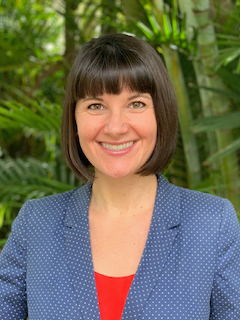
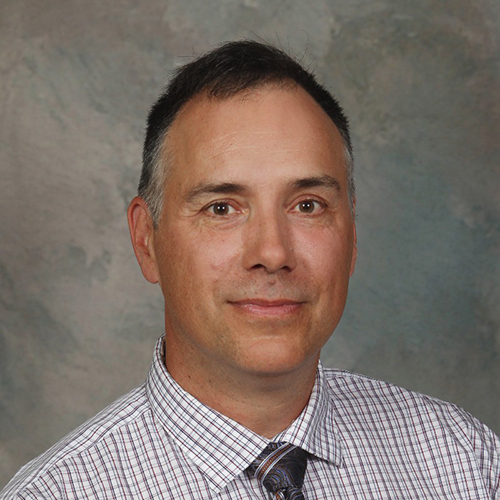
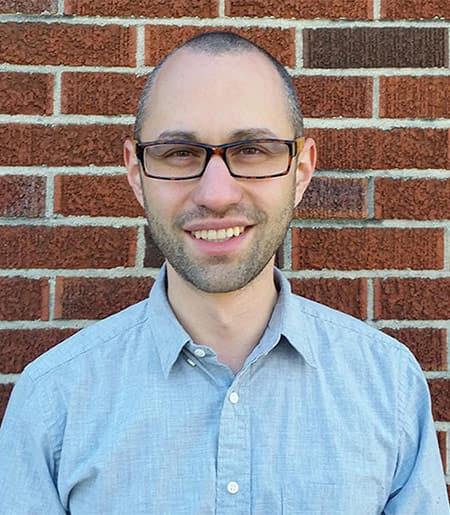
Kiara R. Timpano is a Professor in the Department of Psychology at the University of Miami and Director of the Program for Anxiety, Stress, and OCD (PASO). She holds a PhD from Florida State University and completed postdoctoral training at Massachusetts General Hospital/Harvard Medical School. Her research focuses on cognitive and psychosocial risk factors for anxiety, OCD, and hoarding disorders, with a particular interest in transdiagnostic mechanisms. Key areas include intolerance of uncertainty, emotion dysregulation, and behavioral interventions. Timpano leads the PASO lab, collaborating with institutions like McLean Hospital, UC Berkeley, and Karolinska Institutet. She supervises graduate students (e.g., Hannah Broos, Amelia Dev) and undergraduates, mentoring over 20 trainees. Her work integrates clinical research with community health initiatives, such as pandemic behavioral studies and climate change engagement projects. She serves on the Scientific and Clinical Advisory Board of the International OCD Foundation. Timpano's research spans neuroimaging (e.g., fMRI studies of repetitive negative thinking), translational therapy development (e.g., mindfulness-integrated CBT), and public health interventions. Her 2025 study in Children journal examines transdiagnostic treatments for youth OCD/anxiety comorbidity, while 2024 Cerebral Cortex work links PTSD symptoms to neural connectivity. Collaborations emphasize global mental health challenges and evidence-based practices.
Inigo Flores Ituarte is a Research Professor at Tampere University's Faculty of Engineering and Natural Sciences, affiliated with the Automation Technology and Mechanical Engineering department. He leads the Digital Design and Manufacturing (D2M) research lab, focusing on sustainable manufacturing and twin-transition strategies integrating digital and green technologies. His work emphasizes optimization-driven design, additive manufacturing innovations, and AI-driven expert systems to enhance energy efficiency and reduce environmental impacts. Key research pillars include: Pillar 1: Twin-transition in Engineering Design and Manufacturing Processes, addressing sustainable manufacturing and intelligent systems Pillar 2: Development of open D2M systems and Process-Structure-Property-Performance (PSPP) linkages in advanced materials His research explores multi-disciplinary optimization combining model-based simulations and data-driven techniques. Notable contributions include generative AI integration in CAD systems, cognitive manufacturing systems, and cost-effective process monitoring using CNN-based methods. Inigo's work emphasizes environmental sustainability, with a focus on reducing manufacturing's energy consumption (54% of global use) and CO2 emissions. He advocates for interconnected material systems, smart manufacturing processes, and AI-assisted decision-making to achieve cognitive intelligence in industrial operations. His D2M lab's overarching goal is to maximize product/process performance while improving cost-effectiveness and minimizing environmental footprints. Recent projects include railway bogie demonstrators via multi-material deposition and sensor systems leveraging IoT and ChatGPT integration.
Prof. Dr. Moritz Petersen is an Associate Professor of Sustainable Supply Chain Practice and Co-Director of the Center for Sustainable Logistics and Supply Chains (CSLS) at Kühne Logistics University (KLU) in Hamburg, Germany. His academic career began at Hamburg University of Technology, where he completed his doctoral studies in 2017 under Prof. Dr. Wolfgang Kersten, and he has been at KLU since 2016. Research Focus: Decarbonization of logistics, Circular Economy, Blockchain applications in supply chains, and sustainable product development Teaching: Courses on Supply Chain Sustainability, Circular Product Development, and Lean Logistics Operations across KLU’s Bachelor to MBA programs Outreach: Co-hosts the podcast “Das Gleiche in Grün?!”, collaborates on educational children’s books about logistics, and frequently speaks at industry events like the Deutscher Logistik-Kongress Research Trends from his 15 most recent articles center on: Blockchain technology’s role in sustainable logistics Decarbonization strategies across maritime and road freight Circular economy implementation through product design and waste stream analysis Behavioral and organizational barriers to sustainability Public-private partnerships in European logistics Information sharing as a CE enabler Scientific Awards: 2020 Best Paper Award, International Journal of Operations & Production Management (IJOPM) Research Projects include: CREAToR: EU Horizon 2020 project on polymer recycling GATE: German Ministry of Economy-funded GHG emissions data exchange HANSEBLOC: Blockchain applications in logistics ChainLog: Blockchain use cases Development of Logistics Competence Assessment Toolkit
Pedro Sangro Colón serves as both Vice-Rector of Research and Degrees and Titular Professor of Language and Audiovisual Narrative at the Pontifical University of Salamanca's Faculty of Communication since 2008. His academic home is firmly rooted in the Audiovisual Communication and Advertising department where he has established himself as a leading scholar in film theory and audiovisual narrative. Dr. Sangro Colón earned his doctorate from Universidad Complutense de Madrid with his thesis "El concepto de 'montaje cinematográfico': una revisión de su formulación teórica" (2000), supervised by Dr. Manuel Alonso Erausquin. His research interests span cinematic montage theory, Spanish cinema history (particularly during the Francoist period and democratic transition), audiovisual narrative structures, documentary film analysis, and the intersection of cinema with psychoanalysis. His work demonstrates a consistent focus on how film constructs meaning through editing techniques and narrative frameworks. An analysis of his 15 most recent publications reveals a scholarly trajectory deeply engaged with Spanish cinematic history and theoretical film studies. His work frequently examines how film represents historical memory, particularly regarding Spain's transition from dictatorship to democracy, with special attention to montage techniques as tools for constructing historical narratives. More recently, he has expanded his scope to include contemporary media phenomena like the Marvel Cinematic Universe, analyzing how superhero films represent national security apparatuses and historical trauma. His extensive publication record includes numerous books, articles, and book chapters, with notable works such as "Escenas de cine, Guión y análisis" (2017), "La estética televisiva en las series contemporáneas" (2018), and "El clasicismo en el cine Una mirada Intergeneracional" (2015). His research demonstrates both theoretical sophistication and practical application to screenwriting and television production. As Vice-Rector of Research and Degrees, Dr. Sangro Colón oversees academic programs and research initiatives at the university. His leadership role complements his scholarly work by providing institutional perspective on academic innovation and research management. His recent publication "Introducción: la innovación en la Universidad Pontificia de Salamanca" (2021) reflects his engagement with contemporary challenges in higher education. His academic collaborations are extensive, with frequent co-authorship with colleagues like Juan Medina-Contreras and Miguel Ángel Huerta. His work appears in both Spanish and international journals, demonstrating his ability to engage with global film scholarship while maintaining a strong focus on Spanish and Latin American cinematic traditions.
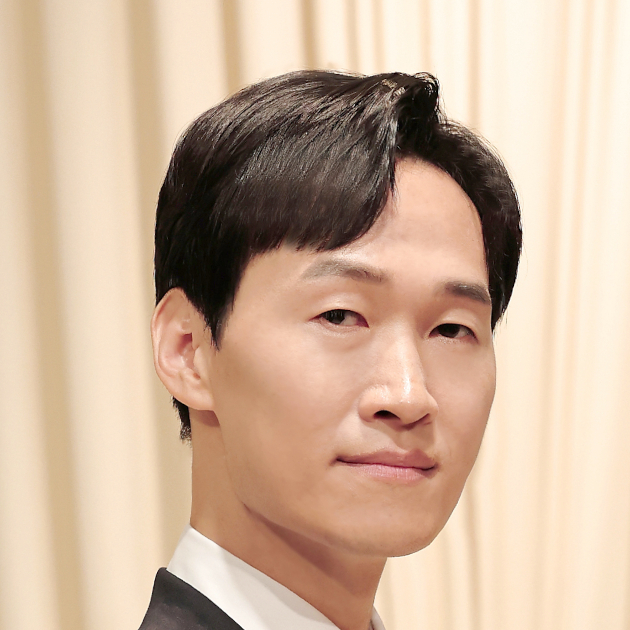
Kiwon Um is a tenured Assistant Professor in the Computer Graphics group at Télécom Paris, France, since October 2019. He focuses on physics-based simulations and data-driven approaches using deep learning, with an emphasis on human visual perception in computer graphics and engineering applications. Education: Ph.D. in Computer Science and Engineering from Korea University His research explores effective simulation of natural phenomena through refined data utilization and develops reliable data acquisition methods for machine learning. He also investigates perceptual evaluation of simulations to advance numerical method understanding. Recent work trends include: (1) turbulence modeling with machine learning integration, (2) elastic material simulation stability, (3) fluid dynamics optimization, and (4) differentiable physics frameworks. His publications range from 2008 to 2025, covering topics like SPH solvers, porous shell simulations, and numerical method validation.
Omar Rifki is an Associate Professor (Maître de Conférences) specializing in combinatorial optimization and artificial intelligence applications. His research bridges theoretical computer science with practical logistics challenges, focusing on routing problems, process mining, and machine learning integration for complex decision systems. His core research interests include phase transitions in NP-hard problems, vehicle routing optimization under time constraints, and healthcare process modeling. Rifki's work demonstrates a consistent pattern of integrating reinforcement learning with traditional optimization techniques to solve large-scale real-world problems in transportation and logistics, with particular emphasis on spatio-temporal data effects and collaborative systems. Analysis of his 15 publications (2019-2025) reveals three dominant research thrusts: (1) Fundamental studies of combinatorial problem hardness using phase transition frameworks, (2) Practical applications of deep reinforcement learning in vehicle routing and taxi assignment, and (3) Healthcare process optimization through advanced process mining techniques. His work consistently addresses scalability challenges in real-world implementations while maintaining theoretical rigor. No scientific awards were documented in the provided materials. His collaborative work with researchers like Christine Solnon and Thierry Garaix indicates active participation in European operations research communities, though specific grant details remain unreported. Rifki's research shows increasing integration of graph theory and machine learning in transportation applications, particularly evident in his Lyon City case studies on autonomous ride-sharing systems.
Jan Carmeliet is a Full Professor at the Department of Mechanical and Process Engineering at ETH Zürich , holding the Chair of Building Physics since 2008. He previously held academic positions at Katholieke Universiteit Leuven and Eindhoven University of Technology . His research focuses on multiscale modeling of porous and granular materials , urban heat-air-moisture flows , and energy-efficient urban systems . His work integrates advanced computational techniques (e.g., lattice Boltzmann methods , CFD , FEM ) with experimental approaches ( X-ray tomography , wind tunnel PIV ). He leads major projects such as the RePoDH and Urban Multiscale Energy Modelling initiatives, aiming to decarbonize urban energy systems and understand local heat islands. Current projects emphasize renewable-powered district heating networks and urban climate modeling . Key collaborations include institutions like Empa , University of Illinois , and Los Alamos National Laboratory . He has secured significant grants from the Swiss National Science Foundation (SNSF) and ETH Domain , focusing on urban energy resilience and material science. His leadership roles include directing the Energy Science Center ETH Zürich and coordinating the SCCER-efficiency program.
Xiaoning Qian is a Professor in the Department of Electrical and Computer Engineering at Texas A&M University, where he also serves on the Faculty Advisory Committee for the Texas A&M Institute of Data Science (TAMIDS) and the Executive Committee for the Texas A&M TRIPODS Research Institute for Foundations of Interdisciplinary Data Science (FIDS). He holds a joint appointment in the Applied Math group within the Computational Science Initiative at Brookhaven National Laboratory (BNL). Previously, he was an Associate Professor (2018-2022) and Assistant Professor (2013-2018) at Texas A&M, and an Assistant Professor in the Department of Computer Science and Engineering at the University of South Florida (2009-2013). Dr. Qian received his B.S.E. and M.S.E. degrees from Shanghai Jiaotong University, China, and his M.Ph. and Ph.D. degrees in Electrical Engineering from Yale University. Dr. Qian's research focuses on developing mathematical models and computational algorithms in signal processing, machine learning, and Bayesian methods, particularly in learning, uncertainty quantification, and experimental design. His work spans multiple disciplines, with applications in life sciences and materials science. His research group, the Biomedical Imaging, Sensing, and Genomic Signal Processing Group, actively applies probabilistic models and optimization algorithms to solve complex problems in interdisciplinary domains. His research has evolved from foundational work in bioinformatics and biomedical image processing to more recent applications in materials science and broader AI for science initiatives. Dr. Qian has received numerous scientific awards and recognitions including: National Science Foundation (NSF) CAREER Award Segers Family Dean's Excellence Professorship II in the College of Engineering TEES (Texas A&M Engineering Experiment Station) Senior Faculty Fellow Montague-Center for Teaching Excellence Scholar J. T. Oden Faculty Fellow at the University of Texas, Austin Finalist of the 2023 INFORMS QSR Best Paper Faculty Impact Fellow from the Department of Electrical & Computer Engineering As an advisor , Dr. Qian has mentored numerous graduate students through their PhD and MS programs, with many of his alumni securing positions at prestigious institutions and companies including NIH/NCBI, Microsoft, Baidu Research Lab, and Qualcomm. His research has been supported by multiple grants, including an NSF CAREER award and collaborative research funding from the Information Integration and Informatics program. He is actively recruiting postdoc and graduate student research assistants for projects in machine learning and optimization methods with applications in bioinformatics and materials science. Dr. Qian is involved with several research initiatives including the Objective-Based Uncertainty Quantification (ObjectiveUQ) project, which provides a mathematical framework for integrating prior knowledge and data while enabling effective operational and experimental design under uncertainty. He also co-organizes the Bio-Seminar series for the Biomedical Imaging, Sensing & Genomic Signal Processing group at Texas A&M.
Prof. Carlijn V.C. Bouten is Full Professor of Cell-Matrix Interactions in Cardiovascular Regeneration at Eindhoven University of Technology (TU/e), where she heads the Soft Tissue Engineering & Mechanobiology research group in the Department of Biomedical Engineering. She leads a team of ~40 researchers focusing on cardiovascular tissue regeneration through interdisciplinary approaches. Her research investigates mechanobiological interactions between cells and extracellular environments during tissue growth/regeneration, using multi-scale living model systems. Key innovations include biodegradable heart valve prostheses, hybrid implantable organs, and remote cardiac tissue engineering concepts. She collaborates with material scientists, clinicians, and medtech companies. Education includes an MSc in Functional Anatomy and Biomechanics (Vrije Universiteit Amsterdam, 1991) and PhD (TU/e, 1995), with postdoctoral training at Université Laval and University of London. Her 300+ publications focus on: Cardiovascular tissue engineering Cell-matrix mechanobiology In vitro tissue models Biodegradable implants Hybrid organ development Major scientific honors: ERC Advanced Grant (2022) VICI Grant (2003) Aspasia Career Development Award Coordinator of €18.8M Gravitation Programme Elected member of KNAW and AcademiaNet She leads multiple consortia including RegMed-XB's Cardiac Moonshot and international programs like FET-OPEN 'Hybrid Heart'. Heads TU/e's Soft Tissue Engineering & Mechanobiology lab developing advanced biomaterials and tissue models.
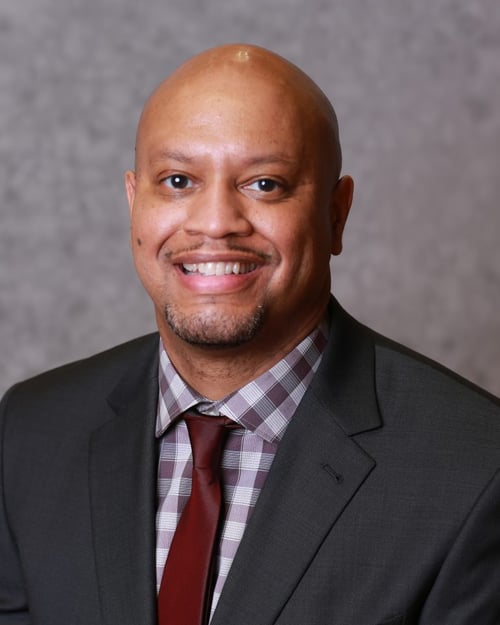
Eddie C. Red is an Associate Professor of Mathematics and Computational Sciences at Morehouse College , where he currently serves as the Interim Dean of the Science, Technology, Engineering, and Mathematics (STEM) Division. He earned his B.S. from Morehouse College (class of 2000) , followed by his M.S. and Ph.D. from Florida Agricultural and Mechanical University . Dr. Red also completed post-doctoral education at Lawrence Berkeley National Laboratory . Interim Dean, STEM Division Former Chair, Mathematics and Computational Science Division Former Chair, Physics & Dual-Degree Engineering Department Dr. Red’s research interests bridge atomic physics, quantum mechanics, and computational modeling , with a focus on: Photoionization cross-sections Bound states in the continuum Velocity map imaging techniques Mathematical formulations for quantum operators His work has resulted in publications in Physical Review A, Communications Physics, and the Journal of Physics B , alongside numerous conference presentations. Dr. Red has led the NuMaSS (Nuclear, Materials, and Space Science) Summer Enrichment Program for K-12 students and directed the Research Experience with Diversification Laboratory , emphasizing student training and research. Scientific awards include: Principal Investigator for Department of Energy National Nuclear Security Administration awards Dr. Red has served on multiple faculty governance committees, including the Admissions Committee , Faculty Grievance Committee , and Faculty Research Committee .
Professor Ali Yapar is a faculty member at Istanbul Technical University in the Electronics and Communication Engineering department. His research focuses on Electromagnetics , Microwave Engineering , and Antenna Technologies , with a particular emphasis on inverse scattering problems and microwave imaging for biomedical applications. He has supervised numerous graduate students and led projects related to breast cancer treatment and rough surface imaging. PhD in Electronics and Communication Engineering from Istanbul Technical University (1997) MSc in Electronics and Communication Engineering (1995) His recent publications analyze advanced techniques for microwave hyperthermia systems, reverse time migration methods, and Newton-based solutions for electromagnetic inverse scattering. Key projects include TUBITAK-funded initiatives on microwave tomography and brain stroke imaging. He serves as a project investigator and executive for electromagnetic research programs. Research areas span Electromagnetic Wave Propagation , Green's Function Applications , and Dielectric Material Analysis . Collaborations include IEEE members and international researchers in computational electromagnetics.
Paul W. K. Rothemund is a Visiting Associate in the Department of Computing and Mathematical Sciences and the Computation and Neural Systems program at the California Institute of Technology (Caltech), a position he has held since 2023 with appointment through 2026. Previously, he served as a Research Professor at Caltech from 2015 to 2023, Senior Research Associate from 2008 to 2015, and Senior Research Fellow in Computation and Neural Systems and Computer Science from 2004 to 2008. Rothemund received his B.S. from Caltech in 1994 and his Ph.D. from the University of Southern California in 2001. Following his doctoral studies, he was a Beckman Senior Research Fellow from 2001 to 2004. Dr. Rothemund leads the Rothemund Lab at Caltech, which is part of the Biology and Biological Engineering, Computing + Mathematical Science, and Computation & Neural Systems divisions. His research focuses on DNA nanotechnology, particularly the development and application of DNA origami techniques for creating programmable nanoscale structures. The lab's work bridges computer science, molecular biology, and nanotechnology, exploring how molecular systems can be designed and programmed like computational systems. Analysis of Dr. Rothemund's recent publications reveals a strong focus on advancing DNA nanotechnology for practical applications. His work spans from fundamental techniques for DNA and RNA origami to applications in nanophotonics, lipid bilayer engineering, and single-molecule manipulation. A notable trend is the increasing sophistication of DNA-based nanostructures and their integration with other biomolecular systems and physical phenomena. Scientific Recognition: Beckman Senior Research Fellow Dr. Rothemund has advised several doctoral students to completion, including Anya Mitskovets, who defended her thesis on 'Using DNA origami to create hybrid nanophotonic architectures for single-photon emitters,' and Tyler Ross, who defended his PhD thesis and subsequently joined the lab as a postdoc. His research has been supported by various grants that enable the interdisciplinary work at the intersection of computer science, molecular biology, and nanotechnology. The Rothemund Lab forms a 'DNA nanotechnology supergroup' at Caltech and frequently collaborates with the Winfree and Qian labs. This collaborative environment fosters innovation at the interface of computation, molecular programming, and nanoscale engineering, positioning the lab at the forefront of programmable matter research.
Paul Wiegert is a Full Professor in the Department of Physics and Astronomy at the University of Western Ontario , where he has been since 1996 after positions at York University and Queen's University. He is a member of the Institute for Earth and Space Exploration (IESX) and the Centre for Planetary Science and Exploration (CPSX) . His research spans asteroid dynamics , exoplanet systems , and celestial mechanics , with notable work on Earth co-orbital asteroids like (3753) Cruithne and Earth's first Trojan asteroid 2010 TK7. Education : PhD in Astronomy (University of Toronto, 1996) Research Domains : Planetary Science, Astronomy, Big Data Analytics His recent publications focus on interstellar transport mechanisms , asteroid impact risks , and exomoon detection . Key findings include quantifying risks from asteroid 2024 YR4's potential lunar impact and demonstrating the feasibility of detecting alpha Centauri-origin material in our solar system. He actively supervises graduate students like Cole Gregg and participates in NSERC-funded summer research programs for undergraduates. For planetary defense, he has analyzed collision probabilities for Apophis and developed meteoroid hazard models for spacecraft. His work appears in Planetary Science Journal , Nature Astronomy , and Astrophysical Journal Letters , with media coverage in 60+ outlets and 126 X (Twitter) mentions .
Alireza Yaseri serves as an Adjunct Assistant Professor in the Department of Civil Engineering within Smith Engineering at Queen's University. He maintains a dual affiliation with the GeoEngineering Centre, a leading research institute at Queen's specializing in geotechnical and geoenvironmental challenges, where he contributes to advanced computational modeling initiatives. Education: PhD in Geotechnical Engineering, Université Laval (2021) MSc in Geotechnical Engineering, Shiraz University (2012) Dr. Yaseri's research program centers on computational geomechanics with emphases on seismic soil-structure interaction, railway-induced vibrations, and constitutive modeling of granular materials. His work bridges theoretical mechanics and practical infrastructure challenges through advanced numerical techniques, particularly hybrid FEM-SBFEM implementations for dynamic analysis of earth dams, canyon systems, and transportation corridors. He investigates nonlinear soil behavior under monotonic/cyclic loading and develops predictive models for vibration propagation in complex geological settings. Analysis of his publication trajectory (2014-2024) reveals consistent innovation in computational geotechnics, with recent work focusing on 2.5D/3D modeling of train-induced vibrations and sophisticated sand constitutive frameworks. His 2024 publications demonstrate dual expertise in railway vibration prediction methodologies and critical-state soil mechanics, while his earth dam-canyon system analyses from 2020-2022 established foundational approaches for seismic amplification in flexible geological formations. As an active member of Queen's GeoEngineering Centre, Dr. Yaseri collaborates on interdisciplinary projects addressing infrastructure resilience, with particular relevance to dam safety and transportation geotechnics in seismic zones. His technical leadership in scaled boundary methods contributes to the center's reputation for computational innovation in geomechanics.
Eli Friedman is a Professor of Global Labor and Work at Cornell University's School of Industrial and Labor Relations (ILR), where he has served since 2011. He holds affiliations with the Department of Sociology in the College of Arts and Sciences and the China and Asia-Pacific Studies Program, focusing on labor dynamics within China's global economic ascent. Education: PhD in Sociology, University of California, Berkeley His research examines state responses to worker unrest in China, urbanization challenges for rural migrants, and transnational labor politics across Hong Kong, Taiwan, and Singapore. Key interests span China's development trajectory, social movements, educational access for migrants, and global labor relations systems. Friedman employs comparative frameworks to analyze how China's economic rise since 1990 reshapes labor institutions worldwide. He is author of three major works: Insurgency Trap: Labor Politics in Postsocialist China (Cornell, 2014), The Urbanization of People (Columbia, 2022), and China in Global Capitalism (Haymarket, 2024). His scholarship appears in ILR Review , Theory and Society , and China Quarterly , alongside contributions to Jacobin . Scientific Awards: No awards documented in source materials Friedman advises the Cornell Labor Action Tracker—the sole comprehensive U.S. strike database—and mentors doctoral candidates through specialized seminars. His teaching portfolio includes courses on China-U.S. labor relations, migrant labor systems, and global political economy, emphasizing empirical analysis of labor movements. He directs the Cornell Labor Action Tracker initiative, which catalogs nationwide strike activity to support academic research and labor advocacy, while advancing comparative studies on citizenship regimes in Chinese urbanization.