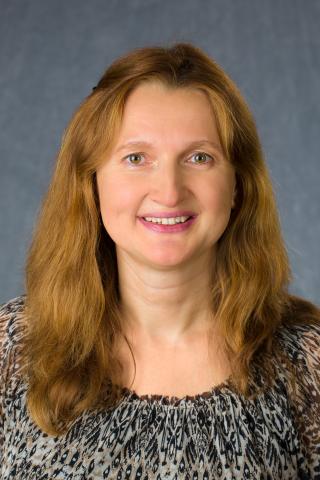
Olga Tsyusko is an Associate Professor in the Martin-Gatton College of Agriculture, Food and Environment at the University of Kentucky. Her research focuses on the environmental toxicology of nanomaterials, particularly their interactions with soil organisms like Caenorhabditis elegans and earthworms. She teaches courses in biotechnology, including Writing and Presentations in the Life Sciences (ABT 301) and Molecular Genetics (ABT 460). Environmental Toxicology Nanotoxicology Molecular Genetics Soil Ecology Agricultural Biotechnology Ecotoxicology Recent publications examine nanoparticle behavior in agricultural systems, including controlled nitrogen release via nanomaterials, metal-organic framework applications for sustainable agrotechnologies, and epigenetic impacts of silver/zinc oxide nanoparticles on model organisms. Collaborative work investigates 2D nanomaterials for PFAS degradation and biosensor-related environmental risks.
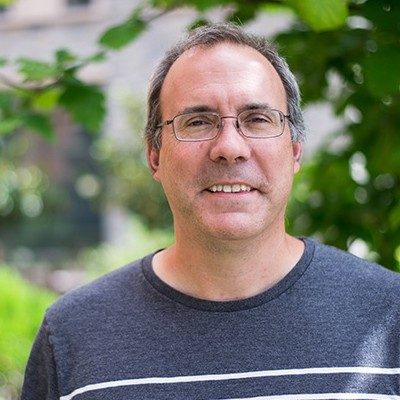
Sean Corcoran is the Interim Department Head and Associate Professor of Materials Science and Engineering at Virginia Tech's College of Engineering. He holds a B.S., M.S., and Ph.D. from Johns Hopkins University (1990, 1992, 1994). His research focuses on atomic-scale mechanisms in electrochemical processes, including electrodeposition, corrosion, and the fabrication of nanoporous metals using advanced techniques like nanoindentation and scanning probe microscopy. He also explores applications of electrochemical processing in sustainable materials engineering. His work emphasizes nanoporous metal structures, corrosion dynamics, and surface modification techniques. Key contributions include studies on dealloying mechanisms, mechanical behavior of porous materials, and the development of eco-friendly electropolishing methods for metals like niobium. His research integrates experimental methods (e.g., small-angle neutron scattering) with computational modeling to understand material behavior at the nanoscale. Corcoran’s publications span over three decades, reflecting his deep expertise in electrochemical systems and materials characterization. His work has implications for energy storage, catalysis, and advanced manufacturing. He currently oversees the Materials Science and Engineering department at Virginia Tech, contributing to academic leadership and interdisciplinary research initiatives.
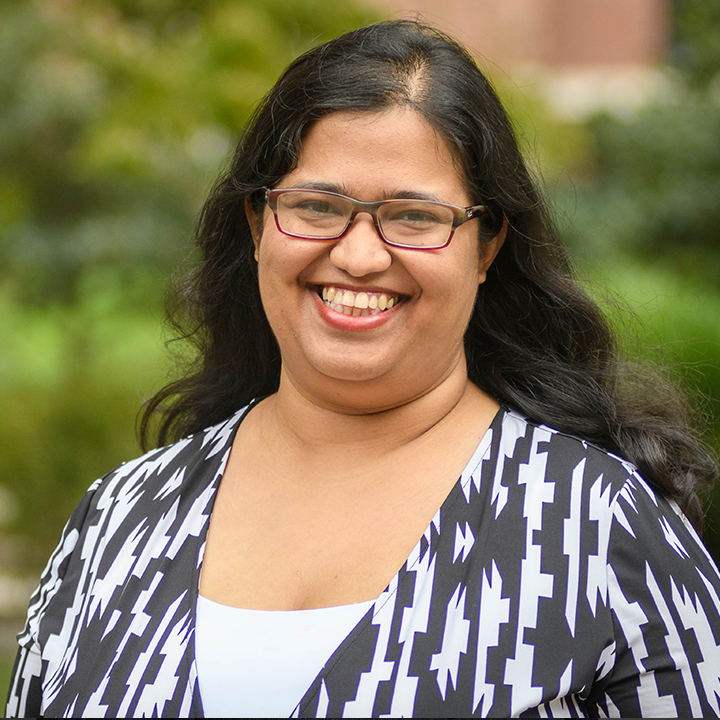
Arundhati Nag is an Associate Professor of Chemistry at Clark University, leading research in synthetic chemistry and biomedical applications. Her work focuses on peptide macrocycles for cancer therapeutics, biomimetic catalysis, and biomolecule sensing. She holds a Ph.D. from the California Institute of Technology (2013), an M.S. from the Indian Institute of Technology (2006), and a B.S. from Presidency College, University of Calcutta (2004). Her research themes include: Cancer Therapeutics: Developing macrocyclic peptides targeting protein-protein interactions (PPIs) in cancer pathways. Biomimetic Catalysis: Creating copper/peptide complexes mimicking photosynthetic enzymes for water oxidation and CO 2 reactions. Biomolecule Sensors: Designing macrocyclic reagents for selective detection of phosphorylated metabolites and amyloid beta aggregates. Recent publications highlight advancements in copper-selective sensors, click chemistry catalysts, and cyclic peptide libraries. Her work has been supported by grants from the National Science Foundation (CAREER Award), Research Corporation for Science Advancement (Cottrell Scholar Award), and the American Chemical Society. Awards: Cottrell Scholar Award (Research Corporation for Science Advancement) Grants: National Science Foundation: CAREER Award (2022–2027) NIH: Development of inhibitors for KRAS-G12V/SOS interactions (2020–2024) Her lab emphasizes interdisciplinary approaches, integrating organic synthesis, biochemistry, and materials science to address biomedical challenges.
Nikolaos Vassilas serves as Professor in the Department of Informatics and Computer Engineering at the University of West Attica, Greece, with leadership roles including Director of the Intelligent Knowledge, Image & Information Systems research Laboratory (ISLab) since 2019 and former Director of the Joint Greek-French Master Degree Program (2016-2020). His academic journey includes research positions at NCSR "Demokritos" and EPFL. His educational credentials feature a Diploma in Electrical Engineering from Aristotle University of Thessaloniki (1983), and M.S.E.E. and Ph.D. degrees from the University of Minnesota (1987, 1990). Professional affiliations include IEEE Computational Intelligence Society, Hellenic Society of Artificial Intelligence, and Greek Computer Society. Professor Vassilas' research centers on Computer Vision and Neural Networks with applications in urban analysis and remote sensing. His work integrates deep learning for building extraction from aerial/LiDAR data, semantic modeling in 3D urban environments, and neural network-based environmental prediction systems. Key methodological focuses include mean-shift algorithms, Hough transforms, and multisource spatial data fusion. Analysis of his recent publications reveals consistent specialization in computer vision techniques for urban infrastructure analysis, particularly building contour detection and 3D reconstruction using convolutional neural networks. The integration of aerial imagery with elevation data and robust line detection algorithms represents a dominant research trajectory across his 70+ publications. No scientific awards were documented in the source materials. He has coordinated two European Union co-funded research programs and participated in multiple national projects, with expertise in environmental data processing and intelligent spatial analysis systems. His leadership extends to directing research laboratories and international academic programs, demonstrating significant grant management experience. Professor Vassilas leads the Intelligent Knowledge, Image & Information Systems research Laboratory (ISLab), which focuses on advancing computer vision techniques for urban planning and environmental monitoring applications through interdisciplinary team collaboration.
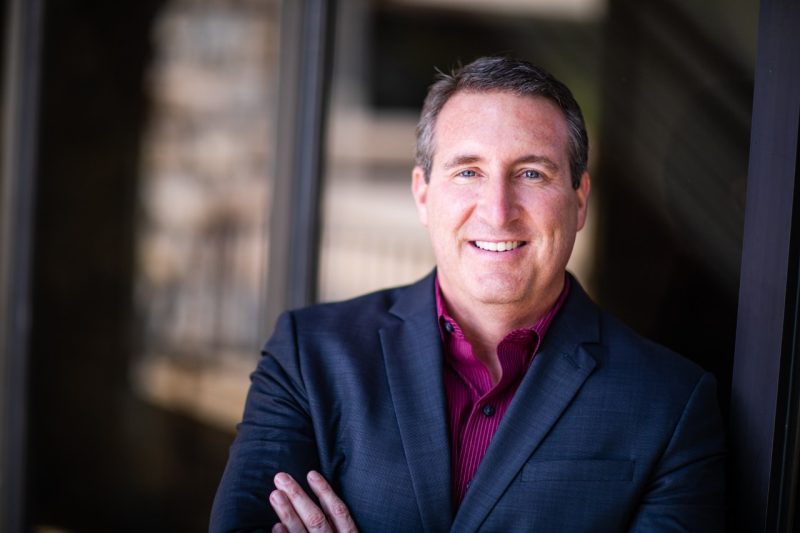
Dr. Gary D. Seidel is a Full Professor and Assistant Department Head for Academic Affairs at the Virginia Polytechnic Institute and State University's College of Engineering. He earned his Ph.D., M.S., and B.S. in Aerospace Engineering from Texas A&M University (2007, 2002, 1999) and has held academic positions at Virginia Tech since 2008. His research focuses on multiscale modeling of damage evolution in multifunctional composites, particularly those incorporating carbon nanotubes. Ph.D., Aerospace Engineering, Texas A&M University, 2007 M.S., Aerospace Engineering, Texas A&M University, 2002 B.S., Aerospace Engineering, Texas A&M University, 1999 Dr. Seidel's research bridges atomistic and continuum scales to analyze piezoresistivity, fracture mechanics, and multifunctional properties in nanocomposites. He develops computational tools for modeling damage in materials used for hypersonic vehicles, lunar structures, and energetic materials. His work integrates micromechanics with advanced sensor systems and topology optimization for structural health monitoring. His recent publications focus on multiscale modeling of CNT-polymer composites, thermomechanical properties of ultra-high temperature ceramics, and piezoresistive damage sensing networks. These align with keywords like computational mechanics, nanotechnology, and materials science, covering subfields such as peridynamics, interfacial modeling, and stochastic microstructure analysis. Scientific Awards: ASME Fellow (2020) AIAA Associate Fellow (2013) AFRL Summer Faculty Fellow (2017-2021) Oak Ridge Ralph E. Powe Award (2010) ASME/Boeing Best Paper Award (2016) Dr. Seidel serves as Associate Editor for Applied Mechanics Reviews and Smart Materials and Structures , and actively participates in AIAA and ASME technical committees. He co-directs the Aerospace Structures and Materials Lab (ASML) and mentors NASA MUST undergraduate researchers, demonstrating commitment to both academic leadership and student development.
Ismaila Ba serves as an Assistant Professor, Teaching Stream (Limited Term) in the Department of Statistical Sciences at the University of Toronto, with office located in the Ontario Power Building, Room 9165 at 700 University Avenue on the downtown Toronto (St. George) campus. Education: PhD in Statistics, Université du Québec à Montréal (2022) Research Interests: Dr. Ba specializes in statistical models and inference methodologies for high-dimensional data, with particular expertise in genomic platforms (single-cell sequencing and microbial/metagenomic sequencing) and spatial point pattern data. His hydrology research focuses on probability distributions for modeling extreme events. Core methodologies include Variational Bayesian inference, spatial statistics, and microbiome data analysis within theoretical statistics and statistical computing frameworks. Scientific Awards: CANSSI Distinguished Postdoctoral Fellow Advising and Grants: The available documentation does not specify current advisees, grant funding, or research mentorship activities beyond his postdoctoral fellowship recognition. Labs and Teams: No institutional affiliations with specific research laboratories or collaborative teams are mentioned in the provided materials.
Thi Phong Nguyen is an Assistant Professor in Mathematical Sciences at the New Jersey Institute of Technology. His research focuses on inverse problems, scattering theory, and computational mathematics with applications to wave propagation and imaging. Research develops novel mathematical methods including Tikhonov regularization techniques for fractional derivative problems, fast imaging algorithms for periodic media, and sampling methods for anisotropic scatterers. Current investigations address inverse source problems for fractional PDEs. Publications demonstrate consistent focus on regularization theory for ill-posed inverse problems, particularly in scattering scenarios involving periodic structures and anisotropic materials. Recent work extends methods to time-space fractional parabolic equations.
Jean-Francois Babadjian is a Professor at Université Paris Saclay, affiliated with the Department of Mathematics at Orsay within the Faculty of Sciences. His research focuses on mathematical analysis with applications to material science, particularly in the areas of calculus of variations, partial differential equations, and geometric measure theory. His primary research interests include: Calculus of Variations Partial Differential Equations Geometric Measure Theory Applications to Materials Sciences (linear and nonlinear elasticity, damage, fracture, plasticity, shape optimization) Babadjian has published extensively in top mathematical journals, with recent work focusing on plasticity models, fracture mechanics, and the mathematical analysis of material behaviors. His research often explores the connections between theoretical mathematics and practical applications in material science, particularly examining how mathematical frameworks can describe complex material phenomena like crack propagation, damage evolution, and plastic deformation. His collaborative work spans multiple institutions and has resulted in significant contributions to the understanding of variational problems in continuum mechanics. Recent publications demonstrate his ongoing engagement with cutting-edge problems in mathematical analysis as applied to material science, with particular emphasis on regularity theory, approximation methods, and the behavior of materials under stress. Babadjian is also actively involved in teaching advanced mathematics courses at Université Paris Saclay, including Calculus of Variations, Partial Differential Equations, and Functional Analysis, as evidenced by his course offerings for the 2024-2025 academic year.
Professor Juan Sagaseta is a Professor of Structural Robustness at the University of Surrey, affiliated with the School of Sustainability, Civil and Environmental Engineering and the Centre for Infrastructure Systems Engineering. He leads structural engineering modules at undergraduate and postgraduate levels and specializes in improving structural design efficiency and safety, particularly in concrete construction and robustness of critical infrastructure. His research focuses on enhancing structural systems' resilience against accidental loads like blast, impact, and flooding. Education: PhD in Structural Engineering from Imperial College London (2008), Post-doctoral research at EPFL (Switzerland). Professional memberships include Fellow of the Institution of Civil Engineers (ICE), fib Action Group 10 (Robustness), and editorial roles in Magazine of Concrete Research . Research interests include: Structural robustness under blast/impact loads Disproportionate collapse prevention Modern methods of construction (precast, steel-concrete composites) Dynamic punching shear analysis Risk-based design frameworks Key contributions include full-scale testing of precast structures, development of post-punching shear models, and validation of Eurocode 2 provisions. His work has been recognized with awards including the ACI Mete A. Sozen Award (2021) and fib Achievement Award (2011). Grants and collaborations involve EPSRC projects on blast impact, international initiatives on building segmentation, and industry partnerships for modular construction systems. Labs/Teams: Leads the Structural Robustness Research Group at Surrey, collaborating with global institutions like EPFL and ACHE (Spain).
G.H.L.A. Brocks is an Associate Professor at the MESA+ Institute, University of Twente, specializing in Computational Chemical Physics. His research focuses on material science and theoretical physics, particularly in halide perovskites, 2D materials, and photocatalysis. Research Interests Density Functional Theory Molecular Dynamics Electronic Properties Photocatalytic Water Splitting Scientific Contributions Recent work explores chiral phonons in 2D halide perovskites (2025). Investigates ion migration using machine learning force fields (2025). Develops 2D TiNBr as a photocatalyst (2025). Studies defects in 3D vs. 2D perovskites (2024). Discovers intrinsic direct-gap 2D materials (2024). Collaborations Collaborates with experts like S. Tao, M. Pols, and S. Er. Active in conferences discussing spin-polarized currents, graphene electron-hole puddles, and magnetic susceptibilities.
John Darwent is a Continuing Lecturer at the University of California, Davis, specializing in Arctic archaeology with a focus on hunter-gatherer societies, site formation processes, and cultural transmission. His research spans the North American Arctic, including regions like Norton Sound, Alaska, and Northwestern Greenland, where he examines subsistence strategies, settlement patterns, and technological innovations. Key projects include investigations of Dorset and Thule cultures, Inuit dispersal routes, and the analysis of zooarchaeological and ceramic evidence. Notable work at sites like Iita (Northwest Greenland) and Shaktoolik (Norton Sound) explores environmental adaptation and cultural continuity. His studies integrate methodologies such as cladistics, spatial analysis, and ZooMS to reconstruct prehistoric lifeways. Recent publications highlight topics like miniature carvings as indicators of hunter-prey relationships, specialized sledge dog domestication, and gendered use of space in Arctic settlements. Dr. Darwent collaborates widely, with co-authors including Christyann M. Darwent, James Savelle, and Hans Lange. His work contributes to understanding regional cultural dynamics and long-term human-environment interactions in Arctic regions.
Brendl C. Miguel is a Full Professor of Marketing at the University of Basel's Faculty of Business and Economics (WWZ), where he leads the Marketing Professorship. His office is located at Peter Merian-Weg 6 in Basel, Switzerland. Prior to joining the University of Basel, he held prestigious academic positions including Associate Professor of Marketing with tenure at Northwestern University's Kellogg School of Management (with a co-appointment in the psychology department) and a tenured position as Associate Professor of Marketing at INSEAD. Earlier in his career, he taught in the psychology departments at the Universities of Heidelberg and Konstanz. PhD in Psychology from Columbia University Undergraduate studies in Psychology and Business Administration at the University of Mannheim Professor Miguel's research centers on the origins of psychological utility and how people form preferences toward choice options across various behaviors including buying decisions, consumption behavior (such as eating and social media activity), investment decisions (like saving for retirement), and brand preferences. His work draws extensively on theories of motivation, conditioning, and social cognition. Currently, his research focuses on two primary areas: understanding the role of motivation (wanting, desire) and anticipatory pleasure in influencing behavior, and reversing negative emotional brand associations. His earlier research examined goals and uncontrollable influences on preferences, including significant contributions to implicit measures methodology. Analysis of Professor Miguel's publication record reveals a consistent focus on consumer decision-making processes, particularly examining how psychological mechanisms influence preference formation. His work bridges marketing, psychology, and behavioral economics, with increasing attention to sensory marketing, implicit bias measurement, and identity-based consumer preferences in recent years. The interdisciplinary nature of his research is evident in publications spanning top psychology and marketing journals, demonstrating how fundamental psychological principles translate to real-world marketing applications. Professor Miguel actively contributes to his field through his research group and the Basel Behavioral Research Center. His work has established important theoretical frameworks for understanding how consumers evaluate products and services, with particular emphasis on the psychological mechanisms underlying preference formation. While specific grant information isn't detailed in the available materials, his extensive publication record suggests successful research funding throughout his career. His advising responsibilities include mentoring doctoral students in marketing and consumer behavior research. Professor Miguel maintains strong connections with the broader academic community through his research group and participation in the Basel Behavioral Research Center. His work continues to influence both academic understanding of consumer behavior and practical marketing applications, particularly in areas related to motivation, implicit measurement, and sensory marketing.
David Reid is an Adjunct Research Fellow at The University of Western Australia's School of Engineering, specializing in Civil, Environmental and Mining Engineering. His expertise focuses on geotechnical engineering, soil mechanics, and tailings management, with significant contributions to understanding critical state soil mechanics and tailings stability. His work addresses UN Sustainable Development Goals related to environmental sustainability and disaster risk reduction. Research interests include critical state line analysis, cone penetration test (CPT) applications, liquefaction triggering mechanisms, and the behavior of mine tailings under various stress conditions. He has pioneered methods for specimen preparation, stress path analysis, and polymer treatment effects in geotechnical materials. Key contributions include over 58 publications analyzing tailings stability, CPT data interpretation, and static liquefaction risks. His work often combines experimental testing with numerical modeling, such as Material Point Method (MPM) simulations. He has collaborated on industry-funded projects like TAILLIQ, advancing tailings engineering practices. Two grants funded the development of mini calibration chambers for CPT testing. His research emphasizes reproducibility in geotechnical testing and improving field-scale performance predictions for tailings storage facilities. He has supervised two research projects and contributed to international discussions on tailings dam safety and failure analysis.
Dr. Julia Espinosa is a Research Fellow in the Department of Human Evolutionary Biology at Harvard University, affiliated with the Peabody Museum. Her work focuses on comparative cognition, particularly in domestic dogs and canids, emphasizing collaborative 'Big Team Science' approaches to investigate canine behavior and cognition. Her research explores topics such as dogs' understanding of human gestures, physical object interactions, food preferences, and play behavior across species. She pioneered the ManyDogs Project, a multi-lab initiative to replicate and expand studies on canine social cognition. Methodological innovations include the use of head-mounted eye-tracking devices to study dogs' visual attention. Espinosa's studies often bridge developmental psychology and ethology, analyzing how dogs perceive environmental cues (e.g., solidity, containment) and engage in social learning. Her work highlights the importance of large-scale collaborative research to standardize experimental protocols and enhance reproducibility in comparative cognition. No scientific awards or grants are explicitly mentioned in the provided materials. She has advised no formally listed students but collaborates extensively with international research groups.
Doğa Ceylan is an Assistant Professor at the Electromechanics and Power Electronics department of Eindhoven University of Technology. His research focuses on sustainable electromechanical systems, particularly reluctance machines for heavy-duty electric vehicles and agricultural applications. He specializes in multi-physical design, rare-earth-free structures, and novel control strategies. Education: B.Sc. and M.Sc. in Electrical and Electronics Engineering from Middle East Technical University (2016–2018), followed by a Ph.D. at TU/e (2019–2024) culminating in a cum laude distinction. Postdoc work involved developing high-torque variable flux reluctance motors for electric tractors. Research Interests : Electromechanical systems design, electric mobility, finite element analysis, vector hysteresis modeling, and sustainable energy solutions. His work aligns with UN SDGs, emphasizing clean energy and innovation. Articles Trends : Recent publications emphasize variable flux reluctance machines, flux-weakening control, and cross-coupling effects in motor control. He explores heavy-duty applications, thermal characteristics, and optimization techniques for high-torque operations. Awards : PhD with distinction cum laude (2024). Grants & Projects : Participated in the Smaragd-Farmtronics project (2017–2021) focusing on solar energy and agricultural technologies. Current work includes EU-funded initiatives on sustainable drive systems. Labs & Teams : Leads research in the Electromechanics Lab and collaborates with the Electromechanics and Power Electronics group. Active in developing demonstrators for agricultural electric tractors and heavy-duty vehicle systems.