Kenneth B Hoehn, PhD, is an Assistant Professor of Biomedical Data Science at the Geisel School of Medicine, Dartmouth College. His work focuses on applying data science methodologies to address challenges in healthcare and biomedical research. He holds a DPhil from the University of Oxford and a BS from Duke University. Education: DPhil in Biomedical Sciences, University of Oxford BS in Biological Sciences, Duke University Dr. Hoehn’s research interests include leveraging computational tools for biomedical data analysis, machine learning applications in clinical settings, and translational data science. His lab (hoehnlab.org) explores innovative approaches to integrate multi-omics data and electronic health records for precision medicine. No specific awards or grants are listed in the provided materials. His current affiliations include the Dartmouth Hitchcock Medical Center and other affiliated hospitals. Contact information is available at 1 Rope Ferry Road, Hanover, NH.
Stine Ejsing-Duun is an Associate Professor at Aalborg University's Department of Sustainability and Planning, Technical Faculty of IT and Design. She contributes to the UN Sustainable Development Goals through research in Problem-Based Learning (PBL), technology education, gender equality in STEM, and making in education. She serves on the academic council, cooperation committee, and multiple steering/advisory boards. Specializes in humanistic informatics, design thinking, and educational technology Active in PBL research and implementation Focuses on K12 to higher education technology integration Her research explores generative AI applications in education, emotional intelligence development through teamwork, and technological literacy in science education. Recent projects include Generativ AI som ny faglighed i uddannelser på AAU and Building Emotional Intelligence in a PBL environment . She received the Top downloaded paper award in 2020. Supervises PhD student Anne Sofie Brodersen Lütken Active in workshops/seminars on playful learning approaches Participant in educational policy debates and media contributions
Dr. Mohamed Elbadawi is a Lecturer in Computational Physiology/Biomedicine at Queen Mary University of London's School of Biological and Behavioural Sciences. His research focuses on leveraging digital technologies like AI, robotics, and 3D printing to advance healthcare. He has received recognition as a Stanford Top 2% Scientist (2022-2023). Elbadawi holds a PhD in Mechanical Engineering from the University of Sheffield (2014-2017), an MSc in Biomedical Engineering from the University of Surrey (2012-2013), and a BSc in Pharmacology from the University of Bristol (2007-2010). His research interests include AI-driven drug discovery, 3D printing for precision medicine, bioelectronics for programmable drug delivery, and sustainability in pharmaceutical manufacturing. He leads modules like 'AI and Data Analytics in Physiology and Biomedicine' and 'Developing AI Solutions in the Biosciences.' Elbadawi has secured grants such as the £20,021 EPSRC-funded 'i-GREENPHARM' project and the £35,000 Innovate UK grant for 'Terpene enhancement of anxiolytic properties of cannabinoids.' He also collaborates with organizations like TSIP to develop community-focused AI solutions for medication management. His editorial roles include membership on the Frontiers in Industrial Microbiology editorial board. He actively publishes in journals like Materials Today Advances , ACS Sustainable Chemistry & Engineering , and International Journal of Pharmaceutics .
Dr. Amaranta Membrillo Solis is a Lecturer in Mathematical Data Science at the School of Mathematical Sciences, Queen Mary University of London. Her research focuses on advanced mathematical methodologies intersecting topology, geometry, and data science. She holds a prominent position in geometric and topological data analysis, with expertise in soft materials modeling, persistence theory, and spectral geometry of singular spaces. Her work integrates algebraic topology with applications in materials science, including the analysis of metasurfaces and soft matter systems. Notable contributions include studies on Hodge spectra differentiation between orbifolds and manifolds, topological characterization of nanoparticle networks, and homotopy theory of gauge groups. She actively collaborates with interdisciplinary teams to bridge theoretical mathematics and practical applications in nanotechnology and molecular conformational analysis. Her publications span high-impact journals such as the Journal of Applied and Computational Topology , Michigan Mathematical Journal , and ACS Nano . She maintains an active research blog ( https://amarantamembrillosolis.wordpress.com ) and is engaged in computational projects leveraging topological methods for material science innovation.
Dr. Yangchao Luo is an Associate Professor in the Department of Nutritional Sciences at the University of Connecticut since August 2021. He previously served as an Assistant Professor (2014–2021) and held postdoctoral roles at the University of Tennessee and University of Maryland. He earned his Ph.D. in Nutrition and Food Science from the University of Maryland (2012), M.S. from China Agricultural University (2009), and B.S. from Hunan Agricultural University (2006). His research focuses on developing nanoscale delivery systems for nutrients using food-derived biomaterials, including nanoparticles, nanoemulsions, and hydrogels. Key areas include gastrointestinal stability of nanoparticles, bioavailability enhancement, and natural nanomaterial extraction. He has published extensively in journals like Nanoscale , Food Hydrocolloids , and International Journal of Biological Macromolecules . Dr. Luo holds editorial roles at Journal of Agriculture and Food Research (Editor-in-Chief) and International Journal of Biological Macromolecules , among others. He has received awards including the Goldhaber Travel Grant (2010) and Summer Research Fellowship (2011). His teaching portfolio includes courses like Food Colloids and Nanotechnology. Current and past students include Jingyi Xue, Qiaobin Hu, and Taoran Wang.
Oksana Zavalina is a Professor at the University of North Texas, specializing in information organization, metadata standards, and digital library systems. She holds a Ph.D. and M.L.I.S. from the University of Illinois (Urbana-Champaign) and a B.S. in Library and Information Science from Kiev State Institute of Culture. Her work focuses on metadata quality evaluation, digital language archives, and interdisciplinary collaboration in cultural heritage preservation. Her research interests include information retrieval systems, semantic web technologies, and the application of metadata standards in diverse contexts. Notable projects include the LAMlang Arc Training Project and studies on AI-generated metadata accuracy. She has also explored metadata practices in Arabian Gulf academic libraries and audiovisual resources in Kuwaiti institutions. Zavalina has published extensively on metadata change analysis, digital library infrastructure, and user interactions with digital collections. Her work bridges library science, linguistics, and technology to address challenges in knowledge representation and preservation. She actively contributes to workshops on historical linguistic datasets and digital archive stewardship, emphasizing education and community engagement in archival practices.
Sabine von Mering is a Biological Data Scientist at the Museum of Natural History Leibniz Institute for Evolution and Biodiversity Science in Berlin, Germany. Her work focuses on opening up and connecting natural history collections with particular attention to collection agents, including marginalized groups, research expeditions, and linked entities such as objects, localities, publications, and archival material. Her research spans biodiversity informatics, data science applications in natural history collections, plant systematics (particularly of plant families like Caryophyllaceae and Juncaginaceae), and the ethical dimensions of collection management. Dr. von Mering is particularly known for her work on making collection data more accessible through linked open data standards and for her research on the historical context of collections, including colonial-era collecting practices. Opening up and linking type catalogues in Wikidata Wikidata for Botanists and Linked Open Data Research on women honored in plant genera Provenance research on collections from colonial contexts Community curation of research expeditions data She actively contributes to several major initiatives including the Collectors project, the FIND working group (Women in natural history), and the international WOMNH network. She also participates in the TDWG Task Group on Modelling Research Expeditions and the Distributed System of Scientific Collections (DiSSCo) initiative. Dr. von Mering's scientific work demonstrates a strong commitment to interdisciplinary collaboration and the application of modern data science techniques to traditional natural history questions. She has made significant contributions to understanding taxonomic relationships within plant families and to developing better data models for representing the complex histories of museum collections.
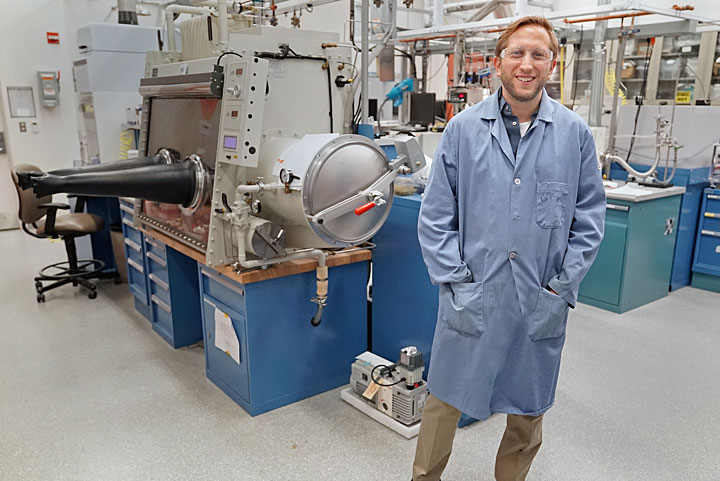
Gregory Doerk is a Materials Scientist specializing in AI Accelerated Nanoscience at Brookhaven National Laboratory's Center for Functional Nanomaterials (CFN). As a key member of the Electronic Nanomaterials Group, he conducts cutting-edge research on self-assembly processes for nanofabrication applications. His work bridges fundamental polymer science with practical applications in energy, optics, and electronics manufacturing. Doerk earned his B.S. in Chemical Engineering from Case Western Reserve University (2005) and his Ph.D. in Chemical Engineering from the University of California, Berkeley (2010). His academic journey was complemented by philosophical studies that shaped his approach to scientific inquiry, recognizing both the power and limitations of scientific knowledge. Dr. Doerk's research focuses on directing the self-assembly of polymers to create tailored nano-architectures for optical, chemical, and energy applications. He specializes in block copolymer systems, developing combinatorial, high-throughput, and adaptive experimental methods to integrate self-assembly into scalable manufacturing processes. His work addresses the challenge of scaling block copolymer assembly to larger feature sizes (approaching 200nm) that can influence light for structural color applications, overcoming the natural limitations of traditional block copolymer systems. His 15 most recent publications reveal a strong trajectory toward AI-accelerated materials discovery, with increasing focus on autonomous experimentation, combinatorial approaches, and hierarchical structures. The research spans fundamental polymer science to applied nanotechnology, with applications in photonic materials, energy conversion, and advanced manufacturing. His work demonstrates a progression from basic self-assembly mechanisms to increasingly sophisticated systems incorporating machine learning and high-throughput methodologies. 2021 DOE Early Career Research Program award recipient As a senior scientist at CFN, Doerk mentors numerous users from academic and industrial institutions worldwide, helping them develop self-assembly processes for diverse applications ranging from microfluidics to biosensing. He has secured significant research funding, including the prestigious DOE Early Career award, and actively contributes to the scientific community through organizing workshops at major conferences including the American Physical Society March Meeting and the NSLS-II & CFN User Meetings. His collaborative approach has resulted in numerous interdisciplinary projects spanning multiple DOE facilities. Dr. Doerk leads research in the Electronic Nanomaterials group at CFN, where he operates specialized equipment for block copolymer self-assembly, solvent vapor annealing, and pattern transfer. His lab focuses on developing adaptive experimental methods that combine self-assembly with AI-driven discovery, creating a unique environment where traditional materials science intersects with cutting-edge computational approaches. The team regularly collaborates with researchers using Brookhaven's National Synchrotron Light Source II for in-situ characterization of self-assembly processes.
Elena Simone is a Full Professor at the Department of Applied Science and Technology (DISAT) of Politecnico di Torino, Italy, where she serves as Vice Coordinator of the PhD programme in Chemical Engineering. She holds an ERC fellowship and leads the Crystallization & Crystal Engineering Laboratory. Her research integrates crystal engineering, process technology, and materials science for applications in food and pharmaceutical industries. Research Interests: Fundamental crystallization mechanisms and polymorph control Food and pharmaceutical crystal engineering Process analytical technology development Sustainable manufacturing of functional crystalline materials Particle design for emulsion stabilization and delivery systems Her recent publications (2023-2025) demonstrate strong focus on experimental and computational approaches to crystallization control, with applications spanning confectionery fats, pharmaceutical polymorphs, electrocatalysts, and emulsion systems. The work frequently employs advanced characterization techniques including synchrotron X-ray scattering. Awards & Leadership: Excellence Award in Crystallization 2017 (EFCE) Steering Committee Member: EFCE Crystallization Working Party Steering Committee Member: British Association of Crystal Growth Editor: Food and Bioproducts Processing Guest Editor: Crystal Growth & Design She currently supervises five PhD students and leads multiple research projects including the ERC-funded CryForm (2021-2026) on crystallization fundamentals, AdvinPro (2024-2026) on insect processing, and NewOilFactory (2024-2026) on crystalline oleogels.
Prof. Dr. Britta Nestler serves as a Research Unit Chair at the Institute of Nanotechnology (INT) within the Karlsruhe Institute of Technology (KIT), Germany. Leading the Microstructure Simulations research group (INT-MSS), she focuses on computational modeling of mechanical and microstructural properties in materials, with significant contributions to phase-field methodologies for microstructure evolution and materials design. Her research spans computational materials science, phase-field modeling, and multiphysics simulations for energy storage systems. Key interests include chemo-mechanical coupling in multiphase systems, solid-state dewetting phenomena, battery electrode optimization, and microstructure-property relationships in polycrystalline materials. She integrates machine learning and data management frameworks to advance virtual materials design, particularly for post-lithium battery technologies. Recent publications reveal a strong emphasis on phase-field applications for energy materials, with 15+ 2025 articles addressing battery electrode design, structural optimization of porous materials, and multiphysics coupling in electro-chemo-mechanical systems. Her work bridges fundamental thermodynamics with industrial applications, notably in the POLiS Cluster of Excellence for post-lithium storage. Prof. Nestler actively shapes the field through leadership in the GAMM Workshop on phase-field modeling and the Materials/Microstructure Modeling conference. As part of KIT's Institute of Nanotechnology, her INT-MSS group collaborates on virtual materials design initiatives within the MaTeLiS Focus Field and NFDI4Ing research data infrastructure, driving digitalization in engineering sciences.
Dr Lauren E. Hatcher is a Royal Society University Research Fellow in the School of Chemistry at Cardiff University . She is a solid-state organometallic chemist with expertise in time-resolved single-crystal X-ray diffraction and photocrystallography, focusing on photo-active crystalline materials and solar energy applications. Education: PhD in Chemistry , University of Bath (2014) – Thesis: Molecular Photocrystallography BSc(Hons) in Natural Sciences with Industrial Placement , University of Bath (2010) Industrial Placement , Small Molecule Crystallography Group, GlaxoSmithKline Services, Harlow Research Focus: Dr Hatcher’s research investigates the structure–property relationships in photo-active crystalline materials. Her work is divided into two streams: (1) rational design of light-responsive ferroelectric materials for solar energy conversion, and (2) development of dynamic X-ray diffraction methods (e.g., photocrystallography) to observe real-time structural changes. Techniques include organic/organometallic synthesis, framework synthesis, time-resolved X-ray diffraction, and advanced crystallization strategies. Awards & Fellowships: Royal Society University Research Fellowship (2019) CCDC Chemical Crystallography Prize for Younger Scientists (2017) American Crystallographic Association travel grant (2016) Rigaku travel grant (2015) Journal of Chemical Crystallography poster prize (2013) Margaret Etter Student Lecturer Award (2011) The Leadership Forum Award for Best Chemistry Student (2010) Faculty of Science Prize for Best Natural Sciences Student, University of Bath (2007, 2008, 2010) Supervision & Team: Dr Hatcher currently supervises PhD students including Sam Lewis , Debashish Das , and Josh Morris . Her group welcomes postgraduate students interested in structural chemistry, photocrystallography, synthetic organometallic chemistry, and advanced crystallization techniques. Funding & Projects: Her research is supported by the Royal Society University Research Fellowship under the project Dynamic X-ray Diffraction in Solar Energy Materials Design , and she collaborates with the Diamond Light Source synchrotron on advanced microcrystallization for serial crystallography.
Soon Myoung Chung is a computer science researcher with significant contributions in the areas of cloud computing security, parallel data clustering, and GPU-accelerated algorithms. The publications indicate long-standing research activity spanning from 2002 to at least 2022, suggesting sustained academic engagement. While no formal institutional affiliation is provided in the scraped content, the depth and consistency of work imply a faculty or research-oriented academic role. The research interests center around cloud security , especially hypervisor vulnerabilities and isolation breaches, parallel and distributed clustering algorithms for large-scale data, and 3D shape analysis using orthogonal moments. These fields reflect a strong focus on algorithmic efficiency, security in virtualized environments, and pattern recognition. The most recent articles show a trend toward leveraging GPU acceleration for real-time data processing in crisis management and enhancing anomaly detection in time series data. Earlier works emphasize foundational methods in association rule mining, text clustering, and combinatorial fusion for feature selection. Collectively, the publications demonstrate expertise in both theoretical algorithm design and practical implementation in high-performance computing contexts. Although no scientific awards are mentioned in the provided texts, the body of work has accumulated over 1,800 citations, indicating influence in the field. There is no information available about students advised, grants received, or leadership roles. No labs or collaborative teams are referenced in the scraped material.
Natalie Parde is an Associate Professor and Co-Director of Undergraduate Studies in the Department of Computer Science at the University of Illinois Chicago (UIC). She co-directs the UIC Natural Language Processing Laboratory and holds affiliations with the AI.Health4All Center for Health Equity using Machine Learning and Artificial Intelligence as well as the UIC Honors College. Her research focuses on natural language processing with applications in healthcare, multimodal communication, and creative language analysis. Ph.D., Computer Science and Engineering, University of North Texas M.S., Computer Science, University of North Texas B.S., Computer Science, University of North Texas Parde's research spans three primary strands: NLP interfaces for educational technology, health-oriented summarization, and multimodal communication systems. Recent publications highlight advancements in dementia detection through spoken language analysis, empathy prediction in conversational systems, and multimodal emotion classification. Her work frequently addresses healthcare applications of NLP, including mental health assessment and medical self-disclosure detection. Scientific awards include the Dr. Hermann Zemlicka Award for Most Visionary Paper at Gmunden Retreat on NeuroIS 2024. She has advised numerous doctoral students, including Gyeongeun Lee working on empathy detection via figurative language, Shahla Farzana researching dementia detection methods, and Mohammad Arvan investigating reproducibility in NLP evaluations. The UIC NLP Lab under her direction focuses on developing NLP systems that positively impact society through educational technology interfaces and healthcare applications.
Mathias Polz serves as a University Assistant and Ph.D. Researcher at Graz University of Technology's Institute of Biomechanics, Austria. His academic journey spans from Bachelor's to Doctoral studies in Biomedical Engineering at the same institution, with concurrent appointments at the Medical University of Graz through collaborative projects since 2020. His educational background includes: B.Sc. Biomedical Engineering (2015-2020, TU Graz) M.Sc. Biomedical Engineering - Biomedical Device Design and Safety (2020-2021, TU Graz) Ph.D. Candidate in Biomechanics (2023-present, TU Graz) Ph.D. Candidate in Health Care Engineering (2023-2025, TU Graz) Polz's research centers on optoelectronic neurostimulation and tissue-inspired biomaterials , with significant contributions to wireless biomimetic stimulators for cellular activation. His work bridges materials science and mechanobiology , focusing on organic semiconductor interfaces for neural and cardiac applications. Recent projects like LOGOS-TBI demonstrate his expertise in light-activated organic semiconductors for cell culture characterization. Analysis of his 8 publications (2022-2025) reveals three dominant research streams: optoelectronic neural stimulation (40% of works), cardiac electrophysiology interfaces (30%), and biomaterial biointegration (30%). His methodology consistently combines in vitro models with computational analysis , frequently employing organic photovoltaic devices for precise cellular activation. His scientific recognition includes: Zagreb Neuroelectronics Symposium Best Poster Award (1st place, 2022) Initiative Gehirnforschung Research Grant (2024) BioTechMed Best Collaborative Paper Award (2024) BioEl Best Poster Award (3rd place, 2025) Polz actively contributes to collaborative research initiatives including the LOGOS-TBI project with Medical University of Graz and B. Braun Melsungen. His grant portfolio features the Initiative Gehirnforschung award supporting neuroelectronics development. Beyond research, he mentors through Graz's Sindbad Program and organizes Pint of Science Austria events, demonstrating commitment to academic outreach. He operates within TU Graz's Biomechanics research ecosystem, collaborating with the Center for Biomarker Research in Medicine and international partners like CREAX (Belgium). His current Ph.D. focuses on wireless biomimetic stimulators for optoelectronic cellular activation , building on prior work with organic photocapacitors for neuronal network stimulation.
Milica Todorovic is a Visiting Professor at Aalto University's Department of Applied Physics , leading machine learning research within the Computational Electronic Structure Theory (CEST) group. Her work bridges quantum mechanical simulations and machine learning algorithms to optimize material functionality, particularly for solar cell components and organic-inorganic interfaces . Research Interests include: Data-driven materials science Active learning for molecular datasets Bayesian optimization in atomic structure prediction Quantum simulations of surfaces and adsorbates Thermodynamic property modeling for atmospheric molecules Article Trends (2017-2025) show focus on machine learning applied to materials science , with subfields spanning bayesian optimization , conformational analysis , and density functional theory . Key collaborations include Patrick Rinke and Hanna Vehkamäki . Activities include organizing workshops like the Young Researcher’s Workshop on Machine Learning for Materials Science (2019) and International Workshop on Machine Learning for Materials Science (2018).