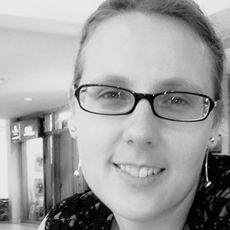
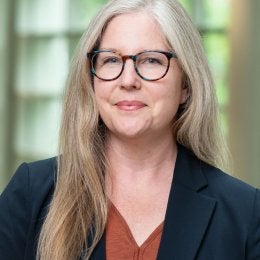
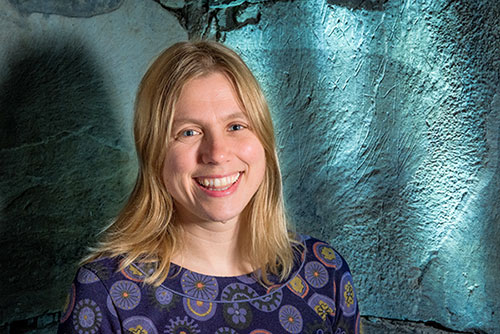
Debarun Sarkar is a Research Fellow affiliated with the Department of Linguistic, Literary and Aesthetic Studies at the University of Bergen. He works on the ALGOFOLK project, examining sociotechnical systems and material-semiotic configurations. His research spans digital culture, AI ethics, urban studies, and cultural studies, with a focus on India and the Global South. Research Interests: Debarun focuses on the intersections between algorithms and folklore, exploring how digital technologies shape labor, creativity, and social structures. He critically analyzes blockchain adoption in India, AI auditing frameworks, and the sociopolitical implications of smart/green city initiatives. His cultural studies work includes examining heavy metal subcultures and hip-hop’s role in capitalist realism. Projects: He was co-PI for Audit4SG (2023), funded by the Notre Dame-IBM Technology Ethics Lab, and contributed to a Learning Analytics in Higher Education project (2022-24). Current work involves the ALGOFOLK project (Research Council of Norway and Trond Mohn Foundation funding). Education: PhD in Sociology from the University of Mumbai, where he served as a UGC Junior/Senior Research Fellow. His doctoral work engaged with urban scale debates in New Town, West Bengal.
Samuel Weber (b. 1940) is a distinguished American philosopher, literary theorist, and psychoanalyst. He holds the Paul de Man Chair at The European Graduate School / EGS and the Avalon Foundation Professor of Humanities at Northwestern University , where he co-directs the Paris Program in Critical Theory. His interdisciplinary work spans psychoanalysis , media studies , theatre theory , and deconstruction , with a focus on the Frankfurt School and French poststructuralism . Weber’s research interrogates the politics of institutions (e.g., University and Discipline Formation ), media’s role in identity construction , and theatricality as a structural metaphor for understanding modernity. His seminal works include Return to Freud , Institution and Interpretation , and Benjamin’s Abilities , where he explores iterability and Benjamin’s conceptual style . He has translated foundational texts by Jacques Derrida ( Limited Inc ) and Theodor Adorno ( Prisms ), and co-founded the journal Glyph , instrumental in introducing the Bakhtin circle to the West. His career bridges academia and practice, having worked extensively as a dramaturge in German opera houses.
Susanne Kopf is a Lecturer at the Institute for English Business Communication at Vienna University of Economics and Business (WU Wien), where she holds a venia docendi in applied linguistics. With a PhD from Lancaster University, UK, she specializes in critical discourse analysis with a focus on digital communication platforms and their social implications. PhD in Applied Linguistics, Lancaster University, UK Venia Docendi (Habilitation) in Applied Linguistics, WU Wien Dr. Kopf's research sits at the intersection of Critical Discourse Studies and corpus linguistic methods, examining how digital platforms shape communication and power dynamics. Her work particularly focuses on Wikipedia as a site of knowledge production, EU representation in digital spaces, and social media discourse surrounding political events like Brexit. Her methodological approach uniquely combines qualitative linguistic analysis with quantitative corpus methods to uncover patterns in large-scale digital communication. Analysis of her recent publications reveals a consistent focus on digital discourse practices across multiple platforms. Her work shows how Wikipedia functions as a transnational public sphere, how social media platforms moderate content through vague policies, and how political events like Brexit are discursively constructed across different cultural contexts. These studies collectively demonstrate how digital communication both reflects and shapes broader social and political dynamics. Oberösterreichische Talentförderungsprämie Alois Mock science prize While specific details about her advising activities aren't provided in the available information, Dr. Kopf's extensive publication record and editorial work (including co-editing 'Discourses of Brexit' with Routledge) demonstrate significant scholarly leadership. Her research has been supported through academic positions at WU Wien that have enabled her substantial contributions to the field of digital discourse studies. Dr. Kopf maintains active research collaborations across European institutions, as evidenced by her multi-authored publications. Though not explicitly mentioned in the provided materials, her research focus on Wikipedia and digital platforms suggests engagement with digital humanities research groups and potentially corpus linguistics laboratories that support her methodological approach to analyzing large-scale digital communication.
Dr. Fatima Khan serves as a Senior Lecturer in Criminology at Manchester Metropolitan University, specializing in the criminalization of British Muslims through counter-terrorism policies and the discursive construction of Muslim 'otherness' in media and political narratives. Her work emphasizes the gendered dimensions of anti-Muslim rhetoric and epistemological justice. Her academic credentials include: PhD in Sociology from the University of Liverpool (2015) MRes in Social Sciences from the University of Liverpool (2010) BA Hons in Sociology and Cultural Studies from Manchester Metropolitan University (2007) Dr. Khan's research spans criminology, Islamophobia studies, and gender analysis, with focus on British Muslim identity formation under securitization frameworks. She examines how counter-terrorism policies create 'risky identities' and explores resistance strategies in everyday interactions, particularly among women. Her methodology combines critical discourse analysis with ethnographic approaches to uncover systemic biases in security narratives. Analysis of her 15 most recent publications (2009-2025) reveals evolving thematic trajectories: early work focused on victimization and identity performance under counter-terrorism (2009-2013), shifting toward micro-level Islamophobia management (2018-2019), and culminating in current research on epistemological justice and racial-colonial literacy (2025). Notable interdisciplinary expansion includes computational work on Pakistani traffic systems (2024), demonstrating methodological versatility while maintaining core sociological inquiry. No scientific awards are documented in the provided materials. As an educator, Dr. Khan employs co-productive teaching methods centered on debate and discussion. She supervises postgraduate research in criminology and related fields, though specific advisees are unlisted. Her office (GM 14 Geoffrey Manton Building) hosts weekly student drop-in sessions during term time, reflecting commitment to accessible mentorship. While research grant details remain unspecified, her sustained publication output indicates active external funding engagement.
Dr. Katrien Pype is an Associate Professor at the Department of Social and Cultural Anthropology at KU Leuven University and an Honorary Research Fellow at the Department of African Studies and Anthropology at the University of Birmingham. Her work bridges anthropology, media studies, and African studies with a particular focus on urban Kinshasa in the Democratic Republic of Congo. She has established herself as a leading scholar in the anthropology of communication technologies, Pentecostalism, and urban social dynamics in Central Africa. Dr. Pype received her academic training at KU Leuven, earning an MA in Literature (German literature), an MA in Social and Cultural Anthropology, and an Advanced Masters in Social and Cultural Anthropology, before completing her PhD in Anthropology in 2008. Her doctoral research examined the production of evangelizing TV drama in Kinshasa. Following her PhD, she held prestigious postdoctoral positions including a Newton International Fellowship at the University of Birmingham (2009-2011) and a Marie Curie Fellowship at MIT and KU Leuven (2011-2013). Dr. Pype's research centers on the social and cultural contours of communication in urban Africa, particularly examining how people make sense of communication technologies in their daily lives and how these technologies impact urban lifeworlds. Her work spans multiple interconnected themes: the anthropology of Pentecostal media and religious expression, digital cultures and social media in African urban contexts, intergenerational dynamics and aging in relation to technology, and the politics of urban space and state-citizen relations. She approaches these topics through long-term ethnographic fieldwork in Kinshasa, employing participant observation and in-depth interviews to understand communication practices and their broader social implications. Her extensive publication record reveals a scholar deeply engaged with theoretical developments in media anthropology while maintaining empirical grounding in Central African contexts. Over time, her work has evolved from studying television media to examining mobile phone cultures, digital technologies, and their implications for social relations, political expression, and religious practice. A consistent thread throughout her scholarship is attention to how communication technologies mediate social relations, power dynamics, and cultural transformations in urban African settings. Newton International Fellowship (2009-2011) Marie Curie Fellowship (FP7-2009) (2011-2013) Odysseus grant (FWO G.A005.14N) FWO-ERC-Runner Up Budget (FWO G.0.E65.14N) Dr. Pype actively mentors students interested in popular culture, technology and society interactions, gender, and aging. She leads a research team working on technology cultures in urban DR Congo and beyond (1960-present), which includes five doctoral and postdoctoral scholars. This project, funded by an Odysseus grant and an FWO-ERC-Runner Up Budget, produces ethnographies of medical, energy, and communication cultures in Kinshasa, Kikwit, and Nakuru. Additionally, she is involved in a comparative research program on New Media Practices in a Changing Africa, funded by the Norwegian Research Council. Beyond her formal mentorship, she fosters academic community through the Congo Research Network, which she founded in 2009 to connect scholars working on the Democratic Republic of Congo. Dr. Pype directs the Congo Research Network, which brings together humanities scholars studying the Democratic Republic of Congo. Her current research team investigates technology cultures across urban Africa, examining how digital technologies intersect with medical practices, energy systems, and communication patterns. This work positions her at the forefront of scholarship on digital transformations in African urban contexts, while maintaining deep connections to historical trajectories and local cultural practices.
Kevin Schilbrack is Professor of Religious Studies in the Department of Philosophy and Religion at Appalachian State University's College of Arts and Sciences, where he bridges philosophical inquiry with religious studies through multi-disciplinary frameworks addressing global religious diversity. His educational foundation stems from the University of Chicago Divinity School, shaping his approach to cross-cultural understanding and methodological rigor in religious studies. Schilbrack's research centers on embodied cognition and social ontology as revolutionary lenses for understanding religion, rejecting supernatural frameworks in favor of practice-based analysis. He champions a tripartite academic model integrating interpretive humanities, explanatory social sciences, and normative evaluation to prevent civilizational clashes in our interconnected world. His work emphasizes how religious meaning emerges from social practices rather than abstract beliefs, with particular focus on realism's revival in religious studies methodology. Analysis of his 15 most recent publications reveals a decisive shift toward discursive realism and social ontology, moving beyond postmodern skepticism to establish religion as a socially emergent phenomenon. Key trends include dismantling supernatural assumptions in philosophy of religion, developing practice-based theories of religious formation, and establishing normative evaluation frameworks for cross-cultural religious comparison—all while engaging cutting-edge cognitive science. His scientific recognition includes: Visiting Fellow at Harvard University Scholar-in-Residence at University of Uppsala Scholar-in-Residence at Vrije Universiteit Amsterdam Schilbrack actively shapes the field through editorial leadership on the Journal of the American Academy of Religion and Sophia, grant evaluation for the National Endowment for the Humanities, and service as external dissertation committee reader. His frequent invitations to speak at Oxford, Yale, Cambridge, and other global institutions reflect his influence in redefining religious studies methodology through embodied cognition frameworks. His collaborative work manifests through international scholarly networks and editorial boards rather than formal laboratories, with significant impact visible in the 15+ publications engaging his scholarship by peers like Mikel Moberg and Mikel Burley.
Maria Roszkowska-Menkes serves as Professor at the Louvain School of Management (LSM), Université catholique de Louvain (UCLouvain), Belgium. She is actively affiliated with the Louvain Research Institute in Management and Organizations (LouRIM), conducting research at the intersection of corporate governance, sustainability reporting, and institutional theory. Her institutional base operates within the College of Deans at Place des Doyens 1, Louvain-la-Neuve, where she contributes to LSM's mission of advancing management scholarship through critical organizational analysis. Her research program centers on Corporate Social Responsibility (CSR) evolution, Environmental, Social, and Governance (ESG) disclosure mechanisms, and non-financial reporting frameworks. She investigates how cultural contexts and regulatory environments shape corporate sustainability practices, with particular expertise in German and Polish business ecosystems. Her work employs institutional theory to analyze decoupling phenomena in sustainability reporting, cross-cultural variations in ESG implementation, and the effectiveness of European non-financial reporting directives. Current projects examine institutional investor influences on disclosure quality and the translation of sustainability rhetoric into operational practices. Analysis of her recent publications reveals a methodological emphasis on comparative institutional analysis, with increasing focus on the implementation gaps between regulatory requirements and corporate practices. Her scholarship demonstrates consistent engagement with critical questions about greenwashing mechanisms, cultural contingencies in CSR adoption, and the political economy of sustainability reporting. The trajectory shows deepening exploration of how varieties of capitalism frameworks explain divergent corporate responses to global sustainability challenges. Maria Roszkowska-Menkes operates within the Louvain Research Institute in Management and Organizations (LouRIM), a multidisciplinary hub fostering research on contemporary organizational challenges. This institute provides the collaborative environment for her investigations into governance-sustainability linkages, supporting both theoretical development and policy-relevant scholarship through its network of European management scholars.
Lissa Paul is a Professor in the Department of Educational Studies at Brock University, St. Catharines, Ontario. Her work bridges literary scholarship and educational theory, focusing on children’s literature, cultural studies, and eighteenth-century Caribbean history. She has authored or edited seven books, contributed to nineteen edited volumes, and published extensively in international journals. Research interests include children’s literature, gender studies, post-colonial discourse, and migration studies. Her SSHRC-funded research on Eliza Fenwick (1766–1840) examines the life and letters of this British author and teacher who migrated to Upper Canada via Barbados, New York, and New Haven. This work intersects with her broader exploration of colonial history and the digitization of endangered archives like the Barbados Mercury Gazette . Scientific awards and grants include founding the Lion and the Unicorn Award for Excellence in North American Poetry (2005), a Lucy Cavendish College Visiting Fellowship (Fall 2013), and multiple research grants, such as a SSHRC Insight Grant (2016–2021) and a British Library Endangered Archives Programme Grant (2017) to digitize the Barbados Mercury Gazette . She has also edited Lion and the Unicorn and co-edited the second edition of Keywords for Children’s Literature (2019).
Julia Affolderbach serves as Professor for Sustainability Transitions at the University of Trier's Faculty of Spatial and Environmental Sciences since 2023, leading the Sustainable Regional and Urban Development department. Previously, she held Assistant Professor positions at Trier (2020-2023) and Lecturer/Senior Lecturer roles at the University of Hull (2014-2020), following postdoctoral work at the University of Luxembourg (2009-2014). Her educational foundation includes a PhD in Geography from Simon Fraser University (2003-2009) and a Diploma in Geography, Botany, and Geology from the University of Cologne and Simon Fraser University (1995-2002). Prof. Affolderbach's research centers on sustainability transitions through urban and regional development lenses, with critical focus on green building , plastics/waste management , and lived sustainabilities . Her methodological approach integrates political economy and environmental economic geography frameworks to examine how global sustainability discourses interact with local practices across Europe, North America, and Australia. This work emphasizes transformative science applications in real-world contexts. Her extensive publication record demonstrates consistent evolution from foundational work on environmental bargaining (2011-2012) toward contemporary analyses of circular economy justice (2021-2024), with green building transitions remaining a central thread. Recent scholarship increasingly addresses plastic crises through educational frameworks and examines digital sharing economies' role in just transitions. Prof. Affolderbach actively shapes academic discourse through committee leadership including Trier University's Senate Committee for Quality Management and Center for European Studies Steering Committee. Her research program attracts significant international funding from Dutch Research Council, ESRC UK, German Research Foundation, and NSF USA grants. She teaches core courses including Transitions: Geography and Education for Sustainable Development: Plastics while supervising graduate theses. She directs the Sustainable Regional and Urban Development research team, fostering interdisciplinary collaboration on sustainability challenges through interactive knowledge generation approaches that bridge academic and practical domains.
Professor Symeon Dagkas serves as Head of the School of Psychology & Life Sciences at the University of East London, specializing in the intersection of physical education, social inclusion, and superdiverse communities. His research critically examines barriers to sport participation among marginalized groups, particularly focusing on Muslim women, ethnic minorities, and youth from diverse socioeconomic backgrounds in East London contexts. His primary research interests center on physical education inclusion , superdiverse health equity , and critical pedagogies for diverse classrooms . Through Bourdieusian frameworks, he investigates how race, religion, and social class intersect to shape physical culture experiences. Key projects include the Newham Every Child a Sport Person (NECaSP) initiative and Schools on the Move intervention, examining family structures, pedagogical practices, and institutional barriers affecting youth physical activity. Analysis of his recent publications reveals a consistent focus on intersectional exclusion mechanisms in sport settings, with increasing emphasis on superdiversity theory and decolonizing physical culture . His work bridges academic research and practical interventions, documenting discrimination patterns among Asian European footballers while developing inclusive pedagogical models for culturally diverse classrooms. Professor Dagkas has led significant funded projects including: Youth Sport Trust's 'Schools on the Move' evaluation Newham Borough's Every Child a Sport Person program BASS Project on Muslim girls' participation His scholarly contributions include edited volumes like 'Families, Young People, Physical Activity and Health: Critical Perspectives' (Routledge, 2016), establishing him as a key voice in critical sport pedagogy. His research teams frequently collaborate with East London community organizations, focusing on: Racialization in physical culture Family health pedagogies Religious inclusion frameworks Urban youth engagement models Current work examines superdiverse adolescents' activity patterns through mixed-methods approaches, developing context-specific inclusion strategies for London's multicultural schools.
Dr. Kodili Henry Chukwuma serves as an Assistant Professor of International Security within Durham University's School of Government and International Affairs, a position he assumed following the completion of his PhD at the University of East Anglia in 2022. His academic trajectory demonstrates consistent excellence in security studies with deep regional expertise in African contexts. Dr. Chukwuma's educational foundation includes: PhD from the University of East Anglia (2022) Undergraduate and postgraduate studies at the University of Ilorin, where he graduated as Valedictorian (2015) His research interrogates the politics of security through critical terrorism studies, postcolonial theory, and examinations of time/space in (in)security frameworks. With a pronounced focus on Nigeria and broader African security dynamics, his work challenges conventional counter-terrorism paradigms by analyzing how threats are constructed discursively and institutionally. He investigates how temporal narratives shape counter-terrorism responses and how spatial concepts like 'ungoverned spaces' function in security discourse. Analysis of his 2020-2025 publications reveals a cohesive scholarly trajectory centered on Nigerian counter-terrorism practices, with increasing methodological sophistication in examining juridical processes, researcher positionality, and archival practices. His work consistently bridges theoretical innovation in critical security studies with empirical investigations of African security contexts, particularly through analyses of terrorism trials, proscription mechanisms, and temporal dimensions of security policy. Dr. Chukwuma's scholarly recognition includes: UEA's Arts and Humanities 'Research Community Award' (2021) UEA's Arts and Humanities 'Best Graduate Article Award' (2020) University of Ilorin's 'Prestigious Scholar Award' (2012-2015) University of Ilorin 'Best Graduating Student Award' as Valedictorian (2015) 'Research in World History Award' (2013) Faculty of Arts 'Intellectual of the Year Award' (2012) While specific advising details remain undisclosed, his current research portfolio demonstrates active scholarly engagement through projects examining terrorism trials in Nigeria, postcolonial spatial theory in critical terrorism studies, and proscription mechanisms for terrorist organizations. His methodological contributions include innovative approaches to archival research and fieldwork adaptation during global crises.
Ranja Hautamäki serves as Associate Professor in Landscape Architecture at Aalto University's Department of Architecture, specializing in sustainable landscape planning and society. Her research bridges academic theory with municipal policy implementation, focusing on nature-based solutions for climate change, biodiversity loss, and urban well-being through green infrastructure development. Her research interests center on planning practices and discourses in landscape architecture, examining how societal conceptions of nature translate into material landscapes. Key areas include climate-adaptive urban greening, carbon-neutral city development, biodiversity conservation in compact cities, and the political dimensions of nature-based solutions. She investigates tensions between ecological imperatives and urban densification through critical analysis of municipal climate action plans and EU environmental legislation. Recent publications reveal strong thematic trends: 75% address urban green infrastructure for climate mitigation/adaptation, with growing emphasis on policy implementation (EU Nature Restoration Law), carbon accounting methodologies, and socio-ecological tradeoffs in dense urban environments. Her interdisciplinary work spans environmental science, planning theory, and political ecology. Lappset scholarship (2025) Puutarhaliiton Golden Badge (2022) Vuolteentori Environmental Structure of the Year (2018) Väitöskirjapalkinto Doctoral Dissertation Prize (2016) Maisema-arkkitehtuuriteko Landscape Architecture Achievement (2016) As thesis supervisor, Hautamäki has guided award-winning master's research including Anni-Mari Anttola's LAPPSET-prize work on Helsinki's grassland networks. Her funded projects focus on green infrastructure for climate adaptation, with recent grants supporting carbon sequestration studies in urban residential yards and EU policy impact assessments. She actively collaborates with municipal planners through projects translating academic research into practical tools like the Green Factor methodology.
Jean Bessette is an Associate Professor and Director of Graduate Studies in the Department of English at the University of Vermont (College of Arts and Sciences). Her interdisciplinary work bridges rhetoric and composition, gender/sexuality studies, archival theory, and digital humanities. She holds a Ph.D. from the University of Pittsburgh (2013) and has been recognized with awards including the Winifred Bryan Horner Outstanding Book Award (2018) and the Rhetoric Society of America Dissertation Award (2014). Her research examines how marginalized communities, particularly lesbian collectives, leverage archives to shape identity and navigate cultural challenges. Notable works include Retroactivism in the Lesbian Archives: Composing Pasts and Futures (2018) and essays on queer historiography and digital methods. Courses taught include Feminist Critical/Rhetorical Theory, Digital Rhetorics, and Expository Writing. Education: Ph.D. in English, University of Pittsburgh (2013) Bessette’s scholarship emphasizes feminist and queer approaches to pedagogy, historiography, and digital archives. Her articles explore topics like archival ethics, queer temporalities, and the intersections of sound studies with activism. Awards also include the CCCC Lavender Rhetorics Award (2017) and the UVM Excellence in Teaching Award (2018). Awards: Winifred B. Horner Book Award, RSA Dissertation Award, CCCC Lavender Rhetorics Award Her work spans institutional critique, digital humanities methodologies, and the politics of memory. Bessette actively contributes to feminist and queer academic communities through teaching, publishing, and interdisciplinary collaboration.
Dr. Kerry H. Alexander is an Assistant Professor of Literacy Education in the Department of Teaching and Learning, Policy and Leadership at the University of Maryland, College Park. She holds a Ph.D. in Language and Literacy Studies from The University of Texas at Austin. Her research focuses on sociocultural dimensions of early literacy, critical literacy, and justice-focused coaching, emphasizing equitable practices in elementary education. Alexander has published extensively in journals such as Language Arts , English Education , and Journal of Education and Social Justice , and co-authored works on teacher education and equity-focused networks. She teaches courses like ‘Materials and Instruction for Creating Skilled and Motivated Readers’ and ‘Culturally Responsive Language and Literacy Teaching.’ Her work integrates community-centered inquiry, exploring how state policies shape classroom practices and teacher identities. Recent research includes playful languaging, neuro-affirming pedagogies, and critical discourse analyses around literacy instruction. Alexander previously taught elementary English Language Arts for ten years and is committed to supporting preservice teachers through mentorship and anti-racist professional discernment. Dr. Alexander leads the Elementary Writing Teacher Development and Practice: From UMD to MS DoE grant, funded by UMD’s College of Education. She mentors graduate students interested in connecting teaching practice with research, particularly those with public elementary school experience. Her lab, part of the Literacy, Language, and Social Innovation (LLSI) initiative, focuses on innovative literacy education strategies.
Dr. Ragnhild Ljosland is a sociolinguist and lecturer at the University of the Highlands and Islands (UHI), affiliated with the Archaeology Institute and Language Sciences Institute at Orkney College. She specializes in Orkney and Shetland dialects, runology, and Norse cultural heritage. Her research explores linguistic shifts, historical discourse, and the interplay between language and identity in the Northern Isles. Education: PhD in Sociolinguistics, Norwegian University of Science and Technology (NTNU), 2008 Cand. Philol. (Master’s equivalent) in Scandinavian Studies Research Interests: Discursive construction of cultural identity Norn to Scots language transition Runic inscriptions and modern rune use Scots language revitalization Orkney witchcraft trials narratives Publications & Media: Over 30 peer-reviewed articles, books, and chapters, including works on Orkney dialect grammar, modern rune carving, and historical linguistics. Featured in documentaries like Mystic Britain: The Monster of Maeshowe and media appearances on Scandinavian heritage. Awards: 2017 Highlands and Islands Student Association Award for Best Research Supervisor. Roles: Module leader for MLitt courses on Orkney dialects, runology, and Norse Studies Editorial board member, Scottish Language journal External examiner, University of Stavanger Labs/Teams: Collaborates on projects like the AHRC-funded Orkney and Shetland Dialect Corpus and community heritage initiatives.