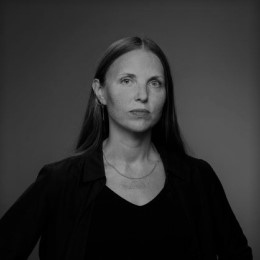
Katarina Winter is a Lecturer in Criminology at the Department of Criminology, Stockholm University. With a PhD in Sociology, her research focuses on knowledge production processes and expert-public dynamics, particularly in the context of digital crime prevention and drug policy. She is affiliated with the Victimological Research Group and contributes to interdisciplinary projects bridging sociology and choreography. PhD in Sociology (2019) from Stockholm University Lecturer in Criminology at Stockholm University Her research explores how digital technologies and biomedical frameworks shape public policy and citizen participation. Key projects include: Promises and consequences in security technology (2023-2025) Digital crime prevention in Swedish municipalities (2022-2023) Risks of injection drug use (2022-2024) Scientific state or state science? (2016-2021) Her publications analyze sociotechnical imaginaries in security apps, media framing of harm reduction, and conversational coproduction mechanisms. She serves as associate editor for Nordic Studies on Alcohol and Drugs and co-founded the Green Criminology working group at Stockholm University.
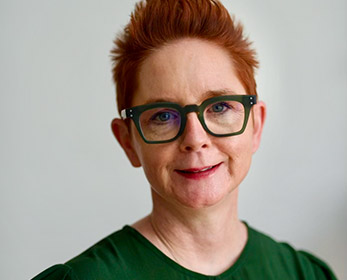
Alina Zils is a Researcher at the Department of Pedagogy, Faculty of Educational Sciences, Martin Luther University Halle-Wittenberg, where she has served since 2020 while completing her doctoral dissertation titled "The Ir_relevance of Gender. An (epistemological) theoretical, methodological and empirical study" under supervision of Prof. Dr. Bettina Hünersdorf and Prof. Dr. Juliane Engel. Education: PhD in Educational Sciences (2018-present), Martin Luther University Halle-Wittenberg Visiting Scholar, Washington University St. Louis (2018) MA in Practice Research in Social Work and Pedagogy, Alice Salomon University Berlin (2011-2014) BA in Social Work, EH Darmstadt (2007-2011) Research Focus: Zils employs poststructuralist and posthumanist frameworks to investigate gender irrelevance in early childhood, reconstructive social research methodologies, and spatial dynamics of playgrounds. Her work critically examines how drug policy, prostitution frameworks, and gender performativity intersect in educational and social work contexts, emphasizing material-discursive practices over identity-based analyses. Publication Trends: Her 2023-2025 publications reveal three converging trajectories: methodological critiques of reconstructive social research, spatial analyses of playground (in)accessibility, and empirical deconstructions of gender in early childhood. These works consistently bridge theoretical innovation with practical implications for inclusive education and social work practice. Scientific Recognition: Alice-Salomon Scholarship Program PhD Completion Scholarship from Catholic University of Applied Sciences Berlin Academic Engagement: Zils teaches undergraduate courses on social work theories, gender in social work, drug policy, and qualitative methods. As deputy doctoral representative (2022-2024), she advocated for PhD candidates while presenting at major conferences including Gender, Work and Organization and DGfE Congresses. Her pre-academic career included 16 years in drug and homeless support services with crisis intervention for marginalized sex workers.
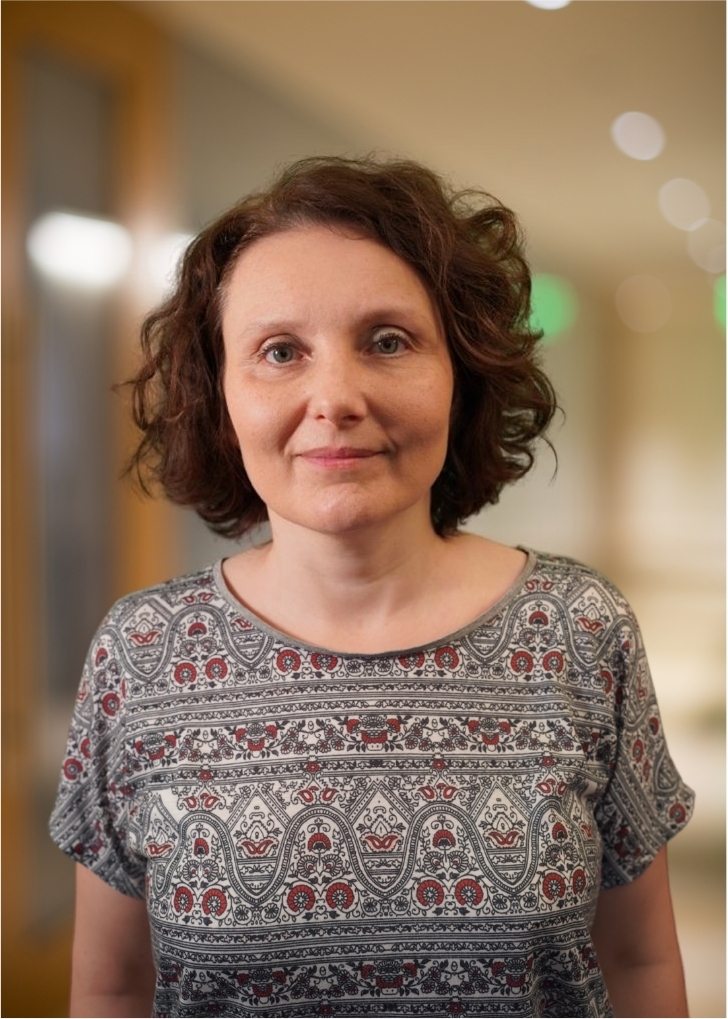
Konstantina Georgelou is an Assistant Professor in Media and Performance Studies at Utrecht University's Department of Media and Culture Studies and affiliated with University College Utrecht. She is also a tutor at DAS Choreography and theory advisor at DAS Theatre (Amsterdam University of the Arts), focusing on lateral thinking in dramaturgy and embodied resistance. Affiliations: Utrecht University University College Utrecht Amsterdam University of the Arts ArtEZ Master of Choreography (2011-2019) Her research interrogates dramaturgy as a political practice, emphasizing collective modes of production, new materialism, and activism at law's margins. She co-founded the The Young postgraduate symposium (since 2014), fostering early-career critical voices through MA student-led exchanges across Europe. Recent projects include Dramaturgy as a Practice of Lateral Movement (2020-), critiquing linear academic progress, and PSi Manifesto Lexicon (ongoing), a multilingual platform redefining performance studies through regional perspectives. Editorial Roles: Co-editor of The Practice of Dramaturgy (Valiz, 2017) Co-editor of Performance Research journal Editorial work at Maska, ArtEZ Press, and Valiz She collaborates widely with artists like Genevieve Murphy, Danae Theodoridou, and Efrosini Protopapa, and has held positions at Utrecht University since 2011, following postdoc work on dance and cognitive neuroscience.
Professor Helena Grehan is Vice Chancellor’s Professorial Research Fellow at the Western Australian Academy of Performing Arts (WAAPA), Edith Cowan University. Since joining WAAPA in February 2024, she brings more than two decades of leadership in theatre and performance studies, ethics, and digital cultural heritage. Education Doctor of Philosophy (Theatre Studies), Murdoch University, 1999 Research Interests Professor Grehan’s scholarship interrogates how contemporary performance, installation and digital arts negotiate ethics and responsibility . Through critical frameworks spanning climate disaster preparedness, post-digitisation futures for vulnerable HASS collections, and the politics of spectatorship, her work connects creative practice with urgent societal challenges. Recent projects explore how extreme weather events reshape artistic practice and how digital technologies can safeguard—and re-imagine—cultural heritage. Publications & Trends Across 2021–2024, Grehan’s output has clustered around four inter-related themes: climate futures, cyber-physical aesthetics, listening ethics, and activist dramaturgy. Book chapters and journal articles repeatedly deploy performative methodologies to examine how art mediates ecological crisis, political refusal, and community resilience, signalling a scholarly trajectory that merges critical theory with applied creative research. Awards & Recognition Fellow of the Australian Academy of the Humanities (2023) Australasian Drama Studies Association Joanne Tompkins Prize for Editing (2021) Murdoch University Vice Chancellor’s Award for Distinguished and Sustained Achievement in Research (2019) Marlis Thiersch Research Award (2011) Rob Jordan Book Prize (2010) Murdoch University Vice Chancellor’s Excellence in Teaching Award (2008) Doctoral Supervision & Grants Grehan has successfully supervised over 20 HDR candidates to completion and currently leads three doctoral projects as principal supervisor, alongside one as associate supervisor. She is Chief Investigator on the ARC Linkage project Life after Digitisation: Future-proofing WA's Vulnerable Cultural Heritage (AUD $1.13 M, 2022–2027), collaborating across performing arts, information science and climate humanities. Labs & Teams At WAAPA she anchors a growing research cluster on Performance, Climate & Digital Futures , convening interdisciplinary teams across performance, design, screen, and digital humanities to prototype new models of creative practice and cultural preservation.
Danielle Drozdzewski is an Associate Professor (Docent) in Human Geography at Stockholm University's Department of Human Geography, where she has been employed since July 2018. Previously, she was a Senior Lecturer in Human Geography at the University of New South Wales, Sydney, Australia. She holds a PhD in Human Geography from UNSW, along with a BEnvSc (Hons Class 1 in Geography) and a BA in Science and Technology Studies, also from UNSW. Her research centers on the geographies of remembrance, with expertise in memory, identity, and migration. She investigates how memories of culture and place are integral to identity formation across scales, from personal to supranational. Her work explores migration motivations and outcomes to understand people-place interactions, primarily using qualitative methods. She has developed QualNotes, a digital research tool for social sciences and humanities, which integrates mobile mapping, interviews, and participant observation. Her recent publications show a strong focus on digital geographies of commemoration, cultural memory in urban contexts, and innovative research methodologies. She has published extensively in journals like Emotions, Space and Society, Geography Compass, and Political Geography, with recent work examining memory practices in Kraków, Poland, and digital memorialization techniques. Editor-in-Chief of Emotions, Space and Society (Impact Factor: 1.983) Former Associate Editor for Geographical Research (2017-2021) Editorial board member for Miscellanea Geographica and GeoView She actively supervises doctoral and master's students across topics including emotional geographies, digital geographies, migration studies, and memory research. Her current research projects include 'Biosocial Walking: Investigating the emotions of urban walking for migrants from the Global South,' 'QualNotes' digital research tool development, and 'The Neighbourhood Revisited: Spatial polarization and social cohesion in contemporary Sweden.'
Prof. Dr. Arne Klawitter is a Professor at Waseda University's School of Humanities and Social Sciences , where he has worked since 2013. Previously, he served as Associate Professor at Kyoto University (2008–2013) and Lecturer at Kyushu University (2006–2008). A graduate of Rostock University (PhD, 2001) and Wilhelm University Münster (Habilitation, 2012), his academic career spans German and Comparative Literatures, with a focus on aesthetic resonance, Enlightenment radicalism, and transcultural encounters. His research interests include German Enlightenment literature , Chinese and Sino-Japanese script aesthetics , Sturm und Drang , and 18th–20th century cultural discourses . He has published extensively on Jakob Mauvillon, Ludwig August Unzer, and Thomas Mann, often connecting literary forms to philosophical and historical frameworks. His 2015 monograph Ästhetische Resonanz won the Prize for Best Monograph from the Japanese Society for German Studies (2015) and was followed by significant awards in 2017. Key Research Projects: Jakob Mauvillon and the German Radical Enlightenment (2019–2026) supported by IZEA Halle and others. Justinus Kerner's Reiseschatten as a Romantic Gesamtkunstwerk (2022–2025) via JSPS Grant-in-Aid. Pacificism: Hybridity and Resistance in Pacific Discourses (2015–2018) funded by JSPS. Professional Memberships: Internationale Vereinigung der Germanistik Japanische Gesellschaft für Germanistik
Tomonori Sano is an Assistant Professor at Waseda University's History Museum, specializing in the history of thought and Japanese history. His academic journey includes positions at Meiji Gakuin University and contract staff roles at Waseda University. He holds a PhD in Literature from Waseda University (2013). Education: PhD (Waseda University, 2013) Current Role: Assistant Professor, Waseda University History Museum Sano's research interests focus on historical thought systems , religious movements in Japan , and archival science . His work explores ideological structures in Shinto and Tenrikyo sects, the interplay of benevolence and capitalism, and institutional archival practices. His recent publications analyze university archives management (2024), the theological dimensions of spiritual desire in Japanese religious texts (2021-2023), and the construction of holiness narratives within modern Japanese sects. Earlier works examine counter-worldviews in Meiji Japan and the symbolic role of suffering in religious discourse. Sano also contributes to public engagement through book reviews and translations, addressing topics like postwar Japanese thought, crisis narratives, and international political issues. His interdisciplinary approach merges historical analysis with cultural critique.
Daniel Andersson is a Lecturer and Postdoctoral Fellow at Linköping University's Department of Theme, specializing in Theme Environmental Change. His research critically examines the sociotechnical dimensions of climate governance, with particular focus on how computer-based simulations shape international climate policy and future visions. His educational background includes: PhD in Technology and Social Change, Linköping University (2020) Master of Political Science, Stockholm University (2014) Bachelor of Political Science, Stockholm University (2013) Andersson's research interests center on the intersection of technological cultures, political notions, and historical processes that shape how the global environment is studied and valued. He investigates how discursive formations and concepts materialize in scientific practices, with current projects examining solar radiation management as sociotechnical visions of desirable futures and negative emissions technologies within the LUNETS research portfolio. His work bridges environmental sociology, Science and Technology Studies (STS), and the history of knowledge. His recent publications reveal a strong focus on climate futures, modeling practices, and energy transitions. The articles demonstrate interdisciplinary engagement with climate science, social theory, and environmental humanities, particularly examining how temporal structures shape climate policy and how sociomaterial configurations influence energy transitions. His work consistently addresses the political and normative dimensions of technological solutions to climate change. Andersson is actively involved in several research initiatives: Lead researcher on an Energy Agency-funded project examining solar radiation management as sociotechnical visions Member of the Linköping University Negative Emission Technologies (LUNETS) research portfolio studying carbon removal's political economy Member of the Center for Climate Policy Research (CSPR) promoting just climate transitions Participant in The Seed Box: A Mistra-Formas Environmental Humanities Collaboratory His current research critically examines how climate models function as future-oriented configurations affecting present environmental governance, with the conviction that deeper understanding of modeling's role in developing visions of desirable futures is essential to prevent models from becoming gatekeepers of political deliberation.
Anna Rigmor Moxnes serves as Associate Professor at the Department of Pedagogy, Faculty of Humanities, Sports and Educational Sciences, University of South-Eastern Norway (USN), where she has held continuous academic appointments since 2010 across USN's predecessor institutions. Her responsibilities include course leadership for master's programs in mentoring and change management, alongside teaching in pedagogical methodology and preschool education. Her academic credentials feature: PhD in Sensing, Thinking and Doing Reflection in Early Childhood Teacher Education (2019) Master in Preschool Pedagogy (2010) Preschool Teacher Education (1991) Advanced studies in mentoring (60 credits) Advanced studies in oral storytelling (30 credits) Moxnes' research pioneers intersections between materiality, ethics, and pedagogy in early childhood contexts. She investigates how child-animal relations, aesthetic environments, and physical objects shape educational experiences through feminist new materialist frameworks. Her work challenges traditional reflective practice models by examining 'diffractive' encounters where destruction, tension, and non-human elements become pedagogical catalysts. Analysis of her 15 most recent publications reveals consistent focus on methodological innovation in educational research, with increasing emphasis on posthuman and material-discursive approaches since 2018. Her scholarship spans journals like Reconceptualizing Educational Research Methodology and Contemporary Issues in Early Childhood, demonstrating interdisciplinary reach across education, philosophy, and gender studies. Her notable recognition includes: Årets barnehageinspirator (The Year's Preschool Inspirator Award, 2019) As an active supervisor, Moxnes guides master's students through structured mentoring frameworks while leading the ViPU research group. Her supervision philosophy emphasizes ethical tension and material engagement as growth opportunities, reflected in students' nomination for her 2019 teaching award. Current research projects explore quality development through process mentoring and nature-based pedagogical transformations. Her leadership extends to the BarneKraft Kompetanse research group, fostering collaborative investigations into children's agency. These platforms support methodologically adventurous work examining how everyday materials and unexpected encounters reconfigure educational possibilities beyond conventional human-centered paradigms.
Ahmet Uysal is an Associate Professor at Nevsehir Haci Bektas Veli University's Faculty of Arts and Sciences, specializing in human and cultural geography. His research examines migration, urban spaces, tourism geography, and socio-spatial relationships, with particular focus on Turkish diaspora communities and cultural landscapes. Education includes: Doctorate in Geography, Istanbul University (2015) Master's in Geography, Istanbul University (2010) Bachelor's in Social Studies Education, Ondokuz Mayis University (1998) Research explores emotional geographies, post-structuralist spatial theory, and everyday practices. Recent publications analyze Industry 4.0's spatial impacts, citizen science methodologies, and discursive constructions of institutional spaces. His work consistently intersects cultural theory with empirical studies of Turkish communities domestically and abroad. Currently supervises 9 Master's students investigating diverse topics like digital geographies, consumer spaces, and tourism development. Graduated 6 students since 2020 with theses on smart factories, transnational identities, and autism geography.
Peeter Torop is a Professor at the University of Tartu, where he works in the Institute of Philosophy and Semiotics, Department of Semiotics. He leads the Transmedia Research Group and has been affiliated with the university since at least 2003, serving as a Full Professor from January 2003 to March 2016 and continuing in his professorial role thereafter. Professor Torop's research primarily focuses on cultural semiotics, with particular emphasis on: The Tartu-Moscow School of Semiotics and Yuri Lotman's theoretical legacy Intersemiotics and translation studies across different sign systems Transmediality and the translation of emotions across media The semiosphere concept and cultural dynamics The relationship between cultural heritage and digital reading practices His scholarly work demonstrates a strong trajectory in developing semiotic theory while applying it to contemporary cultural phenomena, particularly in the digital age. Torop has made significant contributions to understanding how cultural texts function across different media platforms and how meaning is preserved and transformed in digital environments. Professor Torop has published extensively, with 69 publications that have received 69,419 reads and 847 citations. His work spans multiple languages including English, Russian, Spanish, Portuguese, French, Italian, and Estonian, reflecting his international scholarly impact. As leader of the Transmedia Research Group, Torop has been involved in developing open access educational materials for humanities instruction in Estonian and Russian-language secondary schools, demonstrating his commitment to applying theoretical insights to practical educational contexts.
Dr. Maureen K. Michael is a Senior Lecturer at the University of Stirling and Co-Director of the MSc Professional Education and Leadership programme. Her interdisciplinary work bridges arts practice, social science, and education, examining how professionals learn through material and visual methods. She holds leadership roles in international academic bodies including the Visual Sociology Research Committee (ISA) and maintains professional affiliations with the General Teaching Council Scotland and Scottish Educational Research Association. Michael's research explores: Arts-based methodologies in educational research Sociomaterial analyses of learning environments Teacher development and feedback literacy Visual ethnography of professional practice She employs collage, photography, and relational drawing to investigate how objects and spaces shape pedagogical encounters. Her scholarly recognition includes: Research Culture Award (2020) Outstanding Research Mentor Award (2024) Staff Recognition Award (2017) Senior Fellowship (Higher Education Academy) Michael contributes to academic capacity-building through writing retreats and workshops, notably developing novice academics' feedback literacy. Her published work demonstrates consistent engagement with pedagogical innovation, materiality studies, and arts-research integration across diverse educational contexts.
Dr. Rishi Krishnamoorthy is an Assistant Professor in the Department of Curriculum, Teaching and Learning at the University of Toronto's Ontario Institute for Studies in Education. Their academic trajectory includes previous positions as Assistant Professor at Pennsylvania State University and postdoctoral work at Rutgers University. They hold leadership roles including Co-President of the Network of the Learning Sciences in Canada and committee memberships in several international education organizations. Their research program examines sociopolitical dimensions of science education through three interconnected strands: Co-designing justice-oriented science curricula with youth and teachers Desettling colonial methodologies in educational research Examining how Hindu supremacy shapes diasporic South Asian youth identities This work integrates critical race, feminist, queer, and decolonial frameworks to transform science education. Analyses of their scholarly publications reveal consistent themes: Decolonizing science curricula and research methods Examining power dynamics in learning environments Developing critical approaches to data and science practices Centering relational ontologies in educational research Addressing sociopolitical dimensions of STEM education Their work consistently challenges Eurocentric knowledge systems while advancing justice-oriented pedagogies. Notable scientific recognition includes: Best Poster Award, International Conference of the Learning Sciences (2021) Best Paper Award, Canadian Science Education Research Group (2020) Their research has secured substantial grant support from organizations including: Canadian Institutes of Health Research (Community-engaged health equity projects) National Science Foundation (Science learning in community-relevant contexts) NYU Steinhardt Global Research Incubator (International participatory design) They teach graduate courses in critical research methodology and science education, mentoring students in justice-oriented scholarship.
Ben Dalton is a Principal Lecturer at Leeds Beckett University, affiliated with the Leeds School of Arts and the Leeds Arts Research Centre (LARC). Their academic work bridges art, design, and technology, focusing on communication design and critical infrastructure studies within digital publics. Ben Dalton's educational background includes training at prestigious institutions: MIT Media Lab (design, ubiquitous computing, and mobile sensor networks) Arhus University Electron-Molecular Interaction group University of Leeds Spintronics and Magnetic Nanostructures lab Jim Henson's Creature Shop, London Ben's research explores identity design and critical infrastructure through diffractive methodologies, feminist science and technology studies, and material-discursive agential realism. Their work investigates identity performance in digital public spaces, developing prototype apps and services that explore contemporary identity experiences. They have examined identity construction in workplace and social spaces through collaborative projects with partners including the BBC and international art institutions. Their research extends to digital public space as a growing field encompassing critical infrastructures, personal data stores, networked commons, and construction of sustainable digital publics. Ben has developed numerous interactive media applications with commercial and government partners, including urban big screen interactions, mobile city geolocation games, and festivals. Ben Dalton's publication record demonstrates a consistent focus on the intersection of identity, digital infrastructure, and public space. Their work spans from early investigations into audio-based self-localization and spin mixing to recent explorations of queer joy as a digital good and collaging against women's invisibility in climbing magazines. A notable trend across their publications is the use of artistic and design methodologies to critically examine digital infrastructure and identity politics. Their research often employs diffractive approaches that blend technical, social, political, and aesthetic perspectives on identity in networked environments. Ben has secured significant research funding for their work, including: ESRC Network funding for "Queer Joy as a Digital Good" AHRC Creative Exchange Knowledge Exchange Hub Two EPSRC-funded research projects on visualizing pedestrian usage patterns and wearable computing sensors Hewlett-Packard funding for GPS music city archive app development VERDIKT (Research Council of Norway) funding for the "Data is Political" project As an academic and artist, Ben Dalton has led numerous collaborative projects and workshops internationally, including presentations at ESA Convention House, FACT Liverpool, MAP University of Regina, DUB University of Washington, Chaos Communication Congress, and many other venues worldwide. Their work often involves interdisciplinary teams and combines academic research with artistic practice to explore the political dimensions of digital infrastructure.
Professor Justyna Deszcz-Tryhubczak is a distinguished academic at the University of Wrocław's Faculty of Modern Languages, Department of English Literature and Comparative Studies. She co-founded the Children's and Youth Literature and Culture Workshop at the Institute of English Studies in 2003, which she directed from 2013 to 2022 and remained a member until 2024. She serves as co-founder and member of the Program Council of the Children's and Youth Literature Research Center and is affiliated with the Center for Climate Literacy at the University of Minnesota. Professor Deszcz-Tryhubczak's research spans contemporary children's literature and culture, childhood studies, posthumanism, and participatory research with children as co-researchers. Her work explores intergenerational relations, new materialist approaches to children's literature, the Anthropocene, and children's poetry. She advocates for children's voices in literary canon formation and develops methodologies that position children as active participants rather than passive subjects in research. Her scholarly output reveals consistent engagement with radical fantasy fiction, intergenerational solidarity, and the politics of representation in children's literature. The publications demonstrate an evolving trajectory from traditional literary analysis toward more innovative, interdisciplinary approaches incorporating new materialism, posthumanism, and participatory methodologies that challenge conventional research paradigms in childhood studies. 2023 Edited Book Award from the International Research Society for Children's Literature for 'Intergenerational Solidarity in Children's Literature and Film' (2021) Professor Deszcz-Tryhubczak has secured significant research funding including a Marie Skłodowska-Curie Individual Fellowship (€97,727.40), a Bekker Programme grant (86,000 PLN), and leadership roles in major international projects including Erasmus Mundus programs (totaling over €9.6 million), 'Seen and Heard' (€400,000), and 'CoREM' (€372,505). She serves as review editor for the International Research in Children's Literature journal and on editorial boards for Book 2.0 and multiple publication series. As coordinator of the Erasmus Mundus International Master programs and principal investigator for the 'Seen and Heard' and 'CoREM' projects, Professor Deszcz-Tryhubczak leads international research teams connecting the University of Wrocław with institutions across Europe and beyond. Her work with the Children's and Youth Literature and Culture Workshop has fostered a vibrant research community focused on innovative approaches to children's literature studies.