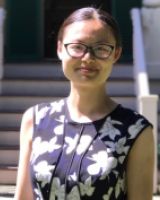
Dr Xiaoyu Xia is a Senior Lecturer in the Department of Economics at the University of Essex, School of Social Sciences. His research spans applied economics, behavioral economics, and econometrics, with a focus on market dynamics, labor economics, and decision-making processes. Email: xiaoyu.xia@essex.ac.uk Office: 5B.122, Colchester Campus Research Interests include: Industrial organization and market entry Labor economics and firm behavior Behavioral analysis in economic decision-making Family network economics Education economics Transportation policy His publications demonstrate interdisciplinary applications of economic theory to real-world problems, including transportation safety, college admissions, and family co-residence patterns. Teaching Responsibilities : EC101 Business Economics Supervision : Current: Omar Mohamed Abdelmohsen Hussein (PhD Economics) Previous: Ariya Phaokrueng (PhD Economics) with thesis on technological change impacts in Thailand
Philip Neary is a Senior Lecturer in the Department of Economics at Royal Holloway, University of London. He is affiliated with the Centre for Mathematical and Theoretical Economics. His research focuses on algorithmic economics, game theory, and network economics, with contributions to the UN Sustainable Development Goals. He has published extensively on topics such as stable matchings, public goods provision in networks, and computational complexity in economic models. Neary's recent work includes advancing deferred acceptance algorithms, analyzing stable matchings under constraints, and exploring Tiebout sorting in digital communities. His research bridges theoretical economics with computer science, emphasizing practical applications in market design and resource allocation. He will teach Industrial Economics, Machine Learning and Data Mining, and The Economics of AI starting in 2025/26. His scholarly contributions include 14 peer-reviewed articles, with a focus on interdisciplinary approaches combining economics, computer science, and network theory.
Chad Vidden is a Professor of Mathematics at the University of Wisconsin - La Crosse, specializing in the intersection of mathematics with AI, big data, and applied computational methods. He holds a Ph.D. in Applied Mathematics from Iowa State University (2013) and a B.S. in Mathematics from Minnesota State University - Mankato (2007). His research focuses on machine learning applications, numerical analysis, and data-driven solutions for diverse fields like sports analytics, marketing, and computational mathematics. He has mentored numerous undergraduate research projects, including exoplanet detection via Fast Fourier Transform and sports ranking using linear algebra. Vidden has co-authored textbooks such as From Data to Decision (2018, 2023) and contributed to over a dozen peer-reviewed articles. His work bridges theoretical mathematics with practical industry collaborations, emphasizing undergraduate research and partnerships with local businesses. Education: Ph.D. Applied Mathematics, Iowa State University, 2013 B.S. Mathematics, Minnesota State University - Mankato, 2007 Research Interests: Machine learning, numerical methods, computational mathematics, and interdisciplinary applications of data science. His current focus includes AI-driven sports performance analysis, market segmentation modeling, and optimization algorithms for real-world problems. Publications Overview: Recent work spans sports analytics (e.g., soccer match demands), marketing strategy (e.g., brand crisis impact analysis), and numerical methods (e.g., discontinuous Galerkin techniques). These studies highlight his dual expertise in applied math and data science. Advising & Grants: Supervised over a dozen undergraduate research projects, including award-winning studies on sports statistics and optimization. Collaborates with local industries to integrate academic research with practical solutions. Labs/Teams: Actively involved in the UWL Mathematics & Statistics department's research initiatives, though no dedicated lab is explicitly named.
Dr. Laurie Drabble is Professor in the School of Social Work at San José State University and Director of the Center for Applied Research in Human Services (CARHS). An Affiliate Scientist with the Alcohol Research Group, she collaborates with researchers at Columbia, Yale, and Glasgow Caledonian University. Her NIH-funded scholarship examines substance use disparities among marginalized populations, particularly sexual minority women, investigating risk factors, policy impacts, and treatment approaches. Drabble's research explores how state policies, minority stress, and protective factors like spirituality influence alcohol and drug use patterns. Her methodological expertise includes community-university partnerships, addiction treatment system analysis, and longitudinal survey designs. Previously, she served as Executive Director of the California Women's Commission on Alcohol and Drug Dependencies and provides national technical assistance on women's substance use issues. Recent publications analyze pandemic-related substance use changes, LGBTQ-affirmative interventions, and the impact of marriage equality policies. Her work appears in journals including Drug and Alcohol Dependence , PLOS ONE , and Social Science & Medicine .
Dr. Robert Reams is a Professor and Chair of the Department of Mathematics at SUNY Plattsburgh. He holds a B.A. in Mathematics from Trinity College Dublin, followed by an M.A. and Ph.D. in Mathematics from University College Dublin. His academic journey includes postdoctoral work in mathematical biology and teaching positions at institutions in Ireland, England, and the U.S., including the National University of Ireland, Galway. He joined SUNY Plattsburgh in 2008. Dr. Reams teaches Introductory Statistics (MAT161) and other mathematics courses, including Statistical Inference (MAT362), Probability Models (MAT365), and Financial Math (MAT460). His research focuses on matrix theory, copositive matrices, magic squares, and applications of matrix theory to mathematical biology. His homepage provides detailed insights into his pure mathematics research. His research interests span pure mathematics, with notable contributions to copositive matrices, matrix scaling, and stochastic matrix properties. He has explored interdisciplinary applications in distance geometry and molecular conformations. His work often intersects linear algebra, optimization, and spectral theory. Contact details include his office at 244B Hawkins Hall, SUNY Plattsburgh, and email addresses: rream001@plattsburgh.edu and robert.reams@plattsburgh.edu. Additional resources include his faculty website and publications on topics like matrix completion and inverse eigenvalue problems.
Dr. Xiaofeng Gu is a Professor of Mathematics at the University of West Georgia's Dr. Perry College of Mathematics, Computing, and Sciences. He earned his PhD in Mathematics from West Virginia University in 2013. His research specializes in combinatorics and graph theory, with particular focus on spectral properties of graphs and combinatorial optimization. Dr. Gu's research explores fundamental properties of graphs through combinatorial and spectral methods, investigating connectivity parameters, cyclic orderings, and extremal graph properties. His recent work demonstrates advanced applications of spectral graph theory to solve complex problems in discrete mathematics. Analysis of Dr. Gu's publications reveals consistent focus on spectral graph theory, combinatorial structures, and connectivity properties. His work applies mathematical rigor to problems in graph characterization, random graphs, and discrete optimization, with recent emphasis on spectral radius applications and graph connectivity measures.
Young Ki Shin is a Professor of Economics at McMaster University, where he has established himself as a leading researcher in econometrics and economic theory. His work bridges theoretical developments with practical applications in statistical methods for economic analysis, with significant contributions to quantile regression, causal inference, and economic modeling. His educational background includes a Ph.D. in Economics from the University of Rochester (2002-2007) and a B.A. from Seoul National University (1996-2001). Professor Shin's research focuses on several key areas: causal inference and identification , where he develops methods to determine cause-effect relationships; modern computational algorithms and inference , creating efficient statistical methods for large datasets; and applications of statistical decision theory to economic problems. His work often addresses computational challenges in applying econometric methods to massive datasets. His recent publications demonstrate a strong focus on quantile regression methods, with several papers addressing computational challenges in applying these techniques to large datasets. He has made significant contributions to generalized method of moments (GMM) estimation and developed innovative approaches to monotone signaling equilibria in matching markets. His research spans from theoretical econometrics to applied economic questions, including analyses of government spending multipliers during economic crises. As an educator, Professor Shin has taught a comprehensive range of econometrics courses at both undergraduate and graduate levels, including Econometrics I, Econometrics II, and Applied Econometrics, reflecting his research expertise in both theoretical foundations and practical applications of econometric methods.
Persi Diaconis is the Mary V. Sunseri Professor of Statistics and Professor of Mathematics at Stanford University, with a joint appointment in the Symbolic Systems Program. He has held these positions since 1998 and previously served as a professor at Harvard University and Cornell University. His work bridges mathematics and statistics with applications across scientific computing and data analysis. Diaconis is renowned for his research in probability theory, combinatorics, and group theory, with a specialty in rates of convergence of Markov chains . His current research focuses on adapting mathematical developments to practical applications in large real-world simulations. He has opened up new areas in Markov chain theory including rates of convergence to quasi-stationarity and the study of "features" in chains. His work extends to statistical analysis of graph and network data, generalizations of de Finetti's notion of exchangeability, and connections between statistics and graph limit theory. An analysis of his recent publications reveals a strong focus on Markov chain theory, combinatorial probability, and statistical applications. His work demonstrates interdisciplinary connections between pure mathematics, theoretical statistics, and practical computing problems. Diaconis frequently collaborates with researchers like Sourav Chatterjee, Susan Holmes, and Jason Fulman on problems ranging from card shuffling to network analysis. Honorary doctorate from University of St Andrews Mary V. Sunseri Professorship at Stanford University Fellow of the Center for Advanced Study in the Behavioral Sciences (1999-2000) Diaconis has advised numerous doctoral students including Michael Howes, Zhiqi Li, Andrew Lin, and Nathan Tung. His research has been supported by various grants that enable his work on Markov chains, combinatorial probability, and statistical theory. He has developed important connections between theoretical mathematics and practical statistical applications, influencing both academic research and real-world problem solving. While not explicitly mentioned as leading a specific lab, Diaconis collaborates extensively with researchers across Stanford and globally. His work with the Symbolic Systems Program connects mathematics with cognitive science and computer science. His research group focuses on probabilistic and combinatorial problems with applications to data science and scientific computing.
Louis Durlofsky is the Otto N. Miller Professor of Energy Science & Engineering at Stanford University's School of Earth, Energy & Environmental Sciences. He specializes in subsurface flow modeling, reservoir simulation, and carbon sequestration. His research bridges computational methods with practical applications in energy systems and environmental science. Education: PhD in Chemical Engineering from MIT (1986), with earlier degrees from MIT and Penn State. He has held academic and industry roles, including Chevron (1987–1999) and Stanford since 1998, where he chaired the Energy Resources Engineering department (2006–2012). Research Interests: Focus on advanced reservoir engineering, data assimilation, machine learning for subsurface modeling, and closed-loop reservoir management. His work integrates deep learning surrogates, reduced-order models, and geological parameterization to address challenges in CO2 storage and energy systems optimization. Awards: Member of the National Academy of Engineering, SPE Distinguished Member, and multiple best-paper awards in geosciences and reservoir engineering. He leads the Stanford Smart Fields Consortium and Reservoir Simulation Research programs. Teaching: Courses on subsurface flow simulation, reservoir engineering, and energy-environment interactions. Advises over 20 PhD/Master’s students and postdocs, contributing to next-generation energy research. Labs & Collaborations: Directs industrial affiliates programs and collaborates globally on initiatives like the Stanford Center for Carbon Storage. Active in editorial roles for Computational Geosciences and Mathematical Geosciences .
Mohammad Akbarpour is an Associate Professor of Economics at Stanford University's Graduate School of Business, with a courtesy appointment as Professor of Computer Science in the School of Engineering. His academic work bridges economics and computer science, focusing on computationally complex economic problems. Professor Akbarpour's research centers on market design, redistributive mechanisms, and network theory. He frequently employs computational tools from computer science to address challenging economic questions. His work spans auction theory, matching markets, organ exchange systems, vaccine allocation frameworks, and pandemic policy response. He has made significant contributions to understanding how markets can balance efficiency with redistribution in contexts like kidney exchange, school choice, and energy crises. His publication record demonstrates consistent application of theoretical economic frameworks to real-world problems. Many papers appear in top economics journals including Econometrica, Journal of Political Economy, and Quarterly Journal of Economics, addressing how market mechanisms can solve problems in healthcare, education, and public policy. His work on credible auctions and market design has received significant recognition in the field. Best Paper Award at the Conference on Economics and Computation (EC'18) Featured in Quartz's list of '12 economics research that shaped our world in 2018' Lead Article in the Journal of Political Economy for 'Thickness and Information in Dynamic Matching Markets' Professor Akbarpour has collaborated extensively with leading economists including Scott Kominers, Piotr Dworczak, Shengwu Li, and Alvin Roth. His interdisciplinary approach combines economic theory with computational methods to address pressing societal challenges, particularly in healthcare markets and pandemic response. He has contributed to public discourse through media appearances discussing kidney transplantation policy, auction design, and pandemic reopening strategies.
Dr. David Delacretaz is a Lecturer in Economic Theory at the University of Manchester's Department of Economics. His research develops theoretical frameworks for market design problems including matching mechanisms and allocation systems. Research focuses on: Design of efficient matching algorithms Refugee resettlement mechanisms Stability in two-sided markets Impossibility theorems in trade Recent work combines Walrasian equilibrium concepts with Vickrey auction principles to address practical allocation problems, with applications in humanitarian logistics and resource distribution systems.
Dr. Kenan Zhang is a Tenure Track Assistant Professor at EPFL's School of Architecture, Civil and Environmental Engineering, leading the Laboratory for Human-Oriented Mobility Eco-system (HOMES). She holds dual roles in teaching Civil Engineering and contributes to the EDCE and SGC programs. Her research focuses on mathematical modeling, optimization, and operations management of urban transportation systems, with emphasis on emerging mobility services and technologies. Education: BSc in Civil Engineering, Tsinghua University MSc in Architecture-Engineering-Construction Management (AECM), Carnegie Mellon University PhD in Civil Engineering (Transportation System Analysis & Planning) and second MSc in Statistics, Northwestern University Postdoctoral Researcher at ETH Zurich Research Interests: Urban transportation systems, optimization algorithms, sustainable mobility, traffic flow theory, and emerging technologies like autonomous vehicles and MaaS platforms. Her work integrates data-driven approaches with theoretical models to address real-world challenges in urban mobility. Awards & Recognition: CEE Rising Star Award COTA Best Dissertation Award TRB Committee Membership (ACP 50) Editorial Advisory Board, Transportation Research Part C Teaching & Advising: Supervises PhD students Liu Xuhang & Ma Xinyu. Teaches courses on urban transport systems, transportation network modeling, and seminars in civil/environmental engineering. Active in curriculum development for interdisciplinary mobility studies. Labs & Collaborations: Directs HOMES Lab exploring human-centric mobility ecosystems. Engages in international collaborations and policy analysis for sustainable transport solutions.
Jiajin Li is an Assistant Professor in the Operations and Logistics Division at the UBC Sauder School of Business, concurrently affiliated with the Institute of Applied Mathematics (IAM) at the University of British Columbia. He holds a BSc in Statistics from Chongqing University and a PhD in Systems Engineering and Engineering Management from the Chinese University of Hong Kong (CUHK). Prior to joining UBC, he was a postdoctoral researcher at Stanford University's Department of Management Science and Engineering. His research focuses on continuous optimization , design and analysis of optimization algorithms , and machine learning , with emphasis on nonsmooth/nonconvex optimization, minimax problems, and distributionally robust optimization. His work bridges theoretical foundations with applications in graph data analysis and algorithmic stability. He teaches courses including Logistics and Operations Management (BCom), Seminar on Theoretical Developments in Management (PhD), and Optimization Theory and Applications (PhD). He actively seeks PhD students with strong mathematical or coding backgrounds through UBC Sauder or IAM programs. Key research contributions include advancements in primal-dual balancing for minimax optimization, stability evaluation via distributional perturbation analysis, and outlier-robust algorithms for graph data. His methodologies often integrate optimal transport theory and subdifferential analysis. He is affiliated with multiple research communities, including the IEEE and conferences like NeurIPS, ICML, and ICLR. His work emphasizes algorithmic robustness and scalability in complex optimization landscapes.
Mark Rudelson is a Professor of Mathematics at the University of Michigan, part of the College of Literature, Science, and the Arts (LSA). He holds a Ph.D. from the Hebrew University of Jerusalem (1997) and an M.Sc. from Leningrad Polytechnical Institute (1988). His research focuses on geometric functional analysis, probability theory, and random matrix theory, with contributions to the study of high-dimensional normed spaces, convex bodies, and spectral properties of random graphs and matrices. Rudelson's work bridges pure mathematics and applications in data science and signal processing. His research interests include the geometric and spectral properties of random matrices, convex geometry, and the interplay between probability and high-dimensional structures. Notable contributions include studies on the invertibility of random matrices, delocalization of eigenvectors, and the circular law for sparse matrices. Rudelson has collaborated widely, with impactful papers in top journals such as Annals of Mathematics , Probability Theory and Related Fields , and Advances in Mathematics . Rudelson's recent work explores the volume estimation of convex bodies, sparse matrix theory, and applications of random matrix techniques to problems in statistics and machine learning. His research often addresses foundational questions in mathematics with implications for computational and theoretical data analysis.
Dana Yang is an Assistant Professor in the Department of Statistics and Data Science at Cornell University. She joined Cornell in Spring 2022 after completing a Simons-Berkeley fellowship focusing on computational complexity of statistical inference at UC Berkeley. Previously, she was a postdoctoral associate at Duke University’s Fuqua School of Business. Her education includes a B.S. in Mathematics from Tsinghua University and M.A./Ph.D. in Statistics from Yale University. Yang’s research interests span statistical inference, machine learning, and computational complexity. She focuses on problems involving planted structures (e.g., matching recovery), privacy-preserving algorithms, high-dimensional statistics, and graph theory. Her work bridges theoretical foundations with practical applications in data science. Her recent articles explore phase transitions in statistical recovery, private convex optimization, and algorithmic fairness. Notable contributions include studies on planted matching problems, community detection efficiency, and secure sequential learning protocols. No scientific awards were explicitly mentioned in the provided materials. Her advising history and grant involvement remain unspecified in the current data. Dana Yang is affiliated with Cornell’s Comstock Hall facility, though specific lab or team affiliations were not detailed.