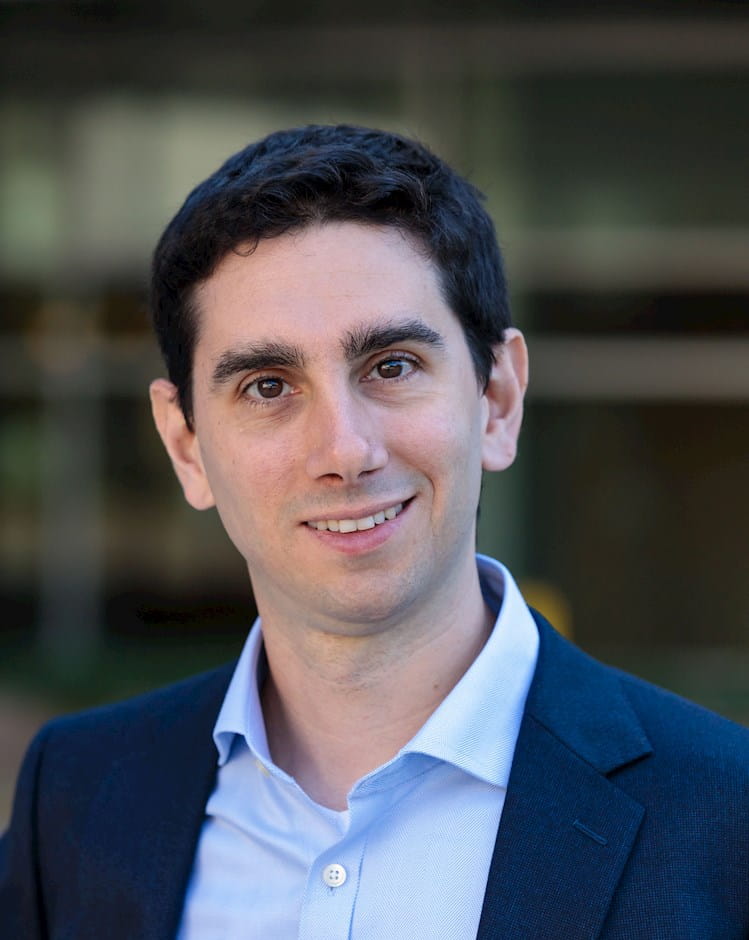
Maria Chudnovsky is a Professor in the Department of Mathematics at Princeton University. Her research focuses on structural graph theory, particularly in areas such as graph decomposition, induced subgraphs, and algorithmic applications of graph structure. She is renowned for her contributions to understanding perfect graphs, even-hole-free graphs, and the Erdős–Hajnal conjecture. Her work often explores the interplay between graph structure and algorithmic efficiency, with applications in combinatorial optimization and theoretical computer science. Notable contributions include foundational results on tree decompositions, chromatic number bounds, and the structure of metrizable graphs. Recent research trends include investigations into induced subgraph obstructions, tree independence numbers, and the properties of sparse graphs. She has published extensively on topics such as clique-stable set separation, rainbow matchings, and the complexity of graph coloring problems in restricted graph classes. Chudnovsky has been involved in significant collaborative projects, including work funded by the DMS-EPSRC grant 'The Power of Graph Structure' (2021). Her research frequently bridges theoretical insights with practical algorithm design, contributing to both fundamental and applied areas of discrete mathematics.
Thatchaphol Saranurak is an Assistant Professor at the University of Michigan , specifically in the Computer Science and Engineering Division . Prior to this, he earned his PhD in Computer Science from KTH Royal Institute of Technology in 2018 under Danupon Nanongkai , followed by a postdoctoral research assistant professorship at Toyota Technological Institute at Chicago (2018-2020). Research Focus : His work bridges fundamental problems in graph theory, including Dynamic graph algorithms for max-flow and min-cut Expander graph decompositions and their applications Robust algorithms against adaptive adversaries Continuous optimization for combinatorial problems Scientific Contributions : He has made breakthroughs in deterministic graph algorithms, notably improving vertex connectivity bounds, developing near-linear time Gomory-Hu trees, and advancing dynamic matching algorithms. His research has been recognized by Sloan Research Fellowship NSF CAREER Award Presburger Award 2023 Teaching : He teaches courses like Expander and Graph Algorithms and Introduction to Algorithms (Winter 23, Winter 25). His lecture videos and notes are publicly available. Collaborations : He works with leading researchers including Sayan Bhattacharya , Joakim Blikstad , and Jason Li , with affiliations to institutions like TTIC , KTH , and SODA conferences.
Minsu Kim is a CIFAR AI Safety Post-doc Fellow at KAIST and Mila, collaborating with Prof. Yoshua Bengio, Prof. Sungjin Ahn, and Prof. Sungsoo Ahn. His work bridges System 2 Deep Learning, Bayesian posterior inference, and combinatorial optimization. Ph.D., Industrial Engineering, KAIST (2025) M.S., Electrical Engineering, KAIST (2022) B.S., Mathematics and Computer Science (Dual Degree), KAIST (2020) Kim's research focuses on enabling AI systems to measure uncertainty, represent causality, and perform sequential reasoning for safety-guaranteed planning. His methodology integrates GFlowNets and diffusion models with off-policy amortized inference, targeting applications in scientific discovery , hardware design optimization , and large language model alignment . Recent work explores Bayesian posterior inference through GFlowNets, aiming to unify deep learning with probabilistic reasoning. His 15 most recent publications (2025–2024) reveal a trend of combining combinatorial optimization with generative models for tasks like molecular graph discovery, vehicle routing, and neural architecture search. He also investigates diffusion samplers for Bayesian inverse problems and symmetry-based neural methods (Sym-NCO) to enhance sample efficiency. Jang Yeong Sil Fellowship (2025) KAIST Presidential Best Ph.D. Thesis Award (2025) Qualcomm Innovation Fellowship (2023) DesignCon Best Paper Awards (2021–2022) Kim's collaborations span KAIST's Industrial Engineering department and Mila's AI research groups. He actively contributes to academic peer review for top conferences (NeurIPS, ICML, ICLR) and journals (IEEE TNNLS, TPAMI), emphasizing the intersection of AI safety , uncertainty quantification , and systemic reasoning .
Dongwoo Kim is a researcher affiliated with Hanyang University, ERICA Campus (Department of Electronics and Communication Engineering) and has previously collaborated with institutions like POSTECH , Chungnam National University , and Microsoft . His work spans interdisciplinary domains in Computer Science and Engineering . Hanyang University, ERICA Campus - Department of Electronics and Communication Engineering POSTECH - Power Analog Electronics & Semiconductor Devices Lab Microsoft Chungnam National University Kim's research focuses on formal verification of automotive control software, deep learning applications in environmental monitoring, 3D modeling for indoor positioning, and machine learning for signal processing. His recent publications highlight advancements in graph neural networks (GNNs), including analyzing oversmoothing and gradient dynamics, as well as developing geometric vision-language models with domain-agnostic encoders. His 15 most recent articles (2023-2025) address topics like: Optimizing hybrid electric vehicle engine performance 3D modeling for indoor localization GNN training stability UAV-based environmental monitoring Algorithm difficulty prediction for programming problems Millimeter-wave antenna design Kim collaborates with researchers in software engineering , signal processing , and environmental science domains. His work intersects formal methods , applied machine learning , and embedded systems research.
Antonio De Rosa is an Associate Professor in the Department of Decision Sciences at Bocconi University, Italy. Previously, he held positions at the University of Maryland, College Park (2020–2024), and the Courant Institute of Mathematical Sciences, New York University (2017–2020). He earned his Ph.D. in Mathematics from the University of Zurich in 2017 under Camillo De Lellis and Guido De Philippis. Education: Ph.D. in Mathematics, University of Zurich (2017). His research spans Geometric Analysis , Partial Differential Equations , Calculus of Variations , Geometric Measure Theory , Optimal Transport , and Non-convex Optimization . Recent work focuses on anisotropic geometric variational problems, including existence, regularity, and uniqueness of anisotropic minimal surfaces and CMC (constant mean curvature) surfaces. He has also contributed to interdisciplinary applications in Explainable Risk Assessment and Data Analysis . The 15 most recent articles highlight advancements in anisotropic surfaces , min-max theory , optimal transport , and mathematical programming (e.g., K-means clustering, linear programming). Key trends include the intersection of geometric measure theory with nonlinear PDEs and applications in machine learning and transportation networks . Scientific Awards and Grants: 2023 Maryland Research Excellence Carlo Ciliberto Prize (2019) ERC Starting Grant ANGEVA (101076411, 2023–2028) Air Force Office of Scientific Research (AFOSR) grant (FA9550-23-1-0123) NSF CAREER Award (DMS-2143124) NSF DMS Awards (DMS-1906451, DMS-2112311) AMS Simons Travel Grant Antonio actively supervises research and teaches courses such as Optimization and Introduction to Partial Differential Equations . His work is supported by significant funding totaling approximately €3 million.
Ju Sun is an Assistant Professor at the University of Minnesota, Twin Cities, in the Computer Science & Engineering department. He leads the Group of Learning, Optimization, Vision, Healthcare, and X (GLOVEX) and plays key roles in the UMN Data Science Initiative (DSI), Program for Clinical AI, and AI-CLIMATE institute. Research Focus : Theoretical foundations of machine learning, computer vision, and numerical optimization with applications in healthcare, inverse problems, and medical imaging. Grants : $4.5M+ in funding including NSF ACED Program and NIH R01 grants for constrained deep learning and imbalanced classification. Teaching & Leadership : Featured in UMN seminars and AI institutes, with affiliations across Electrical and Computer Engineering, Health Informatics, and Medical School. Recent Publications address inverse problems, federated learning, imbalanced classification, and phase retrieval using deep generative priors and diffusion models. His group website details these innovations. Scientific Awards : McKnight Land-Grant Professorship (2025–2027) 2021 AAAI New Faculty Highlights Advising : Mentored three PhD graduates now at Meta, Amazon, and UCLA. Collaborations span medicine, materials science, and biomedical engineering, integrating physics-informed constraints into AI.
Karl Henrik Johansson is a Professor at the School of Electrical Engineering and Computer Science, KTH Royal Institute of Technology in Stockholm, Sweden, where he also serves as the Founding Director of Digital Futures. He is a Fellow of both IEEE and the Royal Swedish Academy of Engineering Sciences, and has held leadership positions including Immediate Past President of the European Control Association and IEEE Control Systems Society Vice President Diversity, Outreach & Development. Dr. Johansson earned his MSc in Electrical Engineering and PhD in Automatic Control from Lund University. His academic journey includes visiting positions at prestigious institutions such as UC Berkeley, Caltech, and NTU. His research focuses on networked control systems and cyber-physical systems with applications in transportation, energy, and automation networks. His work investigates fundamental challenges in connecting physical world systems through communication networks, exploring how wireless communication and sensor technology can enhance system robustness, reliability, energy efficiency, and safety. Current research directions include security of cyber-physical systems, distributed optimization, multi-agent systems, and applications to intelligent transportation and energy networks. Analysis of his recent publications reveals a strong focus on distributed optimization algorithms, secure networked control, multi-agent systems, and applications to transportation and energy networks. His work increasingly integrates machine learning techniques with traditional control theory, addressing challenges in privacy-preserving distributed computation, resilient state estimation, and resource allocation in complex networked systems. IEEE Control Systems Society Hendrik W. Bode Lecture Prize (2024) Swedish Research Council Distinguished Professor (2018-2027) Wallenberg Scholar (2009-2026) IFAC Young Author Prize IEEE CSS Distinguished Lecturer (2017-2019) IFAC Outstanding Service Award IEEE Fellow Dr. Johansson has supervised over 100 postdocs and PhD students, with many now holding prominent positions at institutions worldwide. His research has been supported by significant grants including the Swedish Research Council Distinguished Professor Grant (2018-2027), multiple Wallenberg Foundation grants, and numerous EU and national research projects. He has directed major research centers including ACCESS Linnaeus Centre (2009-2016) and Strategic Research Area ICT TNG (2013-2020). His research group operates within the Digital Futures initiative and maintains strong connections with industry partners through projects like the Integrated Transport Research Lab (supported by Scania and Ericsson) and Smart Mobility Lab. The group actively collaborates with international institutions and participates in major EU-funded projects addressing challenges in cyber-physical systems, transportation, and energy networks.
Mohammadtaghi Hajiaghayi is the Jack and Rita G. Minker Professor of Computer Science at the University of Maryland, College Park. He is affiliated with the Robert H. Smith School of Business and holds Research Affiliate positions at MIT CSAIL and the Center for Discrete Mathematics and Theoretical Computer Science (DIMACS). His research focuses on algorithms, game theory, and network design, supported by NSF, ONR, and industry grants. He has received prestigious awards including ACM Fellow (2018) and EATCS Nerode Prize (2015) for his work on bidimensionality theory. Education: PhD from MIT (2005), postdocs at CMU and MIT, MSc from University of Waterloo, and BSc from Sharif University. He teaches courses like Data Science and Algorithms at UMD. Industry experience includes roles at Amazon, Google, and AT&T Labs. Over 20 students have graduated under his advisement, many in academia and industry. His work spans approximation algorithms, game theory, and big data. Projects include BigDND with Erik Demaine. He serves on editorial boards of Algorithmica, SODA, and others. Awards also include IEEE Fellow (2020) and Blavatnik Honoree (2020).
Vijay Vazirani is a Distinguished Professor in the Department of Computer Science at the University of California, Irvine , where he directs the ACO Center @ UCI . He earned his Ph.D. in Computer Science from UC Berkeley and a S.B. from MIT. Vazirani is a Guggenheim Fellow , ACM Fellow , and 2022 INFORMS John von Neumann Theory Prize recipient. Research Areas: Algorithmic Game Theory, Matching Markets, Computational Complexity, Approximation Algorithms His groundbreaking work includes co-founding algorithmic game theory and solving a 30-year-old problem with an NC algorithm for perfect matching in planar graphs . Recent research focuses on matching-based market design, with a $500K NSF grant for advancing algorithms in matching and market equilibria. His 15 most recent papers explore topics like core imputations, stable matching lattices, and Nash bargaining solutions. Scientific Awards: Guggenheim Fellowship ACM Fellow 2022 INFORMS John von Neumann Theory Prize Vazirani advises numerous Ph.D. students and postdocs, including Tung Mai , Thorben Trobst , and Rohith Reddy Gangam . He contributes to major workshops and co-edited foundational texts like Algorithmic Game Theory and Online and Matching-Based Market Design .
Jacob D. Leshno is an Associate Professor of Economics and Robert H. Topel Faculty Scholar at the University of Chicago Booth School of Business. His research employs game theory, applied mathematics, and microeconomic theory to study allocation mechanisms and marketplace design, with applications spanning school choice systems, patient assignments to nursing homes, and decentralized cryptocurrency protocols. Professor Leshno's academic background includes: PhD in Economics from Harvard University, completed under Nobel laureate Alvin Roth M.Sc. in Pure Mathematics from Tel Aviv University B.Sc. in Pure Mathematics from Tel Aviv University His research program centers on market design theory with two primary strands. The first focuses on matching markets, where he developed tractable cutoff characterizations that clarify market structures for college admissions and medical residency matching (NRMP). His work demonstrates how price discovery mechanisms can streamline inefficient processes like college applications and subsidized housing allocation. The second strand examines cryptocurrencies and blockchain technology, investigating how open-source computer code functions as market rules in decentralized systems. This research explores both the economic security of permissionless consensus and fundamental limitations of proof-of-work protocols. Professor Leshno's publications reveal a cohesive research trajectory applying economic theory to increasingly complex market structures. His work consistently bridges theoretical rigor with practical implementation, evolving from traditional matching markets to the frontier of decentralized digital systems. Publications in top journals like American Economic Review and Journal of Political Economy demonstrate both analytical depth and real-world relevance across education, healthcare, and financial technology sectors. Professor Leshno has received significant recognition for his contributions: ACM SIGecom Test of Time Award for foundational work in matching markets INFORMS Frederick W. Lanchester Prize for outstanding contributions to operations research Prior to Chicago Booth, Professor Leshno served as Assistant Professor at Columbia Business School and completed a postdoctoral fellowship at Microsoft Research New England, following industry experience at Yahoo! and IBM. He teaches MBA courses in Competitive Strategy and Market Design, and developed a PhD seminar bridging computer science theory with economic principles for distributed systems. His research continues to influence both academic theory and practical implementations of market mechanisms across multiple sectors. Professor Leshno maintains active collaborations with leading researchers including Itai Ashlagi, Irene Lo, and Gur Huberman, advancing the theoretical foundations of market design while addressing contemporary challenges in digital marketplaces and allocation systems.
Edith Hemaspaandra is a Professor in the Department of Computer Science at the Rochester Institute of Technology (RIT), located in the Golisano College of Computing and Information Sciences. She holds a BS, MS, and Ph.D. in Computer Science from the University of Amsterdam (the Netherlands). Her research focuses on computational social choice, computational complexity theory, logic complexity, and formal methods. She teaches courses such as CSCI-262/263 (Introduction to Computer Science Theory) and CSCI-664 (Computational Complexity). Her work explores the algorithmic aspects of voting systems, including election manipulation, control, and bribery, with a focus on their computational complexity. She has also contributed to formal methods for automata theory, educational tools like JFLAP extensions, and the study of complexity classes such as LWPP and WPP. Her research bridges theoretical computer science with practical applications in social choice theory and algorithm design. Her grants include an NSF-funded project on computationally protecting elections from manipulation (2011). She actively publishes in top venues like STACS and ISAAC, addressing topics ranging from graph reconstruction to hybrid election models. Though no awards are explicitly listed, her extensive publication record highlights her contributions to theoretical computer science. Her advising and grant activities include collaborative research projects and educational tool development. She is affiliated with RIT’s Department of Computer Science and maintains a personal website and ORCID profile.
Kristin Shaw is a Professor in the Department of Mathematics at the University of Oslo, specializing in Algebra, Geometry and Topology. She leads the research group on Algebraic and Topological Cycles in Tropical and Complex Geometries, funded by the BFS. Her office is located in room 1114 of Niels Henrik Abels hus, with contact information including email krisshaw@math.uio.no and phone +47 22855940. Shaw's research focuses on the connections between combinatorics and algebraic geometry over the real and complex numbers, with particular emphasis on tropical geometry. Her work bridges abstract mathematical theory with concrete geometric structures, exploring how combinatorial methods can illuminate deep properties of algebraic varieties. She has made significant contributions to understanding matroids, real algebraic curves, and the topology of hypersurfaces through tropical techniques. Her research demonstrates how combinatorial structures can reveal fundamental insights about algebraic varieties and their topological properties. Analysis of Professor Shaw's recent publications reveals a consistent focus on tropical geometry and its applications to classical algebraic geometry problems. Her work frequently examines the interplay between real and complex geometries, with particular attention to combinatorial structures underlying algebraic varieties. Key themes include matroid theory, enumerative geometry, and the topology of algebraic varieties, demonstrating how tropical methods can provide new insights into longstanding problems in algebraic geometry. Her research shows remarkable depth across multiple subfields while maintaining a coherent theoretical framework that connects combinatorial and geometric approaches. Professor Shaw leads the research group on Algebraic and Topological Cycles in Tropical and Complex Geometries, which is funded by the BFS. Prior to her position at the University of Oslo, she held postdoctoral positions at the Max Planck Institute Leipzig, the Technical University of Berlin, the University of Toronto, and participated in the Fields' Institute semester in Combinatorial Algebraic Geometry. Her collaborative work spans multiple international institutions, reflecting her active engagement in the global mathematical research community.
Günter Rote is a Professor in the Department of Computer Science at Freie Universität Berlin, specifically within the Theoretical Computer Science group (Arbeitsgruppe Theoretische Informatik). He holds a formal academic title of Professor Dr. and is affiliated with the Faculty of Mathematics and Computer Science. His research focuses on theoretical computer science, computational geometry, algorithms, and discrete mathematics. Key research interests include geometric algorithms, optimization problems (e.g., shortest paths, traveling salesman problems), and algorithm design for parallel computing systems. His work spans topics such as systolic arrays, convex hulls, and combinatorial optimization. Rote’s contributions include foundational studies on computational geometry problems, algorithmic complexity, and practical applications in energy equity and infrastructure design. Publications highlight contributions to solving extremal equations, polygon transformations, and the quadratic assignment problem. He has been active in academic leadership, mentoring students, and contributing to computational science communities. His email is rote@inf.fu-berlin.de, and his office is located at Takustraße 9 in Berlin.
Myrto Kalouptsidi is a Professor of Economics at Harvard University. She specializes in Industrial Organization, International Trade, and Transportation Markets. Her research explores industrial policy impacts, global trade dynamics, firm investment patterns in volatile industries, and structural modeling of transportation markets. Education: BA from University of Athens, PhD from Yale University Former faculty at Princeton University Foreign Editor at Review of Economic Studies Research Fellow at NBER and CEPR Notable awards include the Frisch Medal (2022) for her work in Econometrica and the Bodossaki Young Scientist Prize (2021) . She has secured multiple NSF grants, including a CAREER grant in 2019. Her research has been widely recognized in outlets like The Economist, LSE Business Review, and Microeconomic Insights. She advises graduate students and contributes to structural modeling advancements through publications in top journals including American Economic Review, Econometrica, and Review of Economic Studies.
Jeff Shamma is the Department Head and Professor of Industrial and Enterprise Systems Engineering (ISE) at the University of Illinois at Urbana-Champaign, holding the Jerry S. Dobrovolny Chair. He is also courtesy Professor in Aerospace Engineering and Mechanical Science and Engineering. Formerly, he held the Julian T. Hightower Chair at Georgia Institute of Technology and faculty positions at KAUST. Dr. Shamma earned his PhD in Systems Science and Engineering from MIT (1988) and a BS in Mechanical Engineering from Georgia Tech (1983). He is a Fellow of IEEE and IFAC, recipient of the IFAC High Impact Paper Award, AACC Donald P. Eckman Award, and NSF Young Investigator Award. His research spans Decision and Control , Game Theory , and Multi-Agent Systems , focusing on human-machine networks, distributed autonomy, and adaptive robotic systems. Recent work examines crowd dynamics, risk-sensitive control, and feedback linearization for constrained optimization. Jeff has served as Editor-in-Chief of IEEE Transactions on Control of Network Systems (2020–2024) and held editorial roles in journals like Annual Reviews in Control and IEEE Transactions on Robotics . His 15 most recent publications (2024–2025) analyze learning dynamics, multi-agent optimization, and UAV-crawler systems, reflecting trends in autonomous systems, game-theoretic modeling, and industrial inspection technologies. Scientific distinctions include: Fellow of IEEE and IFAC IFAC High Impact Paper Award (2020) AACC Donald P. Eckman Award (1996) NSF Young Investigator Award (1992) Mohammed Dahleh Distinguished Lecture Award (2013) Dr. Shamma advises current PhD students Hassan Abdelraouf, Aya Hamed, and Nawaf Otaibi, with former advisees including Sarah Toonsi (2025) and Fat-hy Rajab (2025). His lab integrates theoretical research with applied projects like FalconScan, a UAV-crawler system for industrial inspection, and develops magnetic legs for curved surface UAV landing.