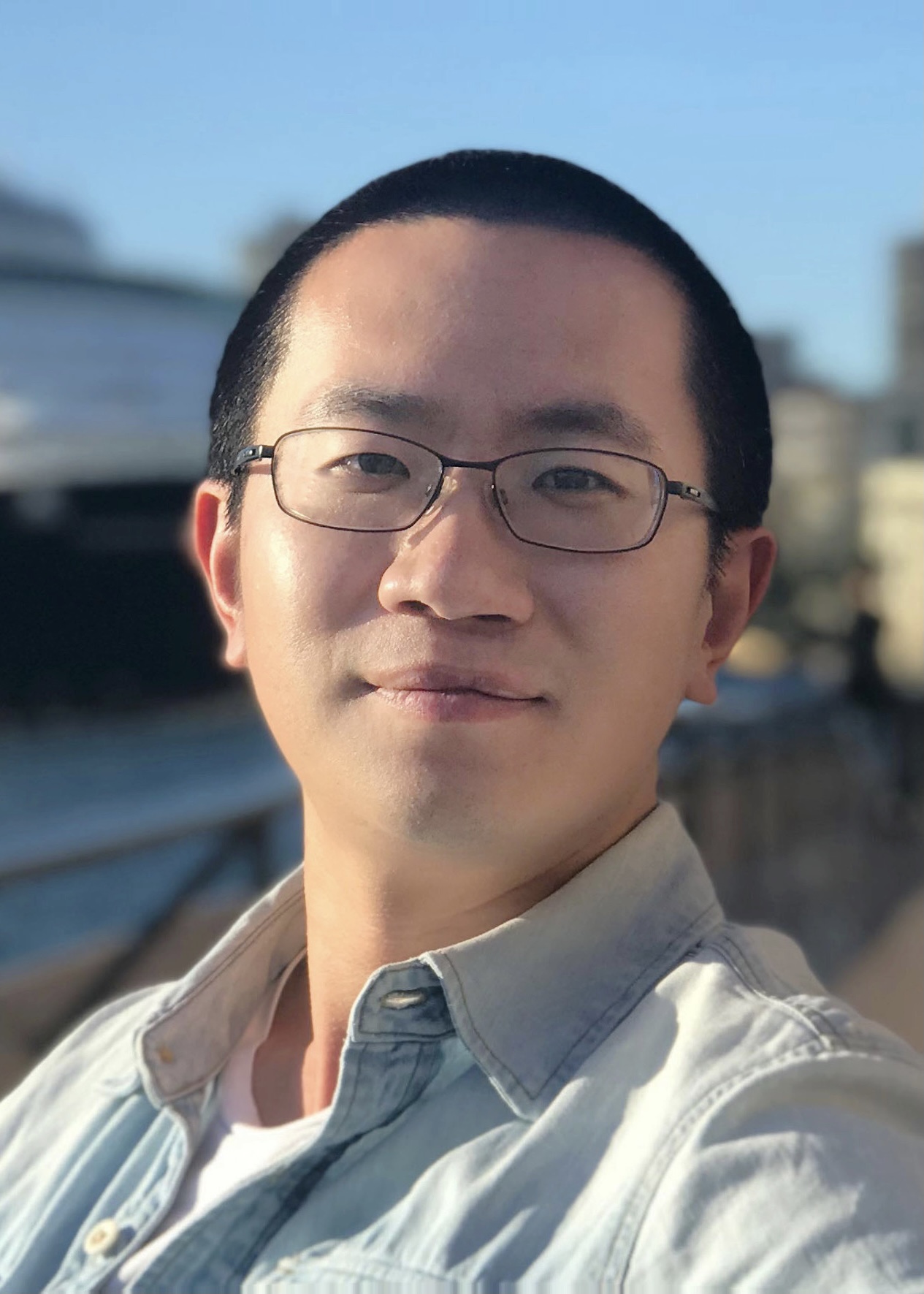
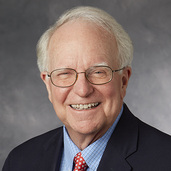
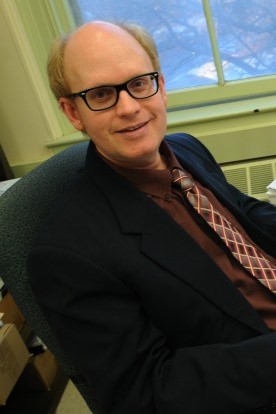
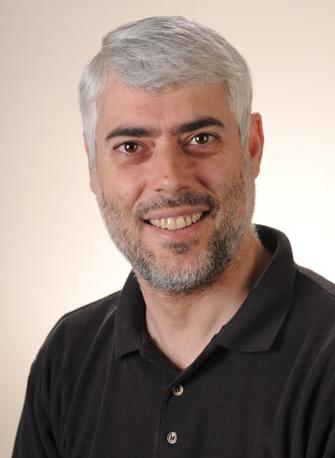
Jonathan Klassen is an Associate Professor in the Department of Molecular and Cell Biology / Microbiology at the University of Connecticut . His research focuses on microbial community ecology, particularly using the fungus-growing ant symbiosis as a model system to study the evolution of microbial interaction networks. He couples genomics and chemical biology to understand molecular mechanisms in symbiosis and explore drug discovery opportunities. PhD : Microbiology and Biotechnology, University of Alberta Postdoctoral Study : Bacteriology, University of Wisconsin-Madison His work spans microbial ecology, symbiosis, secondary metabolite discovery, and comparative genomics. Recent publications highlight studies on microbial exclusion dynamics in ant symbiosis, ITS2 metabarcode biases, and chemical defense mechanisms in insect-associated microbes. Scientific Awards : “Highly Accessed” article in BMC Genomics (2012) Contact : Email: jonathan.klassen@uconn.edu Phone: 860-486-6890 Lab: @klassenlab
Professor Felix Naumann is Chair for Information Systems at the Hasso Plattner Institute (HPI) at the University of Potsdam in Germany, where he leads the Information Systems research group. He is also Coordinator for MSc. Data Engineering and for the Data and AI track for MSc. Computer Science, and Speaker of the Research School on Data Science and Engineering. His extensive academic career includes visiting positions at CIRES Centre in Brisbane (2024-2025), SAP's Innovation Center (2020), AT&T Research (2016), and QCRI (2012). Professor Naumann's research focuses on data profiling, data cleansing, data integration, and data quality assessment with over 200 scientific publications. His work spans theoretical foundations and practical applications, with significant contributions to data quality metrics, metadata extraction, and AI-driven data preparation techniques. His research group develops prominent systems like Metanome for data profiling and Metis for data quality assessment. His recent publications demonstrate continued innovation in data management, with a growing intersection between traditional database research and AI applications. The 15 most recent papers show increasing focus on data quality for AI applications (KITQAR), multimodal data analysis (MELArt), and practical data cleaning frameworks that bridge database systems with machine learning pipelines. GI Dissertationspreis 2000 for best computer science PhD thesis IBM Research Division Award, 2002 Distinguished ACM member since 2021 Distinguished Reviewer Award - SIGMOD 2023 Best paper award at EDBT 2024 for Tasheeh paper Professor Naumann has successfully advised over 30 PhD students who now hold prominent positions at institutions like MIT, Google, Snowflake, and universities worldwide. His research has been funded by major grants including DFG Nachwuchsforschergruppe (2003-2008), IBM SUR Grant (2007), and DFG Forschergruppe Stratosphere (2010-2016). He leads the Information Systems research group at HPI, which includes PostDocs, PhD students, and student assistants working on projects like Metanome, Metis, KITQAR, and Janus, focusing on data profiling, quality assessment, and change exploration in data systems.
Eliane Becache is a permanent researcher at ENSTA Paris within the Applied Mathematics Unit (UMA) and serves as Director of the POEMS laboratory (CNRS/ENSTA/INRIA) and Deputy Director of the EDMH doctoral school. Her research focuses on partial differential equations for wave propagation, numerical methods including mixed finite elements and perfectly matched layers (PML), and unbounded domain resolution techniques. Education: Numerical analysis of PDEs and finite element methods Teaching: Courses on finite elements, complex variables, and wave equations at ENSTA and Orsay master's programs Her publications from 2010-2023 address topics like: Stability analysis of PMLs in anisotropic/disersive media Numerical methods for convective/acoustic wave propagation Wave scattering in unbounded domains Time-domain and frequency-domain wave simulations Elastodynamic and electromagnetic wave modeling Scientific Outreach: Co-author of educational films on wave propagation, including the award-winning Digital modeling of the acoustic guitar (Henri Poincaré Prize, 2003). Organized WAVES conferences and scientific events.
Sonia Fliss is a Full Professor at ENSTA Paris , affiliated with the Department of Applied Mathematics and the POEMS laboratory (UMR CNRS-INRIA-ENSTA) . She teaches applied mathematics courses on partial differential equations (PDEs) , finite element methods , and periodic homogenization to undergraduate and graduate students. Doctor in Applied Mathematics (2009) Authorized to supervise research (2019) Research Interests : Sonia Fliss specializes in the modeling and numerical analysis of wave propagation in periodic, quasi-periodic, and random media . Her work includes transparent boundary conditions , guided waves , and asymptotic methods for acoustic, electromagnetic, and elastic wave phenomena . Recent Publications highlight her contributions to the Half-Space Matching Method , edge states in honeycomb structures , and scattering problems in unbounded domains . Her numerical techniques address multi-scale waveguides and time-harmonic propagation . Laboratory : As a member of the POEMS team, she collaborates on interdisciplinary projects involving mathematical analysis , computational physics , and engineering applications in domains like defence, energy, and transport .
Andreas Bjerre-Nielsen is an Associate Professor at the Department of Economics and Copenhagen Center for Social Data Science (SODAS) within the Faculty of Social Sciences at the University of Copenhagen. His work bridges economics and data science to analyze education-related behavior and policies. Research Focus: School choice, digital technology in education, predictive analytics for interventions, and social network effects. Methodology: Combines econometrics with machine learning techniques to evaluate policy impacts. Research Trends: Recent publications emphasize algorithmic fairness in college admissions, socioeconomic impacts of school boundary policies, and behavioral insights from large-scale datasets. His 2025 Scientific Reports study reveals nation-scale social network dynamics. Awards and Grants: Tietgen Prize (2021) for young social science researchers 2024: Independent Research Fund Denmark grant for 'Coded Clues' project 2023: Major grant for school choice research Collaborations: Works with Danish Ministry of Children and Education through UDDanKvant unit, and collaborates with multidisciplinary researchers including Sune Lehmann and David Dreyer Lassen.
David J. Yu is an Associate Professor at Purdue University with primary appointments in the Lyles School of Civil Engineering (75%) and Department of Political Science (25%) . He contributes to interdisciplinary research through Purdue’s Building Sustainable Communities cluster, focusing on sustainability and community resilience. His research examines resilience of coupled systems to change and uncertainty, combining natural, physical, and institutional factors across scales from local to global. Methodological approaches include mathematical modeling , case study analysis , and behavioral experiments to understand human-infrastructure-water interactions. Recent publications demonstrate expertise in socio-hydrology of reservoir operations groundwater governance frameworks agent-based modeling of water systems cognitive biases in water management His work was recognized with an NSF CAREER Award (2022) for innovative research on resilience engineering. He actively seeks graduate students for projects in Civil Engineering, Ecological Sciences, Environmental Engineering, and Political Science programs at Purdue. Current research includes logical interdependencies in water infrastructure and AI-enhanced resilience frameworks for reservoir management.
Xiaoyang Wang is a Senior Lecturer in the School of Computer Science and Engineering (CSE) at the University of New South Wales (UNSW). He holds a Bachelor's and Master's degree in Computer Science from Northeastern University, China, and earned his PhD from CSE UNSW. Dr. Wang's research focuses on database systems with a special emphasis on query processing and data mining on large-scale graph, spatial, and streaming data. His expertise extends to data-driven machine learning, smart contract analysis on blockchain, and FinTech with financial network analysis. His work spans Graph Processing, Graph Neural Networks, Spatial Data Processing, AI for Databases (AI4DB), Database for AI (DB4AI), and FinTech applications. His publication record shows significant contributions to the field with 7 book chapters, 56 journal articles, 61 conference papers, 7 edited conference proceedings, and 4 conference abstracts. Recent publications (2022-2025) demonstrate his strong research trajectory in advanced graph processing techniques, neural network applications, and innovative database approaches. Key themes include hierarchical contrastive learning, robust attack frameworks, temporal graph processing, influence maximization, knowledge graph-enhanced reasoning, and rumor mitigation. Dr. Wang actively recruits PhD students interested in pursuing research in related fields and encourages current undergraduate and master's students at UNSW to contact him about research opportunities. He maintains an active research agenda with practical implications for industries dealing with large-scale network data, financial technology applications, and data-intensive systems. He can be reached at xiaoyang.wang1@unsw.edu.au and is located in Engineering building K17-501D at UNSW.
Robert E. Hall is the Robert and Carole McNeil Senior Fellow at the Hoover Institution and Professor of Economics at Stanford University. A member of the National Academy of Sciences and fellow of several distinguished societies, he is an applied economist whose work focuses on macroeconomics, monetary policy, labor markets, taxation, and the economics of technology. Education: B.A., University of California, Berkeley Ph.D., Massachusetts Institute of Technology Research Interests: Hall’s research spans a broad range of topics including the economics of high technology and the Internet, stock market valuation, unemployment dynamics, business cycles, and fiscal and monetary policy. He has made foundational contributions to the understanding of consumption behavior, labor market fluctuations, and the design of efficient tax systems. His work on the flat tax with Alvin Rabushka significantly influenced public policy debates. Research Leadership and Policy Impact: Hall directs the NBER Program on Economic Fluctuations and Growth and chairs the NBER Business Cycle Dating Committee. He has advised the U.S. Treasury, Department of Justice, and Federal Reserve, and has testified before Congress on numerous occasions. His 2001 Ely Lecture to the American Economic Association highlighted his ongoing influence on macroeconomic thought. Scientific Awards and Honors: Member, National Academy of Sciences Fellow, American Academy of Arts and Sciences Fellow, Econometric Society Fellow, Society of Labor Economists Money Hall of Fame, Money Magazine (with Alvin Rabushka) Institutional Roles: In addition to his faculty role at Stanford, Hall serves as director of the NBER's Program on Economic Fluctuations and Growth and chairs its Business Cycle Dating Committee, which maintains the semi-official chronology of U.S. recessions.
Antonios Deligiannakis is a Professor at the School of Electronic and Computer Engineering of the Technical University of Crete, specializing in database systems and distributed data processing. His academic career includes a postdoctoral position at the National and Kapodistrian University of Athens (2006-2007) and a visiting researcher role at AT&T Labs-Research (2003). His educational background includes: PhD in Computer Science, University of Maryland, USA (2005) Master's Degree in Computer Science, University of Maryland, USA (2001) Diploma in Electrical and Computer Engineering, National Technical University of Athens (1999) Professor Deligiannakis's research spans Databases , Stream Processing , and Sensor Networks , with pioneering work in Approximate Query Evaluation for massive datasets and Complex Event Processing in distributed environments. His contributions enable efficient analytics in resource-constrained settings through techniques like synopses-based engines and windowed outlier detection. His 15 most recent publications (2020-2025) reveal a dominant focus on distributed streaming analytics, with recurring themes of cross-platform integration, federated learning, and extreme-scale interactive systems. Key innovations include the INFORE framework for interactive analytics, DAG* for IoT workflow optimization, and communication-efficient federated learning techniques—demonstrating consistent translation of theoretical advances into production-ready platforms. Scientific Awards: No specific awards were listed in the provided material. Information about advisees and research grants was not provided in available documentation, though his leadership in the Distributed Information Systems and Applications laboratory suggests active mentorship and project direction. He directs research in the Distributed Information Systems and Applications laboratory, developing systems for real-time analytics across domains including maritime surveillance, financial technology, and IoT platforms, with emphasis on scalability and fault tolerance in geo-distributed environments.
Todd Gabe is a Professor of Economics at the University of Maine, affiliated with the School of Economics within the College of Natural Sciences, Forestry and Agriculture. His work focuses on state and local economic development, human capital, public finance, and the knowledge economy. He is supported by the Maine Agricultural and Forest Experiment Station and contributes to the Hatch project ME022307. Dr. Gabe holds a Ph.D. in Agricultural Economics from The Ohio State University and an M.S. in Applied Economics from the University of Minnesota. He teaches courses such as Principles of Microeconomics, Applied Economic Data Analysis, Economics of Sports, and Regional Economics – Policy & Practice. His research spans regional and community economic development, rural workforce dynamics, tourism economics, and the impacts of climate change and pandemics on regional economies. Recent work examines the creative economy, minimum wage effects, urban influence metrics, and post-COVID recovery patterns. Dr. Gabe’s publications include analyses of social media as economic indicators, labor market spillovers, and tourism spending dynamics. His work frequently leverages econometric and spatial methods to address urban-rural economic linkages and workforce skill disparities. University of Maine Presidential Public Service Award (2004) College of Natural Sciences, Forestry and Agriculture Outstanding Public Service Award (2005) He has published in journals such as the Journal of Economic Geography , Journal of Regional Science , and Urban Studies , with a focus on applied regional economics and policy evaluation.
Nisarg Shah is an Associate Professor in the Department of Computer Science at the University of Toronto, affiliated with the Theory Group. He also serves as a Research Lead at the Schwartz Reisman Institute for Technology and Society and a Faculty Affiliate at the Vector Institute for Artificial Intelligence. Education: Ph.D. in Computer Science, Carnegie Mellon University (2016) B. Tech. with Honors in Computer Science & Engineering, IIT Bombay (2011) Shah's research focuses on the theoretical foundations of artificial intelligence, particularly algorithmic fairness, social choice theory, game theory, and mechanism design. His work addresses fair resource allocation, strategic agent behavior, and robust AI system design through interdisciplinary approaches combining computer science, economics, and cognitive psychology. Recent publications highlight temporal fair division, constrained allocations, and market value integration in fair division. His 2024 awards include the prestigious IJCAI Computers and Thought Award and Kalai Prize for game theory contributions. Scientific Awards: 2024 - IJCAI Computers and Thought Award 2024 - Kalai Prize in Game Theory and Computer Science 2022 - MIT Technology Review Innovators Under 35 2020 - IEEE Intelligent Systems AI's 10 to Watch 2016 - Victor Lesser Distinguished Dissertation Award (IFAAMAS) 2014 - Facebook Graduate Fellowship 2013-14 - Hima and Jive Graduate Fellowship 2011 - IIT Bombay President's Gold Medal Shah supervises numerous graduate students across diverse institutions and leads research initiatives at the intersection of technology and society. His lab collaborates with institutions like Carnegie Mellon University and Harvard University, while developing practical applications such as Spliddit.org for fair decision-making in everyday life.
Joel Sokol is the Harold E. Smalley Professor in the H. Milton Stewart School of Industrial and Systems Engineering at Georgia Tech. He serves as Director of the interdisciplinary Master of Science in Analytics (MSA) degree, offered both on-campus and online. His academic journey began with a Ph.D. in Operations Research from MIT (1999), followed by bachelor's degrees in Mathematics, Computer Science, and Applied Sciences in Engineering from Rutgers University (1994). Education Ph.D. in Operations Research (MIT, 1999) B.S./B.A. in Mathematics, Computer Science, Applied Sciences in Engineering (Rutgers, 1994) Dr. Sokol's research focuses on Sports Analytics , Health Informatics , and Supply Chain Optimization . He pioneered the LRMC (Logistic Regression/Markov Chain) method for NCAA basketball tournament predictions, which has become an industry standard. His work extends to organ transplantation logistics, maritime shipping networks, and semiconductor manufacturing optimization, blending machine learning with traditional operations research techniques. The articles reflect his interdisciplinary expertise: 2025 introduced a Smart Stadium Testbed for real-time sports analytics, while 2024 addressed Language Model Safety . Earlier publications (2023–2018) focused on transplant survival modeling, vaccine scheduling, and maritime logistics, showcasing his ability to apply analytics to diverse domains. Scientific Awards EURO Management Science Strategic Innovation Prize (2008) Cozzarelli Prize finalist (non-sports research) Georgia Tech's highest teaching awards (multiple years) INFORMS and IISE recognitions for curriculum development As a leader in analytics education, Sokol co-founded the INFORMS Sports Operations Research section and served as INFORMS Vice President of Education. His work has practical applications in professional sports, healthcare, and industry, with methodologies adopted by teams, medical institutions, and global logistics networks.
David A. Goldberg is an Associate Professor and Director of Undergraduate Studies in the Operations Research and Information Engineering (ORIE) department at Cornell University's College of Engineering. His research bridges theoretical probability with practical applications in operations management, inventory systems, and queueing networks. Education: Ph.D. in Operations Research, MIT, 2011 B.S. in Computer Science, minors in Applied Math and Industrial Engineering / Operations Research, Columbia University SEAS, 2006 Professor Goldberg's research focuses on advancing theoretical understanding of stochastic systems while developing practical insights for operations management. His work spans applied probability, stochastic processes, queueing theory, inventory models, distributionally robust optimization, and combinatorial optimization. He has made significant contributions to understanding the behavior of complex systems under uncertainty, particularly in many-server queues and inventory management under demand variability. His publications reveal strong trends in asymptotic analysis of stochastic systems, particularly in the Halfin-Whitt regime for queueing systems and in inventory models with large lead times. His work consistently bridges theoretical probability with practical operations management applications, with a strong emphasis on developing models that account for real-world uncertainties while maintaining mathematical tractability. His recent work shows increasing focus on distributionally robust approaches that require minimal assumptions about underlying distributions. Scientific Awards: INFORMS Applied Probability Society Best Publication Award (2019) INFORMS Nicholson student paper competition first place (2019) INFORMS Nicholson student paper competition first place (2015) INFORMS Junior Faculty Interest Group paper competition second place (2015) Professor Goldberg has successfully advised multiple Ph.D. students who have gone on to prestigious academic and industry positions. His research is supported by significant NSF funding, including a CAREER award and a grant for stochastic comparison approaches to parallel server queues. He serves on editorial boards for leading journals including Operations Research and Stochastic Models, and has held leadership positions in the INFORMS Applied Probability Society including Vice-chair (2020-2022) and Council member (2015-2017).
Evy Rombaut serves as a postdoctoral researcher at the MOBI Electromobility Research Centre, Vrije Universiteit Brussel, specializing in Business Technology and Operations Management. Her research focuses on autonomous vehicle systems, sustainable transportation, and urban mobility optimization within the Flemish Institute for Technological Research ecosystem. Her primary research interests include autonomous vehicles (100% fingerprint match), logistics systems (24-28% focus), electric vehicle integration (22-31% emphasis), and vehicle-to-grid technology (28% focus). Her work bridges engineering and social sciences, particularly examining user acceptance (21% focus), traffic simulation modeling (22% focus), and job creation metrics (21% focus) in electromobility transitions. Rombaut actively supervises graduate research, with notable contributions to master's theses on autonomous vehicle environmental impacts and EU regulatory frameworks. Her current projects include AccelerationMOBI (2025-2029), DESTINY carbon reduction initiatives (2024-2029), and AUGMENTED CCAM infrastructure development (2022-2025), reflecting her leadership in European sustainable transport research consortia. She maintains active roles in PhD committees and conference organization, including the ACCAM Project Review Meeting (2024) and doctoral defenses on shared autonomous vehicle implementation. Her research output demonstrates consistent productivity with 43 publications since 2015, including 17 journal articles and 10 conference papers, achieving an h-index of 8 with 341 Scopus citations. Rombaut's work is centered at the MOBI Electromobility Research Centre, where she contributes to the Autonomous Mobility & Logistics research focus area. Her current projects involve multi-institutional collaborations across 8 active research initiatives examining vehicle-to-grid integration, urban mobility transitions, and carbon-neutral transport solutions through both fundamental and applied research frameworks.
Francesco Prudenzano is a Full Professor at the Department of Electrical and Information Engineering (DEI), Polytechnic University of Bari, Italy. He leads research in photonics, microwave engineering, and electromagnetic compatibility, with a focus on mid-infrared optical fiber devices, laser design, and microwave antennas. His work spans theoretical modeling, fabrication, and application development in advanced photonic systems. University: Polytechnic University of Bari Department: Electrical and Information Engineering Research Group: MOE Group (Microwave and Optical Engineering) Research Interests: Prudenzano's research explores the design and optimization of optical fiber devices, microwave sensors, and electromagnetic systems. Key areas include mid-infrared laser development, additive manufacturing of antennas, and photonic sensors for composite materials. His work bridges material science, photonics, and electromagnetics to solve practical engineering challenges. Recent Publications (2024-2025): His articles highlight advancements in fluoride and chalcogenide fiber optics, Q-switched lasers, and 5G antenna technologies. Topics span mid-IR amplification, supercontinuum generation, and microwave applicators for medical use, reflecting his interdisciplinary approach. Laboratories: Research is conducted at the Electromagnetic Fields and Telecommunications laboratories in Bari and the "Polo Magna Grecia" facility in Taranto, focusing on device prototyping and electromagnetic modeling.