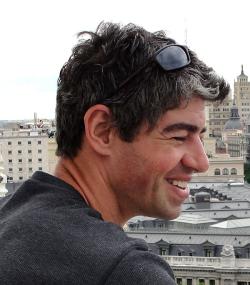
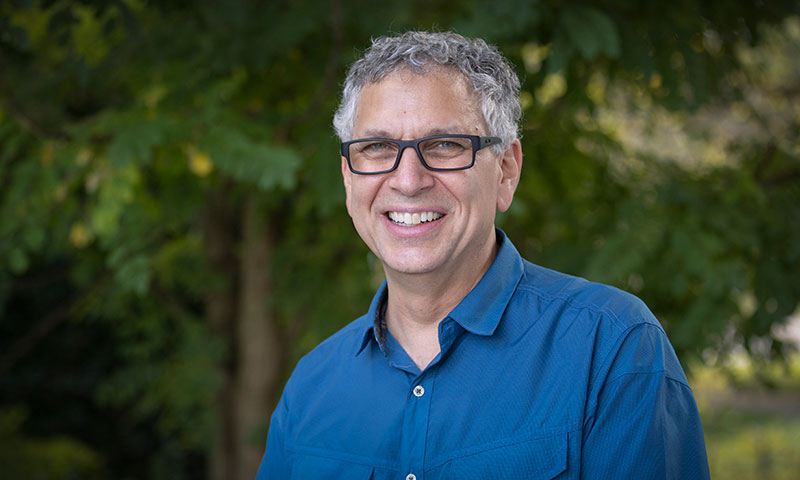
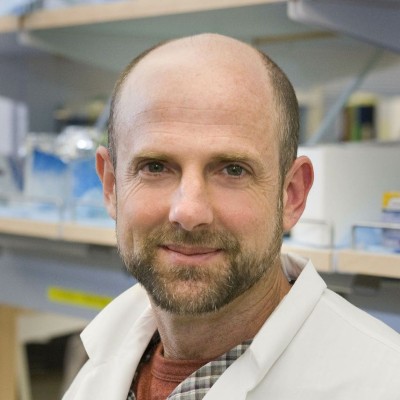
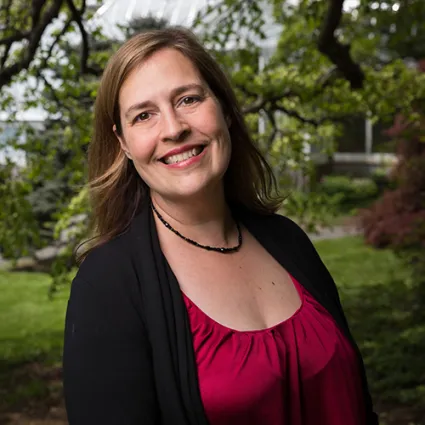
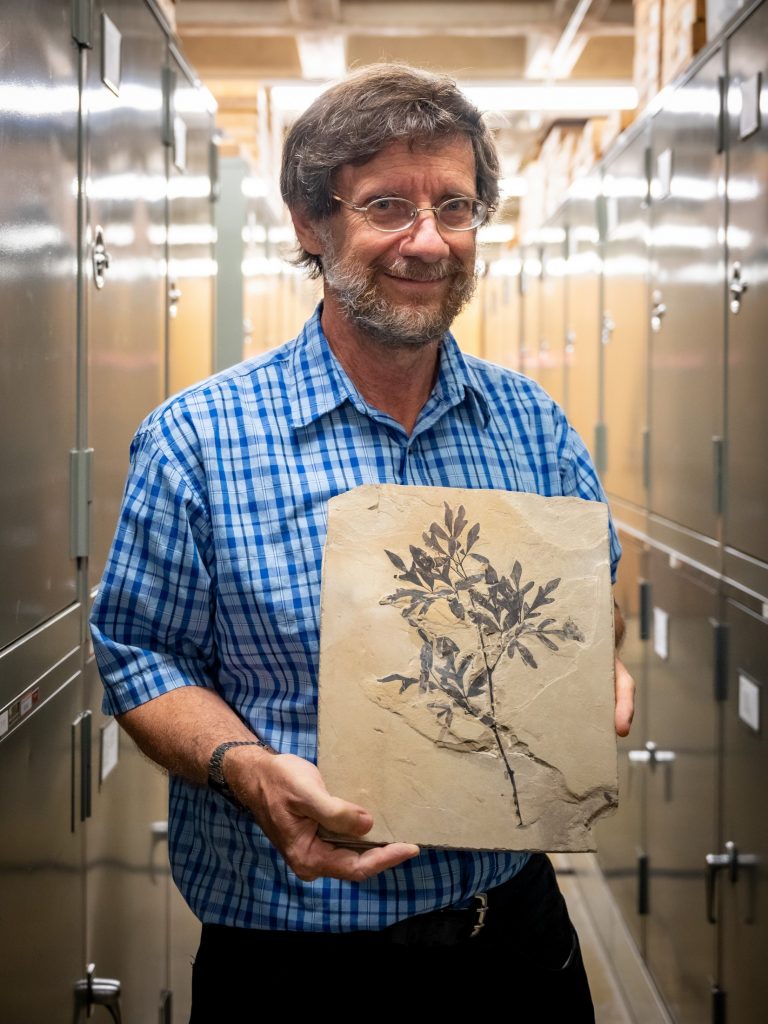
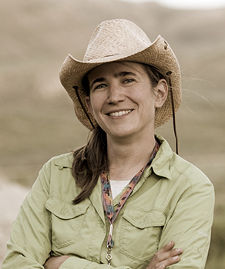
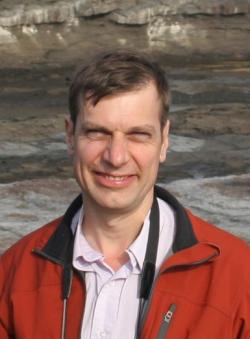
Frank Corsetti is a Professor of Earth Sciences at the University of Southern California (USC), leading the Corsetti Lab. His research focuses on the co-evolution of Earth and its biosphere, particularly during extreme events like the 'Snowball Earth' glaciation and mass extinctions. He holds a Ph.D. in Geological Sciences from UC Santa Barbara (1998) and a B.S. in Geology from UC Davis (1989). Research Interests: Corsetti studies geobiological processes such as stromatolite formation, microbial carbonate systems, and the environmental impacts of mass extinctions. His lab investigates biosignatures, diagenetic processes, and astrobiological applications. Current projects include the end-Triassic mass extinction and microbial interactions in extreme environments. Advising & Grants: He mentors a team of PhD students (including Reena Joubert, Alison Cribb, and others) and has secured funding from NASA for projects like stromatolite carbonate formation studies. His work bridges paleontology, geochemistry, and microbiology, contributing to understanding Earth’s long-term climate and life history. Labs/Teams: The Corsetti Lab at USC explores stromatolites, microbial mats, and ancient Earth systems. Collaborations involve institutions like JPL and international universities.
Peter Wilf is a Professor in the Department of Geosciences at Pennsylvania State University's College of Earth & Mineral Sciences. His research focuses on fossil plants as indicators of past climates, biodiversity, and environmental disturbances from the latest Cretaceous through middle Eocene (~67-45 million years ago). Wilf leads significant research projects including the Origins of Southeast Asian Rainforests from Paleobotany and Machine Learning and the Patagonia Paleofloras Project. His research interests span paleobotany, paleoclimatology, plant-insect interactions, and biogeography, with emphasis on how deep-time data illuminate modern ecosystems and their responses to anthropogenic change. Wilf's work primarily focuses on the latest Cretaceous through middle Eocene, examining global disturbances including warming and cooling events, the end-Cretaceous mass extinction, and recovery periods. His research has significant implications for understanding climate change, biodiversity conservation, and ecosystem dynamics. Wilf's extensive publication record demonstrates consistent high-impact research across paleobotany, with recent work focusing on Southeast Asian rainforests, Patagonian paleofloras, and the connections between Gondwanan landmasses. His research integrates fieldwork in Patagonia and Southeast Asia with advanced analytical techniques, including machine learning applications for fossil leaf identification. Fellow, American Association for the Advancement of Science (AAAS) 2022 Wilson Award for Excellence in Research, Penn State College of Earth & Mineral Sciences 2022 Fellow, Paleontological Society 2017 Fellow, Geological Society of America 2016 Paul F. Robertson Research Breakthrough of the Year Award, Penn State College of Earth & Mineral Sciences 2016 George W. Atherton Award for Excellence in Teaching, Pennsylvania State University 2013 Wilf maintains an active research program with numerous NSF-funded projects and international collaborations. He leads a productive lab group conducting extensive fieldwork in Patagonia, Argentina, and Southeast Asia. His research has transformed understanding of Southern Hemisphere floras, the role of Patagonia in plant evolution, and connections between ancient and modern ecosystems across continents. Wilf's laboratory serves as a hub for paleobotanical research, bringing together students, postdocs, and international collaborators to study fossil plant collections from around the world. The lab integrates traditional paleobotanical methods with cutting-edge technologies including machine learning for fossil identification and advanced imaging techniques for detailed morphological analysis.
Seth Finnegan is a Professor in the Department of Integrative Biology at the University of California, Berkeley, and affiliated with the University of California Museum of Paleontology. His research focuses on understanding the processes shaping marine ecosystems and biota from the late Neoproterozoic to the present, with a particular emphasis on the Ordovician Period and mass extinctions. He integrates field observations, laboratory data, and literature databases to study extinction selectivity, environmental proxies (e.g., stable isotopes, biomarkers), and ecosystem reconstructions. His lab, the Finnegan Lab, explores themes such as organism-environment interactions and the drivers of biodiversity changes. Finnegan’s work has been widely published in journals like Proceedings of the National Academy of Sciences and Geology , and he collaborates with institutions globally. Despite no listed awards here, his contributions to paleontology are significant.
University of Illinois at SpringfieldUnited States
John Martin is an Associate Professor at the University of Illinois Springfield, affiliated with the School of Integrated Sciences, Sustainability, and Public Health. Since 2006, he has taught introductory physics for science majors and astronomy courses while directing the Henry R. Barber Research Observatory and hosting public UIS Star Parties. His research focuses on stellar astrophysics, particularly the life cycles of massive stars and phenomena like Eta Carinae. Stellar Astrophysics Massive Star Evolution Luminous Blue Variables (LBVs) Supernova Impostors Be Stars and Disks Photometry and Spectroscopy His publications, including over 100 peer-reviewed works, emphasize Eta Carinae's 5.5-year spectroscopic events, LBVs in M31/M33, Be star dynamics, and supernova impostors like SN 2009ip. Awards include the 2011 University of Illinois University Scholar title, JJ Nassau Fellowship (1997), and Dean's List recognitions. He earned his PhD in Astronomy from Case Western Reserve University (2003) and BS in Astro-Physics from the University of Virginia (1995). Scientific awards include 2011 University of Illinois University Scholar 1997 JJ Nassau Graduate Research Fellowship 1995 Mastin Graduate Fellowship 1995 Dean's List, University of Virginia 1994 Dean's List, University of Virginia
David Finkelstein is an Associate Professor in the Department of Geosciences at Hobart and William Smith Colleges, where he has been a faculty member since 2013. He earned his Ph.D. from the University of Illinois at Urbana-Champaign and holds advanced degrees from the University of Massachusetts, Amherst. His academic affiliations include prior roles as a Research Assistant Professor and Lab Manager at the University of Massachusetts and as an Assistant Professor at the University of Tennessee. Ph.D., University of Illinois at Urbana-Champaign M.S., University of Massachusetts, Amherst B.S., University of Massachusetts, Amherst Dr. Finkelstein's research centers on limnogeology and biogeochemistry , with a focus on the chemical evolution of lake systems, stable isotope geochemistry, and microbial life in extreme environments. His work integrates aqueous geochemistry, organic molecular analysis, and microbiological methods to reconstruct paleoenvironments and climate change across geological timescales, including the Holocene, Pleistocene, Cretaceous, and Triassic periods. He has extensively studied lake sediments, wildfires, and the environmental impacts of the 2010 Gulf of Mexico oil spill. His recent publications show a strong trend in using biogeochemical proxies and isotopic signatures to understand past climate variability, human-environment interactions, and extreme environmental conditions. His research often involves multidisciplinary collaborations and field-based studies in diverse regions such as Russia, Iran, and Central America. Dr. Finkelstein is actively involved in scientific communities, with affiliations including: International Association of Limnogeology American Geophysical Union Geological Society of America Geochemical Society SEPM (Society for Sedimentary Geology) He has advised numerous research projects and mentored students in geoscience, though specific names are not listed. His teaching includes courses such as Stable Isotope Geochemistry, Limnology, and Environmental Geochemistry, reflecting his expertise in both theoretical and applied aspects of earth sciences. Dr. Finkelstein has not received any explicitly listed scientific awards in the provided text, but his publication record in high-impact journals demonstrates significant scholarly contributions. He does not appear to lead a named laboratory or research center, but his work is deeply embedded in field and laboratory-based geochemical analysis.
Stephanie E. Pierce is a Professor of Organismic and Evolutionary Biology and Alexander Agassiz Professor of Zoology at Harvard University, affiliated with the Museum of Comparative Zoology (MCZ). She serves as Curator of Vertebrate Paleontology and Interim Curator of Mammalogy at the MCZ. Her research focuses on the evolution of vertebrate musculoskeletal systems, integrating biomechanics, paleontology, and functional morphology to understand how form and function evolved in tetrapods and synapsids. Key projects include studying postural transitions in synapsids, the evolution of the mammalian vertebral column, and the functional adaptations enabling terrestrialization in early tetrapods. Dr. Pierce's work is supported by grants such as the National Science Foundation (NSF) Grant 1524523, which examines the functional evolution of the mammalian backbone. Her lab, the Stephanie Pierce Lab, collaborates widely and includes postdoctoral researchers, graduate students, and international teams. Recent work has revealed insights into the radiation of reptiles post-mass extinctions and the discovery of early South American predators. She has also been featured in podcasts and media for her contributions to paleontology and evolutionary biology. Her research spans disciplines including evolutionary biomechanics, paleohistology, and computational modeling, with a focus on major transitions in vertebrate evolution. She leads projects that bridge the gap between extant and extinct organisms to reconstruct ancestral functional traits and evolutionary trajectories.
Josh Schmerge is an Instructional Assistant Professor of Biology at the University of Mississippi. He holds a PhD in Geology from the University of Kansas (2015) and teaches courses such as BISC 102 and BISC 104. His research focuses on vertebrate paleontology, particularly the functional anatomy of burrowing rodents and the taxonomic validity of theropod dinosaurs like Nanotyrannus lancensis . He has published extensively on dinosaur morphology and phylogeny, arguing for Nanotyrannus ' distinct status from Tyrannosaurus rex based on dentary groove analysis. Education : B.S. Geology (University of Wyoming, 2007), M.S. Geology (University of Kansas, 2011), Ph.D. Geology (University of Kansas, 2015) His work integrates morphological studies with phylogenetic analysis, emphasizing anatomical features like dentary grooves to resolve taxonomic debates. Key contributions include clarifying groove morphology in tyrannosaurids and describing new castorid species. Awards include the 2015 Erasmus A. Haworth Award and teaching nominations.
University of California, Los AngelesUnited States
Dr. Michael Alfaro is a Professor in the Department of Ecology and Evolutionary Biology at UCLA, where he leads the UCLA Alfaro Lab. His research focuses on understanding evolutionary dynamics of organismal diversification, particularly in marine fishes. He employs interdisciplinary approaches combining evolutionary morphology, molecular phylogenetics, and theoretical evolution to explore patterns and mechanisms of morphological and functional diversity. Education: Ph.D. in Evolutionary Biology, University of Chicago (2000) M.A. in Biology, Humboldt State University (1995) B.A. in Dramatic Arts, University of California, Davis (1989) Research interests emphasize the interplay between morphological diversity and ecological/functional dynamics. Notable themes include the drivers of diversification in marine lineages, the role of physiological traits in lineage success, and the integration of computational tools for large-scale phenotypic analysis. Alfaro has contributed to advancements in phylogenetic methodology and genomic resources for studying fish evolution. His work bridges macroevolutionary theory with empirical data, often leveraging crowdsourced phenotypic data and bioinformatics tools like Sashimi and Charisma for high-throughput analysis. The lab actively engages in collaborative projects addressing biodiversity patterns and evolutionary mechanisms across marine and terrestrial systems. Grants and advising activities are central to his academic contributions, though specific details are not detailed in the provided text. The UCLA Alfaro Lab collaborates internationally, emphasizing both basic research and applied conservation contexts.
Sara Pruss is the Esther Cloudman Dunn Professor of Geosciences at Smith College, where she has established herself as a leading researcher in geobiology and paleontology. Her work focuses on critical transitions in Earth's history, particularly mass extinctions and the evolution of early life forms. She maintains an active research program that combines field work, laboratory analysis, and theoretical approaches to understand the complex interactions between life and Earth's environments through geological time. Education: Ph.D., University of Southern California M.S., University of Southern California B.S., University of Rochester Professor Pruss's research spans several interconnected areas within geobiology and paleontology. Her primary focus is on understanding mass extinction events, particularly the end-Permian extinction and Cambrian-Ordovician transitions. She investigates how these events affected marine ecosystems and the subsequent recovery patterns. Her work on Neoproterozoic carbonates and early animal evolution has provided important insights into the environmental conditions that facilitated the emergence of complex life. Professor Pruss also examines microbial sedimentary structures and their implications for interpreting ancient environments. Her research often combines detailed field observations with geochemical analyses to reconstruct paleoenvironments and understand the taphonomic processes that affect fossil preservation. Analysis of Professor Pruss's recent publications reveals a consistent focus on critical transitions in Earth's history. Her work spans the Ediacaran-Cambrian boundary, the Cambrian-Ordovician transition, and the Permian-Triassic extinction. A recurring theme is the relationship between environmental changes (particularly oxygenation and redox conditions) and biological evolution. Her research increasingly incorporates geochemical proxies like mercury chemostratigraphy to identify potential volcanic triggers for extinction events. The geographical scope of her work is global, with field sites in North America, Scotland, Namibia, and the Arctic. Scientific Awards: Outstanding Contributions to Geobiosciences by the Society for Geobiology and Geomicrobiology (2014) Sherrerd Prize for Distinguished Teaching by Smith College (2015) Professor Pruss has mentored numerous undergraduate students through her research lab at Smith College. Several of her former students, including Katie Castagno, Jana Burke, Kelsey Moore, Sophie Westacott, and Kiara Gomez, have gone on to earn PhDs from prestigious institutions like MIT, Yale, and Woods Hole. Her research has been consistently supported by major funding agencies including the National Science Foundation and the National Geographic Society. Beyond her research mentorship, Professor Pruss has been actively involved in programs aimed at supporting underrepresented women in STEM fields, demonstrating her commitment to inclusive excellence in science education. Professor Pruss leads an active research laboratory at Smith College that combines field, laboratory, and analytical approaches to geobiological research. Her lab has produced numerous publications with undergraduate co-authors, reflecting Smith's strong emphasis on undergraduate research. The lab's work often involves international collaborations with researchers from institutions around the world. Current research directions include investigating the relationship between oxygenation and early animal evolution, studying microbial influences on sedimentary structures, and examining the environmental triggers for major extinction events throughout Earth's history.
Steven R. Manchester is the Curator of Paleobotany at the Florida Museum of Natural History, University of Florida, and an Adjunct Professor in the Department of Biology. He holds a Ph.D. in Paleobotany from Indiana University (1981), with additional degrees from Oregon State University. His research focuses on angiosperm evolution, particularly Northern Hemisphere families, integrating fossil evidence with modern phylogenetics. He has authored over 200 publications, including studies on Eocene floras, Cretaceous-Paleogene transitions, and collaborative projects across North America, Europe, and Asia. Notable work includes discoveries of extinct plant families and Arctic fossil walnuts. Manchester’s research emphasizes multi-organ paleobotanical analyses, linking flowers, fruits, leaves, and wood to modern phylogenies. He has described new genera like Remberella and Pogonokardion , and his fieldwork spans regions from the High Arctic to the Tibetan Plateau. His educational contributions include courses in Paleobotany, Palynology, and Plant Geography. Publications highlight studies on fossil floras from India, Peru, and the U.S., with recent focus on Cretaceous angiosperm origins and Eocene dispersal patterns. His work bridges paleobotanical data with modern biogeography, illuminating plant evolution across major geological epochs.
Peter C. Lippert is an Associate Professor in the Department of Geology & Geophysics at the University of Utah , with research spanning paleomagnetism, tectonics, and environmental magnetism. His work connects geological time scales to climate dynamics, orogenic processes, and urban pollution monitoring. BS (2003) and PhD (2010) in Earth sciences Postdoctoral training at University of Arizona and UC Santa Cruz Research focuses include: Antarctic ice age cyclicity and Earth's orbital influences Hydrothermal alteration effects on paleomagnetic records in Tibet Magmatism during Mongol-Okhotsk Ocean closure Magnetofossils as climate proxies for rapid warming events Evergreen needle magnetization for urban pollution mapping Recent publications highlight collaborations across 50+ international institutions , with methodological innovations in site-level paleomagnetic analysis and FORC-PCA magnetofossil discrimination. His 15 most recent articles (2020–2024) address tectonic reconstructions, geomagnetic field evolution, and climate-ocean interactions. He serves on the Magnetics Information Consortium (MagIC) Steering Committee and has received the Taft-Nicholson Summer Faculty Fellow award. Teaching emphasizes Earth science as a philosophy, with courses on structural geology, dynamic Earth systems, and field research.
Jay P. Gore is the Vincent P. Reilly Professor in Combustion Engineering at Purdue University's School of Mechanical Engineering, with courtesy appointments in Aeronautics & Astronautics and Chemical Engineering. He holds positions at the West Lafayette campus and leads the Gore Research Group, focusing on combustion, radiation heat transfer, and sustainable energy systems. Education: B.E. from University of Poona (1978), M.S. and Ph.D. from Penn State (1982, 1986), and a Postdoctoral Certificate from University of Michigan (1987). His research spans combustion fundamentals, CO2 recycling via char gasification, laser diagnostics, and propulsion systems. He pioneered the Summer Undergraduate Research Fellowship (SURF) program at Purdue. Research interests include turbulent reacting flows, biomedical heat transfer, and global energy policy. Key subfields are combustion diagnostics, flame structure analysis, and hydrogen storage. His work integrates experimental and computational methods, with applications in aerospace, energy, and environmental sectors. Awards: Purdue Innovator Hall of Fame (2014) Fellowships: AIAA (2009), ASME (2006) Reilly Chair Professor (2000) Presidential Young Investigator Award (1991) Grants & Collaborations: Supported by DoE, NASA, and industry partnerships. Leads interdisciplinary projects on CO2 utilization and renewable energy systems. Labs/Teams: Gore Research Group specializes in combustion diagnostics, laser-based measurements, and sustainable energy solutions. Collaborations include international conferences and policy initiatives.
Rowan C Martindale is an Associate Professor at the University of Texas at Austin's Department of Earth and Planetary Sciences within the Jackson School of Geosciences. His research focuses on marine paleoecology, mass extinctions, and carbon cycle perturbations in deep time, particularly the Triassic-Jurassic and Toarcian Ocean Anoxic Event. He leads the Martindale Lab, which investigates Jurassic reef crises, Lagerstätten preservation, and modern reef decline. His work integrates field studies, geochemical analyses, and educational tools like board games to enhance STEM engagement. Affiliations: UT Austin Non-vertebrate Paleontology Lab GSA Geobiology & Geomicrobiology Division (Executive Committee) Education: Doctoral research centered on Triassic/Jurassic boundary reef collapse linked to ocean acidification. Postdoctoral opportunities at Scripps and Humboldt Foundation were declined. Research Interests: Reconstruction of ancient reef ecosystems, exceptional fossil preservation mechanisms, and applying paleontological insights to modern conservation. Key projects include the Pliensbachian/Toarcian reef crisis and Jamaican coral reef monitoring. Publications: Over 50 peer-reviewed articles since 2015, emphasizing Jurassic paleoecology, fossil preservation, and education innovation. Top-tier journals include Paleontology , Geology , and Papers in Palaeontology . Awards: NSF CAREER Award (2019) UT Austin Teaching Excellence Award (2017) Advising & Grants: Supervised 15+ graduate students and postdocs. Secured NSF grants for reef research and educational initiatives like the GeoPATHS program in Jamaica. Labs/Teams: Collaborates with global institutions on field projects in Morocco, Jamaica, and the Caribbean. Lab focuses on combining fieldwork, microscopy, and geochemical analyses.
Ellen Currano is Professor of Paleobotany in the Department of Geology and Geophysics at the University of Wyoming. Her research integrates fossil plants, insect herbivory, and paleoenvironmental proxies to understand how ancient forest ecosystems responded to climate perturbations, with field projects spanning Wyoming’s Paleogene strata and East Africa’s Miocene basins. She teaches courses in paleobotany, paleoecology, and paleoclimatology and is co-founder of The Bearded Lady Project , a science-outreach documentary initiative. Education Ph.D., Pennsylvania State University, 2008 B.S., University of Chicago, 2003 Research Interests Currano’s work centers on reconstructing ancient forest ecosystems using fossil plants and their insect-mediated damage. She investigates how taxonomic diversity, ecosystem structure, plant–insect interactions, and biogeographic patterns shifted during past global warming events. Her current projects include: Biotic responses to Paleogene hothouse climates across the Western US, especially Wyoming. Evolution of East African terrestrial ecosystems over the last 30 million years. Fossil-plant proxies for paleoclimate and paleoenvironmental reconstruction. Scientific Awards Paleontological Society Medal, 2021 Teaching & Mentoring Currano emphasizes active, process-based learning and critical thinking in her courses on paleobotany, paleoecology, and paleoclimatology. Leveraging Wyoming’s world-class fossil exposures, she mentors both undergraduate and graduate students in independent research. Outreach & Leadership She co-founded The Bearded Lady Project: Challenging the Face of Science , a documentary film and photography campaign that confronts stereotypes surrounding women in field sciences.
Charles R. Marshall is the Philip Sandford Boone Chair in Paleontology and Professor in the Department of Integrative Biology at the University of California, Berkeley. He serves as Director of the University of California Museum of Paleontology (UCMP) and Chair of the Berkeley Natural History Museums (BNHMs). His research focuses on deep-time evolutionary biology, integrating fossil and genomic data to understand life's evolution, extinction dynamics, and morphological innovation. He holds a joint appointment in Earth and Planetary Sciences. Research Interests: Dr. Marshall explores processes shaping long-term evolution, including mass extinctions, biodiversity dynamics, and the origins of animal body plans. His work combines epistemological tools with interdisciplinary approaches, such as molecular phylogenetics and fluid dynamics analysis of fossilized structures. He emphasizes collaboration across institutions and disciplines, leveraging museum collections and computational models. Key Contributions: Notable projects include quantifying Tyrannosaurus rex population size, analyzing extinction pulses, and evaluating timetree methodologies. He co-authored influential studies on the Cambrian Explosion and the Red Queen hypothesis in mammalian extinctions. His work bridges paleobiology with conservation science to address modern ecological challenges. Awards: Recipient of the 2023 Paleontological Society Pojeta Award. His leadership roles include directing major initiatives like the Eastern Pacific Invertebrate Communities of the Cenozoic (EPICC) project, advancing global biodiversity documentation.