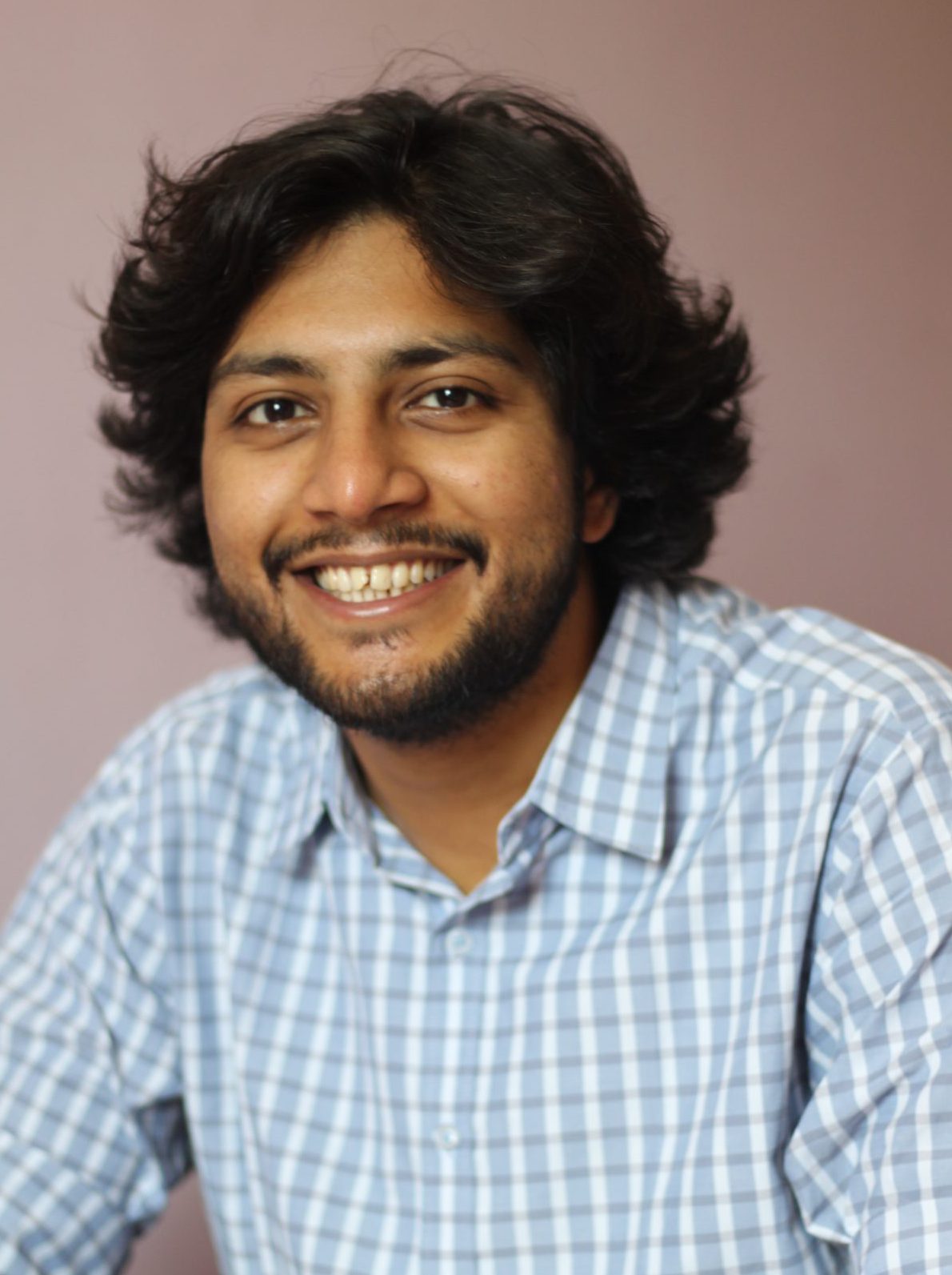
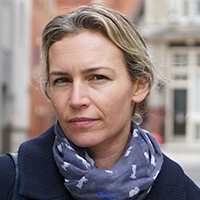
Aaron Bartels-Swindells is a Postdoctoral Associate in the Department of Literatures in English at Cornell University, affiliated with the College of Arts & Sciences. His research focuses on postcolonial literature, African intellectual history, and Marxist literary criticism. He is based at 250 Goldwin Smith Hall, Ithaca, NY. His academic work examines intersections of genre, political ideology, and cultural praxis in African and diasporic literatures. Recent publications include analyses of Ayi Kwei Armah’s engagement with Black Marxism and critical studies of literary prizes like the Windham-Campbell Festival. No grants or awards are explicitly mentioned in the provided materials. His professional presence includes social media links (Twitter/Instagram/Facebook) but no listed advisees or formal grants.
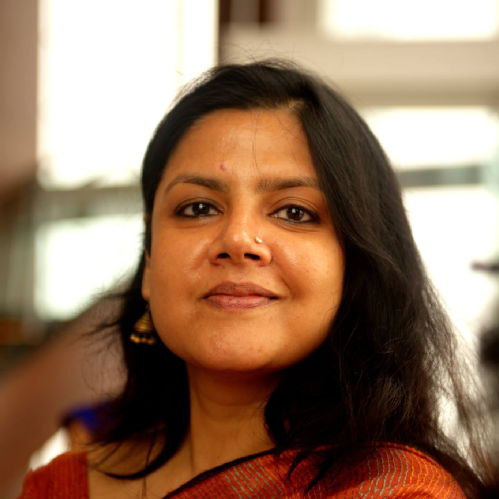
Rashmi Varma is a Professor at the University of Warwick, affiliated with the Faculty of Arts. She has previously taught at the University of North Carolina, Chapel Hill, and Jesus and Mary College, University of Delhi. Education: BA in English (Honours) from Lady Shri Ram College, University of Delhi MA in English Literature from University of Delhi PhD in English and Women’s Studies from University of Illinois at Chicago Research interests: Varma specializes in the postcolonial city, postcolonial Indian and African theory, global feminism, representations of indigeneity, and world literature theory. Her work interrogates urban political ecologies, feminist pedagogy, and subaltern politics. Scientific awards: British Academy Mid-Career Fellowship (2011-2012) for Modern Tribal: Representing Indigeneity in Postcolonial India Supervision: She currently supervises PhD students Angel Maria Varghese, Shavena Malvika Nair (Chancellor's International Scholar), Ragesree Roy, and Archana Vinod (Chancellor's International Scholar). Collaborations: Varma co-edited journals like Feminist Dissent and special issues on transnational feminism, urban political ecologies, and postcolonial theory. She was involved in the Tate Exchange workshop on 'Production, Truth and Justice' (2021).
Rafael Grohmann is an Assistant Professor of Media Studies at the University of Toronto Scarborough (UTSC), with a graduate cross-appointment at the Faculty of Information (iSchool). He leads the DigiLabour Initiative and is a researcher with Fairwork, focusing on Critical Platform and Data Studies. His research emphasizes platform labour, the platformization of work, and resistance strategies among workers in Latin America. Grohmann holds a PhD in Communication from the University of São Paulo and has held prior academic positions at institutions in Brazil, including Unisinos University. His research interests span platform cooperativism, public policies for technology and labor, AI's impact on work, and data-driven labour practices. He is an editorial board member for Big Data & Society and Work, Employment and Society , and contributes to UCLA’s Center for Critical Internet Inquiry (C2i2). His work examines intersections of technology, labour precarity, and solidarity economies, with a focus on global South contexts. Recent publications analyze click farm labour in Brazil, gender dynamics in platform cooperatives, and global-local trends in platform worker organizing. Grohmann’s work bridges critical theory with action research, advocating for fair work standards in digital economies. He participates in initiatives like the Platform Cooperativism Consortium and the Labor Tech Research Network.
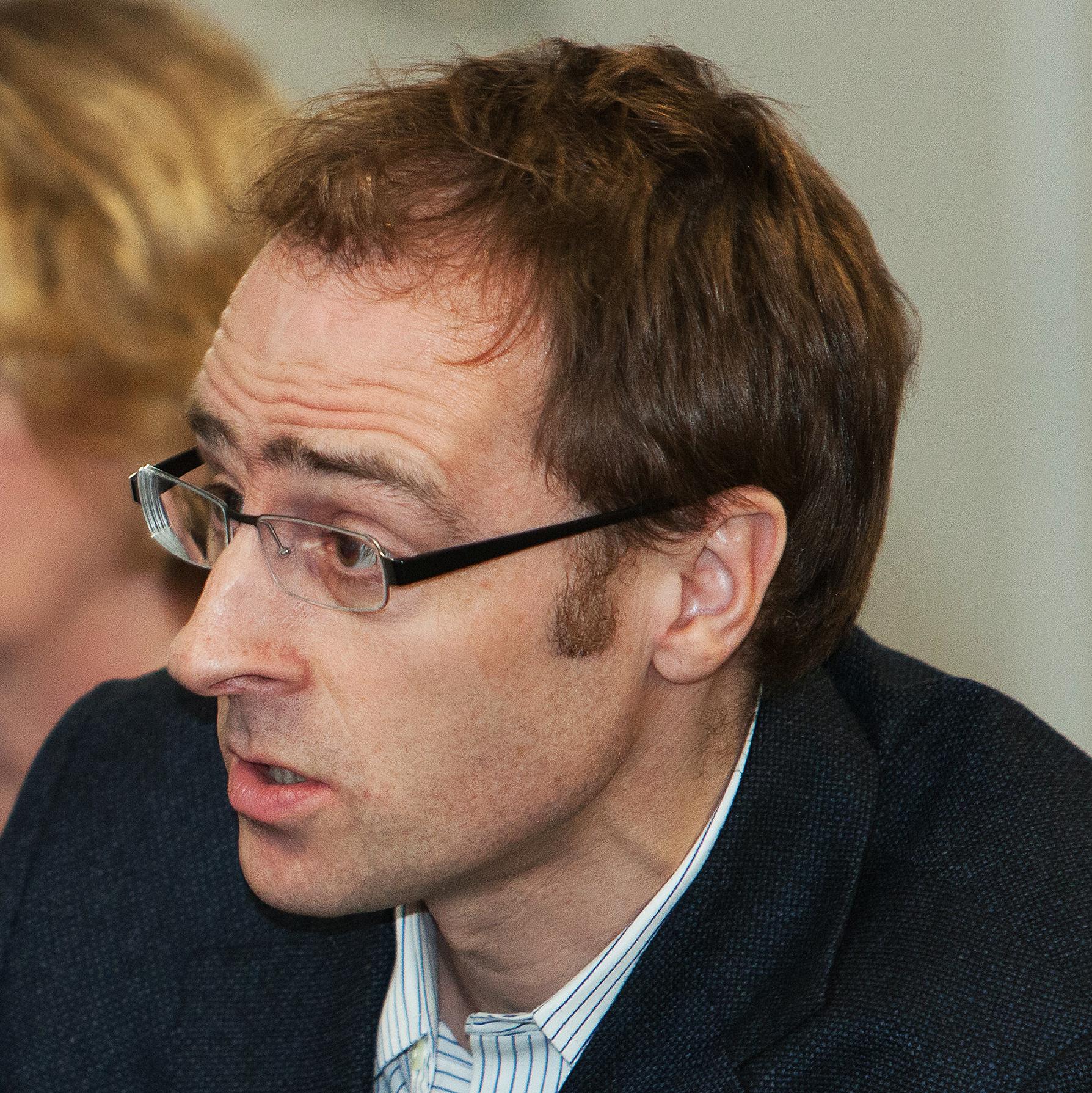
Timothy Bewes is the Owen F. Walker Professor of Humanities and Professor of English at Brown University , where he has taught since 2004. His research bridges contemporary fiction , poststructuralist theory , Marxist literary analysis , and postcolonial studies , with a focus on the politics and ethics of literary form . He has held fellowships at the Pembroke Center and Cogut Institute for the Humanities , and co-edits the Film-Thinking series. Education : DPhil and MA from University of Sussex , BA from University of North London . Bewes' scholarship interrogates the ontological status of fiction and the materiality of literary works , as seen in his National Book Critics Circle Award-winning book Free Indirect: The Novel in a Postfictional Age (2022). His recent articles explore intersections between novel theory , Black studies , and Deleuzean philosophy , emphasizing repetition , dialogicality , and anti-representational frameworks . Notable awards include the L. S. Dembo Prize (2015) and Chesler-Mallow Senior Faculty Research Fellowship (2012-13). He teaches courses such as The Terrible Century , Capitalism & its Metamorphoses , and Bakhtin and the Political Present .
Stefan Kipfer is a Professor at the Faculty of Environmental and Urban Change , York University. He coordinates the Cities, Regions, Planning program and holds a PhD in Political Science from York University. His research focuses on the intersections of spatial organization, social order, and political rule, with particular emphasis on urban politics, racial capitalism, and anti-colonial theory. Education: PhD in Political Science, York University MES in Urban Political Economy and Ecological Politics, York University BA in Political Science and French, York University Kipfer's research spans transnational urban studies, critical theory, and radical political ecology. He explores: Urban social movements in Zurich, Toronto, and Paris State interventions in public housing, transit, and environmental policy The capitalist and racialized dimensions of urbanization Right-wing populism and neo-fascism Connections between Henri Lefebvre, Frantz Fanon, and Antonio Gramsci Recent work analyzes: Urbanization as neocolonial process Anti-racist and decolonial spatial strategies Transit justice and free public services Comparative urban governance Resistances to far-right regimes Articulation theory and political strategy He supervises graduate students in Environmental Studies, Geography, and Political Science, and has contributed to critical urban theory through publications linking Marxist, anti-colonial, and feminist frameworks.
Todd McCallum is an Assistant Professor in the Department of History at Dalhousie University . His research focuses on North American social and cultural history , particularly intersections with Marxism, anarchism, and working-class movements . He also explores themes of gender and sexuality within historical contexts. PhD in History from Queen’s University MA in History from Simon Fraser University BA in History from Queen’s University McCallum’s recent publications analyze transient worker communities, labor activism, and spatial marginalization during economic crises. His work critically examines how categories like “tramp” evolved alongside industrial capitalism and social policy, often incorporating interdisciplinary lenses such as eugenics, documentary photography, and urban sociology. Key trends in his research include the dialectic of mobility and marginality, gendered interpretations of transient life, and the role of radical ideologies in shaping worker identities. He has contributed extensively to journals like Labor/Le Travail and BC Studies , with a particular focus on Vancouver’s Depression-era hobo communities. His teaching portfolio includes courses on the history of the future , conspiracy theories , and gender formation in North America . Office hours are held in the Marion McCain Building, Halifax.
Otto Maduro is a Venezuelan-born Professor of World Christianity & Latin American Christianity at Drew University (Madison, New Jersey) since 1992. He chairs the Division of Church & Society in the Theological School and co-leads the Hispanic Institute of Theology and Hispanic D.Min. Program. Married to Dr. Nancy Noguera, they share a passion for social justice, music, and intercultural dialogue. His research focuses on liberation theology, social justice, and the intersection of religion with marginalized communities. Education: PhD (1977), MA (1975), and MA (1973) in Philosophy/Sociology of Religion from the Université Catholique de Louvain (Belgium), all summa cum laude. Licentiate in Philosophy from Universidad Central de Venezuela (1968). Research Interests: Liberation theology, social justice, ecological ethics, epistemological critiques, religious resistance, and LGBTQ+ rights. His work emphasizes global South perspectives, particularly Latin America’s socio-religious dynamics. Grants & Awards: Henry Luce III Fellowship (2006), Ford Foundation grants (2000–2002), Will Herberg Award (1997), and international recognition for his book Marxismo y Religión (1977). Professional Contributions: Associate editor of Concilium , Journal of Hispanic/Latino Theology , and others. Served on editorial boards of leading journals and as council member of PARAL, SSSR, and ACHTUS. Current Projects: Researching Pentecostal congregations among Latina/o immigrants in Newark and directing the Hispanic Summer Program in Religion & Theology.
University of California , Santa Barbara (UCSB)United States
Utathya Chattopadhyaya is an Assistant Professor in the Department of History at the University of California, Santa Barbara, specializing in Modern South Asian and British Imperial History with intersecting interests in the Indian Ocean World, Global History, and Commodity History. His research combines critical materialist and anti-imperial frameworks to analyze colonial agrarian frontiers, intoxicant commodities, and social dynamics of caste, class, and gender. He teaches undergraduate and graduate courses including commodity histories, South Asian public culture, and historical methods. Ph.D., University of Illinois, Urbana-Champaign (2018) His recent publications focus on cannabis regulation, colonial political economy, and multispecies entanglements in imperial contexts. He has received prestigious fellowships from the American Council of Learned Societies, UC Humanities Division, and the Mellon Foundation. Chattopadhyaya co-teaches interdisciplinary courses on topics such as race, colonialism, and cannabis history, contributing to emerging scholarship in Science, Technology, and Society (STS) and decolonial studies. Chattopadhyaya's research clusters around British imperialism's material impacts, particularly in eastern Bengal's agrarian transformations and intoxicant commodity systems. His work synthesizes historical methods with critical plant studies and gender analysis, producing innovative insights into colonial governance and resistance. He actively engages with graduate students in comparative history and Indian Ocean World studies. "Ganja and the Godhead" (2024) - Colonial cosmologies and cannabis "Colonial Capitalism" (2024) - Economic structures of empire "Bodies that Cohere" (2023) - Gender analysis in colonial contexts Key awards include the Margaret T. Getman Service to Students Award (2024), Regents Humanities Fellowship (2022-23), and ACLS Fellowship (2021-22). His scholarly activities intersect with research clusters in Science, Technology and Society; Race, Blackness and Abolition; and Global Antiquity.
Martin Hägglund is the Birgit Baldwin Professor of Comparative Literature and Humanities at Yale University, with a secondary appointment in the Department of Philosophy. He holds a Ph.D. in Comparative Literature from Cornell University (2011) and Philosophy from Leipzig University (expected 2026). His work bridges Post-Kantian philosophy, critical theory, and modernist literature, with notable books including This Life: Secular Faith and Spiritual Freedom (2019), which won the René Wellek Prize, and Dying for Time: Proust, Woolf, Nabokov (2012). Research focuses on temporality, mortality, and freedom, engaging thinkers like Heidegger, Marx, and Hegel. His writing explores secular ethics, political Marxism, and the interplay between philosophy and literature. Hägglund has held global appointments, including at Sorbonne University and invited professorships in Bonn and Cornell. Awards include the Guggenheim Fellowship (2018) and Myrdal Grand Prize (2024). Publications span over 60 articles and essays, addressing topics from Kierkegaard’s existentialism to Knausgaard’s secular confession. His current projects include The Mortality of the Soul and I Care, Therefore I Am . Teaching emphasizes Heideggerian thought, narrative temporality, and literary theory. Awards and fellowships include Harvard Society of Fellows membership (2009–2012), Berlin Prize (2024), and multiple honorary distinctions. His interdisciplinary approach unites philosophy, literature, and political theory, influencing debates on secularism, capitalism, and freedom’s material conditions.
David Leopold is an Associate Professor of Political Theory at the Department of Politics and International Relations (DPIR), University of Oxford, and a Fellow of Mansfield College. He specializes in the political philosophy of G.W.F. Hegel, Karl Marx, and theoretical connections between them. His research also explores utopianism, methodological questions in political theory, and the history of socialist thought. Leopold holds an MA from Sussex University and a DPhil from the University of Oxford. His teaching includes undergraduate and graduate courses on political theory, research methods in the history of political thought, and the theories of Hegel and Marx. He advises doctoral students on Marx, Hegel, and related topics. Research interests span Marx's views on human flourishing (linked to capabilities approaches), Analytical Marxism, William Morris's utopianism, and the role of ideal theory in political philosophy. He critiques dismissals of utopian thinkers like Morris and engages with Engels's early communitarian socialism. Leopold is affiliated with the Political Theory Network and the Centre for Socio-Spatial Justice (CSSJ). His work bridges historical and contemporary political thought, emphasizing critical engagement with classical texts and their relevance to modern debates.
Professor Maria Löblich holds a position in the Department of Communication History and Media Cultures at the Institute of Journalism and Communication Studies, Faculty of Political and Social Sciences at Freie Universität Berlin. She specializes in historical and comparative approaches to communication studies with particular expertise in German division and reunification contexts, media policy history, and qualitative research methodologies. Her research focuses on communication history, media biographies, and the relationship between East and West German media landscapes. She has developed innovative approaches to studying media use across life courses and historical periods, with particular attention to how media shapes and reflects collective identities during periods of political transformation. Her methodological expertise lies in qualitative approaches including biographical interviews, discourse analysis, and historical media research. Her recent publications demonstrate a strong focus on historical media analysis, particularly examining the Berliner Zeitung as an anchor of East German identity, media usage patterns in divided Berlin, and the development of journalism studies after the student movement. She has also contributed significantly to theoretical discussions on mediatization and media policy frameworks. Fellow at the Berkman Center for Internet & Society, Harvard University (2012/13) Speaker of the Communication History Group of the German Society for Publizistik- and Communication Science (2012-2016) Professor Löblich has supervised numerous research projects examining media history in divided Germany and currently leads investigations into the media legacy of the GDR. Her methodological contributions to qualitative communication research have been widely recognized, including her co-authored book 'Qualitative Forschung in der Kommunikationswissenschaft.'
The Courtauld Institute of Art, University of LondonUnited Kingdom
Sarah Wilson is Professor of Modern and Contemporary Art at The Courtauld Institute of Art, University of London. She has been a faculty member since 1982 and has held leadership roles including Head of the Modern and Contemporary Section (2005-2008) and Head of Diploma programmes (2014-2015). She is internationally recognized as the English-language expert on Post-War European art and has held visiting positions at Paris-IV Sorbonne and the University of Versailles-Saint Quentin. Wilson was educated at the University of Oxford (BA English Literature) and at the Courtauld Institute of Art (MA and PhD). She was awarded the title Chevalier des Arts et des Lettres in 1997 for services to French art and culture, and received the International Association of Art Critics' Award for Distinguished Contribution to Art Criticism in 2015. She has held visiting professorships at Paris-IV Sorbonne (2002-2004), École Nationale Supérieure des Beaux-Arts (2006-2007), and University of Versailles-Saint Quentin (2012-2013). Sarah Wilson's research spans post-war and Cold War European art, contemporary global art practices, and the intersections between conceptual art, political theory, and visual culture. Her work extends from European avant-gardes to contemporary art across the former Soviet Union and Asia. She is particularly known for her expertise in French Stalinism, neo-Marxism and the arts, and conceptual art practices beyond the 'first world.' Wilson has initiated important academic programs such as the 'Global Conceptualism' MA course with Boris Groys, which connects Anglo-American conceptual art with practices from Moscow and beyond. She has also expanded her research to include modern and contemporary Asian art since 2013. Her extensive publication record shows a consistent focus on European art history with increasing engagement with global perspectives, particularly Asian contemporary art since 2013. Wilson's scholarship bridges art historical analysis with philosophical inquiry, especially regarding French theory and its visual manifestations. Her major publications include 'Paris, Capital of the Arts, 1900-1968' (2002) and 'The Visual World of French Theory: Figurations' (2010), with a second volume 'The Visual World of French Theory II: Interventions' in preparation. Chevalier des Arts et des Lettres (1997) International Association of Art Critics' Award for Distinguished Contribution to Art Criticism (2015) Marie Curie Actions – RBUCE-UP, Chaire d'excellence, Université de Versailles-Saint Quentin (2012-2013) Professor Wilson has supervised 36 PhD students to completion and over 230 MA dissertations, creating what she describes as 'a unique English-language archive in the field of post-1945 European and global art history.' Her former students now hold prominent positions in major institutions worldwide including Tate, the British Museum, Design Museum, Scottish National Gallery of Modern Art, British Council, Centre Georges Pompidou, Kunsthalle Bremen, and universities across Europe and North America. She has received significant research funding including a Marie Curie Actions grant for her project 'Globalisation before globalisation: avant-gardes, academies, revolutions.' Wilson is actively involved with the Courtauld alumni's former East Wing Collection (now VS1, Vernon Square) and has contributed to the Research Forum's programmes. She has curated numerous exhibitions including the 'Global Conceptualism'-related projects and served on the curatorial team of the 1st Asian Biennale (China-Guangzhou) in 2014. Her commitment to women artists has led to early exhibitions of artists like Zofia Kulik and Alina Szapocznikow before their international prominence. She is involved with CCRAC (Cambridge-Courtauld Russian Art Centre), Calvert 22, and Pushkin House in London, reaching out to Russia and Eastern Europe.
Anna Krylova is an Associate Professor at Duke University with joint appointments in the Department of History and Gender, Sexuality, and Feminist Studies. Her research bridges historical theory, gender studies, and modern Russian/Soviet history, with a focus on socialist alternatives in industrial modernity. She is currently developing two books: The Grip of History: Essays in Historical Criticism and Social Theory and Imagining Socialism in the Soviet Century . Education Ph.D. in History, Johns Hopkins University (2001) M.A. in History, Johns Hopkins University (1998) M.A. in Political Science, Johns Hopkins University (1995) Research Focus Krylova interrogates the intersections of gender theory, socialist feminism, and Western/Soviet Marxism. Her award-winning book, Soviet Women in Combat (2010), redefines narratives of violence on the Eastern Front. Current projects critique poststructuralist influences on historiography and reimagine Soviet socialism beyond Stalinist paradigms. Publications Overview Her recent articles (2023–2024) analyze agency, poststructuralism, and Marxism's latent role in contemporary historiography. Works consistently engage themes of gender binaries, socialist imaginaries, and Cold War legacies, reflecting a commitment to rethinking historical methodology. Awards and Honors Herbert Baxter Adams Prize (2011) for best first book in European history National Humanities Center Fellowship (2013–2014) Institute for Advanced Study Membership (2013) Mellon Faculty Book Manuscript Fellowship (2008–2009) Advising and Grants Krylova mentors Ph.D. students in Russian history and gender theory. Her research is supported by grants from SSRC, IREX, and the Davis Center at Harvard. She has held residencies at Tübingen University and the John Hope Franklin Humanities Institute.
Auritro Majumder is Associate Professor of English at the University of Houston's College of Liberal Arts and Social Sciences, holding a courtesy appointment in the India Studies Program. His academic profile spans literary scholarship, critical theory, and intellectual history with a focus on non-Western perspectives. His educational background includes a Ph.D. in English from Syracuse University (2014), a Certificate in Critical Theory from Cornell University (2012), an M.A. (First Class) in English from Jadavpur University (2009), and a B.A. (First Class Honours) in English from Jadavpur University (2007). Majumder's research centers on peripheral internationalism and decolonial knowledge production , examining literary traditions across India, the Soviet Union, China, Latin America, and the United States. His work bridges literary theory , critical race studies , and global political movements , with particular emphasis on Bengali literature, caste-race intersections, and South-South cultural networks. His monograph Insurgent Imaginations: World Literature and the Periphery (Cambridge University Press, 2020) redefines world literature through non-Western frameworks. Analysis of his 15 most recent publications reveals consistent engagement with decolonial aesthetics , transnational solidarity , and subaltern epistemologies . His scholarship demonstrates interdisciplinary reach spanning literary studies, political theory, film criticism, and comparative intellectual history, with increasing focus on contemporary debates around planetary consciousness and peripheral modernities. His scientific recognition includes: Project Completion Grant, CLASS (2019) William Lee Pryor College Professorship (2018-2019) Research Progress Grant (2017) CLASS Research Funds (2016) New Faculty Summer Research Grant (2015) Majumder actively contributes to academic service as Executive Committee member of the Modern Language Association’s South Asian and South Asian Diasporic Language, Literature and Culture Forum, editorial board member for Mediations , jurist for the National Endowment for the Humanities, and reviewer for multiple international journals. He has lectured globally across North America, South Asia, Europe, and Brazil. His teaching portfolio includes courses on postcolonial literature, modern Indian literature, and graduate seminars in postcolonial theory. Current projects include a monograph titled The Global South in Literature and Theory and a co-edited anthology Cultures of the Cold War in South Asia .
London School of Economics and Political Science (LSE)United Kingdom
Lea Ypi is a Professor of Political Theory at the London School of Economics and Political Science (LSE) and an Honorary Professor of Philosophy at the Australian National University. She holds degrees from the University of Rome La Sapienza and a PhD from the European University Institute, followed by postdoctoral research at Nuffield College, Oxford. Her work spans political theory, the history of philosophy, Marxism, critical theory, and Kantian philosophy. Notable publications include Global Justice and Avant-Garde Political Agency , The Meaning of Partisanship (with Jonathan White), and Free: Coming of Age at the End of History . Ypi’s research has been recognized with the British Academy Prize and a Leverhulme Prize. She is a Fellow of the British Academy, Academia Europea, and the Albanian Academy of Sciences. Her research interests include revolutionary theory, Kantian philosophy, structural injustice, and global justice. Key publications address topics like Kant’s views on colonialism, the ethics of migration, and the role of partisanship in democracy. Ypi’s academic contributions bridge normative political theory with critical engagement in contemporary social and political issues. Awards include the British Academy Prize for Excellence in Political Science (2015), Leverhulme Prize (2014), and fellowships in leading academic institutions. Her interdisciplinary approach integrates historical, philosophical, and contemporary analyses to address urgent political questions.