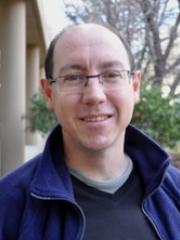
Associate Professor Madeline Taylor is an Australian Research Council (ARC) Early Career Industry Fellow at Macquarie Law School and Co-Lead of the Energy, Communities, and Market Regulation Stream at the Transforming Energy Markets Research Centre. She specializes in socio-legal aspects of energy transition, focusing on regulatory frameworks, energy justice, and land-use conflicts between energy developers and communities. Her work bridges property law, commercial law, and comparative law to address challenges in renewable energy integration and resource governance. Affiliations: Honorary Associate at Sydney Environment Institute, Member of Sydney Institute of Agriculture Industry Partners: NSW Department of Primary Industries and Spark Renewables (FAARM Project) Research Interests: Energy law and policy, agricultural-legal synergies, renewable energy siting, and just transition principles. She co-edits the Oil, Gas and Energy Law Journal and contributes to the LexisNexis Energy and Resources Law in Australia . Recent Articles Highlight Key Themes: Offshore wind governance, agrivoltaics regulatory systems, hydrogen licensing, and energy justice frameworks. These works emphasize interdisciplinary approaches to balancing economic, environmental, and social dimensions of energy transitions. Awards: 2023 Lawyers Weekly Women in Law Academic/Researcher of the Year, 2024 AFR Higher Education Awards Finalist, Clean Energy Council Transformational Leadership Scholarship Teaching and Engagement: Embeds climate justice in commercial law education; advises governments and NGOs on energy policy. Active in RE-Alliance Management Committee and IUCN Climate Change Law initiatives.
Professor Anthony Richardson is a mathematical ecologist at the University of Queensland , holding a joint position with CSIRO Environment since 2005. He leads the Mathematical Marine Ecology Lab , focusing on marine conservation through mathematical, statistical, and computational modeling. School of the Environment, Faculty of Science, University of Queensland Affiliate, Centre for Marine Science Affiliate, Centre for Biodiversity and Conservation Science Research Interests span marine spatial planning (climate-smart protected areas, 3D ocean zoning), marine ecosystem modeling (lower trophic levels, plankton-dynamics), and climate change impacts (carbon sequestration, fisheries productivity, and marine diseases). His work has been cited in IPCC Assessment Reports and emphasizes international collaboration through projects like the Global Working Group on Climate Change Synthesis . Recent Publications focus on Zooplankton's role in carbon cycling Climate-smart marine protected area design Ecosystem modeling under climate uncertainty Marine megafauna connectivity patterns Supervision is offered for >250 peer-reviewed papers and advanced projects in climate-smart conservation planning, with established funding from ARC Discovery Projects and Norwegian Polar Institute .
Professor Sabine Dittmann is a leading expert in coastal ecosystem ecology and marine sciences at Flinders University, Australia. As a Professor of Marine Biology in the College of Science and Engineering, her work bridges research and environmental management, focusing on hypersaline estuaries, blue carbon restoration, and invasive species control. She holds a Habilitation in Ecology from the University of Bremen (2001), PhD from the University of Göttingen (1987), and MSc from the same institution (1984). Her research interests include coastal ecosystem health, mangrove and saltmarsh restoration, and decision support frameworks for marine conservation. She has advised government agencies on marine parks, Commonwealth Marine Reserves, and the Coorong ecosystem. Key roles include national president of the Australian Marine Sciences Association (2012–2014), current president of the Royal Society of South Australia, and member of the Australian Antarctic Science Council since 2019. Her recent work emphasizes the global challenges of hypersaline wetland restoration, invasive species impact, and blue carbon methodologies. Over 112 publications span estuarine dynamics, benthic macrofauna, and policy-relevant ecosystem assessments. Projects like the Coorong benthic surveys highlight her commitment to translating science into conservation action.
Professor Nick Paul is a marine scientist at the University of the Sunshine Coast (UniSC), leading applied research in seaweed and algae for sustainable product development. He holds a PhD and BSc (Hons) from UNSW and a Graduate Certificate in Tertiary Education Management from the University of Melbourne. His work focuses on seaweed aquaculture innovations, including waste-to-resource biotechnology, functional foods, and environmental remediation. He leads international projects funded by organizations like ACIAR, CSIRO, and Advance Queensland. Research interests include seaweed-based solutions for livestock health, wastewater treatment, and sustainable aquaculture expansion near the Great Barrier Reef. He has pioneered commercial land-based seaweed farming and developed intellectual property in this field. Awards include the 2015 UNAA World Environment Day Award for Sustainable Water Management and the 2015 Queensland Water Innovation Forum Best Paper. He serves on the Asian Fisheries Society Council and Fiji’s National Seaweed Taskforce. Key publications span seaweed cultivation methods, marine genomics, and socio-economic impacts of aquaculture in the Pacific. Grants total over A$3.7 million for projects like diversifying Pacific Island seaweed industries and improving Indonesian seaweed production.
Michael Bode is a Professor in the School of Mathematical Sciences at Queensland University of Technology (QUT). His research focuses on applying mathematical and computational methods to ecological and conservation challenges, particularly in marine ecosystems and coral reef management. He holds a PhD in Applied Mathematics from the University of Queensland. Research Interests: Professor Bode specializes in larval dispersal modeling, conservation prioritization, and the application of ecosystem models to real-world management scenarios. His work integrates disciplines like applied mathematics, statistics, and ecology to address issues such as coral reef resilience, invasive species control, and climate change impacts. Grants & Projects: Securing Antarctica's Environmental Future (2020) Conserving Coral Reef Fish and Sustaining Fisheries in the Anthropocene (2019) Tackling Pests Using Game Theory (2019) New Methods for Conserving Dispersing Species on Coral Reefs (2017) Awards: 2020 Fenner Medal (Australian Academy of Science) Eureka Prize finalist (2020) Australian Research Council Future Fellowship (2017) Labs & Teams: He leads the QUT Applied Mathematical Ecology Group (QUTAMEG), which develops quantitative tools for ecological and conservation problems. His work is published in journals like Conservation Biology , Nature Sustainability , and PLoS Biology .
Bojan Tamburic is a Senior Lecturer in Environmental Engineering at the University of New South Wales (UNSW) Sydney, where he is affiliated with the School of Engineering and the Department of Civil and Environmental Engineering. He holds the prestigious position of Australian Research Council Mid-Career Industry Fellow (IM230100222) and serves as the lead Chief Investigator of the Nuisance and Harmful Algae Science-Practice Partnership (NHASP). Dr. Tamburic earned his academic credentials from Imperial College London, including a PhD in Chemical Engineering (2009-2012), an MSc in Sustainable Energy Futures (2008), and an MSci in Physics (2003-2007). Prior to joining UNSW, he was a Chancellor's Postdoctoral Research Fellow at the University of Technology Sydney. His research focuses primarily on dual aspects of algal science: the management of harmful algal blooms ('bad algae') in waterbodies to preserve water quality and aquatic habitats, and the cultivation of beneficial algae ('good algae') for producing valuable bioproducts such as biofuels, animal feed, and sustainable chemicals. His work spans environmental engineering, water treatment processes, and algal biotechnology applications. Analysis of Tamburic's recent publications reveals a strong trend toward practical applications of algal science in water management. His research spans environmental monitoring using remote sensing, microplastic analysis in urban water systems, odour and taste management in drinking water, and innovative approaches to algal biomass harvesting and utilization. His work consistently bridges fundamental algal physiology with practical engineering solutions for water quality challenges. Australian Research Council Mid-Career Industry Fellow (IM230100222) for the project 'Large scale urban stormwater reuse: safe, clear and odourless water supply' (2023-2026) Dr. Tamburic leads significant research initiatives including the Nuisance and Harmful Algae Science-Practice Partnership (NHASP), focusing on translating scientific understanding of algal phenomena into practical management solutions. His grant portfolio demonstrates strong industry and government engagement, particularly in the area of sustainable water management. He teaches courses including DESN1000 Engineering Design and Innovation and CVEN9886 Environmental Microbial Processes at UNSW.
Professor Stuart Phinn is a distinguished academic at the University of Queensland, serving as Professor in the School of the Environment and Centre Director of the Remote Sensing Research Centre (Earth Observation Research Centre). He also maintains affiliations with the Centre for Marine Science. With a career spanning over two decades, Professor Phinn has established himself as a leading expert in earth observation and environmental monitoring, with over 559 publications including 295 journal articles. His educational background includes a Bachelor (Honours) of Science (Advanced) from The University of Queensland and a Doctor of Philosophy from San Diego State University. Professor Phinn's leadership extends to founding directorships of Australia's national earth observation coordination body (www.eoa.org.au) and collaborative research infrastructure (www.tern.org.au), as well as a world-leading research-to-operational program supporting government environmental monitoring (www.jrsrp.org.au). He also leads the Earth Observation for Government Network. Professor Phinn's research focuses on monitoring environmental change using earth observation and field data. His work primarily involves using images collected from satellites and aircraft, combined with field measurements, to map and monitor Earth's environments and how they change over time. This research is conducted in collaboration with environmental scientists, government agencies, NGOs, and private companies. A growing aspect of his work focuses on national coordination of earth observation activities and the collection, publishing, and sharing of ecosystem data. His work provides solutions to support sustainable development and resource use for governments, industries, and communities. His recent publications demonstrate a consistent focus on applying earth observation technologies to solve environmental challenges across multiple domains. The 15 most recent articles reveal strong themes in coral reef mapping and monitoring, land cover change detection, fire resilience analysis, and advanced remote sensing techniques including multi-sensor fusion and machine learning applications. His work spans terrestrial, coastal, and marine environments, with significant contributions to understanding environmental change in Australia and internationally, particularly in Indonesia. Professor Phinn has secured substantial research funding from diverse sources including government agencies (Queensland Government, Great Barrier Reef Marine Park Authority), industry partners (SmartSat CRC, Blue Economy CRC), and international organizations (Google Inc, Vulcan Inc). Current projects include evaluating impacts of threats to endangered reptiles, automating tree-scale vegetation structure monitoring, and continuing the Joint Remote Sensing Research Program. As an academic supervisor, Professor Phinn has mentored numerous PhD and Master's students, with current supervision spanning topics from forest disturbance analysis to kelp forest mapping and fire resilience of mine site rehabilitation. His extensive supervision history demonstrates his commitment to training the next generation of earth observation scientists. The Earth Observation Research Centre he directs fosters a collaborative research environment focused on transforming satellite and airborne images with field survey data into meaningful environmental information for decision-making.
Prof Justin Seymour is a Professor in the Climate Change Cluster (C3) at the University of Technology Sydney (UTS). He leads the Ocean Microbiology Group, focusing on microbial ecology and oceanography. His research explores microbial roles in ocean ecosystems, spanning from ocean-basin dynamics to microscale interactions between microbes and marine organisms. He supervises Masters and PhD students, teaches Microbial Ecology (91170), and advises on courses like Ocean Systems and Climate Change (91156). Education: Not explicitly listed, but his academic role implies advanced degrees in microbiology or marine science. Affiliations: Faculty of Science, UTS Climate Change Cluster (C3) Research Interests: His work addresses microbial contributions to ocean biogeochemistry, including interactions between microbes and corals, fish, seagrasses, and harmful pathogens. Key themes include: Microbial Oceanography Marine Microbial Ecology Climate Change Impacts on Microbiomes Articles Trends: Recent publications emphasize climate-driven shifts in microbial communities, pathogen dynamics linked to oyster mortality, and chemotaxis mechanisms in marine bacteria. Research highlights include the role of Vibrio species in disease outbreaks and the influence of marine heatwaves on microbiology. Awards: ARC Discovery Projects (DP240100370, DP230100127, DP210101610) UTS Chancellor's Research Fellowship Gordon and Betty Moore Foundation Grant Advising & Grants: Active in securing funding (e.g., ARC, NSW Government, Fisheries grants) for projects like oyster disease resilience and microbial contamination studies. Supervises interdisciplinary teams addressing climate change and marine health challenges. Labs/Teams: Leads the Ocean Microbiology Group, collaborating internationally on microbial ecology, coral restoration, and aquaculture.
Associate Professor Ben Gilby is a coastal and marine ecologist at the University of the Sunshine Coast (UniSC), specializing in ecological restoration, conservation biology, and spatial ecology. He holds an Associate Professor position in Animal Ecology within the School of Science, Technology and Engineering. His research focuses on optimizing ecosystem management through systematic planning, spatial ecology, and ecological indicators, with expertise in coastal fish habitats and shellfish reef restoration. He collaborates extensively with government agencies, NGOs, and industries to address ecological monitoring, restoration, and environmental planning challenges. Ben Gilby's education includes a PhD and BSc(Hons) from Griffith University (Griff) and the University of Queensland (Qld). His teaching includes courses on endangered animals, coastal and marine ecology, and restoration ecology. His research has been published widely in journals like Ecology , Conservation Biology , and Restoration Ecology , with a focus on seascape connectivity, urbanization impacts, and the ecological functions of coastal habitats. Key research topics include shellfish reef restoration, nutrient offsetting using coastal wetlands, and the integration of spatial ecology into conservation planning. He coordinates postgraduate research on coastal fish ecology, ecological restoration hotspots, and the ecological roles of coastal habitats. His work emphasizes maximizing ecological, social, and economic outcomes through evidence-based approaches.
Dale Edward Squires is an economist affiliated with the Southwest Fisheries Science Center under the US NOAA Fisheries in La Jolla, California, and serves as an Adjunct Professor of Economics at the University of California San Diego . His work bridges economic analysis with marine conservation and fisheries policy. Research interests include: Marine economics and fisheries management Bycatch mitigation strategies Conservation agreements and policy frameworks Data-limited fisheries analysis Stakeholder-driven resource governance Deep sea mining regulations Recent publications focus on multidisciplinary approaches to bycatch reduction, sustainable tuna management, shark conservation frameworks, and stakeholder participation in deep-sea mining policies. His collaborations span institutions in the US, UK, Sweden, and international foundations.
Tim Stephens is Professor of International Law at The University of Sydney Law School. He specializes in international law of the sea, environmental law, and Antarctic governance, with appointments to international arbitration panels related to environmental protection. Key research domains: International ocean governance and UNCLOS implementation Climate change impacts on maritime boundaries Antarctic Treaty System under geopolitical pressure International environmental dispute resolution Recent publications analyze climate change adaptation in marine law, ocean acidification governance, and legal innovations for environmental protection. His advisory roles include: Arbitrator under the Antarctic Environmental Protocol Expert for the South Pacific Regional Fisheries Management Organisation Past President of Australian and New Zealand Society of International Law
Professor Michael Fabinyi is a distinguished academic at the University of Technology Sydney, where he serves as Professor in Social and Political Sciences within the Faculty of Design and Society. Previously, he held positions as Associate Professor (2019-2023) and Senior Lecturer (2016-2018) at the same institution. His academic journey includes significant research experience at the Australian Research Council Centre of Excellence for Coral Reef Studies at James Cook University (2010-2016), where he progressed from Postdoctoral Research Fellow to Senior Research Fellow. Professor Fabinyi completed his PhD at the Australian National University in 2009 and earned his BA (Hons.) from the University of Melbourne. His international experience is extensive, having lived and worked in China, Indonesia, Malaysia, Papua New Guinea, the Philippines, and Solomon Islands. He has held visiting appointments at Peking University (2013-14) and WorldFish in Malaysia (2015), and currently serves as an Adjunct Associate Professor at Palawan State University in the Philippines. Professor Fabinyi's research focuses on the social, political, and cultural dimensions of marine resource use and management. His work spans coastal livelihoods, agrarian change, food security in coastal contexts, seafood trade, fisheries governance, and coral reef restoration. His research approach integrates theories and methods from anthropology, development studies, and human geography, with a strong emphasis on Southeast Asian contexts, particularly the Philippines. He has developed expertise in political ecology, environmental anthropology, and the blue economy, examining how maritime zone developments impact small-scale fishing communities across Southeast Asia. His recent publications reveal a strong focus on coral reef restoration governance in Southeast Asia, small-scale fisheries contributions to global food systems, and China's role in global seafood trade. Professor Fabinyi's work consistently addresses the intersection of environmental conservation and human wellbeing, with particular attention to governance structures, equity issues, and the social dimensions of marine resource management. His research often employs ethnographic methodologies including interviews, focus group discussions, and participant observation to understand local perspectives on marine resource management. Professor Fabinyi has secured significant research funding from various sources including the Australian Research Council, Australian Centre for International Agricultural Research, and the Nippon Foundation Ocean Nexus Centre. His current projects focus on sandfish mariculture, coral reef restoration and governance in the Philippines, small-scale fisheries governance in the Philippines, edible bird's nest trade in Indonesia, and China's role in global fisheries. At UTS, Professor Fabinyi coordinates and teaches undergraduate subjects on political economy, sociology, and climate justice and policy. He actively supervises PhD students researching fisheries governance and coastal livelihoods. His work engages with multiple UN Sustainable Development Goals, particularly Life Below Water (14), No Poverty (1), Reduced Inequalities (10), Responsible Consumption and Production (12), Zero Hunger (2), and Decent Work and Economic Growth (8). Professor Fabinyi is an active contributor to international research networks, collaborating with scholars across Southeast Asia, Australia, and globally. His work bridges academic research with policy relevance, contributing to debates on sustainable ocean governance, equitable blue economy development, and effective coral reef conservation strategies that consider both ecological and social dimensions.
Assoc. Prof Natasha Stacey is an anthropologist with a PhD and over two decades of experience in socio-economics, marine resource management, and fisheries research across the Asia-Pacific region and North Australia. Her work focuses on small-scale fisheries, aquaculture, and enhancing livelihoods for Indigenous and rural coastal communities. Education: PhD in Anthropology Her research spans interdisciplinary themes in sustainable development, ecosystem services, and policy analysis. She investigates socio-economic drivers of natural resource use, women's empowerment in agriculture, and food security challenges in Timor-Leste, Indonesia, and Bangladesh. Recent publications highlight collaborative studies on tropical sardine fisheries, forest management policies, and maternal nutrition impacts. Stacey's articles emphasize socio-economic factors, cross-disciplinary methodologies, and regional applications in fisheries and agriculture. While no explicit awards or grants are listed, her work demonstrates a commitment to addressing livelihood and sustainability issues through anthropological and environmental science lenses.
Millicent McCreath is a Scientia PhD Candidate and Teaching Fellow at UNSW Law & Justice. She holds a BA (Environmental Studies) and LLB (Hons) from UNSW, an LLM (Law of the Sea) from the University of Tromsø, and a GDLP from ANU. Her doctoral research focuses on marine environmental protection, state responsibility, and dispute settlement. She was a Research Associate at the National University of Singapore’s Oceans Law and Policy Programme (2017–2019) and remains affiliated as a Global Associate. Her work addresses law of the sea issues in the Asia-Pacific, including climate change litigation and marine governance. Notable roles include serving as Tipstaff to Justice Pain of the Land and Environment Court of NSW (2016) and being admitted as a solicitor in NSW. Her research interests span Law of the Sea, Public International Law, and International Environmental Law. Key publications include analyses of dispute resolution mechanisms, marine environmental protection, and climate change adaptation. She has presented globally, focusing on topics like advisory opinions in international courts and coastal state obligations. McCreath received the Rhodes Academy’s best written exam prize (2017) and has contributed to edited volumes on high seas governance and climate change litigation. Her affiliations include the UNSW Environmental Law Group and collaborations with international institutions like the Centre for International Law in Singapore.
Professor Robin Warner is an Honorary Fellow at the Australian National Centre for Ocean Resources and Security (ANCORS) within the University of Wollongong's Faculty of Business and Law. He holds a Ph.D. in Law from the University of Sydney (2006). His research focuses on oceans governance, marine environmental law, climate change impacts, and high seas biodiversity conservation. He has supervised over 13 PhD students, including studies on IUU fishing, marine genetic resources, and climate change in maritime security. Key contributions include advancing legal frameworks for marine protected areas, dynamic spatial management, and the Blue Economy. He has authored over 99 research outputs, including seminal works on Antarctic environmental security and strategic environmental assessment (SEA) applications. His service roles include Vice President of the NZ and Australian Armed Forces Law Association and editorial board membership with Frontiers in Marine Affairs and Policy . Notable awards include an Australian Research Council (ARC) Postdoctoral Fellowship. He has contributed to major funding initiatives like the Global Challenges Project on Blue Carbon Futures and Blue Economy strategies. His work bridges legal, scientific, and policy dimensions to address global ocean challenges.