Norwegian University of Science And TechnologyNorway
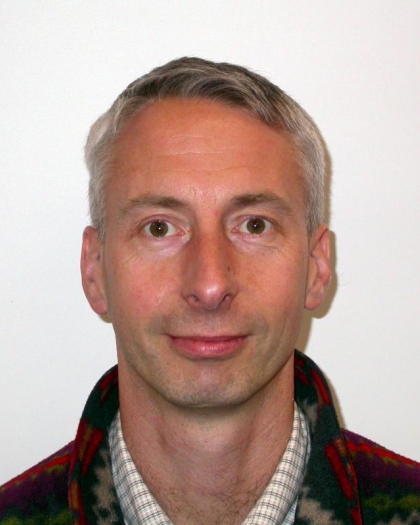
Hans Bihs is a Professor in the Department of Civil and Environmental Engineering, Faculty of Engineering. His research focuses on computational fluid dynamics (CFD), wave hydrodynamics, and wave-structure interaction using the open-source framework REEF3D. Key Research Areas: CFD simulations, wave modeling, floating body dynamics, ocean wave energy, aquaculture hydrodynamics, sediment transport, and high-performance computing. Projects: ERC Consolidator Grant PARTRES (2023-2028), EEA Grants Portugal SurfWave (2023), NFR KPN IPIRIS (2021-2025), EEA Baltic SolidShore (2021-2024), NTNU's MAPLE (2022-2025), and DigiCoast (2021-2024). Email: hans.bihs@ntnu.no His recent publications (2025-2020) analyze fluid-structure interaction, ship-induced waves, floating offshore wind turbines, submerged vegetation, and coastal structures using advanced CFD techniques. Topics include wave hydrodynamics, turbulence, and numerical modeling for marine and aquaculture systems.
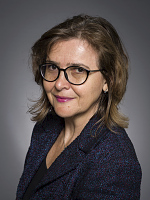
Filippo Maria Bianchi is an Associate Professor in the Department of Mathematics and Statistics at UiT The Arctic University of Norway, where he conducts research at the intersection of machine learning, dynamical systems, and complex networks. He is also a Senior Researcher at NORCE Norwegian Research Centre and actively contributes to the IEEE Task Force on Learning for Structured Data and the ELLIS Society. Department: Department of Mathematics and Statistics School: Faculty of Science and Technology University: UiT The Arctic University of Norway Adjunct Position: Senior Researcher, NORCE Education: Bachelor’s in Computer Engineering, Sapienza University of Rome Master’s in Artificial Intelligence & Robotics, Sapienza University of Rome (cum laude, 2012) PhD in Machine Learning, Sapienza University of Rome His research focuses on graph machine learning, time series analysis, reservoir computing, and probabilistic forecasting , with applications in energy analytics and remote sensing. He has led and contributed to numerous projects involving Arctic power grids, satellite-based environmental monitoring, and deep learning for sustainability. The recent publications reflect a strong trend in graph neural networks —particularly pooling mechanisms, spatiotemporal modeling, and explainability—alongside applications in energy forecasting, avalanche detection, and remote sensing . His work combines theoretical innovation with real-world impact, especially in Arctic and remote environments. Scientific Affiliations and Leadership: Vice-Chair, IEEE Task Force on Learning for Structured Data Member, ELLIS Society Co-founder, Northernmost Graph Machine Learning group Member, IEEE Task Force on Reservoir Computing Visiting Professor, Politecnico di Milano (2024–2025) He actively mentors students and collaborates on interdisciplinary research. He has led projects in power grid reliability, solar fault detection, and unsupervised change detection in satellite imagery . His work is supported by open-source implementations and reproducible research practices. Laboratories and Research Groups: Northernmost Graph Machine Learning group (co-founder) ARC Research Group, UiT Graph Machine Learning Group, Lugano
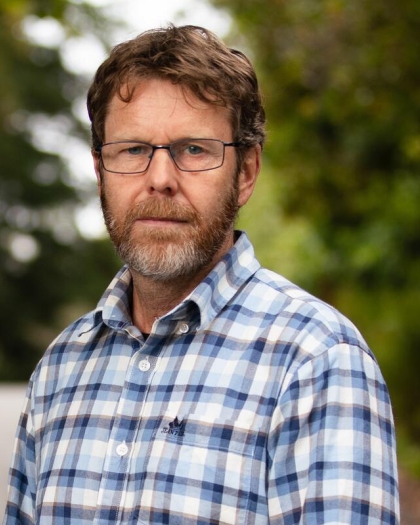
Eirik Valseth is an Associate Professor of Scientific Computing at the Norwegian University of Life Sciences (NMBU), Department of Data Science. He holds concurrent roles as a research associate at the Oden Institute, University of Texas at Austin, and an affiliated researcher at Simula Research Laboratory (Department of Numerical Analysis and Scientific Computing). His expertise lies in advanced finite element methods for PDEs with applications in flood modeling and hydropower systems. Current Affiliation: NMBU (Norwegian University of Life Sciences) Secondary Affiliations: Oden Institute (UT Austin), Simula Research Laboratory Research interests span numerical methods for challenging PDE systems, including: Stabilized finite element formulations Hurricane storm surge and riverine flood modeling Hydropower infrastructure analysis Computational mechanics and applied mathematics His recent publications (2024–2025) emphasize flood risk assessment (compound flooding, dam breaks, dredging impacts), advanced numerical methods (isogeometric analysis, stochastic finite elements, graph-grammar algorithms), and environmental applications (pollution transport, pathogen distribution, mosquito population dynamics after hurricanes). Key trends include cross-disciplinary integration of physics-aware machine learning and robust hydrodynamic simulation tools. Valseth's work extends to software development (e.g., WAVEx for spectral wave models, SWEMniCS for coastal circulation) and large-scale modeling frameworks like the ADCIRC unstructured mesh model for US coasts. Collaborative projects involve institutions such as University of Texas at Austin, Simula, and NOAA.
Joachim Reuder is a Professor and Research Group Leader at the Geophysical Institute, University of Bergen, affiliated with the Bjerknes Centre for Climate Research. His research focuses on turbulence in the atmospheric boundary layer, wind energy meteorology, and the application of drones for atmospheric measurements. He leads the Meteorology research group and collaborates with the Bergen Offshore Wind Centre. His work combines field observations with advanced simulations, emphasizing stable boundary layers, wind turbine wake dynamics, and lidar technology validation. Key projects include the ISOBAR Arctic field campaigns, COTUR offshore turbulence studies, and the SAMURAI-S drone-based turbulence investigation. Publications highlight contributions to lidar data analysis, boundary layer modeling, and wind energy applications. He has organized conferences and contributed to editorial roles, underscoring his influence in atmospheric science and meteorology.
Jack Christopher Landy is an Associate Professor in the Department of Physics and Technology at UiT The Arctic University of Norway , specializing in Earth Observation and Arctic sea ice dynamics . His work integrates satellite altimetry , microwave backscatter , and data assimilation to study climate impacts on polar ice. Research Focus : Arctic sea ice thickness and freeboard estimation Snow depth modeling via CryoSat-2 and ICESat-2 Multi-decadal SAR analysis of ice types Climate change effects on ice roughness and transport Collaborations : Torgny Vinje Ice and Climate Laboratory INTERAAC (Norway-China air-snow-ice-ocean interactions) Multi-institutional Arctic climate projects
Norwegian University of Science And TechnologyNorway
Egil Tjåland is an Associate Professor in the Department of Geoscience at the Norwegian University of Science and Technology (NTNU). His research focuses on geophysical methods, seismic attribute analysis, and applications in petroleum engineering and deep-sea mining technologies. His publications demonstrate expertise in seismic interpretation methods, attribute benchmarking, and geophysical data processing. Recent work explores the transfer of oil and gas technologies to deep-sea mining operations. He teaches courses in geophysics, petroleum engineering, and scientific communication. His research contributions include developing seismic analysis tools like A3Mark for attribute benchmarking and investigating elastic parameter estimation methods. No information regarding awards, supervised students, or research grants is provided.
Henk Keers is an Associate Professor at the Department of Geosciences of the University of Bergen (UiB). His research focuses on geophysical modeling, seismology, and ocean acoustics, with contributions to seismic wave analysis, teleseismic tomography, and educational innovations in sedimentology. He actively collaborates on projects such as SEDucate, promoting active learning in geoscience education. Key research themes include: Body wave modeling for regional seismology Acoustic inversion techniques for ocean turbulence Tomographic imaging of crustal structures Development of efficient numerical methods for geophysical problems Recent work includes presentations at events like the AdriaArray Workshop (2023) and Nordic Seismology Seminar (2022) , addressing topics such as elastic isotropic modeling and waveform inversion. His research has been funded by institutions including the Research Council of Norway.
Norwegian University of Science And TechnologyNorway
Hefeng Dong is a Professor in Acoustic Remote Sensing at the Department of Electronic Systems (IES) at NTNU since 2002. She leads the Acoustics Group and focuses on underwater acoustics, geoacoustic modeling, and marine environmental impact studies. Her research integrates signal processing, seismic inversion, and distributed sensing technologies. Education: BSc/MSc in Physics (Northeast Normal University, 1983/1986), PhD in Geoacoustics (Jilin University, 1994). She held positions at SINTEF Petroleum and conducted research visits at the University of Victoria (2008–2009) and University of Delaware (2014–2015). She is a member of IEEE and the Acoustical Society of America. Research interests span underwater acoustic communication, fiber-optic sensing for geophysics, and environmental monitoring. Recent work includes advancements in distributed acoustic sensing (DAS) for seabed monitoring and underwater localization using vector sensors. Her publications emphasize machine learning applications in geophysical data analysis and signal processing. Notable contributions include studies on shear wave velocity estimation via deep learning and the development of underwater communication protocols using fiber-optic cables. She has also explored the environmental impact of low-frequency sound on marine life, integrating acoustic measurements with ecological studies. Grants and collaborations include projects on quick clay monitoring and geophysical sensing technologies for energy applications. Her academic outreach includes hands-on acoustics training courses at NTNU and international conference participation.
Mostafa Bakhoday Paskyabi is an Associate Professor at the Geophysical Institute , University of Bergen. His research focuses on offshore wind energy , environmental impacts of turbines , wind-wave-turbulence interaction , and climate change effects on wind parks . He employs Large Eddy Simulation (LES) and data assimilation for digital twin development. Teaching: Course responsible for ENERGI322 and ENERGI101; lecturer for ENERGI321 and ENERGI360. Supervision: Advises PhD candidates like Maria Krutova, Xu Ning, and Øystein Husevåg Døskeland, alongside master’s students including Fahim Masud Ahmed and Tord Nylan Malmei. His research explores physical oceanography (ocean mixing, Lagrangian particle tracking), air-sea interaction , and reduced-order modeling for offshore energy systems. Recent work examines swell wave impacts on turbulence and LiDAR-based data assimilation for transient event forecasting. Projects include LESWIND , WindSys , HIPERWIND , and Wind3D , addressing offshore wind design, ecosystem impacts, and climate operability. Collaborations span institutions like NTNU, NORCE, and IMR.
Lars Enok Engvik is an Associate Professor at the Faculty of Logistics, Molde University College (HiMolde). His research focuses on quantum mechanics, fluid mechanics, thermodynamics, numerical simulations, and environmental modeling. He holds a PhD in Nuclear Physics from the University of Oslo (1999). Education: PhD in Nuclear Physics, University of Oslo (1999) Research Interests: His work spans fluid dynamics in geophysical contexts, including submarine landslides, debris flow mechanics, and numerical modeling of geological processes. He also investigates thermodynamic systems and pollutant dispersion modeling with applications in environmental science. Publications Overview: Recent works address fluid infiltration in magmatic veins, submarine debris flow dynamics, and hydroplaning phenomena. Earlier studies include neutron star properties and glacially influenced submarine mass-wasting processes. Labs/Teams: Affiliated with the Faculty of Logistics’ applied research teams focusing on logistics optimization and environmental modeling systems.
Robert Leslie Gawthorpe is a Professor in the Department of Earth Science at the University of Bergen (UiB). He joined UiB in July 2010 after serving as Professor of Sedimentology and Tectonics at the University of Manchester, where he led the Basin Studies and Petroleum Geoscience Group. His research focuses on integrating geomorphology, sedimentology, stratigraphy, and tectonics to study tectonic landscapes and sedimentary basins, with particular emphasis on rift basins, salt tectonics, and seismic interpretation. He established a 3D seismic and digital outcrop laboratory at UiB, equipped with advanced workstations for interpreting large seismic datasets. Current projects include the Research Council of Norway-funded SynRift Systems project and studies on rift margin dynamics. In 2018, he was appointed VISTA Professor, a prestigious industry-academic collaboration position. Key research themes include syn-rift stratigraphy, fault growth mechanics, carbonate reservoir characterization, and the interplay between tectonics and sedimentation in rifted margins. His work bridges field observations, subsurface data, and numerical modeling to address challenges in petroleum geoscience and basin analysis. Awards: VISTA Professor (2018) Projects: SynRift Systems, DeepRift, ZechTec, and studies on Brazilian and Norwegian margins. Labs: 3D seismic and digital outcrop laboratory at Realfagbygget, UiB.
Carmen Gaina is a Professor at the Centre for Planetary Habitability, University of Oslo , specializing in tectonics, geophysics, and Arctic studies. Her research spans mantle dynamics, oceanic basin evolution, paleoclimate reconstruction, and lithospheric modeling. Recent publications focus on Arctic ocean bathymetry, lithosphere-asthenosphere interactions, and plume-induced subduction processes. She leads projects like DYPOLE (dynamics of polar basins), HOTMUD (hydrothermal systems), and SUBITOP (Arctic tectonics), often using multi-disciplinary approaches including seismic tomography and satellite gravity inversion. Scientific awards : No explicit awards listed in the provided text.
Norwegian University of Science And TechnologyNorway
John Robert Potter is a Professor in the Department of Electronic Systems at NTNU's Faculty of Information Technology and Electrical Engineering. He holds expertise in marine physical science with multidisciplinary backgrounds in mathematics, physics, polar oceanography, and glaciology. His work integrates environmental conservation principles with advanced technology development. Education includes degrees in mathematics, physics, and specialized fields in polar oceanography and glaciology. His research focuses on underwater acoustics, ambient noise analysis, and marine mammal behavior. He pioneers applications of distributed acoustic sensing (DAS) for ocean monitoring, autonomous vehicles, and sustainable practices. His recent work explores fiber-optic networks for tracking whales, seismic activity, and storms in Arctic environments. Teaching responsibilities include courses on bioacoustics, acoustic signal processing, and electronic systems design. Outreach activities include international conferences and workshops, such as IEEE OES lectures in Singapore and Pisa. Publications emphasize DAS innovation, underwater communication, and multi-sensor systems. Key collaborations involve institutions like IEEE, EAGE, and international research groups.
Ivar Midtkandal is a Professor at the University of Oslo's Department of Geosciences, specializing in the Section for Study of Sedimentary Basins. His work focuses on sedimentology, tectonostratigraphy, and planetary geology with a particular emphasis on CO2 storage and basin evolution. He is affiliated with research groups such as Basin Studies and CO2 Storage. Research interests include rift basin dynamics, fault seal analysis, and sedimentary architecture. His projects involve Arctic petroleum exploration (ARCEx), CO2 containment (COTEC), and Triassic reservoir prediction (FORCE Triassic). Recent studies explore topics like fault complexities in CO2 storage sites and seismic geomorphology of submarine canyons. Midtkandal's work integrates field data, seismic interpretation, and experimental methods. He leads initiatives like the VISTA Centre for CO2 Storage in Volcanic-Sedimentary Systems (VICCO) and collaborates internationally on projects such as NOR-R-AM2 (volcanism and tectonics). Publications span 20+ years, addressing topics like Paleogene basin development, sedimentation records of glacial cycles, and volcanic influences on basin evolution. His research bridges geology, geophysics, and environmental science, with applications to energy and climate challenges.
Asgeir Sorteberg is a Professor at the University of Bergen's Geophysical Institute and affiliated with the Bjerknes Centre for Climate Research. His research focuses on climate dynamics, extreme weather events, and their societal impacts. Key areas include projections of windstorm damages under climate change, offshore wind energy potential, and climate adaptation strategies. He has contributed to projects like StormRisk, examining damage modeling and future wind climates. His work integrates meteorological data, machine learning, and climate modeling to address challenges in environmental science and renewable energy. Notable collaborations include the Bergen Offshore Wind Centre (BOW) and the Norwegian Meteorological Institute. His presentations at workshops and conferences highlight contributions to climate policy, infrastructure resilience, and Arctic climate studies. Sorteberg's research spans regional climate analysis, hydrological responses to precipitation extremes, and validation of high-resolution climate datasets like NORA3. He frequently addresses interdisciplinary topics such as the impact of atmospheric rivers on Norwegian precipitation and the mitigation of energy intermittency through interconnected offshore wind systems. His findings inform climate adaptation policies and sustainable energy planning in Norway and beyond.