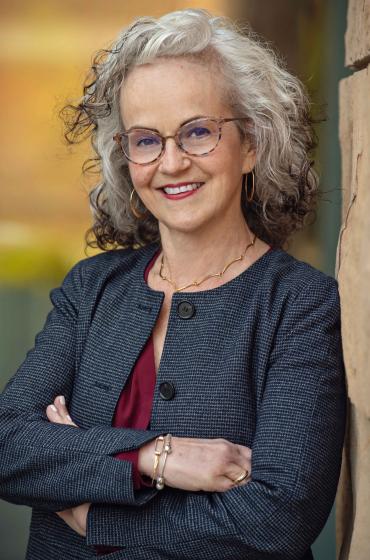
Andrew Ollett is an Associate Professor and Director of Graduate Studies in the Department of South Asian Languages and Civilizations at the University of Chicago , where he has taught since 2019. His research focuses on the literary and intellectual traditions of South and Southeast Asia, particularly through works in Sanskrit, Prakrit, Apabhramsha, and Kannada from the first millennium CE. Co-founder and editor of NESAR (New Explorations in South Asia Research) Director of NEH-funded edition/translation of the Kavirājamārga (earliest Kannada literary manual) Expert in Prakrit and Kannada literary traditions His work explores the 'question of language'—examining how language choice shaped cultural production and change in premodern India. Current projects include a monograph on context-sensitivity in Indian language theories and a study of manuscript technology's impact on early South Asian knowledge communities. He has authored The Mirror of Ornaments (Naples: Unior Press, 2025) and Language of the Snakes (UC Press, 2017), and co-authored Lilavai (Harvard, 2021). Recent publications include interdisciplinary studies on: Sanskrit-Prakrit campū genre reevaluation Pragmatics in Mīmāṁsā interpretive concepts Manuscript literacy's influence on literary forms Historical linguistics of Middle Indic syllable reduction Philosophy of language in Śālikanātha and Kumārila Bhaṭṭa Awarded the NEH 'Scholarly Editions and Translations' grant , he teaches classical South Asian literature courses covering Sanskrit, Prakrit, and Tamil traditions. He maintains digital resources including a Prakrit Digital Texts Project and Mīmāṁsādigdarśinī digital text repository, and actively contributes to open-access scholarship.
Dinah Ribard is a Director of Studies at the École des Hautes Études en Sciences Sociales (EHESS), working within the Centre de Recherches Historiques (CRH). She serves as Center Director for the GRIHL (Groupe de recherche interdisciplinaire sur l'histoire du libéralisme) research group. Her academic career has been dedicated to the historical study of work, intellectual practices, and cultural production from the early modern period through the 19th century. Ribard completed her thesis in December 2000 at the University of Paris III - Sorbonne Nouvelle under the direction of Alain Viala, entitled "Live Tell Think. Research on the literary status of the philosopher: the Lives of philosophers in France 1650-1766." She was formerly a student at the École Normale Supérieure (Ulm) and holds a degree in Modern Literature. Prior to her position at EHESS, she served as an ATER (Attaché Temporaire d'Enseignement et de Recherche) at Paris III University from 1999 to 2001 and taught at Lycée Jacques-Feyder in Epinay sur Seine from 2001 to 2003. Ribard's research focuses on the history of work from multiple perspectives - examining both intellectual work (1600-1900) and material labor. She investigates how work has been conceptualized, narrated, and institutionalized throughout history. Her work explores the relationship between knowledge production and labor, analyzing how different professions and social statuses have shaped intellectual and cultural practices. She examines the historical construction of disciplines, professions, and social classifications, with particular attention to how writing practices intersect with work identities. Her recent publications reveal a consistent focus on the relationship between writing, work, and social identity across the early modern and modern periods. Ribard's scholarship demonstrates how textual practices were embedded in specific work contexts, from artisanal workshops to academic institutions. Her work shows how literary forms were used to construct professional identities and how writing practices served as forms of political action. She has made significant contributions to understanding the historical relationship between intellectual labor and material production. Ribard has published extensively, including the notable 2023 book "Le Menuisier de Nevers. Poésie ouvrière, fait littéraire et classes sociales (XVIIe-XIXe siècle)" which examines how working-class poetry was historically constructed and marginalized. Her scholarship challenges traditional literary classifications and reveals how social categories have been historically produced through cultural practices. As Director of Studies at EHESS, Ribard supervises doctoral students and contributes to the academic training of historians. She co-responsible for the Grihl seminar and teaches courses at EHESS on topics including "Writings of the Past. Literature and History: Methods, Theories, Fields" and "History and stories of work." Her teaching reflects her research interests in the intersection of literary practices, historical methodology, and social analysis. Within the CRH, Ribard is affiliated with the GRIHL research group, which focuses on the interdisciplinary history of liberalism. Her work bridges historical, literary, and sociological approaches to understanding the development of social and intellectual categories. Through her research, teaching, and institutional leadership, Ribard has made significant contributions to the historical understanding of work, knowledge production, and cultural classification.
Dr Stella Bolaki is Reader in American Literature and Medical Humanities at the School of English, University of Kent, and Co-Director of the Centre for Health and Medical Humanities. She has been a faculty member since 2011, after holding positions at the University of Glasgow and the University of Edinburgh, where she also held a postdoctoral fellowship at the Institute for Advanced Studies in the Humanities (IASH). Her educational background includes a BA from Athens and an MSc and PhD from the University of Edinburgh. BA, Athens MSc, University of Edinburgh PhD, University of Edinburgh Stella’s research spans interdisciplinary fields including contemporary American literature, medical humanities, disability studies, and Black feminist theory. Her work critically examines narratives of illness, chronic conditions, self-care, and the intersection of art and health. She has pioneered research on artists’ books as tools for wellbeing, testimony, and community engagement, particularly in contexts of trauma and social injustice. Her recent publications and projects reveal a consistent focus on expanding narrative forms in medical humanities—moving beyond traditional literary modes to include photography, performance, film, and digital storytelling. Themes of inequality, mental health, climate anxiety, and embodiment recur across her work, especially in her ongoing monograph on self-care. Fellow of the Higher Education Academy Wellcome Trust funding recipient British Academy funding recipient Research England grant awardee Kent’s AHRC Impact Acceleration Account funding Stella supervises doctoral research across a wide range of interdisciplinary topics and has co-supervised a CHASE-funded project on health zines. She contributes to teaching in American literature and medical humanities at the Kent and Medway Medical School. Her professional service includes editorial roles for Contemporary Cultural Studies in Illness, Health and Medicine and the Journal of Literary & Cultural Disability Studies , and leadership in the Eastern Arc Medical and Health Humanities Network and the Kent Medical Humanities Network. She leads public-facing research through creative workshops, exhibitions, and events such as ‘Artists’ Books and the Medical Humanities’ and ‘Mending the Psyche: Art as Reparation’, often in collaboration with NHS partners and community organizations.
David Nugent is a Professor in the Department of Anthropology at Emory University. He holds a PhD from Columbia University (1988) and specializes in sociocultural anthropology, political economics, and Latin American studies. His research focuses on state formation, race/ethnicity, agrarian societies, and the interplay between knowledge systems and power. Nugent’s fieldwork spans diverse regions including the Peruvian Andes, East Africa, the Canadian Arctic, and the U.S. Southwest. Key publications include The Encrypted State (2019), Modernity at the Edge of Empire (1997), and co-edited volumes such as State Theory and Andean Politics (2015). He has received the Choice Magazine ‘Outstanding Academic Title’ award for his collaborative work. Current projects explore vernacular sovereignties in Pacific-facing Latin America and underground democratic forms in Peru. Nugent’s research bridges historical and political anthropology, examining how states negotiate legitimacy through symbolic systems, fear, and displacement. His work critiques colonial and neocolonial knowledge frameworks while analyzing contemporary challenges like urban inequality and smart city governance. Education: PhD in Anthropology, Columbia University (1988) Awards: Choice Magazine ‘Outstanding Academic Title of 2004’ Projects: Co-editing ReOrienting Latin American History and authoring Sacropolitics: Group Sacrifice and the State of Redemption
Dr. Rathna Ramanathan is a leading academic and practitioner in intercultural communication and alternative publishing. Currently serving as Provost of Central Saint Martins and UAL Executive Dean for Global Affairs , she has previously held deanships at Central Saint Martins and the Royal College of Art. Based in London but originally from Chennai, India, her work bridges South Asian and global design practices. University of Reading - PhD in Typography and Graphic Communication Central Saint Martins - MA in Communication Design University of Madras - BA Fine Art Her research focuses on intercultural communication and alternative publishing in the Global South, examining how marginalized voices can be amplified through design. She explores the tension between tangible/intangible heritages and contemporary design, and investigates how form, media, and content interact in addressing social/political issues. Recent publications highlight her design research trends in decolonial publishing, critical typography, and intercultural book design. As a design educator , she emphasizes listening, cross-cultural learning, and sustainable practices. Her supervision includes postgraduate research students working on topics like female printers in India, exhibition design, and architectural lettering. Key scientific collaborations include major projects with Tara Books (international design awards), British Council-funded initiatives (Crafting Futures, Going Global Partnership), and the Murty Classical Library of India (Harvard University Press partnership). She consults on Indic typeface design with Adobe and Monotype. Her design lab at Central Saint Martins (M9Design) works with international networks of editors, translators, and type designers. Current team projects focus on digital/print transitions, bilingual typography, and preserving endangered typographic practices through innovative publishing formats.
Daniel Pettersson is a Professor at University of Gävle specializing in educational science with a particular focus on international knowledge measurements, comparative education, and curriculum studies. His work critically examines the hegemony of comparisons in education, particularly through large-scale assessments like PISA, and explores how these influence educational policy and practice. Professor Pettersson's research spans several interconnected domains within educational science. He investigates how international comparisons shape educational discourse and policy, examining the historical development of assessment practices and their impact on national education systems. His work frequently analyzes the production of educational knowledge through data visualization and quantification, revealing how numbers become authoritative in educational decision-making. A significant portion of his research focuses on Swedish education within international contexts, exploring how global educational trends are adopted, adapted, and contested in national settings. His extensive publication record reveals several key trends in his scholarly work. Over the past two decades, Pettersson has traced the evolution of international large-scale assessments from marginal research tools to central policy instruments. His recent work increasingly examines data visualization techniques in educational research and the historical construction of educational knowledge through quantification. He also explores the intersection of teacher education with international assessment frameworks, revealing tensions between global educational discourses and local teaching practices. Professor Pettersson has made significant contributions to understanding how educational policy is shaped by international comparisons. His research demonstrates how assessment data becomes transformed into policy narratives that influence educational reform. He has documented the historical trajectory of international assessment research, showing how it evolved from marginal academic interest to central policy instrument. His collaborative work with scholars like Sverker Lindblad, Thomas Popkewitz, and Tatiana Mikhaylova has been particularly influential in critically examining the political dimensions of educational measurement. His research activities include extensive work with international research teams, participation in major conferences including the Nordic Education Research Association (NERA) and the International Standing Conference for the History of Education (ISCHE), and contributions to systematic reviews of international comparative research. Professor Pettersson's work bridges historical analysis, policy studies, and critical examination of educational measurement practices, providing valuable insights into how global educational knowledge is produced and circulated.
Jing Tsu is the Jonathan D. Spence Chair Professor of Comparative Literature and East Asian Languages and Literatures at Yale University. She holds affiliations with the MacMillan Center for International and Area Studies (as Senior Research Fellow), the Humanities Program, Women’s, Gender, and Sexuality Studies (WGSS), and Ethnicity, Race, and Migration (ER&M). Her interdisciplinary research focuses on modern Chinese literary and cultural studies, with specialties in diaspora, science history, and comparative frameworks. Her key works include Sound and Script in Chinese Diaspora (2010) and Failure, Nationalism, and Literature (2005), which explore themes of cultural identity, transnational networks, and historical transformations. Tsu has held prestigious fellowships from institutions including Harvard Society of Fellows, Alexander von Humboldt Foundation, and the Institute for Advanced Study at Princeton. Her research bridges literary analysis with technological history, examining how language, script, and scientific knowledge shape cultural power dynamics. Her recent publications analyze global literary frameworks (e.g., 2023’s World Literature and National Literature(s) ) and the intersections of science translation with national identity (e.g., 2014’s Science in Translation: Yan Fu’s Role ). Tsu’s work consistently interrogates the boundaries between global and local cultural systems, emphasizing the agency of marginalized voices in shaping intellectual histories. Awards: Harvard Society of Fellows Fellowship, Radcliffe Institute Fellowship, Mellon Foundation Fellowship, and others. Grants/Advising: Extensive institutional support through fellowships; her advisory roles focus on guiding interdisciplinary scholarship in Sinophone studies and transnational literatures. Labs/Teams: Collaborates through the MacMillan Center’s international studies initiatives and interdisciplinary programs like ER&M and WGSS.
Anne Rawls is a Professor of Sociology and Chair of the Department of Sociology at Bentley University. She also holds roles as Professor for Interaction, Work, and Information at the University of Siegen (Germany), Senior Fellow at Yale University's Urban Ethnography Project, and Director of the Garfinkel Archive, LLC. Her academic career began with a B.A. in Sociology (Summa Cum Laude), M.A. in Philosophy, and Ph.D. in Sociology from Boston University, followed by a Post-Doctoral Fellowship in Psychiatry at the University of Wisconsin-Madison. Her research focuses on ethnomethodology, race relations, workplace studies, and the sociology of information. Notable works include Epistemology and Practice: Durkheim's Elementary Forms of the Religious Life (Cambridge University Press) and editorship of Garfinkel’s Archive . She explores how interactional practices shape social order, race dynamics, and modern democratic systems, emphasizing the role of 'constitutive practices' in creating moral and social facts. Teaching interests span race, gender, globalization, and the ethics of situated practices. Her consulting work addresses workplace studies and computer-mediated work design. Rawls' contributions bridge classical sociological theory (Durkheim, Garfinkel) with contemporary issues like racial justice and technology's societal impact. Her research highlights tacit racism in everyday interactions, the moral foundations of public life, and the interplay between sociology and technology. She has presented globally and contributed to debates on sociological methodology and the legacy of key theorists like Goffman and Garfinkel.
Monika Krause is Professor of Sociology at the London School of Economics and Political Science (LSE), specializing in human rights, humanitarianism, knowledge, expertise, social theory, and culture. She serves as Chair of the Culture Section of the American Sociology Association and on the Council of the Section on the Sociology of Human Rights of the ASA. Her research addresses comparative questions about forms of expertise, professions, organizations and fields of practice, with particular focus on humanitarian NGOs, human rights organizations, and knowledge production in the social sciences. Her scholarly work demonstrates a consistent engagement with theoretical innovation in sociology. Her recent publications reveal a trajectory moving from empirical studies of humanitarian organizations toward more foundational questions about sociological methodology, epistemology, and theory-building. She has developed concepts for sociological analysis and seeks to apply insights from a sociology of the social sciences to sociological practice itself. Her work bridges substantive empirical research with theoretical reflection, particularly examining how fields of practice vary across contexts and how sociologists can theorize from neglected cases. Professor Krause's research has been recognized with numerous prestigious awards, including the 2019 Lewis A. Coser Award for Theoretical Agenda Setting in Sociology. Her book Model Cases: On Canonical Research Objects and Sites (2021) examines concrete material research objects behind shared conversations in social sciences and humanities, while her earlier work The Good Project: Humanitarian NGOs and the Fragmentation of Reason (2014) won multiple book prizes for its analysis of humanitarian relief organizations. She has served as an elected member on the Executive Council of the Society for the Advancement of Socio-Economics (SASE) and continues to shape theoretical debates in sociology through editorial work and professional leadership. 2019 Lewis A. Coser Award for Theoretical Agenda Setting in Sociology 2015 BSA Philip Abrams Memorial Prize 2015 Hodgkinson Book Award from Association for Research on Non-profits and the Voluntary Sector 2016 Best Book Award by an International Scholar, American Sociological Association At LSE, Professor Krause convenes courses on Key Concepts: Advanced Social Theory, Seeing like an NGO: Human Rights in Practice, Classical Social Thought, and Modern Social Thought. She is part of the Politics and Human Rights research cluster and has supervised numerous doctoral students. Her research has been supported by fellowships from the Centre for Interdisciplinary Research at the University of Bielefeld and the Helsinki Collegium for Advanced Studies, reflecting the interdisciplinary nature of her work that bridges sociology, political science, and cultural studies.
Jairo Moreno is an Associate Professor of Music at the University of Pennsylvania's College of Arts & Sciences, Department of Music. His research focuses on the production of musical knowledge in modernity, Latin American and Afro-Caribbean music, and the intersections of sound with political and cultural practices. He has authored major works like Musical Representations, Subjects, and Objects and Syncopated Modernities , exploring themes such as listening practices, colonialism, and cultural hybridity. His awards include the Society for American Music’s Irving Lowens Article Award (2005) and ACLS/National Humanities Center Fellowships. A former professional bassist, he has collaborated with musicians like Ray Barretto and contributed to Grammy-nominated recordings. His current research involves fieldwork with Brazil’s Pankararu community and Colombia’s Pacific region midwives, examining aural practices and metaphysics. Key research themes include the political dimensions of music, the ethics of listening, and the role of sound in shaping cultural identity. His publications span music theory, ethnomusicology, and interdisciplinary studies, with recent work addressing Latin Americanisms and global jazz histories. Scientific Awards: Society for American Music 2005 Irving Lowens Article Award ACLS Fellowship (2009–2010) National Humanities Center Fellowship (2012–2013) Advising & Grants: While no specific advisees are listed, his work involves collaborative fieldwork and interdisciplinary projects funded by fellowships. His musical career includes performances with the Ciompi String Quartet and guitarist David Starobin, reflecting his dual academic and artistic engagement. Labs/Teams: Fieldwork collaborations with Indigenous and Afro-Colombian communities emphasize participatory research, combining ethnography with historical analysis to document marginalized aural traditions.
Pinar Tuzcu is an Assistant Professor in the Department of Sociology at Queen's University. She holds a PhD from the University of Kassel, Germany, with prior roles including interim full-professorship at Justus-Liebig-University (2019-2020) and postdoctoral research coordination of projects like 'RE:Coding Algorithmic Culture' and 'Migrantischer Feminismus.' Her research focuses on digital justice, cybercolonialism, and intersectional internet studies through an anti-colonial feminist lens. Education: B.A., Gazi University (Turkey) M.A., Kocaeli University (Turkey) D.Phil (PhD), University of Kassel (Germany) Research Interests: Explores power dynamics in digital spaces, marginalized knowledge systems, and feminist critiques of algorithmic culture. Proposes concepts like 'cybercolonialism' (spatial power in digital realms) and 'cybaltern' (subjectivity of marginalized digital actors). Teaching: SOCY 201: Migration and Mobilities SOCY 304: Algorithmic Cultures & Digital Justice SOCY 428: Cybercolonialism Grants & Projects: Co-initiated and led multiple interdisciplinary projects including transnational 'Digital Feminist Collective' (University of Alberta) and organized events like 2022's 'Decolonizing Gender Studies' spring school. Her work bridges academic research with community knowledge-sharing in BI*PoC communities.
Derrick R. Spires serves as Associate Professor of English in the College of Arts & Sciences at the University of Delaware, specializing in early Black print culture, citizenship studies, and African American intellectual history. His scholarly mission centers on recovering the rich imaginative worlds African-descended people generated through print media and how these imaginings facilitated material change, spanning from tragicomic expressions to mundane daily practices. Spires' research interrogates how Black writers articulated expansive, practice-based theories of citizenship through robust print networks including newspapers, the Colored Conventions movement, and ephemeral publications. His work reveals the centrality of seriality, pseudonymity, and collaborative performance in Black political thought, demonstrating how print culture enabled Black communities to navigate and reshape citizenship frameworks despite systemic exclusion. He examines how early African American literature cultivated aesthetic sensibilities that sustained resistance and community building. Analysis of his 2016-2024 publications reveals consistent thematic threads: the material conditions of Black bibliography, gendered dimensions of political expression, and the performance aspects of print culture. His scholarship increasingly engages with digital humanities methodologies while maintaining deep archival rigor, particularly regarding Dorothy Porter's bibliographic mission and liberation bibliography frameworks. Key publications map connections between early Black social media practices and contemporary digital activism. Spires' accolades include: Modern Language Association Prize for First Book (2020) St. Louis Mercantile Library Prize (2020) National Endowment for the Humanities Fellowship Ford Foundation Fellowship Social Science Research Council Fellowship Mellon/Mays Initiatives Fellowship American Antiquarian Society Fellowship His editorial leadership encompasses the Broadview Anthology of American Literature and the University of Pennsylvania Press series 'Black Print and Organizing in the Long Nineteenth Century.' Research has been supported by major fellowships examining Black print networks, though specific grant details beyond institutional fellowships aren't specified. Spires contributes significantly to recovering marginalized intellectual traditions through meticulous bibliographic work and theoretical innovation in citizenship studies.
Patrick Olivier is a Professor at Monash University's Department of Human Centred Computing, with adjunct roles at Monash University Indonesia and Malaysia. He leads the Action Lab, a multidisciplinary research group focusing on human-centred design, digital health, and social innovation. His work bridges academia and real-world impact, particularly in co-design methods and implementation science. He holds a PhD in Language Engineering from the University of Manchester and has extensive industry experience, including founding Lexicle Ltd and Axivity Ltd. Education: PhD in Language Engineering, University of Manchester (1998) MSc in Artificial Intelligence, University of Wales (1991) Postgraduate Diploma in Computing, University of Bradford (1990) BA in Natural Sciences (Physics), University of Cambridge (1989) Research Interests: Co-design methods, digital health, technology-enhanced learning, collaborative and social computing. Recent Work Trends: His articles (2023–2025) emphasize digital health interventions, community engagement in tech design, and the societal impacts of light exposure. Key themes include participatory frameworks for marginalized groups and scalable healthcare systems. Awards: 2022 Dean's Award for Excellence in Research Engagement 2021 Dean’s Community Research Award 2018 ACM Honorable Mention & Sydney Vice Chancellor's Award Advising & Grants: Supervises PhD students in digital health and co-design. Principal Investigator on projects like the EPSRC Centre for Digital Civics and global health initiatives (e.g., Open Nutrition, PIP-Kids). Lab/Teams: Action Lab (Australia, Malaysia, Indonesia) focuses on tech for social innovation, digital health, and civic engagement.
Deborah Loewenberg Ball is the Jessie Jean Storey-Fry Distinguished University Professor of Education at the Marsal Family School of Education, an Arthur F. Thurnau Professor, and a Research Professor at the Survey Research Center within the Institute for Social Research at the University of Michigan. She also directs TeachingWorks , a program focused on defining and supporting effective teaching practices for educators. Ball began her career as an elementary school teacher, teaching for over 15 years, and continues to engage in summer teaching at the Elementary Mathematics Laboratory (EML), a space for observing and analyzing teaching dynamics. Her educational background includes a doctoral degree in mathematics education from Michigan State University (1988), where her work emphasized the interplay between teacher knowledge and classroom practice. She has held significant leadership roles, including serving as dean of the University of Michigan School of Education (2005–2016), president of the American Educational Research Association (2017–2018), and currently as a member of the National Science Board and the Mathematical Sciences Research Institute Board of Trustees. Ball’s research interests center on the practice of teaching , particularly in elementary mathematics, and its role in fostering student agency, equity, and collective learning. She explores how teachers’ decisions in 'discretionary spaces'—moments where they choose instructional approaches—impact educational justice and student outcomes. Key themes include leveraging curricula to support marginalized students, measuring teacher knowledge (e.g., Mathematical Knowledge for Teaching), and redesigning teacher education to prioritize practice-based learning. Her recent articles and projects highlight the importance of formative assessments for teacher candidates, equitable discussion practices, and the influence of discretionary spaces in instruction. Ball has also contributed to state-level initiatives, such as the New York State Education Department’s numeracy briefs, which synthesize research for educators. Her scientific awards include prestigious recognitions like her election to the American Academy of Arts and Sciences (2014) and National Academy of Education (2007), along with fellowships from the American Mathematical Society and the American Educational Research Association. Ball’s advising and grant work emphasize practical, scalable solutions for teacher education. Major grants include projects to support multilingual early mathematics learners, pandemic-era teacher professional development, and strategies for implementing practice-based education. She emphasizes collaboration across disciplines and institutions to address systemic inequities in education. The Elementary Mathematics Laboratory (EML) serves as a central hub for her work, blending research and practice to model effective teaching and engage stakeholders in dialogue about educational justice.
Elaine Auyoung is an Associate Professor of English at the University of Minnesota, with affiliations in Gender, Women & Sexuality Studies and the Center for Cognitive Sciences. Her research bridges 19th-century British literature, psychological approaches to the arts, and feminist epistemology, focusing on how literary works engage readers' embodied knowledge and perceptual learning. She authored When Fiction Feels Real: Representation and the Reading Mind , examining how realist aesthetics creates immersive reading experiences. Current projects include Becoming Sensitive , which critiques disciplinary hierarchies in humanities education, and Permission to Receive Joy , exploring aesthetic experiences of joy and their fragility. She holds a PhD from Harvard University and a BA from Stanford University. Her specialties include aesthetic experience, learning in the humanities, and epistemic injustice. Her work challenges institutional structures that marginalize certain forms of knowledge, advocating for democratizing literary education and revaluing humanistic inquiry. Elaine’s research emphasizes interdisciplinary collaboration, combining cognitive science, feminist theory, and literary analysis. Her articles explore topics like perceptual transformation in reading, the role of inductive learning in literary criticism, and the intersections of trauma and aesthetic joy. These projects collectively aim to redefine the value and practice of humanities education in contemporary contexts.