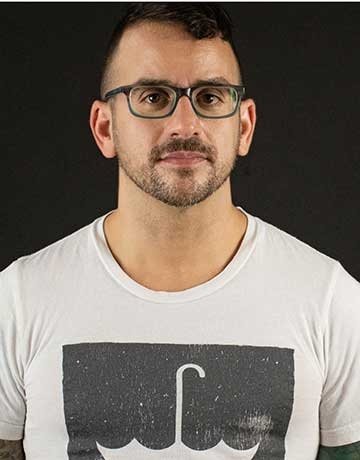
Antonia DarderView profile
Professor
Antonia Darder is a Professor at the California Institute of Integral Studies (CIIS) in the School of Education, Department of Educational Leadership and Interdisciplinary Studies. Her academic career spans over two decades of scholarly work focused on critical pedagogy, decolonizing methodologies, and social justice education. Dr. Darder's research interests center on critical pedagogy, decolonizing methodologies, race and racism studies, Latina/o critical theory, public pedagogy, and the impact of neoliberalism on educational spaces. Her work consistently examines how structural inequalities manifest in educational settings and how critical consciousness can serve as a tool for liberation and social transformation. She approaches education as a political act that must challenge systems of oppression and create spaces for marginalized voices. Her publication record demonstrates a clear evolution from early work examining race and multiculturalism to more recent focus on decolonizing research methodologies. Her scholarship reveals deep engagement with Paulo Freire's critical pedagogy tradition while developing her own theoretical contributions, particularly regarding borderland intellectuals and the politics of knowledge production. The articles show consistent attention to how community-based resistance, artistic expression, and alternative media forms can serve as vehicles for public pedagogy and social change. Dr. Darder has collaborated with prominent scholars including Peter Mayo, Rodolfo D Torres, and Carmel Borg. Her work has been published in leading journals such as Policy Futures in Education, Educational Studies, and Ethnicities, and through major academic presses including Routledge and New York University Press. As a public intellectual, Dr. Darder has contributed to discussions on community radio as a tool for resistance, the embodiment of public pedagogy through artistic expression, and the critical examination of neoliberal policies within academic spaces. Her scholarship consistently bridges theory and practice, emphasizing the importance of education as a transformative force for social justice.