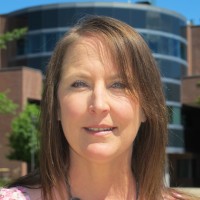
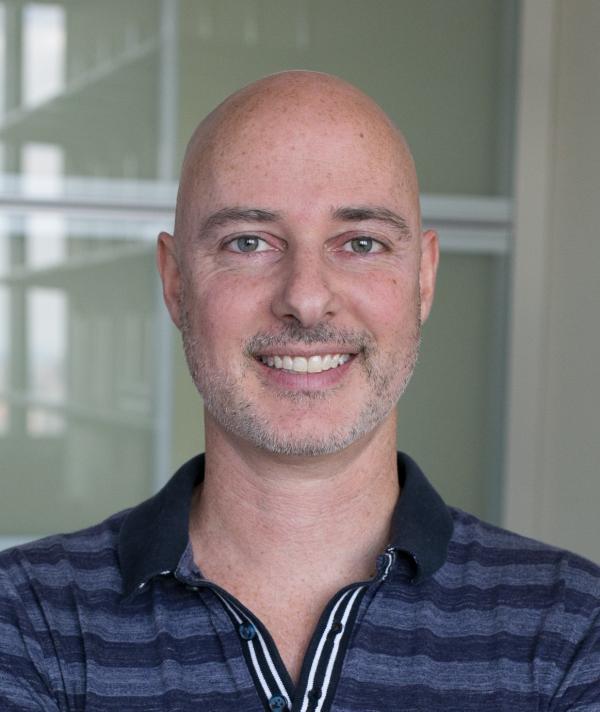
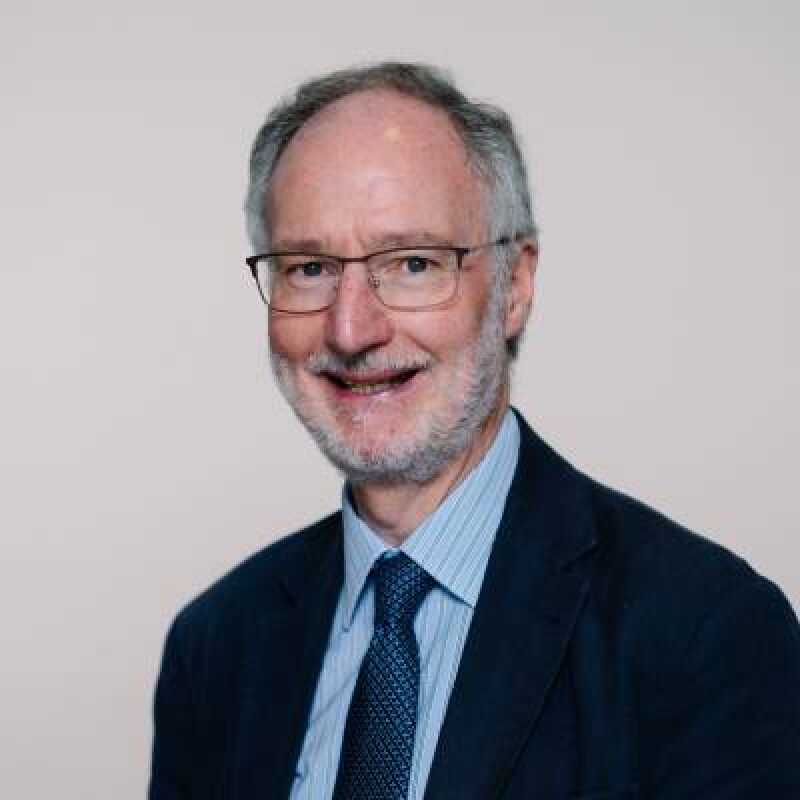
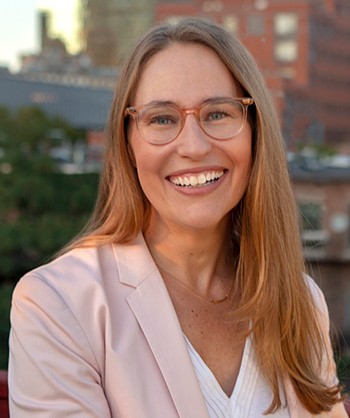
Steve Loughnan is a Professor of Psychology at the University of Edinburgh's School of Philosophy, Psychology and Language Sciences. His research focuses on dehumanization, objectification, and human-animal relations, exploring how societal and psychological factors influence moral judgments and behaviors. He teaches undergraduate courses on social psychology, experimental/applied social psychology, and social class, and supervises PhD students in related fields. Research interests include: Dehumanization of social and ethnic outgroups Psychological impacts of objectification on women and marginalized groups Moral psychology of meat consumption and animal treatment Effects of economic inequality on societal attitudes Anthropomorphism in human-AI and human-pet relationships His publications analyze topics like the psychological mechanisms behind meat consumption paradoxes, the role of dehumanization in conflict scenarios, and the ethical implications of AI romance. He has received no explicitly listed awards but has been widely cited in social psychology domains. Teaching includes year-long programs on social psychology principles, experimental research methods, and social class analysis. Office hours are held weekly to support students. His work bridges theoretical social psychology with applied issues in global inequality, environmental ethics, and veterinary mental health.
Sean O'Shea is a Lecturer and Supervised Fieldwork Advisor at Bank Street College of Education, specializing in Special Education advocacy and inclusive practices. He holds an EdD from Teachers College, Columbia University. His career spans over three decades in educational administration and teaching, focusing on ensuring equitable access to programs for students with disabilities and at-risk learners. He has held roles such as Deputy Superintendent for Compliance and Administrator of Transition Programs in NYC DOE, emphasizing legal compliance and policy adherence. Research & Advocacy: Dr. O'Shea's work prioritizes advocating for underserved students, particularly those with emotional/behavioral variations, intellectual disabilities, and physical challenges. He consults pro-bono with families and community organizations to strengthen educational advocacy. His publication explores the impact of special education experience on inclusive instructional practices. Programs & Teaching: At Bank Street, he leads programs like Childhood Special and General Education Dual Certification and the Residency Program. He emphasizes preparing educators as advocates for marginalized students. His courses address compliance frameworks, differentiated instruction, and systemic barriers in education. Grants & Collaborations: While specific grants aren't detailed, his administrative roles indicate involvement in DOE-funded initiatives. He collaborates with museums and social services through dual-degree programs with Columbia School of Social Work.
Rachelle Hole is a Professor at the School of Social Work, Faculty of Health and Social Development, University of British Columbia Okanagan. She serves as the Director of the Canadian Institute for Inclusion and Citizenship (CIIC) and leads the Social Inclusion and Equity Research Cluster at the Institute for Community Engaged Research. As an Associated Health Researcher with CREST.BD, she bridges mental health and disability studies through community-based participatory research. UBC Tier 1 Principal's Research Chair in Critical Disability Studies Director, Canadian Institute for Inclusion and Citizenship Social Inclusion and Equity Research Cluster Leader Associated Health Researcher, Collaborative RESearch Team (CREST.BD) Her research integrates critical disability studies with community-based participatory methodologies to advance social inclusion for marginalized populations, particularly focusing on individuals with intellectual/developmental disabilities, Indigenous communities, and bipolar disorder patients. She explores employment equity, self-advocacy, and digital health tools like the PolarUs app for mental health. Her work emphasizes ethical participatory theatre and policy-informing research. Recent publications and grants (2018–2025) include multi-million-dollar partnerships with Canadian Institutes for Health Research, Social Sciences and Humanities Research Council, MITACS, and Vancouver Foundation. Key projects: Tide Project (youth employment), Impact 2.0 (summer employment), and Evidence to Inform Policy (community living sector). Her 15 most recent Google Scholar articles span employment barriers, digital health, research-based theatre, and policy analysis. Scientific awards include UBC Okanagan Health Researcher of the Year (2019). She has supervised numerous graduate students and collaborated with institutions like Community Living British Columbia, Aspire, and CREST.BD.
Elisabet Langmann serves as Associate Professor and Department Head at Södertörn University, Sweden, specializing in Teacher Training with research bridging educational philosophy and classroom practice. Her work critically examines ethical dimensions of schooling and democratic values implementation. Langmann holds a PhD in Educational Philosophy from Örebro University (2013), where her dissertation explored pedagogical approaches to teaching tolerance while avoiding student marginalization. Her academic journey reflects deep engagement with continental philosophy and didactic theory. Her research centers on ambiguities in democratic values (tolerance, justice, responsibility) and their classroom implications, investigating how value conflicts manifest and how supportive teaching climates emerge. Methodologically, she integrates empirical classroom observations with philosophical analysis, drawing from phenomenology and critical theory to examine sensory, affective, and ethical dimensions of learning environments. Analysis of her 2021-2025 publications reveals three evolving trajectories: sustainability education exploring climate change pedagogy; sensory-phenomenological approaches to classroom climate; and continued refinement of tolerance education frameworks. These strands converge in examining how affective dissonance and bodily experiences shape ethical learning. Langmann actively secures research funding including two Swedish Research Council projects (2020-2023): as project leader for "Forms of Upbringing" investigating bodily dimensions in value conflict resolution, and as co-investigator in "How can schools reduce unequal educational opportunities?" examining school culture in disadvantaged areas. She mentors junior researchers through international networks rather than formal student supervision. She contributes significantly to academic infrastructure as board member of the Nordic Society of Philosophy of Education, co-convenor for NERA/EERA educational philosophy networks, and peer reviewer for 12+ journals including Studies in Philosophy and Education. Her leadership extends to international research collectives like PEDST and SCAPE, focusing on democratic sustainability transitions and cultural conflicts in education.
Robert P. Anderson is a Professor of Biology in the Division of Science at City College of New York (CCNY), part of the City University of New York (CUNY) system. His research laboratory is located in Marshak Science Building (Room 810), with additional affiliation as a Research Associate at the American Museum of Natural History (AMNH) Mammalogy Department. As a Highly Cited Researcher (2019-2023) and AAAS Fellow (2023), he leads an interdisciplinary biogeography research program focused on modeling species niches and distributions. Dr. Anderson's research spans biodiversity modeling, biogeography, and ecology with specialization in mammals. His lab develops ecological modeling software widely applied in conservation biology, invasive species management, zoonotic disease studies, and climate change impact assessments. Key research themes include: Characterizing spatial configuration of environmental suitability for species Developing machine learning approaches (particularly Maxent) for species distribution modeling Studying climate change effects on biodiversity Conservation applications of biogeographic models Neotropical mammal systematics and ecology His work has resulted in significant software contributions including Wallace, ENMeval, and spThin, with recent publications emphasizing methodological improvements in species distribution modeling and conservation applications. The lab maintains active projects funded by NASA and the National Science Foundation, focusing on small mammals of North and South America. Scientific recognition includes: AAAS Fellow (2023) Web of Science Highly Cited Researcher (2019-2023) Blavatnik Science Scholar (New York Academy of Sciences) Most Downloaded Paper in Ecography (2023-2024) Most Cited Paper in Ecography (2023) Dr. Anderson mentors graduate students through the CUNY Graduate Center and CCNY Master's programs, with recent advisees receiving prestigious awards including the ASM Horner Award and NASA FINESST Fellowship. His lab trains students in environmental biology through interdisciplinary research combining fieldwork, morphology, climatology, remote sensing, physiology, and genetics. Current lab members include Andrew Gaier (NASA Fellow), Mariano Soley-Guardia, and Kass (lead author on highly cited Wallace v2 paper). The Anderson Lab operates from CCNY's Marshak Science Building as part of the university's biodiversity group studying ecology, evolution, and geography of life on Earth. The lab emphasizes software co-design between end-users and developers to enhance conservation utility, with recent work focusing on neighborhood approaches for range estimation and operationalizing expert knowledge in species assessments.
Ronald Fuentes is an Associate Professor and Director of Online Programs in the Department of English at the University of Memphis. His research focuses on language policy in education, immigration impacts on multilingualism, and transnational identity dynamics. He holds a Ph.D. in Sociolinguistics from the University of Washington, alongside a MAT in TESOL and a BA from the University of British Columbia. His research explores how immigration shapes language attitudes and practices, particularly in educational contexts. Fuentes examines language policy implementation in universities and K-12 settings, with recent work analyzing gender-inclusive language adoption and transnational family language maintenance strategies. He has published extensively on topics such as heritage language teaching in diaspora communities and structural barriers faced by immigrant students in higher education. His articles consistently address the interplay between institutional policies and individual agency, revealing both opportunities and constraints in multilingual education systems. Current projects investigate language planning in non-traditional migration regions and digital pedagogy for online language learners. As Director of Online Programs, Fuentes oversees innovative instructional design for distance learning initiatives while maintaining active grant-funded research on ESL program efficacy and transnational student support systems. His work bridges sociolinguistic theory and applied educational practice, contributing to both academic discourse and real-world policy recommendations.
Professor David Oliver is an Honorary Professor at the University of Kent’s Tizard Centre, within the School of Social Sciences. He specializes in palliative care for individuals with neurological disorders, particularly motor neurone disease (MND), and intellectual/developmental disabilities (IDD). His roles include teaching on end-of-life care courses and supervising PhD students such as Winnie Tsang, Simone Veronese, and Carol Gouveia e Melo. With over 25 years of involvement at the University, Oliver previously held roles as Honorary Senior Lecturer and Honorary Reader. His research focuses on quality of life assessment for IDD individuals with dementia, palliative care in neurodegenerative diseases, and improving care for marginalized populations. Internationally, he chairs the European Association for Palliative Care task force on neurological palliative care and collaborates with institutions in Croatia, Nigeria, and beyond. Key achievements include co-authoring NICE guidelines on MND, editing major palliative care textbooks, and receiving awards like the Humanitarian Prize from the International Alliance of ALS/MND Associations. His work spans clinical practice (retired from full-time hospice work), academic leadership, and global advocacy for equitable end-of-life care.
Jesook Song is a Professor at the Department of Anthropology, University of Toronto. She serves as Department Chair and Graduate Chair (Tri-Campus), focusing on sociocultural anthropology, contemporary urban transformation, and welfare issues including homelessness, youth unemployment, and single women's housing in East Asia, particularly South Korea. PhD in Cultural Anthropology (2003), University of Illinois, Urbana-Champaign B.A. in Education Science, Yonsei University Her research examines neoliberal capitalism's impact on welfare systems, labor practices, and gendered experiences in urban South Korea. Key themes include: Financial techniques in everyday life Post-development welfare states Gendered care work in public policy Homelessness and urban marginality Single women's spatial autonomy Recent publications analyze pandemic-era welfare policies, financial subjectivity, and urban marginality. Her books include Living on Your Own (2014) and On the Margins of Urban South Korea (2019). American Anthropological Association Sylvia H. Forman Prize (2002) Academy of Korean Studies Distinguished Paper Award (2010) She has advised graduate students Sophia Jaworski, Celeste Pang, and Kristina Alda, while securing multiple grants from SSHRC, Korea Foundation, and Academy of Korean Studies for research on financial techniques in everyday life and welfare systems.
Chang-kyu Kwon serves as an Assistant Professor in the Department of Education Policy, Organization & Leadership within the College of Education at the University of Illinois, Urbana-Champaign. His academic journey includes a Ph.D. in Learning, Leadership & Organization Development from the University of Georgia (2019), an M.A. in Organizational Behavior & Evaluation from Claremont Graduate University (2015), and a B.A. in Education from Korea University (2013). Professor Kwon's research is fundamentally informed by critical systems thinking with a focus on diversity, inclusion, and the role of learning in promoting whole-person inclusion. He investigates leadership and organizing principles that cultivate 'safe to be vulnerable' learning spaces where individuals across power divides can collaborate and develop as teams, organizations, and communities. His work critically examines ableism and disability inclusion in educational and workplace settings, with international recognition for his scholarship and advocacy in countries including South Korea, Japan, Peru, and Taiwan. Currently, he leads a U.S.-based project focused on promoting disability employment in small- and medium-sized manufacturing contexts. His scholarly output demonstrates a clear trajectory toward increasingly impactful work at the intersection of critical human resource development, disability studies, and transformative learning. The publications reveal a progression from foundational theoretical work to applied research with practical implications for organizational change, particularly in creating inclusive environments for people with disabilities. His recent work shows growing emphasis on generative pedagogy, dialogic organization development, and the practical application of critical HRD principles in real-world settings. Early Career Scholar Award, Academy of Human Resource Development (2025) Richard A. Swanson Research Excellence Award, Academy of Human Resource Development (2022) Cutting Edge Award, Academy of Human Resource Development (2019) Professor Kwon teaches courses in diversity, adult learning, leadership, and organization development, with a focus on helping students develop an adaptive learning mindset to strengthen relationships and lead inclusively. His EPOL 470 course covers principles of human resource education, while EPOL 474 examines diversity in workplace environments and strategies for harnessing the power of diversity and inclusion. His teaching philosophy emphasizes genuine humility and curiosity as essential components of effective leadership in global workforce contexts. His research is characterized by a strong commitment to bridging theory and practice, with particular attention to the practical implementation of critical ideas in organizational settings.
Megan Adams is an Associate Professor at the School of Curriculum Teaching and Inclusive Education, Monash University. Her work focuses on inclusion, diversity, and reducing educational inequalities for marginalized groups, with a particular emphasis on teacher education, early childhood education, and international education contexts. She has contributed to pedagogy and curriculum development through research projects and teaching roles. Recent research projects include collaborations with preservice teachers, studies on inclusive classrooms in preschools, and consultancy work on curriculum content for international development assistance. Her work aligns with the UN Sustainable Development Goals Inclusive education Pedagogy and curriculum development as key areas of impact. Her recent publications highlight trends in Gender studies and masculinity disruption through play Transitions in international education settings Online teaching during the pandemic Professional identity formation among immigrant educators LGBTIQ+ inclusive curriculum design Family-school dynamics in early childhood Scientific awards include Vice-Chancellor's Excellence Award (2024, nominated) Dean’s Equity and Inclusion Award (2024) ATEA Research Recognition (2019) Dean's Research Excellence Commendation (2019) Dean's Early Career Grant (2017) She actively engages in external academic events, peer review, and policy advisory roles, including contributions to the Australian Early Education Institute and Tasmanian Government preventative health strategy. Her teaching includes units on diversity, inclusive learning environments, and educational research projects.
Alessandro Rigolon is an Associate Professor and MCMP Program Coordinator in the Department of City and Metropolitan Planning at the University of Utah, where he has been on the faculty since 2019. A dual-PhD scholar (Design & Planning, University of Colorado Denver; Architecture, University of Bologna), he is internationally recognized for research on environmental justice, green-space equity, and the public-health consequences of urban greening. Education: Ph.D. in Design and Planning, University of Colorado Denver (2015) Ph.D. in Architecture, University of Bologna, Italy (2012) B.Arch. & M.Arch. in Architecture and Urban Design, University of Bologna, Italy (2007) Research Interests: Rigolon’s work sits at the intersection of environmental justice, urban planning, and public health. He investigates four interconnected themes: (1) policy drivers of inequity in green-space provision; (2) the mechanisms and resistance to green gentrification; (3) green infrastructure’s role in equitable climate adaptation; and (4) health impacts of urban nature on marginalized communities. His studies span multiple scales—from census microdata in Miami-Dade County to machine-learning analyses across 263 Chinese cities—deploying mixed-methods, spatial analytics, and community-engaged research. Publications & Impact: Across 89 peer-reviewed outputs, recent work (2024-2025) reveals complex pathways by which gentrification both precedes and follows greening, quantifies disparities in park access among racial/ethnic groups, and evaluates policies aimed at achieving green-space equity. Collectively, these studies highlight the need for fine-scale spatial data, intersectional analyses, and robust procedural justice when designing equitable greening interventions. Scientific Awards & Recognition: Stanford/Elsevier Top 2 % Scientist (2024) Clarivate Highly Cited Researcher (2024) APA-Utah High Achievement Award (2022) Urban Studies Editor’s Featured Articles (2021) University of Utah Celebrate U Researcher Honoree (2020) Arnold O. Beckman Award (2019) Grants & Advising: Rigolon currently leads or co-leads six funded projects totaling over one million dollars from the Center for Equitable Transit-Oriented Communities, Center for Climate Smart Transportation, Prevention Institute, and University of Illinois. These grants support interdisciplinary teams examining transit-oriented green gentrification, climate adaptation for active transportation, and equitable park policy implementation. Graduate students and post-docs are active collaborators on all projects. Teaching & Community Engagement: He teaches graduate courses including Design Ecologies , Plan Making , Professional Project Studio , and Research Design . Through studio courses, students partner with local governments (South Salt Lake City, Liberty Wells Community Council) to produce actionable plans advancing environmental justice.
Angela Boatman is an Associate Professor in the Department of Educational Leadership & Higher Education at Boston College specializing in higher education policy evaluation, with emphasis on improving access and success for underrepresented student populations through evidence-based interventions. Her educational credentials include: Ed.D. in Higher Education from Harvard University M.P.P. and M.A. in Higher Education from the University of Michigan B.A. from the University of Minnesota Dr. Boatman's research program systematically examines college access barriers and success pathways, focusing on remedial education reform (particularly mathematics), financial aid design, community college transfer policies, and behavioral interventions to reduce loan aversion. She employs rigorous quasi-experimental and experimental methodologies to evaluate policy impacts on student outcomes, with particular attention to equity implications for traditionally marginalized groups. Her work bridges academic research and practical policy implementation through sustained engagement with federal and state education agencies. Analysis of her recent publications (2019-2025) reveals consistent thematic focus on remediation models (corequisite vs. traditional, high school vs. college timing), behavioral economics applications in financial aid, and cross-institutional transfer policies. Her research spans diverse contexts including U.S. community colleges, technical institutions in Chile, and rural-serving universities, demonstrating methodological versatility through large-scale administrative data analysis, randomized trials, and comparative international studies. Dr. Boatman has secured substantial external research funding from the Institute for Education Sciences, Bill & Melinda Gates Foundation, Lumina Foundation, and Peabody College. She actively contributes to national discourse as a faculty affiliate of the Center for the Analysis of Postsecondary Readiness (CAPR) and the Center for Education Policy Research (CEPR) at Harvard University, frequently presenting findings to policymakers and practitioners through congressional briefings, Federal Reserve conferences, and national education forums.
Alistair McCulloch is a Professor in the Learning and Teaching Unit at the University of South Australia, with significant expertise in doctoral education and research supervision. Previously, he served as Professor and Dean of Research and Knowledge Transfer at Edge Hill University near Liverpool for over 12 years, where he was responsible for the development and quality of the university's research degree programs. His primary research interests focus on doctoral education, PhD supervision, and graduate education, with particular attention to the experiences of part-time doctoral students, especially working mothers. McCulloch's work explores sociocultural transitions in doctoral education, the role of oral examinations (vivas), and the concept of serendipity in research. His research demonstrates a consistent concern with the wellbeing of doctoral students and the structural factors that affect their success. McCulloch's publication record shows a clear evolution from early work in political history (notably his 1979 thesis on the 1910 UK General Election) toward contemporary issues in higher education. His recent work (2022-2025) focuses on critical issues in doctoral education including student wellbeing, supervisor-student relationships, and assessment practices. He has been particularly active in examining the experiences of marginalized doctoral student populations and has contributed significantly to the literature on part-time doctoral study. As an academic leader, McCulloch has been involved with the Quality in Postgraduate Research (QPR) conference series held in Adelaide, South Australia, which brings together international scholars interested in doctoral education. His work bridges theoretical perspectives (including Marxist theory on work and alienation) with practical concerns in doctoral program design and implementation.
Hector Rivera is an Associate Professor in the Department of Educational Psychology at Texas A&M University’s College of Education and Human Development. His research focuses on bilingual education, educational resilience, classroom learning environments, and community development, particularly for English Language Learners (ELLs). He has advised doctoral students such as Bizhu He and Lileana Rios-Ledezma. His work bridges sociocultural perspectives with practical interventions to support underrepresented groups, including refugees and minority students. Awards include the 2015 Outstanding New Faculty Award from CEHD. Key research initiatives include the Eco-Resilience NPD program (2016-2021), funded by the US Department of Education, aimed at connecting multiple environments to support ELL success. Other projects address teacher performance evaluation and STEM pathways for Hispanics. Rivera has held leadership roles like Chair of the Climate Committee in EPSY (2016) and Co-Chair of the NABE Special Interest Group (2015). Publications span topics like parental involvement in bilingual education, teacher empowerment, and the impact of learning environments on student resilience. His work often emphasizes culturally responsive practices and systemic equity in education.
LaShandra Sullivan is an Associate Professor of Anthropology at Northwestern University, specializing in cultural anthropology with a focus on land relations, racialized labor, queer politics, and property struggles. Her research centers on collaborations with activists in Mississippi and Brazil, addressing historical and ongoing oppression through protest and resistance. She holds a PhD from the University of Chicago (2013) and has authored the book Unsettling Agribusiness: Indigenous Protests and Land Conflict in Brazil (2023). Her work explores themes such as Indigenous land activism in Mato Grosso do Sul, Black and LGBTQ+ resilience in Rio de Janeiro, and the intersections of property rights with identity. Sullivan’s peer-reviewed publications include articles in American Anthropologist , PoLar , and Social Dynamics , as well as edited volumes on Afro-Brazilian citizenship and property narratives. She currently leads ethnographic and archival research projects in both Mississippi and Brazil, examining landholding practices and LGBTQ+ advocacy. Though not currently accepting new graduate students, Sullivan actively engages with interdisciplinary grant initiatives and has contributed to institutional frameworks supporting marginalized communities. Her research integrates archival studies, ethnographic fieldwork, and participatory activism, offering critical insights into global struggles over land, identity, and belonging.