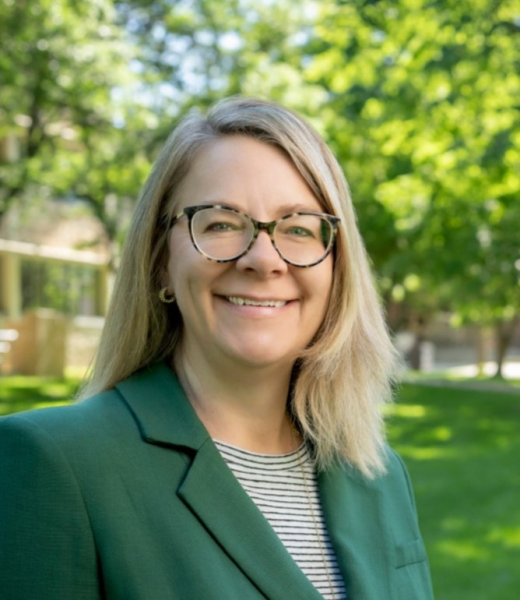
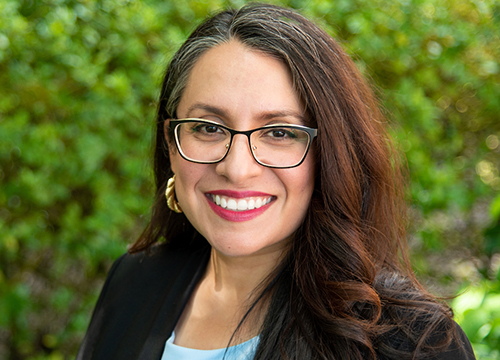
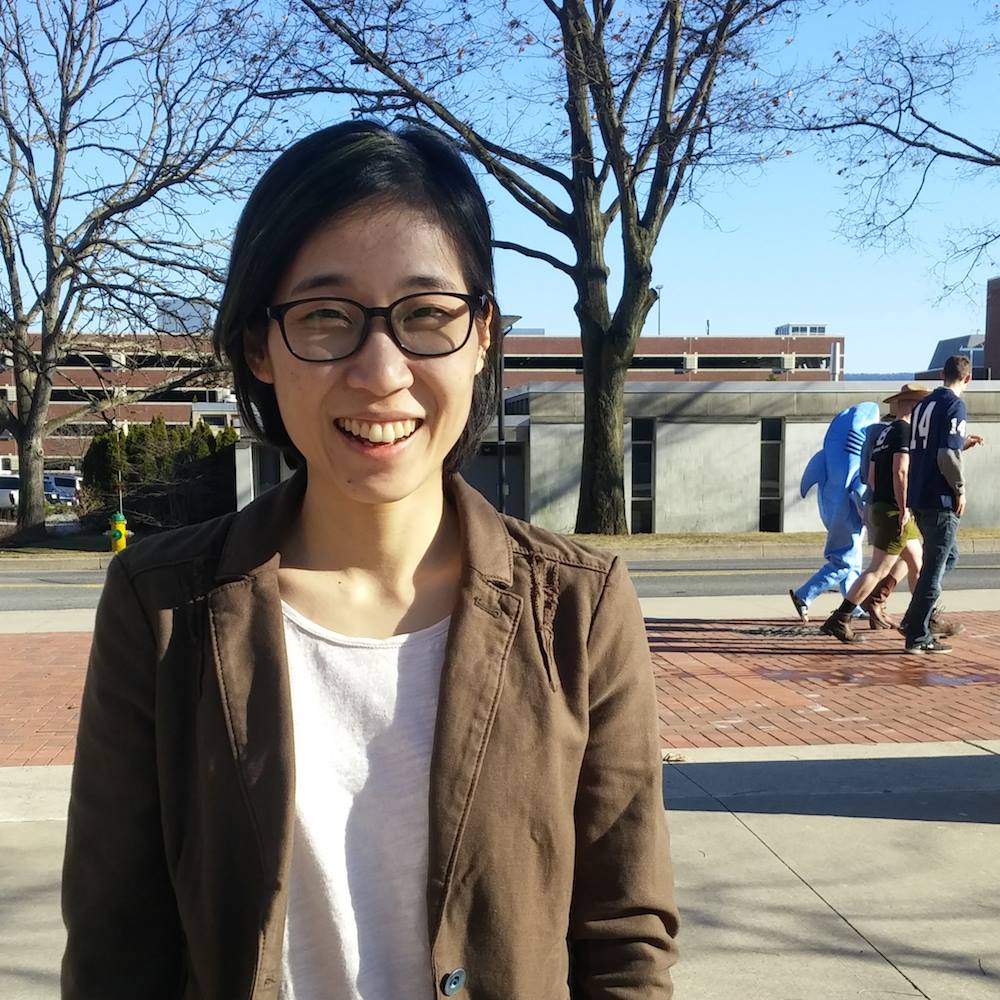
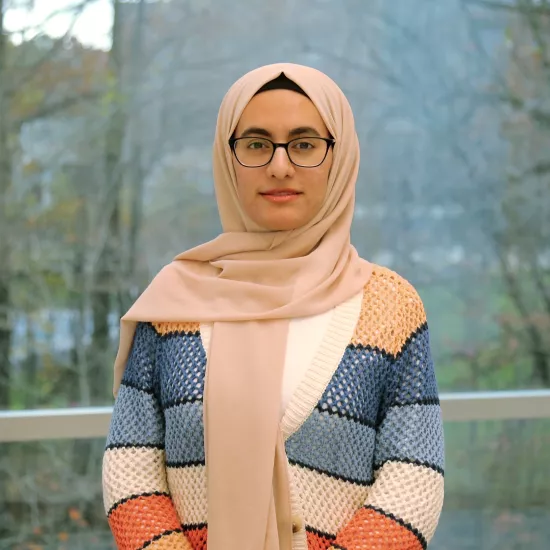
Nathaly Carolina Pinto Torres is a Doctoral Researcher at Aalto University's Department of Design, working on critical design interventions for marginalized communities. Since 2020, she has led the "Emergencia de Educación en la Amazonía Ecuatoriana" project, collaborating with indigenous students and Confeniae to develop pictographic communication systems challenging social exclusion. Her research spans: Participatory design with indigenous communities Gender justice in education during crises Epistemic justice in plurinational contexts Visual resistance strategies in Amazonian regions Postcolonial educational frameworks Design for socio-environmental transformation Publication trends show focus on: Visual communication systems for marginalized groups Crisis-driven educational design Decolonial methodologies Intersectional analysis of exclusion Epistemic justice in academia Collective resilience building Scientific recognition includes: Best Demo Award (2021) SENESCYT International Graduate Scholarship (2019) Netherlands Fellowship Programmes (NFP) (2010)
Chelsey R. Carter is an Assistant Professor of Public Health in the Department of Social and Behavioral Sciences at Yale School of Public Health with a secondary appointment in the Department of Anthropology. A Black feminist anthropologist of medicine, public health, and race from St. Louis, Missouri, Dr. Carter's interdisciplinary work bridges public health, anthropology, and critical race studies to address health inequities, particularly focusing on neurodegenerative diseases like ALS in Black communities. Dr. Carter received her BA in Anthropology from Emory University (2012), followed by an MPH and PhD from Washington University in St. Louis (2021), and completed a Presidential Postdoctoral Fellowship at Princeton University (2022). Her educational background reflects her commitment to both anthropological theory and public health practice. Her research examines the relationship between social determinants of health (particularly anti-Black racism, socioeconomic status, and gender) and neurodegenerative diseases such as amyotrophic lateral sclerosis (ALS) and motor neuron diseases. Dr. Carter employs ethnographic research and qualitative methodologies to investigate how embodied inequality impacts diagnosis, treatment, and engagement in clinical trials for Black individuals with ALS. She also leads research on precision medicine and genomic research in Black communities through The Black Genome Project and studies caregiving among persons impacted by ALS. Her scholarship has been funded by the National Science Foundation, the Andrew Mellon Foundation, and the Wenner Gren Foundation. Analysis of Dr. Carter's recent publication trends reveals a strong focus on health equity, particularly examining how systemic racism manifests in medical settings and contributes to health disparities. Her work spans multiple domains including neurodegenerative diseases, HIV/AIDS care, genomics, and mental health, with consistent attention to intersectional approaches that consider race, gender, and socioeconomic status. A notable pattern in her scholarship is the use of qualitative and mixed methods to center the lived experiences of marginalized communities, challenging dominant biomedical paradigms through a Black feminist lens. Principal's Development Fund Visiting Scholar (2024) Distinguished Teaching Award from Yale School of Public Health (2023) Funding from the National Science Foundation Support from the Andrew Mellon Foundation Wenner Gren Foundation grant Dr. Carter actively mentors students and has developed innovative teaching approaches, including her course 'Biomedical Justice: Public Health Critiques and Praxis,' which encourages students to bring their full selves into the classroom. Her research has been supported by significant grants that enable community-engaged work addressing health disparities. She emphasizes the importance of community partnerships in her research, ensuring that academic work serves and is accountable to the communities being studied. Dr. Carter is Founder and Director of The LEITH (Lived Experiences Igniting Transformations in Health) Lab, which addresses Black invisibility and misdiagnosis for rare neurodegenerative and genetic diseases. The lab brings together persons and caregivers impacted by rare diseases, researchers, clinical providers, educators, students, and activists to develop more humanizing and critical approaches in the rare neurodegenerative field. The LEITH Lab's vision centers on advancing anti-racist research, fostering awareness through education, creating palliative networks for support, and developing a pipeline of health equity scholars.
Jessica Glazier is an Assistant Professor in the Frances L. Hiatt School of Psychology at Clark University, Worcester, MA. She completed her Ph.D. and M.S. in Psychological Science at the University of Washington (2022 and 2019, respectively) and a B.A. in Psychology & Music from Albion College (2015). Her research focuses on challenging societal norms about social categories like gender, race, and sexual orientation, emphasizing inclusivity for marginalized groups such as transgender, multiracial, and asexual individuals. She employs methods from social, developmental, cognitive psychology, and interdisciplinary approaches like feminist and LGBT studies. Research Interests Exploring how social categorization affects perceptions and experiences of individuals who defy traditional norms Examining consequences of gender/racial essentialism on prejudice and discrimination Investigating gender development in youth, including transgender and cisgender children Addressing statistical methodology limitations in psychological science Recent Research Trends Her 2024 work highlights challenges in LGBTIQ+ research inclusivity and examines gender attitudes across diverse children. Recent projects (2023–2024) emphasize statistical frameworks for meaningful inference, intersectionality in harassment perceptions, and the role of adult beliefs in shaping children’s identity autonomy. Earlier studies (2019–2022) established foundational insights into gender categorization mechanisms and transgender children’s developmental similarities to cisgender peers. Teaching & Mentoring Teaches Advanced Social Psychology (PHD) and Statistics (undergraduate), prioritizing student learning through dedicated skill-building sessions. Mentored research assistants (e.g., Liza Moore, Martina Khurana) and supervised Elizabeth Abel’s honors project on race and gender essentialism. Actively supports early-career researchers via peer mentoring programs. Labs & Collaborations Conducts research within Clark University’s Frances L. Hiatt School of Psychology lab environments, collaborating with institutions like Northeastern University and international teams on child development and social categorization projects.
Jonas Eliasson is a Visiting Professor at Linköping University's Department of Science and Technology (ITN), focusing on Communications and Transport Systems. He concurrently serves as Director of Transport Access at the Swedish National Transport Administration and chairs the Planning & Construction committee of the Royal Academy of Engineering Sciences. Previously, he was Director of the Stockholm City Transportation Administration (2016–2019) and a professor at the Royal Institute of Technology (KTH) from 2007 to 2016. His research emphasizes transport policy design and evaluation, including cost-benefit analysis, transport pricing, railway capacity allocation, and public acceptability of policies. He advises governments on sustainable transport planning, congestion pricing, and socio-economic appraisals. His work bridges theoretical frameworks and practical implementation, with a focus on accessibility, equity, and climate targets. Key research themes include infrastructure cost overruns, traffic demand reduction strategies, and the integration of passenger and freight transport systems. Recent publications analyze policy impacts, forecasting methods, and carbon-neutral transportation systems. His interdisciplinary approach addresses both technical and socio-political dimensions of transport challenges. Eliasson collaborates with research groups like Railway and Public Transport and contributes to initiatives like the 'Next Generation Smart Transportation Systems' project. Despite extensive professional roles, no formal student advisees are listed. His work is disseminated through journals like Transportation Research Part A and policy reports for national and regional governments.
Kjerstin Thorson serves as the Dean of the College of Liberal Arts at Colorado State University, a position she assumed on August 1, 2024. Previously, she was the Brandt Endowed Professor of Political Communication and Associate Dean for Strategic Initiatives at Michigan State University’s College of Communication Arts & Sciences. An internationally recognized scholar, her research centers on digital platforms and their impact on civic life and culture. Her educational background includes: BA in English from Macalester College MA in Journalism from the University of Missouri-Columbia PhD in Mass Communication from the University of Wisconsin-Madison Thorson's research explores the intersection of digital media, political communication, and civic engagement. She investigates how social media platforms shape political participation, news consumption, and civic discourse, with a particular focus on young adults and historically marginalized communities. Her work addresses critical issues such as equity in digital civic infrastructure, the role of algorithms in political exposure, and the dynamics of online moderation and community governance. She examines both the empowering potentials and the challenges of digital media for democratic participation. Her recent publications (2023-2025) reveal a sustained investigation into platform governance, volunteer moderation, and the urban-rural divide in digital civic engagement. She also delves into Gen Z's civic behaviors, the spread of misinformation, and the evolving landscape of political learning on social media. Her work often employs mixed-methods approaches, combining digital trace data with surveys to understand complex media effects. Thorson has received notable recognition for her contributions: Michigan State University’s Teacher-Scholar Award 2022-2023 Fellow of the Big 10 Academic Alliance Leadership Program Her research has been supported by prestigious organizations including the National Science Foundation (NSF), the Social Science Research Council, and the Spencer Foundation. In her administrative roles, she has prioritized student success through initiatives like the Ignite the Future program, which supports first-generation and marginalized students, and has championed faculty development through the creation of a Center for Teaching and Learning. While specific advisees are not listed, her leadership in student success programs underscores her commitment to mentoring. Under her leadership at Michigan State University, the College of Communication Arts & Sciences expanded its revenue-generating partnerships, created a college-wide Center for Teaching and Learning, launched the Ignite the Future family of programs, and grew the esports initiative. She has also focused on improving culture and climate through promotion pathways for non-tenure track faculty, climate surveys, and community-building events.
Bruna Damiana Heinsfeld serves as Assistant Professor of Learning Technologies within the Department of Curriculum & Instruction at the University of Minnesota's College of Education and Human Development. Her research critically examines the intersections of technology, society, and education through the lens of Critical Studies of Education and Technology (CSET), with emphasis on power dynamics and social justice implications. Her academic credentials include: Ph.D. in Interdisciplinary Learning and Teaching (Learning Design and Technologies concentration) from UTSA M.A. in Education (Digital Languages, Media and Education concentration) from PUC-Rio, Brazil Multiple Postgraduate Certificates from Brazilian institutions: Media Discourse Analysis, Ontology and Epistemology, Philosophy/Sociology/Social Sciences, and Distance Learning Management B.A. in English Language and Literature from UERJ, Brazil Dr. Heinsfeld's research program centers on critical discourse analysis of educational technology narratives across corporate, policy, and educational contexts. She investigates how technological discourses are constructed and operationalized, particularly regarding digital equity, participatory exclusion, and the sociopolitical dimensions of technology adoption. Her methodological approach combines Critical Discourse Analysis (CDA) with critical pedagogy to unpack ideological, cultural, and economic factors shaping educational technology implementations. She examines epistemological foundations of technological beliefs and challenges neoliberal narratives in EdTech through rigorous deconstruction of policy documents and marketing materials. Analysis of her recent publications (2019-2023) reveals consistent focus on corporate influence in educational technology, with particular attention to Google and Microsoft's marketing narratives, pandemic-era remote learning disparities, and Latinx student experiences. Her work demonstrates how technological solutions often reinforce existing inequalities through participatory exclusion mechanisms, while her policy analyses expose contradictions between equity rhetoric and actual implementation. Recurring methodological threads include discourse analysis of educational landscape reports and critical examination of public policy frameworks. No scientific awards were documented in the provided materials. As an advisor, Dr. Heinsfeld cultivates a supportive environment grounded in social justice principles, emphasizing critical consciousness development and student autonomy. Her advising philosophy centers on accessible feedback, interdisciplinary exploration, and preparation for meaningful societal engagement. She teaches foundational courses including CI 4311W Technology and Ethics in Society (examining algorithmic bias, privacy concerns, and AI ethics) and CI 8147 Critical Discourse Analysis in Educational Research (focusing on language-power dynamics in educational contexts). While specific research laboratories aren't detailed, her collaborative work spans international contexts with Brazilian institutions and U.S. colleagues, particularly evident in joint publications with researchers like V. Marone and M. Pischetola. Her research trajectory indicates ongoing critical engagement with emerging technologies like AI in education policy, as evidenced by upcoming 2025 conference presentations.
Assoc Prof Siok Kuan Tambyah is an Associate Professor at the National University of Singapore (NUS) Business School and a Fellow at The College of Alice & Peter Tan, NUS. She holds a PhD in Business from the University of Wisconsin-Madison. Her research focuses on consumer behavior, consumer culture theory, services marketing, and happiness/quality-of-life studies. She has authored/co-authored five books and numerous articles in leading journals such as the Journal of Consumer Research and Journal of Service Research . Her teaching spans undergraduate and graduate levels, including courses on Principles of Marketing, Consumer Behavior, and The Pursuit of Happiness. She has supervised over 60 undergraduate research projects and advised two PhD students. Her pedagogical research emphasizes interdisciplinary learning and residential college environments, highlighted in works like Student Growth and Development in New Higher Education Learning Spaces . A/P Tambyah’s work on Singapore’s quality of life and well-being has positioned her as a leading expert. Key publications include Happiness and Wellbeing in Singapore: Beyond Economic Prosperity (2023) and Drivers of Sustainability and Consumer Well-Being (2022). Her research often bridges consumer behavior with societal issues, such as immigrant inclusion and economic hardship impacts. She is an award-winning educator, recognized for innovative teaching methods in residential colleges and executive education programs. Her contributions to interdisciplinary learning and community engagement are further detailed in her writings on reflective practices and community-based research models.
Anthony J. Gambino is a Postdoctoral Research Associate in the Department of Educational Psychology at the University of Connecticut. His research focuses on gifted education, teacher evaluation, and multilevel modeling techniques. Ph.D. in Research Methods, Measurement, and Evaluation (University of Connecticut) M.A. in Measurement, Evaluation, and Assessment (University of Connecticut) B.S. in Psychology (Wagner College) His work addresses critical issues in educational equity, including disparities in gifted program identification by race, poverty, and language status. He develops and evaluates statistical tools for multilevel modeling and contributes to understanding the role of teacher rating scales in educational assessments. Gambino’s publications emphasize methodological rigor in educational research, particularly in behavioral interventions like PBIS and analytical frameworks for teacher effects. He maintains active engagement in advancing evaluation curricula for graduate programs.
Katherine C. Rodela is an Associate Professor and Interim Chair in the Department of Educational Leadership and Sport Management at Washington State University Vancouver, part of the College of Education, Sport, and Human Sciences. She is a community-engaged scholar committed to advancing equity and justice in education through research, teaching, and outreach. Her educational background includes a Ph.D. from Stanford University’s Graduate School of Education and a BA in Philosophy and History from Seattle University. She is a former Fulbright Scholar with research experience in civic engagement in Peru. Dr. Rodela's research focuses on leadership for equity and social justice, particularly the leadership of Latinx communities, parents, and educators. Her work explores how leaders of color navigate equity initiatives, how marginalized families advocate for justice, and how educational leadership can be redefined to include youth, parents, and community members. She uses qualitative methods, especially LatCrit counterstorytelling, to center the voices of those often excluded from leadership narratives. Her recent publications reflect a strong trend in examining Latinx leadership pathways, community cultural wealth, gender and LGBTQ+ inclusion, and activism in conservative educational settings. These works are published in leading journals such as Educational Administration Quarterly , Peabody Journal of Education , and Teachers College Record . George Brain and Gay Selby Faculty Award in Educational Leadership Fulbright Scholar She actively mentors future educational leaders and collaborates with community partners such as the SW Washington Latino Parent Leadership Institute. Her research includes longitudinal studies on Latinx parent leadership and equity leadership during politically divisive times. She has also contributed to special issues and conceptual frameworks that challenge traditional notions of educational leadership and advocate for more inclusive, justice-centered models.
Eun Kyoung Choe is an Associate Professor in the College of Information at the University of Maryland, College Park. She returned to UMD in Fall 2024 after a year-long sabbatical at Seoul National University’s Computer Science Department. Her research bridges Human-Computer Interaction (HCI), Health Informatics, and Ubiquitous Computing, with a focus on designing inclusive and accessible health technologies for marginalized populations such as blind and low-vision individuals, older adults, and stroke survivors. She earned her BS from KAIST, MIMS from the University of California, Berkeley, and PhD in Information Science from the University of Washington, where she received the Distinguished Alumni Award in 2024. Her research focuses on creating technologies that empower individuals to manage their health through personalized and accessible systems. Key areas include personal informatics, semi-automated tracking, teachable interfaces, and mobile data visualization. She investigates how people reflect on personal data and how visualizations can support insight generation, particularly on mobile devices. Her work emphasizes inclusive design, addressing health disparities through accessible technologies. The trends in her recent publications reveal a strong focus on health equity, aging, and rehabilitation. Her research spans activity tracking for older adults, stroke recovery systems, and inclusive health technologies for people with disabilities. She leverages mixed-methods approaches, co-design, and user-centered development to build systems that are both technically sound and socially impactful. Distinguished Alumni Award, University of Washington, 2024 Dr. Choe has advised several students and researchers, including Young-Ho Kim, Diana Chou, and Sabahat Fatima, and leads interdisciplinary teams on projects funded by NSF, NIH, and Microsoft Research. Her major projects include MyMove (personalized activity tracking for older adults), mHealth platforms for stroke survivors, and OmniTrack (flexible self-tracking tools). She has served on editorial boards of PACM IMWUT and Foundations and Trends in HCI and co-chaired the Health Subcommittee for CHI (2021–2023). Her work continues to advance the frontiers of accessible and human-centered health technologies. She leads the Inclusive and Accessible Health Tracking Lab, where her team develops technologies in collaboration with users from marginalized communities. The lab emphasizes participatory design, real-world deployment, and ethical considerations in health technology development.
Samar Sabie is an Assistant Professor at the Institute of Communication, Culture, Information and Technology (ICCIT) at the University of Toronto, where she also serves as Program Director for the Technology, Coding, and Society (TCS) program. She holds a graduate appointment at the Daniels Faculty of Architecture, Design, and Landscape, reflecting her interdisciplinary work bridging technology, design, and social justice. She leads the Open Design Collaboratory, a research space focused on critical and community-centered design practices. Education: Doctor of Philosophy, Department of Information Science, Cornell University/Cornell Tech, 2022 Master of Science, Department of Computer Science, University of Toronto, 2017 Master of Architecture, John H. Daniels Faculty of Architecture, Landscape, and Design, University of Toronto, 2015 Honors Bachelor of Science (Architecture and Computer Science), University of Toronto, 2011 Her research investigates design as a socio-material practice that fosters community adaptive capacity toward sustainable change. Drawing from architecture, software engineering, ethnography, and philosophy, she explores participatory design , unmaking , and design for social justice . Her work critically engages with how communities resist, adapt, and reimagine technology in contexts of displacement, scarcity, and inequality. Her recent publications, appearing in top venues like CHI , CSCW , and DIS , reveal a strong thematic focus on unmaking as a design strategy for emancipation and agonism, mobility justice , e-waste practices , and cultural memory through design. These works collectively emphasize community agency, ethical ambiguity, and the political dimensions of design. Scientific Contributions: Director, Open Design Collaboratory Program Director, Technology, Coding, and Society (TCS) Graduate Faculty, Daniels Faculty of Architecture, Design, and Landscape Current Courses: CCT204 Design Thinking I, CCT477 Understanding Users Samar Sabie actively mentors students and collaborates on research focused on humanitarian technology, critical making, and design education. Her projects often involve community engagement, participatory methods, and interdisciplinary teams. She has collaborated with and advised early-career researchers such as Dina Sabie, Awais Hameed Khan, and Taneea Agrawal on topics ranging from IDP shelter dynamics to mobility justice advocacy. Her research is supported by her deep engagement with socio-technical challenges in marginalized contexts, and she continues to push the boundaries of how design can serve as a tool for equity, care, and resistance. Future work appears to be evolving toward deeper philosophical inquiries into destruction, care, and the limits of technology.
Dr. Matteo Montecchi is a Senior Lecturer (Associate Professor) in Marketing at King’s Business School, King’s College London, where he also serves as Theme Lead for Sustainable Consumption at the Centre for Sustainable Business and Programme Director for the Strategic Marketing (Open Executive) programme. He teaches core modules such as Consumer Behaviour, Digital Marketing, and Research Methods, and leads executive education initiatives. Previously, he was a Senior Lecturer at the London College of Fashion, University of the Arts London, and has held visiting positions at Milan Politecnico, Università Cattolica del Sacro Cuore, and Università Federico II. Montecchi earned his PhD in Marketing from King’s College London, an MRes in Marketing from Birkbeck College, an Executive Master in Marketing and Sales from SDA Bocconi and ESADE, and a Bachelor’s in Business Economics from the University of Modena and Reggio Emilia. He also holds a PgCert in Academic Practice and is a Fellow of the Higher Education Academy (FHEA). His research focuses on the digital transformation of marketing, particularly the role of artificial intelligence and blockchain in enhancing transparency and trust. He investigates ethical engagement with diverse consumer groups, inclusion, and corporate responsibility, with a special interest in marginalized communities. His work integrates consumer behavior, digital interactions, and decision-making with technological innovation, offering actionable insights for sustainable and responsible business strategies. The most recent 15 publications reflect a strong trend in AI in retail, brand transparency, consumer trust, ethical data use, voice technologies, and social sustainability. His research spans journals in marketing, psychology, interactive marketing, and business ethics, demonstrating interdisciplinary impact. Scientific Awards: KingsCAT: Capture and Analysis Tool for Social Media Research at King’s College London (2024) – Recognized as part of a collaborative team for advancing digital research infrastructure and media analysis. Montecchi is actively involved in PhD supervision and is accepting new students. He has led research projects using social media analytics (KingsCAT) and has contributed to strategic debates on grand challenges in marketing. His work connects academic research with real-world managerial applications, particularly in digital strategy and ethical innovation. He is a key contributor to interdisciplinary research through tools like KingsCAT, which supports collaborative social media analysis, and his publications often involve co-authorship with experts in data science, psychology, and organizational behavior.
Dr. Courtney Plante serves as an Associate Professor in the Psychology Department at Bishop's University, renowned for research on furry fandom, anime communities, and bronies. A social psychologist and active community member, he explores intersections between these fandoms and LGBTQ+ identities, emphasizing mental health benefits of inclusive spaces. His engaging teaching style and campus presence foster strong student connections at Bishop's progressive environment. Plante earned his Ph.D. in Social Psychology from the University of Waterloo in 2015, followed by a post-doctoral fellowship at Iowa State University. Research focuses on: Psychological dynamics of furry fandom (80% LGBTQ+ identification), highlighting community support for mental wellbeing Cultural identity formation in anime/manga enthusiast networks Age-defying engagement in brony communities (My Little Pony fans) His work demonstrates how marginalized groups combat stigma through belonging, reducing health risks from identity concealment. Plante stresses that community provides critical resources—from emotional support to physical shelter—particularly for those labeled 'weirdos or outcasts'. Plante mentors students through authentic teaching, sometimes lecturing in furry suits, and campus immersion like dining with students and attending the Games Club weekly. He advocates for individuality, advising others to 'keep the edges' rather than conform. His vision includes normalized media representation for furries, bronies, and LGBTQ+ communities to foster societal acceptance.
Chasalevris Athanasios is an Assistant Professor at the School of Mechanical Engineering, National Technical University of Athens (NTUA), specializing in Rotordynamics and Tribology. His research focuses on nonlinear dynamics of machines, active bearings, and turbomachinery design. He holds a Ph.D. in Rotordynamics from the University of Patras (2009) and a Diploma in Mechanical & Aeronautical Engineering (2004). Research Interests: Machine Dynamics, Turbomachinery, Active Bearings, Bifurcation Analysis, Crack Detection. Teaching: Dynamics of Rotating Machines, Kinematics and Dynamics of Mechanisms, Machine Elements I. Collaborations: KIT (Germany), RPI (USA), MTU Aero Engines (Germany), and Cleveland State University (USA). Awards include the Humboldt Foundation Fellowship (2010), GE's 'Beyond and Ahead' Award (2017), and recognition as a Top 2% Scientist (2023). He has authored over 40 publications and supervised numerous graduate students. Current roles include Academic Advisor at DOATAP and Associate Editor for journals like ASME Journal of Tribology.
Steve Loughnan is a Professor of Psychology at the University of Edinburgh's School of Philosophy, Psychology and Language Sciences. His research focuses on dehumanization, objectification, and human-animal relations, exploring how societal and psychological factors influence moral judgments and behaviors. He teaches undergraduate courses on social psychology, experimental/applied social psychology, and social class, and supervises PhD students in related fields. Research interests include: Dehumanization of social and ethnic outgroups Psychological impacts of objectification on women and marginalized groups Moral psychology of meat consumption and animal treatment Effects of economic inequality on societal attitudes Anthropomorphism in human-AI and human-pet relationships His publications analyze topics like the psychological mechanisms behind meat consumption paradoxes, the role of dehumanization in conflict scenarios, and the ethical implications of AI romance. He has received no explicitly listed awards but has been widely cited in social psychology domains. Teaching includes year-long programs on social psychology principles, experimental research methods, and social class analysis. Office hours are held weekly to support students. His work bridges theoretical social psychology with applied issues in global inequality, environmental ethics, and veterinary mental health.

.jpg)