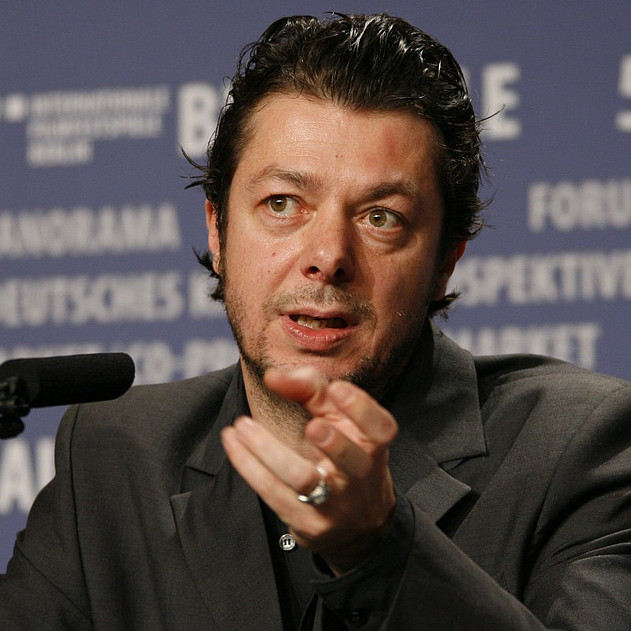
Prof. Thomas Arslan is a filmmaker and screenwriter serving as a Professor for Narrative Film at the Institute for Time-Based Media of the Berlin University of the Arts since 2007. His work bridges narrative cinema and documentary practices, often exploring themes of migration, urban life, and cultural identity. Research Interests include: Narrative Film German-Turkish Cultural Contexts Social Realism in Cinema Documentary Storytelling Independent Film Production Historical Memory in Visual Media Filmography Trends : Spanning 1993–2013, his works focus on marginalized communities, historical displacement, and personal/family dynamics within urban settings. Selected subfields include German-Turkish Cinema , Social Observation , and Migration Narratives . Affiliation : Institute for Time-Based Media at UdK Berlin.
Joshua B. Guild is an Associate Professor in the Department of African American Studies at Princeton University. He is also an Associated Faculty member in the Program in Urban Studies and has been involved with the Center for Digital Humanities. His scholarly work bridges historical research with public engagement and digital innovation. His education includes a PhD in History and African American Studies from Yale University and an undergraduate degree from Wesleyan University, where he was a Mellon Mays Undergraduate Fellow. Professor Guild's research centers on 20th- and 21st-century African American social and cultural history, urban history, and the modern African diaspora. His interests include migration, black internationalism, black popular music, and the black radical tradition. He is deeply engaged in the digital humanities and public scholarship, organizing seminars and contributing to podcasts and public exhibitions. The recent publications and projects reflect a strong focus on urban Black communities, transnational migration, and cultural politics. Themes include the Great Migration, postwar New York and London, New Orleans after Katrina, and the Black 1980s. His work combines historical analysis with cultural critique and social justice advocacy. Scientific Awards and Fellowships: Mellon Mays Undergraduate Fellowship Andrew W. Mellon Foundation Fellowship Ford Foundation Fellowship Woodrow Wilson National Fellowship Foundation Award Charles Warren Center Fellowship (Harvard University) W.E.B. Du Bois Institute Fellow (Harvard University) Professor Guild has advised graduate students through seminars and collaborative projects, though no individual students are named. He has led initiatives supported by institutional grants, particularly in digital humanities and public engagement. His leadership in the 'Black Studies in the Digital Age' seminar and editorial work on the 'Black 1980s' special issue demonstrates his commitment to advancing the field through interdisciplinary collaboration. He is affiliated with the Program in Urban Studies and the Center for Digital Humanities at Princeton, where he contributes to shaping curricula and research directions in African American Studies and digital scholarship.
Krzysztof Z Gajos is a Gordon McKay Professor of Computer Science at Harvard University’s Paulson School of Engineering and Applied Sciences. He leads the Intelligent Interactive Systems Group, focusing on human-AI interaction, accessible computing, and behavioral research at scale. His work integrates technical innovation with ethical and societal considerations, emphasizing equity-centered design. Education: Ph.D., University of Washington M.Eng. and B.Sc., Massachusetts Institute of Technology (MIT) Research Interests: His research spans AI for public services , health informatics , design for equity , and behavioral research platforms like LabintheWild.org. He investigates how AI can augment human decision-making while addressing biases and ethical challenges. Recent Trends in Articles: Recent work emphasizes human-AI collaboration in healthcare , explainable AI , and equity-centered design . Key themes include reducing overreliance on AI, improving transparency in algorithmic decisions, and centering marginalized communities in technology development. Scientific Awards: Sloan Fellowship Best Paper Awards at ACM CHI, COMPASS, and IUI Advising & Grants: His federal grants support AI ethics and healthcare projects, though recent terminations have prompted efforts to secure alternative funding. He advises students on projects like AI for humanitarian negotiations and digital phenotyping. Labs & Teams: Leads the Intelligent Interactive Systems Group , collaborating with organizations on AI for social good and accessible technology.
Kevin O'Brien is the Jack M. Forcey Professor of Political Science at the University of California, Berkeley. He specializes in Chinese politics, particularly focusing on contentious politics, protest dynamics, and state-society relations in rural China. His research examines mechanisms of protest control, authoritarian governance, and institutional reforms. O'Brien holds a B.A. from Grinnell College (1979) and a Ph.D. from Yale University (1987). Education: B.A., Grinnell College; Ph.D., Yale University Affiliations: Institute of East Asian Studies, UC Berkeley Research interests include rightful resistance, relational repression, and adaptation strategies under autocratic regimes. He has authored/co-authored influential books such as Rightful Resistance in Rural China and edited volumes on popular protest and grassroots elections in China. Books: Reform Without Liberalization , Popular Protest in China , Grassroots Elections in China Awards include the Sage Award for Best Paper in Comparative Politics (2004). His work integrates fieldwork insights with theoretical frameworks, addressing topics like land expropriation, migrant worker rights, and NGO operational challenges in China's evolving political landscape.
Professor Ute Stephan is a Professor of Entrepreneurship at King's Business School, King’s College London, where she is affiliated with the Strategy, International Management & Entrepreneurship department. She is a globally recognized scholar in the psychology of entrepreneurship, with a focus on entrepreneurial well-being, mental health, social entrepreneurship, and the role of culture and institutions. Research Interests: Entrepreneurial well-being, stress, and mental health Social and inclusive entrepreneurship Cross-cultural innovation and national culture Family business and women entrepreneurs Entrepreneurial resilience during crises (e.g., Covid-19) Feedback-seeking and social networks Her recent publications reveal a strong trend toward understanding the psychological and social dimensions of entrepreneurship, particularly how entrepreneurs navigate uncertainty, maintain well-being, and create inclusive impact. Her work integrates insights from organizational behavior, psychology, and management, often using cross-national data and meta-analytic methods. Scientific Awards and Recognition: 2025 JIBS Decade Award Fellow, International Association of Applied Psychology (IAAP) 21st Century Entrepreneurship Fellow Winner, 2016 GLOBE Robert J. House Best Research Paper Award Highly Commended, 2015 GLOBE Robert J. House Best Research Paper Award Nominee, 2021 Journal of Management Scholarly Impact Award She has secured over £3 million in research funding from the European Commission, UK Government, UK research councils, and German institutions. She serves as Associate Editor at Journal of Management and Entrepreneurship Theory & Practice , and previously held editorial leadership roles at Applied Psychology and Journal of International Business Studies . She is an elected board member of the IAAP and chairs its publication committee. She also advises the Founder Mental Health Pledge and is an IfM Research Fellow at IfM Bonn. Labs and Research Teams: Lead investigator of the 25-country study on Entrepreneurship & COVID-19 Principal investigator of the WEWell project on women entrepreneurs’ well-being Lead investigator of the SEFORIS and SELUSI projects on social enterprises Team member in large-scale international collaborations across Europe, Asia, and the Americas
Sally M. Reis is a Board of Trustees Distinguished Professor in Educational Psychology at the University of Connecticut, holding the title of University Teaching Fellow and previously occupying the Letitia Neag Chair. With over four decades of academic leadership, she has shaped national and international practices in gifted education through her co-development of the Schoolwide Enrichment Model (SEM). Her academic credentials include: Ph.D. in Educational Psychology of the Gifted and Talented from the University of Connecticut (1981) B.A. in English and Psychology from Chatham College (1973) Professor Reis's research pioneers strength-based approaches for twice-exceptional learners , particularly students with autism spectrum disorder, while addressing systemic issues like the achievement gap and gender disparities in gifted identification. Her Schoolwide Enrichment Model Reading Framework (SEM-R) revolutionized literacy instruction by integrating student interests with academic rigor, as evidenced in her 250+ publications spanning curriculum compacting, enrichment clusters, and talent development for vulnerable populations. Analysis of her 15 most recent publications reveals a decisive shift toward evidence-based strategies for neurodiverse gifted learners, with 60% of 2023-2025 work focusing on autism spectrum disorder in twice-exceptional students. Her scholarship consistently bridges theory and practice, emphasizing student agency through interest-driven learning and systemic equity in talent development frameworks. Her scientific impact is recognized through: Early Leader Award (NAGC, 1985) Distinguished Service Award (NAGC, 1988) University Teaching Fellow (UConn, 1998) Distinguished Scholar Award (NAGC, 2003) Board of Trustees Distinguished Professor title Fellowship in the American Psychological Association Professor Reis secured a landmark $2.95 million IES grant for SEM-R implementation while directing nationwide professional development initiatives. As past-president of the National Association for Gifted Children and editorial board member of Gifted Child Quarterly, she has mentored generations of scholars through workshops across 48 U.S. states. Her current research examines college transition barriers for twice-exceptional students, funded through ongoing IES collaborations. Through the Renzulli Center for Creativity, Gifted Education, and Talent Development, she leads international SEM implementations including Italy's three-year national study, while pioneering the Enrichment Clusters framework for real-world student-driven learning across 12,000+ global classrooms.
Anita Hubley is a Professor at the University of British Columbia's Faculty of Education, Department of Educational and Counselling Psychology, and Special Education (ECPS). She serves as MERM Program Coordinator and directs the Adult Development and Psychometrics Lab. Her work focuses on psychometric test development/validation and quality of life research across adult populations. Education: Ph.D. in Psychology (Human Assessment specialization), Carleton University (1995) M.A. in Psychology (Lifespan Development and Aging), University of Victoria (1991) Pre-doctoral training at Geriatric Assessment Unit (Ottawa) and Neuropsychological Assessment Unit (Ottawa) Her research integrates psychometric theory with practical applications in aging populations, homeless/vulnerably housed individuals, and neuropsychological assessment tools. Key contributions include developing the Memory Test for Older Adults (MTOA), Hubley Depression Scale for Older Adults (HDS-OA), Quality of Life in Homeless and Hard-to-House Individuals (QoLHHI), and Subjective Age Identity Scale (SAIS). Scientific Awards: Killam Teaching Prize (2017) Distinguished Reviewer, Buros Institute of Mental Measurements (2013) She has taught graduate courses in Psychological Assessment, Measurement Principles, Scale Development, and Applied Neuropsychology, emphasizing ethical testing practices and response process research. Her lab's work on test adaptation for marginalized populations has informed international measurement standards.
Dr. Kathryn A. Burnett is a Senior Lecturer in the Division of Arts and Media at the University of the West of Scotland, based in the School of Business and Creative Industries. She is actively involved in supervising PhD students and contributes to research areas including rural sociology, cultural heritage, and climate adaptation. Her work aligns with UN Sustainable Development Goals related to sustainable communities and environmental stewardship. Education: (Details not explicitly provided in text, but her extensive academic output suggests a PhD in related fields.) Research Interests: Dr. Burnett’s expertise spans Scottish culture, remote rural communities, island studies, and the creative industries. Her work emphasizes cultural work, resilience in marginalized regions, and the intersection of media, narrative, and place. She explores themes such as Gaelic heritage, climate adaptation strategies, and the socio-economic dynamics of small island communities. Recent Research Trends: Her publications highlight interdisciplinary approaches to rural regeneration, climate adaptation through participatory methods, and the mediatization of island spaces. Recent work includes studies on Arctic art education, coastal community resilience, and sustainable enterprise in remote areas. Awards: SFHEA (2021) Best Paper Award, Rural Enterprise ISBE, Cardiff (2013) Winner of Best Paper Rural Enterprise ISBE (2014) Grants & Advisory Roles: She has held external examiner roles at institutions like the University of Highlands and Islands and has been a Board Member of The Reid Foundation. Her activities include organizing conferences, hosting academic visitors, and contributing to national and international research networks. Labs/Teams: Collaborations include projects with the University of Lapland (e.g., Nurture: Living in the Landscape) and cross-border initiatives on Arctic studies and climate adaptation. She frequently engages in interdisciplinary research with environmental scientists and sociologists.
David M. Silverman is an incoming Assistant Professor in the Department of Psychology at Yale University. His academic work bridges social psychological theory with practical applications for institutional change. Dr. Silverman's research focuses on identity and person-context interactions, specifically examining how schools, workplaces, and other societal institutions shape (in)equity. He is particularly interested in developing and testing new approaches for shifting these institutions to expand equitable access to opportunity. Much of his work emphasizes 'strength-based approaches' that recognize valuable skills and knowledge gained through marginalized identities rather than focusing on deficit narratives. His recent publications demonstrate a clear trajectory toward practical interventions in educational and organizational settings. The research examines how institutions can reject stigmatizing narratives about marginalized people in favor of approaches that recognize their strengths. His work has particular relevance for educators and administrators seeking to implement equity-focused changes. Second most cited paper of 2024 in Personality and Social Psychology Review Dr. Silverman actively engages with practitioners, having published articles in EdWeek and making research accessible through open-access publications. His work on classroom practices supporting students from lower socioeconomic status backgrounds demonstrates his commitment to translating research into practical applications.
Kristen Cole serves as an Associate Professor in the Department of Communication Studies within San Jose State University's College of Social Sciences. Her academic work centers on critical interrogations of health communication systems, disability justice, and the socio-linguistic construction of personhood, with particular attention to marginalized communities navigating healthcare barriers and systemic inequities. Her research is anchored in two foundational inquiries: how individuals negotiate health/illness meanings under cultural constraints, and how communication assumptions shape human categorization. Methodologically grounded in critical/cultural studies, disability frameworks, feminist/queer theories, and autoethnography, her work examines pandemic-era health communication dynamics, citizenship language in immigration processes, and pedagogical innovations for inclusive classrooms. Personal experiences with chronic illness and ELL instruction directly inform her commitment to health justice and communicative equity. Analysis of her 15 most recent publications reveals persistent thematic engagement with disability studies and health communication, featuring methodologies like duoethnography and critical discourse analysis. Key trends include socio-emotional disablism during COVID-19, feminist disability pedagogy through participation menus, and neuroqueering communication theory. Her scholarship consistently exposes how communication practices reinforce or challenge power structures in healthcare, education, and political discourse. While specific grant details remain unlisted in available materials, her research directly addresses urgent contemporary issues: health inequality in pandemic response systems and language-based exclusion in citizenship processes. Her chronic illness narrative and ELL classroom experiences demonstrate profound personal investment in dismantling communication barriers, particularly regarding how vulnerability categorization affects healthcare access and how language determines political inclusion.
Dr. Michele Shaul serves as Professor of Spanish and Chair of the World Languages Department at Queens University of Charlotte, where she also directs the Center for Latino Studies. A dedicated scholar and educator, she co-founded the e-journal Label Me Latina/o and leads community-focused initiatives bridging academia and social outreach. Her academic credentials include: Ph.D. in Spanish-American Literature from the University of North Carolina, Chapel Hill M.A. in Spanish from the University of Florida, Gainesville B.A. with honors in Spanish from the University of Florida, Gainesville Dr. Shaul's research interrogates Latinx identity through literary criticism, translation, and creative writing, emphasizing intersectional experiences of race, gender, and disability within U.S. institutions. Her work actively challenges monolithic narratives while centering marginalized voices in both scholarly and artistic contexts. Analysis of her recent publications (2016-2023) reveals a cohesive trajectory exploring bilingual expression, cultural memory, and systemic inequity. Edited volumes on Latinx literature in Spanish and theater demonstrate scholarly rigor, while creative works like poetry and short stories employ personal narrative to examine reincarnation, hybrid identity, and border-crossing experiences. Her contributions have earned significant recognition: Queens’ 2016 Hunter-Hamilton Love of Teaching Award for pedagogical excellence 2023 Con A de Arte Award from the Latin American Coalition for cultural leadership Through the student/faculty Latino Studies Project, Dr. Shaul mentors researchers documenting Charlotte's Latino community history while collaborating with artists on tolerance-focused initiatives. Her editorial work with international scholars demonstrates sustained commitment to amplifying underrepresented voices across academic and creative domains. Dr. Shaul co-leads the e-journal Label Me Latina/o and directs the Latino Studies Project, fostering collaborative research between students, faculty, and Charlotte's Latino community. Her social outreach partnerships integrate art installations and performance to address diversity through experiential learning and public engagement.
Grace Lim is an Assistant Professor in the Department of Management at the Nanyang Business School, Nanyang Technological University, Singapore. Her research focuses on inclusion, diversity, and the empowerment of disadvantaged employees in organizations, particularly those from lower social class backgrounds and women. Education: Ph.D. in Business (Organizational Behavior and Human Resources), Singapore Management University B.Sc. in Psychology, National University of Singapore Her research employs a range of methodologies, including field surveys, experiments, archival data, and qualitative methods, to ensure robust and generalizable findings. She investigates how individuals can exercise agency to overcome structural disadvantages in the workplace, contributing to the fields of organizational behavior, human resources, and social psychology. Her recent publications reflect a strong trend in studying diversity, inclusion, and equity, with a focus on social class, gender, leadership, and employee well-being. The research spans interdisciplinary themes, integrating insights from psychology, management, and sociology to understand workplace dynamics. Scientific Contributions: Published in top-tier journals such as Organizational Behavior and Human Decision Processes and Academy of Management Annals Research on social class, gender, inclusion, and leadership has been influential in shaping organizational practices Dr. Lim is actively involved in advancing knowledge in organizational behavior and human resources. She has not supervised any listed students yet but continues to contribute through impactful research and academic engagement. She is a member of the Centre for Leadership and Cultural Intelligence at NTU, collaborating on initiatives related to cultural intelligence and inclusive leadership.
Filipa Melo Lopes is a Lecturer in Social and Political Philosophy at the University of Edinburgh, affiliated with the School of Philosophy, Psychology and Language Sciences. She currently directs the Scottish Feminist Philosophy Network. Her research focuses on feminist philosophy, social theory, sexual ethics, and the work of Simone de Beauvoir, with recent attention to incel extremism, fashion ethics, and gender-based violence. Education: B.A. from Simon Fraser University (Canada), Ph.D. from University of Michigan (USA). Teaching includes undergraduate courses like 'Advanced Topics in Feminist Philosophy: Gender and Beauty' and PhD supervision in feminist ethics and political theory. She has supervised several doctoral students, including Lilith W. Lee (now Assistant Professor at Vrije Universiteit Amsterdam). Publications analyze themes such as misogynistic dehumanization, feminist fashion ethics, and Beauvoirian critiques of incel ideology. Her work bridges academic philosophy with public discourse on topics like sugar dating and incel violence. Active in feminist knowledge networks, she also writes for broader audiences on fashion, misogyny, and cultural criticism.
Professor Kjetil Grimastad Lundberg serves at the Institute for Welfare and Participation, Western Norway University of Applied Sciences (HVL), appointed Professor of Welfare Sociology in 2020 after joining HVL in 2018. A University of Bergen PhD graduate (2012), he previously worked as Researcher II at Uni Research Rokkansenteret (2011-2018). His academic credentials include: PhD in Sociology, University of Bergen, 2012 Master's in Sociology, University of Bergen, 2007 Lundberg's research critically examines intersections of welfare systems, poverty, and marginalization through institutional ethnography. He investigates street-level bureaucracy in NAV (Norwegian Labour and Welfare Administration), digitalization impacts, and child/family perspectives in low-income contexts, emphasizing stigma, power dynamics, and activation policies. His work bridges theoretical sociology with practical welfare challenges. His 15 most recent publications (2017-2024) reveal consistent focus on welfare-state dynamics, with recurring themes of work inclusion mechanisms, user experiences in complex interventions, and poverty's structural dimensions. Methodologically, he employs qualitative institutional ethnography across European Societies, European Journal of Social Work, and Social Policy and Society, demonstrating longitudinal analysis of policy evolution. Lundberg supervises multiple PhD candidates on work inclusion and poverty interventions while leading the NAV-funded project 'Barneperspektiv i Nav' (2023-2027) and participating in three additional studies addressing long-term poverty effects and cross-sectoral coordination. His grant portfolio spans NAV-FOU, Sparebankstiftelsen, and NFR funding. He contributes to HVL's 'Rights, Democracy and Welfare' research group, advancing critical welfare sociology through teaching in social science, sociology, and social work programs while examining urban poverty, bureaucratic practices, and marginalized family experiences.
Dr. Prerna Arora is Associate Professor of Psychology and Education at Teachers College, Columbia University, within the Graduate School of Education, Health & Psychology and the Department of Health Studies & Applied Educational Psychology. She directs the School Mental Health for Minoritized Youth and Families (SMILE) Research Lab, where she leads innovative research on mental health equity for immigrant-origin, racial and ethnic minoritized, and historically marginalized youth. Ph.D. in School Psychology – University of Texas at Austin M.A. in Educational Psychology – University of Texas at Austin B.S. in Biology – Arizona State University Predoctoral Internship – Children’s Hospital of Philadelphia Postdoctoral Training – University of Maryland School of Medicine Dr. Arora’s research focuses on culturally tailored mental health interventions, school-based services, barriers to care, and trauma-informed, equity-driven practices. Her work is grounded in participatory action research and mixed methods, aiming to bridge research-practice gaps and empower communities. She has led major funded projects from the Spencer Foundation, National Institute of Mental Health (NIMH), and the U.S. Department of Education, including a $4.9 million grant to train clinicians in culturally responsive services. Her recent publications reflect a strong thematic focus on mental health disparities, cultural adaptation of interventions, school climate, and help-seeking behaviors among AAPI, Latino/a, and immigrant youth. The body of work demonstrates a commitment to advancing equity, social justice, and measurement-based care in school psychology. American Psychological Association Minority Fellowship Program Spencer Foundation Research Grant NIMH Funding U.S. Department of Education OSEP Grant ($4.9 million) Dr. Arora actively mentors PhD and graduate students, many of whom co-author her publications. She has secured major grants that support training, research, and community partnerships. Her leadership extends to editorial roles as Associate Editor of School Mental Health and Consulting Editor of School Psychology Review , and she is a vocal advocate for diversity, equity, and inclusion in academic training and practice. She collaborates extensively with NYC-based organizations, building community-driven research models through the SMILE Lab.