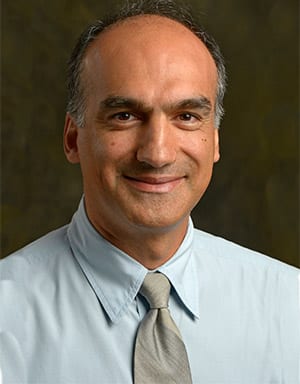
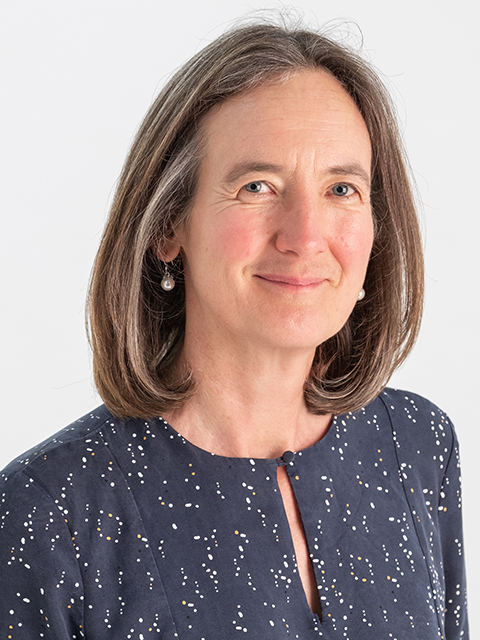
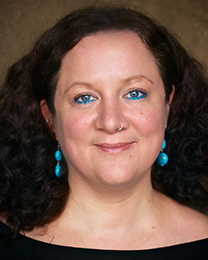
Professor Stephen Graham at Newcastle University is a leading scholar in critical urban studies, focusing on the intersections of militarism, surveillance, and urban infrastructure. His work explores how cities are shaped by and become sites of geopolitical conflict, technological control, and social inequality. Research spans urban verticality , military urbanism , and digital surveillance . Key themes include infrastructure disruption , elite spatial practices , and post-conflict urbanism . Recent publications analyze the militarization of urban space , robotic imperialism , and surveillance societies . His "Splintering Urbanism" framework remains foundational for understanding fragmented urban networks. Current work investigates vertical geopolitics , elite bunkering , and smart city security , with a focus on planetary-scale urban systems and their vulnerabilities.
Laurie Shannon is the Franklyn Bliss Snyder Professor of English at Northwestern University, with a J.D. from Harvard Law School and a Ph.D. from the University of Chicago. She studies English literature and culture in the long sixteenth century, focusing on the history of ideas in language, stakeholdership, embodiment, and cross-species relations. She serves as convener of The Anne Lister Society and is collaborating with Oxford University Press on a scholarly edition of Anne Lister’s Journal. Education: J.D., Harvard Law School; Ph.D., University of Chicago Shannon’s research explores the political imagination in early modern literature, particularly through friendship (Sovereign Amity: Figures of Friendship in Shakespearean Contexts) and animal studies (The Accommodated Animal: Cosmopolity in Shakespearean Locales). Her current monograph, 'Frailty’s Name: Shakespeare and the Natural History of Human Being,' examines human negative exceptionalism in Renaissance thought and its implications for climate crisis ethics. Her publications span Shakespeare studies, queer theory, environmental humanities, and textual editing. Notable awards include the Elizabeth Dietz Memorial Award, Robert B. Cox Teaching Award, and Dean’s Award for Graduate Mentoring. She has held NEH, ACLS, and Guggenheim fellowships. Scientific Awards: Elizabeth Dietz Memorial Award, Robert B. Cox Distinguished Undergraduate Teaching Award, Dean's Award for Graduate Mentoring, NEH Fellowship, ACLS Fellowship, Guggenheim Fellowship Shannon contributes to the Anne Lister Diary Transcription Project and has served as English Department Chair at Northwestern. Her recent articles focus on Shakespeare’s engagement with natural history, queer cosmology, and animal sovereignty, reflecting her interdisciplinary approach.
William Kennedy is a Professor in the English Department at the University at Albany, State University of New York. For over 40 years, he has crafted a body of literature centered on Albany, New York, creating what is known as the "Albany Cycle" of novels. His work has established Albany as a significant place in American literature, comparable to Joyce's Dublin and Bellow's Chicago. His educational background includes a BA from Siena College, following attendance at Public School 20 and Christian Brother's Academy. Professor Kennedy's creative work focuses on American fiction, particularly historical and urban narratives rooted in Albany's cultural and political landscape. His writing explores machine politics, family sagas, and the interplay between individual lives and historical events, rendering Albany's "outcasts and machine politicians, lowlifes and swells" with profound humanity. His narratives transform the city into a mythic capital of national memory. His publications consistently draw from Albany's history, with recurring themes of political corruption, redemption, and the resilience of marginalized communities. The "Albany Cycle" demonstrates his mastery in blending local history with universal human struggles across multiple literary forms. William Kennedy's distinguished honors include: John D. and Catherine T. MacArthur Foundation Fellowship Election to the American Academy of Arts and Letters National Endowment for the Arts Fellowship Regents Medal of Excellence from SUNY Governor's Arts Award Commander of the Order of Arts and Letters in France Election to the American Academy of Arts and Sciences As an educator, Kennedy taught creative writing and journalism at the University at Albany from 1974-1982 and Cornell University in 1982-83. His MacArthur Fellowship directly funded the creation of the New York State Writers Institute at Albany, with matching funds from the university and legislative support from Governor Cuomo. He has served on the New York State Council for the Humanities board and the Academy of Motion Picture Arts and Sciences. William Kennedy co-founded the New York State Writers Institute in 1984, which has grown into a major literary hub conducting statewide cultural and educational activities. The Institute remains central to his legacy, fostering literary arts through readings, workshops, and educational programs across New York.
Daniel M. Roy is a Full Professor at the University of Toronto, with cross-appointments in the Department of Computer Science, Department of Statistical Sciences, and Department of Electrical and Computer Engineering. He serves as Research Director at the Vector Institute and holds the CIFAR Canada AI Chair. Research Focus: Foundational principles of prediction, inference, and decision-making under uncertainty across machine learning, statistics, mathematical logic, applied probability, and computer science. Scientific Contributions: Key work in learning theory, statistical network analysis, probabilistic programming, and information-theoretic frameworks for generalization. Awards: ICML 2024 Best Paper Award for "Information Complexity of Stochastic Convex Optimization" and promotion to Full Professor in 2024. Student Advising: Actively mentors Ph.D. candidates and postdoctoral researchers with strong quantitative backgrounds, particularly at the intersection of machine learning, statistics, and computer science. Email: daniel.roy@utoronto.ca
Adrien Desjardins is a Professor at the University of British Columbia, jointly appointed in the Department of Mechanical Engineering and Department of Electrical and Computer Engineering within the Faculty of Applied Science. He joined UBC in 2024 after serving as a Full Professor at University College London from 2019-2024, following 13 years on faculty there. His educational background includes a B.Sc. from UBC (2001) and a Ph.D. from MIT and Harvard University (2007). Dr. Desjardins' research program focuses on interdisciplinary development of imaging and sensing modalities and autonomous robotics with marine and biomedical applications. His work integrates photonics, ultrasound, machine learning, and robotics to create innovative diagnostic tools and sensing systems, particularly in optical coherence tomography, diffuse optical spectroscopy, and photoacoustic imaging. His publication record reveals an evolution from foundational neuroimaging work (2001) toward increasingly sophisticated optical systems culminating in breakthroughs like ultrasensitive optical microresonators for ultrasound sensing (2017), demonstrating consistent innovation in biomedical optics with growing emphasis on machine learning integration and real-world applications. His scientific contributions have been recognized through prestigious awards: Research Chair from the Royal Academy of Engineering Healthcare Technologies Challenge Award from EPSRC Starting grants from ERC, EPSRC, and Royal Society World Economic Forum Young Scientist (2015) UCL Provost Teaching Prize (2013) Dr. Desjardins actively mentors graduate students and secures major research funding through competitive grants, with current openings for January/September 2025 intakes. His program involves close industry collaboration indicating strong translational focus, though specific lab names aren't mentioned. The interdisciplinary nature of his work suggests teams spanning engineering, computer science, and medical disciplines working on next-generation imaging systems for healthcare and marine exploration.
Elaine Chun is an Associate Professor in the Department of English Language and Literature at the McCausland College of Arts and Sciences, University of South Carolina. She holds a Ph.D. in Linguistics from the University of Texas at Austin (2007) and an A.B. in Linguistics from Stanford University (1995). Education: Ph.D. in Linguistics, University of Texas at Austin (2007); A.B. in Linguistics, Stanford University (1995). Research Interests Dr. Chun specializes in sociolinguistics and linguistic anthropology, with a focus on language, race, gender, and sexuality. Her work examines how language practices traverse racial and national boundaries, particularly in contexts like Asian American YouTube commentary, K-pop fandom, and U.S. public spaces. She investigates ideologies of race and gender, collaborative interpretation in social media, and anti-racist strategies. Publication Trends Her recent publications emphasize language in digital media, racial ideologies, and sociocultural identity. Topics include racism in public discourse, transnational social media analysis, racial parody, and the intersection of language with race and gender. Her work spans journals like American Speech , Language in Society , and Discourse & Society .
Christopher M EARLS is a Professor in the Department of Psychology at Université de Montréal's Faculty of Arts and Sciences. He specializes in forensic psychology, psychopathology, and behavioral studies with a focus on sexual delinquency and juvenile prostitution. His research explores the intersections of psychopathy, criminal behavior, and mental health comorbidities. He teaches courses including Psychopathology: Introduction across undergraduate programs in psychology, social sciences, and cognitive neuroscience. His academic contributions span over two decades, with notable work on psychopathy assessment, parenting practices in non-criminal populations, and sexual behavior conditioning. Education Affiliations: Université de Montréal (primary) Teaching Programs: Baccalauréat en psychologie, Neuroscience cognitive, Social Work programs Dr. EARLS has directed 10+ theses and mémoires since 1998, focusing on forensic psychology topics like sexual delinquency correlates and psychopathy measurement validity. His work bridges clinical psychology with sociocultural factors, particularly in marginalized populations like sex workers and juvenile offenders. Research Highlights: Clinical assessment tools comparison (paper vs. digital psychopathy scales) Gender differences in psychopathy expression Impact of childhood trauma on sexual interest development Though no formal awards are listed, his extensive publication record reflects sustained contributions to forensic and clinical psychology research.
Janet Chen is Professor of History and East Asian Studies at Princeton University, serving as Director of the East Asian Studies Program. Based in 302 Dickinson Hall, she maintains regular office hours on Thursdays from 9:30 am to 11:30 am and is contactable via jychen@princeton.edu. Her academic credentials include: Ph.D. in History, Yale University M. Phil in History, Yale University M.A. in History, Yale University B.A. in History and Asian Studies with highest honors, Williams College Chen specializes in twentieth-century Chinese social and urban history, examining marginalized populations during periods of war and revolution. Her research explores intersections of poverty, state formation, and cultural identity, with current work focused on Mandarin language standardization in China and Taiwan. This scholarship bridges historical analysis with sociological frameworks to understand how ordinary people navigate systemic upheaval. Her publication 'Guilty of Indigence: The Urban Poor in China, 1900-1953' (2012) exemplifies her methodological approach, revealing how destitution became criminalized amid political transformation. Collectively, her work demonstrates consistent focus on urban marginality, state-society relations, and historical memory in modern East Asia, establishing her as a significant voice in social history methodologies.
Shahram Ghiasinejad is a Senior Lecturer in the Department of Psychology at the University of Central Florida (UCF), affiliated with the College of Sciences. He joined UCF in 2007 and specializes in education technology, student engagement, and equity in academic settings. Dr. Ghiasinejad holds a B.A. in Computer Science from the University of Texas at Austin, and an M.S. and Ph.D. in Cognition and Neuroscience from the University of Texas at Dallas. Bachelor of Arts: Computer Science, University of Texas at Austin Master of Science: Applied Cognition and Neuroscience, University of Texas at Dallas Doctor of Philosophy: Cognition and Neuroscience, University of Texas at Dallas His research focuses on leveraging experimental and computational methods to understand human language comprehension, alongside innovative approaches to support underrepresented students through multimedia tools and undergraduate research initiatives. Recent work emphasizes equity and engagement in higher education, including strategies for transfer students and first-generation learners. Publications highlight themes such as JoVE video integration for marginalized students, the role of undergraduate research in fostering equity, and creative solutions for academic challenges faced by underrepresented groups. While no formal awards are listed, his work underscores a commitment to inclusive education and student success.
Maria José Lisboa Brites de Azeredo is an Associate Professor with Habilitation at Lusófona University, Portugal. She serves as Vice-President of the Centre for Research in Applied Communication, Culture and New Technologies (CICANT) and coordinates the Media Literacy and Civic Cultures Lab (MeLCi Lab). She holds leadership roles in the Portuguese Association for Communication (SOPCOM) and the European Communication Research and Education Association (ECREA). Her academic career spans over two decades, including roles at institutions like Universidade Lusófona do Porto and Universidade Nova de Lisboa. Her education includes a PhD and Habilitation in Communication Sciences from Universidade Nova de Lisboa. She has completed specialized courses in digital education, intercultural dialogue, and pedagogical training from institutions like the University of Edinburgh and the Knight Center for Journalism in the Americas. Brites’ research focuses on youth journalism, audience studies, digital citizenship, and participatory methodologies. She has led projects such as the YouNDigital study (PTDC/COM-OUT/0243/2021) and the SMaRT-EU initiative. Her work has been recognized with awards including the Research Prize (2017, 2020, 2023) and the Gold Medal of Academic Value (2019). She coordinates the Master's Degree in Media and Information Literacy and Digital Citizenship at Lusófona University and has trained educators through initiatives like the Media in Action (MIA) project. Her publications span peer-reviewed journals, edited books, and conference proceedings addressing media literacy, generational media practices, and civic engagement.
Flavio Vasconcellos Comim is a Full Professor at IQS School of Management in Barcelona, Spain, holding the Chair of Ethics and Christian Thought (intercenter). His research focuses on the intersections of Sustainability, Economics, and Ethics. Fields of Interest : Human Development, Capability Approach, Social Exclusion, Regional Development, AI Ethics, Poverty Stigma (Aporophobia), Sustainable Development, Social Welfare, Justice, and Happiness. Recent research includes publications on youth HDI in Spain (2025), AI bias against the poor (2024), and critiques of Sen's social choice theory (2024). He leads projects like Big data applied to the study of aporophobia and Population Medicine and Sustainable Development collaborations with China. His academic output spans journals like Regional Studies , AI and Society , and Cambridge Journal of Regions, Economy and Society , with keywords spanning Economics, Machine Learning, Human Development, and Social Justice. No formal students or awards are listed in available records.
Linda Morrice is a Professor of Education and Migration at the School of Education and Social Work, University of Sussex. She specializes in the intersection of refugee/migration studies with education, focusing on informal learning, social integration, and exclusion. Her research spans both the Global North and South, emphasizing refugee access to higher education and policy implications. Current role: Co-Director, Centre for International Education (2021-2024) Education: BA(Hons) in Social Anthropology (University of Sussex), PgDip (Birkbeck, 2004), MA (University of Sussex, 2005), Doctorate in Education (University of Sussex, 2010) Her scientific work explores refugee education through participatory methodologies, creative/narrative methods, and life history approaches. Recent publications analyze racialized borders, digital technology’s role in refugee well-being, and sanctuary city frameworks. Supervision interests include refugee family dynamics, informal pedagogies, and gendered policy impacts. Key grants include UKRI funding for digital well-being of unaccompanied refugee children (2024-2027), ESRC projects on longitudinal qualitative studies (2023-2024), and AHRC research on refugee cultural values (2013-2014). She has led evaluations for the Home Office and Queen Rania Foundation. Professional roles: Co-Chair, Sussex University of Sanctuary group (2019-2024) Advisory member for Home Office integration frameworks and vulnerable persons resettlement schemes Labs/teams: Founding member of University of Sussex Sanctuary Group and Brighton & Hove Sanctuary on Sea. Her research emphasizes participatory practices with refugee communities and longitudinal tracking of social networks.
Mungo Wilson is a Professor of Finance at the Saïd Business School , University of Oxford, and an associate member of the Oxford-Man Institute of Quantitative Finance. He holds a PPE degree from Oxford, an MSc in Economics from LSE, and a PhD in Economics from Harvard. His research focuses on asset pricing, credit risk, mutual funds, and macroeconomic influences on financial markets. He has published extensively in top journals and engages actively with industry through board roles and advisory work. Education : Bachelor's in Philosophy, Politics & Economics (PPE), University of Oxford MSc Economics, London School of Economics PhD in Economics, Harvard University Research Interests : Assesses how macroeconomic conditions and credit risk shape asset prices Analyzes mutual fund behavior and market information transmission mechanisms Explores political dynamics' impact on financial markets His professional engagements include board memberships with funds like EA Asia Absolute Return Master Fund and advisory roles at Broadwell Capital. Teaching focuses on microeconomics for MBA programs, covering game theory, market structures, and price discrimination. Advisory & Grants : Supervises doctoral students at Saïd Business School and serves on programme committees for major finance conferences (e.g., European Finance Association, CEPR Annual Spring Symposium). Awards : While no specific prizes are listed, his impactful research has been widely cited and presented globally.
Katherine V. Gough is Professor of Human Geography at Lund University, Sweden, with a 30-year research focus on housing/home, work/entrepreneurship, youth/elderly geographies, mobility, urbanisation, and climate change across Africa, Latin America, and Asia-Pacific. She collaborates with Loughborough University's Clear Climate team on extreme heat mitigation in Ghana and leads the 'Trocha de Paz' project for Colombia's 'Total Peace' agenda. Research Themes Extreme Heat in Ghana Peacebuilding in Colombia Rural-Urban Dynamics Her multidisciplinary approach bridges academia, policy, and communities through projects like VEWEC, REFIT, and Paz Alto Cauca. Current work emphasizes: Climate-resilient housing design Post-conflict governance Informal sector innovation Scientific Engagement: British Academy funded VEWEC and REFIT projects Principal Investigator for Trocha de Paz (Colombia) Her collaborative research strengthens stakeholder networks in: West African urban livelihoods Colombian territorial peacebuilding Tropical climate adaptation
Professor Lizelle Bisschoff is a Professor of Film Studies at the University of Glasgow’s School of Culture & Creative Arts. She specializes in African cinema with particular focus on gender representation, digital technologies, and film festival curation. Her research bridges academic scholarship and practical initiatives, such as co-founding the Africa in Motion Film Festival (AiM). She holds a PhD from the University of Stirling and has held prestigious fellowships including the Leverhulme Trust (2010-2012) and Lord Kelvin Adam Smith (2012-2015). Education: PhD in African Cinema (University of Stirling, 2009) MSc in Cultural Studies (University of Edinburgh, 2005) Research Interests: Gender dynamics in African filmmaking Emerging digital film industries across sub-Saharan Africa Postcolonial cinema and modernist aesthetics Her work emphasizes decolonizing film studies through projects like AiM Festival and edited volumes such as Women in African Cinema . Recent research explores African science fiction and feminist archives. She has secured £115k in grants for film restoration and educational outreach programs. Awards: Leverhulme Trust Postdoctoral Fellowship AHRC Follow-on Funding for Impact (£90k) British Federation of Women Graduates Scholarship Teaching: Convenes MSc Film Curation program Teaches Introduction to African Cinemas and Race on Screen Key Projects: Lead curator for Africa’s Lost Classics restoration initiative Organized international symposia on African art and activism