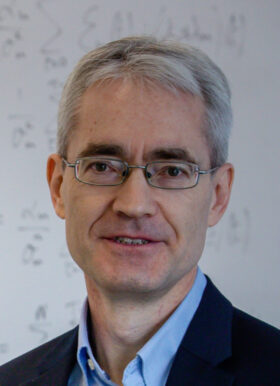
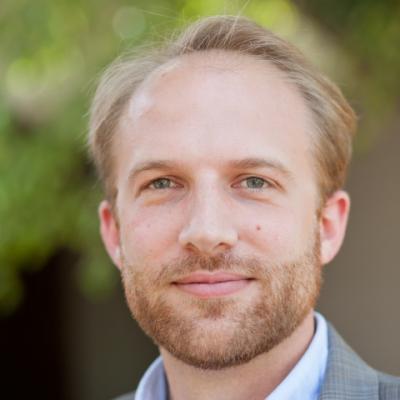
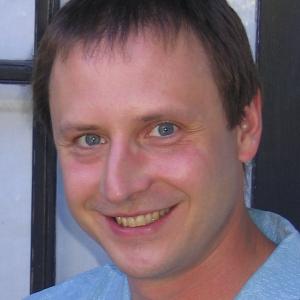
David Lentink is a Full Professor of Biomimetics at the University of Groningen , leading the Biomimetics Group within the Faculty of Science and Engineering. His research bridges biomechanics, aerospace engineering, and robotics, focusing on avian flight mechanics and bio-inspired aerial robotics . Previously at Stanford University, he pioneered the development of the Aerodynamic Force Platform and low-turbulence wind tunnels for animal flight studies. Education : PhD in Aerospace Engineering (Stanford), MSc in Mechanical Engineering (Delft), BSc in Mechanical Engineering (Delft). Research Interests : Understanding bird flight biomechanics to design advanced drones, studying evolutionary adaptations in flight, and developing biohybrid robots with real feathers. Scientific Awards : Dutch Academic Year Prize for the Flight Artists (2013). World Economic Forum Young Scientist under 40 (2013). Alumnus of the Young Academy of The Royal Netherlands Academy of Arts and Sciences. Labs : The Lentink Lab at Groningen’s Linnaeusborg campus integrates bird aviaries, wind tunnels, and maker spaces for bio-inspired robotics development. His team collaborates globally with institutions like Stanford, TU/e, and Sorama.
Geoffrey Goodhill is Professor of Neuroscience and Professor of Developmental Biology at Washington University School of Medicine, where he directs the Center for Theoretical & Computational Neuroscience. His laboratory bridges experimental and theoretical approaches to study brain development. Goodhill earned his BSc in Mathematics and Physics from the University of Bristol (1986), MSc in Artificial Intelligence from the University of Edinburgh (1988), and PhD in Cognitive Science from the University of Sussex (1992). His postdoctoral training included a Medical Research Council Fellowship and a Sloan Theoretical Neuroscience Fellowship at the Salk Institute. His research focuses on computational principles of brain development, particularly using larval zebrafish to investigate neural coding development, behavioral emergence, and alterations in Autism Spectrum Disorders. Key projects examine neural coding and spontaneous activity patterns zebrafish behavioral development autism-related circuit dysfunction calcium imaging analysis methods historical work on axon guidance mechanisms His recent publications show a clear trajectory from molecular gradient studies toward complex systems neuroscience using zebrafish models. Scientific recognition includes: Paxinos-Watson Prize (2012) Elspeth McLachlan Plenary Lecture (2019) Keynote at Computational Neuroscience Meeting (2020) Sloan Theoretical Neuroscience Fellowship (1995) The Goodhill Lab maintains an interdisciplinary team with backgrounds in biology, mathematics, physics and engineering. Current research analyzes human video data for early autism detection while continuing zebrafish neural circuit investigations. The lab has received consistent funding for its innovative approaches to developmental neuroscience questions.
Dr. Grzegorz Kiarszys serves as Assistant Professor in the Department of Archaeology within the Institute of History at the University of Szczecin, a position he has held since October 2011. His academic journey began with archaeology studies at Adam Mickiewicz University in Poznań (1999-2004), where he earned his Master's degree under Prof. Danuta Minta-Tworzowska, followed by doctoral research completed in 2010 under Prof. Włodzimierz Rączkowski. His educational background includes: Master of Archaeology, Adam Mickiewicz University (2004) PhD in History, Adam Mickiewicz University (2010) Kiarszys specializes in archaeological methodology with emphasis on conflict archaeology, landscape archaeology, and advanced geospatial technologies. His research integrates social theories with non-invasive methods including GIS, airborne laser scanning (LiDAR), aerial photography, and photogrammetry to analyze spatial organization and landscape transformation. His work particularly focuses on medieval and post-conflict landscapes in Poland, examining how cultural and political forces shape spatial perception and material heritage. This interdisciplinary approach bridges traditional archaeology with digital humanities and heritage conservation. Analysis of his 15 most recent publications reveals consistent focus on landscape palimpsests, aerial perspective limitations, and conflict-related heritage. Key trends include methodological innovation in point cloud analysis, critical examination of cartographic representations, and theoretical exploration of time-space relationships in archaeological contexts. His work increasingly addresses Cold War heritage and post-WWII landscape transformations. Scientific recognition includes: Individual award from the Minister of Science and Higher Education (2016) for monograph on Górowski County defensive settlements His grant leadership demonstrates significant research impact: the 2014-2015 Ministry of Culture-funded project on defensive settlements in Górowski County established new methodological frameworks, while the 2018-2019 project on Soviet nuclear warhead storage sites pioneers archaeological perspectives on Cold War heritage. These projects involve international collaborations with researchers from Serbia, UK, and Ireland, often incorporating student fieldwork components. Kiarszys actively participates in rescue excavations across Poland and has contributed to major infrastructure projects including Copenhagen Metro archaeological surveys. Though not explicitly mentioning dedicated labs, his work integrates with student research groups including the Student Archaeological Club and Media and Civilization Research Club at the University of Szczecin, where he supervises field methodology and spatial analysis components.
Jan Theeuwes is a full Professor and current Head of Department at Vrije Universiteit Amsterdam's Department of Cognitive Psychology. With over 250 peer-reviewed publications, he leads research in visual attention, statistical learning, and distractor suppression mechanisms. His work bridges fundamental cognitive science with practical applications in road design and human factors. His educational background includes: BSc in Mechanical Engineering (1981) BSc and MSc in Experimental Psychology with highest honors (cum laude) from Tilburg University (1987) PhD from Vrije Universiteit with highest honors (1992) Theeuwes' research focuses on fundamental knowledge acquisition regarding perception, attention, memory, and emotion using diverse methodologies including behavioral measurements, eye tracking, fMRI, psychophysiological recordings, patient studies, and computational modeling. His specific contributions span attentional and oculomotor capture, working memory, multimodal integration, remapping, face perception, visual search, emotion processing, unconscious processing, the attentional blink, reward processing, and applied road design research. His recent work demonstrates how statistical learning shapes attentional selection by creating predictive models of where and when to expect relevant information. Analysis of his recent publications reveals a strong focus on the neural and behavioral mechanisms of learned distractor suppression, with particular emphasis on how statistical regularities in the environment shape attentional priority maps. His research increasingly integrates electrophysiological methods with behavioral paradigms to uncover the temporal dynamics of attentional selection and suppression processes. His notable scientific achievements include: Election to the Royal Dutch Academy of Science (KNAW) in 2010 Receiving the first Bertelson Award for outstanding psychological research from the European Society for Cognitive Psychology in 2001 Serving as president of ESCOP (European Society for Cognitive Psychology) from 2016 to 2018 Theeuwes serves as principal advisor to the Dutch Department of Transportation (Rijkswaterstaat) regarding road design and signing. In 2023, he co-founded Attention Architects with two former PhD students, a company applying eye-tracking research to practical settings. His work has received substantial research funding supporting his investigations into attentional mechanisms and their real-world applications. Theeuwes has established collaborations across multiple institutions and mentored numerous researchers who have gone on to establish their own careers in cognitive science. He leads the Cognition Team at Vrije Universiteit Amsterdam, which investigates fundamental attentional processes using cutting-edge methodologies. The team maintains strong connections with applied research settings through projects with government agencies and industry partners, particularly in transportation safety. Their current work focuses on how statistical learning dynamically shapes attentional selection in complex visual environments.
Scott Nesbit serves as an Associate Professor of Digital Humanities in the College of Environment and Design at the University of Georgia, where his work bridges computational methods and humanistic inquiry focused on the American South's historical geography. His research examines spatial dynamics of slavery, emancipation, and Civil War-era transformations through digital mapping frameworks. His academic foundation includes: PhD in History, University of Virginia (2013) Nesbit's scholarly contributions center on Digital History, U.S. 19th & 20th Century studies, the U.S. South, War and Diplomacy, Public History, and Race and Slavery. He pioneered the Visualizing Emancipation project that synthesized military records and runaway slave advertisements to spatially reconstruct slavery's collapse during the Civil War, demonstrating innovative digital historiography. No scientific awards were documented in the source materials. The available information does not specify graduate student mentorship or research grant activities. Previously, Nesbit directed digital scholarship initiatives as Associate Director of the University of Richmond's Digital Scholarship Lab (2009-2014), establishing expertise in spatial humanities before joining UGA's faculty where he continues developing digital methodologies for historical analysis within the College of Environment and Design.
Michael A. Silver is an Associate Professor in the School of Optometry and Vision Science at UC Berkeley, with affiliations in the Helen Wills Neuroscience Institute and the Department of Psychology. His research focuses on cognitive neuroscience, particularly the neurophysiological and neurochemical substrates of visual perception, attention, and learning. He leads the Silver Lab, which investigates topics such as visual attention mechanisms, perceptual learning, cholinergic pharmacology, and the effects of psychedelics on brain function. Silver holds a Ph.D. from UCSF and has been recognized with grants from the NIH, NSF, and private foundations. Education: B.S. Biological Sciences and Chemistry (Carnegie Mellon, 1991); Ph.D. Neuroscience (UCSF, 1999). Awards include the Howard Hughes Medical Institute Predoctoral Fellowship and Hellman Family Faculty Fund. He mentors graduate students and postdoctoral researchers in vision science and neuroscience. Research interests span visual neuroscience, including the impact of psychedelics (e.g., psilocybin) on neural substrates of perception and cognition. His lab collaborates with institutions like Stanford University and UC Irvine to explore therapeutic applications of psychedelics and age-related auditory decline. Key projects include cholinergic modulation of attention and perceptual learning, and functional subdivisions of the lateral geniculate nucleus. Recent articles highlight studies on attentional modulation of visual crowding, effects of psychedelics on predictive coding, and GABA levels in amblyopia. Silver teaches courses on visual cognitive neuroscience and supervises over 20 graduate students and postdocs. His grants total over $5M, supporting work on nicotine therapy for auditory decline and psychedelic science.
Dr. Kenneth Kent is a Professor in the Department of Computer Science at the University of New Brunswick (UNB), where he has served for 14 years. He is the Director of the Information Technology Centre (ITC) and heads the Reconfigurable Computing Group. He also serves as Director of the IBM Centre for Advanced Studies - Atlantic and holds an Honorary Professorship at Hochschule Bonn-Rhein-Sieg. His research focuses on hardware/software co-design, reconfigurable computing, virtual machines, and embedded systems. Dr. Kent earned his PhD and Master of Science in Computer Science from the University of Victoria. His work has led to over 100 refereed publications and the supervision of 70+ graduate students. He co-founded WEnTech Solutions Inc., a software firm addressing waste-to-energy optimization. His awards include the IBM Faculty Fellow of the Year and Project of the Year (as Principal Investigator) for contributions to the J9 Java Virtual Machine. His articles span FPGA acceleration, compiler optimization, cloud storage security, and IoT intrusion detection. Recent work emphasizes energy-efficient Node.js systems and advancements in CAD tools like VTR 9 for FPGA architecture. Dr. Kent’s advising and grants include leading the IBM CAS Atlantic and directing industry-academia collaborations. He has pioneered technologies such as the Eclipse OpenJ9 JVM and the CephArmor storage interface, balancing academic research with commercial innovation. He leads the Reconfigurable Computing Group at UNB and collaborates with the Institute for Visual Computing in Germany. His research bridges theoretical computing and practical applications, with a focus on scalable systems and embedded technologies.
Leila Wehbe is an Associate Professor in the Machine Learning Department and Neuroscience Institute at Carnegie Mellon University (CMU), with affiliations in Psychology and Computational Biology. She leads a research group focused on understanding high-level brain representations of language and vision using machine learning techniques. Her work combines neuroimaging (fMRI/MEG) with computational models to investigate how the brain processes meaning and visual stimuli. Education : PhD in Machine Learning from CMU, advised by Tom Mitchell BE in Electrical and Computer Engineering from the American University of Beirut Postdoc at UC Berkeley's Helen Wills Neuroscience Institute with Jack Gallant Research Interests : Her research bridges cognitive neuroscience and AI, focusing on: Decoding language and visual processing from brain activity Developing machine learning models aligned with brain representations Investigating semantic composition in language Exploring visual cortex selectivity for objects/food Improving neural decoding with advanced methods (e.g., transformers, generative models) Awards & Recognition : NSF CAREER Award (2022) NIH R21/R01 Awards Human Frontier Science Program Award Google Faculty Research Award Grants & Labs : Leads the Wehbe Lab, part of brAIn at CMU. Active in grant programs including NSF and NIH, focusing on language-brain alignment and visual cortex studies. Co-organized workshops at ICLR and CVPR on brain-inspired AI.
Craig Gotsman is a Professor and Dean at the Ying Wu College of Computing, New Jersey Institute of Technology. He previously held roles at Cornell Tech, Technion, ETH Zurich, and MIT. His research focuses on computational geometry, computer graphics, and 3D animation. Ph.D. in Computer Science, Hebrew University of Jerusalem (1991) His work spans geometric modeling, mesh processing, and applications in animation and visualization. Recent research trends include gaze correction in video conferencing, mesh parameterization, and spectral compression techniques. Notable awards include Fellowships in the US National Academy of Inventors and the Academy of Europe, multiple best paper awards, and the Technion's Hewlett Packard Chair in Computer Engineering. Gotsman has mentored over 50 postgraduate students and holds ten US patents. He co-founded three companies: Virtue 3D Inc. (acquired by NVIDIA), Estimotion Inc. (now ITIS Israel Ltd.), and CatchEye.
Roberto Rojas-Cessa is a Professor in the Department of Electrical and Computer Engineering at New Jersey Institute of Technology (NJIT), affiliated with the School of Applied Engineering and Technology. His research focuses on networking, blockchain applications in smart cities, energy systems, wireless communications, and high-performance switching. He has led multiple National Science Foundation (NSF)-funded projects, including initiatives on controlled delivery power grids and next-generation network quality of service. Notably, his work explores blockchain for energy metering, sustainable environmental measures, and smart grid optimization. He is also a Senior Member of the National Academy of Inventors (2024). His research interests span network protocols, distributed systems, and IoT applications. Recent projects include AMI-Chain (a blockchain-based power metering system) and studies on indirect free-space optical communications for vehicular networks. He has contributed to advancements in medium access control for crowded networks and energy packet switches for digital microgrids. Rojas-Cessa’s work integrates machine learning for network management and flood impact analysis. He has developed tools for time-lapse analysis of urban data and agent-based models to evaluate electric vehicle adoption. His publications emphasize scalability, security, and efficiency in both traditional and emerging technologies. Grants: Collaborative Research on Power Grids (NSF, 2016–2018), NeTS-NR: Quality of Service Networks (NSF, 2004–2008) Awards: Senior Member of the National Academy of Inventors (2024) His lab activities include experimental evaluations of digital microgrids and blockchain implementations for carbon footprint tracking. He actively collaborates on projects addressing emergency communications and resilient energy distribution systems.
Dr. Chris Brown is a Senior Lecturer in Psychology at Bournemouth University . His research bridges cognitive psychology, neuroscience, and health psychology to investigate attentional mechanisms, emotion regulation, and mental health. Research Focus : Attention processing, interoceptive awareness, affective neuroscience, and pandemic-related stress impacts. Key Themes : Cognitive control, threat processing, ADHD, smoking cessation, and health communication. His recent work explores how interoceptive attention interacts with automatic thought processes and how goal relevance shapes visual search templates. Publications span journals like Emotion , Cortex , and Drug and Alcohol Dependence . Awards & Grants : Leverhulme Trust grant (2024) for "Mapping the distortion of visual search templates". Collaborations with neuroscientists and clinicians focus on attentional traits in interpersonal distancing and addiction neuroscience.
Kshirasagar Naik is a Professor in the Department of Electrical and Computer Engineering at the University of Waterloo, Ontario. He is actively involved in graduate research supervision and has been a member of IEEE since 1994. His academic career spans decades, with a focus on wireless communication, energy efficiency, and cybersecurity. 1992, Doctorate in Computer Engineering from Concordia University, Ontario 1988, Master of Mathematics in Computer Science from University of Waterloo, Ontario 1983, MTech in Computer Engineering from Indian Institute of Technology, Kharagpur, India 1981, BScEng in Electronics and Telecommunication from Sambalpur University, India His research interests include Mobile and Ad Hoc Networks , Cybersecurity , Internet of Things (IoT) , and Intelligent Transportation Systems . He has published extensively on energy optimization in wireless devices, delay-tolerant networks, and security protocols for vehicular systems. Recent publications highlight the integration of Machine Learning and IoT in environmental monitoring, particularly forest fire detection and prediction. Other works focus on cybersecurity , vehicular networks , and energy optimization in data centers and handheld devices. Professor Naik is currently accepting graduate students for research in mobile systems, network protocols, and green computing at the University of Waterloo.
Aditi Majumder is a Professor of Computer Science at the University of California, Irvine (UCI), affiliated with the School of Engineering and Information Sciences. Her research focuses on multi-projector display systems, augmented reality (AR), and their applications in scientific and medical fields. She holds a Ph.D. from the University of North Carolina, Chapel Hill (2003). Her work addresses challenges in geometric, chromatic, and luminescent corrections for tiled displays, with applications in surgical assistance and deformable surface visualization. Recent projects include precision stencils for surgical sites and dynamic projection mapping on non-rigid surfaces. Notable achievements include the Inaugural Hasso Plattner Endowed Chair in Artificial Intelligence (2025). Her research spans AR in medicine, real-time multi-projector synchronization, and color gamut optimization. Dr. Majumder also engages in public discourse on computer science education, emphasizing its societal importance and foundational skills like programming and discrete mathematics. Her 15 most recent articles (2021–2024) highlight advancements in surgical AR, deformable surface projection systems, and medical visualization. These contributions bridge computer graphics, vision, and biomedical engineering, reflecting her interdisciplinary approach to solving complex display and interaction challenges.
Hal Blumenfeld, MD, PhD, is a Professor of Neurology, Neuroscience, and Neurosurgery at Yale University's School of Medicine, serving as Director of the Clinical Neuroscience Imaging Center (CNIC). He specializes in epilepsy, consciousness, and neuroimaging. His research focuses on understanding the mechanisms underlying impaired consciousness during seizures and developing innovative diagnostic and treatment approaches. Dr. Blumenfeld holds a PhD from Columbia University and completed neurology residency at Massachusetts General Hospital. Appointments: Neurology (Primary), Neuroscience & Neurosurgery (Secondary) Key Roles: Director, CNIC; Author, Neuroanatomy Through Clinical Cases Research Interests: Epilepsy , Consciousness , Neuroimaging , and Cortical-Subcortical Mechanisms . His work combines human and animal models to study seizure-induced consciousness impairment, with a focus on neurovascular coupling, EEG-fMRI, and wearable technologies for real-time monitoring. Publications highlight advancements in understanding absence epilepsy, focal seizures, and the neural correlates of sensory perception. Recent studies explore cholinergic arousal deficits and predictive models for impaired consciousness. His team has developed the ARTiE Watch for automated responsiveness testing in epilepsy. Awards : Javits Neuroscience Investigator Award (NIH), Francis Gilman Blake Award (Yale), and Whitaker Visiting Professorship (ANA). Labs & Teams : Blumenfeld Lab, CNIC, and collaborations with the Kavli Institute for Neuroscience.
Thomas Bjørner is an Associate Professor at Aalborg University's Department of Architecture, Design and Media Technology within The Technical Faculty of IT and Design. He serves as Head of the Media Innovation & Game Research (Me-Ga) unit and co-founded the research network for qualitative methods (since 2007) with 40+ company collaborations. Specializes in qualitative/mixed methods for technology evaluation Teaches PhD courses in advanced qualitative methods EU expert evaluator for research grants His research focuses on gamified learning , VR for social communication , and technology acceptance studies , often addressing UN Sustainable Development Goals. Recent projects include: Audio-only VR for blind gamers Generative AI integration in education Plastic crisis awareness games Smart city implementation barriers Scientific Awards: Serious Game Competition Award (2022) International conference prizes (2020, 2018) With over 121 publications including two textbooks, his work emphasizes applied qualitative methods with improved validity in technology contexts, particularly for youth education and media research.