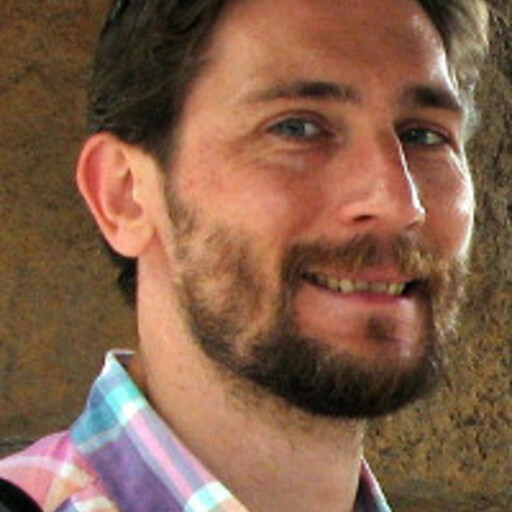
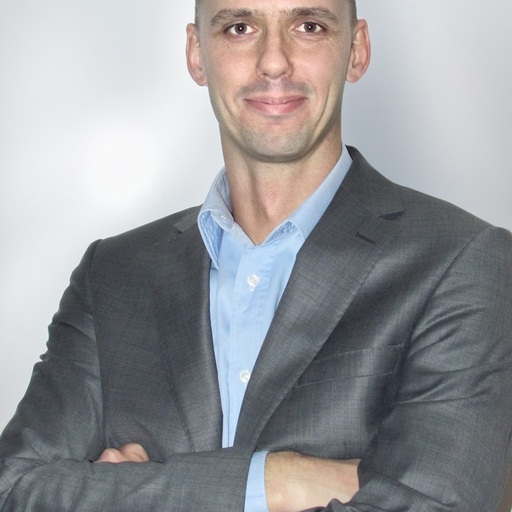
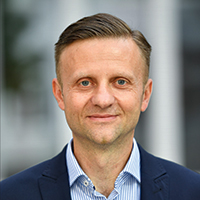
Paweł Myszkowski is a Professor at Wrocław University of Science and Technology, affiliated with the Department of Artificial Intelligence within the Faculty of Computer Science and Management. He is a key member of the Metaheuristics Team and actively contributes to research in evolutionary computation, multi-objective optimization, and scheduling algorithms. His research focuses on evolutionary algorithms , metaheuristics , and multi-objective optimization , particularly applied to the Multi-Skill Resource-Constrained Project Scheduling Problem (MS-RCPSP). He has developed hybrid algorithms combining differential evolution, greedy methods, and ant colony optimization. His work includes the creation of benchmark datasets (iMOPSE) and quality measures for optimization algorithms. The recent publications show a strong trend in algorithmic innovation for complex scheduling and design automation , with applications in architectural design and financial modeling. His work bridges theoretical optimization and practical implementation in software systems. Golden Badge of Wrocław University of Science and Technology He supervises diploma theses and collaborates extensively with researchers such as Maciej Laszczyk and Marek Skowroński. He has contributed to the development of tools and benchmarks that support reproducibility and comparative evaluation in computational intelligence research. He is involved in research projects on dark-box optimization, multi-criteria optimization for classifiers, and application-aware network optimization, indicating an ongoing active research agenda.
Michał Panek is a researcher at the Department of Computer Systems and Networks, Faculty of Computing, Wroclaw University of Science and Technology. He is a member of the Machine Learning Team (ZUM) and actively contributes to research in optimization and machine learning applications in networking. His research interests include: Machine Learning in cellular networks Multi-criteria and many-objective optimization Evolutionary algorithms with gene-linkage techniques Application-aware multi-layer network optimization Classifier training using optimization methods The research projects he is involved in focus on developing advanced general-purpose optimizers (Dark-Box Optimization), evolutionary methods for high-dimensional multi-criteria problems, and performance analysis for wireless network automation. These projects reflect a strong interdisciplinary trend combining computer science, optimization theory, and telecommunications engineering. Michał Panek serves as a supervisor for diploma theses and is engaged in teaching activities. He is currently completing his doctoral studies, with a thesis titled "Machine Learning-based performance analysis to enhance the wireless network automation," supervised by Prof. Michał Woźniak and Prof. Ireneusz Jabłoński. The defense is scheduled for March 18, 2025. He is involved in key research teams including: Machine Learning Team Teaching Team Computer Networks Team Advanced Data Analysis Methods Team Metaheuristics Team
Dr. Uday Venkatadri is a Professor and Department Head in the Department of Industrial Engineering at Dalhousie University in Halifax, Nova Scotia, Canada. He has been teaching at Dalhousie University since July 2001, progressing from Assistant Professor (2001-2006) to Associate Professor (2006-2019) and finally to Professor (2019-present). His extensive experience includes prior roles as a Lead Architect for supply chain planning products at Baan and as a Research Associate at Université Laval in Québec City. Dr. Venkatadri's educational background includes: Ph.D. in Industrial Engineering from Purdue University M.S. in Industrial Engineering from Clemson University B.Tech in Mechanical Engineering from Indian Institute of Technology, Banaras Hindu University His research focuses on addressing design, planning, and control issues in production and distribution systems in the era of Industry 5.0 and Hyperconnected Logistics. He employs Mixed Integer Linear Programming as the cornerstone of his methodological approach, while incorporating trends in big data analytics, machine learning, and artificial intelligence. Dr. Venkatadri's work spans several critical areas including facilities planning and design, supply chain management, production planning and control, and sustainable manufacturing systems. He has developed frameworks for perishable food supply chains, healthcare logistics during pandemics, offshore wind energy maintenance, and cellular manufacturing systems. Dr. Venkatadri's recent publications demonstrate a strong emphasis on sustainable and resilient supply chains, maintenance optimization, and the application of advanced analytics to logistics problems. His work addresses contemporary challenges such as pandemic response in healthcare supply chains, optimization of renewable energy systems, and management of perishable goods in food supply chains. He frequently collaborates with researchers across disciplines, particularly with Claver Diallo, Abdelhakim Khatab, and other colleagues in the field of industrial engineering. Dr. Venkatadri has received numerous awards and honors throughout his career: 2021: Teaching award by the Logistics and Supply Chain Division of the Institute of Industrial and Systems Engineers 2016: Best Teacher of the Year award, Department of Industrial Engineering, Dalhousie University 2004: Best Teacher of the Year award, Department of Industrial Engineering, Dalhousie University 1991-1993: Summer David Ross Fellowship from Purdue University for excellence in teaching 1987-1990: David Ross Fellowship from Purdue University for Ph.D. work 1988: Institute of Industrial Engineer's General Motors First Place Master's thesis award Dr. Venkatadri has advised numerous graduate students, with many co-authoring publications with him. His research has been supported by various grants focusing on supply chain optimization, maintenance systems, and sustainable manufacturing. He is actively involved in the academic community as a Senior Member of IIE (Institute of Industrial Engineers), a Member of Engineers Nova Scotia, and a Member of the Canadian Operational Research Society (CORS). His teaching portfolio includes undergraduate and graduate courses in computational methods, operations research, supply chain management, facilities design, and quality control.
Michał Przewoźniczek is a Professor at Wrocław University of Science and Technology (PWr), actively contributing to the fields of evolutionary computation, optimization, and artificial intelligence. He is a key member of multiple research teams, including the Metaheuristics Team, Machine Learning Team, and Advanced Data Analysis Methods Team, reflecting his broad interdisciplinary impact. His research focuses on Evolutionary Computation , Multi- and Many-objective Optimization , Linkage Learning , Problem Decomposition , and Hybridization of metaheuristic methods, with applications in industrial process planning, network optimization, and real-world decision-making. He leads significant research projects such as greybox optimization (2023–2026) and multi-objective evolutionary methods with linkage learning (2021–2026), demonstrating sustained grant support and scientific leadership. The analysis of his recent publications reveals a consistent trend in advancing parameter-less evolutionary algorithms, empirical linkage learning, and scalable distributed implementations using containerization (e.g., Docker). His work bridges theoretical algorithm development with practical applications in optical networks, manufacturing, and distributed computing. His scientific honors include: Best Paper Nomination at the Genetic and Evolutionary Computation Conference (GECCO) Associate Editor, IEEE Transactions on Evolutionary Computation (since January 2023) Prof. Przewoźniczek supervises graduate students as a thesis advisor and collaborates extensively with researchers such as Piotr Dziurzanski, Marcin Komarnicki, Krzysztof Walkowiak, and Leandro Soares Indrusiak. He is actively involved in major conferences like GECCO, CEC, and CORES, and his work is indexed in Google Scholar, ResearchGate, and ORCID (0000-0003-2446-6473). He is affiliated with research groups focusing on Machine Learning, Computer Networks, Advanced Data Analysis, and Metaheuristics, indicating a strong collaborative and team-based research environment.
Krzysztof Walkowiak is a Professor at the Faculty of Computer Science and Telecommunications, Wrocław University of Science and Technology (PWr), where he also serves as the Dean of the Doctoral School. He leads the Computer Networks Team (ZSK) and is actively involved in multiple research projects, including Dark-Box Optimization and evolutionary methods for multi-criteria network design. A Senior Member of IEEE and IEEE ComSoc, he contributes to academic governance as a member of the Polish Academy of Sciences’ Committee on Electronics and Telecommunications. PhD in Computer Science (2000, with distinction) Habilitation in Computer Science (2008) Professor of Technical Sciences (2017) Dean of the Doctoral School, PWr (since 2020) Senior Member, IEEE and IEEE Communications Society Member, Committee on Electronics and Telecommunications, Polish Academy of Sciences His research spans computer network optimization, machine learning in networks, evolutionary algorithms, survivable optical networks, and intelligent computational techniques . He has pioneered the integration of AI methods in teleinformatics and leads initiatives in intent-based and cognitive networking. His work emphasizes multi-layer, application-aware network design and distributed processing systems. The 15 most recent publications reflect a strong trend in optimization under uncertainty, AI-driven networking, and metaheuristic algorithm development . There is a clear focus on survivability, scalability, and automation in modern network architectures, with increasing attention to edge intelligence via TinyML and cognitive systems. His recent work also addresses internationalization and pedagogical innovation in doctoral education. Fabio Neri Best Paper Award 2014 (Elsevier Journal of Optical Switching and Networking) Best Paper Award, DRCN2009 (Washington, USA) Best Paper Award, RNDM2015 (Munich, Germany) Medal of the National Education Commission (2011) Scientific Scholarship, Wrocław University of Science and Technology (2017) Star of Internationalization 2024 – Teaching Star Professor Walkowiak has supervised 10 completed PhD theses and currently mentors 5 doctoral students. He has led or managed 13 research projects funded by NCN (including 4 OPUS grants), EU, NAWA, and national agencies. His grant leadership includes the NAWA InterDocSchool project (2021–2023) and the Unite! Doctoral School curriculum development. He has reviewed over 300 journal submissions and served as session chair at 22 international conferences. He leads several research teams: Computer Networks Team (ZSK), Machine Learning Team, Advanced Data Analysis Methods Team, Metaheuristics Team, and Teaching Team . He has developed innovative educational programs such as the Research Skills course and Recent Research Trends , promoting international collaboration and doctoral training. He championed the transition to English-language instruction in the Doctoral School and promotes internationalization as a 'team sport' across institutional levels.
Professor Andrzej Jaszkiewicz is a faculty member at the Faculty of Computer Science and Telecommunications, Poznań University of Technology, where he works in the Institute of Informatics. He holds the position of full professor with extensive experience in multiobjective optimization and evolutionary algorithms, as evidenced by his habilitation completed in 2001 and continuous research output through 2025. Professor Jaszkiewicz's research focuses on theoretical and practical aspects of multiobjective optimization, particularly addressing the challenges of many-objective problems. His work spans quality indicator development (hypervolume, R2), efficient data structures (ND-Trees), evolutionary algorithm design, and applications to combinatorial optimization problems. His publications demonstrate consistent theoretical rigor combined with practical implementation considerations. Recent publications (2022-2025) reveal continued productivity with multiple articles in top journals like IEEE Transactions on Evolutionary Computation and Physics of Fluids. These works explore theoretical properties of quality indicators, efficient calculation methods, and novel applications of optimization techniques to complex problems including fluid dynamics. Professor Jaszkiewicz has supervised doctoral research including Tarek Alkhaeir's 2021 dissertation on software quality metrics and Marek Kubiak's 2009 work on memetic algorithms. He has also reviewed numerous doctoral dissertations in related fields, demonstrating his standing in the academic community and commitment to graduate education. His scholarly output includes journal articles, conference papers, book chapters, and two books. The 2005 edited volume 'Advanced OR and AI methods in transportation' reflects his interest in practical applications of optimization techniques. His research demonstrates sustained scholarly activity from the 1990s to the present, with particular emphasis on advancing the state-of-the-art in multiobjective optimization theory and practice.