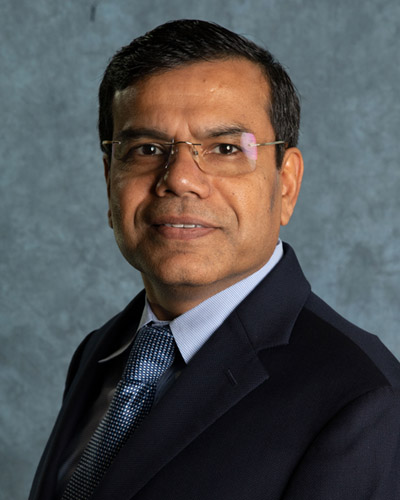
Ioan Raicu is a Professor in the Department of Computer Science at Illinois Institute of Technology (IIT) and a guest research faculty at Argonne National Laboratory's Math and Computer Science Division. He leads the Data-Intensive Distributed Systems Laboratory (DataSys) at IIT, focusing on distributed systems, cloud computing, and high-performance computing. His work is primarily funded by the NSF and DOE. Research interests include distributed systems, many-task computing, and data-intensive applications. Over 140 peer-reviewed publications have yielded a H-index of 46, with top papers addressing cloud vs. grid computing comparisons, Globus GridFTP, Swift workflow systems, and Falkon frameworks. Recent projects explore fine-grained parallelism, scalable indexing, and energy-efficient blockchain algorithms. Awards include NSF grants and recognition for lab innovations. Advised PhD students include Alexandru Orhean and Poornima Nookala. The DataSys lab has won the Grainger Computing Innovation Prize and leads initiatives like the BigDataX REU program. Active in conferences such as SC and IEEE IPDPS, Raicu's work bridges theory and practice in extreme-scale computing systems.
Can Ding is an Associate Professor in the School of Electrical and Data Engineering at the University of Technology Sydney (UTS), affiliated with the Faculty of Engineering and IT. He is a core member of the Global Big Data Technologies Centre (GBDTC). Ding holds a BEng in Microelectronics from Xidian University (2009) and a joint PhD in Electromagnetic Fields and Microwave Technology from Xidian University and Macquarie University (2016). His research focuses on engineering electromagnetics, particularly in base station antennas for 5G/6G networks, cross-band interference mitigation, and antenna array design. He has led numerous industry-collaborative projects, including ARC-funded initiatives, and has over 120 publications in top-tier journals/conferences, featured in IEEE's 'What’s Hot in Antennas and Propagation.' Teaching highlights include coordinating foundational electrical engineering courses and studio subjects, recognized with UTS's 2023 'Mid-Career Educator of the Year' award. He actively contributes to professional societies like IEEE AP-S, serving as an editor and conference organizer. His awards include the ARC DECRA grant (2020), Top 2% World Scientist (2023), and multiple outstanding reviewer distinctions. His grants include 'Advancing Millimeter-Wave Base Station for 6G' (ARC DP, 2025–2027) and 'Maximizing 5G Signal Transparency' (UTS Bluesky, 2024). Ding supervises students in antenna design and has mentored over a dozen researchers, many of whom have won international conference awards.
Associate Professor Joshua San Miguel leads research in computer architecture and systems at the University of Wisconsin-Madison, with an affiliate role in Computer Sciences. His work focuses on energy-efficient computing for IoT devices, microarchitecture innovations, and networks-on-chip. He holds a PhD (2017) and BASc (2012) from the University of Toronto. Education: PhD in Electrical & Computer Engineering, University of Toronto (2017) BASc in Engineering Science (ECE), University of Toronto (2012) Research Interests: Approximate computing for energy harvesting systems Branch prediction and value prediction in processors Cache architectures and networks-on-chip for many-core processors Intermittent computing resilience His recent work emphasizes value-level parallelism (Carat/uSystolic), RTL simulation acceleration (TaroRTL), and personalized neural network inference (CAP’NN). His research has been recognized with the NSF CAREER Award (2021) and multiple IEEE Micro Top Picks. Grants & Advising: Active in supervising advanced independent studies and master’s/dissertation research. Extensive grant funding includes the NSF CAREER Award and the Grainger Faculty Scholarship. Labs & Teams: Leads research groups focused on approximate computing and energy-efficient architectures within the Electrical & Computer Engineering department.
Navid Rekab-saz is an Assistant Professor at the Institute of Computational Perception, Johannes Kepler University Linz (JKU), Austria. He is actively involved in research and teaching, offering courses such as Natural Language Processing and Natural Language Processing with Deep Learning . He maintains regular office hours and is accessible via email and a dedicated booking system for meetings. His research focuses on natural language processing , information retrieval , fairness and bias in AI , and recommender systems , with applications in humanitarian action and ethical AI. He employs deep learning and machine learning techniques to address challenges in bias mitigation, explainability, and domain adaptation. His work often bridges technical innovation with societal impact, especially in developing inclusive and fair AI systems. The recent publications of Navid Rekab-saz reflect a strong trend in debiasing strategies , parameter-efficient learning , and evaluation of societal biases in search and recommendation systems. His research spans from foundational work on word embeddings and retrieval models to applied studies in humanitarian NLP and gender bias in user queries. He frequently collaborates with a broad network of researchers and contributes to the development of datasets and benchmarks. Scientific Awards: Best Student Paper Award at ISMIR 2022 for 'Traces of Globalization in Online Music Consumption Patterns and Results of Recommendation Algorithms' Advising and Grants: Navid Rekab-saz has advised and collaborated with numerous students and researchers, many of whom are co-authors on his publications. While specific grant details are not listed in the provided text, his extensive publication record in top-tier venues suggests active involvement in funded research projects, likely supported by national or European funding bodies. He is also engaged in interdisciplinary research, particularly at the intersection of technical AI and legal or social implications. Labs and Teams: He is a core member of the Institute of Computational Perception at JKU, where he contributes to research projects in computational linguistics and AI. He collaborates closely with the team led by Prof. Markus Schedl and participates in initiatives related to music information retrieval, fairness in AI, and humanitarian applications of NLP.
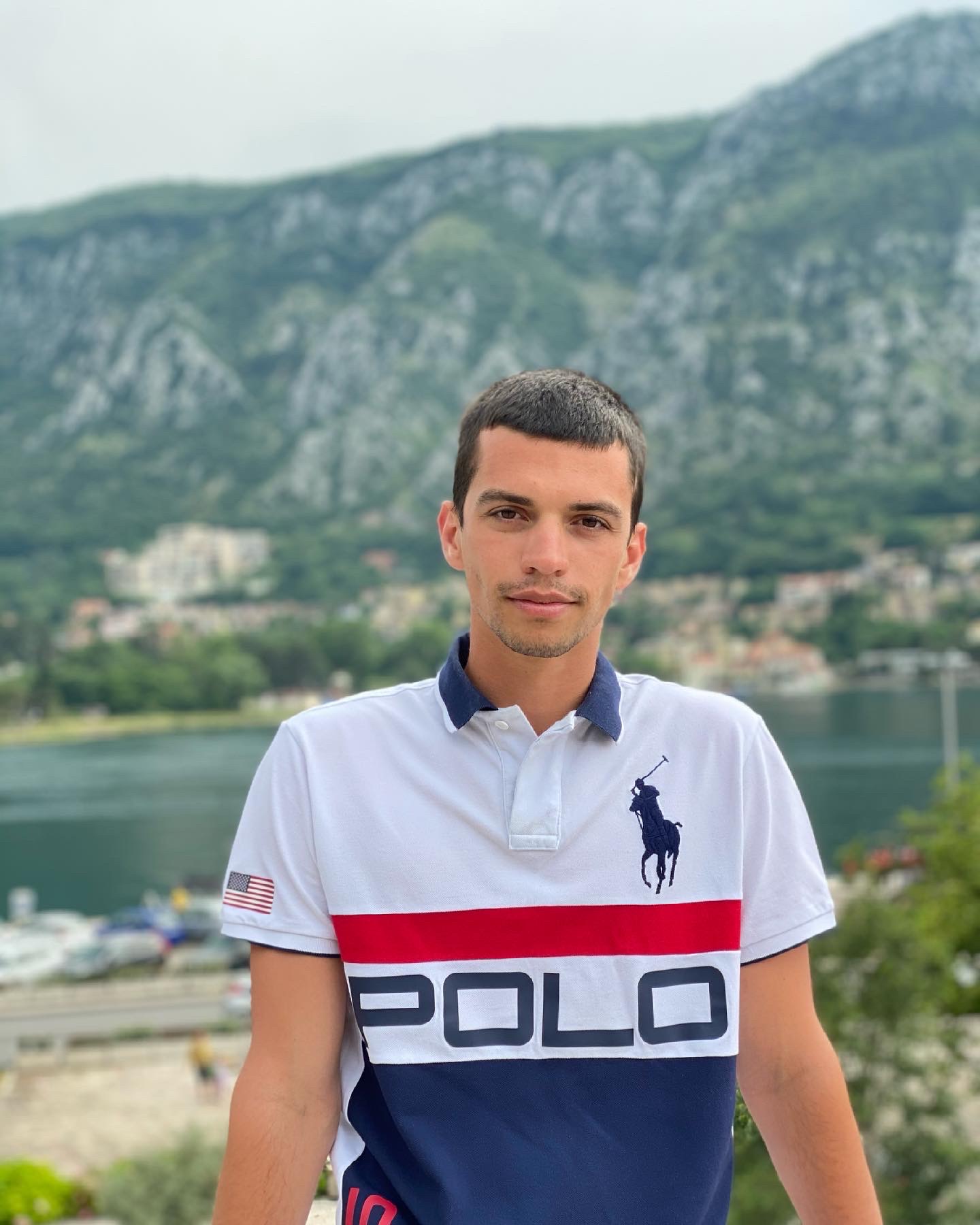
Jovan Stojkovic is an incoming Assistant Professor at the Department of Computer Science at the University of Texas at Austin, set to join in Fall 2026. Prior to his appointment at UT Austin, he will spend a year at Meta working with the AI and Systems Co-design group. His research focuses on cloud computing and datacenters, with particular emphasis on cloud-native workloads and machine learning inference. Education: PhD in Computer Science from the University of Illinois at Urbana-Champaign, advised by Professor Josep Torrellas Undergraduate studies at the School of Electrical Engineering, University of Belgrade, Serbia, where he was recognized as the best student of the Computer Engineering and Information Theory Department every year from 2017-2020 Research Interests: Jovan's research focuses on cloud computing and datacenters , with two primary domains: Cloud-native workloads , such as microservices and serverless computing. He investigates how to co-design novel hardware platforms and software systems that deliver orders-of-magnitude improvements in performance, energy efficiency, and resource utilization for these emerging workloads. Machine Learning (ML) inference , particularly large language models (LLMs). His work addresses the challenges of ML inference through smart scheduling, workload placement, and system-level configuration tuning to reduce energy, power, and thermal overheads while maintaining performance and accuracy guarantees. Publication Trends: Jovan's publications demonstrate a strong focus on optimizing cloud infrastructure for emerging workloads. His research spans across serverless computing, microservices, and large language model inference. A clear trend emerges in his work: addressing the performance, energy efficiency, and resource utilization challenges of modern cloud workloads through innovative hardware-software co-design approaches. His most recent work shows increasing focus on LLM inference optimization, particularly in the areas of thermal management, power efficiency, and scheduling for many-adapter environments. Awards and Honors: HPCA Best Paper Award (2025) IEEE MICRO Top Picks Honorable Mention (2024) 6 patents with IBM and Microsoft on: Serverless systems, Processor overclocking in the cloud, and Energy-efficient LLM inference W. J. Poppelbaum Memorial Award (2025) for hardware and architecture innovation Mavis Future Faculty Fellowship (2024–2025) Invited to present at 11th Heidelberg Laureate Forum (2024) Kenichi Miura Award (2022) for excellence in High Performance Computing Multiple student travel grants to ISCA, MICRO, ASPLOS, and HPCA Advising and Grants: Jovan is actively seeking prospective PhD students for his research group at UT Austin. His research has been supported through collaborations with major tech companies including IBM, Microsoft, and Meta. His six patents with IBM and Microsoft demonstrate the practical impact of his research in serverless systems, processor overclocking, and energy-efficient LLM inference. His work on serverless computing (MXFaaS, EcoFaaS) and LLM inference optimization has received significant recognition in top-tier computer architecture conferences. Research Groups: During his PhD at UIUC, Jovan worked with Professor Josep Torrellas on cloud infrastructure research. He has collaborated extensively with researchers at IBM Research (particularly Hubertus Franke) and Microsoft (particularly Íñigo Goiri and Ricardo Bianchini). His upcoming position at UT Austin will establish his independent research group focused on cloud computing and datacenter systems. His year at Meta working with the AI and Systems Co-design group will further strengthen his expertise in AI infrastructure.
Professor Wes Armour is a Professor of Scientific Computing at the University of Oxford and serves as the Associate Head of Department for Research in the Department of Engineering Science. He previously directed the Oxford e-Research Centre, an interdisciplinary research center within the Engineering Science Department. With over £31 million secured as PI or Co-I, his work spans supercomputing, signal processing, machine learning, computational fluid dynamics, and protein crystallography. Professor Armour's research focuses on extracting science from data through fundamental challenges in modeling, simulation, and data processing. His work draws from numerical analysis, signal processing, and machine learning to develop technologies enabling future scientific discoveries, particularly for the Square Kilometre Array (SKA) telescope. Key interests include GPU computing, high performance computing, and machine learning applications across diverse domains from radio astronomy to finance. As Director and Principal Investigator of JADE and JADE2, a 700-GPU machine, he established the UK's first national High Performance Computer facility dedicated to advancing Artificial Intelligence and Machine Learning. His research group has pioneered GPU applications across multiple fields, including Square Kilometre Array data processing, protein crystallography, and graphene simulations. Current projects span energy-efficient machine learning, stock price prediction in finance, prime number prediction in cryptography, and multi-modal CCTV data analysis. Professor Armour has been instrumental in developing real-time signal processing techniques for astronomical observations, including the ARTEMIS system for millisecond radio transient detection. His publications demonstrate consistent innovation in GPU-accelerated computing dating back to early work in 2008 on accelerating conjugate gradient routines for electron transport in graphene.
Roberto Giorgi is an Associate Professor of Computer Engineering at the Department of Information Engineering, University of Siena, Italy. He has held this position since October 1, 2006, following his tenure as an Assistant Professor since March 15, 1999. His educational background includes a Ph.D. in Computer Engineering from the University of Pisa (1999) with a thesis on coherence protocols for shared-memory multiprocessors, and an Electronic Engineering degree (1995) with a thesis on trace-driven performance evaluation of multiprocessors. Giorgi's primary research focuses on Computer Architecture , particularly on multiprocessor/multicore issues including processor design, coherence protocols, programmability, and energy efficiency. His work spans both theoretical and practical aspects of computer architecture, with emphasis on real-world implementations and educational tools. He has coordinated significant EU-funded projects including AXIOM (2014-2018) on Smart Cyber-Physical Systems and TERAFLUX (2009-2014) on Many-Cores. His recent publications (2022-2025) demonstrate a strong progression toward practical applications of computer architecture research, with particular emphasis on RISC-V architecture, FPGA-based acceleration, dataflow computing models (especially DF-Threads), and graph processing. Many of his papers address educational tools for computer architecture education, real-time object detection on embedded platforms, and novel execution paradigms for edge computing and HPC. IEEE Senior Member ACM Lifetime Member Coordinator of EU-funded AXIOM project (2014-2018) on Smart Cyber-Physical Systems Coordinator of EU-funded TERAFLUX project (2009-2014) on Many-Cores Giorgi has been actively involved in securing research funding and building collaborations, particularly in high-performance computer architecture research with emphasis on scalable architectures and embedded systems. He leads the Computer Architecture Lab (ROOM 223) at the University of Siena, which was established in 2007, and has been instrumental in developing practical implementations of architectural concepts including the AXIOM platform for cyber-physical systems.
Sushil Prasad is a Professor of Computer Science at the University of Texas at San Antonio (UTSA), affiliated with the College of Sciences. His research focuses on data-intensive computing, energy-efficient deep learning models, parallel algorithms, and high-performance software systems. He holds a Ph.D. from the University of Central Florida, an M.S. from Washington State University, and a B.Tech. from the Indian Institute of Technology, Kharagpur. His work emphasizes integrating parallel and distributed computing into early computer science curricula. Key research interests include geospatial data analysis using ICESat-2 and Sentinel-2 imagery, edge device-optimized neural networks, and scalable polygon processing algorithms. He has contributed to frameworks like MPI-GIS and Crayons for high-performance geospatial computing. His educational initiatives include NSF-funded curriculum modernization efforts in parallel computing education. Recent work trends show a focus on climate science applications (e.g., polar sea ice classification), energy-efficient AI, and GPU/OpenMP parallelization. He has organized workshops like EduHPC and EduPar to advance HPC education strategies. Notable recognition includes the TCPP Outstanding Service Award (2012). His projects span cloud-based GIS systems, distributed ML training, and big spatial data processing. Collaborations include NSF-funded research on colocation mining, trajectory analysis, and curriculum development for undergraduate HPC education.
Nuno Pereira Lopes is an Associate Professor at Instituto Superior Técnico , part of Universidade de Lisboa , and a researcher at INESC-ID . He also serves as an advisor at FuriosaAI , focusing on tensor contraction processors for AI workloads. Research Interests : Compilers, formal verification of LLVM optimizations, machine learning frameworks, undefined behavior exploitation, probabilistic model checking, blockchain security, and many-core code generation. Teaching : Compilers and Computer/Informatics Engineering projects. Funding : Supported by Google, Matter Labs, NLnet, Oracle, PRACE, RNCA, and Woven by Toyota. Recent Publications focus on LLVM backend validation , PyTorch pipeline parallelism , C++ dynamic cast optimization , undefined behavior in C/C++ , and AI tensor processors . His work bridges compiler design, formal methods, and AI hardware. Academic Service includes representing Portugal in ISO/IEC JTC 1/SC 22 (C++), organizing FLoC'26 , and serving on program committees for PLDI, EuroLLVM, and CGO.
Daniel W Armstrong is a Professor at the University of Texas at Arlington in the Department of Chemistry and Biochemistry. With over 35 years of experience, he is a pioneering figure in chiral recognition, enantiomeric separations, and the biological relevance of D-amino acids. His work has led to over 740 publications, 35 patents, and 560 invited seminars worldwide. Developed first chiral recognition mechanism by cyclodextrins First to use macrocyclic antibiotics as chiral selectors Synthesized most new ionic liquids (ILs) globally Created ultra-fast separation techniques now standard in analytical chemistry Contributed to FDA 1992 guidelines on chiral drug separation His research focuses on chiral separations, ionic liquids, and the role of D-amino acids in biological systems. He has commercialized over 30 HPLC and GC columns, transforming analytical chemistry and pharmaceutical analysis. Recent publications demonstrate continued innovation in chiral chromatography, biomarker analysis, and AI-driven separation optimization. His grants include industry collaborations with Merck, Alcon, and Sigma-Aldrich, emphasizing practical applications of his work. Scientific honors include multiple lifetime achievement awards, fellowships in the Royal Society of Chemistry and American Chemical Society, the Chirality Medal, and induction into the National Academy of Inventors. He has mentored over 100 PhD students, many from first-generation college backgrounds.
Dominik Huber is a Ph.D. candidate and researcher at the Technical University of Munich , affiliated with the Chair of Computer Architecture & Parallel Systems . His work focuses on Dynamic Resource Management in High-Performance Computing (HPC) , with expertise in Parallel & Distributed Programming Models and Hardware-aware programming . He has actively contributed to teaching courses like Parallel Programming Systems and Advanced Computer Architecture . His research emphasizes adaptive resource allocation in hybrid HPC clusters, leveraging technologies such as MPI Sessions , PMIx , and frameworks like LAIK and XBraid . Recent projects include the DynRes software suite for dynamic resource management and collaborations on quantum-HPC integration. Huber has advised students on topics ranging from Dynamic Resource Management in Charm++ to CI Systems for HPC Software , and his publications address challenges in malleability, scheduling, and power-constrained environments. Current affiliations include participation in the SEANERGYS (EuroHPC) and PlasmaPEPS projects.
Bjorn Baumeier is an Associate Professor in the Department of Mathematics and Computer Science at Eindhoven University of Technology (TU/e). His research group is part of the Centre for Analysis, Scientific Computing and Applications (CASA) and the Institute for Complex Molecular Systems (ICMS). He also participates in several research groups including Scientific Computing, ICMS Core, Eindhoven Hendrik Casimir institute, and Computational Quantum & Molecular Dynamics. His educational background includes: Diploma in Theoretical Solid State Science from the University of Münster PhD in Theoretical Solid State Science from the University of Münster Baumeier's research focuses on the development and application of multiscale simulation techniques for studying electronic transport processes in soft matter. His work combines approaches from computational chemistry, statistical physics, and mathematics to analyze the interplay between molecular electronic structure and material morphology. Additional research lines include studies of disordered biomolecular assemblies and super-coarse-grained modeling of soft granular materials. His group employs large-scale computer simulations linking quantum chemistry, classical Molecular Dynamics at various levels, and rate-based models. Recent publications (2024-2025) demonstrate a strong focus on charge transport phenomena in complex materials, with particular emphasis on interface effects in polymer composites, trap identification in molecular networks, and embedded many-body Green's function methods. His work bridges fundamental physics with practical applications in energy materials and opto-electronic devices. Scientific awards include: Vidi grant from NWO (The Netherlands Organisation for Scientific Research) in 2017 (€800,000) Baumeier has received significant research funding, most notably the Vidi grant focusing on understanding mechanisms underlying long-distance and spin-selective electronic transport in complex molecular systems. His research is often conducted in collaboration with multiple institutions and research groups within TU/e, indicating a strong interdisciplinary approach. His work has practical applications in opto-electronic devices and bio-molecular processes. His research group operates within the Computational Quantum & Molecular Dynamics group, which is part of several larger research initiatives at TU/e including ICMS and the Eindhoven Hendrik Casimir institute. This positioning allows for strong collaboration across physics, chemistry, and engineering disciplines.
Heiner Giefers is a Professor for Cloud Computing at the Department of Computer Science and Natural Sciences at Southwestphalia University of Applied Sciences since 2018. Prior to this position, he worked as a Research Staff Member at IBM Research - Zürich (2013-2018), focusing on hardware acceleration in cloud environments, implementation of big data algorithms on FPGAs, and development of hardware platforms for approximate and in-memory computing. Dr. Giefers received his doctorate (Dr. rer. nat.) from Universität Paderborn in 2012 with a dissertation titled "Design and Programming of Reconfigurable Mesh based Many-Cores." His academic journey at Universität Paderborn includes serving as an Academic Council Member (Akademischer Rat a.Z.) from 2008-2013 and as a Scientific Staff Member from 2006-2012, where he taught digital technology and computer architecture. Professor Giefers' research focuses on energy-efficient computing, particularly through hardware acceleration using FPGAs for cloud and AI workloads. His work spans cloud computing infrastructure, hardware-software co-design, approximate computing, in-memory computing, and energy-efficient implementations of machine learning algorithms. He has made significant contributions to the field of reconfigurable hardware for high-performance computing applications. His recent publications show a strong trend toward applying hardware acceleration techniques to artificial intelligence and machine learning workloads, with a particular focus on energy efficiency. His work bridges the gap between theoretical computer science and practical hardware implementation, often resulting in patented technologies that address real-world computing challenges in cloud environments. Best Paper Award for "Stochastic Matrix-Function Estimators: Scalable Big-Data Kernels with High Performance" (2016) Best Paper Award Nomination for "Energy-Efficient Stochastic Matrix Function Estimator for Graph Analytics on FPGA" (2016) Best Paper Award Nomination for "Analyzing the energy-efficiency of dense linear algebra kernels by power-profiling a hybrid CPU/FPGA system" (2014) Best Paper Award Nomination for "A Triple Hybrid Interconnect for Many-Cores: Reconfigurable Mesh, NoC and Barrier" (2010) Professor Giefers actively supervises numerous Bachelor's and Master's students, with over 50 completed theses covering topics from machine learning and cloud computing to IoT systems and hardware acceleration. He leads the "Energy-efficient AI" project (eki), which aims to increase the energy efficiency of AI systems through approximation techniques for FPGA implementation. Additionally, he collaborates with Prof. Dr. Christian Plessl on the "Digital teaching materials with Jupyter Notebooks" project, creating interactive learning materials that integrate teaching content, program code, and results into a single document. His work extends to practical applications through multiple patents related to FPGA implementations, neural networks, and memory systems, demonstrating his commitment to translating research into real-world solutions.
Alex Borgella is an Associate Professor of Psychology at Fort Lewis College in Durango, Colorado, where he also leads the Social Perception Experimentation (SPEx) Lab. He holds a Ph.D. in Social Psychology from Tufts University (2017), an M.A. from James Madison University, and a B.A. from the University of West Florida. Prior to joining Fort Lewis College in 2019, he served as a Visiting Assistant Professor at Bates College. Ph.D., Social Psychology, Tufts University, 2017 M.A., Psychological Sciences, James Madison University, 2012 B.A., Psychology, University of West Florida, 2010 Dr. Borgella's research centers on social psychological mechanisms of stereotyping, prejudice, and discrimination. His work explores intergroup interactions, implicit bias, within-group racial bias, and stereotype threat, particularly in understudied populations such as Indigenous communities, people with multiple stigmatized identities, and in contexts like combat sports and social media. He investigates how identity-related humor can reduce intergroup anxiety and how generative AI representations affect psychosocial well-being. His research has been published in journals including the Journal of Experimental Social Psychology , Psychology of Sport and Exercise , and Humor: International Journal of Humor Research , and has been featured in NPR, Psychology Today, VICE, and Gizmodo. His most recent publications show a strong trend in examining subtle forms of bias in dynamic settings—such as UFC refereeing and social media—and in exploring how stereotype threat manifests across diverse identities, including White individuals in rhythmic performance. His 2024 Mamie Phipps Clark Faculty Research Award supports groundbreaking work on text-to-image AI and racial representation. 2024 Mamie Phipps Clark Faculty Research Award (APA and Psi Chi) Featured Scholar, Fort Lewis College Alice Admire Outstanding Teaching Award Ginny Hutchins Teaching Award for New Faculty Best Educator in Durango FLC Achievement Award Dr. Borgella is a dedicated mentor, supervising numerous undergraduate research projects through the SPEx Lab. Many of his students have presented at national conferences and pursued graduate studies. He teaches core courses such as Research Methods, Social Psychology, and the Senior Research Capstone. He is currently securing funding and mentoring students on projects related to AI, social media bias, and intergroup dynamics. His lab, originally founded at Bates College, is now based at Fort Lewis College and actively recruits undergraduates.
Tali Moreshet is a Research Assistant Professor in the Department of Electrical & Computer Engineering at Boston University. Her primary appointment is as a Master Lecturer, reflecting her dual focus on teaching and research. She is affiliated with the College of Engineering and holds a PhD from Brown University (2006). Her research interests include computer architecture, energy-efficient computing, hardware-software co-design, near-data processing, and embedded systems. Dr. Moreshet has received notable awards including the Senior Member distinction from ACM, the ECE Department Teaching Award (2017), a Best Paper Award at SAMOS XIV (2014), and an NSF BRIGE Award (2009). She teaches core courses such as Introduction to Logic Design (EC 311), Advanced Data Structures (EC 504), and Computer Architecture (EC 513). Her work emphasizes energy efficiency in embedded systems and transactional memory implementations. Recent research explores hardware acceleration for garbage collection and near-memory processing architectures. She also investigates voltage noise mitigation and concurrency control mechanisms in embedded multi-core systems. Moreshet has contributed to collaborative NSF projects on durable data structures for non-volatile memory and energy-efficient speculation in NUMA architectures. Her publications span 20+ years, with a focus on embedded systems, transactional memory, and parallel computing optimizations.