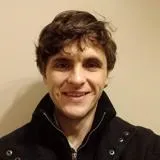
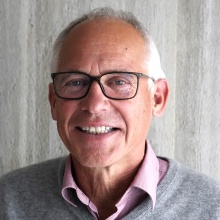
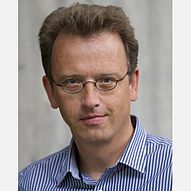
Marko Cetina is an Assistant Professor of Physics and the Department of Electrical and Computer Engineering at Duke University, affiliated with the Duke Quantum Center. He holds a B.S. from the California Institute of Technology (2004) and a Ph.D. from the Massachusetts Institute of Technology (2011). His research focuses on quantum computing, quantum optics, and atomic physics, with particular emphasis on trapped-ion systems, quantum error correction, and quantum simulation. He teaches courses including Atomic Physics and Quantum Optics, Advanced Topics in Physics, and introductory mechanics. His work explores foundational aspects of quantum mechanics and applied technologies for scalable quantum computers. Notable contributions include demonstrating multi-body interactions in trapped ions and advancing measurement-induced quantum phases. His team actively develops fault-tolerant qubit control and novel quantum architectures using cavity-mediated systems. Publications highlight advancements in quantum error correction protocols, lattice gauge theories, and quantum verification protocols. While no explicit awards are listed, his involvement in high-impact studies like the Duke Quantum Center underscores his contributions to the field. Current projects include optimizing stabilizer codes for logical qubit memory and simulating NMR experiments via digital quantum methods. His lab collaborates across disciplines to bridge theoretical quantum mechanics with experimental implementations in trapped-ion platforms.
Biao Lian is an Assistant Professor of Physics at Princeton University, affiliated with the Department of Physics. He holds a Ph.D. in Physics from Stanford University (2017) and a B.S. in Physics from Tsinghua University (2012). His research focuses on theoretical condensed matter physics, including topological states of matter, quantum many-body systems, and quantum chaos. Notable areas include twisted bilayer graphene (TBG) physics, quantum Hall systems, and the interplay between topology and interactions in quantum materials. Key research interests include 2D Moiré materials (e.g., TBG's magic-angle superconductivity), thermal Hall effects, and quantum integrability/chaos in chiral models like the SYK model. He has pioneered studies on topological superconductors, nodal line semimetals, and entanglement Hamiltonians. His work bridges theoretical physics with experimental advances in quantum materials and topological phases. Awards include the NSF Career Award (2022), Sloan Fellowship (2021), and a gold medal at the 39th International Physics Olympiad. His 2023 Physical Review Letters paper on Kekulé graphene’s Kagome flat bands exemplifies his exploration of novel topological phenomena. Advising includes Ph.D. students Bo-Ting Chen, Kaiyuan Gu, Kevin Huang, and Bowei Liu. Research is supported by grants from NSF, DOE, and Princeton’s initiatives.
Mostafa Ammar is a Regents' Professor and Interim Chair at the School of Computer Science , Georgia Institute of Technology. He holds a Ph.D. from the University of Waterloo and degrees (S.B., S.M.) from MIT. His career spans academia, industry collaboration, and leadership in networking research. Research Interests : Network architectures, protocols, and services; multicast communication; multimedia streaming; content distribution networks; disruption-tolerant networks; mobile cloud computing; network virtualization; HTTP adaptive streaming; video quality of experience (QoE); encrypted traffic analysis; vehicular networks; peer-to-peer systems; overlay networks. Funding : Supported by NSF, DARPA, AFOSR, CISCO, IBM, Intel, BellSouth, Sprint, and others. His research focuses on video QoE estimation using network measurements, mobile cloud computing , and network agility through virtualization. Recent work includes machine learning approaches for encrypted traffic analysis and scalable techniques for network performance. Key scientific awards include: IBM Faculty Partnership Award (1996), Best Paper at WWW '98, IEEE Fellow (2002), ACM Fellow (2003), GT Outstanding Doctoral Thesis Advisor (2006), IEEE TCCC Service Award (2010), ACM Mobihoc Best Paper (2012), College of Computing Awards (2015, 2018), IFIP Best Paper (2018), and multiple teaching excellence awards (2013-2017, 2022 CIOS Award). Dr. Ammar has advised 39 PhD students , many of whom hold prominent positions at institutions like UC Santa Barbara, Emory University, and companies including Google, Microsoft, and Facebook. His editorial leadership includes Editor-in-Chief of IEEE/ACM Transactions on Networking (1999-2003) and roles in conference committees.
Professor Lyudmila Mihaylova is a distinguished academic at the University of Sheffield's School of Electrical and Electronic Engineering, where she holds the position of Professor of Signal Processing and Control. She has established herself as a leading researcher in the fields of signal processing, Bayesian methods, and autonomous systems, with significant contributions to particle filtering techniques for intelligent transportation systems. Her work bridges theoretical developments with practical applications across multiple domains including transportation, healthcare, and industrial automation. Prof. Mihaylova's research interests center on nonlinear filtering, sequential Monte Carlo methods, statistical signal processing, and sensor data fusion. Her work spans both theoretical advancements and practical implementations, with particular focus on high-dimensional problems including vehicular traffic flow estimation, image processing, and localization in sensor networks. She has extensive experience with various image modalities such as optical, thermal, LIDAR, SAR, and hyperspectral imaging. Her group actively develops novel methods for autonomous intelligent systems focusing on sensing, tracking, decision making, and machine learning applications. Analysis of Prof. Mihaylova's recent publications reveals a strong trend toward uncertainty quantification in machine learning models, particularly for safety-critical applications. Her work increasingly integrates traditional signal processing techniques with modern deep learning approaches, with applications spanning sewer inspection robotics, medical diagnostics (particularly sleep apnea detection), UAV swarm tracking, industrial manufacturing, and autonomous vehicle systems. A significant portion of her recent research focuses on developing robust methods that can handle incomplete or outlier-corrupted data while providing reliable uncertainty estimates. Among her notable professional achievements: President of the International Society of Information Fusion (ISIF) Senior member of the IEEE Signal Processing Society Associate Editor for IEEE Transactions on Aerospace and Electronic Systems Associate Editor for Elsevier Signal Processing Journal Prof. Mihaylova has successfully mentored numerous PhD students and postdoctoral researchers, many of whom have gone on to prominent academic and industry positions. Her research has been supported by major funding bodies including EPSRC, EU, MOD/DSTL, and industry partners, with recent projects including 'Protecting Environments with UAV Swarms' (InnovateUK, 2022-2024), 'ShiRAS: Towards Safe and Reliable Autonomy in Sensor Driven Systems' (NSF-EPSRC, 2019-2023), and 'Confident safety integration for Cobots' (Lloyd's Register Foundation, 2019-2020). Her research group follows a collaborative approach with the philosophy 'We share knowledge, we grow.' Prof. Mihaylova maintains active research collaborations with institutions worldwide and has held previous academic positions at Lancaster University (2006-2013) and University of Bristol (2004-2006), along with research visiting positions at the University of Ghent, Katholic University of Leuven, and the Bulgarian Academy of Sciences.
Jay D. Sau is a Professor of Physics at the University of Maryland, College Park, and Co-Director of the Joint Quantum Institute (JQI). His research focuses on theoretical condensed matter physics, particularly topological quantum computing, quantum many-body systems, and Majorana fermions. He holds affiliations with the Condensed Matter Theory Center (CMTC) and JQI. Sau received his Ph.D. from UC Berkeley in 2008. His work bridges theoretical concepts in topological materials, superconductivity, and quantum information processing. Research Interests: Sau's primary interests include applying topological principles to solid-state and cold-atomic systems for quantum computation. Key areas include topological superconductivity, Majorana fermions, quantum Hall effects, and spin-orbit coupled systems. His group explores phenomena like topological degeneracy, Weyl semimetals, and cold atomic gases. Awards: He has been recognized with the National Science Foundation CAREER Award (2016) and the Sloan Research Fellowship (2016). His work has been published extensively in high-impact journals and covers topics ranging from Majorana physics to quantum phase transitions. Advising & Labs: Sau mentors graduate students including Tamoghna Barik, Stuart Thomas, Huan-Kuang Wu, and Shuyang Wang. His research group collaborates on projects at JQI and CMTC, focusing on experimental realizations of topological qubits and quantum devices.
Nicola Marzari is a Professor of Theory and Simulation of Materials at EPFL, where he also serves as Director of the National Centre for Computational Design and Discovery of Novel Materials (NCCD). He is Chairman of Psi-k, an international network for advanced materials' computational design. Previously, he held the Toyota Chair of Materials Engineering at MIT and leadership roles at the University of Oxford, including Director of the Materials Modeling Laboratory and a Statutory Chair in Materials Modeling. His education includes a Laurea in Physics (summa cum laude) from the University of Trieste, a PhD in Physics from the University of Cambridge under Prof. Michael C. Payne, and postdoctoral work at Rutgers University with Prof. David Vanderbilt. Marzari's research focuses on computational materials science, electronic structure theory, and high-throughput simulations. He develops methods for predicting material properties using first-principles approaches, machine learning, and quantum espresso software. Key areas include energy materials (batteries, thermoelectrics), magnetic materials, and optoelectronic systems. His work bridges fundamental physics and practical material design, emphasizing reproducible workflows and open-source tools like koopmans and AiiDA . His recent articles highlight advancements in machine learning for materials interfaces, dynamical Hubbard functionals, and thermal conductivity modeling. He actively contributes to EuroHPC initiatives for exascale materials design and OPTIMADE standards for materials data exchange. Marzari leads interdisciplinary teams at EPFL and collaborates globally on projects ranging from defect engineering in semiconductors to AI-driven materials discovery. His research aims to accelerate the development of sustainable energy and electronic technologies through computational innovation.
Professor Henning Schomerus is a leading theoretical physicist at Lancaster University , specializing in condensed matter theory with a focus on quantum systems. His research spans topological photonics , non-Hermitian physics , quantum chaos , and mesoscopic transport . He leads the Theory Group and contributes to the Physics Strategy Committee . Education: Dr rer. nat. (University of Essen, 1997) Dipl. Phys. (University of Stuttgart, 1993) Research Interests include: Quantum transport in graphene and topological insulators , exploring disorder effects and quantum pumping Topological lasers and non-Hermitian photonic systems with combined amplification/absorption Quantum chaos and fractal Weyl laws in open systems Many-body localization and quantum noise phenomena Scientific Awards Senior Fellow of the Higher Education Academy (SFHEA) Fellow of the Institute of Physics (FInstP) Studenstiftung des Deutschen Volkes Scholarship JSPS Invitational Fellowship DFG Forschergruppe 760 Fellow Teaching encompasses advanced topics in Quantum Mechanics and Quantum Information Processing , with over 15 years of experience in undergraduate and postgraduate instruction.
Dr. Curt von Keyserlingk is a Reader (equivalent to Associate Professor) in theoretical physics at King's College London, based in the Theory & Simulation of Condensed Matter Group within the Department of Physics, Faculty of Natural, Mathematical & Engineering Sciences. His research focuses on understanding complex quantum systems through both analytical and numerical approaches. His educational background includes an MMath from the University of Cambridge, followed by DPhil studies at the University of Oxford under Professor Steve Simon. Prior to his current position at King's, he held a postdoctoral research fellowship at the Princeton Center for Theoretical Science and was a lecturer at the University of Birmingham. Dr. von Keyserlingk's research centers on interacting quantum systems, studying exotic phenomena such as superconductivity, topological order, localization, and time crystallinity. His work bridges the gap between fundamental quantum mechanics and practical applications in quantum computing. He develops both analytical frameworks and numerical tools to understand how quantum systems evolve and behave under various conditions, with particular emphasis on non-equilibrium dynamics, quantum information processing, and topological phases of matter. His recent publications reveal a strong focus on quantum many-body systems, with particular attention to topological phases in three dimensions, operator dynamics in quantum systems, and the interplay between dissipation and quantum information. His work spans from fundamental theoretical questions about quantum thermalization to practical applications in quantum error correction and quantum computing architectures. Dr. von Keyserlingk is the recipient of a prestigious UKRI Future Leaders Fellowship, which supports his research on robust many-body quantum phenomena. His current projects include 'Robust Many-body Quantum Phenomena Through Driving And Dissipation' (2025-2028) and 'Robust many-body Quantum phenomena through Driving and Dissipation' (2022-2025). He actively supervises PhD students and runs the physics intercollegiate programme between King's College London and Royal Holloway, University of London. His research group focuses on developing new theoretical frameworks to understand quantum systems that could potentially be harnessed for quantum computing applications.
Bruno Nachtergaele is a Professor of Mathematical Physics at the University of California, Davis , affiliated with the Department of Mathematics. His research focuses on Mathematical Physics , with particular emphasis on equilibrium and non-equilibrium statistical mechanics, quantum spin systems, and quantum information theory. Applications include condensed matter physics and materials science. His work explores foundational aspects of quantum many-body systems, including Lieb-Robinson bounds, topological order, and fractional quantum Hall effects. He has contributed to understanding gapped phases, symmetry breaking, and dynamics in quantum spin chains. Notably, he received the LeRoy Apker Award for his research contributions. His publications highlight advancements in quasi-locality bounds for lattice systems, spectral gaps in fractional quantum Hall systems, and the study of anyonic excitations. He has also co-edited special issues in journals like Journal of Mathematical Physics , reflecting his leadership in the field. Dr. Nachtergaele’s research bridges abstract mathematical techniques with real-world condensed matter phenomena, contributing to both theoretical frameworks and applied insights in quantum technologies.
Martin Ringbauer is an Associate Professor at the Department of Experimental Physics , University of Innsbruck . His research focuses on advancing quantum computing and quantum simulation through innovative applications of trapped ion qudits and high-dimensional quantum systems . Affiliation: Department of Experimental Physics, University of Innsbruck Research Areas: Lattice gauge theories, symmetry-protected topological phases, quantum verification protocols, and fidelity estimation Key Contributions: Development of qudit-based quantum processors for simulating complex physics, experimental demonstrations of quantum error correction and joint measurements His recent publications highlight advancements in quantum simulation (lattice gauge theories, Haldane phases), quantum verification (fidelity estimation, classical validation), and qudit engineering (mixed-dimensional frameworks, entanglement optimization). These works leverage trapped ion technology as a platform for scalable and precise quantum operations.
Prof. Dr. Jens Eisert is a Professor at the Free University of Berlin, where he leads the Quantum Many-Body Theory, Quantum Information Theory, and Quantum Optics research group (Eisert AG) within the Institute of Theoretical Physics at the Dahlem Center for Complex Quantum Systems. His office is located at Arnimallee 14, Room 1.3.06 in Berlin-Dahlem. His research focuses on the intersection of quantum information theory and condensed matter physics, specifically exploring what information processing tasks are possible using individual quantum systems as information carriers. His group develops mathematical-theoretical foundations of quantum information, particularly in entanglement theory and tomography, while also investigating quantum optical implementations using light modes or cold atoms in optical lattices. A major emphasis of their work is on quantum many-body systems, including static properties, efficient numerical simulation methods like tensor networks, and non-equilibrium quantum dynamics. Recent publications highlight significant contributions in thermalization of quantum systems (Communications Physics 2025), quantum thermodynamics (Nature Physics 2025), and quantum error correction (PRX Quantum 2025). The group's work is characterized by combining the rigor of mathematical physics with physically motivated applicability, frequently leading to direct collaborations with experimental groups. Quantum Information Theory Quantum Many-Body Theory Quantum Optics Entanglement Theory Tensor Networks Quantum Error Correction Prof. Eisert maintains active supervision of numerous PhD students and postdoctoral researchers, with research positions regularly available in areas including quantum error correction, quantum information theory, tensor networks, and quantum simulation. His group has published extensively in top journals including Nature Physics, PRX Quantum, and Physical Review series.
Udo Seifert is a Professor in the II. Institute for Theoretical Physics at the University of Stuttgart, part of Faculty 08. His research focuses on stochastic thermodynamics, non-equilibrium statistical mechanics, and entropy production in complex systems. He has contributed significantly to understanding Markov networks, thermodynamic inference, and the interplay between fluctuations and irreversibility. His work bridges theoretical frameworks with experimental techniques, such as single-molecule experiments and motor-bead assays. Key areas of interest include entropy estimation in partially accessible systems, localization of entropy production, and the development of model-free entropy estimators. His recent studies explore the thermodynamic uncertainty relation, active matter systems, and the dynamics of biochemical oscillators. He has published extensively on topics like nonequilibrium fluctuations in chemical reaction networks, driven systems, and the application of stochastic processes to biophysical systems. Seifert's research also extends to membrane mechanics, with studies on fluid vesicle shapes and membrane-mediated interactions. His work emphasizes the integration of theoretical models with experimental data, aiming to uncover fundamental principles governing non-equilibrium phenomena. Despite the absence of listed awards or students in the provided text, his prolific publication record underscores his influential role in advancing stochastic thermodynamics and related fields.
Professor Charles G. Smith is a prominent academic in quantum physics and nanotechnology at the University of Cambridge's Cavendish Laboratory, affiliated with the Ray Dolby Centre for Quantum Information and Control. His research focuses on semiconductor nano-devices, quantum transport, and hybrid superconductor-semiconductor systems. He pioneered work on GaAs quantum dots, single-electron charge measurement techniques, and cryogenic scanning probe methods. Smith has developed novel low-temperature measurement tools and contributed to carbon-based nanoelectronics and graphene research. He leads major grants, including EPSRC projects on quantum integrated circuits and many-body localization. He founded Cavendish-Kinetics and Cambridge Lab on Chip, leveraging his nano-mechanical and microfluidic innovations. His work bridges fundamental physics with scalable quantum technologies. Education & Research Expertise: PhD in Physics (Implied by career trajectory) Extensive post-1985 contributions to nano-device physics Research Highlights: Quantum dot arrays and cryogenic multiplexing for high-throughput analysis Hybrid superconductor-semiconductor devices for quantum applications Graphene-based electronics and magnetoresistance phenomena Scalable quantum integrated circuits and error mitigation strategies Grant Leadership & Industry Impact: EPSRC Grant EP/S019324/1: Scaling quantum devices Program Grant EP/R029075/1: Non-Ergodic Quantum Manipulation Two spin-out companies commercializing nano-technology Labs & Facilities: Active in Cavendish Laboratory’s cutting-edge nanofabrication and cryogenics facilities, supporting large-scale quantum device integration.
Prof. Dr. Ferdinand Evers is a Chair of Computational Condensed Matter Theory at the Institute of Theoretical Physics , University of Regensburg. His research spans quantum transport , spintronics , molecular electronics , and many-body localization , with a focus on ab initio and DFT-based modeling of nanostructures and low-dimensional systems . Key Research Areas: Quantum transport in molecular junctions Spin-orbit coupling and chiral effects Multifractality at quantum phase transitions Electronic structure of topological materials Ultrafast laser-driven electron dynamics Anderson localization and disorder Recent Article Trends (2021–2024): High-harmonic generation in topological insulators Spin-selective transport in chiral systems Mechanical torque in molecular rotors Self-consistent GW methods for molecular electronics Quantum interference in graphene nanoribbons Teaching: Lecturer for Theoretical Physics I-IV , Advanced Quantum Mechanics , and Scientific Perspectives courses at the University of Regensburg Focus on statistical mechanics , quantum transport , and computational nanoscience
Alex Kamenev is a Professor in the School of Physics and Astronomy at the University of Minnesota and serves as Director of the William I. Fine Theoretical Physics Institute. His academic career spans multiple decades with continuous research output since 1991, demonstrating sustained contributions to theoretical physics. His research focuses on theoretical condensed matter physics, with particular emphasis on disordered systems and glasses, field-theoretical treatment of many-body systems, mesoscopic systems, and out-of-equilibrium phenomena. His fingerprint analysis reveals strong expertise in Instanton Physics (100%), Fermion Physics (90%), Conductance (69%), Quantum Dot Physics (64%), and Superconductor physics (62%). Analysis of his recent publications shows a clear trend toward quantum computing applications, non-equilibrium quantum dynamics, and advanced field-theoretical approaches to many-body problems. His work bridges fundamental theoretical physics with practical applications in quantum information science, particularly in understanding quantum dissipation, localization phenomena, and quantum annealing processes. As Principal Investigator, Kamenev has led numerous significant research projects, primarily funded by the National Science Foundation. His current active projects include the REU Site: Physics and Astronomy at the University of Minnesota (2024-2027) and NSF-BSF: Many Body Physics of Quantum Computation (2024-2027), demonstrating his leadership in training the next generation of physicists and advancing quantum computing research. He actively mentors graduate students, as indicated by his statement that he is "Accepting new graduate research students." His research group contributes to the Condensed Matter Theory research area within the School of Physics and Astronomy, focusing on theoretical approaches to quantum systems.