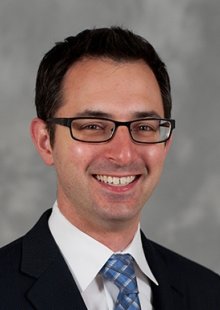
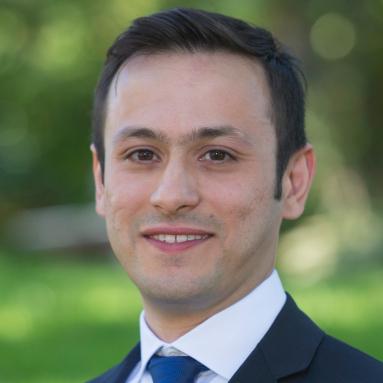
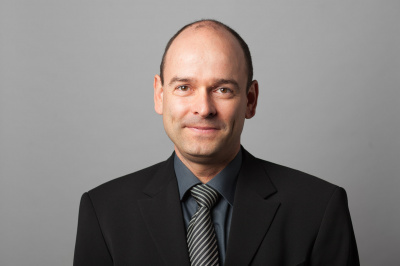
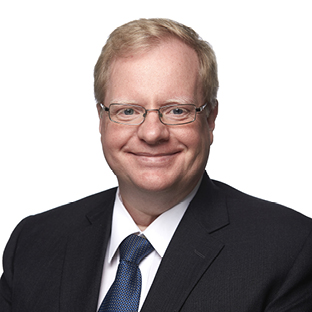
Michael Filler is Associate Professor at Georgia Tech's School of Materials Science and Engineering and Traylor Faculty Fellow in Chemical & Biomolecular Engineering. His Filler Lab specializes in nanoscale materials synthesis and deployment for electronic, photonic, and energy technologies. Research focuses on: Nanowire synthesis using in situ spectroscopy to understand atomic-level growth mechanisms Engineering nanowire structure via precursor design for heterostructures and doping control Semiconductor nanowire plasmonics for infrared light manipulation Scalable manufacturing through innovations like the Geode process for high-throughput production His work bridges fundamental chemical understanding with practical applications in energy and electronics. Research has been supported by NSF, DOE, DARPA, SRC, and Schmidt Futures.
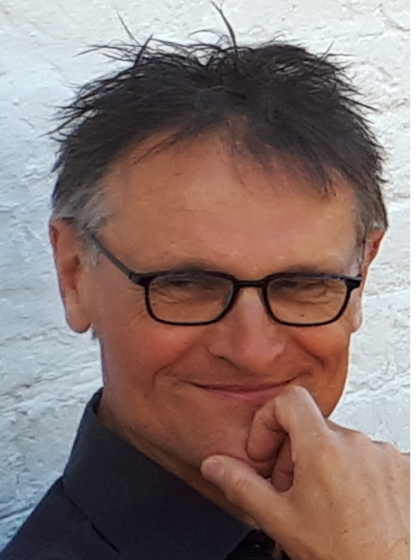
Prof. Dirk Pieter van Donk is a Professor at the University of Groningen's Faculty of Economics and Business, within the Operations — Management department. He specializes in Supply Chain Management and Resilience, focusing on integration, contextual factors, and performance. His research spans journals like the Journal of Operations Management and has earned awards such as the EurOMA Fellowship Award (2024). Education: PhD in Business Administration (1995), Master's in Econometrics and Business Administration. Research Interests: His work explores supply chain resilience, integration dynamics, and operational challenges in industries like food processing. Key themes include disruption management, critical infrastructure coordination, and sustainable practices in supply networks. Publications: Recent articles address resilience strategies, supply chain collaboration, and infrastructure challenges. His 2025 work on disruption concurrence highlights communication's role in critical infrastructure resilience. Awards: EurOMA Fellowship Award (2024) Outstanding Paper Award (1994) ISM Best Paper Runner-Up (2018) Advising & Grants: Supervisor of over 100 master's theses. Active in projects like NGInfra (2018–2022) and NWO-funded resilience initiatives. Teaches courses on strategic supply chain management and international business. Labs/Teams: Involved in interdisciplinary projects on infrastructure resilience and digital transformation in criminal justice supply chains.
James Roscow is a Senior Lecturer in the Department of Mechanical Engineering at the University of Bath, affiliated with the Centre for Integrated Materials, Processes & Structures (IMPS), IAAPS, and the Institute of Sustainability and Climate Change. His research focuses on developing ferroelectric composites for energy harvesting, sensing, and energy storage, with expertise in material fabrication, property tuning, and numerical modeling. He holds a PhD in Mechanical Engineering from the University of Bath and a BSc in Materials Science from the University of Manchester. Research interests include porous ferroelectric ceramics, piezoelectric and pyroelectric materials, and their applications in renewable energy and sensors. He has led or contributed to 12 projects funded by organizations like EPSRC and Innovate UK, exploring topics such as low-cost transducers, nanofluid cooling for solar panels, and phase transformations in ceramics. Key publications (2021–2025) address piezoelectric energy harvesting, porous material design, and advanced manufacturing techniques. His work aligns with UN SDGs, particularly sustainable energy and innovation. Roscow supervises PhD students in functional ceramics, energy storage, and sensor technologies. Notable collaborations include projects on hydraulic energy harvesters, SONAR transducers, and self-healing materials. He has contributed datasets on piezoelectric composites and energy storage systems, emphasizing reproducibility and applied research.
Cejna Anna Quist-Jensen is an Associate Professor at the Department of Chemistry and Bioscience, Aalborg University, affiliated with the Bioresources and Process Engineering Center and the Center for Membrane Technology. Her research focuses on membrane-based technologies for resource recovery, including minerals/metals and freshwater from unconventional sources like waste streams. She specializes in membrane distillation, membrane crystallization, electrodialysis, and forward osmosis. Education: PhD in Membrane Crystallization (Institute on Membrane Technology, ITM-CNR, 2016) and MSc in Chemical Engineering (2012). Key projects include BEYONDBATTREC (battery recycling), CORNERSTONE (water-energy-solute recovery), and EXBRINER (seawater brine resources). She teaches Integrated Process Modeling and supervises students across multiple semesters in water/wastewater treatment. Research interests span sustainable development goals (SDGs), particularly clean water (SDG 6), affordable energy (SDG 7), and responsible consumption (SDG 12). Her work addresses industrial wastewater treatment, produced water management, and circular economy strategies. Notable contributions include advancements in 3D-printed membranes, percrystallization for zero liquid discharge, and lithium/magnesium recovery from brines. She actively participates in conferences and collaborates internationally on membrane technology innovations.
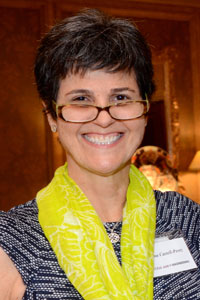
Elena Castell-Perez is a Professor at Texas A&M University's College of Agriculture & Life Sciences, Department of Biological and Agricultural Engineering. She holds a B.S. in Food Engineering from Campinas State University (1980), followed by an M.S. (1984) and Ph.D. (1990) in Agricultural Engineering from Michigan State University. Her research focuses on food safety technologies, including antimicrobial packaging systems, biomass pretreatment for bioenergy, and food irradiation applications. She is affiliated with Texas A&M AgriLife Research and Extension Service. Her work integrates nanotechnology (e.g., ZIF-8 nanoparticles) with food engineering to enhance packaging safety and develop sustainable materials. Key contributions include optimizing electron beam irradiation for pathogen decontamination and advancing predictive modeling for microbial contamination risks in fresh produce. She also explores CO₂ capture innovations for agricultural sustainability. Recent articles highlight advancements in antimicrobial delivery systems, 3D-printed biomass composites, and machine learning for food safety prediction. Her research spans food rheology, smart packaging, and waste reduction within the water-energy-food nexus. Dr. Castell-Perez collaborates on multidisciplinary projects involving food phantoms, Monte Carlo simulations for irradiation dosimetry, and agent-based modeling of microbial cross-contamination. Her labs focus on translating engineering principles into practical solutions for the food industry.
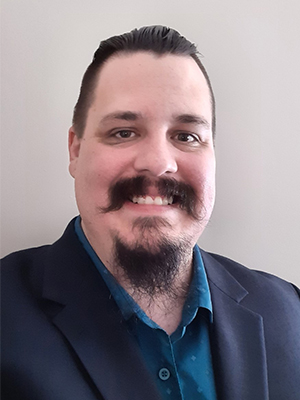
Albert E. Patterson is an Assistant Professor in the Department of Engineering Technology and Industrial Distribution at Texas A&M University's College of Engineering. He is also affiliated with Materials Science & Engineering, Mechanical Engineering, and Multidisciplinary Engineering. His research focuses on mechanical design methods, additive manufacturing processes, and fracture mechanics. He holds a Ph.D. in Industrial Engineering from the University of Illinois at Urbana-Champaign (2021), an M.S. in Industrial Engineering (2014), and a B.S. in Mechanical Engineering (2013), both from the University of Alabama in Huntsville. Key research areas include design under manufacturability constraints, additive manufacturing (e.g., FDM/FFF, SLS, SLM), and systems engineering for manufacturing and aerospace applications. His work emphasizes optimizing material properties, process-driven constraints, and sustainable manufacturing practices. Dr. Patterson leads the Manufacturability-Driven Design Lab (MDDL), exploring topics like additive manufacturing for energetic materials, repair strategies for plastic components, and energy-efficient production systems. He has contributed to over 60 publications on fracture mechanics, material characterization, and manufacturing systems optimization. His research integrates experimental methods with computational modeling to address challenges in design, manufacturability, and sustainability.
Prof. Songlin Ding is a Professor of Manufacturing Engineering at RMIT University's School of Engineering. He joined RMIT in 2005 as a Lecturer, progressing to Senior Lecturer (2009), Associate Professor (2015), and Professor (2020). He currently manages the Master of Engineering (Manufacturing) program. His research focuses on advanced manufacturing technologies, including CAD/CAM, geometric modeling, and machining of difficult materials like synthetic diamonds and titanium alloys using CNC and non-traditional methods. He pioneered the 'adaptive iso-planar' machining strategy, now widely adopted in CAD/CAM software. His work on high-speed machining of ultra-hard materials and additive manufacturing has been supported by ARC, CRCs, Victorian Government, and industry. Teaching interests include advanced manufacturing technologies and supervision of projects in areas like electrical discharge machining, additive manufacturing, and robotic applications. He coordinates over 20 courses and has published >100 papers in manufacturing, mechanical, and control engineering. Key contributions include developing post-processing techniques for additive manufacturing biomedical components and creating novel cutting tools for robotic bone tumor excision. His research emphasizes industry impact, particularly in aerospace and medical applications.
Professor Richard Blackburn is a Professor of Sustainable Materials at the University of Leeds, School of Design. His research focuses on applying sustainability principles to materials science, textile coloration, and cosmetics. He leads the Sustainable Materials Research Group and co-founded Keracol Limited, a spin-out company developing natural cosmetic ingredients from plant extracts. His work includes innovations in dyeing technologies, reducing microfibre pollution, and sustainable textile processing. Education: BSc (Hons) and PhD in Colour Chemistry from the University of Leeds Professional Memberships: Fellow of the Royal Society of Arts, Royal Society of Chemistry, and Society of Dyers and Colourists. Key research interests span sustainable textile practices, natural dye extraction, polymer chemistry, and green chemistry applications. He has pioneered methods for extracting actives from food waste for cosmetics and developed fluorine-free repellent coatings for textiles. Awards: Silver Medal (Society of Dyers and Colourists, 2016) Fellowship (Society of Dyers and Colourists, 2017) Centenary Medal (2018 & 2019) Freedom of The City of London (2013) Advising & Grants: Leads multidisciplinary projects on textile sustainability, including FoodWasteNet and the Business of Fashion, Textiles and Technology partnership. His work bridges academia and industry through spin-offs like Keracol and RITE Group, focused on minimizing environmental impact. Labs & Teams: Head of the Sustainable Materials Research Group and collaborator with global industry partners to advance sustainable materials innovation.
Dr. Ajay Achath Mohanan is a Lecturer at the Malaysia School of Engineering, Monash University. He holds a PhD in Engineering from Monash University Malaysia (2016) and a Bachelor of Engineering in Electrical and Computer Systems Engineering from the same institution (2009). His research focuses on flexible surface acoustic wave (SAW) sensors integrated with ZnO nanostructures, transitioning from rigid to flexible substrates. Key areas include piezoelectric ZnO thin films on polymers, low-temperature hydrothermal synthesis of nanowires, and UV-LED photolithography for sensor fabrication. He teaches ECE2071 - Computer Organisation and Programming and ECE3091 - Engineering Design . Mohanan leads or collaborates on projects such as flexible Lamb wave resonators for wastewater monitoring and graphene-integrated acoustic sensors. He has contributed to over 15 peer-reviewed publications since 2009, addressing topics like SAW resonator design, nanowire growth, and semiconductor defect analysis. His research aligns with UN SDG 4 (Quality Education) and SDG 9 (Industry, Innovation, and Infrastructure). Mohanan’s work emphasizes sustainable sensor technologies for environmental and industrial applications. He operates in the Micro and Nano Devices Lab, advancing flexible electronics and wearable sensor platforms.
Petar Popovski is a Professor at the Department of Electronic Systems within the Technical Faculty of IT and Design at Aalborg University, Denmark. His research focuses on next-generation wireless communication systems, with a strong emphasis on ultra-reliable low-latency communication (URLLC), Internet of Things (IoT), multiple access, and 6G technologies. He leads several high-impact research projects, including the Classique - Center for Classical Communication in the Quantum Era funded by the Danish National Research Foundation and WATER (Wireless Architectures for intelligent and Trusted connectivity in the posT-5G ERa) supported by Villum Fonden. His research interests span key areas in modern communication theory and systems, including random access , non-terrestrial networks , satellite communication , and machine learning for reliable communication . He is actively involved in advancing the integration of sensing and communication, digital twin technologies, and quantum-era classical communication frameworks. The recent publications highlight a strong trend toward deterministic and reliable access in wireless networks, integration of sensing and communication for industrial automation, and novel physical-layer techniques using reconfigurable intelligent surfaces. These works are published in top IEEE journals such as IEEE Transactions on Communications , IEEE Transactions on Haptics , and IEEE Transactions on Vehicular Technology . Award highlights include the Best Student Paper Award (2021) , recognizing his mentorship and collaborative research excellence. Prof. Popovski serves as a principal investigator (PI) and supervisor in multiple research projects, securing significant funding from national and international bodies such as the Danish National Research Foundation and the European Space Agency (ESA). He hosts visiting researchers regularly and contributes to scientific leadership through editorial roles and conference participation. He is a key figure in the Connectivity section at Aalborg University and leads cutting-edge research in future wireless systems, contributing to both theoretical foundations and practical implementations in smart infrastructure, space communication, and dependable 6G networks.
Mehdi Mortazavi is an Associate Teaching Professor in the Department of Mechanical and Materials Engineering at Worcester Polytechnic Institute (WPI), where he has been since January 2023. He previously served as an Assistant and Associate Professor at Western New England University (WNE) from 2016 to 2022. His expertise lies in experimental thermo-fluid systems, multiphase flow, and clean energy technologies. Education: PhD in Mechanical Engineering (Michigan Tech University, 2014), MS in Mechanical Engineering (Michigan Tech University, 2011), BS in Mechanical Engineering (KN Toosi University, 2007). Research Interests : Multiphase Flow Dynamics Hydrogen Energy Systems Droplet Dynamics in Fuel Cells Decarbonization Strategies Additive Manufacturing in Heat Exchangers As director of the Multiscale Thermal Fluids Laboratory (MTFL) at WPI, Dr. Mortazavi leads research addressing thermo-fluid challenges in energy systems. His work bridges fundamental and applied research, with a focus on improving fuel cell efficiency, hydrogen production, and sustainable energy solutions. He also emphasizes pedagogical innovation, teaching courses like Fluid Dynamics, Thermodynamics, and Heat Transfer. His recent publications highlight advancements in PEM fuel cell optimization, hydrogen electrolyzers, and thermal modeling of renewable energy systems. While no specific awards are listed, his contributions to clean energy and experimental fluid mechanics are notable. Lab involvement includes directing the MTFL, which focuses on additive manufacturing, multiphase flow characterization, and energy storage. His teaching portfolio spans both undergraduate and graduate levels, reflecting his commitment to engineering education.
Prof. Kathrin Greiff is a University Professor at the Chair of Anthropogenic Material Cycles and Institute of Processing, Coking, and Briquetting at RWTH Aachen University's Faculty of Georesources and Materials Engineering. Her work focuses on advancing circular economy principles through innovative recycling technologies, sensor-based material flow analysis, and sustainability assessments. She leads research initiatives like the DACE Academy and the Material Assessment Lab, which explore sensor integration, waste valorization, and decarbonization strategies in industrial processes. Her research interests include optimizing mechanical recycling processes for plastics and construction materials, developing machine learning-driven sorting systems, and evaluating environmental impacts across material lifecycles. Recent projects highlight applications in lightweight packaging waste, steel forging decarbonization, and polystyrene insulation recycling. She collaborates closely with industry to translate research into scalable solutions for sustainable material management. Prof. Greiff’s publications emphasize technical feasibility studies, life cycle assessments, and cross-disciplinary approaches to circular economy challenges. Her work contributes to policy frameworks for sustainable resource use and eco-design principles in manufacturing.
Nicolas Zufferey is a Full Professor of Operations Management at the University of Geneva, Switzerland, where he has served since 2008. He leads research in optimization methods for complex systems, focusing on applications in supply chain management, production planning, inventory control, and transportation logistics. His affiliations include the Research Institute of Management and collaborations with CIRRELT (Transportation & Logistics) and GERAD (Decision Analysis). Education: PhD in Operations Research (EPFL, 2002), MSc/BSc in Mathematics (EPFL) Prior Experience: Postdoc at University of Calgary (2003–2004), Assistant Professor at Université Laval (2004–2007) Research Interests: His work emphasizes developing advanced metaheuristics (e.g., VNS, Tabu Search, PSO) for challenging optimization problems. Key domains include: Multi-objective scheduling with resource constraints Inventory deployment under uncertainty Network design for supply chains and transportation systems Publications: Over 150 peer-reviewed articles across journals like European Journal of Operational Research , Transportation Research , and INFORMS Journal on Computing . Recent work addresses electric vehicle routing, drone integration in delivery systems, and robust decision-making under uncertainty. Collaborations: Engaged with 35+ universities and 27 private companies globally. Active in applying operations research to industrial problems (e.g., Swiss railways, luxury watch production, pharmaceutical networks).
Bjorn Birgisson is the Chair of the School of Environmental, Civil, Agricultural and Mechanical Engineering and holds the Georgia Power E-Mobility Distinguished Professorship at the University of Georgia. His research focuses on infrastructure resilience, pavement engineering, materials science, and novel construction technologies. He has pioneered work on asphalt mixture performance, autonomous vehicle impacts on roadways, and extraterrestrial construction materials using lunar regolith. His interdisciplinary approach integrates computational modeling, experimental testing, and environmental sustainability. Educational Background: Ph.D., P.E. credentials are highlighted but formal education details are not provided in the text. His professional appointments emphasize practical application of research to real-world infrastructure challenges. Research Interests include: Transportation infrastructure resilience to climate change Advanced material characterization for pavements Additive manufacturing for space exploration Non-destructive evaluation techniques His recent publications (2020-2025) address: Moisture variation in clayey soils Pavement crack initiation modeling Autonomous truck infrastructure impacts Lunar regolith utilization Scientific Awards: Georgia Power E-Mobility Distinguished Professorship recognizes his contributions to sustainable transportation infrastructure. Advising/Grants: While student names are not listed, his research teams focus on doctoral-level projects in geotechnical engineering and materials science. Grant activities likely include federal/state transportation initiatives and space exploration partnerships. Labs/Teams: Active in the Boyd Research and Education Center, collaborating with industry partners on pavement testing and additive manufacturing technologies.
Professor Anthony Gachagan is a leading academic at the University of Strathclyde, serving as Head of Department and Research Director in the Department of Electronic and Electrical Engineering (EEE) within the Faculty of Engineering. He has been Director of the Centre for Ultrasonic Engineering (CUE) since 2010, leading a multidisciplinary team of around 55 researchers with over £5M in active funding. He also holds leadership roles in RCNDE as Academic Chair and Management Board member, and participates in BINDT committees. His research spans ultrasonic transducer design, non-destructive evaluation (NDE), robotics, high-power ultrasound, and industrial process control. His work is highly collaborative, involving national and international partnerships with industry and academia, and contributes to sectors such as energy, aerospace, nuclear, and healthcare. He is actively involved in major research initiatives aimed at net zero, structural integrity, and advanced manufacturing. Recent publications highlight his focus on robotic ultrasonic inspection, adaptive signal processing, phased array techniques, and in-process monitoring of additive manufacturing. These works demonstrate a strong trend toward automation, real-time defect detection, and integration of ultrasonic systems in industrial and safety-critical applications. Scientific Awards: The BINDT Annual Conference Award (2019) Prof Gachagan has secured significant grants from EPSRC, Innovate UK, and industry partners, including projects on future ultrasonic engineering, lightning impulse testing, and robotic inspection for offshore wind. He supervises numerous research students and leads large collaborative teams. He also contributes to research commercialization through IAA projects. He leads the Centre for Ultrasonic Engineering (CUE), a vibrant research unit integrating electronic, mechanical, and biomedical engineers, physicists, and material scientists. The centre focuses on next-generation ultrasonic technologies, robotics integration, and industrial deployment.