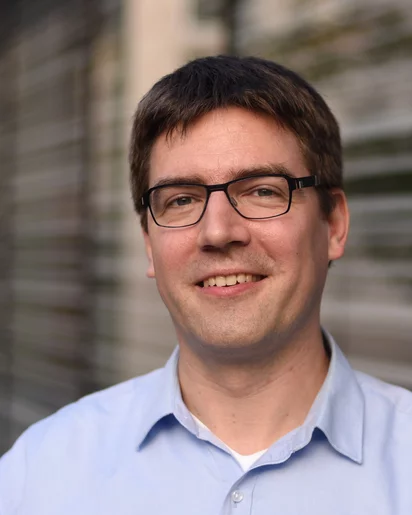
Dr. Cornelius Hempel is a Research Fellow at the Paul Scherrer Institute (PSI) in Switzerland, leading the Ion Trap Quantum Computation group at the PSI Quantum Computing Hub since April 2021. He previously served as a Principal Investigator at the University of Sydney's Quantum Control Laboratory and was promoted to Senior Research Fellow in 2020. His academic training includes physics studies at Martin Luther University and the University of Michigan, followed by a PhD at the University of Innsbruck under Prof. Rainer Blatt and Dr. Christian Roos. Key Affiliations: Paul Scherrer Institute (PSI) – Group Head, Ion Trap Quantum Computing University of Sydney – Senior Research Fellow, Quantum Control Laboratory Institut for Quantum Optics and Quantum Information (IQOQI) – Postdoctoral Researcher Research Focus: Hempel specializes in quantum computing using trapped ion systems , with emphasis on analog quantum simulation, error correction, and laser-based quantum control. His work bridges quantum information science and chemical dynamics , enabling quantum simulations of molecular processes. Publications Trends: Recent articles highlight advancements in trapped ion quantum computing, including 3D laser fabrication of ion traps, geometric phase interference studies, and software tools for error suppression. His work combines quantum simulation , quantum control , and quantum chemistry to enhance quantum hardware capabilities. Laboratory Leadership: Hempel leads the Ion Trap Quantum Computation group at the PSI Quantum Computing Hub , focusing on scalable quantum systems and practical implementations of quantum algorithms.
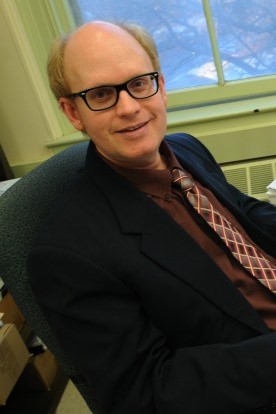
Dr. Gerald Wang is an Assistant Professor in Civil and Environmental Engineering at Carnegie Mellon University with courtesy appointments in Chemical Engineering and Mechanical Engineering. He leads the M5 Lab (Mechanics of Materials via Molecular and Multiscale Methods), focusing on nanoscale mechanics using computational approaches to solve civil engineering challenges related to water-energy systems, material resilience, and sustainable polymers. Education: Ph.D. in Mechanical Engineering and Computation, MIT (2019) S.M. in Mechanical Engineering, MIT (2015) B.S. in Mechanical Engineering, Mathematics & Physics, Yale University (2013) His research integrates statistical physics, fluid mechanics, and high-performance computing to investigate nanoscale structural and transport phenomena. Key areas include climate-resilient infrastructure, energy-water nexus solutions, and nanoscale thermal transport in materials. Recent work explores molecular-scale separation processes and recyclable polymer design using advanced simulation techniques. Publication trends demonstrate consistent focus on nanoscale transport mechanisms, computational method development, and interdisciplinary applications from materials science to urban systems. Articles frequently bridge molecular dynamics with macro-scale engineering problems. Awards: Scott Institute Seed Grant for clean energy research CMU Celebration of Education Award for teaching excellence Current projects include NSF-funded work on nanoscale slip phenomena and polymer upcycling collaborations. The M5 Lab develops open-source simulation tools and maintains active industry partnerships in advanced materials.
Todd Gabe is a Professor of Economics at the University of Maine, affiliated with the School of Economics within the College of Natural Sciences, Forestry and Agriculture. His work focuses on state and local economic development, human capital, public finance, and the knowledge economy. He is supported by the Maine Agricultural and Forest Experiment Station and contributes to the Hatch project ME022307. Dr. Gabe holds a Ph.D. in Agricultural Economics from The Ohio State University and an M.S. in Applied Economics from the University of Minnesota. He teaches courses such as Principles of Microeconomics, Applied Economic Data Analysis, Economics of Sports, and Regional Economics – Policy & Practice. His research spans regional and community economic development, rural workforce dynamics, tourism economics, and the impacts of climate change and pandemics on regional economies. Recent work examines the creative economy, minimum wage effects, urban influence metrics, and post-COVID recovery patterns. Dr. Gabe’s publications include analyses of social media as economic indicators, labor market spillovers, and tourism spending dynamics. His work frequently leverages econometric and spatial methods to address urban-rural economic linkages and workforce skill disparities. University of Maine Presidential Public Service Award (2004) College of Natural Sciences, Forestry and Agriculture Outstanding Public Service Award (2005) He has published in journals such as the Journal of Economic Geography , Journal of Regional Science , and Urban Studies , with a focus on applied regional economics and policy evaluation.
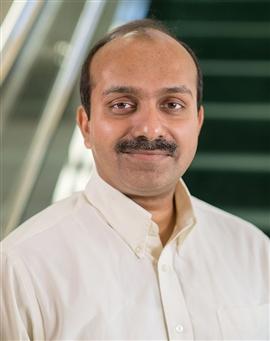
Elizabeth (Liza) Lee is an Assistant Professor at the Samueli School of Engineering , University of California, Irvine (UCI), with joint appointments in Materials Science and Engineering and Chemical and Biomolecular Engineering . Her research program focuses on theory and computational modeling of materials formation, breakdown, and transport to design sustainable solutions for quantum and energy technologies. Ph.D. , MIT, Chemical Engineering M.S. , MIT, Chemical Engineering Practice B.S./B.A. , Johns Hopkins University, Chemical and Biomolecular Engineering and Chemistry Lee’s research bridges ab initio calculations , machine learning , and molecular simulations to study functional materials. Key areas include catalytic plastic waste deconstruction , quantum defects in semiconductors , and computational method development using statistical mechanics and machine learning. Her work has implications for sustainable synthesis , quantum information science , and energy technologies . Her recent publications (2025–2024) span nanostructure modeling , electrocatalysis , machine learning in materials science , and solid-state electrolytes , reflecting her interdisciplinary approach. Notable awards include the NSF CAREER Award , UCI Samueli Faculty Development Chair , and DOE ASCR Leadership Computing Challenge Award . NSF CAREER Award UCI Samueli Faculty Development Chair DOE ASCR Leadership Computing Challenge Award NSF Graduate Research Fellowship AIChE Electronics and Photonics Materials Award UCI Engineering Student Council’s Professor of the Year Award Maria Lastra Postdoctoral Mentor Award
Thomas Schnabel is a Research Group Leader and Senior Researcher in Design and Green Engineering at Salzburg University of Applied Sciences, where he heads the Green Materials and Processing research group and leads the Salzburg Center for Smart Materials 2.0 initiative. His work bridges academic research with practical industrial applications in sustainable materials science. His research focuses on: Valorization of wood byproducts, particularly tree bark extracts for multiple applications Development of natural fiber insulation materials from recycled wood residues Life cycle assessment of sustainable material production processes Application of bioactive compounds from bark for biomedical uses Green chemistry approaches to material processing and purification Dr. Schnabel's publication record shows a cohesive research trajectory focused on extracting maximum value from wood processing byproducts. His recent articles demonstrate increasing sophistication in characterizing bark extracts and developing practical applications across construction, biomedical fields, and sustainable manufacturing. The research directly contributes to UN Sustainable Development Goals related to responsible consumption, climate action, and industry innovation. He leads multiple significant research initiatives including: NETTLE: Cross-border cooperation for alpine plant bioactive compounds (2024-2026) DRWO4.0: Danube Region Wood Industry Transformation toward Industry 4.0 (2024-2025) SCSM 2.0: Salzburg Center for Smart Materials 2.0 (2023-2026) User-centered teaching materials development in forestry and bioeconomy (2023-2026) His collaborative network spans the Danube region and beyond, reflecting the international significance of his work in advancing sustainable materials science and engineering practices.
Dr. Yasmine Abdin serves as an Assistant Professor in the Department of Materials Engineering within the Faculty of Applied Science at the University of British Columbia (UBC). Her research focuses on advancing polymer matrix composite materials through innovative digital simulation and probabilistic design methodologies. Her academic credentials include: B.Sc. from KU Leuven M.Sc. from KU Leuven Ph.D. from KU Leuven Dr. Abdin's research program centers on overcoming limitations in composite material durability through probabilistic design frameworks and multi-scale modeling. She integrates finite element analysis, machine learning, and Industry 4.0 technologies to predict structural reliability under stochastic service conditions, with emphasis on damage tolerance, manufacturing-process-structure relationships, and optimization of carbon fiber production from sustainable precursors like lignin and asphaltenes. Her recent publications (2023-2025) demonstrate strong focus on sustainable composite manufacturing, including carbon fiber production from renewable resources, 4D printing of shape memory polymers, flax fiber-reinforced composites, cellulose nanofibril modification, and fatigue behavior analysis. Key thematic trends include the convergence of digital twin technologies with composite manufacturing, sustainable precursor development, and the application of machine learning to enhance modeling efficiency in structural reliability prediction. Information regarding doctoral students, research grants, laboratory facilities, or scientific awards was not provided in available sources.
Joe Alexandersen is an Associate Professor in the Department of Mechanical Engineering at the University of Southern Denmark (SDU), affiliated with the Institute of Mechanical and Electrical Engineering. His research spans structural optimization, heat transfer, fluid dynamics, and high-performance computing, with applications in heat sink design, microfluidic devices, and additive manufacturing. Research Interests Topology and shape optimization Conjugate heat transfer Navier-Stokes flow modeling Finite element methods High-performance computing Scientific Awards 2022 Fluids 2020 Best Paper Award 2017 DTU Young Researcher Award 2015 ISSMO/Springer Prize for Young Scientist Key Projects HiHeaT: Topology optimization for high heat flux components (2024–2027) Structural Analysis of Large Modular Vessels (2025–2027)
Prof. Dr.-Ing. Katharina Schmitz serves as Institute Director and Vice Dean at the Institute for Fluid Power Drives and Systems, RWTH Aachen University. Her leadership within the Production Technology Cluster and extensive contributions to fluid power engineering establish her as a leading authority in mechanical engineering research and education. Her research spans fluid power systems, hydraulic component design, tribology, and physics-informed machine learning applications. She pioneers sustainable propulsion solutions through bio-hybrid fuels research while addressing fundamental challenges in polymer material behavior under hydraulic stresses. Current work focuses on carbon-neutral heavy-duty transportation, physics-based neural networks for lubrication modeling, and advanced control systems for electro-hydraulic actuators. Analysis of her 15 most recent publications reveals a dominant trend toward integrating physics-based modeling with deep learning to solve complex engineering problems. Her team consistently develops novel frameworks for cavitation prediction, flow rate determination, and material compatibility assessment - significantly advancing fluid power system reliability, efficiency, and digitalization. Scientific recognition includes: GfT Förderpreis 2023 for experimental and simulative investigation of partially hydrostatic relieved contacts in variable speed axial piston machines As head of the Institute for Fluid Power Drives and Systems, she leads cutting-edge research in sustainable fluid power technologies. The institute maintains strong industry partnerships while driving innovation in hydraulic component design, digital twins for condition monitoring, and next-generation propulsion systems through its position within RWTH Aachen's Production Technology Cluster.
Sunil Thomas, PhD , is a Research Professor at the Lankenau Institute for Medical Research (LIMR), with a distinguished career in translational science. His work bridges microbiology, immunology, molecular biology, and cell biology to develop diagnostic tools and vaccines for diseases affecting millions globally. He has held academic titles at LIMR since 2012, including Research Assistant Professor, Research Associate Professor, and now Research Professor. Current roles: Research Professor (2022–Present), Editor of Vaccine Design: Methods and Protocols (Springer-Nature), and Visiting Professor at Temple University (2017). Education: BSc in Botany (Kerala University), MSc in Biotechnology (Cochin University of Science and Technology), PhD in Environmental Biotechnology (Cochin University), and Postdoctoral Fellowship at Mount Sinai School of Medicine. Research interests encompass translational studies on immunotherapies for ulcerative colitis and Alzheimer’s disease, focusing on Bin1 monoclonal antibodies. He has pioneered structure-based vaccines for ehrlichiosis, modeled SARS-CoV-2 membrane proteins, and developed diagnostic tools like the ELISA kit for T-cell lipid rafts and Eastern Blotting for post-translational modifications. His lab investigates antibody uptake mechanisms and gut-brain axis interactions using animal models. Recent publications highlight his work on viral protein structure (Camp Hill, Borealpox, Oropouche), microbiome analysis in ICUs, diet-immunotherapy interactions, and advancements in AI-driven vaccine design. He has also contributed to understanding SARS-CoV-2 pathogenesis, monoclonal antibody therapies, and microbiome-host health connections. Patents include methods for disease treatment, Ehrlichia diagnostics, biosimulator technology, heat shock protein peptides, and vaccines against ehrlichiosis. Commercialized products like the IDO1 monoclonal antibody are now diagnostic probes in cancer research.
Rainer J. Hebert is a Professor in the Department of Materials Science and Engineering at the University of Connecticut, serving as Director of the Pratt and Whitney Additive Manufacturing Center and Associate Director of the Institute of Materials Science. His research focuses on advancing additive manufacturing technologies with particular emphasis on materials development and process optimization for industrial applications. Education Ph.D., University of Wisconsin-Madison, 2003 Postdoctoral Fellow, University of Wisconsin-Madison, 2003-2005 Post Doctoral Fellow, Research Center Karlsruhe, Germany (now Karlsruhe Institute of Technology), 2003-2005 Research Interests Professor Hebert's research spans multiple areas within materials science and additive manufacturing. His primary focus is on developing new alloys specifically designed for additive manufacturing processes, with particular attention to how microstructures form during rapid solidification and laser processing. He investigates powder characteristics and their effects on the final manufactured products, aiming to improve quality and performance. His work on quasicrystal-reinforced aluminum alloys has shown promising results for high-performance applications, and he has made significant contributions to understanding the fundamental mechanisms of laser powder bed fusion. Hebert's research bridges fundamental materials science with practical industrial applications, particularly in aerospace and high-temperature environments. Publication Trends Analysis of Professor Hebert's recent publications reveals a strong focus on advancing additive manufacturing technologies, particularly laser powder bed fusion. His work spans from fundamental materials science (microstructure formation, phase transformations) to practical applications (alloy design, process optimization). A notable trend is the increasing integration of computational methods with experimental work to predict and optimize material behavior. His research shows a progression from basic microstructure characterization to more complex systems involving multi-material interactions, intelligent manufacturing systems, and the development of specialized alloys resistant to cracking and other defects. The consistent theme across his publications is improving the reliability and performance of additively manufactured components for demanding applications. Awards Materials Science and Engineering Program Teaching Award, 2010-2011 Advising and Grants As Director of the Pratt and Whitney Additive Manufacturing Center, Professor Hebert oversees significant research initiatives funded by both government agencies and industry partners, particularly in aerospace applications. His leadership in the Institute of Materials Science provides opportunities for student research and collaboration across multiple disciplines. His extensive publication record suggests active mentorship of graduate students in materials science and engineering. His research program likely involves multiple PhD and Master's students working on various aspects of additive manufacturing, from fundamental materials science to process development. Laboratories and Teams Professor Hebert directs the Pratt and Whitney Additive Manufacturing Center at UConn, which serves as a hub for collaborative research between academia and industry. The center focuses on advancing metal additive manufacturing technologies, particularly for aerospace applications. He also plays a key leadership role in the Institute of Materials Science, one of UConn's premier research centers. His research teams likely include graduate students, postdoctoral researchers, and industry collaborators working on projects related to powder characterization, laser processing, microstructure analysis, and alloy development. The collaborative nature of his work is evident from the multi-institutional authorship on many of his publications.
Dr. Suhash Ranjan Dey is a Professor in the Department of Materials Science and Metallurgical Engineering at Indian Institute of Technology Hyderabad , India. He earned his Ph.D. in Materials Science and Physics from the University of Metz, France, and holds advanced degrees from IIT Kanpur and University of Delhi. His research focuses on advanced electrochemical materials processing for energy, biomedical, and sustainability applications. Key Research Areas: High Entropy Alloys/Oxides, CIGS/CZTS Solar Cells, Electrodeposition, Biomedical Devices, E-Waste Recycling, Hydrogen Production His research group specializes in synthesizing multi-component alloy thin films via non-vacuum electrochemical methods, with recent breakthroughs in one-dimensional nanostructures and bio-inspired hydrogels . He has secured over INR 3.5 crores in competitive research grants from agencies like DST, CSIR, and TATA Steel. Dr. Dey's publications (over 15 in last 3 years) span high entropy materials , perovskite solar cells , and electrochemical sensors . He serves as Associate Editor for Bulletin of Materials Science and maintains active collaborations with institutions in Germany, Japan, and China. Notable Awards: Humboldt Fellowship (Germany), BASE Fellowship (USA), IEI Young Engineers Award As department Head (2020-2023), he drove INR 6 crores in TEQIP funding. His laboratory (Room 304, MSME Block) houses state-of-the-art facilities for electrochemical synthesis and advanced materials characterization .
Lecturer Aydin Uçar has been affiliated with Akdeniz University's Faculty of Architecture, Department of Interior Architecture since 2000. He holds a postgraduate degree in Architecture/Reconstruction and Restoration from Yildiz Technical University (2000) and an undergraduate degree in Architecture from Anadolu University (1997). Education: Anadolu University (B.Arch), Yildiz Technical University (M.Arch) Research Areas: Architecture, History of Architecture and Restoration, Restoration, Engineering and Technology Aydin Uçar's work focuses on architectural restoration, cultural heritage, and spatial planning. His research bridges historical analysis with modern applications, particularly in post-disaster rural settlements and digital fabrication technologies like CNC in furniture design. He has explored the interplay between traditional architecture and contemporary tourism development strategies. His recent projects include the use of AR technology in Phaselis case studies (2022-2024). Uçar has contributed to understanding Anatolian architectural identity through publications on topics ranging from archaeological reconstruction to 20th-century rural modernization. Scientific Awards : Best Papers WSEAS (2010) Grants & Scholarships : SEE together Traveling Academy Scholarship (2022) Travel Grants (2015, 2014) Research Scholarship (2003) Professional Activities : Founder of Pratikiz Mimarlık Ltd. Şti. (2017) Jury member in architectural competitions (2002-2008) Active in international academic conferences (2008-2022)
Prof. Wojciech Sobieski is a faculty member at the Department of Mechanics and Fundamentals of Machine Design within the Faculty of Technical Sciences at the University of Warmia and Mazury in Olsztyn . His research focuses on fluid mechanics, numerical modeling, and porous media analysis, with applications in environmental engineering, hydraulic systems, and 3D printing. Academic Rank: Professor Scientific Discipline: Mechanical Engineering Key Research Areas: Tortuosity Analysis, Multiphase Flow, DEM Simulations His recent publications highlight advancements in computational methods for granular porous media, fluid flow modeling, and thermodynamic applications. Notable trends include the use of the Waterfall Algorithm for geometric analysis and sensitivity studies of numerical models like the Eulerian multiphase approach. He has contributed to understanding Forchheimer's laws and cavitation phenomena in hydraulic systems. Prof. Sobieski oversees the PathFinder Project , a research initiative focused on numerical modeling of porous media. His laboratory maintains infrastructure for multiphase flow simulations and particle-scale modeling. He has supervised 2 doctoral students to completion but currently has no active advisees.
Bopaya Bidanda serves as the Ernest E. Roth Professor and Chairman of the Department of Industrial Engineering at the University of Pittsburgh, where he has led since joining the faculty in 1987 after completing his PhD at Penn State. His institutional impact includes founding the Manufacturing Assistance Center, Automated Data Collection Laboratory, and Swanson Center for New Product Innovation. His research expertise spans manufacturing systems with concentrated focus on Group Technology, Reverse Engineering, Cellular Manufacturing, Lean Manufacturing, and Human Issues in Manufacturing. This work bridges advanced computational methods with industrial applications to solve real-world production challenges. Publication trends from 2000-2002 reveal strong emphasis on human capital integration in cellular systems, reverse engineering applications in biomedical contexts, and virtual laboratory development for manufacturing education. Key thematic threads connect workforce skills assessment with lean transformation and advanced computing techniques for production optimization. Scientific recognition includes: Fellow of the Institute of Industrial Engineers His grant portfolio demonstrates exceptional funding diversity, securing support from NSF, Department of Commerce, W.M. Keck Foundation, and industry partners like FedEx Ground for initiatives in manufacturing modernization and workforce development. He actively mentors doctoral candidates through flexible international programs and industry-university collaborations. Leadership extends to operational hubs including the Manufacturing Assistance Center which provides direct technical support to regional manufacturers, and the Swanson Center driving product innovation through interdisciplinary industry partnerships.
Dr. Faisal Mohd-Yasin is a Senior Lecturer in the School of Engineering and Built Environment at Griffith University, specializing in Electrical and Electronic Engineering. He has been with Griffith University since 2010, initially as a Lecturer (2010-2016) and promoted to Senior Lecturer in 2017. He is also a member of the Queensland Quantum and Advanced Technologies Research Institute (QUATRI) since 2025. His research spans microelectronics, MEMS technology, compound semiconductors, and electronic sensors/instrumentation, with particular expertise in silicon carbide-based devices for harsh environments. Dr. Mohd-Yasin holds dual PhD qualifications: a Doctor of Philosophy (Engineering) from Multimedia University, Cyberjaya, Malaysia (2014) and a PhD in Engineering from Ibaraki University, Hitachi, Japan (2009). His educational background provides a strong foundation for his interdisciplinary research that bridges semiconductor physics, sensor technology, and electronic circuit design. His research interests focus on Microelectromechanical systems (MEMS), compound semiconductors (particularly $$ ext{SiC}$$), electronic sensors, and electronic instrumentation. He has made significant contributions to the development of silicon carbide MEMS devices for harsh environments, piezoelectric energy harvesters, and noise analysis in microelectronic systems. His work has important applications in sustainable cities (SDG 11), health and well-being (SDG 3), and clean energy (SDG 7). Analysis of his recent publications reveals a strong trend toward MEMS sensor technology, particularly silicon carbide-based devices for harsh environments, and noise analysis in piezoelectric sensors. His research also demonstrates a growing interest in engineering education, with several publications on practical electronics teaching methods. The publications span electrical engineering, sensor technology, energy harvesting, and engineering education, reflecting his interdisciplinary approach to research and teaching. Dr. Mohd-Yasin has successfully supervised multiple doctoral and masters students through completion, including Utkarsh Jadli (PhD on Parasitic Capacitances of Power Transistors), Siti Aisyah Zawawi (PhD on MEMS capacitive microphone), Mei Kum Khaw (PhD on magnetically actuated droplets), Abid Iqbal (PhD on AlN thin films), Noraini Marsi (PhD on MEMS pressure sensors), and Kai Meng Mui (Masters on Power management IC). He has also secured numerous research grants totaling over $1.5 million from various sources including Griffith University, Innovative Manufacturing CRC, IRU, and Malaysian research councils. He is actively involved in professional service as a peer reviewer for the IEEE Sensors Conference series (2015-2025), Micro and Nano Engineering Conference series (2009-2018), and the International Conference on Solid-State Sensors, Actuators and Microsystems (2018-2019). He is also a member of IEEE (Institute of Electrical and Electronics Engineers) since 1997. Dr. Mohd-Yasin's research is primarily conducted through the Queensland Quantum and Advanced Technologies Research Institute (QUATRI), where he collaborates with researchers working on advanced semiconductor technologies and quantum applications. His laboratory work focuses on MEMS fabrication, sensor characterization, and circuit design for harsh environment applications.