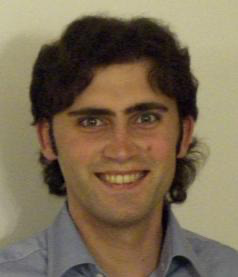
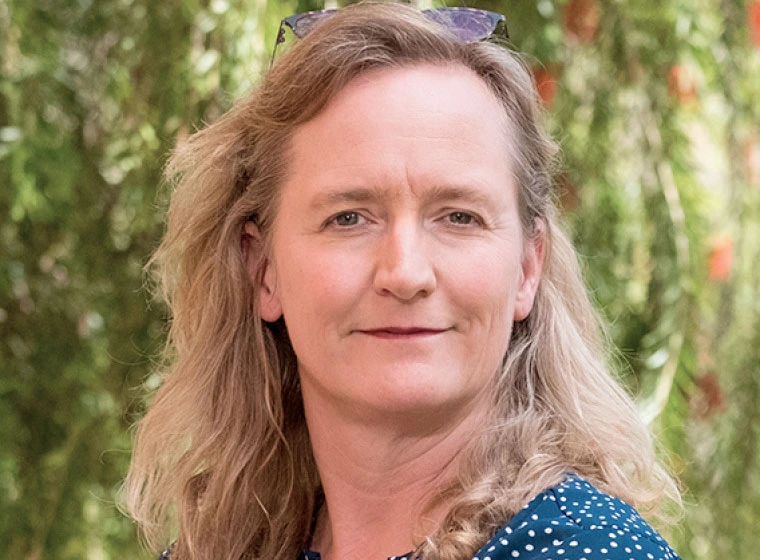
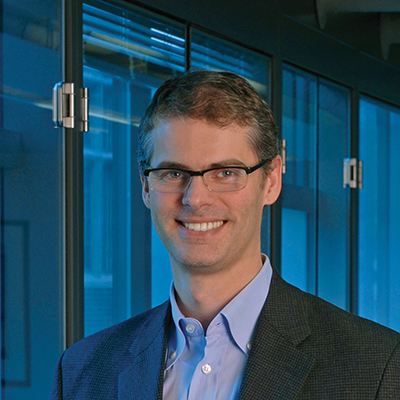
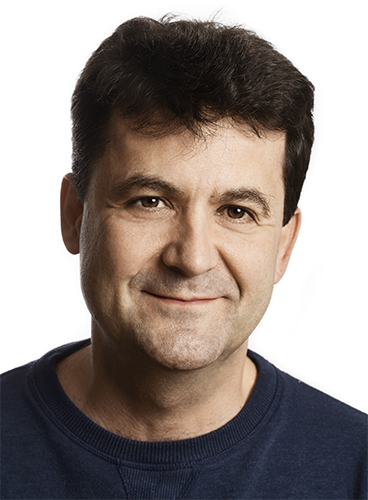
Ruggero Carli is an Associate Professor at the Department of Information Engineering, University of Padova. His research focuses on control systems, robotics, and optimization, with emphasis on model-based reinforcement learning, distributed optimization algorithms, and energy systems. His work bridges theoretical advancements with real-world applications, including autonomous robotics, smart grids, and nonlinear control. Key contributions include physics-informed machine learning frameworks, ADMM-based distributed optimization methods, and MPC-driven control solutions for underactuated systems. Research interests include: Model-Based Reinforcement Learning for Robotics Nonlinear Model Predictive Control (NMPC) Distributed Optimization and ADMM Variants Energy Networks and Smart Grids Robot Dynamics and System Identification Recent publications emphasize: Continual learning for driver behavior analysis Physics-informed control for underactuated systems Robust optimization in unreliable networks Autonomous robotic manipulation with large language models His research integrates control theory with modern machine learning techniques, addressing challenges in edge computing, distributed systems, and real-time implementation.
Prof. Dante Kennes is a University Professor at RWTH Aachen University, leading the Chair of Theoretical Physics of Condensed Matter. His research focuses on quantum materials, strongly correlated systems, and cavity quantum electrodynamics. Key areas include superconductivity in twisted bilayer systems, moiré heterostructures, and non-equilibrium phenomena in low-dimensional materials. He explores theoretical frameworks such as functional renormalization group methods and topological phase transitions. Recent work emphasizes cavity-coupled systems, light-induced superconductivity, and the interplay between electronic correlations and topological properties. His publications address topics like van Hove singularity heterogeneity in graphene, nematicity in kagome metals, and experimental signatures of moiré-engineered phases. Kennes' research bridges theoretical predictions with experimental observability through advanced modeling techniques. His contributions span advanced computational methods for many-body systems and proposals for novel quantum materials characterization. Despite his prolific output, no formal student advisees or awards are explicitly listed in the provided materials.
Dr. Pamela Carreno-Medrano is a Lecturer and Early Career Research Representative in the Department of Electrical and Computer Systems Engineering at Monash University. Her research focuses on Human-Robot Interaction (HRI), robot learning, and socially assistive robotics. She holds a PhD in Information & Communication Sciences (Université de Bretagne-Sud), Master's in Computer Science (École Nationale d’Ingénieurs de Brest), and a Bachelor's in Computer Systems Engineering (Universidad EAFIT). Her work emphasizes human-centered design for intelligent systems, including adaptive navigation algorithms, human-robot collaboration models, and affective computing applications. She leads projects on long-term human-robot interaction and has contributed to interdisciplinary studies on robot ethics and public space integration. Dr. Carreno-Medrano also serves as an Adjunct Lecturer at Universidad EAFIT and collaborates internationally on sustainable aging technologies through the ARC Training Centre for Optimal Ageing. Current research themes include aligning task representations between humans and robots, modeling non-goal-driven human behaviors, and socially aware navigation strategies. She actively supervises postgraduate students in HRI, offering projects on interactive robot learning and embodied AI systems.
Frank Scholle is a Professor in the Department of Biological Sciences at North Carolina State University (NC State), affiliated with the College of Agriculture and Life Sciences. His research focuses on developing antimicrobial materials and photodynamic therapies to combat infectious pathogens. Key interests include nanotechnology-based antimicrobial coatings, antiviral textiles, and photodynamic inactivation mechanisms. His work integrates material science, virology, and biomedical engineering, with applications in infection control, drug delivery, and surface functionalization. Notable projects involve quantum dots, copper-doped nanoparticles, and plant-derived compounds for antiviral activity. Recent studies address SARS-CoV-2 pathogenesis and cytokine storm modulation using repurposed drugs like Vandetanib. Dr. Scholle has contributed to standardized assays for viral infectivity and pioneered spray-coated antimicrobial surfaces. His interdisciplinary approach bridges fundamental research and translational applications, aiming to reduce the global threat of drug-resistant microbes and viral outbreaks.
Catherine Brooks serves as Professor and Interim Dean of the College of Information Science at the University of Arizona, having previously held leadership roles as associate director (2016-2018) and director (2019-2023). She founded the Center for Digital Society and Data Studies, establishing herself as a key institutional leader in digital society research. Her academic foundation includes a PhD from the University of California, positioning her at the intersection of communication theory and information science. Research Interests Dr. Brooks investigates day-to-day language use in social contexts with emphasis on instructional communication technologies , online collaboration dynamics , and language-identity relationships . Her work examines how digital environments facilitate co-construction of knowledge, relationships, and identities while exploring science communication challenges. This inherently interdisciplinary research bridges communication studies, information science, and sociology through mixed-methods approaches. Publication Trends Recent scholarship reveals evolving focus from classroom communication (2018) to contemporary societal-technological intersections. Her 2022-2024 work increasingly addresses environmental media narratives (Arizona mining, energy transition), emerging technology ethics (quantum computing, deepfakes), and digital governance (student data privacy, algorithmic bias), demonstrating responsive engagement with urgent socio-technical dilemmas. Research Infrastructure As founder of the Center for Digital Society and Data Studies, she cultivates interdisciplinary collaboration examining digital technology's societal impact. This hub supports research on media discourse, data ethics, and communication innovation while connecting academic work with public discourse through outlets like Scientific American and Wired.
Tracy Taylor-Helmick is a part-time Professor in the Department of Psychology and Neuroscience at Dalhousie University . Her research focuses on human attention and memory interactions, particularly intentional forgetting mechanisms and mnemonic strategies. She holds a BA from the University of Calgary, MA/MSc and PhD from Dalhousie University, and a Postdoctoral Fellowship at Vanderbilt University. Her work employs behavioral methodologies to investigate how attentional resources modulate memory retention and purposeful forgetting processes. Key research themes include directed forgetting paradigms, memory suppression mechanisms, and cognitive control processes. Awards: 2012 Outstanding Graduate Advisor Award, 2009 Alumni Teaching Award, 2002 CIS Mentor Award Publications span topics like attentional blink modulation through forgetting instructions and the effortful nature of memory suppression. Her research bridges cognitive psychology and educational applications, emphasizing practical mnemonic techniques.
Benjamin C. Pierce is Henry Salvatori Professor of Computer and Information Science at the University of Pennsylvania, with appointments in the School of Engineering and Applied Science. A Fellow of the ACM, his research spans programming languages, formal verification, and security-privacy technologies. He directs the DeepSpec project on verified systems infrastructure and leads climate computing initiatives. Research interests focus on: Formal methods for reliable software via proof assistants like Coq Bidirectional programming and data synchronization Language-based security and differential privacy Publication trends show consistent contributions to type theory foundations, with recent emphasis on property-based testing methodologies and real-world verification. Articles frequently appear in top PL/SEC venues with practical applications in compilers and secure systems. Scientific Awards: ACM Fellow (systems verification) SIGPLAN Distinguished Educator Award (textbook innovations) Advises graduate students through the Penn PL Club. PI for NSF Expeditions in Sustainable Computing. Leads the VERSE project for verified C code and Unison file synchronizer. Directs the Penn Programming Languages Research Group collaborating with industry partners including Amazon and Microsoft Research.
Jörg Evers is a physicist at the Max Planck Institute for Nuclear Physics (MPIK) in Heidelberg, Germany, where he is a staff scientist and coordinator of the International Max Planck Research School for Quantum Dynamics in Physics, Chemistry and Biology. He holds the academic rank of Adjunct Professor at Heidelberg University and has been affiliated with MPIK since 2004, progressing from group leader to W2 Fellow and then to staff scientist. His research is centered on quantum optics, nuclear quantum optics, and cavity quantum electrodynamics, with a focus on X-ray interactions with Mössbauer nuclei and quantum control techniques. His research interests span Quantum Optics , Nuclear Quantum Optics , X-ray Quantum Optics , Cavity QED , Mössbauer spectroscopy , Quantum Control , and Ultrafast Science . His work explores coherent manipulation of nuclear excitations, precision spectroscopy, and quantum interference effects in complex atomic and nuclear systems. He has made significant contributions to the development of nuclear clocks, particularly using scandium-45, and has pioneered methods for controlling X-ray emission and absorption in thin-film cavities. His recent publications reveal a strong trend toward inverse design in quantum systems, coherent control of nuclear excitons , and precision metrology using X-rays. These works often appear in top-tier journals such as Nature , Science , and Physical Review Letters . The research integrates theoretical modeling with experimental feasibility, often in collaboration with leading institutions and facilities like DESY and European XFEL. His scientific awards include: Röntgen-Preis (2014) Dulger Prize (2010) APS Outstanding Referee (2009) Institute of Physics PhD Thesis Prize (2005) Erasmus Scholarship (1999–2000) He has served as a referee for over 25 physics journals and funding agencies and has held leadership roles in research schools and conference panels. He has mentored students and early-career researchers through the International Max Planck Research School and has been involved in organizing key workshops in quantum optics and X-ray science. His laboratory work is conducted within the Division of Quantum Dynamics at MPIK, where he collaborates closely with Director Christoph H. Keitel and other leading physicists. His team focuses on theoretical and computational modeling of quantum optical phenomena with potential applications in next-generation atomic clocks, quantum sensors, and fundamental tests of quantum mechanics.
Aleksandra Mitrović, PhD, is an Associate Professor at the Faculty of Hotel Management and Tourism in Vrnjačka Banja, part of the University of Kragujevac, Serbia. Her academic role centers on teaching and research in Accounting and Finance, with a focus on applications in tourism, healthcare, and public sector institutions. Education: Undergraduate Studies: Faculty of Economics, University of Kragujevac (2006–2010) Master Studies: Faculty of Economics, University of Kragujevac (2010–2012) PhD: Singidunum University (2016) Her research interests include Accounting Information Systems, Financial Statement Analysis, Auditing, and Controlling, particularly in specialized sectors such as hospitality and healthcare. She has extensively published on financial fraud detection using models like Beneish M-Score and has contributed to textbooks and academic journals. Her recent publications reflect a strong trend toward applying quantitative and qualitative accounting methods in niche industries and public institutions, emphasizing transparency and efficiency. Scientific Awards: No awards explicitly mentioned. She has been actively involved in advising and project leadership, particularly in EU-funded initiatives such as the TEMPUS project MHTSPS and the EVLIA project focused on SME financing through intellectual assets. She also contributed to national projects improving English language instruction in health tourism programs. Her professional affiliations include the Association of Certified Fraud Examiners (ACFE) and the Association of Public Sector Accountants, underscoring her commitment to ethical and professional standards in accounting. She leads a research agenda that bridges academic theory with practical applications in emerging economies.
Henrik Bruus is a Professor and Section Head in the Department of Physics at the Technical University of Denmark (DTU). He leads the Section of Biophysics and Fluids and the Theoretical Microfluidics Group, focusing on theoretical modeling in microfluidics, acoustofluidics, and nanofluidics. His academic journey began at the Niels Bohr Institute, University of Copenhagen, where he earned his B.Sc., M.Sc., and Ph.D. in physics. He has held research and faculty positions at NORDITA, Yale University, CNRS-CRTBT, and DTU, transitioning from DTU Nanotech to DTU Physics in 2012. He has held visiting professorships at Harvard, MIT, Princeton, and several French institutions. B.Sc. in Mathematics and Physics, University of Copenhagen (1984) M.Sc. in Physics, University of Copenhagen (1986) Ph.D. in Physics, University of Copenhagen (1990) Henrik Bruus's research lies at the intersection of theoretical physics and engineering, with a strong emphasis on microfluidics, acoustofluidics, and biophysics . His work explores acoustic radiation forces, electrokinetics, streaming, and particle manipulation in microsystems. He is renowned for his Acoustofluidics tutorial series published in Lab on a Chip. His research contributes to UN Sustainable Development Goals in energy and innovation. He has published over 248 works, including in Physical Review , Lab on a Chip , and Science Advances . The recent publications highlight a consistent focus on acoustofluidic phenomena , particularly the modeling and control of acoustic streaming, radiation forces, and thermoviscous effects in microchannels. His work bridges theoretical analysis with experimental validation, often involving collaborations across disciplines. Key themes include ultrasound manipulation of particles and cells, optimization of microreactors, and development of novel acoustofluidic devices using thin-film transducers. Scientific Awards: DTU Teacher of the Year (2013) Elected Fellow of the American Physical Society (since 2011) Henrik Bruus actively supervises Ph.D. students and leads multiple research projects in biophysics and microfluidics. He has been the main supervisor or co-supervisor on projects related to plant biophysics, micro- and nanochannel flows, and electroacoustic actuation. His international collaborations span across Europe and the U.S., and he has delivered numerous conference presentations, including at APS meetings and specialized workshops. He is a central figure in the global acoustofluidics research community. He leads the Theoretical Microfluidics Group at DTU Physics, which focuses on computational and analytical modeling of fluid behavior at micro- and nanoscales. The group collaborates closely with experimental teams to develop and validate theoretical frameworks for lab-on-a-chip systems. Their work supports applications in biomedical diagnostics, cell sorting, and material science.
Benedetta Catanzariti is a British Academy Postdoctoral Fellow at the University of Edinburgh's School of Social and Political Science, with dual affiliation as a PostDoctoral Affiliate at the Centre for Technomoral Futures within the Edinburgh Futures Institute. She actively contributes to the AI Ethics & Society network, focusing on the social, historical, and political dimensions of data-driven technologies through qualitative STS (Science and Technology Studies) methodologies. Her work critically examines machine learning data practices, classification systems in algorithmic decision-making, and engineering cultures across industry, research, and educational contexts. Education: PhD in Science, Technology and Innovation Studies, University of Edinburgh (2023) MScRes in Science and Technology Studies, University of Edinburgh (2019) Master in Philosophy, University of Turin (2016) Her research investigates how data objectivity claims emerge within specific cultural imaginaries, with current emphasis on translating medical uncertainty into diagnostic AI outputs. Recent projects analyze facial expression recognition in healthcare, generative AI threats to parliamentary democracy, and ethical integration in computer science curricula. She develops reflexive tools to address algorithmic harm while documenting global labor practices in AI development and anti-surveillance resistance tactics. Article trends reveal escalating focus on AI's societal crises: 2025 works dissect objectivity construction in data annotation and AI governance metaphors, while 2024 outputs target democratic vulnerabilities (Chamberfakes), CS curriculum politics, and translational ethics teaching. Medical AI and emotion recognition studies (2020-2023) establish foundations for current work on medical imaging uncertainty. All publications consistently apply STS lenses to expose hidden power structures in data systems. Scientific Awards: SPS Outstanding Dissertation Award (2023) for 'Seeing affect: knowledge infrastructures in facial expression recognition systems' AsSIST-UK Andrew Webster PhD Prize (2024) She supervises Oksana Dorofeeva (visiting PhD, Aarhus University) and four CDT project students (Jacqueline Rowe, Amanda Horzyka, Osman Batur Ince, Cyndie Demeocq), previously guiding Sandra Wheeler's MSc in Data Science for Health and Social Care. Funded by a British Academy Postdoctoral Fellowship (2023-2026) for 'Technology in Translation: Investigating Organizational Contexts of AI Development', she also secured DCMS Policy Fellowship support under AHRC's BRAID programme. Current teaching includes Data and AI Ethics as Practice (2025) and Data Ethics in Health and Social Care (2024). Operates within the Centre for Technomoral Futures and AI Ethics & Society network, collaborating with Scottish Centre for Crime & Justice Research on parliamentary democracy threats. Organizes key events like the 2024 'AI as the Broken Machine' conference and 2022 'Ethics of Care and Community in AI Practice' workshop, while developing conceptual tools for medical AI practitioners through her active British Academy project.
Sarah E. Chasins is an Assistant Professor at the University of California at Berkeley , affiliated with the College of Engineering and Department of Electrical Engineering and Computer Sciences . She leads the PLAIT Lab (Programming Languages for Approachable and Inclusive Tools), with additional affiliations at the Berkeley Institute for Data Science (BIDS) and collaborations across disciplines. Her research focuses on democratizing programming through Program synthesis Human-Computer Interaction for programming languages Tools for non-traditional programmers Embedded domain-specific language design Web automation frameworks She has developed systems like Ringer for browser automation and Skip Blocks for execution history reuse. Recent publications highlight trends in Direct manipulation programming Synthesis-backed refactoring Sequence-to-tree code search DSL usability for domain experts Functional programming practices Web script optimization She has advised numerous graduate and undergraduate researchers, including: Current PhD students: Justin Lubin, Eric Rawn, Parker Ziegler Alumni: Gabriel Matute (MSc), Rebecca Hicke (undergraduate) Her service includes committee roles at top conferences like OOPSLA, PLDI, and PLATEAU, as well as teaching courses on CS164: Programming Languages and Compilers CS294-184: Building User-Centered Programming Tools CS39-001: Technology, Society, and Power
Maja Golf-Papez is an Associate Professor in Marketing at the University of Sussex Business School, where she also serves as Deputy Director of the MBA program. Her work integrates systems thinking and human-centered design to address complex challenges in technology, health, and consumer behavior. Her educational background includes a PhD in Marketing from the University of Canterbury (2018), an MSc in Marketing from the University of Bath (2010), a BSc in Marketing Communications from the University of Ljubljana (2009), and a BSc in Economics from the same institution (2013). She also holds a Postgraduate Certificate in Higher Education (Advance HE, 2020) and a certification in Human-Centred Systems Thinking from IDEO (2024). Maja's research focuses on responsible innovation, digital inclusion, health innovation, and consumer misbehaviors such as online trolling. She employs qualitative, context-rich methods and co-creates solutions with stakeholders, particularly in healthcare. Her recent work explores the metaverse, synthetic customer experiences, and platform governance in the sharing economy. Her publications span top journals including European Journal of Marketing , Journal of Interactive Marketing , Business Horizons , and Marketing Theory . The research trends reflect a strong focus on digital ethics, responsible technology, consumer well-being, and the social implications of emerging technologies. She frequently collaborates with scholars such as Veer, Bajde, Culiberg, and Keeling. Highly Commended in the 2024 Financial Times Responsible Business Education Awards for the Digital Inclusion Framework Journal of Marketing Management 2017 Best Paper Award – Highly Commended for 'Don’t feed the trolling' Maja is an active supervisor, having co-supervised research on digital fashion and brand purpose. She has secured funding from the ESRC Impact Acceleration Account and a Knowledge Exchange Fellowship. She teaches Design Thinking and Innovation at the postgraduate and MBA levels and has been nominated for the Sussex Teaching Award annually from 2020 to 2025. She also facilitates workshops for organizations and professionals. Her peer review activities include journals such as European Journal of Marketing , Journal of Business Research , and Consumption, Markets and Culture , and she has served on the ESRC IAA fast-track fund review panel.
Vincent Sitzmann is an Assistant Professor at the Massachusetts Institute of Technology (MIT) in the Department of Electrical Engineering and Computer Science (EECS), where he leads the Scene Representation Group at MIT's Computer Science and Artificial Intelligence Laboratory (CSAIL). His research focuses on building machines that learn to understand and interact with the world autonomously through 'world models' - mental simulators that enable agents to predict environmental outcomes and the consequences of their actions. His educational background includes a PhD from Stanford University under Gordon Wetzstein and a Bachelor's degree from the Technical University of Munich. Sitzmann's research spans computer vision, graphics, and robotics, with pioneering contributions to neural scene representations. He introduced Scene Representation Networks (SRNs) that enable continuous 3D-structure-aware scene modeling from 2D images. His work on implicit neural representations with periodic activation functions has become foundational to the field. Recent research focuses on scaling 3D reconstruction techniques, improving generative models for visual content, and developing methods for robot control through neural Jacobian fields. His approach emphasizes both theoretical rigor and practical applications across multiple domains. His publication record shows a clear progression toward more sophisticated diffusion models applied to video generation, robotics, and 3D reconstruction. The 2025 Nature paper on robot control via Jacobian fields demonstrates his expanding influence beyond traditional computer vision into robotics. His work consistently bridges theoretical advances with practical implementations, as evidenced by the CVPR 2023 Best Paper Runner-Up for pixelSplat, which offers scalable solutions for 3D reconstruction. His notable scientific achievements include: CVPR Best Paper Runner-Up (2023) for 'pixelSplat' Multiple papers with 'Spotlight' or 'Oral' presentations at NeurIPS and CVPR 2023 Amazon Research Award for '2D and 3D Animation via Image-Conditional Generative Flow Models' NeurIPS Outstanding New Directions Honorable Mention (2019) As leader of the Scene Representation Group, Sitzmann mentors researchers working at the intersection of computer vision, graphics, and AI. The group has secured funding from prestigious sources including Amazon Research Awards. Their work has practical applications in virtual reality, robotics, and content creation industries. Sitzmann teaches advanced courses at MIT, including 'Advances in Computer Vision' (6.8300). The Scene Representation Group focuses on developing novel methods for 3D scene understanding and manipulation. Current projects include research on neural radiance fields, diffusion models for 3D content creation, and methods for autonomous scene understanding. The group maintains active collaborations with industry partners and academic institutions to advance visual computing research.
Carlo Rigoni is a Visiting Professor in the Department of Applied Physics, focusing on non-equilibrium systems and colloidal assembly. His research spans nanoparticle science, ferrofluid dynamics, and aqueous two-phase systems. Education: Doctoral degree in Natural Sciences from University of Padua Active projects: DissNano (2021–2024) on dissipative nanomaterials Research interests include: Coarse-grained modeling of colloidal systems Electrically/magnetically controlled fluid interfaces Self-assembly of nanoparticles in liquid crystals Non-equilibrium pattern formation in soft matter Thermodynamic control of multiphase separation Bio-inspired nanoparticle superlattices His recent publications address computational modeling of aqueous two-phase systems, magnetic colloids, and electroferrofluids. Collaborative activities include conference presentations on interfacial tension, magnetic rollers, and colloidal gradients. He contributes to open scientific datasets and disseminates findings through platforms like ORCID (0000-0001-6960-779X).