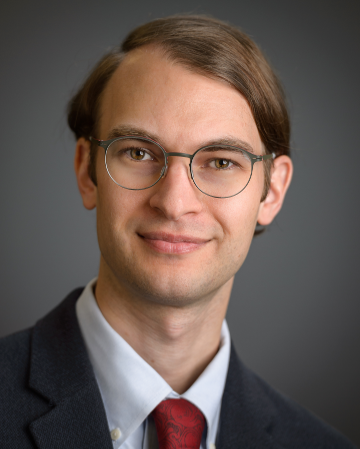
Dr. Ben Mitchell is a Visiting Assistant Professor in the Department of Computer Science at Swarthmore College. He teaches courses in Artificial Intelligence, Machine Learning, and Computer Science fundamentals. His research focuses on AI, machine learning, and deep learning, with recent work emphasizing medical imaging applications and ethical implications of AI. He has been recognized with a Best Paper Award at FLAIRS 2019. Mitchell's teaching spans introductory programming to advanced topics like neural networks and computer ethics. His work also extends to robotics and medical engineering, as seen in collaborations on surgical manipulators and diagnostic models. Education: Not explicitly stated in provided texts. Key Roles: Course instructor for CS63/CS66, advisor on AI projects. Grants/Awards: Best Paper Award (2019). Research interests include the intersection of AI/ML with real-world applications like healthcare, while addressing ethical challenges in data usage. His labs focus on practical implementations of search algorithms, neural networks, and reinforcement learning.
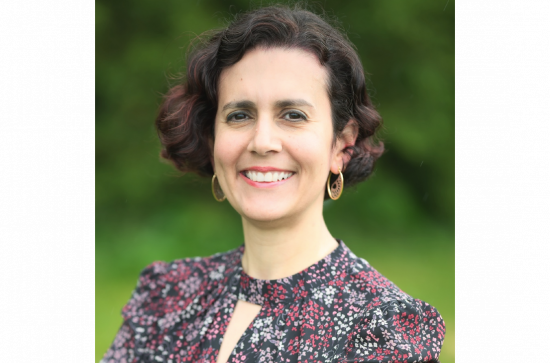
Dr. Abolfazl Zaraki is a Senior Lecturer in AI and Robotics at the University of Hertfordshire's Department of Computer Science, part of the School of Physics, Engineering & Computer Science. He leads the Robotics Research Group and previously held roles at Cardiff University's School of Engineering and the IROHMS Research Centre. His academic journey includes a Master's in Mechatronics from University Technology Malaysia (2010) and a PhD in Automatic Robotic and Bioengineering from the University of Pisa (2014). He has held Research Fellow positions in Italy and the UK until 2019. Dr. Zaraki's research focuses on AI-driven autonomous systems, social robotics, and assistive technologies. Key projects include the EASEL, BabyRobot, and JAMES EU initiatives, alongside the Innovate UK-funded InSight project. His work emphasizes Human-Robot Interaction (HRI), trusted autonomy, and applications in healthcare and industrial contexts. Notable contributions include the development of the Kaspar humanoid robot for autism therapy and advancements in reinforcement learning for robotic control. His recent publications (2021–2025) explore agentic AI, memory-driven systems, and personalized LLMs for HRI, alongside technical advancements in robotic control, communication systems, and bio-inspired robotics. His research bridges theoretical AI innovation with practical applications in healthcare, education, and industrial automation. Zaraki has collaborated internationally across institutions and industry partners, contributing to 35+ research outputs. His work aligns with global trends in ethical AI, explainable systems, and human-centric robotics design.
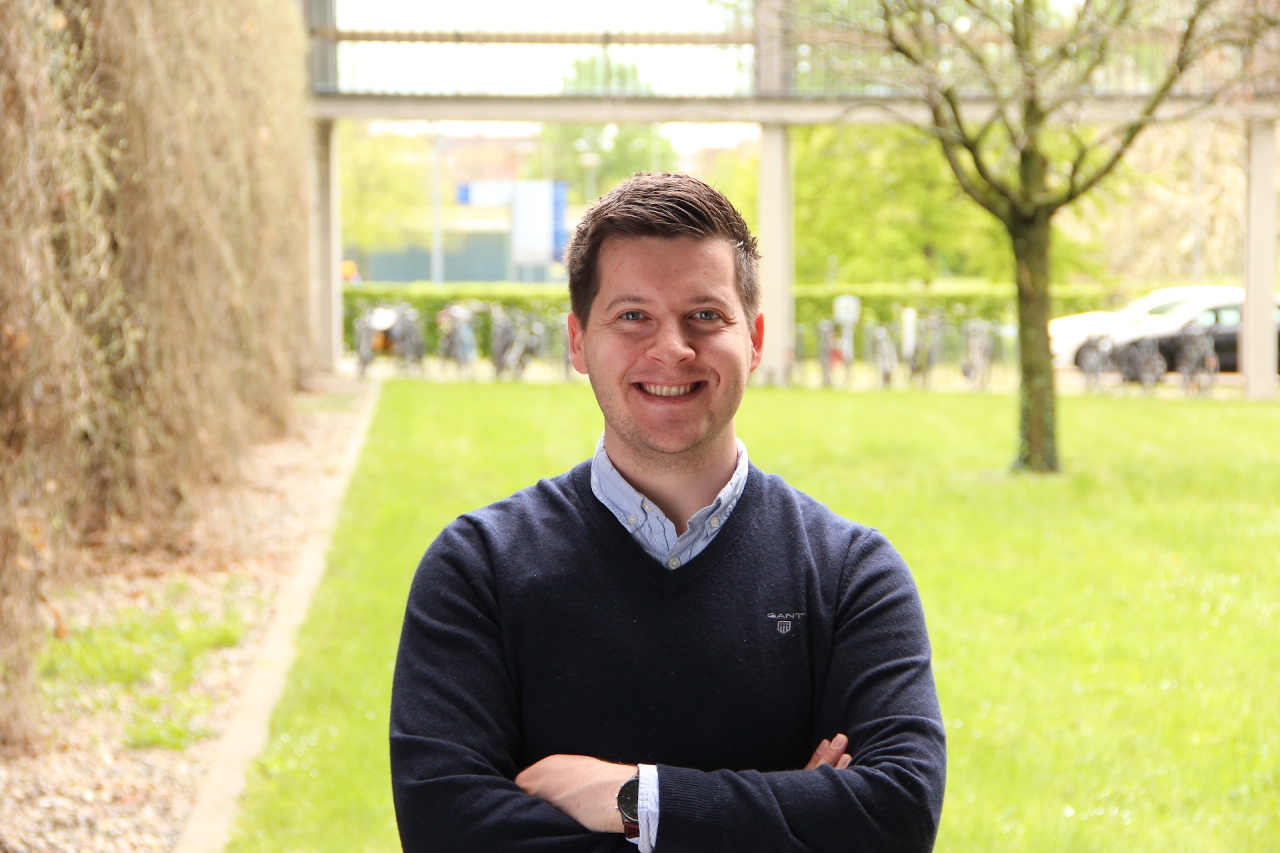
Dr. Nada Elnahla is an Assistant Professor/Lecturer at Maynooth University's School of Business, joining in 2022 after roles as an Instructor of Marketing at Carleton University (Canada) and Assistant Professor of English Literature at Alexandria University (Egypt). She holds dual PhDs in Management/Marketing (Carleton, 2021) and Comparative Literature (Cairo, 2012), alongside MA (Comparative Literature, Alexandria, 2008) and BA (English Literature, Alexandria, 2004) degrees. Her research bridges retail surveillance ethics, consumer behavior, and literary analysis, focusing on topics like smart surveillance in retail, loyalty programs, and the intersection of literature and marketing. Education: PhD in Management/Marketing, Carleton University (2021) PhD in Comparative Literature, Cairo University (2012) MA in Comparative Literature, Alexandria University (2008) BA in English Literature, Alexandria University (2004) Research Interests: Dr. Elnahla explores surveillance technologies in retail, consumer ethics, narrative theory, and marketing history. Her work often critiques how retail spaces monitor customers and employs literary frameworks to analyze consumer psychology and corporate practices. Awards & Grants: MUSSI Research Grants Scheme (2024) Maynooth University School of Business Seed Funding (2023) Paul R. Lawrence Fellowship (2017) Donald F. Dixon Scholarship (2019) Labs & Collaborations: She contributes to the Innovation Value Institute’s (IVI) Digital Retail Cluster and is a member of LERO, Ireland’s Science Foundation research center for software engineering. Her work integrates industry partnerships to study evolving retail technologies and consumer dynamics.
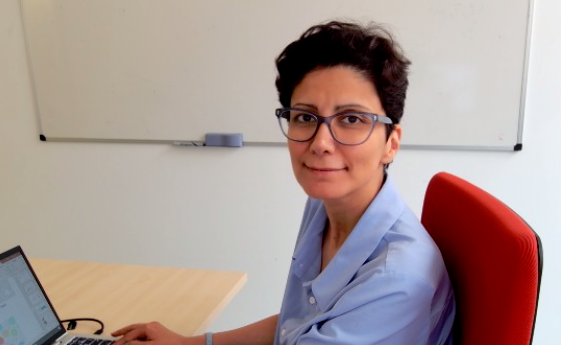
Dr. Armin Nurkanović is an interim professor at the Technical University of Braunschweig's Department of Mathematical Optimization, where he teaches courses on dynamic optimization and numerical methods. Previously, he completed his PhD at the University of Freiburg under Prof. Moritz Diehl, focusing on optimal control of nonsmooth dynamical systems. His research emphasizes numerical methods for hybrid systems, real-time optimization, and applications in robotics and renewable energy systems. He has received the IEEE Control Systems Letters Outstanding Paper Award (2022) and was a finalist for the 2024 European Systems & Control PhD Thesis Award. Education: Bachelor's in Electrical Engineering (University of Tuzla, 2015) Master's in Electrical Engineering and Information Technology (Technical University of Munich, 2018) PhD in Control (University of Freiburg, 2023) Research Interests: Optimal control of hybrid and nonsmooth systems (e.g., Filippov systems, switched systems) Real-time optimization for model predictive control (MPC) Robust control theory and stochastic optimization Applications in robotics and renewable energy systems Teaching & Software: Developed open-source tools nosnoc and nosnoc_py for optimal control Teaching courses on numerical optimization and optimal control at TU Braunschweig Collaborations & Students: Open to academic and industry collaborations Supervises Bachelor's/Master's theses in mathematics, engineering, and computer science
Dr. Kaitlyn Regehr is an Associate Professor at University College London , specializing in digital literacy and cultural impacts of social media. As a media expert and policy influencer, she advises UK government bodies including the House of Lords, Parliament, and Metropolitan Police, contributing to the Online Safety Act and cyberflashing legislation. Her research focuses on: Digital nutrition frameworks Algorithmic manipulation Misinformation combat strategies Attention economy dynamics She regularly appears on BBC News, Woman's Hour, and in The Economist, blending academic expertise with public engagement. Her upcoming book Smartphone Nation (2025) addresses digital well-being through practical strategies for individuals and families.
Dr. hab. Agnieszka Łukasik-Turecka, Prof. KUL is a Full Professor at the John Paul II Catholic University of Lublin (KUL), Faculty of Social Sciences, Department of Political Systems and International Communication. She specializes in Political Communication Disinformation Studies Media Analysis Political Propaganda Election Campaign Strategies Her research focuses on disinformation mechanisms during crises (e.g., Russia-Ukraine war , COVID-19 pandemic ), political discourse in religious contexts (e.g., Russian Orthodox Church ), and evolving media roles in elections. She has led KUL-funded projects on Polish media disinformation (2022–2023) and participated in Erasmus+ staff mobility programs at Université Paris 8. Recent publications analyze Pro-Kremlin bot networks Gender dynamics in Belarusian opposition Political communication in Putin's Russia Kremlin narratives blaming NATO/USA for Ukraine invasion and she co-edited the journal Studia i Analizy Nauk o Polityce (2023). Awards include the Silver Medal for Long Service and multiple KUL Rector Awards . She organized international conferences like International, Interdisciplinary Research Project 'Threats to Democracy: Nationalism, Populism, Extremism' and International Conference 'Man, Society and the State in an Unstable World' , and serves on the editorial boards of Addiction & Social Media Communication and Studia i Analizy Nauk o Polityce .
Jonathan L. Zittrain is the George Bemis Professor of International Law at Harvard Law School, Professor of Public Policy at Harvard Kennedy School, and Professor of Computer Science at Harvard School of Engineering and Applied Sciences. He directs Harvard Law School Library and co-founded the Berkman Klein Center for Internet & Society. Multi-disciplinary affiliation across law, policy, and engineering schools Director of Assembly Program for tech policy solutions Champion of Caselaw Access Project expanding legal data availability His research focuses on AI ethics , digital property control , cryptography regulation , user privacy frameworks , and Internet architecture intermediaries . Recent work examines AI policy through the California Report and large-scale text dataset curation for Harvard Library. Notable awards include: Fellow, American Academy of Arts and Sciences World Economic Forum Young Global Leader EFF Board of Directors member
Óscar Oballe-Peinado is a professor at the Department of Electronics, School of Engineering, University of Málaga. His work focuses on tactile sensors, FPGA-based embedded systems, and robotics, particularly addressing crosstalk elimination, sensor calibration, and smart preprocessing techniques. He contributes to both academic research and educational innovations, including remote digital electronics laboratories. PhD in Electronics (University of Málaga, 2016) Active researcher in tactile sensor technology and FPGA implementations Supervisor of Raúl Lora Rivera's research on texture detection and compliance recognition His research explores advanced methods for tactile sensor optimization, including hysteresis correction, quantization error reduction, and compliance recognition algorithms. Recent publications (2023-2024) focus on smart tactile preprocessing and embedded FPGA implementations for robotics. The 2023-2024 articles emphasize his contributions to tactile sensor applications in robotic manipulation, texture detection, and compliance recognition using FPGA-based embedded systems. These works align with trends in smart sensor interfaces and real-time processing for robotics. Collaborated on improving remote digital electronics laboratories using Raspberry Pi 4 (2022) Developed FPGA-based tactile sensor suite electronics (2017)
Anastasia Kozyreva is a Senior Research Scientist at the Max Planck Institute for Human Development, leading the research group Cognition in Online Environments within the Adaptive Rationality Research Area. With a background in philosophy, her work bridges disciplines by integrating conceptual and empirical approaches to analyze the cognitive and ethical impacts of digital technologies on society. Education: PhD (Dr.Phil.) in Philosophy, Heidelberg University (2016) M.Phil in Europhilosophie, Université catholique de Louvain-la-Neuve, Université de Toulouse II, Bergische Universität Wuppertal (2012) Her research focuses on desinformation policy , public attitudes toward content moderation, and cognitive interventions to combat misinformation. Key projects include developing tools for digital resilience and analyzing algorithmic personalization ethics. Recent publications examine misinformation mitigation , digital citizenship , and public trust in technology . These works span psychology, political science, and digital ethics, addressing challenges like online manipulation and democratic integrity. Kozyreva collaborates with interdisciplinary teams and contributes to policy reports, including the 2020 EU publication Technology and Democracy . She co-authored the influential 2020 Psychological Science in the Public Interest paper on cognitive tools for confronting digital challenges.
Michael Rygaard Hansen is a Professor at the Department of Engineering Sciences , University of Agder , and has served as Dean of the Faculty of Engineering and Science since 2016. He holds a Ph.D. in Computer-Aided Analysis and Design of Mechanical Mechanisms from Aalborg University (1992) and has been active in research and teaching since 1990. His academic interests focus on Numerical methods for modeling , design and optimization of dynamic mechatronic systems , and hydraulic component analysis . He has taught courses on Modeling and Simulation of Mechatronic Systems , Mechanism Theory , and Fluid Power System Design at undergraduate, master's, and doctoral levels. 2025 : Real-Time Simulation of Electro-Hydraulic Manipulators 2024 : Energy Consumption Analysis in Knuckle Boom Cranes 2022 : Linear Time-Invariant Electrohydraulic Cylinder Models His research groups include Intelligent Mechatronics (iTron) and Machine Design , with applications in offshore engineering, wind turbine mechanics, and crane systems. He has collaborated with industry leaders like Danfoss, Akersolutions, and National Oilwell Varco during his career.
Pooran Memari is a CNRS Researcher at the Laboratoire d'Informatique de l'École Polytechnique (LIX), UMR CNRS 7161, Institut Polytechnique de Paris, and an Affiliate Professor (part-time) at École Polytechnique. She leads research in geometric modeling within the GeomeriX team at LIX-Inria, focusing on theoretical foundations and applications in accessibility and neurocognition. Her academic journey includes: HDR (Habilitation à diriger des recherches), Institut Polytechnique de Paris, 2024 Ph.D. in Geometric Modeling, INRIA Sophia-Antipolis, 2010 Master in Image and Geometry, University of Nice-Sophia Antipolis, 2006 Engineering Degree, École Polytechnique, 2005 Bachelor in Mathematics, Sharif University of Technology, 2002 Dr. Memari's research bridges geometric modeling, computational geometry, and computer graphics with real-world impact. She pioneers techniques in shape representation, point pattern synthesis, and surface reconstruction, advancing proximity encoding and clustering algorithms. Her work extends to accessibility applications—developing geometric models for visually impaired navigation through multisensory perception—and neurocognition validation via tactile interfaces. This interdisciplinary approach integrates theoretical rigor with practical tools like the CGAL library. Recent publications (2024-2019) reveal a cohesive trajectory in geometric processing: advancing point pattern synthesis through image-based editing (Patternshop), stability-incorporated neighborhood graphs (SING), and multi-class disk distributions; innovating surface reconstruction via Voronoi-based methods (BallMerge); and expanding applications to virtual worlds simulation and neurocognitive accessibility. Key themes include bridging discrete geometry operators with high-dimensional data analysis and translating theoretical insights into tools for visual computing. Dr. Memari actively mentors the next generation of researchers, advising eight PhD students on topics ranging from generalized Voronoi diagrams to neurocognition-driven tactile navigation. She coordinates Computer Science Projects for École Polytechnique's Bachelor program since 2019 and co-leads the Interaction, Graphics & Design master's program at IP-Paris. Her leadership extends to editorial roles at Computer Graphics Forum and Graphical Models Journal, alongside prominent conference positions including SGP Program Co-Chair (2023) and Eurographics STARs Co-Chair (2025). As a core GeomeriX team member, she drives collaborative projects in geometric modeling and virtual environments. She coordinates the LIX Seminar since May 2025 and serves on the French Eurographics Chapter board, fostering community engagement through initiatives like the IGD master's program and Eurographics symposia.
Omri Ben-Shahar is the Leo and Eileen Herzel Professor of Law at the University of Chicago Law School, where he specializes in contract law, consumer protection, and the intersection of law and economics. His research examines market regulation through private law mechanisms, with emphasis on disclosure requirements, behavioral economics applications, and the design of efficient legal remedies in commercial contexts. Ben-Shahar's scholarly work focuses on developing frameworks for modern regulatory challenges, including: Personalization of legal rules using behavioral data Reform of mandatory disclosure regimes Efficiency of boilerplate contracts in self-regulation Algorithmic governance and liability frameworks Privacy tradeoffs in data-driven markets His recent publications demonstrate a strong emphasis on empirical methodologies and technological adaptation in law, particularly regarding AI governance, dynamic contract interpretation, and quantitative analysis of legal doctrines. This evolving research trajectory addresses emerging challenges in digital markets and algorithmic decision-making.
David W. McDonald is a Professor in the Department of Human Centered Design & Engineering (HCDE) at the University of Washington. His research and teaching focus on the intersection of social behavior and computing systems. He maintains an active research program with numerous Directed Research Groups (DRGs) examining topics including Wikipedia collaboration, social computing, and the application of Large Language Models in design contexts. Dr. McDonald earned his PhD in Information and Computer Science from the University of California, Irvine, with a dissertation titled "Supporting Nuance in Groupware Design: Moving from Naturalistic Expertise Location to Expertise Recommendation." He completed additional graduate work at UC Irvine (MS in Information & Computer Science) and California State University, Hayward (MS in Math & Computer Science), and received his BA in Cognitive Science from UCLA. His research interests span Computer-Supported Cooperative Work (CSCW) and Human-Computer Interaction (HCI), with particular focus on collaboration in Wikipedia, social matching systems, and behavior change through computational systems. His work examines how computational systems can be designed to interleave with human activity to foster collaboration and healthy behaviors. Recent research has explored social translucence in online communities, crisis communication on TikTok, and applications of Large Language Models for debugging assistance and content moderation. Dr. McDonald's publications demonstrate a consistent focus on collaborative systems, with key contributions in social computing, Wikipedia research, and health informatics. His work frequently appears in top-tier venues including ACM CSCW, CHI, and AMIA. Recent publications examine the intersection of social media, health communities, and computational analysis of online behavior. 2013 Distinguished Paper Award, American Medical Informatics Association Fall Symposium (AMIA) 2008 Best Paper Award, AAAI International Conference on Weblogs and Social Media (ICWSM) 2008 Honorable Mention, ACM Conference on Computer Supported Cooperative Work (CSCW) 2003 UW Royalty Research Scholar, University of Washington 1999 Regent's Dissertation Fellowship, University of California, Irvine 1983 Chancellor's Scholar, University of California, Los Angeles Dr. McDonald has served as a Program Director for the Human Centered Computing (HCC), Network Science and Engineering (NetSE), and Social Computational Systems (SoCS) programs at the National Science Foundation. His professional affiliations include the Association for Computing Machinery (since 1999) and ACM SIGCHI (since 1999). He has also co-edited the influential book "HCI Remixed: Essays on Works that have Influenced the HCI Community" (MIT Press, 2008).
Anaís Garrell Zulueta is an Associate Professor at the Polytechnic University of Catalonia (UPC) and a Robotics Researcher at the Institut de Robòtica i Informàtica Industrial (CSIC-UPC) . She serves as Vice-Director of the Mobile Robotics and Intelligent Systems subline and supervises the RAIG - Mobile Robotics and Artificial Intelligence Group . PhD (2013): European Doctorate with highest honors from UPC B.S. in Mathematics (2006) from University of Barcelona Diploma d'Estudis Avançats (DEA) in Control, Vision, and Robotics from UPC Her research focuses on Human-Robot Interaction (HRI) and robot cooperation , particularly in urban environments . Key themes include: Explainable AI for robot transparency Human motion behavior prediction Socially aware navigation systems Collaborative transport robotics Autonomous last-mile delivery systems Cybernetic avatars and societal implications Recent projects (2023-2025) include: TORNADO: Foundation models for robots handling deformable objects HandIA: AI-based rehabilitation tools LENA: Lifelong navigation learning TRIFFID: First responder assistance robotics SOCIAL PIA: Cybernetic avatar modeling Scientific recognition includes: Second Prize for Best Spanish Robotics Thesis Best Paper Award Nomination (IEEE/RSJ IROS, 2009) As an advisor, she supervises: PhD students: Ferran Gebelli Guinjoan, Lavinia Hriscu, Edison Bejarano Final year projects: 8 students on topics like LLM-enhanced interaction and LiDAR SLAM systems She operates within the Institut de Robòtica i Informàtica Industrial (IRI) and collaborates with Carnegie Mellon University.
Ben Houge is a Professor in the Electronic Production and Design (EPD) department at Berklee College of Music, where he has been teaching music technology since 2011. He also serves as a Senior Audio Lead at Bungie and previously held key audio roles at Sierra and Ubisoft. His work spans academia, game audio, digital art, and immersive multisensory experiences. Bachelor of Arts in Music, St. Olaf College (1996) Houge’s research and artistic practice focus on the intersection of music, technology, and sensory experience. He is best known for his food operas —multisensory dining events that use real-time, interactive soundtracks delivered via mobile devices. These projects apply video game audio techniques to everyday experiences, exploring cross-modal correspondences between taste and sound. His work often involves algorithmic composition, audience participation, and interdisciplinary collaboration with chefs, scientists, and musicians. His recent creative output includes large-scale installations and performances such as Night Rain , On the Sensations of Beer , and Mugaritz XX , which blend real-time audio, mobile technology, and cultural narratives. His publications and performances reflect a strong trend in interactive music systems , site-specific sound design , and audience-engaged art , often drawing from historical, poetic, and scientific sources. Selected awards and recognitions include: Faculty-Led Innovations in Education (FLY) Grant (2019) Berklee Newbury Comics Faculty Fellowship (2017) Knight Foundation Grant (2015) Artist Residency at MIT (2011) Shortlist, Guggenheim YouTube Play Biennial (2010) Stranger Genius Award (2004) Houge lectures widely at institutions such as MIT, Harvard, and the Shanghai Conservatory, and at major conferences including GDC, ICMC, and TEDx. He has advised and mentored students through academic and project-based learning, particularly in the areas of audio programming and interactive media. His work has been supported by grants from the Knight Foundation and Berklee, enabling large-scale public and collaborative art projects. He is actively involved in the global digital art and game audio communities, with exhibitions and performances across North America, Europe, and Asia. He has led initiatives such as the Vox Festival and the launch of Berklee’s master’s program in Valencia, Spain. His labs and creative teams often involve collaborations with ensembles like Zeitgeist, institutions like the Boston Symphony Orchestra, and research groups such as Oxford’s Crossmodal Research Laboratory.