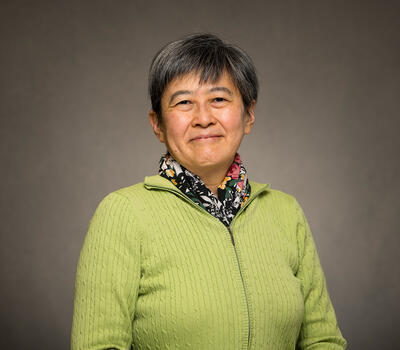
Dr. Yue Zhang is an Associate Professor in the School of Electrical Engineering and Computer Science at Oregon State University. She holds appointments in both academic research and teaching roles, with a focus on computer graphics and data visualization. Her work bridges theoretical mathematics and practical applications in material science and ecological modeling. Ph.D. in Applied Mathematics, North Carolina State University B.S. in Mathematics and Physics, University of Tennessee at Knoxville Research interests span scientific visualization , tensor field analysis , and topology-driven modeling of physical and biological systems. She has pioneered techniques for hypergraph simplification, non-Euclidean geometry visualization, and coupled acoustic-structural simulations. Recent publications demonstrate trends in hypergraph visualization (2024), 3D tensor topology (2024-2022), and environmental stressor modeling (2022). Collaborative works with Eugene Zhang and Peter Oliver dominate her publication record. Students under her advisement include: PhD candidates: Shih-Hsuan Kevin Hung MS/MEng students: Kyle Hiebel, Josiah Blaisdell, Avery Stauber Co-advised projects: Peter Oliver, Xiaofei Gao
Kristóf Huszár is an Assistant Professor at the Institute of Geometry, Graz University of Technology (TU Graz), where he conducts research in computational topology and parameterized algorithms. He has held postdoctoral positions at Centre Inria d’Université Côte d’Azur (DataShape team), Laboratoire de l’Informatique du Parallélisme at ENS de Lyon, and was an adjunct instructor at IUT Lyon 1. He previously spent time at Institut Henri Poincaré in Paris for a thematic trimester on Geometry and Statistics in Data Sciences. His educational background includes a PhD from IST Austria supervised by Uli Wagner and Jonathan Spreer, a BSc in Mathematics from Eötvös Loránd University under András Stipsicz, with additional study periods at Beloit College and Heidelberg University. Kristóf's research centers on computational topology, particularly width parameters of graphs associated with 3-manifolds. His work bridges theoretical computer science and geometric topology, aiming to develop algorithmic tools for topological problems. He is motivated by parameterized complexity and structural graph theory. No recent articles are listed in the provided text, so no trend analysis can be performed. There are no scientific awards mentioned in the available information. Kristóf Huszár has served as a postdoctoral researcher under prominent figures such as Jean-Daniel Boissonnat, Clément Maria, and Édouard Bonnet. While no formal students are listed, his roles involve research mentorship in collaborative environments. No grants are explicitly mentioned. He has been affiliated with the DataShape research team at Inria and the Laboratoire de l’Informatique du Parallélisme at ENS de Lyon, both of which are leading institutions in computational geometry and theoretical computer science. His current research is conducted within the Institute of Geometry at TU Graz.
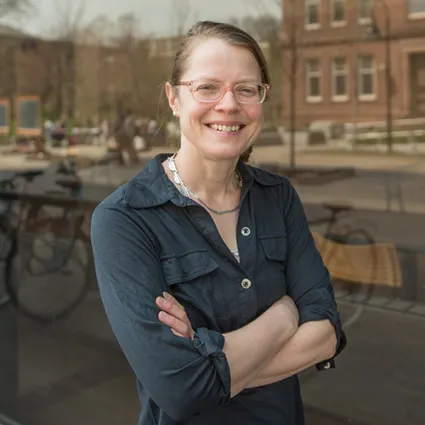
Julianna Tymoczko is the Louise Wolff Kahn 1931 Professor of Mathematical Sciences and Codirector of the Postbaccalaureate Program at Smith College, where she serves as an Associate Professor of Mathematics in the Department of Mathematics within the School of Mathematics & Statistics. Her office is located in Burton Hall 314, and she maintains regular office hours Monday through Thursday. Ph.D. and M.A. from Princeton University A.B. from Harvard University Professor Tymoczko's research sits at the rich intersection of algebraic geometry and algebraic combinatorics, with particular focus on geometric representations of the symmetric group, modern Schubert calculus, and equivariant cohomology using combinatorial methods. Her work often centers on Hessenberg varieties, a family of subvarieties of the flag variety that includes Springer varieties as special cases. She approaches complex geometric questions through algebraic and combinatorial techniques, studying objects like circles, spheres, and more complicated varieties described as zero sets of polynomial equations. Her extensive publication record shows consistent work on Poincare polynomials for Nilpotent Hessenberg Varieties across various dimensions (GL(2) through GL(9)), demonstrating deep exploration of the topological and combinatorial properties of these spaces. The progression of her work reveals increasing complexity from lower-dimensional cases to higher-dimensional generalizations. Alfred P. Sloan fellow Recipient of National Science Foundation grant support Professor Tymoczko actively contributes to the mathematical community through teaching, research, and service. She currently teaches advanced mathematics courses including Math 300 (Dialogues in Math) and Math 301 (Topics in Math), co-organizes the Algebra/Combinatorics/Geometry seminar at Smith College, and participates regularly in the Valley Geometry Seminar and Representation Theory seminar. Her research is supported by NSF funding, and she frequently presents her work at major conferences including AMS Special Sessions and international venues like McMaster University. Her research program involves detailed study of the connections between geometric structures, combinatorial patterns, and algebraic representations, with particular attention to how these fields inform one another in the study of Hessenberg varieties and related structures.
Nicolas Garcia Trillos is an Associate Professor in the Department of Statistics at the University of Wisconsin-Madison, with research spanning applied analysis, computational probability, statistics, and machine learning. His work focuses on the intersection of calculus of variations, optimal transport, and partial differential equations in learning systems. His educational background includes: Bachelor's degree in Mathematics from Universidad de Los Andes, Bogotá, Colombia (2010) Ph.D. in Mathematics from Carnegie Mellon University (2015) Prager Assistant Professor (postdoctoral position) at Brown University (2015-2018) Garcia Trillos' research centers on the mathematical foundations of machine learning , developing tools in optimal transport and calculus of variations to analyze graph-based learning and continuum models. Key contributions address adversarial robustness , federated learning , and spectral clustering , providing theoretical guarantees for large-scale problems through PDE frameworks. Recent publications (2022-2025) demonstrate a cohesive focus on geometric approaches to adversarial robustness , using optimal transport to derive classification bounds and study solution existence. He has advanced federated learning via consensus-based bi-level optimization (CB2O) and developed Fermat distances for metric approximation, bridging pure mathematics with statistical learning theory. No scientific awards were mentioned in the provided text. There is no information available regarding student advising, research grants, or laboratory affiliations in the source material.
Zihan Zhou is an Assistant Professor at the College of Information Sciences and Technology, Penn State University, specializing in computer vision, machine learning, and 3D reconstruction. His research bridges geometric modeling, image processing, and human-computer interaction, with applications in assistive technology and creative design. Email: zuz22@psu.edu His work focuses on robust face recognition, sparse representation, and vision-language approaches for converting 2D CAD drawings into 3D parametric models. Recent projects include neural rendering for wireframe-to-image translation and data-driven 3D scene modeling. The 15 most recent publications highlight his contributions to end-to-end floorplan generation, depth estimation, trajectory prediction, and structured 3D modeling. These works integrate convolutional neural networks, graph construction, and optimization algorithms. Projects like Building Energy Savings by Tuning Indoor Lighting underscore his interdisciplinary approach, combining computer vision with environmental sustainability.
Vasileios Metaftsis is a Professor at the Department of Mathematics, University of the Aegean, located in Karlovassi, Samos, Greece. His office is situated in the "Regal Mansion" building (Office B3), and he holds regular office hours Monday through Friday from 10:00 to 12:00. His primary contact email is vmet@aegean.gr. Education: Ph.D. in Mathematics from Heriot-Watt University, Edinburgh, Scotland B.Sc. in Mathematics from the University of Athens, Greece Research Focus: Professor Metaftsis specializes in Geometric Group Theory, with emphasis on hyperbolic and relatively hyperbolic groups, subgroup separability (LERF groups), residual properties (e.g., finiteness, nilpotence), Hopfian groups, linearity of groups, and Lie algebras associated with group structures. His work bridges combinatorial, geometric, and algebraic approaches to group theory. Publication Trends: His 25+ publications (2007–2022) predominantly explore residual properties of groups, automorphisms (especially IA-automorphisms), Lie algebras linked to McCool and Artin groups, HNN-extensions, and topological rigidity. Recent work (2020–2022) focuses on residual nilpotence and the interplay between group theory and Lie algebras. Collaborations include researchers like C. Kofinas and A.I. Papistas. Awards & Honors: No scientific awards or fellowships are documented in available sources. Academic Service: He actively contributes to academia through course instruction (Algebra, Galois Theory) and examination duties at the University of the Aegean. No information is available regarding student supervision, grant funding, or lab affiliations.
Dmitriy (Tim) Kunisky is an Assistant Professor in the Department of Applied Mathematics and Statistics at Johns Hopkins University's Whiting School of Engineering. He is also affiliated with the Data Science and AI Institute, the Department of Mathematics, and the Algorithms and Complexity Group at Johns Hopkins. Dr. Kunisky received his bachelor's degree in mathematics from Princeton University, worked as a software engineer for Google, earned his PhD in mathematics from the Courant Institute at NYU under the supervision of Afonso Bandeira and Gérard Ben Arous, and was a postdoctoral associate in computer science at Yale University before joining Johns Hopkins. His research broadly concerns how probability theory and mathematical statistics interact with computational complexity and the theory of algorithms. He investigates the mathematical phenomena that govern the power and limitations of algorithms processing massive and high-dimensional inputs, drawing on asymptotic statistics, convex geometry, random matrix theory, statistical physics, and representation theory. His work includes studying convex relaxation algorithms on combinatorial optimization problems, computational intractability in high-dimensional statistics, pseudorandomness, and experimental approaches to number theory and combinatorics. His recent publications demonstrate a consistent focus on the intersection of computational complexity, statistical inference, and random matrix theory. There's a clear trajectory from theoretical foundations to practical algorithmic applications, with particular emphasis on information-computation gaps, spectral methods, and the sum-of-squares hierarchy. His work often bridges theoretical computer science with statistical physics approaches. Dr. Kunisky actively advises graduate students at Johns Hopkins, including PhD candidates in Applied Mathematics and Statistics. He has taught courses on Random Matrix Theory in Data Science and Statistics, Probability Theory, Sum-of-Squares Optimization, and Modern Probability for Theoretical Computer Science, demonstrating his commitment to both research and education in mathematical data science.
Dr. LIU Quanying is an Associate Professor in the Department of Biomedical Engineering at the Southern University of Science and Technology (SUSTech), where she has been a faculty member since September 2019. She serves as the Principal Investigator of the Neural Computing and Control Laboratory (NCC lab) and is a doctoral supervisor. Prior to joining SUSTech, she earned her PhD in Biomedical Engineering from ETH Zurich and conducted postdoctoral research at Caltech. Education: PhD in Biomedical Engineering, ETH Zurich (2013-2017) Master in Computer Science, Lanzhou University (2010-2013) Bachelor in Electrical Engineering, Lanzhou University (2006-2010) Research Interests: Dr. Liu’s research integrates neuroscience, machine learning, and control theory. Her work focuses on multi-modal neural signal processing (EEG, sEEG, fMRI, DTI), explainable AI for neuroscience, and optimization techniques for neuromodulation (tES, TMS). She has developed high-density EEG source localization algorithms and data-driven brain network modeling frameworks, aiming to enhance precision in neural stimulation and control. Scientific Awards: The New Brain 30 (2023) AAIC Travel Award (2019) Estes Stars Award (2018) 深圳市孔雀人才计划C类 Laboratory and Team: As the PI of the NCC lab, Dr. Liu leads a team focused on machine learning algorithms, neurocomputational modeling, and neurofeedback control. The lab actively recruits graduate students, postdocs, and visiting researchers, emphasizing interdisciplinary collaboration in neuroscience and AI.
Dr. Bracha Laufer is a senior lecturer at the School of Electrical Engineering , part of the Iby and Aladar Fleischman Faculty of Engineering at Tel Aviv University. Her research focuses on acoustic source localization, speech signal processing, and machine learning techniques for audio engineering. Her recent work explores conformal prediction and manifold-based approaches for robust source localization, deep learning architectures for sound source separation, and simplex geometry in multichannel signal analysis. These publications highlight interdisciplinary applications of machine learning and statistical methods in acoustics. Dr. Laufer's research integrates Bayesian inference , probabilistic graphical models , and uncertainty quantification to address challenges in adverse acoustic environments. She has contributed to advancements in multi-microphone speaker localization and speech inpainting .
Walter Dempsey is an Associate Professor of Biostatistics at the University of Michigan School of Public Health and Assistant Research Professor at the Institute for Social Research. His research develops statistical methods for digital health, focusing on experimental design for multi-stage decision making, modeling of complex longitudinal data, and analysis of relational network structures. Education: Ph.D. in Statistics, University of Chicago (2015) B.Sc. in Mathematics, Statistics and Economics, University of Chicago (2009) Research Focus: Dr. Dempsey's work integrates statistical theory with health applications, particularly in mobile health (mHealth) technologies. His methodological research spans three interconnected areas: (1) Designing adaptive trials for health decision-making; (2) Developing hierarchical latent variable models for intensive longitudinal data from wearables and sensors; (3) Creating statistical frameworks for analyzing interaction networks that satisfy invariance principles while capturing empirical behavior patterns. Publication Trends: His recent work demonstrates strong emphasis on network modeling, mobile health interventions, and causal inference methods. Publications frequently appear in top statistics and machine learning venues including JASA, Biometrika, ICML, and NeurIPS, with consistent focus on developing interpretable models for health applications. Student Advising: Hera Shi (PhD, 2023) - Time-varying treatment effects in micro-randomized trials Yuhua Zhang (PhD, 2023) - Statistical methods for network data Madeline Abbott (Current PhD) - Latent variable models for intensive longitudinal data Easton Huch (Current PhD) - Robust Bayesian methods for causal inference Laboratory: Leads the Dempsey Lab developing statistical methodologies for digital health, with projects spanning network analysis, survival modeling, and adaptive intervention design.
Dr. Rasa Karbauskaitė is a Researcher at the Cognitive Computing Group within Vilnius University's Institute of Data Science and Digital Technologies . She holds a Doctor of Computer Science degree (2010) and specializes in multidimensional data visualization, dimensionality reduction, and intrinsic dimension estimation. Her work combines geometric and statistical methods to analyze high-dimensional datasets. PhD: Computer Science (2010), focusing on local structure preservation in multidimensional data visualization Advanced Training: B2.1 English language course (2016) Research interests include: Fractal dimension analysis for speech emotion classification Manifold learning and topological preservation Optimization of maximum likelihood estimators for dimensionality reduction Geodesic distance applications in data structure analysis Nonlinear data projection algorithms Scientific contributions show a focus on Developing visualization quality assessment frameworks Advancing dimensionality reduction techniques Fractal-based feature selection for emotion recognition Comparative analysis of intrinsic dimension estimation methods Parameter optimization in manifold learning algorithms Awards : Lithuanian Academy of Sciences Young Scientists' Research Prize (2011) Professional Roles : Managing Editor of the Informatica journal Participant in international conferences like Data Analysis Methods for Program Systems (2011-2015) Contributor to IEEE proceedings and specialized workshops
Dr. Daniele Ettore Otera is a Senior Researcher at the Institute of Data Science and Digital Technologies (DMSTI) and the Faculty of Mathematics and Informatics of Vilnius University , Lithuania. His work is centered on geometric group theory, low-dimensional topology, and group theory, with a focus on asymptotic topology and topological tameness of groups and manifolds. Education: He earned a Mathematics degree from the University of Palermo (1999), a DEA (Master’s) from Université Paris-Sud 11 (2001), and a co-tutored PhD from both University of Palermo and Université Paris-Sud 11 (2006). Research Interests: Geometric group theory: quasi-isometries, ends of groups, lattices in Lie groups Low-dimensional topology: topological tameness, simple connectivity at infinity, geometric simple connectivity Group theory: subgroup permutability, commutativity degrees, probability in group theory Publications: His recent work spans graph theory, spectral invariants, group actions, and geometric topology, reflecting a deep interdisciplinary approach combining algebra, topology, and combinatorics. Labs & Teams: He is affiliated with the Interdisciplinary Statistical Research Group within DMSTI, contributing to collaborative research in mathematical sciences.
Prof. Dr. Alexander Ecker is Professor of Data Science at the Institute of Computer Science, University of Göttingen, and concurrently holds the prestigious Max Planck Fellow position at the Max Planck Institute for Dynamics and Self-Organization. Since 2020 he also serves on the Executive Board of the Campus Institute Data Science in Göttingen. He leads the Neural Data Science research group, comprising 14 PhD students and 2 postdoctoral researchers, focusing on the interface of machine learning and computational neuroscience. His educational background includes a Dr. rer. nat. in Neuroscience (2014) from the Graduate School of Neural and Behavioral Sciences/IMPRS, University of Tübingen, followed by post-doctoral and group-leader positions at the University of Tübingen and the Max Planck Institute for Biological Cybernetics. Research Interests Machine Learning & Deep Learning: developing novel algorithms for representation learning and generative modeling. Computational Neuroscience: large-scale data-driven modeling of visual cortical circuits. Visual Perception: bridging biological vision and computer vision via biologically inspired architectures. His work has produced a steady stream of influential publications (2019-2025) in leading journals such as Nature Communications , Nature , Nature Methods , PLOS Computational Biology , ICLR , NeurIPS , and CVPR . The publications trend toward integrating high-resolution neural recordings with state-of-the-art machine-learning models to uncover principles of sensory processing, neuron-type classification, and behavior. Scientific Awards & Honors Max Planck Fellow, Max Planck Institute for Dynamics and Self-Organization (ongoing) Executive Board Member, Campus Institute Data Science, Göttingen (since 2020) Teaching, Advising & Grants Regularly teaches advanced courses: “Deep Learning for Image Synthesis”, “Current Topics in Deep Learning”, and “Graph Machine Learning”. Supervises 14 current PhD students and 2 postdocs within the Neural Data Science Group. Offers numerous Bachelor’s and Master’s thesis projects, with topics ranging from neuronal morphology clustering to primate vocalization analysis. Leads or co-leads large collaborative consortia with labs in Göttingen, Tübingen, Baylor College of Medicine, and other institutions across the US and Germany. Labs & Teams The Neural Data Science Group operates at the Institute of Computer Science, University of Göttingen, and is tightly integrated with the Max Planck Institute for Dynamics and Self-Organization. The group maintains active collaborations with over a dozen partner laboratories, including groups led by Fabian Sinz, Andreas Tolias, Thomas Euler, Tim Gollisch, and Viola Priesemann, fostering an interdisciplinary environment that spans computer science, physics, biology, and psychology.
Mehmet Gönen is a Professor in the Department of Industrial Engineering at Koç University's College of Engineering. His academic career spans multiple disciplines at the intersection of engineering, computer science, and biomedical research. He maintains an active research program with significant contributions to machine learning applications in biological and medical contexts. Education: PhD, Boğaziçi University (2010) MSc, Boğaziçi University (2005) BS, Boğaziçi University (2003) Professor Gönen's research primarily focuses on developing and applying machine learning methodologies, particularly multiple kernel learning techniques, to solve complex problems in computational biology and medicine. His work bridges theoretical algorithm development with practical applications in cancer biology, infectious disease modeling, and drug discovery. He has made significant contributions to single-cell multiomics analysis, antibiotic resistance research, and cancer genomics. His methodological innovations in kernel-based machine learning have found applications across diverse biological domains, demonstrating the versatility and power of his computational approaches. Analysis of his recent publications (2022-2025) reveals a consistent research trajectory centered on applying advanced machine learning techniques to pressing biomedical challenges. His work demonstrates strong interdisciplinary collaboration, spanning computational methods development, clinical applications, and biological discovery. Key thematic areas include cancer genomics (particularly pathway analysis and biomarker discovery), infectious disease modeling (with emphasis on antibiotic resistance mechanisms), and methodological innovations in kernel learning for biological data integration. His research has practical implications for precision medicine, drug discovery, and healthcare analytics. Professor Gönen has maintained a robust publication record with significant contributions to both methodology development and domain-specific applications. His work on scMKL for single-cell multiomics analysis represents cutting-edge integration of computational techniques with modern biological data. The consistent focus on interpretable machine learning methods suggests an emphasis on creating tools that provide biological insights rather than just predictive accuracy. His research group appears to collaborate extensively with domain experts in microbiology, oncology, and clinical medicine, ensuring that computational approaches address real-world biomedical challenges.
Michael R. Douglas is a Professor at the Simons Center for Geometry and Physics at Stony Brook University . A renowned string theorist , he contributed to matrix models, noncommutative geometry, Dirichlet branes, and the statistical approach to string phenomenology. Previously, he was Professor of Physics and Director of the New High Energy Theory Center at Rutgers University before joining Stony Brook in 2008. Education : B.A. in Physics (Harvard, 1983), Ph.D. in Physics (Caltech, 1988) His research bridges theoretical physics and mathematics , focusing on string theory , quantum field theory , and Calabi-Yau manifolds . Recently, he has pioneered the application of machine learning and symbolic computation to solve complex mathematical and physical problems, such as computing Calabi-Yau metrics. His publications span string compactification , flux vacua , noncommutative geometry , and AI-driven scientific discovery . He explores the intersection of physics and computation , including AI models for economic simulations and mathematical data science. Scientific Awards : Sackler Prize in Physical Sciences Louis Michel Visiting Professor at IHES Clay Mathematical Institute Mathematical Emissary He is a Fellow of the American Mathematical Society and Member of the American Physical Society . Douglas has edited Journal of High Energy Physics and Communications in Mathematical Physics , and organized workshops like 'String Theory for Mathematicians' and 'Mathematical Foundations of Quantum Field Theory'.