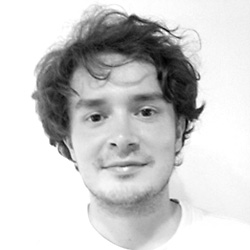
Edouard Oyallon is a CNRS Researcher at Sorbonne University's MLIA team within the Institute of Intelligent Systems and Robotics (ISIR). His research focuses on machine learning foundations, particularly the symmetries of deep neural networks, and large-scale distributed/decentralized training algorithms. He has contributed to frameworks like Kymatio for wavelet scattering transforms and collaborates on projects such as SHARP (Frugal Learning) and ADONIS (ANR-funded). He advises multiple PhD and postdoctoral researchers and teaches advanced deep learning courses at Institut Polytechnique de Paris (IPP). Grants include the ADONIS project (ANR/Sorbonne) and participation in VHS and CoCa4AI initiatives. His work spans theoretical and applied aspects, with recent emphasis on optimizing LLM training at exascale. He maintains active roles in academic service, including organizing workshops on federated learning and graph machine learning.
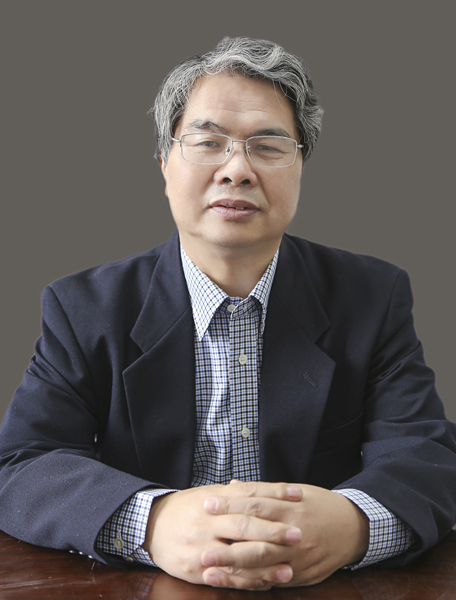
Jiao Licheng is a Distinguished Professor and Doctoral Supervisor at Xidian University, leading the School of Artificial Intelligence and the Department of Computer Science and Technology. He holds prominent roles such as Director of the Key Laboratory of Intelligent Perception and Image Understanding (Ministry of Education) and the International Joint Research Center for Intelligent Perception and Computing. His research focuses on Artificial Intelligence, Deep Learning, Evolutionary Computation, and Remote Sensing, with significant contributions to image understanding and brain-inspired computing. Education: B.E. (1982) from Shanghai Jiao Tong University, M.E. (1984) and Ph.D. (1990) from Xi'an Jiaotong University. Postdoctoral research at Xidian University (1990–1992). Research Interests include AI, Machine Learning, Image Processing, and Big Data Analysis. His work bridges theoretical advancements and practical applications, such as medical imaging, SAR image analysis, and autonomous systems. Recent articles emphasize innovations in remote sensing, deep learning architectures, and evolutionary algorithms. Awards include IEEE Fellow, IET Fellow, and the Wu Wenjun Artificial Intelligence Outstanding Contribution Award. Labs/Teams: Key Lab of Intelligent Perception, International Joint Research Center, and leadership in national innovation bases. Active in academic societies, including editorial roles in IEEE Transactions on Cybernetics and Geoscience and Remote Sensing.
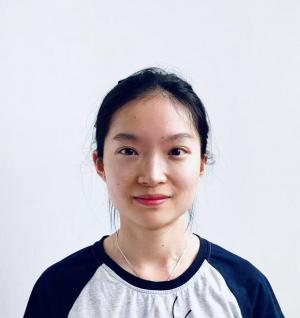
Yi Lai is an Assistant Professor in the Department of Mathematics at the University of California, Irvine (UCI). He earned his Ph.D. from UC Berkeley in 2021 under Richard Bamler and served as a Szego Assistant Professor at Stanford University (2021–2024), mentored by Otis Chodosh. His research centers on geometric analysis, with a focus on Ricci flows, steady gradient solitons, and the geometry of 3-manifolds. Dr. Lai's work explores the construction and classification of geometric structures like flying wing solitons, convergence properties of Ricci flow, and curvature behavior in low-dimensional manifolds. His publications frequently address long-time existence of geometric flows and symmetry in solitons, blending PDE theory with differential geometry. At UCI, he teaches courses such as Linear Algebra (Math 121A). No awards, grants, or supervised students are mentioned in available sources.
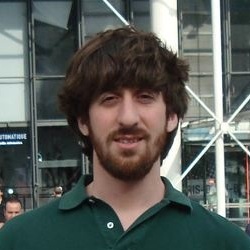
Raquel Urtasun is a Full Professor in the Department of Computer Science at the University of Toronto and a co-founder of the Vector Institute for AI. She is also the Founder and CEO of Waabi, an autonomous vehicle company. Previously, she was Chief Scientist and Head of R&D at Uber ATG (2017–2021) and held faculty positions at the Toyota Technological Institute at Chicago (TTIC) and as a visiting professor at ETH Zurich. Her research spans machine learning, computer vision, robotics, and AI with a strong focus on autonomous driving and 3D perception. Education: Bachelor's degree, Universidad Pública de Navarra, 2000 Ph.D., Computer Science, École Polytechnique Fédérale de Lausanne (EPFL), 2006 Postdoctoral studies, MIT and UC Berkeley Raquel Urtasun's research focuses on developing AI systems for self-driving cars, emphasizing efficient perception using minimal sensors. Her work includes 3D scene understanding, stereo vision, optical flow, semantic segmentation, and object detection. She has developed the KITTI benchmark suite, widely used in autonomous driving research. Her lab is an NVIDIA NVAIL lab, reflecting its leadership in AI innovation. Her recent publications show a consistent trend in deep learning for visual perception, particularly in stereo matching, optical flow, 3D object detection, and semantic segmentation. These works integrate deep neural networks with structured models like CRFs and MRFs, pushing the boundaries of accuracy and efficiency in scene understanding for autonomous systems. Scientific Awards: NSERC E.W.R. Steacie Fellowship NVIDIA Pioneers of AI Award Google Faculty Research Awards (multiple) Amazon Faculty Research Award Connaught New Researcher Award Fallona Family Research Award Best Paper Runner Up at CVPR 2013 and 2017 UPNA Alumni Award Chatelaine 2018 Woman of the Year Adweek 2018 Toronto's Top Influencers Urtasun has advised numerous PhD and Master’s students, many of whom now hold faculty or research scientist positions at institutions like UIUC, NYU, UBC, MIT, and companies including Google, Amazon, NVIDIA, and Apple. She has secured significant research grants from NSERC, Google, Amazon, and NVIDIA. Her leadership extends to organizing workshops and serving as Area Chair and Program Chair at top conferences like CVPR, ICML, and NeurIPS. Labs and Teams: She leads a research group at the University of Toronto focused on AI for autonomous systems. Her team has been recognized as an NVIDIA NVAIL lab, and she continues to mentor students and postdocs working on cutting-edge problems in robotics and machine learning, both at UofT and through her company Waabi.
Steven Sivek is a Reader in Pure Mathematics at Imperial College London, affiliated with the Geometry group within the Department of Mathematics. His research focuses on contact and symplectic geometry, knot theory, gauge theory, and low-dimensional topology. He has taught courses on contact geometry, symplectic geometry, mapping class groups, and Morse theory at institutions including Imperial College London, Harvard University, and the University of Bonn. His work includes advanced topics such as Floer homology, Legendrian knots, and the interplay between contact structures and 3-manifolds. Sivek's contributions bridge geometric topology with algebraic structures, addressing questions about knot invariants, representation varieties, and topological field theories. His courses emphasize foundational texts and advanced research topics, such as the classification of tight contact structures, Morse theory applications, and symplectic fiber bundles. He has organized seminars on mapping class groups and taught graduate-level material on advanced geometry and topology. Sivek's research has been published in numerous high-impact papers, exploring themes like Khovanov homology, instanton Floer homology, and the geometry of 3- and 4-manifolds. His academic profile reflects a commitment to both teaching and cutting-edge research, with a focus on geometric and topological questions that intersect algebraic and differential structures.
Markus Land is a Tenure Track Professor at the Department for Mathematics, Ludwig Maximilian University of Munich, affiliated with the Algebraic Geometry Working Group. His research bridges algebraic topology, homotopy theory, and K-theory, focusing on their interplay with L-theory and manifold topology. He has held postdoctoral positions at the University of Copenhagen (supported by an EU Marie Curie Fellowship and DFG Grant) and the University of Regensburg, and earned his PhD at the University of Bonn under Wolfgang Lück. Education : PhD in Mathematics (University of Bonn, 2016) Positions : Postdoctoral (University of Copenhagen, 2019–2022; University of Regensburg, 2016–2019) Research Interests : Markus Land explores algebraic topology and homotopy theory , particularly algebraic K-theory , hermitian K-theory , and their connections to L-theory and manifold topology . His work often applies infinity-categories to foundational problems in operator K-theory and geometric topology. Recent Publications : His research includes groundbreaking studies on chromatic localization in K-theory, Grothendieck-Witt groups in ring theory, and additivity in cobordism categories . Collaborations with leading mathematicians like Georg Tamme and Ulrich Bunke highlight interdisciplinary approaches to algebraic and geometric problems. Awards & Grants : EU Marie Curie Individual Fellowship (2020–2022) DFG Individual Research Grant (2019–2020) Teaching & Academic Leadership : He has designed advanced courses including Topology I–V , Algebraic K-Theory , and Condensed Mathematics , emphasizing homotopy theory and infinity-categories . Future initiatives include student seminars on arithmetic and algebraic geometry to foster academic collaboration. Working Group : As part of the Algebraic Geometry Working Group at LMU Munich, he contributes to seminars and research projects on arithmetic geometry , manifold classification , and spectral algebra .
Chris De Sa is an Associate Professor in the Department of Computer Science at Cornell University, affiliated with the Cornell Machine Learning Group and leading the Relax ML Lab. His research focuses on algorithmic, software, and hardware techniques for high-performance machine learning, particularly relaxed-consistency stochastic algorithms like asynchronous and low-precision stochastic gradient descent (SGD). He earned his Ph.D. from Stanford University under advisors Kunle Olukotun and Chris Ré. His work emphasizes constructing efficient, parallel, and distributed machine learning frameworks for deep learning and data analytics. Education: Ph.D. in Computer Science, Stanford University (2017) Research Interests: Algorithmic techniques for scalable ML, quantization, distributed optimization, hyperbolic geometry in ML, and reliable measurement of ML systems. His group develops frameworks for efficient inference/training and explores the intersection of ML with domains like agriculture and plant science through courses like PLSCI 7202. Recent Highlights: DARPA YFA Grant (2024), NSF CAREER Award, Google Research Scholar Award, and multiple best paper recognitions. Key contributions include QuIP quantization methods, Coneheads attention mechanisms, and theoretical advances in decentralized training. Awards: NSF CAREER Award DARPA YFA Grant (2024) Google Research Scholar Award Mr. & Mrs. Richard F. Tucker Teaching Award Grants & Advising: Advises 8 Ph.D. students (including Ruqi Zhang, Yucheng Lu, A. Feder Cooper) and holds leadership roles in MLSys conferences. Active in grant-funded research (e.g., NSF Robust Intelligence). Labs/Teams: Leads the Relax ML Lab and participates in Cornell’s Institute for Digital Agriculture (CIDA).
John Lott is a Professor in the Department of Mathematics at the University of California, Berkeley, specializing in Differential Geometry , Geometric Analysis , and Optimal Transport since his appointment in 2008. His research explores the interplay between Ricci curvature , metric-measure spaces , and geometric flows , with notable contributions to Ricci flow and noncommutative geometry . He has supervised multiple PhD students including Thunwa Theerakarn and Patrick Wilson , and maintains an active publication record with over 40 research papers. Selected Research Areas : Differential Geometry, Geometric Analysis, Optimal Transport, Mathematical Physics, Noncommutative Geometry Recent Publications (2020-2025) focus on Kähler manifolds , collapsing geometry , and quasilocal mass in general relativity. His work on Ricci curvature via optimal transport with Cédric Villani has become foundational in the field. Academic Affiliation : Position: Professor Institution: University of California, Berkeley Department: Mathematics
Behnaam Aazhang is the J.S. Abercrombie Professor of Electrical and Computer Engineering at Rice University and Director of the Rice Neuroengineering Initiative (NEI). He holds a B.S., M.S., and Ph.D. from the University of Illinois at Urbana-Champaign. His roles include leading the multi-university Rice Neuroengineering Initiative and directing the Center for Neuroengineering. He has held an Academy of Finland Distinguished Visiting Professorship (FiDiPro) at the University of Oulu (2006-2014) and received an Honorary Doctorate from the University of Oulu in 2017. Education: Ph.D. in Electrical Engineering, University of Illinois at Urbana-Champaign (1986) M.S. in Electrical Engineering, University of Illinois at Urbana-Champaign (1983) B.S. in Electrical Engineering, University of Illinois at Urbana-Champaign (1981) Research Interests: Dr. Aazhang’s work focuses on signal/data processing, information theory, and neuroengineering applications. Key areas include: Neuronal circuit connectivity and learning impacts Real-time closed-loop neuromodulation for neurological disorders (epilepsy, Parkinson’s, depression) Patient-specific cardiac pacing systems Cybersecurity in cloud computing Awards & Honors: 2022 Rice Outstanding Doctoral Thesis Advisor Award 2019 SIGMOBILE Test of Time Award 2017 Honorary Doctorate (University of Oulu) 2013 IEEE Communication Society Advances in Communication Award AAAS and IEEE Fellowships (2012 and 1999) Grants & Advising: His research is supported by multi-university collaborations and grants. He has advised numerous graduate students in electrical engineering and neuroengineering, though specific names are not listed here. Labs & Teams: Leads the Aazhang Lab and the Rice Neuroengineering Initiative, focusing on translational technologies for neurological and cardiac disorders, including non-invasive neuromodulation and cloud security systems.
Georgios Dimitroglou Rizell is a Senior Lecturer in the Department of Mathematics at Uppsala University, Sweden, where he also serves as Head of the Department since 2020. His academic work is centered at the Ångström Laboratory, where he conducts research in symplectic and contact topology. He maintains dual affiliations with both the Department of Mathematics and the Center for Geometry and Physics at Uppsala University. Dr. Dimitroglou Rizell earned his PhD from Uppsala University in 2012 under the supervision of Tobias Ekholm. Following his doctoral studies, he held postdoctoral positions at the Université Libre de Bruxelles (2012-2013), Université Paris-Sud (2013-2014), and the University of Cambridge (2014-2015), all supported by prestigious fellowships from the Knut & Alice Wallenberg Foundation. He returned to Uppsala University as a researcher (2015-2017) and Assistant Lecturer (2017-2021) before being promoted to Senior Lecturer in 2021. His research primarily focuses on symplectic and contact topology, with special emphasis on understanding and classifying Lagrangian and Legendrian submanifolds. His work employs advanced mathematical techniques including pseudoholomorphic curves, pseudoholomorphic foliations, Symplectic Field Theory, and Floer homology. His investigations span a broad range of topics within geometric topology, from the classification of Lagrangians near the Whitney immersion to the study of Legendrian submanifolds and their invariants. His research has significant implications for understanding the geometric structures underlying classical mechanics and quantum physics. His recent publications (2020-2025) demonstrate a consistent focus on Lagrangian and Legendrian submanifolds, with particular attention to their classification, invariants, and interactions with symplectic structures. A notable trend is the development of new techniques for studying C^0-limits of Legendrians, exact Lagrangians in various settings, and the geometric generation of Fukaya categories. His collaborative work with researchers like Michael Sullivan, Roman Golovko, and others has produced significant advances in Floer theory and symplectic field theory. Scientific Awards Wallenberg Scholar (2023-2028, KAW 2023.0294) Wallenberg Academy Fellow (extension 2022-2027, KAW 2021.0191) Wallenberg Scholar (2022-2023, KAW 2021.0300) Wallenberg Academy Fellow (2017-2021, KAW 2016.0198) As Head of the Department of Mathematics, Dr. Dimitroglou Rizell oversees academic programs and research initiatives. His leadership is supported by significant funding from the Knut & Alice Wallenberg Foundation, which has awarded him multiple prestigious fellowships throughout his career. These grants have enabled his research in symplectic geometry and supported collaborative projects with international mathematicians. Dr. Dimitroglou Rizell is actively involved in the Center for Geometry and Physics at Uppsala University, where he collaborates with researchers across mathematical disciplines. His work intersects with theoretical physics, particularly in areas related to geometric quantization and the mathematical foundations of quantum mechanics. He participates in seminar series and reading groups focused on symplectic topology and its applications.
James E. West is a Professor in the Department of Mathematics at Cornell University, affiliated with the College of Arts and Sciences. He holds a Ph.D. from Louisiana State University (1967). His research focuses on geometric topology, infinite-dimensional topology, and the symmetries of manifolds, particularly exploring Hilbert cube manifolds, function spaces, and equivariant homeomorphisms. He has contributed to understanding stabilization processes in topology and the interplay between finite and infinite-dimensional structures. His teaching includes advanced courses such as MATH 4500 (Matrix Groups), MATH 4900 (Supervised Research), and MATH 4901 (Supervised Reading), alongside foundational courses like MATH 2220 (Multivariable Calculus). His work bridges pure mathematics with applications in transformation groups and representation theory. West has published extensively on topics including fixed point sets, compact group actions, and fibration theory. His research emphasizes the control of homeomorphism theories and the classification of topological spaces with complex symmetries.
Tom Coates is a Professor of Pure Mathematics in the Department of Mathematics at Imperial College London's Faculty of Natural Sciences. He holds affiliations with the Artificial Intelligence Network, the CNRS-Imperial Abraham de Moivre UMI, and the Pure Mathematics research group. His office is located in the Huxley Building (662) on the South Kensington Campus, London SW7 2AZ, and he can be contacted via email at t.coates@imperial.ac.uk or phone at +44 (0)207 594 3607. Professor Coates' research spans pure mathematics with emphasis on algebraic geometry, mirror symmetry, and Gromov-Witten theory. He investigates quantum cohomology and Fano variety classification to construct a 'Periodic Table for shapes' through computational algebra, data mining, and machine learning. His work integrates geometric methods with cluster-scale computing to identify structural patterns in algebraic varieties, focusing on quantum periods, toric degenerations, and Laurent polynomial applications. His recent publications (2021-2024) demonstrate a strong trend toward computational classification of Fano varieties and polytopes, leveraging machine learning for dimension prediction and database construction. Key themes include mirror symmetry via Laurent inversion, toric geometry applications, and connections between Gromov-Witten invariants and modular forms. These works often utilize custom tools like PCAS and Fanosearch for large-scale algebraic computations. While specific student names are not listed, Professor Coates mentors PhD and Master's students in algebraic geometry and computational mathematics. His research is supported by the Simons Foundation, member institutions, and contributors, enabling international collaborations through networks like the CNRS-Imperial Abraham de Moivre UMI. He leads a research team developing the Periodic Table for shapes framework, utilizing high-performance computing resources. The team maintains open-source tools including PCAS (Periodic Table for Algebraic Shapes) and Fanosearch for Fano variety exploration, with code repositories hosted on Bitbucket and quantum period databases published in Scientific Data.
Carey E. Priebe is a Professor in the Department of Applied Mathematics and Statistics at the Whiting School of Engineering, Johns Hopkins University. He maintains strong affiliations with multiple research centers including the Johns Hopkins University Center for Imaging Science, the Mathematical Institute for Data Science, and the Human Language Technology Center of Excellence. His academic career spans several decades with significant contributions to statistical methodology and theory. Dr. Priebe's research focuses on computational statistics, statistical pattern recognition, and statistical inference for high-dimensional and graph data. His work bridges theoretical statistics with practical applications in areas such as brain connectome mapping, network analysis, and image processing. He has made significant contributions to spectral graph theory, graph matching, and vertex nomination, with applications ranging from neuroscience to national security. His publication record demonstrates consistent contributions to statistical methodology, with a notable emphasis on graph-based statistical methods. His research trajectory shows increasing focus on network data analysis, particularly in the last decade, with applications to brain mapping and connectome analysis as evidenced by his NSF BRAIN Initiative grant and Nature publication. 2013 Erskine Fellow (University of Canterbury) 2011 McDonald Award for Excellence in Mentoring and Advising 2010 ASA SDNS Distinguished Achievement Award 2009 Erskine Fellow (University of Canterbury) 2008 National Security Science and Engineering Faculty Fellow 2008 Pond Award for Excellence in Teaching NSF BRAIN EAGER grant recipient (2014) Professor Priebe has supervised an extensive number of doctoral students whose work spans statistical methodology, network analysis, and machine learning. His students have secured positions at prestigious institutions including academia (University of Wisconsin, Boston University), government research labs, and major technology companies (Microsoft, Facebook, Amazon). His research has been supported by significant grants from NSF, DARPA, and other agencies focused on national security applications and fundamental statistical methodology development. He maintains active collaborations across multiple disciplines and institutions, as evidenced by his numerous conference presentations and visiting appointments including at The Alan Turing Institute and The Isaac Newton Institute. His work bridges theoretical statistics with practical applications in neuroscience, security, and data science.
Paola Cristofori is an Associate Professor in the Department of Physical, Computer and Mathematical Sciences at the University of Modena and Reggio Emilia. Her research focuses on Algebraic Topology, Differential Geometry, and Manifold Theory, with contributions to PL topology, 4-manifolds, and combinatorial structures like crystallization theory. She teaches courses in Geometry, Linear Algebra, and Algebraic Topology for undergraduate and graduate programs in Mathematics, Civil Engineering, and Strategic Sciences. Her work emphasizes topological invariants, combinatorial methods in manifold classification, and applications of colored graphs. Key areas include trisections of 4-manifolds, Kirby diagrams, and G-degree theory. She collaborates extensively on projects involving geometric topology and computational topology tools. Dr. Cristofori’s teaching spans foundational topics in linear algebra, Euclidean geometry, and advanced algebraic topology, emphasizing rigorous proofs and practical applications. Her research is published in top journals and includes over 40 articles, reflecting her deep engagement with low-dimensional topology and geometric structures.
Carl Henrik Ek is a Professor of Statistical Learning at the Department of Computer Science and Technology (Computer Laboratory) at the University of Cambridge. He is also a fellow and Director of Studies at Pembroke College, and holds visiting positions at Karolinska Institute in Stockholm and the Royal Institute of Technology. He serves as co-Director for the UKRI AI Centre for Doctoral Training in Decision Making for Complex Systems, a collaboration between Cambridge and Manchester universities, and is involved with the Accelerate Program in the Computer Laboratory. Dr. Ek's educational background includes a MEng degree in Vehicle Engineering from the Royal Institute of Technology in Stockholm, followed by a PhD from Oxford Brookes University. During his PhD, he spent time at the University of Manchester and the University of Sheffield. His PhD supervisors were Professor Neil Lawrence and Professor Phil Torr, and his postdoctoral research was conducted at UC Berkeley with Professor Trevor Darrell and Professor Raquel Urtasun. Professor Ek's research focuses on statistical learning, particularly on developing data-efficient and interpretable machine learning methods. His work spans modeling and inference in machine learning, with special emphasis on Bayesian non-parametric methods and Gaussian processes. He explores how to specify assumptions that allow learning from small amounts of data, bridging theoretical foundations with practical applications in various domains. His recent publications demonstrate a strong trend toward applying machine learning to healthcare, drug discovery, and engineering design. There's significant work on Gaussian processes, reinforcement learning, and generative models, with applications ranging from medical diagnostics to structural engineering. His research shows an increasing interdisciplinary focus, connecting machine learning with fields like cardiology, pharmacology, and computational geometry. Professor Ek has received numerous teaching awards throughout his career: Pilkington Price for Teaching Excellence (2024) Teacher of the year in Computer Science at University of Bristol (2016) Docent in Machine Learning at Royal Institute of Technology (2016) Teacher of the year at Royal Institute of Technology, Sweden (2015) Teacher of the year from Student chapter in Industrial Economics at Royal Institute of Technology (2015) Teacher of the year in Computer Science at Royal Institute of Technology (2012) Professor Ek teaches Advanced Data Science, Advanced topics in machine learning, and Machine Learning and the Physical World. He has supervised PhD students throughout his career but is not currently accepting new PhD students for 2025/26 or 2026/27. His research is supported by various grants, including his role as co-Director of the UKRI AI Centre for Doctoral Training. He is an active member of the ml@cl research group at Cambridge and has previously been involved with research groups at University of Bristol and Royal Institute of Technology. His work connects with several interdisciplinary initiatives, particularly in healthcare AI and engineering applications of machine learning.