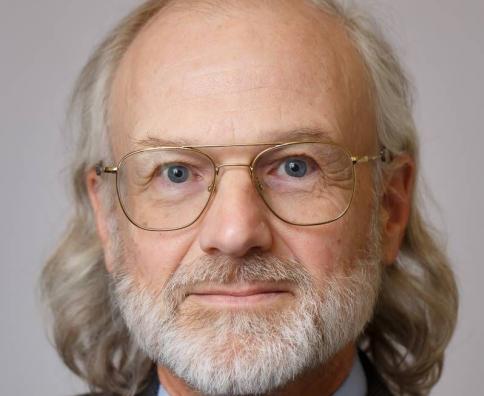
Olli Dahl is a Professor at Aalto University's Department of Forest Products Technology, specializing in Clean Technologies and Environmental Management. His work focuses on waste valorization, biorefinery processes, and sustainable resource utilization. Key areas include microplastic dynamics in composting systems, biochar applications for heavy metal decontamination, and optimization of mineral processing with recycled water. Research highlights include an international award for biorefinery innovation and groundbreaking studies on nickel recovery in flotation processes. He leads interdisciplinary projects addressing water quality impacts on ore processing and thermochemical conversion of agricultural residues into bioenergy. Dahl's recent work emphasizes closing material loops through circular bioeconomy strategies and advancing sustainable industrial practices. Awards: 2015 International Biorefinery Competition 2nd Place (Ministry of Employment & Economy, Finland) Key Themes: Waste-to-resource systems, industrial water management, bio-based materials, and metallurgical sustainability
Duminda Wijesekera serves as Professor in the Department of Cyber Security Engineering and Department of Computer Science at George Mason University, where he was inaugural chairman of the Cyber Security Engineering Department until December 2022. He concurrently held the position of visiting research scientist at the National Institute of Standards and Technology (NIST) from 2007-2022 and maintains status as a fellow at the Potomac Institute of Policy Studies. He leads the Mason Innovation Laboratory at Mason Square, driving translational research in cyber-physical security. His educational foundation includes: PhD in Computer Science, University of Minnesota (1997) PhD in Mathematical Logic, Cornell University (1990) BSc in Mathematics, University of Colombo Professor Wijesekera's research centers on cyber-physical system security , with pioneering work in Intelligent Transportation Systems spanning trains, aircraft, and connected vehicles. His digital forensics innovations establish frameworks for evidence-based scenario reconstruction and error management, while his formal methods research provides mathematical guarantees for safety-critical systems. Current projects address Next G-based edge services, digital twin vulnerability detection, and healthcare security architectures, consistently bridging theoretical rigor with real-world infrastructure protection. Analysis of his 2022-2025 publications reveals intense focus on autonomous vehicle security (38% of recent output), including traffic signal control optimization, ramming attack countermeasures, and CARLA-based scenario validation. Digital forensics using AI (20%) and secure manufacturing/edge computing (27%) constitute other major thrusts, demonstrating how formal verification and machine learning converge to solve complex cyber-physical security challenges across transportation, energy, and healthcare domains. His scientific recognition includes: CCI Impact Award (2022) for groundbreaking cyber-physical security contributions Fellowship at the Potomac Institute of Policy Studies for cybersecurity policy leadership Professor Wijesekera has secured substantial research funding through: NIST grants for health record security frameworks (2014-2015) US Department of Transportation projects on wireless frequency mapping for high-speed rail (2013-2014) Cyber Security Research Alliance funding for trust architectures in cyber-physical systems (2014) Commonwealth Cyber Initiative awards for autonomous vehicle security and energy-efficient manufacturing His industry partnerships with Honeywell and NIST ensure practical impact of theoretical research. The Mason Innovation Laboratory under his direction serves as an interdisciplinary hub for cyber-physical security, integrating researchers from computer science, electrical engineering, and policy studies to develop deployable solutions for transportation networks, power grids, and critical infrastructure protection.
Dr. Majid Pahlevani is an Assistant Professor at the Department of Electrical and Computer Engineering, Queen's University, affiliated with the Smith School of Engineering. He holds a Ph.D. from Queen's University (2012) and has prior roles as an Assistant Professor at the University of Calgary (2016–2019) and Chief R&D Engineer/VP of Technology at SPARQ Systems, Inc. (2011–2016). His research focuses on power electronics, renewable energy systems, smart grids, and energy storage, with a lab environment emphasizing interdisciplinary collaboration. He has authored over 130 publications, holds 50 U.S. patents, and serves as an Associate Editor for the IEEE Journal of Emerging and Selected Topics in Power Electronics. Education: Ph.D. (2012) – Queen's University; B.Sc./M.Sc. (2002) – Isfahan University of Technology. Research Interests: Power Electronics Technology, Renewable Energy Systems, Micro-Grids, Smart-Grids, Electric Vehicles, Energy Storage Systems, Solar Technology, LED Technology. His lab, ePOWER Lab, engages in industrial projects across these domains, fostering teamwork and cross-disciplinary innovation. Scientific Awards: Includes the Early Research Excellence Award (Alberta), Research Achievement Award (University of Calgary), Teaching Achievement Award, and IEEE Canada's Research Excellence Award. Current Supervision: Postdoctoral Fellows Laleh Saleh Ghadimi, Sergey Dayneko, and Pavel Linkov (2022). He leads the ePOWER Lab, collaborating with industry partners like Freescale Semiconductor and SPARQ Systems. Affiliations: Member of the IEEE Power Electronics Society and the Queen's Centre for Energy and Power Electronics Research.
Juergen Dingel is a Professor in the School of Computing at Queen's University, Canada. He joined the faculty in 2000 and holds a PhD in Computer Science from Carnegie Mellon University (1999). His research focuses on software modeling, model-driven engineering, formal methods, and formal verification, with applications in real-time systems and embedded systems. He leads the Modeling and Analysis in Software Engineering (MASE) research group. Education: PhD in Computer Science, Carnegie Mellon University (1999) M.Sc. in Pure and Applied Logic, Berlin University of Technology (1994) M.Sc. in Computer Science, Berlin University of Technology (1992) Research Interests: Model-driven engineering and transformation Formal specification and verification Automated testing and debugging Real-time and embedded systems Service composition and distributed systems His work emphasizes practical tools like Papyrus-RT and MDebugger , integrating formal methods into software development. Grants & Collaborations: Funded by NSERC, OCE, and industry partners (IBM, GM, Ericsson) Focus on automotive systems, IoT, and safety-critical applications Service: Editorial board member for SoSyM , STTT , and JOT Former chair of the MODELS Steering Committee (2016–2018) PC co-chair for MODELS 2014 and FMOODS/FORTE 2011 Labs & Teams: Leads the MASE group, which develops open-source tools for model-driven engineering. Collaborates with industry on automotive and IoT projects.
Kiran Pedada is an Associate Professor of Marketing at the Asper School of Business, University of Manitoba, and holds the F. Ross Johnson Fellow and The Associates Fellow in Marketing and Inclusive Business. Previously, he was an Assistant Professor at the Indian School of Business (ISB) and a Visiting Scholar at the University of North Carolina. He has been recognized as ISB’s Teacher of the Year (2020 and 2021) and named a top MBA professor by BusinessBecause. His research focuses on marketing strategy, digital transformation, emerging markets, and inclusive business practices. Dr. Pedada earned his Ph.D. in Marketing from Texas Tech University, where he won the Helen Devitt Jones Excellence in Graduate Teaching Award. His doctoral work on international marketing alliances in emerging markets won the prestigious AMS Mary Kay Inc. Doctoral Dissertation Award. Before academia, he worked in management consulting and corporate strategy. Research Interests : Marketing strategy in digital environments Social and financial impact of marketing Global marketing expansion via digital ecosystems Emerging markets dynamics Brand competitiveness through digital orientation Key Contributions : His research has been published in top journals like Journal of Marketing Research and Journal of the Academy of Marketing Science. He co-authored cases on digital transformation for Harvard Business Publishing and serves on editorial boards of key marketing journals. His work has been featured in Forbes, Fortune, and CNN. Awards : AMS Mary Kay Inc. Doctoral Dissertation Award (2019) F. Ross Johnson Fellowship Teacher of the Year (ISB, 2020 & 2021) He actively advises on digital readiness of SMEs and ESG integration in alliances. His current projects explore metaverse applications and rural microentrepreneurship in India.
Jack B. Soll is the Gregory Mario & Jeremy Mario Distinguished Professor of Management and Organizations at Duke University's Fuqua School of Business. He joined Duke in 2005 after roles at INSEAD and visiting positions at Chicago and Wharton. His Ph.D. from the University of Chicago focused on behavioral science and economics. Research : Soll specializes in the psychology of judgment and decision making, particularly overconfidence, group decision making, and behavioral policy implications. He has pioneered studies on: Overconfidence's societal impacts Wisdom of crowds dynamics Decision biases in hiring and energy policy Teaching : Teaches decision making, leadership, and statistics across executive and MBA programs. Known for bridging academic research with practical managerial insights. Awards : Decision Analysis Publication Award (2021) Key Contributions : Co-created the 'MPG Illusion' concept showing consumer misunderstandings of fuel efficiency Pioneered 'self-blinding' techniques to reduce decision biases Advanced understanding of advice-taking dynamics in organizations
Davide Di Blasio is a Research Associate in the Department of Mechanical Engineering at the University of Bath. His work focuses on hydrogen fuel cell systems, air path optimization, and control mechanisms for vehicle applications. He actively contributes to sustainability research aligned with UN Sustainable Development Goals. Research interests: Hydrogen fuel cell systems Variable-geometry turbocharger control Air loop optimization for vehicles Thermal management in powertrains Proton-exchange membrane fuel cells His recent publications explore advancements in hydrogen fuel cell efficiency and air path dynamics. Collaborative activities include participation in the CENEX Expo 2024 conference.
Dominic Liao-McPherson serves as an Assistant Professor in the Department of Mechanical Engineering within the Faculty of Applied Science at the University of British Columbia. His research bridges algorithmic control, optimization theory, and computational engineering with practical applications across robotics, energy systems, and aerospace domains. His academic background includes a BASc from the University of Toronto, PhD from the University of Michigan, and postdoctoral training at ETH Zürich: BASc (University of Toronto) PhD (University of Michigan) Postdoc (ETH Zürich) Dr. Liao-McPherson's research centers on developing real-time computational decision-making algorithms for physical systems. His work spans predictive and constrained control (including model predictive control and reference governors), real-time embedded optimization, and game-theoretic coordination mechanisms for multi-agent systems. Key application areas include energy grids, autonomous vehicles, additive manufacturing, and aerospace systems, with past projects covering spacecraft landing, engine emissions control, and aircraft upset recovery. His methodology emphasizes rigorous stability analysis, constraint satisfaction, and practical implementation on resource-constrained hardware. Analysis of his 2020-2022 publications reveals a strong focus on advancing optimization-based control frameworks. His work consistently addresses stability guarantees and constraint handling in real-time systems, with increasing emphasis on distributed algorithms for multi-agent coordination. The research demonstrates a clear trajectory from theoretical algorithm development (e.g., FBstab solver) toward experimental validation in complex engineering systems like diesel engines and autonomous networks. No scientific awards are documented in the provided materials. Regarding academic advising and research funding, the source text contains no information about current students, grant awards, or sponsored research projects. He directs the Algorithmic Optimization and Control Lab (AOCL) at UBC, as evidenced by his research website (aocl.mech.ubc.ca). The lab specializes in developing computationally efficient control algorithms for embedded systems, with particular expertise in handling physical constraints and coordination challenges in multi-agent environments across energy, manufacturing, and robotics applications.
Professor Daniel Eyers is a Professor of Manufacturing Systems Management at Cardiff Business School, Cardiff University , where he also serves as Director of Quality Assurance & Enhancement. He is co-director of the Centre for Advanced Manufacturing Systems (CAMSAC) and Cardiff University RemakerSpace , highlighting his leadership in sustainable and advanced manufacturing innovation. Professor of Manufacturing Systems Management, Cardiff University (2024–present) Co-Director, Centre for Advanced Manufacturing Systems (CAMSAC) (2024–present) Co-Director, Cardiff University RemakerSpace (2020–present) External Advisor, Open University (2022–present) His research focuses on the strategic management of advanced manufacturing technologies , particularly Additive Manufacturing (3D printing) , within operations and supply chain contexts. He explores how digital technologies enhance supply chain flexibility, sustainability, and performance. His work spans flexible manufacturing systems, servitization, and change management in industrial settings. His recent publications (2020–2025) reveal a strong trajectory in AI-human collaboration in decision-making , sustainable manufacturing , urban logistics , and the integration of 3D printing in circular economies. Themes include risk management, digital transformation, and the strategic impact of emerging technologies on operations. He frequently publishes in top-tier journals such as International Journal of Operations and Production Management , Production Planning and Control , and Omega . CEng, Engineering Council (UK) FHEA, Higher Education Academy ESRC Early Career Impact Acceleration Fellowship Daniel Eyers actively supervises PhD, MSc, and MBA students and has attracted over £2.5 million in research funding from research councils, the Welsh Government, and industry. He contributes to academic program design and quality assurance, serving on university committees and as an external examiner for other institutions. He is deeply engaged in applied research with industrial partners, reflecting his background in commercial manufacturing. His leadership in research centers and commitment to sustainability, digital innovation, and education underscore his role as a key figure in modern operations management scholarship.
Alexander Summers is an Associate Professor at the Department of Computer Science , University of British Columbia . He joined UBC in March 2020 after serving as a Senior Researcher (Oberassistent) at ETH Zurich from 2014-2020. His research bridges Programming Languages , Formal Methods , and Software Engineering , with a focus on automated verification tools for heap-based and concurrent programs. MSc Joint Mathematics and Computer Science, Imperial College London (2004) PhD Computer Science, Imperial College London (2009) Postdoc, ETH Zurich (2009-2014) Summers leads the Prusti Project , developing deductive verification tools for Rust, and contributes to the Viper Project for intermediate verification languages. His work addresses challenges in: Memory safety and concurrency verification Ownership models and aliasing control Automated reasoning with SMT solvers Resource-oriented programming specifications Debugging verification condition quantifiers Formal validation of verification infrastructure His research has been recognized with a Amazon Research Award and ACM SIGPLAN Distinguished Paper Awards . He teaches courses like Advanced Software Engineering and Program Verifiers and Program Verification , and supervises graduate students in formal verification and Rust-related research.
Petter N. Kolm serves as a Clinical Professor of Mathematics and Program Director at New York University, with his office located in Warren Weaver Hall (520). He can be contacted at petter.kolm@nyu.edu or 212-998-4855, and holds an editorial board position at the Journal of Portfolio Management. His academic qualifications include: Doctorate in Mathematics from Yale University M.Phil. in Applied Mathematics from the Royal Institute of Technology in Stockholm M.S. in Mathematics from ETH Zurich Dr. Kolm's research centers on quantitative finance, with primary focus areas including quantitative trading strategies, delegated portfolio management, financial econometrics, risk management, and optimal portfolio strategies. His work integrates advanced mathematical modeling with practical investment applications, bridging theoretical frameworks and real-world market dynamics through rigorous empirical analysis. Analysis of his 15 most recent publications reveals consistent emphasis on portfolio optimization techniques—particularly Bayesian methods and the Black-Litterman model—alongside significant contributions to algorithmic trading systems, factor-based equity portfolio construction, and machine learning applications for financial sentiment analysis. His scholarly output demonstrates evolution from foundational portfolio theory toward contemporary computational finance challenges. As Program Director, Dr. Kolm oversees academic programming and likely mentors graduate students in quantitative finance, though specific advisee details are not documented. His prior industry role at Goldman Sachs Asset Management provided direct experience in developing hedge fund strategies, informing his applied research approach. Dr. Kolm's professional trajectory includes significant industry engagement through his tenure in Goldman Sachs' Quantitative Strategies Group, where he developed quantitative investment systems. His current academic leadership position leverages this practical experience to shape quantitative finance education and research at NYU.
Dr. King Man Siu is an Assistant Professor in the Department of Electrical Engineering at the University of North Texas, College of Engineering. He established the Power Electronics and Renewable Energy (PERE) Lab in February 2022, focusing on power electronics technologies for renewable energy, smart grids, and electric vehicle applications. University: University of North Texas School: College of Engineering Department: Electrical Engineering Research Interests: Dr. Siu specializes in power electronics, renewable energy systems, and smart grid technologies. His work addresses challenges in: Efficient energy conversion for solar and battery systems Grid integration of electric vehicles and renewable sources Advanced inverter design for residential and industrial applications Reduction of magnetic components in power converters Reactive power management and circuit breaker development Modular solutions for DC distribution and rural electrification Publication Trends: His research emphasizes optimizing power electronics through innovative topologies (e.g., Manitoba inverters, interleaved totem-pole converters) and materials (e.g., SiC MOSFETs). Key areas include energy efficiency in photovoltaic systems, smart grid stability, and DC microgrid interconnection strategies. Contact: Email: Kingman.Siu@unt.edu Office: Discovery Park B233
Ben Seiyon Lee is an Assistant Professor in the Department of Statistics at George Mason University's College of Science. His work bridges computational statistics, climate modeling, and environmental risk assessment. Education: PhD in Statistics, Pennsylvania State University (2020) Lee specializes in computational methods for high-dimensional spatiotemporal data and uncertainty quantification in climate models. His research explores climate change impacts on extreme hydrological events, wildfire emissions, and medical decision-making. Recent publications focus on Bayesian spatiotemporal frameworks for extreme precipitation analysis, zero-inflated spatial models, and multisector uncertainty quantification. His work addresses challenges in flood risk assessment, agricultural yield projections, and healthcare compliance metrics.
Eduardo Pereyra is a Professor in the McDougall School of Petroleum Engineering at The University of Tulsa, where he serves as Associate Director for the Tulsa Fluid Flow Projects (TUFFP) and the Horizontal Wells Artificial Lift Project (TUHWALP) . His academic career spans theoretical and applied research in multiphase flow, flow assurance, artificial lift systems, and separation technologies. Education: Ph.D. and M.Sc. in Petroleum Engineering from The University of Tulsa; Dual B.S. in Mechanical Engineering and Systems Engineering from the University of Los Andes, Venezuela Pereyra’s research focuses on multiphase flow dynamics , particularly in gas-liquid and oil-water systems. His work addresses critical challenges such as slug flow mitigation , downhole separator efficiency , and ESP motor cooling , leveraging computational fluid dynamics (CFD) and experimental validation. Recent publications emphasize inclined pipe flows , severe slugging mitigation , and plunger lift optimization . Pereyra has received multiple accolades, including the 2023 SPE Production and Operations Award and the 2022 Kermit Brown Outstanding Teacher Award . His contributions to multiphase flow modeling have been recognized through the 2021 Zelimir Schmidt Outstanding Researcher Award . He actively collaborates with industry partners through TUFFP and TUHWALP, directing projects like the Horizontal Wells Artificial Lift Initiative .
Henry F. (Hank) Korth is a Professor of Computer Science and Engineering at Lehigh University, with a courtesy appointment in the Department of Decision and Technology Analytics in the College of Business. He serves as Director of the Blockchain Lab in the Center for Financial Services and Co-Director of the Computer Science and Business Program. Korth is a Fellow of the ACM and IEEE, and a recipient of the VLDB 10-Year Award and Bell Labs President's Silver Award for contributions to database technologies. PhD in Computer Science from Princeton University MA, MSE in Computer Science from Princeton University BA in Mathematics from Williams College Korth's research spans database systems, blockchain systems, distributed systems, and real-time systems. He has pioneered transaction management in parallel and distributed systems, query processing, and the impact of modern computing architectures on database performance. His recent work focuses on blockchain applications in enterprise databases, including acceleration of zero-knowledge proofs, benchmarking frameworks, central-bank digital currencies, and private-yet-provable accounting systems. His contributions are rooted in both theoretical advancements and practical implementations, such as the QTM™ aggregation engine and the DataBlitz™ main-memory storage manager. Scientific awards include: ACM Fellow IEEE Fellow 10-Year Award at the VLDB Conference Bell Labs President's Silver Award Korth actively supervises research within the Blockchain Lab and is affiliated with the Scalable Software Systems Research Group at Lehigh. His scholarly output reflects a deep engagement with blockchain benchmarking, concurrency control, verifiable databases, and the evolution of database systems in response to technological shifts.