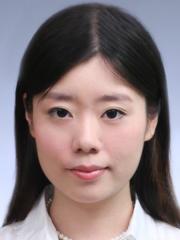
Prof Raphaël Phan is a Professor and Deputy Head of the School of IT at Monash University Malaysia. His expertise spans security, cryptography, malicious AI, emotion recognition, motion analysis, and generative AI. He has published over 220 papers and led significant projects including privacy-preserving data mining funded by UK MoD and Malaysian government grants exceeding RM4 million. He co-designed the BLAKE hash function (SHA-3 finalist) and has an h-index of 50. Education: PhD in Cryptography (Multimedia University, 2005), MEngSci (2001), BEng (Hons) Computer Engineering (1999). Research focuses on adversarial AI, brain networks, and secure systems. Current projects include Æmbience: emotion-aware virtual assistants using motion magnification. Supervised 15 PhD graduates and 19 current students. Professional affiliations: Chartered Engineer (IET, UK), HEA Fellow, Board of Engineers Malaysia. Recent work emphasizes causal bias detection in micro-expressions, brain tumor detection via advanced YOLOv8, and generative adversarial networks for medical imaging. His work bridges cybersecurity with neuroscience applications.
Dr. Gowri Sankar Ramachandran is a Senior Lecturer in the School of Information Systems at Queensland University of Technology (QUT), specializing in cybersecurity and distributed systems. She holds a PhD from KU Leuven (Belgium) and a postdoctoral position at the University of Southern California (USC). Her research focuses on open-source software security, runtime threat detection, blockchain applications, and IoT vulnerabilities. Notable contributions include the FUSE tool for detecting malicious packages and the discovery of hyperlink hijacking vulnerabilities affecting millions of domains. Research interests span software supply chain security, metadata-based risk analysis, and generative AI for cyber risk modeling. Awards include Best Paper Awards at ACM CBSE (2016), Mobiquitous (2017), and BigMM (2019). Collaborations include projects with CSIRO, the City of Los Angeles, and the University of São Paulo. She teaches courses on cybersecurity, database management, and network security, and actively supervises PhD students in cybersecurity and blockchain domains. Recent publications address blockchain-based data governance, quantum-resilient IoT protocols, and decentralized identity systems. Her work bridges academic research with real-world impact, addressing critical challenges in digital systems security and privacy.
Professor Raja Jurdak is a leading academic in distributed systems and applied data sciences at Queensland University of Technology (QUT), where he directs the Trusted Networks Lab. He holds dual roles as Professor of Distributed Systems and Chair in Applied Data Sciences, alongside leadership in the Centre for Data Science. His research focuses on dynamic network modeling, blockchain-based trust frameworks, and IoT applications, with particular emphasis on cybersecurity, energy efficiency, and mobility-driven diffusion processes. Jurdak formerly led CSIRO's Distributed Sensing Systems Group and maintains a visiting scientist role there. Education: PhD in Information and Computer Science, University of California, Irvine MS in Computer Networks and Distributed Computing, University of California, Irvine BE in Computer and Communications Engineering, American University of Beirut Research Interests: Network science, blockchain technology, IoT security, sustainable energy systems, and data-driven decision-making. His work bridges theoretical advancements with practical applications in smart grids, health surveillance, and urban mobility. Awards: Finalist for the 2019 Eureka Prize, multiple CSIRO accolades, and IEEE Senior Member status. His research has received industry recognition for interdisciplinary innovation, including the DiNeMo project's real-time disease surveillance system. Advisory & Grants: Leads high-impact projects funded by government and industry partnerships. Supervises PhD candidates in areas like decentralized data processing and privacy-preserving AI. Holds editorial roles at journals such as Ad Hoc Networks and PLoS ONE . Labs & Teams: Directs the Trusted Networks Lab at QUT, fostering collaborations with institutions like Oxford University and MIT. His work emphasizes cross-disciplinary teams to address global challenges in cybersecurity and sustainable systems.
Professor Vallipuram Muthukkumarasamy is an Associate Professor at the School of Information and Communication Technology at Griffith University, where he has pioneered Network Security teaching and research since joining in 2001. He leads the Networking & Security and Blockchain Research Group at the Institute for Integrated and Intelligent Systems. Muthu holds a Ph.D. from Cambridge University and a B.Sc. Eng. with 1st Class Honors from the University of Peradeniya, Sri Lanka. His extensive academic appointments include Group Leader of Network Security and Blockchain Research (2008-present), Program Director for the Graduate Certificate in Blockchain Technology (2022-present), HDR Convenor (2022-present), Member of the University Council (2020-2021), and Deputy Head of School for Learning and Teaching (2013-2016). Muthu's research expertise spans Cyber Security, Blockchain Technology (DLT), and Wireless Sensor Networking. He has secured national and international funding for interdisciplinary research, published over 150 articles in international journals and conferences, and supervised more than 30 research Masters and PhD students to completion. He pioneered the Network Security teaching at Griffith and successfully proposed and led the development of Queensland's first Master of Cyber Security Program, creating a truly interdisciplinary curriculum with Law, Business, and Criminology Schools. His recent publications reveal a strong research trajectory in blockchain applications, security visualization techniques, and wireless sensor networks. His work explores DeFi user behavior analysis, NFT privacy risks in the metaverse, blockchain transaction visualization, and the integration of blockchain with AI for credit scoring systems. His wireless sensor network research focuses on energy-efficient routing protocols and network lifetime modeling. Muthu has received multiple best teacher awards from students and peers, and during his tenure as Deputy Head of School, the Griffith IT program was ranked #1 in Australia for overall student satisfaction. He successfully proposed and developed Cisco-related courses at undergraduate and postgraduate levels and instrumental in creating industry-sought-after networking and security courses across all academic levels. His funded research includes significant projects such as Increasing the South East Queensland Cyber Security Workforce, Linking Digital Payments to Crime Using Big Data Machine Learning Tools, Improving Water Markets through Digital Technologies, and developing Indo-Australian partnerships for digital transformation through blockchain. He is actively involved in community and charity activities and has been instrumental in internationalization efforts for Griffith University.
Dr. Yanjun Zhang is an Honorary Research Fellow at the School of Electrical Engineering and Computer Science, The University of Queensland. His research focuses on privacy-preserving technologies, federated learning, cybersecurity in IoT systems, and machine learning security. He holds a PhD in Privacy-Preserving Sharing for Genome-Wide Analysis from The University of Queensland (2021). Education: PhD in Information Technology, School of Information Technology and Electrical Engineering, The University of Queensland (2021) Research Interests: Designing secure collaborative machine learning frameworks Defending against adversarial attacks in cyber-physical systems Privacy preservation in distributed genomic and medical data analysis Compliance and ethics in virtual personal assistant applications Key Contributions: Developed privacy-preserving federated learning frameworks (AgrAmplifier, PrivColl) Conducted foundational studies on evasion attacks in IoT systems Created datasets for analyzing malicious browser extensions and Alexa skills Labs/Teams: Active contributor to UQ Cyber initiatives, including the 2021-2022 Seed Funding project on federated deep learning for medical imaging.
Professor Xun Yi is a faculty member at RMIT University's School of Computing Technologies, specializing in cybersecurity, data privacy, and distributed computing. His research focuses on privacy-preserving technologies in cloud systems, blockchain applications, federated learning, and secure communication protocols. He has published over 150 papers in top-tier journals and conferences, including IEEE Transactions on Dependable and Secure Computing. Since 2014, he has served as an Associate Editor for the IEEE Transactions on Dependable and Secure Computing, and has organized major events like the Australasian Information Security Conference (AISC) in 2015 and 2016. Professor Yi actively supervises PhD and Master's research projects, focusing on topics like secure IoT systems, privacy-aware machine learning, and blockchain-enabled frameworks. His work emphasizes practical solutions for real-world challenges in data security and privacy. Research Interests: Data Privacy, Cyber Security, Cloud Security, Wireless/Mobile Security, Applied Cryptography Blockchain-based Systems, Federated Learning, Privacy-Preserving AI Recent Contributions: Developed frameworks for secure data aggregation in smart grids and healthcare systems Advanced techniques for privacy-preserving federated learning and graph neural networks Contributed to standards for secure authentication in vehicular networks (VANETs) Supervision: Open to mentoring students in cybersecurity, privacy-enhancing technologies, and IoT security.
Dr. Arash Mahboubi is a Senior Lecturer in Computing at Charles Sturt University's School of Computing, Mathematics and Engineering. He holds a PhD in Information Security from Queensland University of Technology (2018), a B.Sc. (First Class Honours) in Computer Security from Staffordshire University, and an M.Sc. in Information Security from the University of Technology Malaysia. Full-time Cybersecurity Lecturer at CSU since 2019 Deputy Leader of the Cyber Security Research Group (CSRG) Former Sessional Lecturer at QUT and University of the Sunshine Coast His research focuses on Information Security , Ransomware Detection , IoT Security , and Pervasive Security . Recent work explores AI-enabled secure social industrial IoT in agri-food supply chains, lightweight ransomware detection algorithms, and unauthorized UAV threats to smart farming. His publications demonstrate strong interdisciplinary applications in agriculture and cloud environments. Scientific awards include: AgriTwins Grant (2024) for Cyber-secure Emerging Technologies Charles Sturt Excellence Awards - Highly Commended (2023) C22-00224 Ransomware Resilience Grant (2021) DSRU Summer Scholarships (2021) Active in professional activities, he chairs the Cyber Security Research Group, contributes to peer-reviewed publications, and participates in industry symposia. His media appearances include cybersecurity insights on Optus data breaches and edtech security challenges.
Rizka Purwanto serves as an Adjunct Associate Lecturer at the University of New South Wales (UNSW) Canberra within the School of Engineering and Technology, and concurrently as an Assistant Professor for the Master of Cybersecurity program at Monash University, Indonesia. Previously, she held a postdoctoral researcher position at UNSW Canberra Space and accumulated industry experience as a software engineer across Australia and Indonesia. Her academic qualifications include: Bachelor's degree in Electrical Engineering from Institut Teknologi Bandung (ITB), Indonesia (2013) Master's degree from the University of New South Wales (UNSW) (2018), specializing in artificial intelligence and internetworking PhD from UNSW's School of Computer Science and Engineering (2022), funded by the University International Postgraduate Award (UIPA) and Cyber Security Cooperative Research Centre scholarships Rizka's research centers on artificial intelligence applications across critical domains. Her primary cybersecurity work develops AI-driven methods for phishing and scam detection to enhance public awareness, while her space systems research pioneers federated learning for miniaturized satellite constellations and deep learning-based space object characterization using lightcurve data. This dual focus bridges theoretical AI innovation with practical security and aerospace solutions. Her publication record (2020-2025) reveals consistent contributions to phishing detection algorithms (PhishSim, PhishZip), federated learning optimization, space mission analytics (M2 CubeSat), and affective computing. Key trends show increasing integration of machine learning with domain-specific challenges in Indonesian energy infrastructure, cybersecurity, and satellite operations. No major scientific awards are documented in the provided materials. While no current advisees are listed, her PhD research received significant funding through the University International Postgraduate Award (UIPA) and Cyber Security CRC scholarships. Her postdoctoral role at UNSW Canberra Space likely involved mission-specific project grants, and her current Monash University position suggests involvement in cybersecurity education partnerships. Rizka's technical work prominently features UNSW Canberra Space, where she contributed to the 'M2' Low Earth Orbit Formation Flying CubeSat Mission. This placed her within a multidisciplinary team developing change detection systems and formation flying protocols using optical imaging for space situational awareness.
Bayu Anggorojati is an Assistant Professor at Monash University, associated with Cyber Security Indonesia. He specializes in cybersecurity, user privacy, and smart city technologies, contributing to global efforts in cyber capacity building and disinformation mitigation. His ORCID is 0000-0003-4580-1162 . Research Projects ASEAN Disinformation Index (2024–2025): Analyzing malicious information’s impact on Southeast Asian democracies (Chief Investigator). Privacy-Preserving Machine Learning in Smart Cities (2023–2024): Developing resilient frameworks for data-driven policy formulation (Chief Investigator). Media Engagements Contributed to features on cybersecurity threats, including a July 2024 article on malicious AIs like FraudGPT and disinformation risks in Indonesia. Highlighted collaborative efforts in digital security architecture and threat mapping through October 2024 media pieces. Advising & Grants Accepting PhD students since 2023. His projects are funded research initiatives involving multi-institutional collaborations, emphasizing practical applications of cybersecurity in policy and technology domains.
Dr. Zhuang Li is a Lecturer at RMIT University's School of Computing Technologies, specializing in Natural Language Processing (NLP), machine learning, and trustworthy AI. He earned his PhD from Monash University (2023), focusing on semantic parsing in low-resource conditions, and previously worked at Microsoft on Cortana and Bing. His research bridges NLP, computational social science, and cultural alignment of AI systems, emphasizing data-efficient training and LLM safety. Education: PhD in NLP, Monash University (2019–2023) M.Comp in AI, Australian National University (2014–2015) B.Eng in Electrical Engineering, Wuhan University of Science and Technology (2009–2013) Research Interests: Data-efficient learning, culturally-grounded AI, large language models, computational social science, and ethical AI deployment. Collaborations: Active in industry partnerships and academic collaborations with Monash University, TU Darmstadt, Microsoft Research India, and Ant Group. Recent work includes ACL 2025 papers on LLM safety and peer review analysis. Supervision: Open to PhD students in low-resource languages and culturally-aligned LLMs. Collaborates with senior faculty at RMIT and Monash.
Mohammed Kaosar is Senior Lecturer in Information Technology at Murdoch University, specializing in cybersecurity, IoT systems, and adversarial machine learning. His research develops secure computing frameworks for applications in healthcare, critical infrastructure, and social media. Current investigations include quantum neural networks, blockchain-based security systems, and privacy-preserving AI techniques. Research clusters address: Federated learning for medical diagnostics Bot detection in social networks Secure IoT architectures Cryptographic privacy solutions Publications demonstrate innovation in distributed trust management, healthcare data security, and deep learning applications. Recent work explores quantum computing approaches to image classification challenges. Ongoing projects include developing resilient intrusion detection systems and analyzing cyber threats to national security infrastructure.
Dr. Muhammad Ikram is a Senior Lecturer in Cybersecurity at Macquarie University's School of Computing, affiliated with the Information Security and Privacy (ISP) group and the Macquarie Cybersecurity Hub (MCHUB). His research focuses on privacy/security in mobile/Web platforms, leveraging machine learning for fraud detection and vulnerability analysis. He holds a PhD in Electrical Engineering from UNSW, a Master's from Ajou University, and a Bachelor's from UET Peshawar. Ikram has published 64+ works in top conferences/journals like Usenix Security, NDSS, and ACM TOPS. His notable contributions include analyzing iOS app vulnerabilities, tracking prevention mechanisms, and mobile health app privacy risks. He received the Best Paper Award at AsiaCCS 2019 and Outstanding Paper at Mobiquitous 2021. Research Interests: Mobile/Web Security, Malware Detection, Privacy-Preserving Systems Grants: Led projects on network security, telecommunications obligations, and cybersecurity hubs Media Impact: Featured in The Guardian and over 50 outlets for work on web resource loading (~11M audience reach) Service Roles: Technical Program Committee member at WWW/PETS, reviewer for CCS/PETS He previously held roles as a Postdoc at University of Michigan and Research Scientist at Data61. His work bridges academic research with real-world impact in cybersecurity policy and industry standards.
Dr. Malka N. Halgamuge is a Senior Lecturer in Cybersecurity at RMIT University, Melbourne, Australia, and Chair of the IEEE Computational Intelligence Society Victorian Section. She holds a PhD from the University of Melbourne and has over 5,200 citations with an h-index of 38. Her research focuses on cybersecurity, AI security, large language models, blockchain, and IoT. Previously, she worked at La Trobe University as a Senior Lecturer and Course Coordinator for Micro-credential Cybersecurity courses. She managed the Australian Government's $4.7M Cyber Security Skills Partnership Innovation Fund, collaborating with industry partners like Cisco and Optus. Her industry experience includes roles as an EMR consultant, founder of SenseRadiation Pty Ltd, and part-time algorithm researcher at GreenBox Services. Malka has led over 300 conferences, including roles as Program Co-Chair and Track Chair. She has received numerous awards, including the CAS President's Fellowship and recognition as a top 2% cited researcher globally. Her work spans academic research, industry collaboration, and policy engagement in cybersecurity and emerging technologies.
Raphaël Phan is a Professor at the Malaysia School of Information Technology, Monash University, specializing in security, cryptography, and malicious AI. His research focuses on areas including privacy, emotion recognition, motion analysis, and generative AI, with a particular interest in adversarial behavior. He has published over 200 papers and secured research funding exceeding RM3 million from government and industry sources. Phan led projects such as the privacy-preserving data mining initiative funded by the UK government and Ministry of Defence, and co-designed the hash function BLAKE, a finalist in NIST’s SHA-3 competition. He currently supervises 18 PhD students and has graduated 13, focusing on topics like AI security, generative models, and neurological disease prediction using AI. Recent research contributions include advancements in adversarial AI, brain disorder identification via graph deep learning, and post-quantum cryptography. He actively serves on technical committees for major conferences (e.g., AAAI 2024, Eurocrypt 2024) and has an h-index of 49 with an Erdős number of 2. Key collaborations include projects on Parkinson’s disease tremor analysis, brain network prediction using signal decomposition, and Indo-Pacific post-quantum cryptography initiatives. His work aligns with UN Sustainable Development Goals addressing health and technological innovation.
Aya Hussein is a Lecturer in Artificial Intelligence and Machine Learning at the University of Canberra, specializing in AI and Robotics research within swarm systems and human-autonomy interaction. Her work bridges theoretical AI with practical applications in complex environments requiring human-swarm teaming. Her educational background includes: PhD from UNSW Canberra (Australian Defence Force Academy), awarded 20 January 2021 Dr. Hussein's research centers on human-swarm interaction dynamics, focusing on machine teaching methodologies, autonomy level calibration, and decision-making frameworks for heterogeneous swarms. She pioneers approaches for context-aware control in adversarial scenarios and develops metaverse-based training environments for swarm systems, with significant contributions to swarm interpretability through neural translation techniques and SHAP analysis. Analysis of her 15 most recent publications (2022-2025) reveals dominant themes in swarm intelligence (87%), human-computer interaction (73%), and reinforcement learning (60%). Key trajectories include imitation learning for swarm observation (2023-2025), metaverse integration for multi-level autonomy (2023-2025), and security applications like adversarial patrolling (2024). Her work consistently addresses real-world challenges in search-rescue operations, misinformation resilience, and collective perception systems. Dr. Hussein serves as Co-Investigator on the active ARC-funded project 'Political Misinformation and Media Literacy: Australian Election 2025' (2025), examining misinformation dynamics in electoral contexts. She chairs IEEE Women in Engineering (ACT Section) and organizes the IT & Systems Student Research Conference, demonstrating strong commitment to community engagement and academic service through 12 documented activities including editorial work and peer review. Her research is conducted through the University of Canberra's AI and Robotics group, with significant external collaborations including UNSW Canberra and international institutions. Current projects integrate digital twin technology with swarm metaverse environments to develop next-generation human-swarm teaming frameworks for complex operational scenarios.