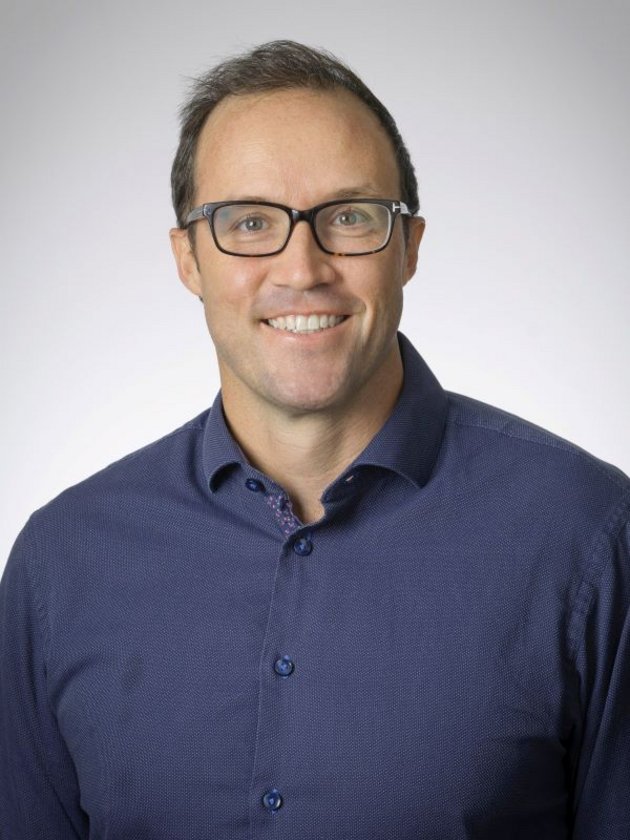
Maxime Descoteaux is a Full Professor in the Department of Computer Science at the University of Sherbrooke, specializing in medical imaging and computational neuroscience. His work bridges computer science with advanced neuroimaging techniques to investigate brain structure and function. His academic credentials include: M.Sc. from the Center for Intelligent Machines, School of Computer Science, McGill University Ph.D. in Automatic Control, Signal and Image Processing from Université de Nice - Sophia Antipolis, INRIA (2008) Descoteaux's research focuses on developing novel acquisition and processing methodologies for anatomical, diffusion, and functional MRI to map neuronal architecture and inter-regional brain communication. His interdisciplinary approach integrates applied mathematics, computer vision, and image analysis to advance understanding of the human brain's structural connectivity and functional dynamics.
Dr. Christian Beaulieu is a Professor in the Department of Radiology and Diagnostic Imaging at the University of Alberta's Faculty of Medicine & Dentistry, and cross-appointed to the Department of Biomedical Engineering in the Faculty of Engineering. He holds the Canada Research Chair (Tier 1) and serves as Scientific Director of the Peter S Allen MRI Research Centre. Additionally, he represents the University of Alberta as a CIHR University Delegate and sits on the CIHR University Delegate Executive Committee (UDEC). His educational background: BSc in Chemistry, University of Manitoba (1986-1990) PhD in Biomedical Engineering, University of Alberta (1990-1995) Postdoctoral Fellowship in Radiology, Stanford University (1995-1999) Dr. Beaulieu's research focuses on advancing MRI technology to detect 'invisible' micro-structural brain injuries in neurological disorders including stroke, epilepsy, multiple sclerosis, and neurodevelopmental conditions. His lab develops novel diffusion and sodium MRI techniques to quantify previously undetectable tissue abnormalities, with additional work in prostate cancer imaging. This research bridges engineering innovation and clinical application to improve diagnostic precision across the lifespan. His scientific recognition includes: Canada Research Chair (Tier 1) Current funding supports his lab through major grants from CIHR, NSERC, Heart and Stroke Foundation of Canada, Multiple Sclerosis Society of Canada, and the Neuroscience and Mental Health Institute Ward grant. He actively recruits graduate students from engineering, physics, neuroscience, and medical disciplines for projects spanning pulse sequence development, image processing, hardware design, and clinical studies. As Scientific Director of the Peter S Allen MRI Research Centre, he leads a multidisciplinary team driving next-generation MRI technologies for brain and prostate cancer research, with future work focused on translating innovations into improved clinical diagnostics and treatment monitoring.
Atiyah Yahya, Ph.D., FCCPM, P.Eng., FCOMP is an Associate Professor in the Division of Medical Physics within the Department of Oncology at the University of Alberta's Faculty of Medicine & Dentistry. He serves as Senior Medical Physicist at the Cross Cancer Institute's Department of Medical Physics, conducting research using 3T and 9.4T MRI scanners. Education: Ph.D. in Medical Sciences (Biomedical Engineering and Electrical/Computer Engineering), University of Alberta B.Sc. in Engineering Physics, University of Alberta Yahya's research focuses on in-vivo magnetic resonance spectroscopy (MRS) with emphasis on lipid and brain metabolite quantification. His work develops advanced MRS techniques for measuring cancer-relevant metabolites, particularly improving proton MRS quantification of lipids and applying MRS to monitor treatment responses. His laboratory utilizes both 3T and 9.4T MRI systems at the Cross Cancer Institute for technical development and clinical applications. Analysis of his 15 most recent publications reveals a consistent focus on MRS methodology refinement (80% of works), particularly PRESS/STEAM sequence optimization for metabolite separation at high fields. Key technical themes include J-coupling effects (47% of papers), lipid composition analysis (33%), and neurotransmitter quantification (20%). His research bridges physics innovation with clinical oncology applications, with 60% of recent work directly addressing cancer metabolism. Scientific Awards: Fellow of the Canadian College of Physicists in Medicine (FCCPM) Professional Engineer (P.Eng.) - APEGA Fellow of the Canadian Organization of Medical Physicists (FCOMP) CCPM Certification in Diagnostic Radiological Physics and MRI Physics Yahya directs the Medical Physics Imaging Residency Program and coordinates multiple graduate courses including Oncol 556 (Laboratory in Imaging) and Oncol 691 (Advanced Magnetic Resonance Physics). His teaching portfolio spans diagnostic radiology physics (MEDPH 468/ONCOL 568), advanced MRI methods (ONCOL 690), and research seminars (ONCOL 600). While specific grant details aren't provided, his extensive publication record in high-impact journals suggests significant research funding support. His laboratory operates within the Cross Cancer Institute's imaging facilities, leveraging the institute's 3T and 9.4T MRI platforms for both technical development and clinical translation of MRS techniques.
Dr. Vladislav Toronov serves as an Associate Professor in the Department of Physics at Toronto Metropolitan University, where he has maintained an active research and teaching profile since earning his PhD from Saratov State University in 1993. His institutional affiliations span the university's core physics department and the hospital-partnered iBEST research institute. His research focuses on cutting-edge biomedical applications of optical technologies: Development of non-invasive brain imaging techniques using near-infrared spectroscopy Integration of optical methods with magnetic resonance imaging (MRI) Medical diagnostic instrumentation for clinical translation Photonics applications in physiological monitoring Through the iBEST research group, Dr. Toronov maintains significant collaborative infrastructure including partnerships with St. Michael's Hospital and University of Western Ontario's MRI-NIRS research team. His professional leadership is demonstrated through committee roles in SPIE's biomedical photonics conferences, reflecting international standing in the field. Educationally, Dr. Toronov bridges foundational physics instruction (teaching core mechanics and electromagnetism courses) with specialized graduate training in medical diagnostics and photonics. His course portfolio reveals a deliberate pathway from basic principles to clinical applications, supporting student development in both theoretical and applied biophotonics domains.
Dr. Jeffrey Frank Dunn is a Professor at the University of Calgary's Cumming School of Medicine, Department of Radiology, with adjunct appointments in Clinical Neurosciences and Physiology & Pharmacology. He holds key affiliations as Full Member at both the Hotchkiss Brain Institute and McCaig Institute for Bone and Joint Health, and serves as Director of the Experimental Imaging Centre. His research focuses on brain oxygen regulation using advanced neuroimaging techniques. Key investigations include: Hypoxia mechanisms in neurological diseases (MS, stroke, concussion) Blood-brain barrier integrity using MRI/NIRS White matter degeneration and neuroinflammation pathways Development of portable brain injury monitoring systems He has received significant recognition for mentorship, including: University of Calgary Top Graduate Supervisor Award (2017) Killam Graduate Supervision and Mentorship Award (2021) At the Experimental Imaging Centre, Dr. Dunn leads technology development for preclinical studies and clinical translation, particularly in high-field MRI (9.4T) and spectroscopy applications.
Dr. Ethan MacDonald is an Associate Professor with joint appointments in Biomedical Engineering and Electrical & Software Engineering at the University of Calgary's Schulich School of Engineering. He also serves as Adjunct Associate Professor in Radiology at the Cumming School of Medicine and holds full memberships at the Hotchkiss Brain Institute and Alberta Children's Hospital Research Institute. Educational background includes: Postdoctoral Fellowship in Radiology (UCalgary, 2020) PhD in Biomedical Engineering (UCalgary, 2014) MSc in Biomedical Engineering (UCalgary, 2010) BEng in Electrical Engineering (Lakehead University, 2008) Diplomas in Electronics Engineering (Nova Scotia Community College, 2005-2006) His research program centers on three interconnected themes: MRI hardware/software development for image acquisition/reconstruction Big Data analytics and machine learning for biomedical applications Brain circuit modeling for next-generation intelligent algorithms This work intersects biomedical engineering, medical imaging, and artificial intelligence. Notable scientific awards include: Dean Brawn Medal for academic excellence Professional Engineers of Ontario Medal Dr. MacDonald leads the Brain Image Team and mentors students through skill development in programming, technical writing, and presentation. The lab prioritizes work-life balance while preparing trainees for leadership positions in academia and industry.