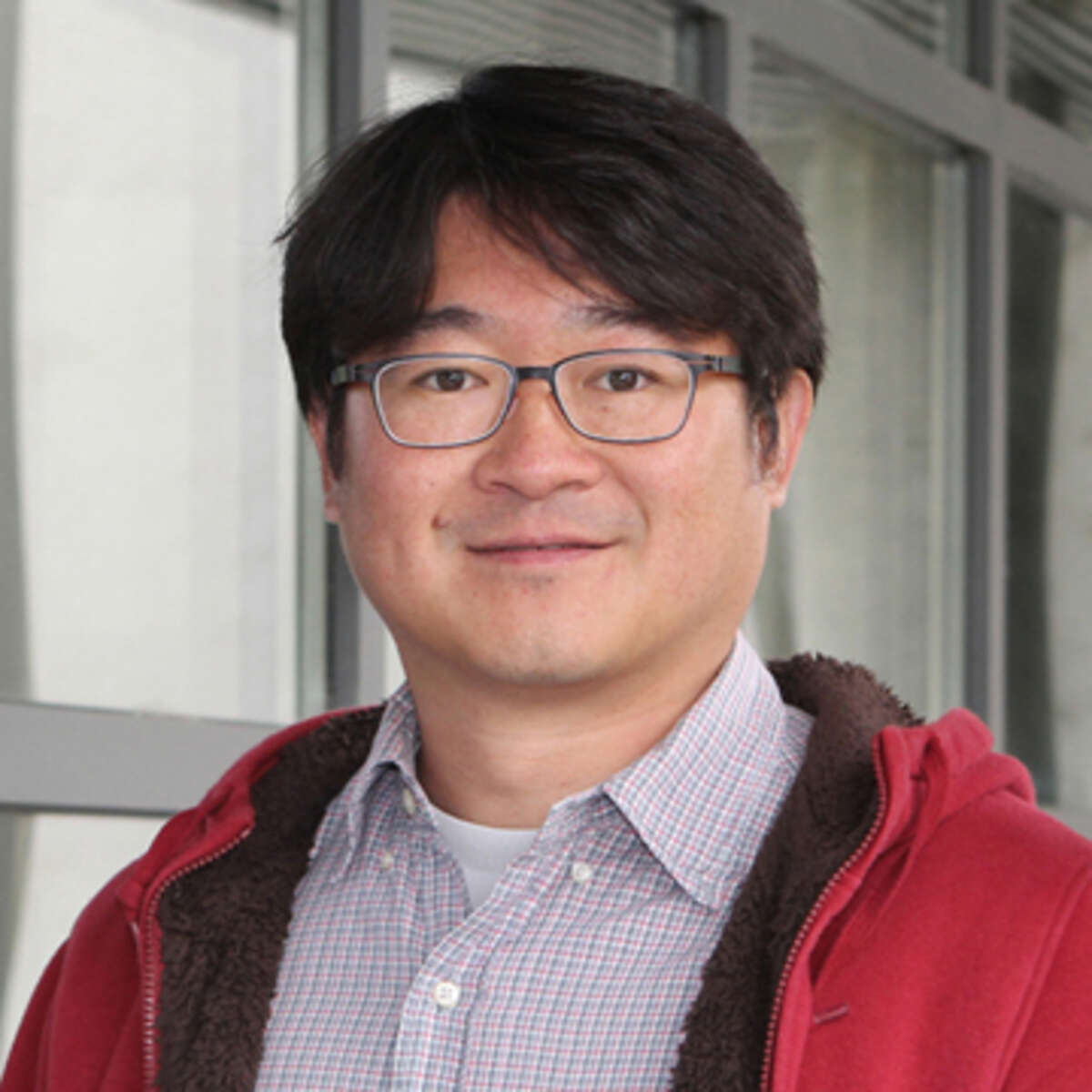
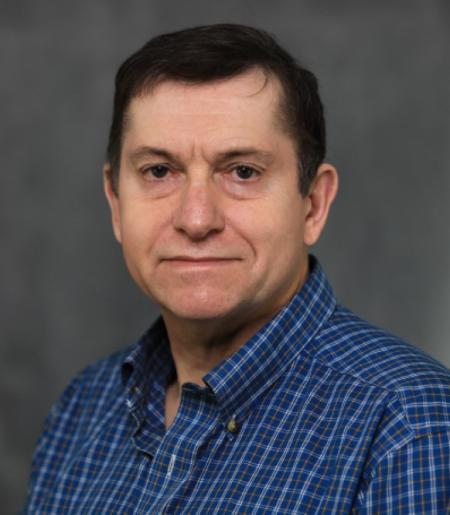
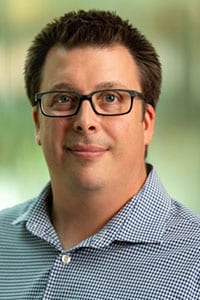
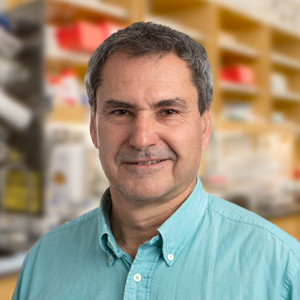
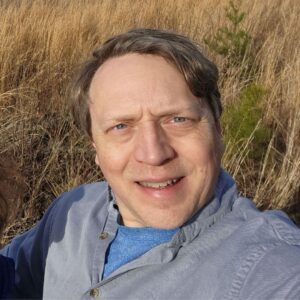
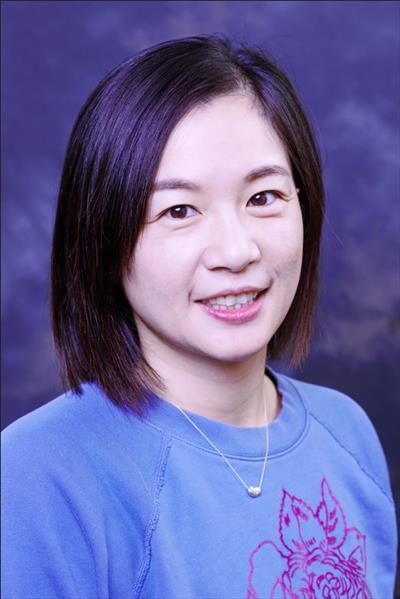
James Van Etten is the William Allington Distinguished Professor of Plant Pathology at the University of Nebraska-Lincoln, affiliated with the School of Biological Sciences and Nebraska Center for Virology. His research focuses on chloroviruses—large dsDNA viruses infecting Chlorella-like algae—with emphasis on DNA replication, restriction systems, and membrane transport proteins. Key research themes include: Viral DNA modification systems Host-virus interactions Structural virology Evolution of organellar genomes Recent work analyzed: SMRT sequencing of viral methylation patterns Chlorovirus cryopreservation methods Potassium channel biophysics Host chemical signaling mechanisms Lab webpage: vanettenlab.unl.edu
Prof. Dr. Roderick Lim is an Associate Professor at the Biozentrum, University of Basel , where he leads a research group since 2014. His work bridges biophysics, nanotechnology, and molecular biology , focusing on the nuclear pore complex (NPC) and mechanobiology of cells . He develops biomimetic systems for selective molecular transport and ARTIDIS , a nanomechanical tissue diagnostic platform commercialized for breast cancer prognosis . Education : BSc (UNC Chapel Hill), PhD (NUS/IMRE Singapore), Postdoc (Swiss Nanoscience Institute) Positions : Argovia Professor (2014–present), Tenure Track Asst. Prof. (2009–2013), Postdoc (2004–2008) His research on NPC transport selectivity reveals how karyopherins modulate the FG Nup barrier via multivalent interactions, with implications for viral entry and Alzheimer’s disease . His ARTIDIS platform uses atomic force microscopy to detect cancer via tissue softness, linking hypoxia to metastasis . Recent 2025 publications explore bacterial nanoharpoon defense mechanisms and DNA origami-based NPC mimics . Scientific Awards : Pierre-Gilles de Gennes Prize (2008), A*STAR Fellowship (2004) Collaborations : NCCR Molecular Systems Engineering, NanoTera, KTI He mentors PhD students in institutions across Switzerland, Singapore, Sweden, and the UK , with alumni working on polymersome delivery, mechanotransduction, and pathogen transport . His lab pioneered high-speed atomic force microscopy for real-time NPC dynamics and plasmonic nanopores for synthetic biology applications.
Janet Sheung is an Assistant Professor of Physics at Scripps College, specializing in biophysical systems and cytoskeletal dynamics. She teaches courses such as Principles of Physics, Electronics Laboratory, and Senior Thesis in Physics/Biophysics. Her research focuses on the interplay between molecular motors, cytoskeletal networks, and active matter, with a particular emphasis on mechanical properties, transport phenomena, and microscopy innovations. Dr. Sheung's work explores how motor proteins like kinesin and myosin drive structural and mechanical changes in cytoskeletal composites, influencing DNA transport, phase separation, and stress propagation. She has pioneered customizable light-sheet microscopy techniques for visualizing these systems in vivo. Her studies integrate experimental and theoretical approaches to understand non-equilibrium dynamics in biological materials. Her articles highlight themes of motor competition, topological effects on DNA transport, and the design of advanced imaging tools. While no awards are explicitly listed, her contributions to biophysics and microscopy instrumentation are evident in her publication record. Advising and grant details are not provided in the available text, but her teaching and research roles suggest active involvement in student mentorship.
Robert Thorne is a Professor in the Department of Physics at Cornell University's College of Arts and Sciences. His research spans biological physics, experimental condensed matter physics, and physics education innovations. He holds a B.Sc. from the University of Manitoba (1981) and a Ph.D. from the University of Illinois at Urbana (1987). Stephen H. Weiss Presidential Fellow (2011-present) Founder and CTO of MiTeGen LLC (2004-present) Research Interests: Thorne's work focuses on: Single-particle cryo-EM and time-resolved molecular movies Advanced X-ray crystallography and SAXS techniques Water/ice physics in biological and materials contexts X-ray fluorescence imaging for archaeology Physics education curriculum reform and outreach programs Publication Trends: His 15 most recent articles (2004-2021) demonstrate expertise in: Structural biology methodology Radiation damage mitigation Nanoconfined material behavior Cultural heritage imaging Physics education innovation Crystallography instrumentation Awards: Presidential Young Investigator (1988-1993) Alfred P. Sloan Fellow (1988-1990) Stephen H. Weiss Presidential Fellow (2011-present) Advising & Grants: Active mentor of M.S. student Myeonghak Lee and undergraduate Andrew DiFabbio . His research has received grants supporting student engagement and CHESS synchrotron upgrades.
Thomas Cheatham III is a Professor of Medicinal Chemistry in the College of Pharmacy and Adjunct Professor of Biomedical Engineering at the University of Utah, specializing in computational biomolecular simulation methodologies. His work bridges theoretical chemistry and biological applications through advanced molecular dynamics techniques. Education: B.A., Middlebury College Ph.D., University of California, San Francisco Research Focus: Dr. Cheatham pioneers molecular dynamics and free energy simulation methods (AMBER/CHARMM) for proteins, nucleic acids, and lipids. His group addresses critical challenges in environmental dependence of nucleic acid structure (ion/hydration effects on DNA), conformational transition pathways (e.g., B-DNA/Z-DNA junctions), and macromolecular flexibility beyond static experimental structures. Recent innovations target force field refinement for modified nucleic acids and polarizable models. Publication Trends: Analysis of his 2023-2025 publications reveals three dominant themes: (1) Nucleic acid force field optimization (60% of recent work), particularly RNA/DNA parameterization; (2) Development of simulation infrastructure including FAIR data principles and AmberTools; (3) Application-driven studies of therapeutic targets like Bcr-Abl inhibitors. His work increasingly integrates polarizable force fields and high-performance computing. Research Infrastructure: He leads the AMBER biomolecular simulation software development effort and maintains an active laboratory focused on methodological innovation. His group collaborates extensively with experimentalists to validate computational predictions and provides open-source tools (PTRAJ/CPPTRAJ) used globally. Current initiatives emphasize reproducibility through standardized simulation protocols and data sharing frameworks.
Dr. Ivett Orsolya Bacskay is an Assistant Professor at the Department of Analytical and Environmental Chemistry, Institute of Chemistry, Faculty of Science, University of Szeged. Her research focuses on fundamental and applied aspects of separation science, particularly in liquid chromatography, with expertise in retention mechanisms, mass transfer, and stationary phase characterization. Research Interests: Her work spans several key areas in analytical chemistry, including hydrophilic interaction liquid chromatography (HILIC), size-exclusion chromatography, chiral separations, pore size distribution analysis, and molecular imprinting for artificial antibody development. She investigates both theoretical models and practical applications in chromatographic systems. An analysis of her recent publications (2010–2025) reveals a strong emphasis on improving chromatographic efficiency and understanding molecular interactions in separation processes. Her studies frequently address challenges in hold-up volume determination, overloading effects, and mass transfer in various stationary phases, contributing significantly to the advancement of HPLC and LC-MS methodologies. Scientific Awards: No awards mentioned in the provided text. Advising and Grants: While specific details about students or funded projects are not listed, her active research output and faculty position suggest involvement in mentoring graduate students and securing research support. She has contributed to interdisciplinary studies involving neuropharmacology and plant biochemistry, indicating collaborative research efforts. Labs and Teams: Dr. Bacskay is part of the Institute of Chemistry at the University of Szeged, where she conducts research within the Department of Analytical and Environmental Chemistry. Her work likely involves collaboration with analytical chemistry research groups focusing on method development, column technology, and environmental or pharmaceutical analysis.
Timothy Grant is an Assistant Professor of Biochemistry at the University of Wisconsin–Madison and an Investigator at the Morgridge Institute for Research , embedded within the John W. and Jeanne M. Rowe Center for Research in Virology . His laboratory, the Grant Lab , focuses on pushing the limits of cryo-electron microscopy (cryo-EM) to visualize ever-smaller and more dynamic biological macromolecules. Education & Academic Home: Faculty appointment: Assistant Professor, Department of Biochemistry, UW–Madison College of Agricultural and Life Sciences. Concurrent appointment: Morgridge Institute Investigator, Rowe Center for Research in Virology. Research Interests: The Grant group develops computational and experimental methods that extend cryo-EM into two major frontiers: size —capturing structures of very small proteins previously invisible to cryo-EM—and motion —resolving conformational changes of molecular machines in real time. These advances are integrated into the open-source software package cisTEM , which provides a user-friendly workflow for single-particle image processing. Publication Trends: Across the 15 most recent papers (2021-2025), Grant’s work spans method-centric algorithmic innovation, high-resolution structural studies of bacterial DNA replication-restart machinery, and integrative technologies that couple native mass spectrometry with cryo-EM. A clear trajectory emerges from tool development toward application in virology and antibiotic-target validation. Scientific Awards: None explicitly mentioned in the provided text. Students & Research Team: Grant currently mentors six graduate students (Colin Hemme, Gan Li, Heidy Elkhaligy, Peter Ducos, Roma Broadberry, Shashwat Shastri) and several postdoctoral researchers and staff, including Alex Duckworth, Raison Dsouza, and Tim Wagner. Laboratory & Collaborations: The Grant Lab is physically located within UW–Madison’s Biochemistry Building and leverages the Center for High-Throughput Computing shared between UW–Madison and Morgridge to perform large-scale cryo-EM data processing.
MICHEL SANNER is a Professor of Molecular Biology at the Department of Integrative Structural and Computational Biology at Scripps Research. He holds a PhD in Computer Science from the University of Haute Alsace, France (1992). His research focuses on computational methods for molecular interactions, molecular graphics, and component-based software development. Notable contributions include the AutoDock suite (for molecular docking), PMV (a molecular visualization environment), and Vision (a visual programming tool). His research group develops tools like AutoDock CrankPep for peptide docking and F2Dock for protein-protein interactions. These tools are widely used in drug discovery and structural biology. His work emphasizes software engineering principles to create adaptable computational pipelines for analyzing macromolecular structures and simulating interactions. Publications span topics like peptide-docking methodologies, ligand-binding site prediction, and GPU-accelerated docking algorithms. His articles highlight advancements in computational methods for understanding protein-ligand interactions, with applications in anticoagulant research and HIV/FIV protease inhibition. Collaborations include work with Arthur J. Olson and David S. Goodsell on docking methodologies.
David R Cooper serves as an Assistant Professor of Research in the Department of Molecular Physiology and Biological Physics at the University of Virginia School of Medicine. His work focuses on developing data management systems for structural biology research, particularly in the field of X-ray crystallography. Dr. Cooper earned his BS in Biochemistry from Old Dominion University followed by a PhD in Biochemistry and Molecular Biology from Purdue University. His educational background provides the foundation for his current research in structural biology data systems. His primary research interest centers on data management and analysis for scientific endeavors, with specialization in X-ray crystallography. Dr. Cooper is currently developing a next-generation Laboratory Information Management System (LIMS) designed to track experimental procedures and parameters throughout the entire structural biology pipeline - from initial cloning to final structure deposition in the Protein Data Bank. His work addresses critical challenges in scientific reproducibility by ensuring protocols, data, and necessary metadata are properly documented and accessible. Analysis of Dr. Cooper's publication history reveals consistent contributions to structural biology data management, with particular emphasis on database development, validation tools, and visualization systems. His research spans bioinformatics, structural biology, and data science, with applications in macromolecular characterization and scientific reproducibility frameworks. Dr. Cooper maintains active research collaborations within the structural biology community, particularly with Dr. Wladek Minor's research group as indicated by his website (https://minorlab.org/person/dcoop/). His work supports the broader structural biology research enterprise through development of essential data infrastructure tools. His laboratory focuses on creating flexible systems capable of managing experimental samples and workflows for all stages of structural biology research. The LIMS development project represents a significant contribution to standardizing and improving data management practices in macromolecular structural analysis.
Devid Maniglio is an Associate Professor at the Department of Industrial Engineering, University of Trento. His research focuses on bioengineering, biomaterials, and tissue engineering, with a particular emphasis on bioprinting, surface modification, and functional materials. He has contributed to advancements in silk fibroin and hydrogel-based systems for medical applications. Research Interests Bioengineering for personalized medicine Biomaterials and surface engineering 3D bioprinting and tissue regeneration Molecular imprinting and biosensors Drug delivery and cell encapsulation Teaching Diagnostic and therapeutic technologies for personalized medicine Engineered materials for precision medicine Fundamentals of biomedical technologies Functional surfaces laboratory Labs & Collaborations Devid Maniglio is affiliated with the Functional Surfaces Laboratory at the University of Trento, collaborating with researchers such as Stefano Rossi and Flavio Deflorian. His work integrates interdisciplinary approaches in biomedical engineering and sustainable medical technologies.
Dr. Matteo Degiacomi is a Visiting Associate Professor in the Department of Physics at Durham University. His research focuses on integrative computational methods combining machine learning and molecular dynamics simulations to model biomolecular systems at near-atomistic resolution. Education: MSc in Computer Science (2008), PhD in computational biophysics (2012) from EPFL. His work leverages ion mobility , cross-linking , SAXS , and electron microscopy data to study protein assembly mechanisms. Recent publications highlight applications in virology , nanomaterials , and membrane protein dynamics . He develops open-source tools like ClayCode and JabberDock . Scientific awards include a Swiss National Science Foundation Early Postdoc Mobility Fellowship (2013-2017) and an EPSRC Junior Research Fellowship (2017-2020). He supervises postgraduate researchers Ajeeth Kanagarajan , Breanna Voss , and Listra Ginting .
Dr. Kristin O'Grady is an Assistant Professor in the Department of Biomedical Engineering and Department of Radiology & Radiological Sciences at Vanderbilt University's School of Engineering. Her research focuses on developing quantitative MRI methodologies for the brain and spinal cord, particularly improving spinal cord MRI for neurological diseases like multiple sclerosis. She specializes in diffusion tensor imaging, functional connectivity analysis, and high-field MRI applications. Her work spans advanced imaging techniques including MP2RAGE, susceptibility-weighted MRI, and phase imaging, with a focus on clinical feasibility and disease markers. She has contributed to studies on spinal cord morphometry, paramagnetic rim lesions, and biological interactions affecting CNS structure. No scientific awards or grants are explicitly listed in the provided materials. Dr. O'Grady collaborates across interdisciplinary teams within the School of Engineering, focusing on translational research in neuroimaging technologies.
Jack Zhang is an Assistant Professor in the Department of Molecular Biophysics and Biochemistry at Yale School of Medicine. His research focuses on developing advanced cryo-electron microscopy/tomography (cryo-EM/ET) methods to investigate dynamic molecular machines in cellular contexts, particularly mechanisms of cell motility and energy metabolism. PhD in Biophysics from Institute of Biophysics (CAS) Postdoctoral work at MRC Laboratory of Molecular Biology Joined Yale faculty in 2019 Research interests include: Mechanistic analysis of dynein motor proteins Structural studies of mitochondrial respiratory supercomplexes Cytoskeletal repair mechanisms via Abl2-tubulin interactions Environmental signal response in mastigoneme assembly Allostery in microtubule transport activation Recent publications demonstrate expertise in: High-resolution in situ structural biology Tomographic analysis of cellular machines Mechanochemical cycle mapping Male infertility structural pathology Contact: jack.zhang@yale.edu
Professor Remco Veltkamp holds a faculty position at Utrecht University's Faculty of Science with a focus on Game and Media Technology . As Scientific Director of AI Labs and coordinator of the Utrecht Center for Game Research , his work bridges serious games, virtual reality, and human-centered AI applications. He leads the Dynamics of Youth Hub 'Healthy Play, Better Coping' exploring gaming's role in pediatric chronic illness management. Academic leadership in gaming technology Director of Utrecht's AI Labs Founder of Serious Game Society Editor of International Journal of Serious Games Research spans game design, AR/VR interaction, 3D object recognition, and multimedia systems with applications in: Healthcare gamification Energy conservation Bioinformatics Social behavior analysis Computer vision Recent work includes: 2025: Developing fatigue management therapy games 2024: Analyzing protest dynamics through social media 2023: Creating equine pain assessment systems 2022: Gamification in food sustainability As educator, he teaches Game Programming and Small Project Game and Media Technology , while pioneering applications of gaming in healthcare and education sectors.
Ying Chen serves as Research Assistant Professor in the Department of Biomedical Engineering within Tufts University's School of Engineering. Her laboratory develops advanced 3D in vitro tissue models of human intestine using silk scaffolds and intestinal organoids to mimic native structure and function. Ph.D. in Biomedical Science and Engineering, University of Maine (2013) M.S. in Environmental Toxicology, Xiamen University (2007) B.S. in Environmental Science, Fujian Normal University (2004) Her research focuses on tissue engineering and regenerative medicine , specifically creating human intestinal models that maintain mucus layers and oxygen gradients. These models enable studies of inflammatory bowel disease, drug delivery mechanisms, nanotoxicity effects, and microbial infections. Her work bridges biomaterials science , organoid technology , and translational medicine , with recent publications emphasizing silk-based protective coatings and cultivated meat applications. Analysis of her publication record (2022-2026) reveals strong emphasis on silk protein biomaterials for cellular protection and tissue modeling, with growing applications in sustainable food technology. Key thematic areas include intestinal disease modeling (32% of recent work), silk-based cell encapsulation (28%), and novel imaging techniques for engineered tissues (15%). Dr. Chen actively secures competitive research funding, including a National Science Foundation grant for 'Dynamic protein-based biomaterial designs for bionic coatings' (2021-2024) and industry collaboration with Sofregen Medical Inc. Her teaching portfolio consistently features 'Tissue Engineering Research Lab' courses since 2019, training students in advanced biomaterial techniques. Her laboratory maintains two key patents: 'Innervated artificial intestine compositions' (2017) and 'Microphysiologic methods and compositions' (2014), demonstrating translational impact beyond academic publications.