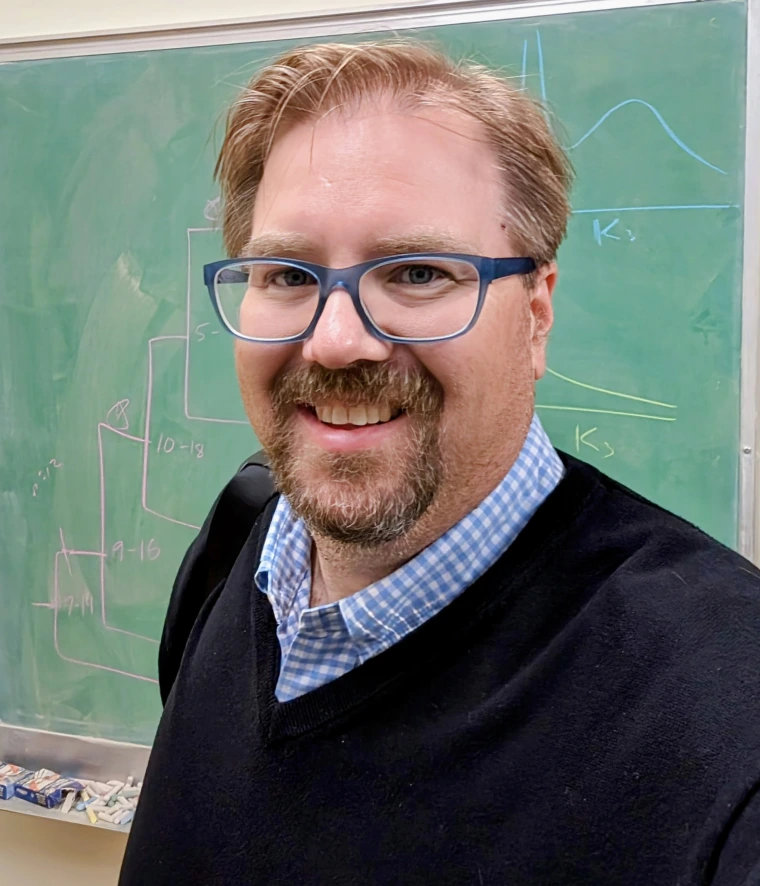
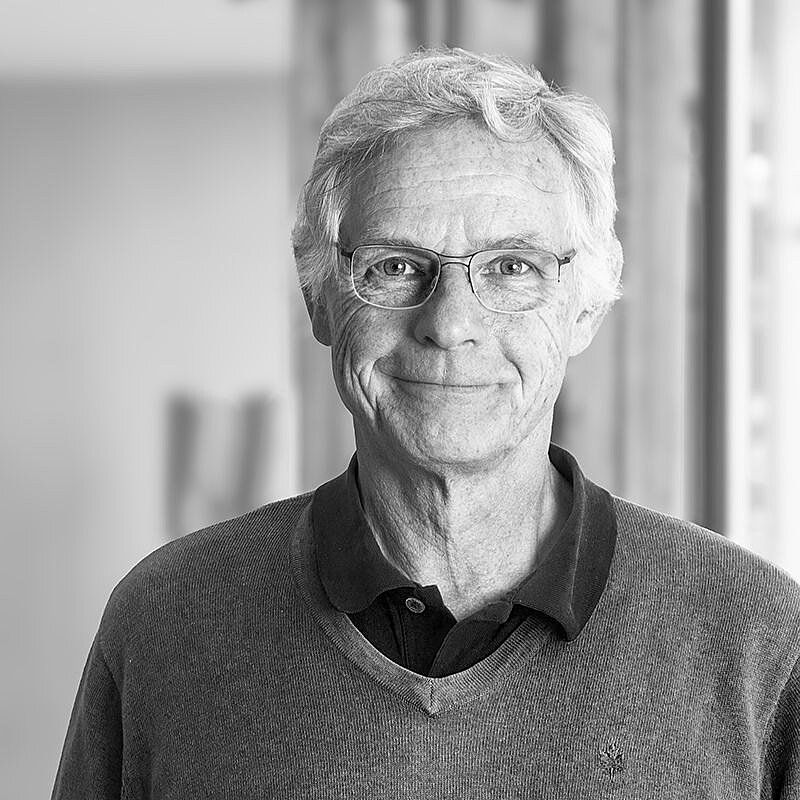
Barbara Sharanowski is a Professor in the Department of Biology at the University of Central Florida (College of Sciences). Her research integrates phylogenetics, genomics, and ecology to study parasitic Hymenoptera evolution, particularly Braconidae wasps, with applications in biodiversity conservation and biocontrol. She directs an active lab developing mobile tools for integrated pest management. Education includes advanced degrees in Entomology/Evolutionary Biology. Research focuses on: Macroevolutionary patterns in parasitic wasps Genome evolution and viral symbionts in insects Biocontrol optimization using digital solutions Publications emphasize insect systematics, with recent work exploring genomic adaptations in parasitoids and field applications for sustainable agriculture. Awards include leadership of the International Society of Hymenopterists and NSF grants. Mentorship spans 6+ graduate students studying wasp taxonomy and tri-trophic interactions. Lab activities include international fieldwork and bioinformatics tool development.
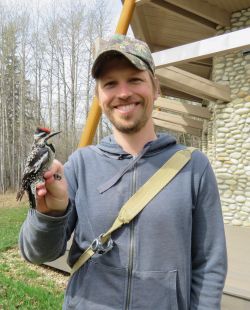
Brian Weeks is an Associate Professor in the School for Environment and Sustainability at the University of Michigan, where he joined as an Assistant Professor in 2019. His research focuses on understanding how species and communities respond to human-induced environmental changes, with particular emphasis on avian systems. Weeks leads an active research group that integrates museum specimen-based work, genomics, and field studies to investigate biodiversity responses to global change. Weeks' research interests span evolutionary ecology, climate change biology, and biodiversity conservation. His work primarily examines how bird species and communities have responded to environmental change through morphological adaptations. He combines museum-, field-, and lab-based approaches to study evolutionary processes across multiple scales, from macroevolutionary patterns in the Solomon Islands to contemporary changes in North American migratory birds. His lab has developed innovative methods like Skelevision for high-throughput measurement of functional traits from museum skeletal specimens. His publication record shows a strong focus on climate-driven morphological changes in birds, with recent work demonstrating how warming temperatures drive size reductions while simultaneously increasing wing length. His research has revealed that smaller-bodied species change at faster rates, and that migration timing shifts are decoupled from morphological changes. Weeks' lab also investigates biodiversity-ecosystem functioning relationships and extinction risk prediction. Packard Fellowship in Science and Engineering (2022) Ecological Society of America's George Mercer Award (2022) Katma Award, American Ornithological Society ISI Highly Cited paper (2021) Weeks advises multiple PhD and Master's students, and his lab collaborates extensively with researchers across institutions. His work has received significant media attention, with coverage in Science, The Wall Street Journal, The Washington Post, BBC News, and numerous international outlets. His research on birds shrinking due to climate change achieved an Altmetric score higher than 99.98% of papers tracked, reflecting its substantial scientific and public impact.
David Fletcher Wright is an Assistant Professor of Paleobiology in the School of Geosciences at the University of Oklahoma and Assistant Curator of Invertebrate Paleontology at the Sam Noble Museum of Natural History. He also holds research associate appointments at the National Museum of Natural History and the American Museum of Natural History. Wright combines specimen-based fossil data with statistical phylogenetics to study biological diversity through Earth's history, focusing on echinoderms and their evolutionary radiations. Ph.D., The Ohio State University (2016) M.S., Ohio University (2012) B.S., University of Kansas (2010) His research intersects macroevolution , phylogenetic comparative methods , and the evolutionary history of marine invertebrates , particularly crinoids (sea lilies, feather stars). He applies Bayesian techniques to fossil phylogeny reconstruction and investigates how ecological vs. geological changes drive diversification and mass extinctions. His work often leverages the ~500-million-year echinoderm fossil record as a natural experiment for testing evolutionary theories. Wright's 15 most recent publications span topics like crinoid systematics, Jurassic sea star origins, and the impact of seawater chemistry on echinoderm evolution. Common themes include phylogenetic uncertainty, character evolution modeling, and integrating fossil data with molecular phylogenies. Notable journals include Nature Communications Biology , Papers in Palaeontology , and Biological Reviews . 2025 Junior Faculty Fellowship, University of Oklahoma 2024 NSF grant ($1.17M) for Late Ordovician extinction research 2018–2020 Gerstner Scholar & Lerner-Gray Fellow, American Museum of Natural History 2017–2018 Peter Buck Postdoctoral Fellow, National Museum of Natural History 2016 Presidential Fellow, The Ohio State University Wright advises students in phylogenetic paleobiology, including Phifer, E.J. His lab collaborates globally on projects like the Anticosti Island biodiversity initiative and systematic revisions of Paleozoic echinoderms. He has authored or co-authored 35 peer-reviewed publications, describing 26 new species and 20 higher taxa, with over 878 citations and an h-index of 17.
Mike McWilliam is a Researcher at James Cook University, affiliated with the ARC Centre of Excellence for Coral Reef Studies (2005–2022). His work focuses on coral reef ecosystems, biogeography, and the impacts of human activities on reef resilience. He holds a PhD from James Cook University under Prof. Terry Hughes and Dr. Mia Hoogenboom, following a degree in biological sciences from the University of Oxford, where he specialized in deep-sea coral biogeography. His research interests include coral diversity, reef ecosystem functions, and responses to climate change. He explores multi-scale reef dynamics—from population-level processes to macroevolutionary patterns—and investigates how historical climate shifts inform current reef management strategies. His work bridges ecological, evolutionary, and applied conservation science. Publications highlight coral bleaching mechanisms, reef recovery trajectories, and biodiversity monitoring. His research emphasizes functional trait diversity and how it mediates reef resilience to disturbances like ocean warming and acidification. He collaborates with institutions globally to advance coral reef conservation strategies. While no scientific awards are explicitly mentioned, his contributions to understanding climate-driven reef transformations are notable. His role in the ARC Centre involved managing large-scale ecological datasets and advancing field methodologies for reef monitoring. He has advised on coral restoration strategies and participated in interdisciplinary projects linking marine biology with climate science.
Rebecca Kimball is a Professor in the Department of Biology at the University of Florida , focusing on evolutionary biology through molecular techniques and field research. Her work spans three primary areas: phylogenetics for comparative studies, microevolutionary processes like mating systems and sexual selection, and linking genomic changes to organismal evolution. Education : Ph.D. (University of New Mexico, 1995) Research Themes : Phylogenetic reconstruction, genome-phenome mapping, sensory system evolution, and avian diversification. Her lab, the Braun-Kimball Lab , trains students in phylogenetics, computational biology, and population genetics. Current projects include galliform evolution, chemosensory systems in vultures, and hybridization studies in paradise flycatchers. She collaborates on NSF-funded phylogenomic initiatives and emphasizes rigorous lab practices, including long-term commitments for researchers and interdisciplinary training. Scientific Awards : No explicit awards listed, but her lab receives external grants (e.g., NSF, University Scholars Program). Advising & Grants : Mentors numerous graduate and undergraduate researchers. Lab members often co-author publications and pursue independent projects. Grants focus on phylogenomic tools and avian evolutionary questions. Labs & Teams : Leads the Braun-Kimball Lab, which engages in global collaborations (e.g., Field Museum, New York State Museum) and interdisciplinary work in genomics and ecology.
Michael Landis is an Assistant Professor in the Department of Biology at Washington University in St. Louis, with a courtesy appointment in the Department of Computer Science & Engineering. He obtained his PhD in Biology from UC Berkeley, followed by postdoctoral fellowships at Iowa State University and Yale University. His research focuses on computational and statistical approaches to understand evolutionary processes, particularly phylogenetics, biogeography, and trait evolution. He develops probabilistic models and open-source software (e.g., RevBayes) to analyze evolutionary patterns in biological datasets. His work spans topics like historical biogeography, phylogenetic biome shifts, and the evolution of ecological interactions. Landis also teaches courses in bioinformatics and computational biology. His lab actively collaborates on projects involving plant radiations (e.g., Hawaiian plants) and viral phylogeography. Funded by NSF and other grants, his research integrates methods from computer science, statistics, and evolutionary biology. Education: PhD in Biology, UC Berkeley; Postdocs at Iowa State and Yale. Research interests include phylogenetic modeling, Bayesian inference, and deep learning applications in evolutionary studies. His lab emphasizes open-source tools and community-driven science. Current students and postdocs work on topics like chromosome evolution, viral spread dynamics, and phenotypic diversification. Lab values prioritize collaboration, mentorship, and balancing personal-professional life.
Andrew Du is an Assistant Professor in the Department of Anthropology and Geography at Colorado State University, within the College of Liberal Arts. His research focuses on the ecology of ancient hominins and the biases in the fossil record affecting paleoecological interpretations. He employs quantitative methods to analyze fossil assemblages and infer hominin spatiotemporal distributions. Education: Ph.D. and M.Phil. in Hominid Paleobiology, The George Washington University B.S. in Evolutionary Anthropology, Rutgers University Research Interests: Paleoanthropology, human evolution, paleoecology, macroecology, macroevolution, taphonomy, Plio-Pleistocene eastern Africa, and quantitative methods. Current projects include studying time-averaging effects in fossil assemblages, large mammal diversity in the Omo-Turkana Basin, and modeling hominin distributions. Teaching & Labs: Teaches courses on human origins, evolution, and data analysis. Maintains a lab with clear cultural norms and mentorship expectations outlined in accessible documents. Active in developing graduate-level R tutorials for statistical methods.
Andy Purvis is a Professor at Imperial College London's Department of Life Sciences (Silwood Park) with a part-time affiliation at the Natural History Museum. His research focuses on biodiversity science, integrating macroevolutionary patterns with global change impacts. Key projects include the PREDICTS initiative modeling biodiversity responses to human activities and the 'Descent into the Icehouse' study on planktonic foraminifera evolution during climate shifts. He leads a lab exploring phylogenetic diversity, ecosystem service vulnerability, and species distribution dynamics. Collaborations span institutions like UNEP-WCMC and Microsoft Research. His work bridges theory and practice, informing conservation policy through tools like the Living Planet Index. Over 20 students have been mentored across NERC and EU-funded programs. Research spans macroevolution, climate change, and functional biodiversity, with outputs in journals like Science and Ecology . Education and training opportunities include the MRes in Biodiversity Informatics & Genomics at Silwood Park, emphasizing programming, genomics, and spatial analysis. Current grants include NERC funding for soil biodiversity-ecosystem function linkages. His lab's interdisciplinary approach addresses pressing challenges in biodiversity monitoring and ecosystem resilience.
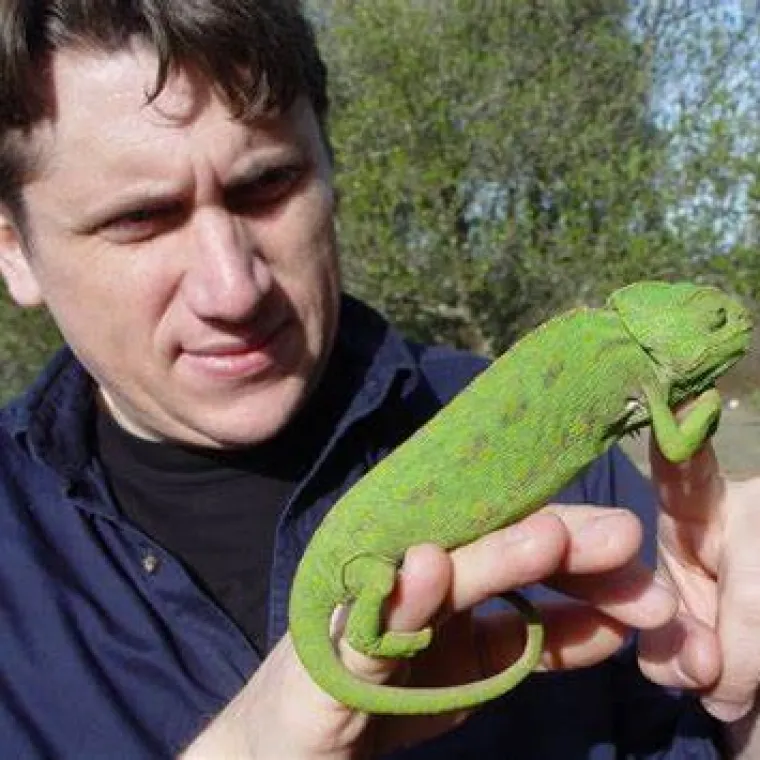
John J. Wiens is a Professor in the Department of Ecology and Evolutionary Biology at the University of Arizona since 2013. Previously, he held positions at Stony Brook University as an Assistant (2002–2006) and Associate Professor (2006–2012), and roles at the Carnegie Museum of Natural History as Curator (1995–2002). He earned a B.S. in Systematics and Ecology from the University of Kansas (1991) and a Ph.D. in Zoology from the University of Texas at Austin (1995). His work is distinguished by honors like the ISI Highly Cited Researcher award and editorial leadership roles at journals including Quarterly Review of Biology and Ecology Letters . Research Interests: Wiens’ lab focuses on three key areas: (1) integrative phylogenetic approaches to evolutionary and ecological questions, (2) phylogenetic theory and methods, and (3) reptile/amphibian evolution. Specific topics include species richness patterns, niche evolution, life-history traits, and climate change impacts. Methodologies combine genetic, morphological, and environmental data with computational approaches. Awards: His recognition includes the President’s Award from the American Society of Naturalists (2011) and the BIOS Distinguished Lecturer (2009). He has served on editorial boards for major journals and contributed to policy through biodiversity research. Grants and Advising: Wiens has advised numerous students (not listed here) and secured funding for projects on phylogenomics, climate change, and biodiversity. His lab collaborates globally, emphasizing open-access data sharing through tools like SuperCRUNCH. Labs/Teams: His research group integrates fieldwork and computational biology, focusing on amphibians, reptiles, and broader evolutionary patterns. Collaborations emphasize large-scale datasets and phylogenetic synthesis.
Luke J Harmon serves as Professor in the Department of Biological Sciences within the College of Science at the University of Idaho, with additional appointments in the Initiative for Bioinformatics and Evolutionary Studies, Institute for Interdisciplinary Data Sciences, and Office of Research and Economic Development. Education: PhD in Evolution, Ecology, and Population Biology (2005) from Washington University in St. Louis BS in Zoology (1998) from Iowa State University Research Focus: Harmon's work integrates phylogenetic comparative methods with computational biology to investigate adaptive radiations , trait evolution , and biogeographic patterns . His research bridges micro-macroevolutionary scales through innovative statistical modeling, particularly in evolutionary medicine applications and speciation dynamics. As developer of key R packages ( rwty , treeducken , SSARP ), he advances methodological frameworks for analyzing evolutionary rates and character correlations. Publication Trends: Recent work (2022-2025) demonstrates increasing emphasis on software tool development for phylogenetic analysis, with significant contributions to evolutionary oncology, fire-adapted trait evolution in conifers, and niche theory applications in adaptive radiations. His publications consistently address methodological challenges in modeling rate heterogeneity, species delimitation, and cross-scale evolutionary processes. Research Infrastructure: Harmon leads the Harmon Lab, which operates within the University of Idaho's Initiative for Bioinformatics and Evolutionary Studies. The lab focuses on computational approaches to evolutionary questions, leveraging high-performance computing resources and interdisciplinary collaborations through the Institute for Interdisciplinary Data Sciences.
Michael Landis is Assistant Professor of Biology at Washington University in St. Louis, developing statistical models and computational tools to reconstruct evolutionary patterns. Research integrates phylogenetics, biogeography, and trait evolution to study historical biodiversity dynamics across deep timescales. Key research areas: Developing Bayesian methods for phylogenetic biogeography Modeling biome shifts and diversification patterns Creating open-source software for evolutionary analysis (RevBayes, phyddle) Reconstructing ancestral networks for pierid butterflies Recent work includes novel approaches for state-dependent diversification modeling, deep learning applications in phylogenetics, and global-scale analyses of butterfly evolution. The lab emphasizes collaborative software development and evolutionary hypothesis testing.
Dr. Max Stockdale is a Senior Lecturer at the School of Geographical Sciences of the University of Bristol. He holds an MSci and PhD, with research focused on paleontology, evolutionary biology, and biogeography. His work explores topics such as dinosaur osteoderms, species distribution modeling in fossil organisms, and body size evolution in crocodile-line archosaurs. Education: MSci and PhD (degrees details not provided explicitly). Research Interests: Dr. Stockdale’s research integrates paleontological data with ecological and evolutionary frameworks. Key areas include understanding sexual dimorphism in dinosaurs, reconstructing niche suitability across mass extinction events (e.g., Cretaceous-Paleogene boundary), and analyzing environmental drivers of body size evolution in archosaurs. He also develops statistical methods for studying extinct taxa and investigates locomotion correlates in carnivorous mammals. Publications: His recent work emphasizes macroevolutionary patterns in crocodylomorpha and critiques methodological approaches in body size analysis. Themes include the interplay between environmental pressures and morphological adaptations in prehistoric life. Awards: No scientific awards explicitly mentioned. Advising & Grants: No advising records or grants listed in available data. His research likely involves collaborations with paleontology and evolutionary biology teams.
Dr. V. Louise Roth is a Professor of Biology and Professor in the Department of Evolutionary Anthropology at Duke University's Trinity College of Arts & Sciences. She holds a Ph.D. from Yale University (1982). Her research focuses on evolutionary changes in mammalian size, shape, and functional morphology, particularly in cetaceans, elephants, and squirrels. She employs phylogenetic approaches, morphometric analyses, and molecular data to study macroevolutionary patterns and adaptation. Key research areas include the evolution of cetacean skull structures, island dwarfism in mammoths, and the ecological implications of Pleistocene carnivore extinctions. Dr. Roth has secured grants from the National Institutes of Health (NIH) and National Science Foundation (NSF), supporting projects on developmental biology and evolutionary processes. Her work has been featured in prominent outlets like *Proceedings of the National Academy of Sciences* and *Trends in Ecology & Evolution*. Teaching responsibilities include courses on mammalian biology, macroevolution, and research methodologies. Her contributions bridge paleontology, developmental biology, and ecology, advancing our understanding of evolutionary mechanisms across diverse taxa.
Michael S. Barker is an Associate Professor and Associate Department Head in the Department of Ecology and Evolutionary Biology at the University of Arizona. He leads the Bioinformatics Degree Program and has held academic roles since 2011. His research focuses on the origins of biodiversity through genomic events like polyploidy and hybridization, integrating computational tools with molecular and phylogenetic approaches. Education: Ph.D., Evolutionary Biology, Indiana University (2009) M.S., Botany, Miami University (2003) B.S., Biology, Denison University (2001) Research interests include genomic evolution, with studies on Brassica crops, Selaginella lycophytes, and macroevolutionary patterns across eukaryotes. His work bridges micro- and macroevolutionary scales to understand genome-driven diversity. Awards include the Botanical Society of America’s Emerging Leader Award (2016) and the NSERC-BRITE Postdoctoral Fellowship (2009–2010). He contributes to editorial roles, including editing a Special Issue on polyploidy in the American Journal of Botany . His lab collaborates widely, generating genomic data to explore evolutionary processes. While no specific grants or advising details are listed, his leadership roles highlight active mentorship and program development.
Prof. Bernd Rosslenbroich is a Professor of Phenomenological Foundations of Natural Science and Biology at Alanus Hochschule's Waldorf Institute. He previously led the Institute for Evolutionary Biology and Morphology at the University of Witten/Herdecke since 2005 and completed his Habilitation there in 2006 on 'Increase in autonomy as a mode of macroevolution.' His work bridges evolutionary biology, organismic theory, and Waldorf educational science. Current university: Alanus Hochschule Former roles: Head of Evolutionary Biology Institute (Witten/Herdecke), Postdoc at University of Giessen Research focuses on biological autonomy, organismic systems, and evolutionary patterns. Key contributions include books on 'Properties of Life' (MIT Press 2023) and 'On the Origin of Autonomy' (Springer 2014). His articles analyze autonomy development across evolutionary history and its implications for education and medicine. Publications emphasize interdisciplinary connections between biology, philosophy, and pedagogy, particularly in Waldorf school curricula. No specific awards listed, but extensive academic contributions in Goetheanist biology and evolutionary theory are evident.