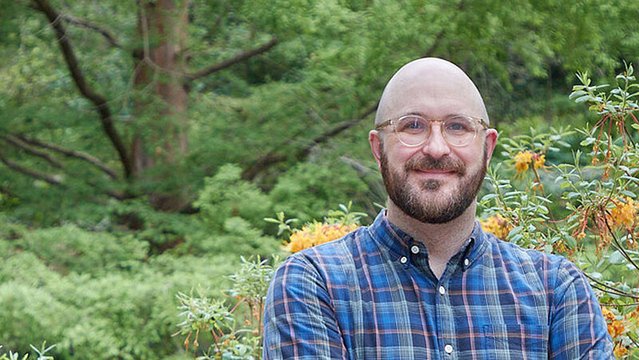
Brian Sidlauskas is a Professor in the School of Science and Engineering at Tulane University, specializing in evolutionary biology and fish diversity research. His work integrates multiple biological disciplines to advance understanding of freshwater ecosystems. Education: PhD, University of Chicago Research Focus: Professor Sidlauskas conducts cutting-edge research in ichthyology and systematics, employing morphometric analysis to study macroevolutionary patterns and biodiversity in freshwater fish populations. His methodologies bridge taxonomic classification with ecological and evolutionary frameworks, contributing significantly to conservation biology and evolutionary studies. Contact: Available for collaboration and student mentorship through university channels.
Norman Wickett is a Professor of Systematic and Evolutionary Botany at the University of Vienna, Austria, and previously held positions at Clemson University (2022–2024) and Northwestern University (2011–2022). His research focuses on understanding evolutionary patterns and processes driving plant biodiversity, integrating genetic/genomic data with traits like floral scent and habitat preference. PhD in Ecology and Evolutionary Biology (University of Connecticut, 2007) BSc in Biology (Botany specialization, University of British Columbia, 2001) Research spans macroevolutionary scales, from the origin of land plants 400+ million years ago to recent speciation events in Hawaii. Key areas include plant parasitism, genome duplication, and bioinformatics tool development. He has been involved in major genomic initiatives (e.g., 1KP Project) and served as Senior Associate Editor for Applications in Plant Sciences . Additional affiliations include the Field Museum of Natural History (2010–2020) and Chicago Botanic Garden (2011–2022). Since 2024, he is Secretary and Board Member of the Botanical Society of America.
Hannah L. Owens is an Assistant Professor at the Center for Mountain Biodiversity within the Biodiversity Section of the Globe Institute at the University of Copenhagen. Her work focuses on evolutionary macroecology, integrating biogeography, phylogenetics, and climate change science to understand broad-scale biodiversity patterns across diverse taxonomic groups. Dr. Owens' research spans multiple organisms including fishes, butterflies, birds, plants, frogs, triatomine bugs, and various parasites. She has developed expertise in assembling large datasets from natural history collections and community science observations, with a particular emphasis on creating computational tools for repeatable and transparent geographic data analysis. Her research interests center around understanding how macroevolutionary and macroecological processes interact to generate biodiversity patterns. She is particularly interested in phylogenetic relationships, species distribution modeling, and the impacts of climate change on biodiversity across spatial and temporal scales. Her methodological approach combines large-scale data assembly with innovative analytical frameworks to uncover fundamental patterns in biodiversity. Analysis of her recent publications shows a strong focus on phylogenomic studies of diverse organisms (particularly butterflies and birds), methodological advances in species distribution modeling, and promoting open science practices in ecology and evolution. Her work often involves large international collaborations addressing fundamental questions in biodiversity science. Research Approach: Integration of macroevolutionary and macroecological perspectives Methodological Focus: Development of tools for transparent, repeatable geographic data analysis Taxonomic Expertise: Broad experience across multiple organism groups with fishes as primary focus Dr. Owens maintains an active research program with publications in high-impact journals including Nature Ecology and Evolution, demonstrating her significant contributions to understanding biodiversity patterns and processes. Her work bridges theoretical evolutionary biology with practical applications for conservation and environmental management.
Daniel Lehrmann serves as the Gertrude and Walter Pyron Professor in the Geosciences Department at Trinity University, where he teaches paleontology, sedimentary geology, basin analysis, and field geology courses. Originally from Wisconsin, he earned his B.S. and M.S. from the University of Wisconsin system before completing his Ph.D. at the University of Kansas. His research program focuses on marine sedimentary basin evolution, carbonate platform development, Earth's chemical and biological system changes, diagenetic processes, and mass extinction events. Lehrmann employs a comprehensive methodological approach including field work, satellite image analysis, GIS, petrography, geochemistry, biostratigraphy, and forward stratigraphic modeling. His fieldwork spans the Nanpanjiang Basin in south China, additional Chinese basins, and global sites including Indonesia, Japan, Turkey, Saudi Arabia, Italy, Mexico, the Gulf of Mexico, and central/western Texas. Lehrmann's recent publications reveal strong trends in Triassic carbonate platform evolution, Permian-Triassic boundary events, microbialite formation, and advanced analytical techniques including machine learning applications in carbonate petrography. His work demonstrates interdisciplinary integration of paleontology, sedimentology, geochemistry, and structural geology to address fundamental questions in Earth history. Erasmus Haworth Distinguished Alumni Honors in Geology Award from the University of Kansas SEPM best paper award Honorable mention for best paper in Palaios Lehrmann has co-advised graduate students at Rice University, Stanford University, the University of Alabama, and UTSA, while securing over $2 million in external funding from NSF, ACS Petroleum Research Fund, Fulbright Program, and oil companies over 25+ years. He serves as associate editor for the Journal of Sedimentary Research and AAPG Bulletin, and actively participates in geological organizations including the Geological Society of America, Southwest Research Institute, Edward Aquifer Authority, and Witte Museum. Lehrmann also provides geological support for UNESCO World Heritage sites in China and promotes AAPI diversity initiatives through the EAST executive committee.
Dr. Thomas Giarla is an Associate Professor of Biology at Siena University, where he has been a faculty member since 2015. He previously served as an Assistant Professor at Siena and was a Visiting Instructor at St. Olaf College. His academic journey includes a postdoctoral fellowship at Louisiana State University's Museum of Natural Science. Dr. Giarla earned his B.A. in Biology from Washington University in St. Louis and his Ph.D. in Ecology, Evolution, and Behavior from the University of Minnesota. His doctoral research focused on the systematics and biogeography of South American marsupials (opossums). Dr. Giarla's research centers on tropical small mammals, particularly rodents and shrews, with a focus on reconstructing evolutionary relationships, describing new species, and investigating the evolutionary forces that generate biodiversity. His work incorporates field, laboratory, and computational approaches to understand the evolutionary history of mammals across South America, Africa, and Southeast Asia. He uses genomic, biogeographic, and ecological data to connect population-level processes to macroevolutionary patterns. His research has led to the discovery and description of numerous new mammalian species, particularly in island ecosystems. His recent publications demonstrate a strong focus on phylogenetic systematics, taxonomic revisions, and biogeographical patterns in tropical mammals. Dr. Giarla's work spans multiple continents and has significantly contributed to our understanding of mammalian diversity and evolution. He has published extensively in leading journals including American Museum Novitates, Journal of Mammalogy, and Bulletin of the American Museum of Natural History. Dr. Giarla has received several research awards at Siena University, including the Siena College Award for Excellence in Research (2022) and multiple Committee on Teaching & Faculty Development fellowships and grants (2016-2018). His commitment to research extends to teaching, where he incorporates authentic research experiences into his courses through the Genomics Education Partnership. As an educator, Dr. Giarla teaches General Biology I, Ecology, Biology of the Vertebrates, and Genomics and Bioinformatics. He particularly enjoys teaching Biology of the Vertebrates, which allows him to explore topics in ecology, evolution, behavior, and conservation of vertebrate animals. He believes strongly in providing students with hands-on field experiences to study organisms in their natural habitats.
Sterling Nesbitt is an Associate Professor in the Department of Geosciences at Virginia Tech's College of Science. Born on March 25, 1982, in Mesa, Arizona, he is a prominent American paleontologist known for his extensive work on archosaur evolution and the origins of dinosaurs. Dr. Nesbitt maintains multiple research affiliations with prestigious institutions including the American Museum of Natural History, the Vertebrate Paleontology Lab at The University of Texas at Austin, the Virginia Museum of Natural History, the North Carolina Museum of Natural Sciences, and the National Museum of Natural History. Dr. Nesbitt's research focuses on paleontology, particularly the evolutionary patterns of archosaurs during the Triassic period. His work spans multiple continents, examining fossil records from Tanzania, Madagascar, the southwestern United States, and other global locations. He has made significant contributions to understanding the early diversification of archosaurs, the relationships between dinosaurs and their closest relatives, and the ecological dynamics of Triassic ecosystems. His research often involves detailed morphological analyses, phylogenetic studies, and examinations of how major extinction events shaped vertebrate evolution. With over 100 peer-reviewed publications and more than 7,700 citations, Dr. Nesbitt's work has appeared in top scientific journals including Nature, Science, and Proceedings of the National Academy of Sciences. His research shows a consistent focus on identifying new species, reconstructing evolutionary relationships, and understanding the biogeographic patterns of early archosaurs and dinosaurs. Dr. Nesbitt has mentored numerous students and collaborated with researchers worldwide. His work has been supported by various grants that have enabled extensive fieldwork and laboratory analyses. He has also contributed to public education through appearances in documentaries such as 'Dinosaurs Alive!' and 'Walking With Dinosaurs.'
Fabrice Lihoreau is a Professor at the University of Montpellier and a key member of the Paleontology Team at the Institute of Evolutionary Sciences of Montpellier (ISEM). His research leverages fossil data to study mammalian evolution, with specialization in artiodactyls, phylogeny, and macroevolutionary patterns. Research Focus: He employs comparative anatomy, paleobiological analysis, and fieldwork (Africa/Europe) to investigate: Origin and diversification of hippopotamids Paraphyly of anthracotheres Artiodactyl radiation during Eocene hyperthermal events Teaching: He lectures on metazoan diversity, anatomy, and macroevolution. He co-developed the BEE Master’s in paleontology—a rare French program training students in fossil analysis and evolutionary theory. Affiliations: His work is anchored at ISEM, a multidisciplinary institute (partnering with CNRS, IRD, EPHE, CIRAD, INRAP) dedicated to biodiversity and evolutionary research.