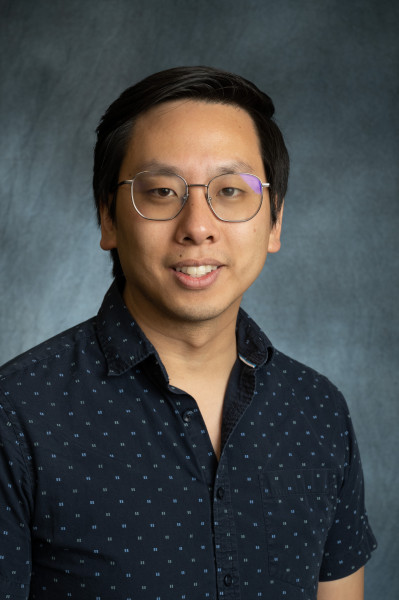
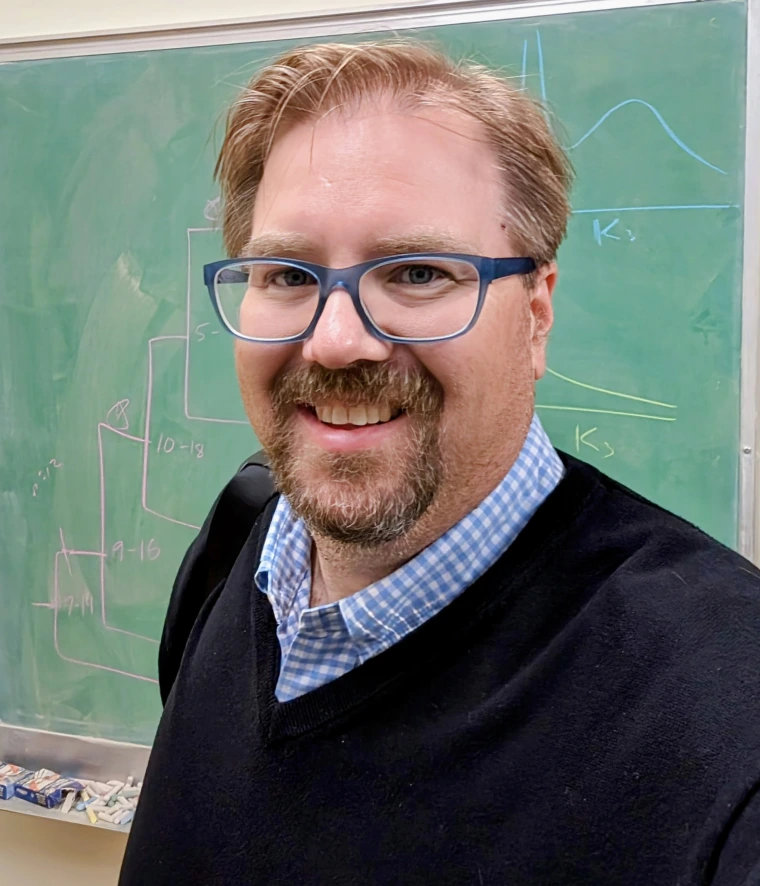
Andrew Du is an Assistant Professor in the Department of Anthropology and Geography at Colorado State University, within the College of Liberal Arts. His research focuses on the ecology of ancient hominins and the biases in the fossil record affecting paleoecological interpretations. He employs quantitative methods to analyze fossil assemblages and infer hominin spatiotemporal distributions. Education: Ph.D. and M.Phil. in Hominid Paleobiology, The George Washington University B.S. in Evolutionary Anthropology, Rutgers University Research Interests: Paleoanthropology, human evolution, paleoecology, macroecology, macroevolution, taphonomy, Plio-Pleistocene eastern Africa, and quantitative methods. Current projects include studying time-averaging effects in fossil assemblages, large mammal diversity in the Omo-Turkana Basin, and modeling hominin distributions. Teaching & Labs: Teaches courses on human origins, evolution, and data analysis. Maintains a lab with clear cultural norms and mentorship expectations outlined in accessible documents. Active in developing graduate-level R tutorials for statistical methods.
Andy Purvis is a Professor at Imperial College London's Department of Life Sciences (Silwood Park) with a part-time affiliation at the Natural History Museum. His research focuses on biodiversity science, integrating macroevolutionary patterns with global change impacts. Key projects include the PREDICTS initiative modeling biodiversity responses to human activities and the 'Descent into the Icehouse' study on planktonic foraminifera evolution during climate shifts. He leads a lab exploring phylogenetic diversity, ecosystem service vulnerability, and species distribution dynamics. Collaborations span institutions like UNEP-WCMC and Microsoft Research. His work bridges theory and practice, informing conservation policy through tools like the Living Planet Index. Over 20 students have been mentored across NERC and EU-funded programs. Research spans macroevolution, climate change, and functional biodiversity, with outputs in journals like Science and Ecology . Education and training opportunities include the MRes in Biodiversity Informatics & Genomics at Silwood Park, emphasizing programming, genomics, and spatial analysis. Current grants include NERC funding for soil biodiversity-ecosystem function linkages. His lab's interdisciplinary approach addresses pressing challenges in biodiversity monitoring and ecosystem resilience.
John J. Wiens is a Professor in the Department of Ecology and Evolutionary Biology at the University of Arizona since 2013. Previously, he held positions at Stony Brook University as an Assistant (2002–2006) and Associate Professor (2006–2012), and roles at the Carnegie Museum of Natural History as Curator (1995–2002). He earned a B.S. in Systematics and Ecology from the University of Kansas (1991) and a Ph.D. in Zoology from the University of Texas at Austin (1995). His work is distinguished by honors like the ISI Highly Cited Researcher award and editorial leadership roles at journals including Quarterly Review of Biology and Ecology Letters . Research Interests: Wiens’ lab focuses on three key areas: (1) integrative phylogenetic approaches to evolutionary and ecological questions, (2) phylogenetic theory and methods, and (3) reptile/amphibian evolution. Specific topics include species richness patterns, niche evolution, life-history traits, and climate change impacts. Methodologies combine genetic, morphological, and environmental data with computational approaches. Awards: His recognition includes the President’s Award from the American Society of Naturalists (2011) and the BIOS Distinguished Lecturer (2009). He has served on editorial boards for major journals and contributed to policy through biodiversity research. Grants and Advising: Wiens has advised numerous students (not listed here) and secured funding for projects on phylogenomics, climate change, and biodiversity. His lab collaborates globally, emphasizing open-access data sharing through tools like SuperCRUNCH. Labs/Teams: His research group integrates fieldwork and computational biology, focusing on amphibians, reptiles, and broader evolutionary patterns. Collaborations emphasize large-scale datasets and phylogenetic synthesis.
Martin Ryberg is a Professor at the Department of Organismal Biology, Uppsala University, specializing in systematic biology with a focus on Fungi. He holds academic merits of a PhD and Docent title. His research emphasizes fungal diversity, evolutionary biology, and bioinformatics, particularly studying ectomycorrhizal symbiosis and fungal phylogenetics. He leads the Ryberg group, contributing to global initiatives like the classification of fungi and the Outline of Fungi project. Education: PhD in Mycology, Docent (Associate Professor) qualification. Research interests include systematic mycology, fungal taxonomy, molecular evolution, and ecological genetics. His work spans fungal biodiversity in tropical regions, symbiotic relationships, and computational tools for phylogenetic analysis. He has co-developed software like ARBitR for genome assembly. Recent publications highlight topics such as microclimate effects on fungal production, evolutionary mechanisms in Marasmius species, and phylogenetic revisions of genera like Floccularia and Piloderma. He addresses challenges in fungal species discovery and DNA-based typification. Grants and collaborations involve global consortiums and studies on African ectomycorrhizal communities. His lab is based at the Evolutionary Biology Centre (EBC), Uppsala.
Bjarte Hannisdal is an Associate Professor in the Department of Geosciences at the University of Bergen, Norway, and affiliated with the Bjerknes Centre for Climate Research. He plays a key leadership role in iEarth, a national Centre of Excellence in geoscience education, serving as the iEarth Education Chair and Head of Focus Area 1, which aims to develop innovative frameworks for higher education in geosciences. Department of Geosciences, University of Bergen Bjerknes Centre for Climate Research iEarth – Centre of Excellence in Geoscience Education His research lies at the intersection of geobiology, paleontology, and Earth system science, with a strong focus on quantitative methods. He investigates Earth system evolution, causality in dynamical systems, and the co-evolution of life and the planet using advanced statistical and information-theoretic approaches applied to geological and fossil records. His work spans microbial ecology in deep-sea sediments, paleoclimatology through isotope analysis, and the detection of causal interactions in deep time. Hannisdal has made significant contributions through a high-impact publication record, with articles in top journals such as Science , Nature Geoscience , PNAS , and Physical Review E . His recent publications highlight trends in applying machine learning and information theory to geoscience problems, including microbial responses to oxygen, causality detection in incomplete records, and the calibration of geochemical proxies. These works reflect a strong interdisciplinary trend, integrating biology, physics, and computational methods into Earth sciences. He is actively involved in higher education, having developed and taught courses such as GEOV114 (Introduction to Geobiology) and GEOV302 (Data Analysis in Geosciences), and contributes to others like GEOV344 and BIO318. His educational research explores student-centered learning and computational skill development. He has supervised doctoral research, including Dario Blumenschein’s project on educational change. His work is supported by funding from the Research Council of Norway, Trond Mohn Foundation, and EU Horizon 2020. Hannisdal collaborates widely across institutions and disciplines, as evidenced by his co-authorship with researchers from Norway, the US, Germany, and others.
Dr. Kamran Safi is a Group Leader at the Max Planck Institute of Animal Behavior (Konstanz, Germany), holding a permanent position as a Senior Researcher (Principal Investigator) with the Computational Ecology Lab. He is also affiliated with the International Max Planck Research School (IMPRS) for Organismal Biology as a faculty member. Education: PhD in Biology (2007), University of Zürich: Thesis on social sexual segregation in bats MSc in Biology (2001), University of Zürich: Thesis on olfactory communication in Bechstein’s bats Bachelor’s in Biology (2000), University of Zürich Research Interests: Focus on movement ecology, macro-ecology, and macro-evolution. Key areas include analyzing animal-environment interactions using remote sensing and sensor data, modeling energy landscapes, and understanding biodiversity patterns. Methodological expertise includes computational ecology, probabilistic analysis, and interdisciplinary data fusion. Articles Summary: Recent work spans animal flight mechanics (e.g., golden eagles using gravity waves), conservation applications (e.g., vulture nesting habitat loss), and software development (e.g., move2 R package). Themes include climate impacts on movement, remote sensing for ecology, and energy efficiency in flight. Achievements: Pioneered MoveApps, an open analysis platform for tracking data. Authored over 40 peer-reviewed articles, with contributions to conservation protocols like the EDGE2 framework. Grants & Labs: Leads the Animal-Environment Interactions Lab and collaborates globally. Projects include studying vultures in drylands, eagle flight in the Alps, and developing tools like the SOS framework for Earth observation integration.
Luke J Harmon serves as Professor in the Department of Biological Sciences within the College of Science at the University of Idaho, with additional appointments in the Initiative for Bioinformatics and Evolutionary Studies, Institute for Interdisciplinary Data Sciences, and Office of Research and Economic Development. Education: PhD in Evolution, Ecology, and Population Biology (2005) from Washington University in St. Louis BS in Zoology (1998) from Iowa State University Research Focus: Harmon's work integrates phylogenetic comparative methods with computational biology to investigate adaptive radiations , trait evolution , and biogeographic patterns . His research bridges micro-macroevolutionary scales through innovative statistical modeling, particularly in evolutionary medicine applications and speciation dynamics. As developer of key R packages ( rwty , treeducken , SSARP ), he advances methodological frameworks for analyzing evolutionary rates and character correlations. Publication Trends: Recent work (2022-2025) demonstrates increasing emphasis on software tool development for phylogenetic analysis, with significant contributions to evolutionary oncology, fire-adapted trait evolution in conifers, and niche theory applications in adaptive radiations. His publications consistently address methodological challenges in modeling rate heterogeneity, species delimitation, and cross-scale evolutionary processes. Research Infrastructure: Harmon leads the Harmon Lab, which operates within the University of Idaho's Initiative for Bioinformatics and Evolutionary Studies. The lab focuses on computational approaches to evolutionary questions, leveraging high-performance computing resources and interdisciplinary collaborations through the Institute for Interdisciplinary Data Sciences.
Dr. Natasha S. Vitek is an Assistant Professor in the Department of Ecology and Evolution at Stony Brook University , where she leads the Vitek Lab . Her research integrates vertebrate paleontology, evolutionary biology, and morphometrics to understand how intraspecific variation scales into macroevolutionary change over geological time. Education: Ph.D. in Vertebrate Paleontology, University of Florida (2019) Research Interests: Dr. Vitek's work centers on two major themes: Fossil Record Analysis: She investigates how unbranching lineages change over 1000+ year timescales using exceptional fossil records like the Bighorn Basin, Wyoming. Her focus is on dental changes in small mammals during the Paleocene-Eocene Thermal Maximum (~56 million years ago). Modern Analogues: She studies morphological variation in extant vertebrates to develop models that help interpret fossil records, particularly focusing on how spatial variation in modern species can inform temporal variation in fossils. Lab and Mentorship: As Principal Investigator of the Vitek Lab , she mentors a diverse team including postdocs, PhD candidates, graduate students, and undergraduates. The lab emphasizes integrating modern genomics and morphometrics with deep-time fossil data. Notable lab members include postdoc Robert W. Burroughs and PhD candidate Alexandra Pamfilie.
Michael Landis is Assistant Professor of Biology at Washington University in St. Louis, developing statistical models and computational tools to reconstruct evolutionary patterns. Research integrates phylogenetics, biogeography, and trait evolution to study historical biodiversity dynamics across deep timescales. Key research areas: Developing Bayesian methods for phylogenetic biogeography Modeling biome shifts and diversification patterns Creating open-source software for evolutionary analysis (RevBayes, phyddle) Reconstructing ancestral networks for pierid butterflies Recent work includes novel approaches for state-dependent diversification modeling, deep learning applications in phylogenetics, and global-scale analyses of butterfly evolution. The lab emphasizes collaborative software development and evolutionary hypothesis testing.
Professor Timothy Barraclough is a leading evolutionary biologist affiliated with the University of Oxford in the Department of Biology . Previously, he spent 23 years at Imperial College London’s Silwood Park campus, where he served as a Royal Society University Research Fellow and later as Professor of Evolutionary Biology. His research focuses on the evolutionary biology of species diversity, integrating theoretical and statistical approaches with molecular, genomic, experimental, and field data across diverse organisms. His work spans questions about speciation, adaptive divergence, and the role of biodiversity in complex ecosystems. Current projects investigate the asexual evolution of bdelloid rotifers, evolutionary time-series of pathogenic fungi, and speciation dynamics in microbial communities. He has received recognition as a Royal Society University Research Fellow. Timothy Barraclough teaches evolutionary biology and ecology at undergraduate and postgraduate levels, including courses on evolutionary modeling and collaborative projects with non-academic partners. His publications cover transposable elements in rotifers, fungal genomics, bacterial adaptation constraints, and theoretical frameworks for understanding species interactions.
Dr. Nicholas Matzke is a Senior Lecturer at the School of Biological Sciences , University of Auckland, New Zealand. His research revolutionizes biogeography by integrating extinction, fossils, organismal traits, and paleogeography into computationally efficient frameworks. Education: PhD in Integrative Biology (2013), University of California, Berkeley MA in Geography (2003), University of California, Santa Barbara Double BSc in Biology and Chemistry (1998), Valparaiso University Dr. Matzke's research spans three major domains: phylogenetic biogeography (developing methods to model trait-dependent dispersal), bacterial flagellum evolution (collaborating on experimental and bioinformatic analyses), and macroevolutionary modeling (integrating fossils and morphological data). His work on the FBD-MSC model and trait-dependent dispersal has transformed divergence time estimation and biogeographical inference. Recent publications show consistent focus on: Integrating molecular and fossil data in phylogenies Quantifying trait-dispersal interactions in rails and crocodiles Modeling historical biogeography using BioGeoBEARS Reconstructing evolutionary timelines with Bayesian methods His 2021 work on Caninae phylogeny demonstrates the power of combined MSC-FBD approaches, while 2019 studies on crocodilian range expansion revealed unexpected trait-dispersal correlations. Scientific Recognition: 2015-2018: Discovery Early Career Researcher Award (DECRA) Fellow at Australian National University 2017: Associate Fellow of The Higher Education Academy As an accredited PhD supervisor with active Marsden Grant projects, Dr. Matzke trains students in phylogenetics, computational modeling, and paleogeographic reconstruction. His lab combines custom software development with empirical studies across diverse taxa, from Rana frogs to Crocodylus crocodiles.
Dr. Max Stockdale is a Senior Lecturer at the School of Geographical Sciences of the University of Bristol. He holds an MSci and PhD, with research focused on paleontology, evolutionary biology, and biogeography. His work explores topics such as dinosaur osteoderms, species distribution modeling in fossil organisms, and body size evolution in crocodile-line archosaurs. Education: MSci and PhD (degrees details not provided explicitly). Research Interests: Dr. Stockdale’s research integrates paleontological data with ecological and evolutionary frameworks. Key areas include understanding sexual dimorphism in dinosaurs, reconstructing niche suitability across mass extinction events (e.g., Cretaceous-Paleogene boundary), and analyzing environmental drivers of body size evolution in archosaurs. He also develops statistical methods for studying extinct taxa and investigates locomotion correlates in carnivorous mammals. Publications: His recent work emphasizes macroevolutionary patterns in crocodylomorpha and critiques methodological approaches in body size analysis. Themes include the interplay between environmental pressures and morphological adaptations in prehistoric life. Awards: No scientific awards explicitly mentioned. Advising & Grants: No advising records or grants listed in available data. His research likely involves collaborations with paleontology and evolutionary biology teams.
Dr. V. Louise Roth is a Professor of Biology and Professor in the Department of Evolutionary Anthropology at Duke University's Trinity College of Arts & Sciences. She holds a Ph.D. from Yale University (1982). Her research focuses on evolutionary changes in mammalian size, shape, and functional morphology, particularly in cetaceans, elephants, and squirrels. She employs phylogenetic approaches, morphometric analyses, and molecular data to study macroevolutionary patterns and adaptation. Key research areas include the evolution of cetacean skull structures, island dwarfism in mammoths, and the ecological implications of Pleistocene carnivore extinctions. Dr. Roth has secured grants from the National Institutes of Health (NIH) and National Science Foundation (NSF), supporting projects on developmental biology and evolutionary processes. Her work has been featured in prominent outlets like *Proceedings of the National Academy of Sciences* and *Trends in Ecology & Evolution*. Teaching responsibilities include courses on mammalian biology, macroevolution, and research methodologies. Her contributions bridge paleontology, developmental biology, and ecology, advancing our understanding of evolutionary mechanisms across diverse taxa.
Sandy Boucher is a Senior Lecturer in the Philosophy of Science at the University of New England (Australia), affiliated with the School of Humanities, Arts, and Social Sciences within the Faculty of Humanities, Arts, Social Sciences and Education. He holds a Ph.D. from the University of Melbourne, with a thesis titled 'Empiricism, Metaphysical Stances the Philosophy of Biology.' Prior to UNE, he taught at the University of Connecticut, University of Melbourne, and La Trobe University, and worked on the IARPA Critical Thinking and Argument Mapping Project. His research focuses on the philosophy of biology (functions, teleology, units of selection, species, natural kinds, macroevolution, and paleobiology), general philosophy of science (scientific realism), and metaphilosophy/epistemology. He is currently completing a book, Naturalism, Empiricism and the Metaphysics of Biology (Palgrave Macmillan), exploring meta-philosophical stances in biology. He also serves as an Associate Editor of the Australasian Journal of Philosophy . Beyond research, Boucher teaches courses such as PHIL102 Critical Thinking, PHIL304/504 Philosophy of Science, and PHIL509 Sex and Death: Issues in the Philosophy of Biology. He actively supervises PhD students in Philosophy of Science and related areas. His work bridges theoretical philosophy with applied ethics, as seen in collaborative projects on ecological science and digital surveillance. Education: Ph.D., University of Melbourne; M.A. and B.A. (Hons), Monash University Professional Roles: Associate Editor, Australasian Journal of Philosophy ; Co-editor of special issue on surveillance and ethics External Profiles: Google Scholar, Academia.edu, ORCID
Michael S. Barker is an Associate Professor and Associate Department Head in the Department of Ecology and Evolutionary Biology at the University of Arizona. He leads the Bioinformatics Degree Program and has held academic roles since 2011. His research focuses on the origins of biodiversity through genomic events like polyploidy and hybridization, integrating computational tools with molecular and phylogenetic approaches. Education: Ph.D., Evolutionary Biology, Indiana University (2009) M.S., Botany, Miami University (2003) B.S., Biology, Denison University (2001) Research interests include genomic evolution, with studies on Brassica crops, Selaginella lycophytes, and macroevolutionary patterns across eukaryotes. His work bridges micro- and macroevolutionary scales to understand genome-driven diversity. Awards include the Botanical Society of America’s Emerging Leader Award (2016) and the NSERC-BRITE Postdoctoral Fellowship (2009–2010). He contributes to editorial roles, including editing a Special Issue on polyploidy in the American Journal of Botany . His lab collaborates widely, generating genomic data to explore evolutionary processes. While no specific grants or advising details are listed, his leadership roles highlight active mentorship and program development.