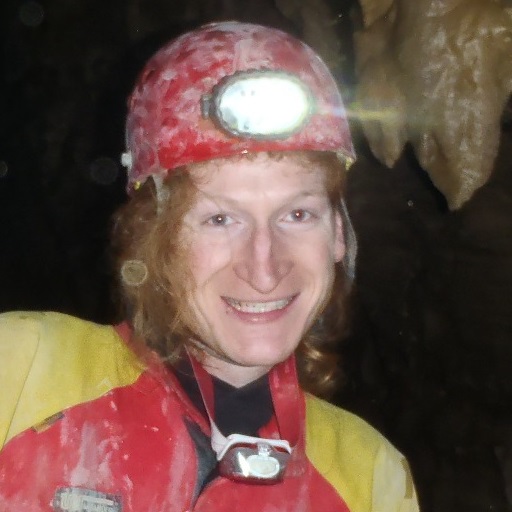
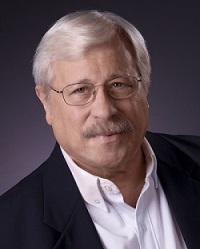
Norman Kerle is a Professor at the Faculty of Geo-Information Science and Earth Observation (ITC) of the University of Twente, holding the chair of Geoinformatics for Disaster Risk Management within the Earth Systems Analysis department. He earned Masters degrees in geography from the University of Hamburg and Ohio State University, and a PhD in volcano remote sensing from the University of Cambridge (2002). His research spans volcanology, landslide detection, and quantitative geomorphology, with a focus on object-oriented remote sensing methods for disaster risk management. He leads the ITC Object-Based Image Analysis research group and coordinates EU-funded projects like RECONASS and INACHUS , emphasizing UAV-based structural damage mapping. Recent work includes post-disaster recovery assessment using remote sensing and macro-economic modeling. His scientific contributions include over 221 research outputs (peer-reviewed articles, book chapters, conference papers) and datasets such as Evaluating Resilience-Centered Development Interventions with Remote Sensing (2020). He has received the 2011 Lloyd's Science of Risk Prize (Natural Hazards) and served as Associate Editor for journals like Remote Sensing and Natural Hazards and Earth Systems Sciences . Prof. Kerle’s professional affiliations include the European Geosciences Union (EGU), American Geophysical Union (AGU), International Society for Photogrammetry and Remote Sensing (ISPRS), and Remote Sensing and Photogrammetry Society (RSPS). He has examined PhD theses and reviewed proposals for Horizon 2020, STEREO, and UNESCO.
Emmanuel Cledat is an Associate Professor of photogrammetry at the National Institute of Geographic and Forest Information (IGN) and lecturer at the ENSG (National School of Geographic Sciences), where he teaches courses in sensor technology, mathematics for photogrammetry, and applied photogrammetry. As a member of the UMR Lastig research unit and ACTE research team, he conducts interdisciplinary work spanning photogrammetry, geomatics, and transportation safety. His research interests focus on photogrammetry , sensor calibration , and measurement of risks faced by cyclists . Dr. Cledat specializes in macro-photogrammetry of small objects, drone-based mapping systems, and GNSS-denied environment navigation. His methodological expertise includes camera calibration models, 3D reconstruction, and fusion of photogrammetric and LiDAR data. Dr. Cledat's publication record demonstrates consistent contributions to photogrammetry and geospatial sciences since 2016, with recent work exploring AI applications in geomatics and historical bridge modeling. His research shows a clear trajectory from foundational work on drone photogrammetry calibration to more applied projects addressing transportation safety and cultural heritage preservation. ISPRS Best Young Author Award 2020 As principal investigator, Dr. Cledat leads the CycloSafe project which quantifies cycling risks using LIDAR-equipped bicycles, and the EntrePonts project focused on 3D modeling of historical bridge models from the 17th-19th centuries. His teaching portfolio spans undergraduate and graduate courses in photogrammetry fundamentals, underwater photogrammetry, and climate change workshops. His laboratory work centers around the UMR Lastig research unit, with projects involving drone mapping systems, 3D TOF camera calibration, and photogrammetric fieldwork methodologies for both small objects and large-scale environmental mapping.
Adam Maloof is a Professor of Geosciences at Princeton University and an Associated Faculty member of the High Meadows Environmental Institute (HMEI). His research focuses on Earth history, integrating field observations with quantitative techniques such as photogrammetry, differential GPS surveys, and serial grinding imaging. Key interests include paleoclimate dynamics, early animal evolution, and paleogeography. His group investigates the coevolution of life and climate over the past billion years through studies of ancient sedimentary and volcanic rocks. Research highlights include analyzing Bahamian carbonate geochemistry, Neoproterozoic glacial records, and the application of computational methods like large language models for geological data analysis. The Maloof Research Group develops advanced imaging tools, such as the High-Resolution Multispectral Macro-Imager, to enhance fossil and geological data collection. Their work bridges field studies with laboratory analyses, addressing topics like ooid formation, Cryogenian isotopic excursions, and glacioeustatic sea-level changes. No scientific awards or grants are explicitly listed in the provided text, though his extensive publication record reflects impactful contributions to geosciences. His lab focuses on innovative methods to decode Earth’s history, emphasizing interdisciplinary approaches.
Brian Loflin is an Adjunct Professor in Wildlife Photography at Texas A&M University-Kingsville's Kleberg College of Agriculture and Natural Resources. With a unique interdisciplinary background bridging biology, photography, and photogrammetry, he has taught photography courses at multiple institutions including the University of Texas at Austin, University of California at Riverside, and Riverside Community College. As an author-photographer, Loflin has co-written four photographic field guides focusing on Texas biodiversity: Grasses of the Texas Hill Country , Texas Cacti , the upcoming Texas Wildflower Vistas and Hidden Treasures , and the nearly completed Advanced Macro Photography for Nature Scientists . His photography workshops emphasize technical mastery of macro imaging, working with extreme magnification (up to 10:1) and specialized equipment like the Laowa Extreme Macro Lens. A seasoned professional with over five decades of experience, Loflin combines biological expertise with photographic innovation. He maintains a vast digital image library used by international publications and has served as past president of the Minnesota Nature Photographers while founding the Austin Shutterbug Club. His work spans wildlife photography, equipment optimization, and educational outreach about field techniques including the strategic use of photography blinds.
Kshitij Jerath serves as Associate Professor in the Department of Mechanical and Industrial Engineering, Robotics at the Francis College of Engineering, University of Massachusetts Lowell. His research focuses on self-organized dynamics in complex systems, multi-agent control, and robotic swarms, with significant contributions to traffic flow theory and sensor characterization. He directs the Emergent Dynamics, Control and Analytics Labs (EXALABS), advancing bottom-up control algorithms for minimal-intervention system guidance. Dr. Jerath's academic background includes: Ph.D. in Mechanical Engineering from Pennsylvania State University (2014), dissertation: 'Influential subspaces in self-organizing multi-agent systems' M.S. in Electrical Engineering from Pennsylvania State University (2011), thesis: 'Sensor noise modeling, characterization and simulation: An Allan variance tutorial' M.S. in Mechanical Engineering from Pennsylvania State University (2010), thesis: 'Impact of adaptive cruise control on the formation of self-organized traffic jams on highways' Bachelor's equivalent in Mechanical and Automation Engineering from Amity School of Engineering and Technology, India His research spans self-organized dynamics , multi-agent systems , and robotic swarm control , applying statistical mechanics principles to model emergent behavior in transportation networks and complex systems. Current work focuses on influencing macro-scale dynamics through minimal intervention by small agent subsets, with extensions to social ensembles and neural systems. His methodologies integrate control theory, network science, and machine learning for real-world applications in autonomous vehicles and system reliability. Recent publications (2023-2025) reveal strong trends in relational network applications for multi-agent learning, adaptive data granulation techniques, and human-swarm interaction frameworks. Key developments include database-inspired algorithms for sensor characterization, renormalization group approaches to traffic modeling, and fault-tolerant recovery mechanisms for robotic teams. These works demonstrate increasing convergence of control theory, database systems, and reinforcement learning in addressing complex system challenges. Dr. Jerath has received notable recognition including: Two Best Presentation awards at American Control Conference (2014, 2012) Kulakowski Travel Award from Penn State (2014) National Merit-cum-Means Scholarship from Indian Government (2013) 2nd place in ITS America Student Essay Competition (2012) His research is supported by grants including the CPS: Medium project 'Automated Discovery of Data Validity for Safety-Critical Feedback Control in Connected Vehicles' (2019) and a Graduate Teaching Fellowship from Penn State (2013). EXALABS maintains active collaborations with transportation agencies and robotics researchers to translate theoretical advances into practical applications. The Emergent Dynamics, Control and Analytics Labs (EXALABS) develops frameworks for modeling, quantifying, and influencing collective behavior across scales. Current projects include human-guided swarm control in virtual reality, traffic flow optimization using connected vehicle networks, and adaptive granulation techniques for large-scale sensor data. The lab employs interdisciplinary approaches combining control theory, statistical mechanics, and machine learning to solve problems in robotics, transportation, and system reliability.