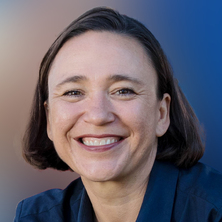
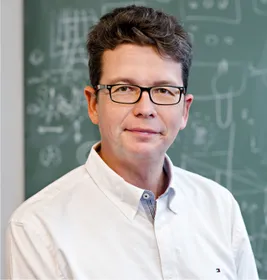
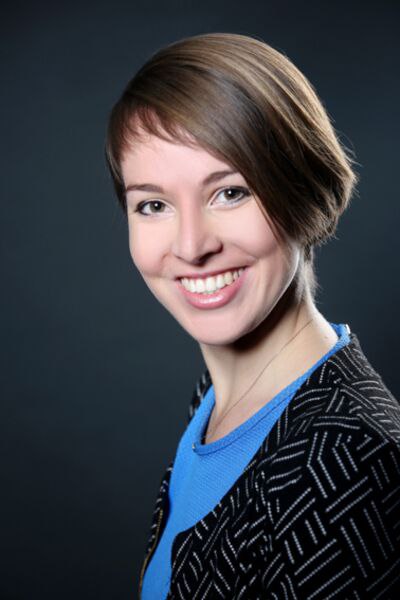
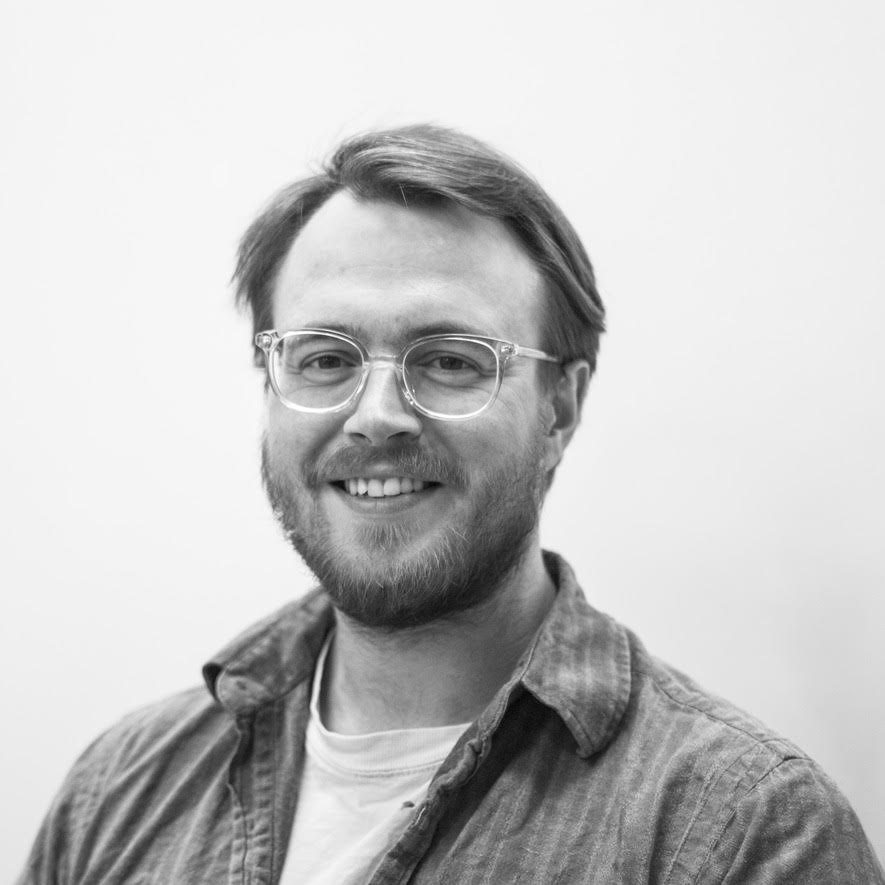
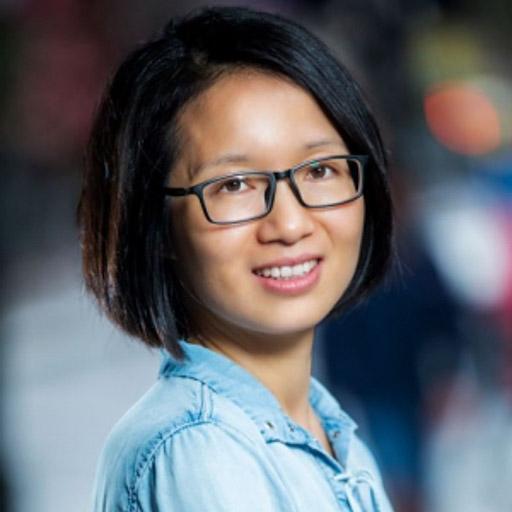
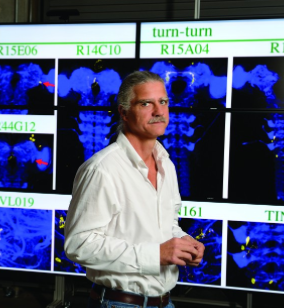
Aman Arora is an Assistant Professor at Arizona State University's Ira A. Fulton Schools of Engineering, specializing in the School of Computing and Augmented Intelligence. His research focuses on reconfigurable computing, hardware acceleration of machine learning, and non-traditional computing paradigms like Processing-In-Memory. With over a decade of semiconductor industry experience, he bridges academic research and industrial applications. PhD in Computer Science from The University of Texas at Austin Research interests emphasize domain-specific acceleration through FPGA optimization , compute-in-memory architectures , and machine learning for CAD/EDA . His work addresses critical challenges in energy efficiency and throughput for AI workloads. Recent publications demonstrate trends toward compute-in-memory systems , FPGA-based deep learning acceleration , and sustainable hardware design . Key contributions include frameworks like SAF, CSR, and GAMA for dynamic hardware optimization. Laboratory Website: ADVENT Lab Teaching includes courses on digital hardware design (CSE 320) and advanced topics in machine learning acceleration (CEN 524/CSE 524). Industry experience informs his practical approach to research and education.
M. Tamer Özsu is a University Professor of Computer Science at the David R. Cheriton School of Computer Science, University of Waterloo, where he holds a Cheriton Faculty Fellowship. He also serves as a Distinguished Visiting Professor at Tsinghua University and is the Founding Director of Waterloo-Huawei Joint Innovation Laboratory since 2018. His extensive contributions to computing have earned him numerous prestigious awards including the 2024 ACM Presidential Award for long-standing and significant contributions to the computing field. Professor Özsu's research focuses on data engineering aspects of data science, particularly addressing data management issues with two main foci: management of non-traditional data and large-scale distributed data management. He is renowned for his seminal book "Principles of Distributed Database Systems" (co-authored with Patrick Valduriez), now in its fourth edition, and the "Encyclopedia of Database Systems" (co-edited with Ling Liu), in its second edition. His work bridges theoretical foundations with practical system implementations, targeting grand societal challenges through computational approaches. His recent publications reveal a strong trend toward graph analytics, streaming data processing, and the integration of large language models with vector data management. The research shows increasing focus on GPU-accelerated graph processing, RDF query optimization, and multimodal data analysis, reflecting the evolution of data management challenges in the era of big data and AI. His work continues to address fundamental challenges in distributed data systems while adapting to emerging technologies and application domains. Scientific Awards and Fellowships ACM Presidential Award (2024) IEEE TCDE Education Award (2024) IEEE Innovation in Societal Infrastructure Award (2022) CS Can | Info Can Lifetime Achievement Award (2018/2019) ACM SIGMOD Test-of-Time Award (2015) ACM SIGMOD Contributions Award (2006) The Ohio State University College of Engineering Distinguished Alumnus Award (2008) Fellow of the Royal Society of Canada Fellow of the American Association for the Advancement of Science (AAAS) Life Fellow of the Association for Computing Machinery (ACM) Life Fellow of the Institute of Electrical and Electronics Engineers (IEEE) Fellow of the Asia-Pacific Artificial Intelligence Association (AAIA) Elected member of the Science Academy, Türkiye Professor Özsu has been deeply involved in academic leadership and community building. As Founding Editor-in-Chief of ACM Books (2013-2019), he launched a series that by 2019 had published 28 major books with another 30 under contract. His service to ACM, particularly through SIGMOD, has been exemplary and widely recognized. He directs the Waterloo-Huawei Joint Innovation Laboratory, which focuses on cutting-edge research in data management and distributed systems, fostering strong industry-academia collaboration.
Professor Sara Dolnicar is an ARC Australian Laureate Fellow at the School of Business, Faculty of Business, Economics and Law, University of Queensland. With degrees in psychology and business administration from Wirtschaftsuniversität Wien, she specializes in market segmentation, sustainable tourism, social marketing, and environmental behavior. Born in Slovenia, raised in Austria, now based in Australia Over 300 refereed publications and 16 ARC grants Recipient of TTRA Distinguished Researcher Award (2017) and Slovenian Ambassador of Science (2016) Her research improves market segmentation methodology, addresses environmental sustainability in tourism, and develops behavioral interventions for eco-friendly tourist practices. She pioneered perceptions-based market segmentation and introduced bi-clustering techniques for improved data analysis. Recent publications focus on towel reuse interventions, buffet waste reduction, and smart sensor systems for hotel sustainability. She supervises PhD students in environmental behavior, tourism carbon emissions, and IoT applications for sustainability. Current grants include 'Mechanisms of Behaviour Change Theory' (2025-2028) and 'Reducing plate waste in hotels' (2021-2025). Key research areas: Sustainable tourism, market segmentation, social marketing Supervised over 15 PhD students in environmental behavior and disability employment Collaborates with industry partners like Energy Queensland and disability organizations
Marta Molinas is a Professor at the Department of Engineering Cybernetics within the Faculty of Information Technology and Electrical Engineering at the Norwegian University of Science and Technology (NTNU). Her research spans multiple interdisciplinary domains with a focus on EEG technology and brain-computer interfaces. She actively supervises numerous Master's projects and maintains extensive international collaborations with institutions including Kavli Institute for Systems Neuroscience, RIKEN Center for Brain Science, University of Tsukuba, Juntendo University, and several European universities. Professor Molinas' research interests center on developing innovative EEG technologies, particularly her FlexEEG concept for reduced-channel EEG systems with brain imaging capabilities. Her work integrates signal processing, artificial intelligence, and neuroscience to create practical applications in mental health, sleep research, neurorehabilitation, and human-computer interaction. She specializes in EEG source imaging, machine learning for brain signal analysis, and the development of brain-computer interfaces for various applications including locked-in syndrome communication, ADHD treatment, and driver monitoring systems. Her publication portfolio demonstrates strong trends in interdisciplinary research combining neuroscience with electrical engineering and artificial intelligence. The work shows particular emphasis on developing practical EEG-based systems that minimize invasiveness while maintaining analytical power, with applications spanning healthcare, rehabilitation, and human augmentation. Her research bridges theoretical signal processing with real-world implementations through numerous student projects and international collaborations. Professor Molinas actively supervises a large team of Master's and PhD students across multiple projects, with each project typically requiring two students working collaboratively. Her research is supported through numerous international collaborations with institutions in Japan, India, and Europe, indicating substantial research funding and project leadership. She has developed a pipeline of student projects that build upon previous work, creating a cumulative knowledge base within her research group. She leads the EEG ITK research team at NTNU, which focuses on developing the FlexEEG headset prototype featuring flexible, wireless, dry electrodes designed to move across the scalp. This team works at the intersection of neuroscience, electrical engineering, and computer science, developing applications for sleep research, mental health monitoring, neurorehabilitation, and brain-computer interfaces. The team collaborates extensively with international partners including the Kavli Institute for Systems Neuroscience, the International Institute of Integrative Sleep Medicine at University of Tsukuba, and several engineering departments across Europe and Asia.
Prof. Peter Müller-Buschbaum is a Full Professor and Head of the Chair of Functional Materials at the Physics Department of the Technical University of Munich (TUM). He has held this position since April 2018 and also served as Scientific Director of the Research Neutron Source Heinz Maier-Leibnitz (FRM-II) and the Heinz Maier-Leibnitz Center (MLZ) from 2018 to 2023. His leadership extends to multiple roles including Core Member of the Integrated Research Institute Munich Institute of Integrated Materials, Energy and Process Engineering (MEP) since 2021, and Head of the Renewable Energies Network (NRG) at MEP. Full Professor (W3), Head of the Chair of Functional Materials at TUM School of Natural Sciences (since 04/2018) Deputy Editor of "ACS Applied Materials & Interfaces" (since 01/2024) Supervising Professor "Electronics Laboratory" at TUM School of Natural Sciences (since 11/2023) Member of TUM Sustainability Board (since 05/2023) Core Member of MEP Institute (since 10/2021) Head of Renewable Energies Network at MEP (since 10/2021) Prof. Müller-Buschbaum's research spans energy materials for photovoltaics and battery technologies, smart responsive materials that adapt to environmental stimuli, and nanocomposite materials with tailored properties. His group employs advanced scattering techniques to characterize materials at the nanoscale, providing insights into structure-property relationships critical for developing next-generation energy technologies. His extensive publication record demonstrates particular expertise in perovskite solar cells, lithium-ion battery technologies, and polymer-based functional materials, with recent work focusing on improving device stability and efficiency while understanding fundamental degradation mechanisms. His publications reveal a strong emphasis on energy conversion and storage technologies, with particular attention to interfacial engineering in both photovoltaic and battery systems. The research shows sophisticated integration of materials synthesis, advanced characterization, and device engineering to address critical challenges in renewable energy technologies. His work bridges fundamental science with practical applications through collaborations with major international research facilities. Scientific Service and Recognition Member of the Council of the Cluster of Excellence "ORIGINS" (since 01/2019) Spokesperson of the Chemical Physics and Polymer Physics Association of DPG (03/2021-10/2022) Member of the European Spallation Source Scientific Advisory Panel (since 03/2011) German representative at the European Polymer Federation for polymer physics (since 03/2011) Chairman of the Keylab "TUM.solar" in the Bavarian research project "Solar Technologies Go Hybrid" (since 03/2012) Prof. Müller-Buschbaum actively contributes to academic community through editorial work, having served as Associate Editor (2012-2022), Executive Editor (2023), and currently Deputy Editor (2024-present) of "ACS Applied Materials & Interfaces". He maintains strong international collaborations with synchrotron and neutron facilities worldwide, reflecting his expertise in advanced materials characterization techniques essential for cutting-edge materials research.
Franziska Boenisch is a tenure-track faculty member at the CISPA Helmholtz Center for Information Security , where she co-leads the SprintML lab for Secure, Private, Robust, Interpretable, and Trustworthy Machine Learning. Her research lies at the intersection of privacy-preserving machine learning and trustworthy ML , with a focus on differential privacy , model inversion attacks , and privacy risks in federated learning . She completed her PhD at Freie Universität Berlin and was a postdoctoral fellow at the Vector Institute for Artificial Intelligence under Prof. Nicolas Papernot. Her work has been recognized with awards such as the Academics Rising Start Award (3rd Prize) and the GI Junior-Fellow honor. Her research spans a wide range of topics including memorization in diffusion models , watermarking generative models , membership inference attacks , and privacy-preserving federated learning . She has published extensively in top-tier venues like ICML , NeurIPS , ICLR , and CVPR . She is actively involved in the academic community, serving as an Area Chair for NeurIPS , Track Chair for ACM AsiaCCS , and co-organizing workshops at ICML . She is currently hiring PhDs, postdocs, and research interns for her group.
Christopher Lawson is an Assistant Professor in the Department of Chemical Engineering and Applied Chemistry at the University of Toronto, affiliated with the Faculty of Applied Science and Engineering. He serves as Principal Investigator of the Microbiome Engineering Lab and is part of BioZone – the Centre for Applied Bioscience and Bioengineering. His research focuses on engineering anaerobic microbiomes for resource recovery from waste streams using systems biology, synthetic biology, and machine learning approaches. B.A.Sc., M.A.Sc. (University of British Columbia) Ph.D. (University of Wisconsin-Madison) Postdoctoral Training (Berkeley Lab) Lawson's work addresses the challenge of controlling complex microbial interactions in engineered systems to enable scalable biotechnologies for renewable energy, chemicals, and materials. His lab develops high-throughput methods integrating automation and computational tools to optimize microbiome assembly and metabolic fluxes. Recent publications highlight advancements in metabolic modeling , isotope tracing , and systems-level analysis of anaerobic microbiomes, with applications in wastewater treatment , anammox granules , and bioenergy production . His research bridges fundamental microbiology with industrial-scale bioprocess engineering. Scientific Awards ISME/IWA BioCluster Rising Star Award (2022) Jacobs Engineering Group/AEESP Outstanding Doctoral Dissertation Award (2020) Wesley Eckenfelder Graduate Research Award (2019) WEF Canham Graduate Studies Scholarship (2018) NSERC Post-Graduate Scholarship – Doctoral (2014) Lawson actively mentors students and postdocs, emphasizing technical rigor, communication skills, and independence. His lab collaborates within BioZone and with industry partners to advance "team science" principles. Current projects focus on creating engineered microbiomes for commercial-scale waste valorization.
Oisin Mac Aodha is a Reader (Associate Professor) in Machine Learning at the School of Informatics, University of Edinburgh. He is also an ELLIS Scholar and founder of the Turing interest group on biodiversity monitoring and forecasting, having previously served as a Turing Fellow from 2021-2025. Mac Aodha completed his undergraduate degree in electronic engineering from the University of Galway in Ireland, followed by his MSc and PhD at University College London (UCL). His academic journey includes postdoctoral positions at UCL (2013-2016) working with Prof. Gabriel Brostow and Prof. Kate Jones, and at Caltech (2016-2019) in Prof. Pietro Perona's Computational Vision Lab as part of the Visipedia team. His research centers on computer vision and machine learning with emphasis on 3D understanding, human-in-the-loop methods, and AI for conservation and biodiversity monitoring. He has made significant contributions to monocular depth estimation (including the influential Monodepth2 paper), fine-grained visual categorization, and biodiversity monitoring systems. His work bridges theoretical machine learning with practical ecological applications, developing tools for species identification, range estimation, and conservation efforts. Recent publications reveal a strong trend toward ecological applications while maintaining fundamental contributions to 3D vision and representation learning. His major scientific achievements include: Turing Fellow (2021-2025) ELLIS Scholar Founder of the Turing interest group on biodiversity monitoring and forecasting Co-organizer of the Fine-Grained Visual Categorization (FGVC) workshop series at major vision conferences Mac Aodha advises multiple PhD students and postdocs working on computer vision for biodiversity monitoring, 3D understanding, and human-in-the-loop learning. His team has developed practical tools like Whombat (an open-source annotation tool for bioacoustics) and contributed to field-deployed biodiversity monitoring systems. He has served as Area Chair for top conferences including NeurIPS, CVPR, ICCV, and ICML, demonstrating his standing in the computer vision community. His research group collaborates extensively with ecologists at University College London, particularly with Prof. Kate Jones' team, bridging machine learning expertise with ecological domain knowledge. The Vision at Edinburgh group he contributes to focuses on developing practical AI tools that address real-world conservation challenges while advancing fundamental computer vision research.
Dr. Chunyan Lai is an Associate Professor at the Department of Electrical and Computer Engineering, Concordia University. Her research focuses on electric drives, motor control, power electronics, electrified vehicles, and vehicle-to-grid solutions. She contributes to both graduate and undergraduate education through courses such as Controlled Electric Drives and Hybrid Electric Vehicle Power Systems . Research Emphasis : Electric motor drives and control systems, electrified transportation, power electronics innovations, and energy management strategies. Publications : Specializes in sensorless control techniques for Permanent Magnet Synchronous Motors (PMSM), thermal management in electric machines, and advanced energy trading frameworks for smart grids. PhD Opportunities : The Power Electronics and Energy Research (PEER) Group under Dr. Lai offers positions for developing efficient motor drives for EVs and grid-connected power converters. Collaboration : Industry-adjacent research with requirements for professional communication, patent development, and technical dissemination.
Lisa Austin is a Professor of Law at the University of Toronto Faculty of Law, holding the Chair in Law and Technology. She serves as Associate Director at the Schwartz Reisman Institute for Technology and Society and is a Faculty Associate at Harvard University's Berkman Klein Center. Previously, she co-founded the IT3 Lab at the University of Toronto, which conducted interdisciplinary research on privacy and transparency issues. Professor Austin earned her BA &Sc from McMaster University (1994), MA from the University of Toronto (1995), LLB from the University of Toronto (1998), and PhD from the University of Toronto (2005). She was called to the Bar of Ontario in 2006 and previously served as law clerk to Mr. Justice Frank Iacobucci of the Supreme Court of Canada. Her research spans data governance, privacy law, property law, and legal theory. Professor Austin has published in prestigious journals including Legal Theory , Law and Philosophy , Theoretical Inquiries in Law , and Canadian Journal of Law and Society . She co-edited Private Law and the Rule of Law (Oxford University Press, 2015), challenging the conventional understanding that the rule of law applies only to public law. Professor Austin's scholarship consistently emphasizes the relationship between privacy, power dynamics, and legal frameworks, arguing that privacy is fundamentally about power rather than mere consent or harm prevention. Her recent work addresses pressing issues including the data governance gap during the COVID-19 pandemic, digital rethinking of constitutional privacy protections, and smart city data governance. 2017 President's Impact Award from the University of Toronto Professor Austin actively engages in policy discussions, having submitted testimony before parliamentary committees on privacy legislation reform, including the Privacy Act and the Security of Canada Information Sharing Act. Her work bridges academic scholarship with practical policy impact, making her a leading voice in Canadian privacy law and technology governance.
Prof. Dr.-Ing. Elisabeth Clausen is a Professor and Director of the Chair and Institute for Advanced Mining Technologies at RWTH Aachen University. She holds key roles in the Specialist Group for Raw Materials and Disposal Technology, serves as a rectorate representative, and leads the Commission for EU Research Funding. Her research spans Underground mining automation Acoustic emission diagnostics Sustainable mining systems Space resource extraction Advanced sensor technologies Her recent publications focus on autonomous mining machinery, underground communication systems, and acoustic emission analysis across 15+ studies from 2013–2025, with particular emphasis on Ultra-wideband positioning Thermographic detection Crack monitoring in planetary gearboxes Explosive atmosphere safety Mineral processing diagnostics Digitalization trends Prof. Clausen contributes to mining education reform through initiatives like CDIO™ and has developed innovative learning spaces in underground mines. She coordinates international educational labs and integrates sustainability into mining engineering curricula, with publications on Adaptive ventilation systems Mining education frameworks Future-proof mineral extraction Entrepreneurial mindset in engineering
Carey E. Priebe is a Professor in the Department of Applied Mathematics and Statistics at the Whiting School of Engineering, Johns Hopkins University. He maintains strong affiliations with multiple research centers including the Johns Hopkins University Center for Imaging Science, the Mathematical Institute for Data Science, and the Human Language Technology Center of Excellence. His academic career spans several decades with significant contributions to statistical methodology and theory. Dr. Priebe's research focuses on computational statistics, statistical pattern recognition, and statistical inference for high-dimensional and graph data. His work bridges theoretical statistics with practical applications in areas such as brain connectome mapping, network analysis, and image processing. He has made significant contributions to spectral graph theory, graph matching, and vertex nomination, with applications ranging from neuroscience to national security. His publication record demonstrates consistent contributions to statistical methodology, with a notable emphasis on graph-based statistical methods. His research trajectory shows increasing focus on network data analysis, particularly in the last decade, with applications to brain mapping and connectome analysis as evidenced by his NSF BRAIN Initiative grant and Nature publication. 2013 Erskine Fellow (University of Canterbury) 2011 McDonald Award for Excellence in Mentoring and Advising 2010 ASA SDNS Distinguished Achievement Award 2009 Erskine Fellow (University of Canterbury) 2008 National Security Science and Engineering Faculty Fellow 2008 Pond Award for Excellence in Teaching NSF BRAIN EAGER grant recipient (2014) Professor Priebe has supervised an extensive number of doctoral students whose work spans statistical methodology, network analysis, and machine learning. His students have secured positions at prestigious institutions including academia (University of Wisconsin, Boston University), government research labs, and major technology companies (Microsoft, Facebook, Amazon). His research has been supported by significant grants from NSF, DARPA, and other agencies focused on national security applications and fundamental statistical methodology development. He maintains active collaborations across multiple disciplines and institutions, as evidenced by his numerous conference presentations and visiting appointments including at The Alan Turing Institute and The Isaac Newton Institute. His work bridges theoretical statistics with practical applications in neuroscience, security, and data science.
Paul Erhart is a Professor in Condensed Matter and Materials Theory at the Department of Physics, Chalmers University. He received his PhD from Technische Universität Darmstadt in 2006, followed by postdoctoral and staff positions at Lawrence Livermore National Laboratory from 2007, before joining Chalmers in 2011. His research bridges computational physics, materials science, and machine learning to tackle fundamental problems in materials design and characterization. Dr. Erhart's research focuses on computational materials science with particular emphasis on condensed matter physics, nanomaterials, and quantum materials. His work spans from developing computational methods like machine-learned potentials (GPUMD, neuroevolution potentials) to studying fundamental phenomena in perovskites, 2D materials, thermal transport, and plasmonics. He has pioneered approaches connecting simulation with experimental techniques through correlation functions and has made significant contributions to understanding phase transitions, defect physics, and electronic structure in complex materials systems. Analysis of his recent publications reveals a strong trend toward integrating machine learning with traditional computational physics methods. His work increasingly focuses on developing and applying neuroevolution potentials to study thermal properties, phase transitions, and optical phenomena in materials. There's also a clear emphasis on connecting computational results with experimental observations, particularly in neutron scattering, Raman spectroscopy, and plasmonic sensing applications. His research spans fundamental materials physics to applied areas like hydrogen sensing and sustainable materials development. Dr. Erhart has contributed to numerous software packages essential to the computational materials science community, including WulffPack for Wulff constructions, Dynasor for extracting dynamical structure factors, calorine for neuroevolution potential models, and ICET for alloy cluster expansions. His collaborative work spans multiple institutions and disciplines, reflecting the interdisciplinary nature of modern materials research. His contributions to understanding perovskite materials, thermal transport phenomena, and plasmonic systems have established him as a leading researcher in computational materials science.
Desmond Elliott is an Associate Professor in the Natural Language Processing section at the Department of Computer Science, University of Copenhagen (UCPH). His research focuses on multimodal and multilingual models with specific emphasis on vision-language integration and tokenization-free NLP approaches. He teaches Bachelor and Master's level courses including Advanced Topics in Natural Language Processing (since 2019), Grundlæggende Data Science (since 2023), and previously Data Science (2021-2023). His research interests center on building and understanding multimodal and multilingual models , particularly exploring vision and language interactions through billion-parameter systems. Current work investigates cultural representation disparities in vision-language models, parameter-efficient captioning, and multimodal distributional semantics across diverse domains including food culture and medical imaging. His methodology emphasizes real-world applicability in non-English contexts and ethical considerations in multimodal systems. Elliott's recent publications (2025) demonstrate leadership in multimodal NLP, with significant contributions to vision-language pretraining, multilingual evaluation frameworks, and clinical NLP applications. His work spans theoretical advancements in model architectures and practical implementations addressing challenges in low-resource languages and domain adaptation. Best Long Paper Award at EMNLP 2021 Best Poster Award at COLING 2019 As an active educator, Elliott contributes to courses on Fair and Transparent Machine Learning and previously taught Information Retrieval. His research collaborations span international institutions with particular focus on European and non-English language contexts, reflecting UCPH's recognition as Europe's #1 institution for HCI research over the past decade.
Dr. Borivoje Dakic is an Associate Professor at the University of Vienna , affiliated with the Faculty of Physics and the Quantum Optics, Quantum Nanophysics and Quantum Information department. His research spans foundational and applied aspects of quantum theory. Operational reconstruction of quantum formalism Quantum interference as a resource for communication Tomography of large-scale quantum systems Macroscopic quantum phenomena His work includes scalable verification techniques for quantum devices and collaborations with experimental teams like Philip Walther’s and Markus Aspelmeyer’s groups. He received the Marko Jarić Prize (2025) for his contributions. Recent projects focus on diagnostics of quantum devices (FWF BeyondC SFB), information-theoretic foundations of quantum interference (FWF P36994), and local operations in quantum field theory (Cluster of Excellence QuantA). His research on quantum coherence in networks and macroscopic entanglement challenges traditional assumptions about quantum-classical boundaries. Publications emphasize resource-efficient tomography, device-independent verification, and foundational frameworks for quantum statistics and field theory. Teaching: Quantum Information (2025W), Theory in Quantum Optics (2025S), VCQ Summerschool Labs: Dakić Group at University of Vienna