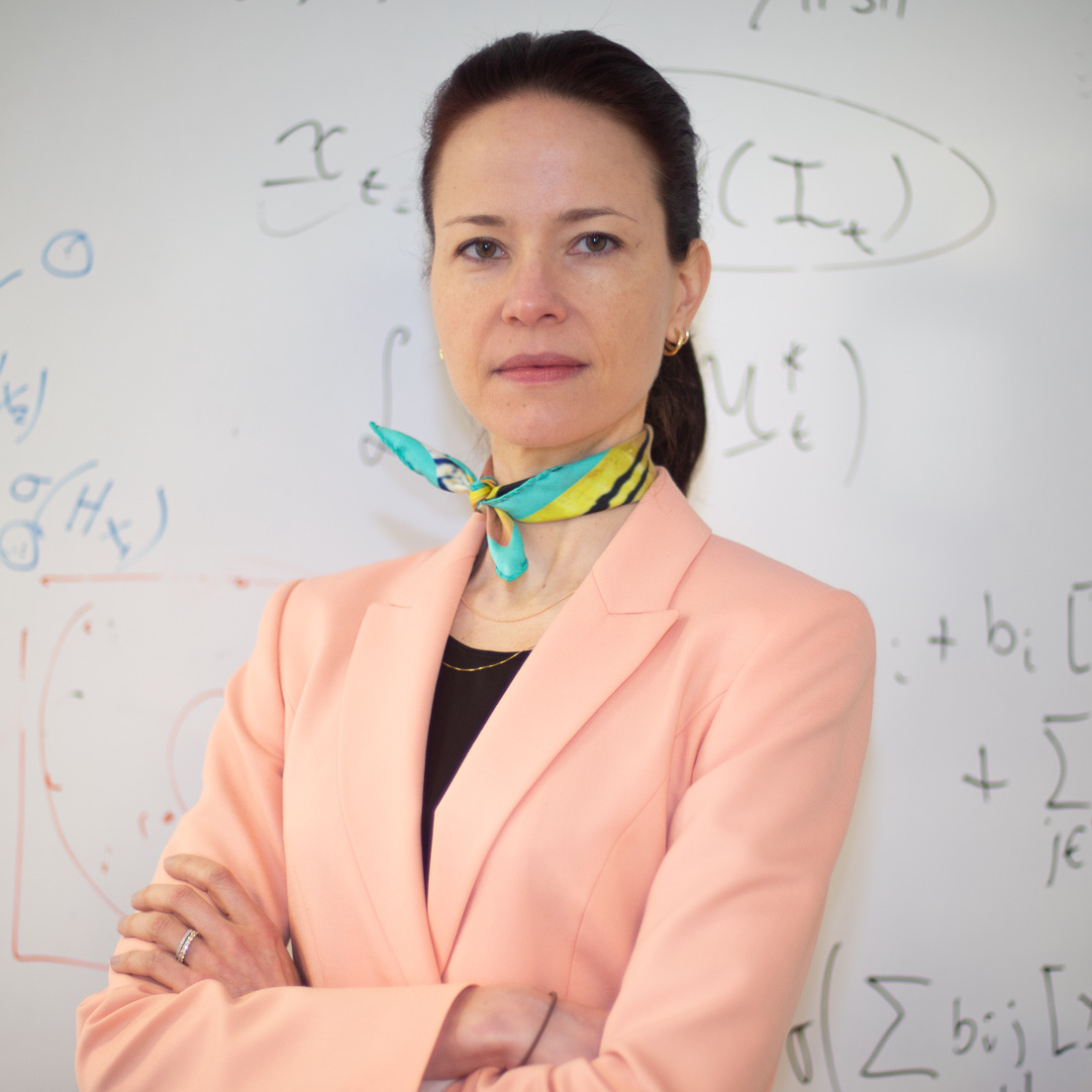
T. N. Vijaykumar is a Professor of Electrical and Computer Engineering at Purdue University's Elmore Family School of Electrical and Computer Engineering. His research focuses on computer architecture, VLSI design, and hardware acceleration for machine learning and datacenter systems. He holds a B.E. (Hons) in Electrical and Electronics Engineering and M.Sc.(Tech) in Computer Science from Birla Institute of Technology and Science, followed by M.S. and Ph.D. in Computer Science from the University of Wisconsin. His work spans GPU architecture optimization, memory systems, network security, and energy-efficient computing. Notable contributions include sparse tensor accelerators, disaggregated datacenter architectures, and secure speculative execution techniques. He has been actively involved in developing accelerators for machine learning inference and frameworks for distributed training of neural radiance fields. His publications address challenges in parallel computing, hardware-software co-design, and real-time systems, with applications in robotics, genomics, and microfluidics. He leads research initiatives funded by NSF and industry partnerships, emphasizing cross-layer optimizations across hardware, software, and networking layers.
Charles Gillan is a Senior Lecturer at Queen's University Belfast's School of Electronics, Electrical Engineering and Computer Science, affiliated with the High Performance and Distributed Computing department and the Institute of Electronics, Communications & Information Technology. His research bridges HPC systems, AI applications in healthcare, and computational physics. Key projects include managing ICU patient care via neural networks, exascale-ready mathematical packages, and edge computing architectures. Research interests focus on high-performance computing (HPC), quantum computing, real-time data analytics, and electron-molecule scattering simulations. Notable contributions include developing microserver architectures for edge analytics and advancing AI-driven clinical decision support systems. Gillan has collaborated on interdisciplinary projects like food authenticity testing using spectroscopy and improving ventilator management in intensive care units. Publications span AI in healthcare, HPC system design, and computational methods for physics problems. He has secured funding for initiatives such as the KTP partnership with Foods Connected Ltd and the HANDHELD olfactory detection project. Gillan's work emphasizes practical applications of advanced computing across healthcare, engineering, and cybersecurity domains.
Meng Xu is an Assistant Professor in the Cheriton School of Computer Science at the University of Waterloo, Canada. He is affiliated with the Cryptography, Security, and Privacy (CrySP) group and the Cybersecurity and Privacy Institute (CPI). His research focuses on system and software security, emphasizing secure-by-design languages (e.g., Rust, Move), automated program analysis, and runtime defense techniques. Education : Ph.D., Computer Science (2020), Georgia Institute of Technology B.Eng. and B.Business (First Class Honors), Nanyang Technological University (2014) Research Interests : Secure-by-design languages Automated security analysis (fuzzing, symbolic execution) Runtime defense mechanisms (moving target defense, secure hardware) Key Awards : EAPLS Best Paper Award (2022) USENIX Security Distinguished Paper Award (2018) Grants & Funding : BlackBerry Research Grant (CAD $200,000) Amazon Research Award (USD $60,000) NSERC Discovery Grant (CAD $170,000) Labs & Collaborations : CrySP (Cryptography, Security, and Privacy Group) Cybersecurity and Privacy Institute (CPI)
Prof. Dr. Thomas Ludwig is the Director of the German Climate Computing Center (DKRZ) and a Professor at the Universität Hamburg. He holds a doctoral degree and habilitation from the Technische Universität München, with expertise in High-Performance Computing (HPC), energy efficiency, and data storage systems. His research focuses on optimizing parallel systems, storage technologies, and computational efficiency for climate science applications. He leads projects like AIMES and PeCoH, advancing HPC storage and energy-aware computing. Education: Doctoral degree and habilitation from TU München (1988–2001). Chair in Parallel Computing at Universität Heidelberg (2001–2009). Research Interests: HPC, data reduction techniques, energy-efficient systems, parallel I/O optimization, and climate modeling infrastructure. Recent Research Trends: His work emphasizes storage system efficiency, machine learning in HPC, and convergence between HPC and Big Data. Key contributions include frameworks for portability (Vecpar), automated performance tools, and energy-aware storage solutions. Awards: Some publications received recognition, e.g., a Best Paper award in 2014 for work on energy efficiency. However, no personal awards are explicitly listed. Advising & Grants: Supervised numerous theses in HPC, I/O optimization, and energy efficiency. Leads major projects funded by national and international initiatives. Labs/Teams: Heads the DKRZ team providing supercomputing and data management for climate research, collaborating with global institutions like the University of Hamburg and European research networks.
Robert Jacob is a Professor of Computer Science at Tufts University's School of Engineering, where he leads research in human-computer interaction with particular focus on implicit brain-computer interfaces. His work bridges computer science, cognitive science, and interface design to create adaptive systems that respond to users' cognitive states without explicit input. His educational background includes a Ph.D. from Johns Hopkins University. Professional milestones include: ACM CHI Academy membership (2007) ACM Fellow designation (2016) Leadership roles as ACM SIGCHI Vice President and conference chair for CHI, UIST, and TEI Professor Jacob's research centers on implicit interaction techniques, particularly using fNIRS brain sensing to create adaptive interfaces. His work has evolved from foundational studies in reality-based interaction and tangible programming to current neuroadaptive systems that measure cognitive workload in real-time. This research spans domains including music learning, museum education, and general user interface adaptation. His publications reveal consistent focus on brain-computer interfaces since 2012, with increasing sophistication in physiological measurement and machine learning techniques. Recent work integrates multiple physiological signals beyond brain data to create comprehensive user state models. Major recognitions include: CHI 2016 Best Paper Award for music learning research CHI 2014 and 2012 Best Paper Honorable Mentions Keynote addresses at major conferences including Neuroadaptive Technology Conference (2017) Extensive media coverage in New Scientist, IEEE Computer, and Boston Globe Professor Jacob has mentored 17 PhD students who now hold faculty positions at institutions including Worcester Polytechnic Institute, Northwestern University, and Carleton University. His HCI Lab, located in the Joyce Cummings Center, receives funding from NSF and other sources supporting neuroadaptive interface research. Current projects focus on broadening implicit interaction to include multiple physiological measurements while maintaining user privacy and system transparency.
Marco Donato is an Assistant Professor in both the Department of Electrical and Computer Engineering and the Department of Computer Science at Tufts University. He leads the TECS Lab (Testchip, Embedded Computing Systems) focused on hardware design for emerging applications. Prior to joining Tufts, he was a postdoctoral fellow at Harvard University's John A. Paulson School of Engineering and Applied Sciences. Dr. Donato received his academic training from prestigious institutions: Ph.D. in Electrical Sciences and Computer Engineering from Brown University (2016) M.Sc. in Electrical Engineering from Università di Roma La Sapienza, Rome, Italy (2010) B.Sc. in Electrical Engineering from Università di Roma La Sapienza, Rome, Italy (2008) Dr. Donato's research primarily focuses on designing reliable and energy-efficient hardware systems leveraging emerging technologies. His work centers on co-design methodologies for building specialized architectures for machine learning applications that utilize dense, fault-prone embedded non-volatile memories. He investigates noise modeling and reliability aspects of next-generation memory technologies, with particular emphasis on how these can be effectively integrated into system-on-chip (SoC) designs for edge computing and IoT applications. His research bridges the gap between circuit-level design and system-level architecture to create holistic solutions for hardware acceleration of machine learning workloads. Analysis of Dr. Donato's publication record reveals a strong focus on hardware acceleration for machine learning, particularly through innovative memory system designs. His work spans multiple domains including non-volatile memory technologies, energy-efficient circuit design, and flexible SoC architectures. A notable trend is his exploration of how emerging memory technologies can be leveraged to create more efficient implementations of deep neural networks, with particular attention to the trade-offs between reliability, density, and energy consumption. His research often involves full-stack approaches that consider everything from device physics to system architecture. Dr. Donato is actively involved in mentoring and has indicated he is "looking for Ph.D. students." His work has been supported by significant research grants that have enabled the fabrication of multiple test chips, as evidenced by his extensive publication record in top-tier venues including IEEE Journal of Solid-State Circuits, ISSCC, and MICRO. He leads the TECS Lab at Tufts University, which focuses on testchip development, embedded computing systems, and hardware acceleration. The lab appears to maintain connections with researchers at Harvard University and other institutions, reflecting Dr. Donato's collaborative approach to research. The lab's work emphasizes practical, real-world implementations of novel hardware concepts through actual silicon fabrication, which is relatively rare in academic settings.
Sanchuan Chen is an Assistant Professor in the Department of Computer Science and Software Engineering at Auburn University's College of Engineering. His research focuses on Machine Learning Security, Trusted Execution Environments, Software Security, and Programming Languages. He holds a Ph.D. from The Ohio State University, an M.E. from the Chinese Academy of Sciences, and a B.E. from the University of Science and Technology of China. His work addresses critical challenges in secure computing, including enclave vulnerabilities, speculative execution attacks, and data privacy preservation. Key research contributions include defenses against SGX enclave leaks (e.g., SGXpectre attacks), data flow tracking techniques, and hardening strategies for binary code. His publications span topics like side-channel mitigation, speculative execution exploits, and privacy-preserving data publishing. Chen collaborates on hardware-software co-design solutions to enhance system security without compromising performance.
Garrett Rose is a Professor and Department Head in the Min H. Kao Department of Electrical Engineering and Computer Science at the University of Tennessee, Knoxville (UTK). He holds a B.S. in Computer Engineering from Virginia Tech (2001), and M.S. and Ph.D. in Electrical Engineering from the University of Virginia (2003/2006). Prior to UTK, he served as Assistant Professor at NYU Polytechnic (2006–2011) and Senior Electronics Engineer at the Air Force Research Lab (2011–2014). His research focuses on nanoelectronic circuit design, neuromorphic computing, hardware security, and memristor-based systems. He leads the SENECA Research Group and the TENNLab initiative, exploring applications in neuromorphic architectures, hardware security primitives (e.g., PUF devices), and device modeling. Recent work emphasizes memristor-driven neuromorphic systems, secure FPGA designs, and in-memory computing. Grants include projects on neuromorphic target detection and nanotechnology-based security solutions. Rose actively mentors students and collaborates on co-design methodologies for real-world neuromorphic applications. Education: Ph.D. Electrical Engineering, University of Virginia, 2006 M.S. Electrical Engineering, University of Virginia, 2003 B.S. Computer Engineering, Virginia Tech, 2001 Research Interests: Dr. Rose’s work spans neuromorphic hardware design, including memristor-based neural networks and spiking systems. He investigates hardware security through nanoscale devices like memristors for PUFs and side-channel resistant circuits. His team develops novel memristor models and explores applications in reconfigurable computing and energy-efficient architectures. Recent efforts focus on neuromorphic vision systems, robotic navigation, and neuromorphic processors with co-design frameworks. Grants & Projects: "Ground-roaming autonomous neuromorphic targeter" (2020) "Secure Backup and Restore for IoT using Nanotechnology" (2020) "Physically Unclonable Reconfigurable Computing System (PURCS)" (2020)
Geir Olav Dyrkolbotn is an Associate Professor at NTNU's Center for Cyber and Information Security (CCIS) and a Major in the Norwegian Armed Forces, serving at the Norwegian Defence Cyber Academy (NDCA). He leads the NTNU Malware Lab and the cyber defence research group at CCIS. He holds a PhD in Information Security from Gjøvik University College and a MSc in Computer Science from NTNU. With over 25 years in the military, his work focuses on tactical communication systems, defensive cyber operations, and operational security. His research emphasizes cyber defence, reverse engineering, malware analysis, side-channel attacks, and machine learning applications. Education: PhD in Information Security, Gjøvik University College (HiG) MSc in Computer Science, NTNU Research Interests: Geir Olav's work bridges theoretical cybersecurity research and practical military applications. He explores innovative methods for hardware reverse engineering, malware detection/classification using low-level features, and forensic acquisition techniques. His contributions include analyzing USB power delivery vulnerabilities, NTFS cluster allocation behavior, and secure chip exploitation for digital forensics. Teaching: Courses include IIKG6500/IMT4213 Cyber-taktikk, IMT4214 Cyber-etterretning, IIKG6501 Cyber Intelligence, and IMT4116 Malware Analysis & Reversing. Labs & Teams: Heads the NTNU Malware Lab and leads the cyber defence research group at CCIS, collaborating on projects like the Digital Forensic Acquisition Kill Chain and hardware security vulnerability assessments.
Tønnes Nygaard is an Associate Professor at the Department of Technology Systems, University of Oslo, affiliated with the Faculty of Mathematics and Natural Sciences. His research focuses on evolutionary robotics, morphological adaptation, and embodied artificial intelligence. He leads projects like COCOMO (Co-evolution of Control and Morphologies) and works extensively with the DyRET (Dynamic Robot for Embodied Testing) platform. Key research interests include robot control systems, adaptive morphology design, and real-world implementation of evolutionary algorithms. His work bridges theoretical computer science with practical robotics applications, emphasizing hardware-software co-evolution and embodied cognition principles. Publications span topics like morphological adaptation in quadruped robots, semi-supervised learning for terrain classification, and overcoming convergence issues in multi-objective evolutionary algorithms. Nygaard collaborates internationally and contributes to both academic journals and conferences in robotics and AI. No scientific awards are explicitly listed, though his impactful contributions to real-world evolutionary robotics suggest potential recognition pending explicit mentions. Advising and grant activities are central to his role, though specific student names or grant amounts are not detailed in the provided texts. Labs/Teams: Core contributor to the DyRET project and affiliated with the Section for Autonomous Systems and Sensor Technologies at UiO.
Professor Amanda Prorok leads the Prorok Lab at the University of Cambridge's Department of Computer Science and Technology, focusing on multi-agent and multi-robot systems. Her work integrates machine learning, planning, and control to coordinate intelligent agents in shared environments, with applications in transport, environmental monitoring, and search-and-rescue. She is a Fellow of Pembroke College and holds editorial roles at IEEE Robotics and Automation Letters and Autonomous Robots. Education: Ph.D., EPFL (Switzerland); Postdoctoral Research, University of Pennsylvania (USA). Research Interests: The lab pioneers methods like differentiable communication between learning agents and develops decentralized algorithms for navigation, coverage, and coordination. Key themes include neural diversity in collective learning, resilient swarm systems, and environment-aware control. Notable Achievements: ERC Starting Grant, Amazon Research Award, EPSRC New Investigator Award ABB Prize for Best Thesis in Computer Science (EPFL) Teaching: Leads Computing for Collective Intelligence (MPhil/Part III) modules. Lab & Infrastructure: The Prorok Lab operates the Cambridge RoboMaster platform and develops testbeds for connected vehicles and robot swarms. Recent work emphasizes scalable reinforcement learning and graph neural networks for decentralized decision-making.
Neil Lin is an Assistant Professor in the Department of Mechanical and Aerospace Engineering at the University of California, Los Angeles (UCLA), with a joint appointment in Bioengineering. His research focuses on developing 3D-printed tissues that replicate the structure, mechanics, and functionality of human organs, with applications in drug screening and regenerative medicine. Lin leads the Lin Lab - Living Soft Material Engineering , advancing soft and living material engineering through interdisciplinary approaches. Lin holds a Ph.D. and M.S. in Engineering from Cornell University (2016 and 2013) and a B.S. in Engineering from National Tsing Hua University, Taiwan (2008). His work spans biomaterials mechanics, quantitative imaging, and AI-driven biological analysis. Research interests include the structure and dynamics of soft biomaterials, image-based force measurements, and quantitative imaging techniques for material characterization. Recent work explores cell morphology regulation, AI applications in microscopy, and mechanical heterogeneity in live tissues. Lin’s publications highlight advancements in cell trapping, AI-based image translation, and prostate cancer metabolism modeling. He has received prestigious awards, including the Young Investigator Award (2022), Hellman Fellowship, and NIH Maximizing Investigators' Research Award (2022). His lab integrates engineering and biology to address challenges in tissue engineering, with ongoing projects on 3D kidney models, drug response assays, and AI-driven phenotyping of senescent cells.
Professor Wes Armour is a Professor of Scientific Computing at the University of Oxford and serves as the Associate Head of Department for Research in the Department of Engineering Science. He previously directed the Oxford e-Research Centre, an interdisciplinary research center within the Engineering Science Department. With over £31 million secured as PI or Co-I, his work spans supercomputing, signal processing, machine learning, computational fluid dynamics, and protein crystallography. Professor Armour's research focuses on extracting science from data through fundamental challenges in modeling, simulation, and data processing. His work draws from numerical analysis, signal processing, and machine learning to develop technologies enabling future scientific discoveries, particularly for the Square Kilometre Array (SKA) telescope. Key interests include GPU computing, high performance computing, and machine learning applications across diverse domains from radio astronomy to finance. As Director and Principal Investigator of JADE and JADE2, a 700-GPU machine, he established the UK's first national High Performance Computer facility dedicated to advancing Artificial Intelligence and Machine Learning. His research group has pioneered GPU applications across multiple fields, including Square Kilometre Array data processing, protein crystallography, and graphene simulations. Current projects span energy-efficient machine learning, stock price prediction in finance, prime number prediction in cryptography, and multi-modal CCTV data analysis. Professor Armour has been instrumental in developing real-time signal processing techniques for astronomical observations, including the ARTEMIS system for millisecond radio transient detection. His publications demonstrate consistent innovation in GPU-accelerated computing dating back to early work in 2008 on accelerating conjugate gradient routines for electron transport in graphene.
Jan Olav Høgetveit is an Associate Professor in the Department of Physics at the University of Oslo (UiO), within the Faculty of Mathematics and Natural Sciences. He also serves as Head of Research & Development in the Department of Biomedical and Clinical Engineering at Rikshospitalet, Norway’s national hospital. His work bridges physics and clinical practice, focusing on medical instrumentation. Education: Bachelor of Electronic Engineering (Technical Cybernetics), Oslo University College, 1993 Master of Electronics, University of Oslo (Department of Physics), 1997 Ph.D. in Physics (Technology Applications for Medical Devices), University of Oslo, 2008 Research Interests: Høgetveit specializes in biomedical instrumentation and clinical engineering, particularly in surgical technology and wireless communication impacts on medical devices. His work addresses challenges like real-time physiological monitoring during heart-lung machine use, non-invasive blood glucose detection, and bioimpedance-based viability assessment of organs. He emphasizes interdisciplinary collaboration between engineering and medicine to enhance patient safety and surgical outcomes. Scientific Contributions: His research trends span bioimpedance applications in ischemia/reperfusion injury, machine learning for surgical decision support, and electrosurgery safety. He has explored ventilator optimization during pandemics and implant-related thermal risks. Contributions highlight both hardware development (e.g., optically isolated current sources) and software innovations (e.g., neural networks for viability prediction). Awards: No scientific awards explicitly mentioned in the text. Advising & Grants: Høgetveit received a 1998–2001 research council scholarship. As Head of R&D since 2001, he oversees translational projects. No formal advisees/students listed, though he collaborates extensively with teams on device development and clinical trials. Labs & Teams: Affiliated with UiO’s Department of Physics and Rikshospitalet’s Biomedical and Clinical Engineering department. Active in the Electronics research group at UiO. Engages with multidisciplinary teams addressing surgical instrumentation and physiological monitoring challenges.
Nicola Calabretta is a Full Professor in Electro-Optical Communication Systems and Senior Research Fellow at Eindhoven University of Technology (TU/e). His work focuses on smart optical networks, high-speed electronics, FPGA implementations for scheduling algorithms, and photonic integrated circuits. He holds a PhD from TU/e (2004) and previously conducted research at DTU Fotonik and the Sant'Anna School of Advanced Studies. His expertise spans optical signal processing, multi-level modulation formats, and applications in data center and metro networks. Key research areas include optical switching architectures (e.g., SOA-based switches), WDM systems, and low-latency interconnect networks. He has led projects like ADAPTOR (resource optimization), SmartTWO (future telecom technologies), and 5G-MOBIX (cross-border mobility). His courses include 'Optical Fibre Communication Technology' and 'Optical Interconnection Networks.' Collaborations involve institutions globally, with recent work emphasizing photonic integration for neural networks, ultra-fast switching, and edge computing. His contributions align with UN SDGs through sustainable telecom infrastructure advancements.





/tonnesfn/t.jpg)