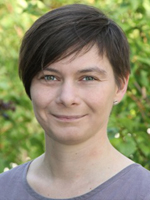
Sebastian MaerklView profile
Associate Professor
Sebastian Maerkl is an Associate Professor at École Polytechnique Fédérale de Lausanne (EPFL) in the Laboratory of Biological Network Characterization , part of the School of Engineering (STI) and the Institute of Bioengineering (IBI-STI). He holds a joint appointment in the EDBB-GE PhD Program Committee and leads the SEL-ENS teaching initiative. His academic journey began with dual B.Sc. degrees in Biology and Chemistry from Fairleigh-Dickinson University (2001) before earning a Ph.D. in Biochemistry and Molecular Biophysics from Caltech (2008). Prof. Maerkl's research lies at the intersection of microfluidics , cell-free synthetic biology , transcription factor biophysics , and molecular diagnostics . His lab has pioneered microfluidic platforms for high-throughput characterization of gene regulatory networks, protein-DNA interactions, and cellular processes. Recent work focuses on artificial cell systems using the PURE cell-free translation system, self-regenerating protein networks, and sustainable biomolecular material design via circular economy principles. His 15 most recent articles (2022-2025) reveal consistent innovation in microfluidic reactor design for cell-free systems, with 2025 studies on tRNA synthesis and protein-ligand deep learning tools. He has secured major funding including an ERC Consolidator Grant (2016) and multiple Swiss National Science Foundation grants, supporting work that has yielded over 50 peer-reviewed publications and 6 patents. Honors : 2005: Innovator’s Challenge – 1st Place (Caltech/Stanford/Berkeley) 2008: Demetriades-Tsafka-Kokalis Prize – Best Caltech PhD Thesis in Biotechnology 2012: Prix SSV – Ambition – EPFL Teaching Excellence Award 2016: ERC Consolidator Grant (€2M+) 2019: iGEM Grand Prize Winner (Overgrad Category) – First Swiss Team Victory As founder and advisor of the EPFL iGEM team (2008-2020), he mentored teams that won 8 Gold, 2 Silver, and 1 Bronze medals. His lab hosted international fellows including one Fulbright Scholar and two Whitaker Fellows, while developing microfluidic devices for applications ranging from cancer diagnostics to SARS-CoV-2 antibody detection.