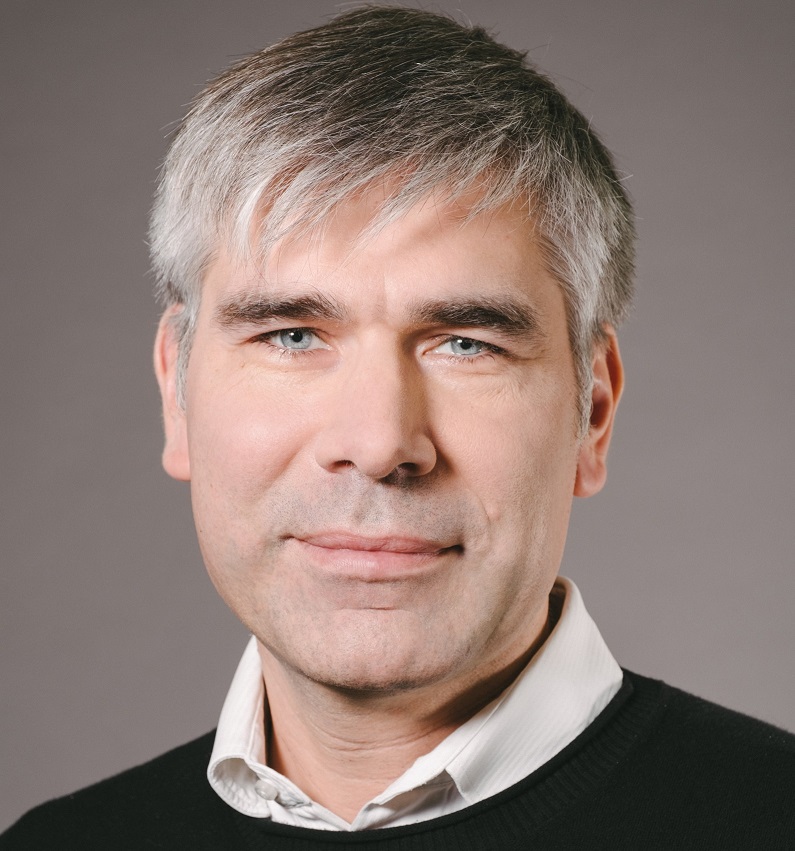
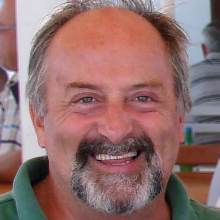
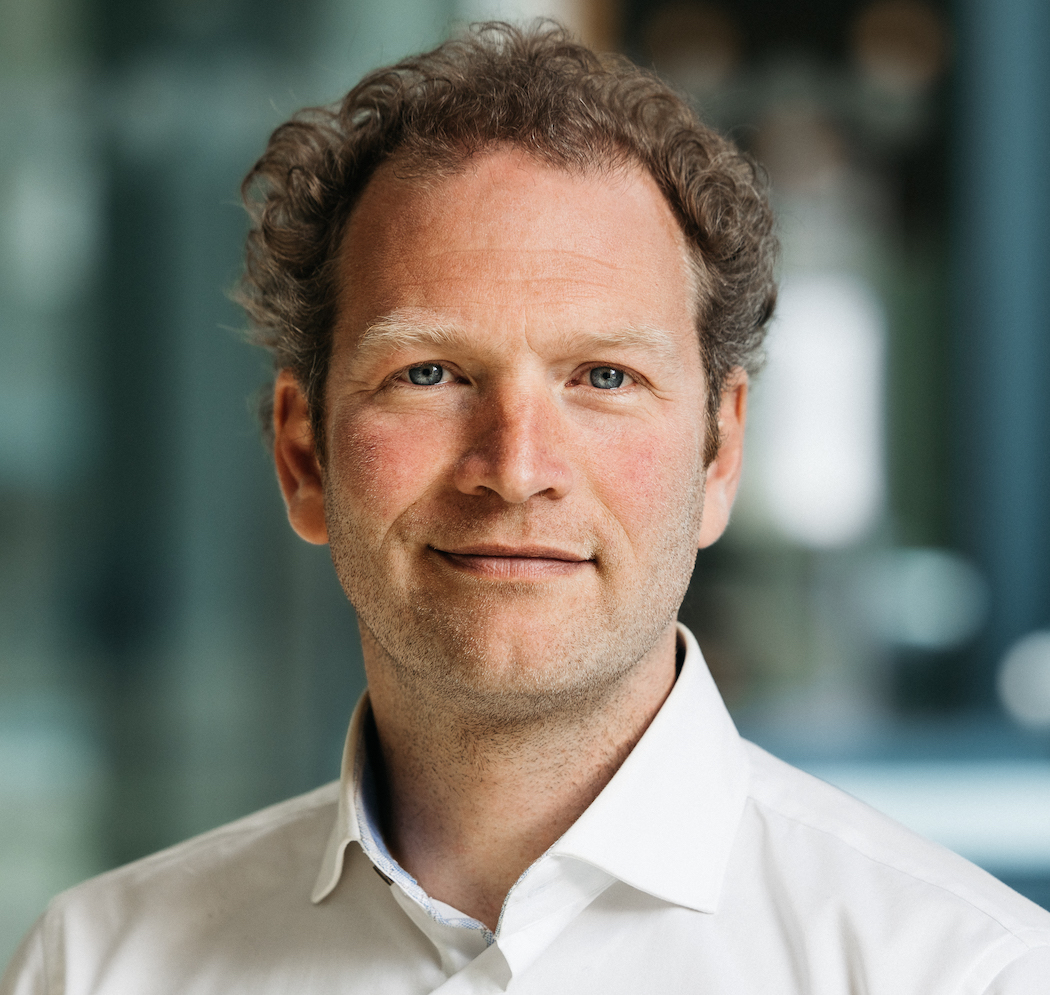
Ivan Laptev is a Professor at MBZUAI on leave from INRIA Paris, and serves as Head of Research at VisionLabs. He holds a PhD from the Royal Institute of Technology (2004) and a Habilitation from École Normale Supérieure (2013). His research focuses on computer vision, robotics, and action recognition, with over 150 publications in top-tier venues. He has served as Program Chair for ICCV'23 and CVPR'18, and organized events like the INRIA summer schools and Machines Can See summits. Key contributions include work on human action recognition, 3D reconstruction, and multimodal learning. His recent research emphasizes robotics manipulation, sim-to-real transfer, and large-scale video understanding. Awards include the ERC Starting Grant (2012) and the Helmholtz Prize (2017). Education: PhD (KTH, 2004), Habilitation (ENS, 2013) Grants: ERC Starting Grant (2012) Labs: Leads new lab at MBZUAI; Head of Research at VisionLabs
Ahmed Sabir is a postdoctoral researcher at the Institute of Computer Science , University of Tartu , focusing on AI Ethics (biases, fairness, and explainability in Large Language Models). He earned his Ph.D. in Computer Science from Universitat Politècnica de Catalunya (BarcelonaTech) in 2020 and an MSc from Kanagawa Institute of Technology under the Masuda AI lab. Current Research : Biases in LLMs, Explainable AI, Multimodal Fact-Checking Past Work : Gesture recognition, OCR correction via visual semantics, Image captioning Research Interests span Natural Language Processing , Computer Vision , and their intersection in Vision-Language Models and AI Ethics . His work emphasizes Context-aware multimodal learning Bias measurement and mitigation Efficient post-processing techniques Scientific Contributions include 15+ peer-reviewed publications at venues like ACL, EMNLP, CVPRW, and COLING, with datasets and re-ranking frameworks for vision-language tasks. Notable achievements: Driven advancements in semantic relatedness for OCR correction Developed visual grounding techniques for captioning Created benchmark datasets for text spotting Explored gender bias in genderless languages Technical Expertise includes Measurement electronics for industrial tools LaTeX thesis template development Participated in 48-hour Mobility Hackathon (2017)
Cristina España i Bonet is a Professor in the Department of Computer Science at the Polytechnic University of Catalonia (UPC), working within the Natural Language Processing group (GPLN) of the Center for Technologies and Applications of Language and Speech (TALP). She holds a Physics degree and a PhD in Cosmology from the University of Barcelona, later transitioning to Natural Language Processing and Machine Translation. Her academic journey includes teaching at both the Faculty of Physics of the University of Barcelona and currently at the Barcelona School of Informatics of UPC. Her research spans multiple areas of computational linguistics with a strong focus on Machine Translation. She has extensive experience in statistical and hybrid translation systems, document-level translation, multilingual systems, and machine learning applications in NLP. Her work often addresses real-world challenges with diverse text genres including news, patents, Wikipedia articles, and social media content. She has made significant contributions to developing translation systems that leverage context beyond the sentence level to improve coherence and quality. Cristina has been actively involved in numerous European and national research projects including OPENMT, OPENMT2, MOLTO, and TACARDI, where she has contributed both research and project coordination. Her recent work shows a growing interest in sign language translation, low-resource language processing, and the intersection of large language models with traditional machine translation paradigms. She has supervised multiple PhD and Master's students in topics related to machine translation and multilingual systems. Member of the Natural Language Processing group (GPLN) at TALP Research Center Supervisor of doctoral and master's theses in NLP and Machine Translation Lead researcher in multiple EU-funded projects on multilingual translation Developer of resources and tools for Wikipedia-based multilingual corpora Her research has evolved from statistical machine translation to incorporate neural approaches while maintaining focus on document-level context and multilingual applications. She has made significant contributions to understanding translation artifacts, developing methods for low-resource language translation, and creating resources for sign language processing. Her work bridges theoretical advances with practical applications across diverse language pairs and domains.
Pierrette Bouillon is affiliated with the University of Geneva as a researcher, focusing on machine translation, accessible communication, and language technology applications in healthcare. Her work bridges computational linguistics, speech processing, and inclusive design. Institution: University of Geneva Research Focus: Medical translation, sign language processing, text/pictograph translation Research Interests : Bouillon specializes in machine translation and computational linguistics , with particular emphasis on: Accessible communication for patients with language barriers Sign language and pictograph translation systems (e.g., BabelDr) Speech-to-speech translation in emergency settings Text simplification for intellectual disabilities Historical French normalization for NLP Multilingual speech recognition and post-editing Article Trends : Her recent publications highlight the integration of large language models with accessibility tools in healthcare, focusing on Swiss French sign language corpora , pictograph sequences , and spontaneous speech simplification . Work spans both NLP and human-computer interaction in medical contexts. Education and Teaching : While specific educational details are omitted, Bouillon contributes to translation pedagogy through tools like COPECO and MT3 , integrating speech technologies into post-editing workflows.
Bram Vanroy is a Senior Researcher at Ghent University's Language and Translation Technology Team (LT³), specializing in machine translation evaluation and human-translation interaction. His work bridges computational linguistics and practical translation workflows with a focus on real-world applications. His educational background includes: Master's degree in Computational and Formal Linguistics from KU Leuven Advanced Master's degree in Artificial Intelligence from KU Leuven PhD in Language and Translation Technology from Ghent University (2021) Vanroy's research centers on machine translation evaluation methodologies, translation difficulty prediction, and cognitive aspects of human translation processes. He investigates neural machine translation integration in professional workflows, educational adaptations for the neural era, and cross-modal translation challenges including sign language. His work combines corpus linguistics, syntactic analysis, and human-subject studies to develop practical evaluation frameworks. Analysis of his 15 most recent publications reveals strong trends in human-centered MT evaluation, with increasing focus on real-world professional scenarios (2022-2024), sign language translation (SignON project), and zero-shot NLP applications. Key themes include syntactic equivalence metrics, educational adaptation to neural MT, and resource development like the LeConTra learner corpus. He actively contributes to major research initiatives: MATEO (Machine Translation Evaluation Online) - developing open evaluation platforms PreDicT (Predicting Difficulty in Translation) - foundational PhD project SignON - EU-funded sign language translation system development As a core member of LT³, Vanroy collaborates on advancing translation technology through empirical studies, tool development, and interdisciplinary research at the intersection of computational linguistics and translation practice.
Herr Marc Masana Castrillo is a Researcher at the Institute of Computer Graphics and Vision within Graz University of Technology (College of Engineering). Holding a PhD in Computer Vision (cum laude) from Universitat Autònoma de Barcelona (2020), he specializes in Deep Learning , Continual Learning , and Neural Network Compression . His work addresses catastrophic forgetting in sequential tasks, out-of-distribution detection, and domain adaptation. PhD Thesis: "Lifelong Learning of Neural Networks: Detecting Novelty and Adapting to New Domains without Forgetting" MSc in Computer Vision (with Honours, 2015) BSc in Mathematics and Computer Science (2014) His research spans continual learning frameworks , feature disentanglement , and multimodal translation . Publications in top-tier venues like TPAMI , BMVC , and ICCV highlight his contributions. He co-developed Avalanche , an open-source PyTorch-based library for reproducible continual learning research. Scientific recognition includes the Best Master Thesis Project at UAB (2015) and the Business Track Award at Accenture Datathon (2016). His email addresses are mmasana@tugraz.at and marc.masana@icg.tugraz.at . He has reviewed for journals like TPAMI and conferences including CVPR and ICCV .
Prof. Marek Miłosz is a Professor at Lublin University of Technology, leading the Department of Software Engineering and Database Systems and the Laboratory of Motion Analysis and Interface Ergonomics. His work focuses on 3D Information Technology for cultural heritage preservation, software engineering, human-computer interaction, and mobile application development. He has spearheaded projects like the 3D Digital Silk Road initiative and the T1DCoach diabetes management app, emphasizing interdisciplinary collaboration between computer science and cultural/humanitarian fields. Research interests include: 3D digitization of historical architecture AI-driven sign language resources Competency-based curriculum design Usability testing of medical applications Ontological approaches in education Recent publications (2023-2025) highlight advancements in gesture recognition systems, low-resource language datasets, and computational methods for cultural heritage preservation. His work bridges technological innovation with societal impact through UNESCO-related heritage projects and health tech solutions. Key projects include: Development of DiagNurse clinical support app 3D digitization of Silk Road monuments Competency-based curriculum ontologies AI-powered linguistic resources for disabled communities He coordinates international education initiatives like the MADEM and PROMIS programs, integrating industry needs into computer science curricula. His laboratory develops innovative solutions for interface ergonomics and motion analysis in rehabilitation contexts.
Lorna Quandt is an Associate Professor in the PhD in Educational Neuroscience (PEN) program at Gallaudet University, focusing on the neural substrates of action perception in signed languages. She directs the Motion Light Lab and the Action & Brain Lab, employing EEG and psychophysiological measures to study topics like sensorimotor systems, self-other body representations, and visual language processing. Her work emphasizes the role of experience in learning actions and the impact of signed language exposure on cognitive processes. Dr. Quandt holds a PhD in Psychology from Temple University and teaches courses such as PEN-701 Educational Neuroscience Proseminar. She has advised over ten doctoral students in the PEN program and contributed to grants like the NSF-funded Signing Avatars & Immersive Learning (SAIL) project. Her research has explored ASL comprehension, biological motion perception, and virtual reality applications in deaf education. Notable awards include the 2020 Public Choice Award and Facilitators’ Choice Awards. She actively participates in committees like the PEN Steering Committee and Gallaudet’s IT Department search committees, advocating for inclusive technology and equity in sign-related research. Her interdisciplinary approach bridges neuroscience, linguistics, and education to advance accessibility for deaf communities.
Cristina España-Bonet is a researcher at the Department of Computer Science (CS) in the Polytechnic University of Catalonia (UPC), where she works in the Natural Language Processing (GPLN) group. Previously, she was affiliated with the University of Barcelona (UB) in the Department of Astronomy and Meteorology (DAM), where she completed her PhD in Cosmology. Her research spans both Natural Language Processing and Cosmology , with a strong focus on Machine Translation and Multilingual Systems . Her work in NLP includes: Statistical and Hybrid Machine Translation Document-level Translation Multilingual Information Retrieval Sign Language Translation Low-resource Language Processing She has contributed to major projects such as: OPENMT MOLTO TACARDI Wikiparable Her research has produced significant resources including: Wikipedia-based comparable corpora Hybrid translation systems for patents Stopword lists for Occitan Sign language translation systems
Alessia Battisti is a Researcher and Ph.D. candidate at the University of Zurich , Faculty of Arts, affiliated with the Language, Technology and Accessibility Group . Her research focuses on sign language technology, accessibility, and natural language processing, particularly in the context of Swiss German Sign Language. She has contributed to projects like SMILE-II (funded by an SNF Sinergia grant) and the Flagship IICT . Battisti is actively involved in academic communities as the student representative on the board of the Special Interest Group on Speech and Language Processing for Assistive Technologies (SIG-SLPAT). Research Interests include: Swiss German Sign Language assessment and learning Automated readability and text simplification Sign language annotation and feedback systems Human motion modeling for sign language analysis Multilingual dataset curation and quality evaluation Recent Publications highlight her work in sign language fluency scales, automated annotation, and German text simplification frameworks. She collaborates on international initiatives like the First WMT Shared Task on Sign Language Translation . Grants include the SNF Sinergia grant supporting the SMILE-II project. Her work intersects computational linguistics , accessibility research , and machine learning to advance sign language and simplified text technologies. Labs/Teams : Language, Technology and Accessibility Group at the University of Zurich; SIG-SLPAT Special Interest Group.
Lieselott Nordman is a Lecturer at the Department of Finno-Ugric and Nordic Studies, University of Helsinki, teaching legal translation, institutional communication, and Finland-Swedish culture. She holds a PhD in Swedish from 2009 and has supervised doctoral students in Scandinavian languages, including Maria Andersson-Koski (Finland-Swedish Sign Language revitalization) and Olga Mezhevich (fiction translation between Swedish and Russian). Her work spans the Faculty of Law, where she taught part-time for over a decade. Research Interests Nordman's research focuses on legal translation , institutional communication , and Finland-Swedish Sign Language . Key themes include: Translation sociology and LSP (Language for Special Purposes) Language planning and plain language initiatives Machine translation in professional workflows Urban linguistic landscapes during crises (e.g., multilingual signage in Helsinki/Stockholm) Scientific Awards PhD thesis 'Legal translation as process and product' awarded by The Society of Swedish Literature in Finland (2010) Teaching & Supervision She has directed master's theses in Scandinavian languages and translation studies and served as primary supervisor for PhD candidates. Nordman also acted as opponent (external examiner) for dissertations at the University of Oslo (2021), Gothenburg (2018), and Uppsala University (2013).
Jeremie Segouat is a Lecturer at the Cognition, Languages, Ergonomics (CLLE) research unit at University of Toulouse - Jean Jaurès. His primary research focuses on French Sign Language (LSF), translation studies, terminology, and accessibility for deaf communities. With a career spanning over 15 years, he has established himself as a key researcher in sign language linguistics and technology. Segouat's research interests center around sign language corpora, terminology development (particularly in STEM fields), audiovisual translation for deaf audiences, and the computational modeling of sign language. His work bridges theoretical linguistics with practical applications for deaf accessibility. He has published extensively on sign language coarticulation, corpus linguistics, and the development of digital resources for French Sign Language. His recent publications (2022-2024) show a strong focus on STEM terminology in LSF, audiovisual accessibility for deaf children, and terminological resources for interpreters. These works demonstrate both continuity with his earlier research on sign language corpora and coarticulation modeling while expanding into new applications for educational contexts. Segouat has received recognition through numerous conference presentations and collaborative projects, particularly with researchers like Annelies Braffort and Amélie Josselin-Leray. His work with the Sens Dessus Dessous association in Toulouse on LSF versions of short films for young deaf audiences represents a significant practical application of his research. He completed his PhD in 2010 at Université Paris Sud - Paris XI with a thesis on modeling coarticulation in French Sign Language for information dissemination in railway stations using virtual signers, establishing the foundation for his ongoing research in sign language technology and accessibility.
Professor Weizi Li serves as Professor of Informatics and Digital Health, Deputy Director of the Informatics Research Centre, and Programme Director for MSc Digital and Technology Solutions and MSc Informatics (BIT) at Henley Business School, University of Reading. She directs the EPSRC Future Blood Testing for Inclusive Monitoring and Personalised Analytics Network+, demonstrating leadership in digital health innovation. Her research integrates artificial intelligence, machine learning, and information systems to solve critical healthcare challenges. Key focus areas include digital health analytics, decision support systems for clinical pathways, and personalized medicine applications. Current work targets inflammatory arthritis detection, diabetes management through glucose monitoring, and reducing healthcare inequalities via predictive attendance systems implemented at Royal Berkshire NHS Foundation Trust. Recent publications reveal consistent application of multimodal machine learning to healthcare data, emphasizing uncertainty quantification, risk stratification, and real-world clinical implementation. Her work bridges technical AI advancements with practical healthcare delivery improvements across diverse patient populations. Professor Li has earned significant recognition for research impact including the ESRC O2RB Excellence in Impact Award (2018), Research Engagement and Impact Award (2020), and Times Higher Education STEM Award (2025). Her contributions to patient safety and digital health innovation have been acknowledged through Health Service Journal awards and British Computer Society fellowship. ESRC O2RB Excellence in Impact Award (2018) Research Engagement and Impact Award (2020) Shortlisted for 2022 Impact Award Health Service Journal Patient Safety Award Times Higher Education STEM Award (2025) Fellow of British Computer Society As Principal Investigator, she has secured major funding from EPSRC, NIHR, ESRC, The Health Foundation, NHS, and Innovate UK totaling over £3 million. Current projects include the £1.16M NIHR RMD-Health initiative for rheumatic disease detection and the £600k EPSRC grant for inflammatory arthritis prediction. Her Royal Berkshire NHS partnership has successfully implemented machine learning systems reducing outpatient non-attendance. She leads the Informatics Research Centre's digital health team, fostering collaborations between academia, NHS trusts, and industry partners to translate AI research into clinical practice through the EPSRC Future Blood Testing Network+ and multiple collaborative innovation funds.
Rodolfo Delmonte is a retired Professor at Ca' Foscari University of Venice, affiliated with the Department of Linguistics and Comparative Cultural Studies. His research focuses on computational linguistics, natural language processing, and poetry analysis. He has contributed to systems like GETARUNS and SPARSAR, which address text understanding, sentiment analysis, and language modeling. His work spans topics such as machine translation, anaphora resolution, and the application of linguistic tools to literary texts like Shakespeare's sonnets. Delmonte has also explored the intersection of speech synthesis and language learning, developing tools for automated tutoring. His publications reflect a commitment to bridging theoretical linguistics with practical computational methods, including studies on discourse relations, pragmatic processing, and semantic evaluation. Despite no listed advisees, his extensive contributions to academic conferences and workshops highlight his role in advancing computational linguistics research in Italy and globally.
Floris Roelofsen is a Professor at the Institute for Logic, Language, and Computation (ILLC), part of the Faculty of Science, Mathematics and Computer Science at the University of Amsterdam. His research centers on expanding semantic theories beyond truth-conditional content, particularly in the interpretation of questions and the formal modeling of meaning through inquisitive semantics. He also investigates sign languages, especially the Sign Language of the Netherlands (NGT), aiming to deepen linguistic understanding and reduce communication barriers between deaf and hearing communities. Professor, ILLC, University of Amsterdam (2023–present) Associate Professor, ILLC, University of Amsterdam (2015–2023) Assistant Professor, ILLC, University of Amsterdam (2013–2015) Postdoctoral Researcher, ILLC (2010–2013) Visiting Assistant Professor, UMass Amherst (2009–2010) Roelofsen’s research interests include inquisitive semantics, formal semantics, questions in language, sign language linguistics, and computational models of meaning. He explores how linguistic meaning goes beyond truth conditions to include information-seeking functions, and how sign languages make grammatical structures visually accessible. His work integrates theoretical linguistics, logic, philosophy, and artificial intelligence. The most recent publications reflect a growing trend toward interdisciplinary research combining formal semantics with computational and experimental methods, particularly in sign language processing, annotation, and translation technology. Themes include polar questions in NGT, sign spotting, text-to-sign translation, and the semantics of attitude predicates across languages. NWO VICI Grant (2021, 1.5 million euro) ERC Starting Grant (2016, 1.4 million euro) NWO VIDI Grant (2015, 800,000 euro) NWO VENI Grant (2012, 250,000 euro) Roelofsen has advised 6 PhD students and 6 postdoctoral researchers, and supervised over 10 master’s and bachelor’s theses. He leads the SignLab Amsterdam initiative, which develops machine translation tools using animated avatars to translate Dutch and English into NGT. He is also the principal investigator of major projects such as 'Language Sciences for Social Good' and the NWO VICI project on questions in sign language. His editorial work includes serving as Associate Editor for the Journal of Semantics since 2018.