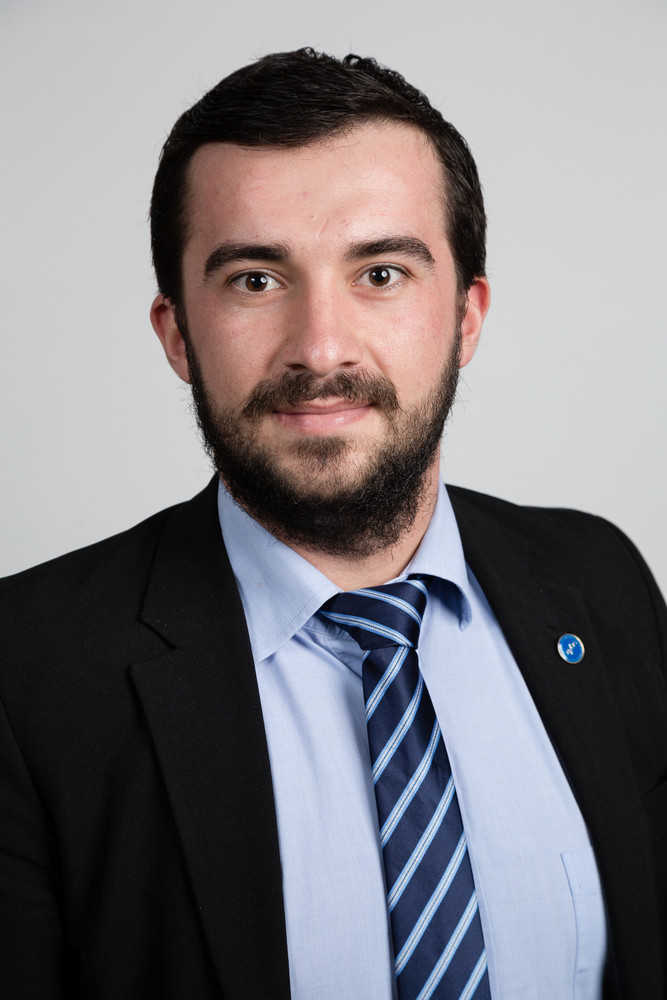
Vlad Popescu is an Associate Professor at the Department of Electronics and Computers, Faculty of Electrical Engineering and Computer Science, Technical University of Brasov. His research focuses on telecommunications, IoT, cognitive radio systems, and multimedia applications. He has authored numerous publications in top journals and conferences, including work on 6G-enabled smart cities, edge-cloud orchestration, and QoE-driven smart home systems. His research explores cutting-edge topics such as immersive multi-sensory experiences, real-time object detection, and energy-efficient architectures for Android TV integration. Popescu has contributed to open-source satellite simulators and pioneered studies on blockchain-based TV advertising systems. His work bridges theoretical advancements with practical implementations in smart home environments, IoT gateways, and next-generation wireless networks. Award-winning research includes innovations in SDR-based satellite gateways and hardware-software partitioning for embedded systems. His collaborative projects address challenges in distributed video applications, D2D communications, and social IoT frameworks for smart tourism management.
Prof. Lazar Maria serves as a Professor in the Department of Environmental Engineering and Geology at the Faculty of Mining, University of Petroșani Technical. She also holds the administrative role of Vice-Rector for Scientific Research, overseeing research initiatives at the institution. Her work focuses on sustainable mining practices, environmental rehabilitation of degraded lands, and the integration of AI in ecological planning. Key research areas include soil restoration, water quality management, and the valorization of industrial byproducts. Research emphasizes case studies in regions like the Jiu Valley and Rovinari mining basins, addressing challenges such as mine closure risks, waste management, and the ecological reclamation of abandoned sites. Recent studies explore AI-driven solutions for mine site design, sustainable copper extraction techniques, and methods to accelerate pedogenesis on waste dumps. Publications highlight innovative approaches to land rehabilitation, seismic stability assessments, and the environmental implications of mining projects like Certej. Despite no listed scientific awards or advisees, her contributions to sustainable resource recovery and policy-relevant research are significant.
Dr. Timenko Artur Valentynovych serves as Senior Lecturer at Zaporizhia National Technical University's Department of Computer Systems and Networks within the Faculty of Computer Science and Technologies. Holding a specialist degree in Computer Systems and Networks (2010), he maintains active roles in both teaching and research. His educational background includes graduation from Zaporizhia National Technical University in 2010 with specialization in Computer Systems and Networks. Professional development is evidenced through continuous research output and curriculum development activities. Research focuses on Internet of Things , computer networks , and neural networks , with particular emphasis on protocol verification, device interoperability, and embedded system optimization. Recent work explores semantic chatbots for IoT management, air quality monitoring systems, and MQTT protocol compatibility analysis. His methodology integrates formal verification techniques with practical hardware implementation. Publication trends from 2020-2024 reveal consistent contributions to IoT infrastructure (45%), network protocols (30%), and AI applications (25%). Key journals include Shipbuilding & Marine Infrastructure and Scientific Notes of Vernadsky University. Research demonstrates strong industry relevance with applications in smart homes, environmental monitoring, and critical systems. Teaching responsibilities encompass Python programming basics, computer network design, IoT fundamentals, and wireless technologies. His laboratory guidelines for Embedded Computer Systems and IoT disciplines reflect practical, hands-on pedagogy. Current projects involve developing automated temperature control systems and network anomaly detection using hybrid neural networks. Professional activities include active participation in Ukrainian academic conferences and international collaborations through ZNTU's research infrastructure. His work contributes to the university's strategic focus on digital innovation and sustainable technology development.
Eugen Borcoci serves as a Full Professor in the Department of Telecommunications at the National University of Science and Technology Politehnica Bucharest. With an extensive publication record spanning networking technologies, he has established himself as a significant contributor to the field of telecommunications research. His work bridges theoretical networking concepts with practical implementations, particularly in next-generation network architectures. Professor Borcoci's research interests focus on advanced networking paradigms including Software Defined Networking (SDN), Network Function Virtualization (NFV), and 5G/6G network architectures. He has pioneered work in network slicing technologies, particularly for vehicular communications and Internet of Vehicles applications. His research demonstrates a consistent emphasis on practical implementations and validation of theoretical networking concepts through experimental frameworks and open-source platforms. His recent publication trajectory (2021-2025) reveals a strong focus on Open Source MANO for network automation, SDN controller optimization across different network topologies, and specialized applications of network slicing for electric vehicle infrastructure and vehicular communications. This work demonstrates a clear progression from theoretical networking concepts to practical deployment scenarios with industry relevance. Professor Borcoci actively collaborates with international researchers, particularly with Marius Vochin, Frank Y. Li, and Andra Ciobanu, indicating strong international research connections. His work appears primarily in networking conferences and journals focused on telecommunications infrastructure and next-generation network architectures.
Laurențiu-Mihai Treapăt is an Associate Professor at the National School of Political Science and Public Administration (SNSPA), Faculty of Management in Bucharest, Romania. With over 35 years of combined practical and academic experience in banking, financial risk management, and insurance, he bridges theoretical knowledge with real-world banking expertise. He is a member of the Center for Research in Management at SNSPA and has published extensively with 43 publications and 110 citations. Doctor in Economics (2010, Bucharest University of Economic Studies) Postgraduate Program in Banking Management (1994, Romanian-French Institute for Business Enterprises Administration) Bachelor in Finance, Credit, and Accounting (1991, Bucharest University of Economic Studies) Dr. Treapăt's research primarily focuses on finance-banking, capital markets, insurance, and risk management. His work demonstrates expertise in credit risk, operational risk, financial instruments, and banking operations. His international professional training in Germany, Austria, Great Britain, Ireland, and Italy has informed his academic perspective, making him particularly valuable in analyzing European banking practices and risk management frameworks. His publications often address practical banking challenges in the Romanian context while connecting to broader European financial systems. Analysis of his 15 most recent publications reveals consistent focus on risk management across various banking contexts, with increasing attention to digital transformation, virtual teams, and the impact of the COVID-19 pandemic on financial systems. His work spans theoretical frameworks and practical case studies, particularly examining Romanian banking institutions and their adaptation to international standards. Quality Assurance Auditor/Lead Auditor certification from Moody International (IRCA London, Certificate number: 10585/2002) Dr. Treapăt's professional trajectory shows a seamless transition from top banking positions at institutions including National Bank of Romania (BNR), BCR, ERSTE Bank, and BCR Leasing to academia. His teaching connects directly to his extensive practical experience, particularly valuable in training future banking professionals. His international cooperative contract with the European Union Council in Brussels for delivering financial training demonstrates the recognition of his expertise beyond Romania. As a member of the Center for Research in Management at SNSPA, he contributes to the academic community while maintaining connections with banking practice. His leadership experience since age 26, including managing training departments and service delivery divisions in major banks, provides unique perspective when working with students.
Rus Cosmin is a Professor and Head of Department at the Faculty of Mechanical and Electrical Engineering, University of Petroșani. His expertise spans electric vehicle systems, automation, IoT, and environmental monitoring. As a leading academic, he focuses on interdisciplinary research addressing energy efficiency, smart city technologies, and sustainable manufacturing. His research interests include autonomous systems (e.g., drones, electric vehicles), predictive modeling, and AI applications in environmental and healthcare domains. Notable projects involve smart grid integration, wildfire detection drones, and elderly fall detection using IoT. Rus Cosmin’s work bridges theory and practice, with a focus on real-world solutions for Romania’s industrial regions like the Jiu Valley. His technical contributions include innovative sensor networks, control strategies, and data-driven environmental forecasting systems. His publications reflect a trend toward applying advanced technologies to solve contemporary challenges in transportation, energy, and urban sustainability. Despite prolific output, no awards or student advisement details are explicitly listed in the provided materials.
Mihoc T. D. serves as a Lecturer at Babeș-Bolyai University in Cluj Napoca, Romania, teaching Artificial Intelligence, Computer Graphics, and Quantum Computing. He earned his Ph.D. in Computer Science from the same institution in 2011 with a dissertation on evolutionary approaches to game-theoretic equilibria under Prof. D. Dumitrescu. His academic career includes prior service as an Assistant Professor (2012-2017) and foundational experience as a Mathematics and Computer Science Teacher (2000-2008). His educational background features: Ph.D. in Computer Science, Babeș-Bolyai University (2011) Research centers on optimization and game theory, with evolutionary algorithms for Nash equilibrium detection in large-scale games. His work extends to quantum computing implementations, computer graphics applications, and human-computer interaction systems for education and healthcare. Recent publications demonstrate a strategic pivot toward educational technology, examining student perceptions of AI ethics and learning behavior analytics in computer science education. Publication trends reveal a clear evolution: 2010-2017 focused on computational game theory foundations (Cournot oligopolies, equilibrium refinements), while 2023-2025 articles emphasize AI education (ethics perception, assessment techniques, entrepreneurship training). This trajectory shows deliberate expansion from theoretical game theory to applied educational technology solutions. No scientific awards were documented in available sources. Information regarding student advising, research grants, and laboratory affiliations was not provided in the source material. His current teaching responsibilities include course delivery, seminars, and laboratory sessions across three advanced computing domains.
Dr. Anca Udristoiu is an Associate Professor at the Department of Computers and Information Technology, University of Craiova's Faculty of Automatic Control, Computers and Electronics. She graduated from the same faculty in 2003 as a Software Engineering specialist and has been a PhD candidate in Computer Science since 2009 under Prof. Mircea Petrescu. Research Focus: Her work centers on AI-driven medical diagnostics, with emphasis on: Real-time analysis of endoscopic ultrasound (EUS) for pancreatic/liver pathologies Deep learning for cancer detection in biopsy samples Robotic navigation systems for minimally invasive procedures Computer-aided diagnosis frameworks for thyroid/liver disorders Teaching: Leads courses in Databases, Machine Learning, and Web Systems Engineering. Research Trends: Publications (2022-2025) demonstrate: Dominant focus on AI applications in endoscopic imaging (76% of recent works) Progression from theoretical models to clinical validation studies Integration of convolutional/long short-term memory neural networks Robotics development for endovascular/pulmonary interventions
Adrian ALEXANDRESCU is an Associate Professor at the Department of Computer Science and Engineering within the Faculty of Automatic Control and Computer Engineering at “Gheorghe Asachi” Technical University of Iași. He is a member of the Open Infrastructure Research Center and specializes in interdisciplinary research areas such as blockchain technology, distributed systems, artificial intelligence (genetic algorithms, neural networks), and IoT applications. His work bridges theoretical computer science with practical implementations in education, healthcare, and smart technologies. His research interests focus on leveraging blockchain for secure transactions, optimizing distributed systems, and enhancing e-learning through gamification. He has contributed to projects involving sensor networks for health monitoring, real-time driver sobriety tracking, and decentralized identity management systems. His academic contributions span over 20 years, with notable work on genetic algorithms for task mapping in heterogeneous systems and cloud-based solutions for ambient assisted living. Dr. ALEXANDRESCU’s publications emphasize blockchain’s role in trustless systems, IoT-driven healthcare environments, and AI-driven solutions for education and logistics. His work on decentralized article retrieval systems and plagiarism detection frameworks underscores his commitment to ethical and efficient digital ecosystems. Despite no explicitly listed awards, his prolific publication record reflects sustained academic excellence. He advises on projects at the intersection of cloud computing, distributed architectures, and smart technologies. His labs and collaborations focus on developing scalable solutions for real-world challenges such as secure real estate transactions and community-driven academic publishing systems.
Oana Mitruț is an Associate Professor at the Polytechnic University of Bucharest, affiliated with the Department of Computer Science in the Faculty of Automatic Control and Computers. Her research focuses on virtual reality therapy, machine learning applications in healthcare, and accessibility technologies for visually impaired individuals. She has collaborated extensively on projects such as the 'Sound of Vision' initiative, exploring audio-haptic interfaces for navigation and sensory substitution. Her work integrates computational methods with clinical applications, including emotion recognition systems using biophysical signals and adaptive exposure therapy for phobias like acrophobia. She has published widely in journals like Sensors and Symmetry , as well as conferences such as EDULEARN and CHI. Her contributions address challenges in human-centered design for medical VR systems and gamification approaches to improve accessibility. Key areas of investigation include: Machine learning models for fear level detection Audio-based navigation systems for visually impaired users Therapeutic game design for mental health interventions Integration of multimodal feedback in assistive technologies Her research bridges computer science, neuroscience, and clinical practice, emphasizing real-world applications in healthcare and accessibility.
Dr. Marian Barbu is a Professor and Dean of the Faculty of Automation, Computers, Electrical Engineering, and Electronics at Dunarea de Jos University of Galati, Romania. He holds a Ph.D. in Automation (2006) and a Habilitation in System Engineering (2016). His research focuses on Modelling and Control of Biotechnological Systems, Renewable Energy Systems, Nonlinear Systems, and Robust Control. He has authored over 120 publications, 3 textbooks, and serves as an evaluator for the Romanian Agency for Quality Assurance in Higher Education. Education: Ph.D. in Automation, Dunarea de Jos University of Galati (2006) Habilitation Thesis in System Engineering, same university (2016) Research Interests: Wastewater Treatment Process Control Microalgae Cultivation Optimization Machine Learning in Medical Imaging Model Predictive Control (MPC) Applications Professional Activities: General Chair of ICSTCC 2022 and IEEE ETFA 2023 Senior Member of IEEE (since 2020) Editor-in-Chief of the System Theory, Control and Computing Journal Awards: Best Paper Award for Young Researcher (2013) Best Paper Award on Water Resource Management (2010) He leads academic management initiatives and has directed multiple research grants focused on sustainable water systems and industrial automation.
Prof. Sergiu Caraman is a Professor and PhD supervisor in System Engineering at Dunărea de Jos University of Galați since 2007. His research focuses on nonlinear process control, biotechnological systems (e.g., wastewater treatment), and artificial intelligence applications in process automation. He has authored/co-authored 17 books and over 100 scientific papers, contributed to 25 research projects, and reviewed for journals like Automatica . As editor-in-chief of the Annals of his university's Fascicle III, he oversees automation and electrical engineering research. Collaborations include GEPEA Lab (University of Nantes), Paris-Saclay’s Laboratory of Signals and Systems, and the University of Mons’ Control Engineering Department. Six doctoral theses have been finalized under his supervision, with a seventh in progress. Research interests include fault diagnosis, model predictive control, and optimization techniques applied to environmental systems. His work spans sewer network management, bioreactor control, and renewable energy integration in energy systems. Key methodologies involve neural networks, fuzzy logic, and genetic algorithms for complex system modeling and automation. Notable contributions include developing modified ASM3 models for trickling filters, multi-objective optimization strategies for sewer networks, and adaptive control structures for bioprocesses. He has also pioneered fuzzy zonal models for biotechnological processes and explored extremum-seeking control for anaerobic digestion optimization.
Darius Bufnea is an Associate Professor at the Department of Computer Science, Faculty of Mathematics and Computer Science, Babeş-Bolyai University in Cluj-Napoca, Romania. His academic address is at No. 1 Mihail Kogalniceanu Street, RO-400084 Cluj-Napoca. He teaches various courses including Web Programming, Security Protocols in Communications, Web Security and Internet, Web Traffic Control, and Operating Systems for Parallel and Distributed Architectures. Dr. Bufnea's research spans multiple domains within computer science, with a strong focus on parallel and distributed computing systems. His work explores innovative frameworks like PowerList-based programming models and their implementation in Java. He has made significant contributions to web security research, particularly in detecting and measuring scraper sites and clickbait content. His research bridges theoretical computer science with practical applications in web technologies and parallel programming paradigms. His publication record shows a consistent trajectory of research in parallel computing frameworks, with recent work expanding into web security and content analysis. The trend indicates a progression from foundational parallel programming models toward applied research in web technologies, security, and educational approaches for teaching complex computing concepts. His work on measuring "scrappiness level" of websites represents an innovative approach to quantifying web spam and content duplication issues. Dr. Bufnea actively engages with students through undergraduate and dissertation thesis supervision, with specific research topics available through university channels. His teaching philosophy emphasizes hands-on learning, as evidenced by detailed laboratory assignments covering web technologies from HTML/CSS to advanced JavaScript and server-side programming.
Dr. Florentin Bota is a Part-Time Lecturer at Babeș-Bolyai University. His research spans interdisciplinary domains including Machine Learning , Game Theory , and Software Development , with a focus on integrating Human Behavior Modeling into computational systems. His notable work includes the Sotirios virtual learning game and studies on Multi-agent Systems , Temporal Discounting , and Software Fault Prediction . He has contributed to 3D Computational Models and Community Structure Detection in complex networks. For academic inquiries, contact florentin.bota@ubbcluj.ro or reach out via Microsoft Teams.
Iuliana Militaru is an Associate Professor at the Department of Finance, Credit, Accounting within the Faculty of Commercial Relations and Domestic and International Financial-Banking at Romanian-American University (URA). She holds a PhD in Economics from Babeș-Bolyai University and has served as Vice-Rector for Academic Strategy, Institutional Development, and Quality Management since 2020. Education: PhD in Economics (2005), Babeș-Bolyai University Graduate, Faculty of Economic Sciences, Finance-Banking specialization, Babeș-Bolyai University Her research focuses on financial decision-making , banking , and analysis of financial statements . She has contributed to studies on sustainable finance, digitalization in education, energy policy, and fiscal strategies for EU competitiveness. Scientific Contributions: With over 50 publications in specialized journals, her recent work spans academic integrity, green finance, blockchain in financial stability, and EU energy systems. She employs quantitative models (e.g., Grey GM(1,1), TAM) and explores intersections of AI, education, and economic policy. Professional Engagement: A member of the Body of Certified Public Accountants of Romania and ARACIS Commission 7, she has participated in international teaching programs and led quality assurance projects in higher education.