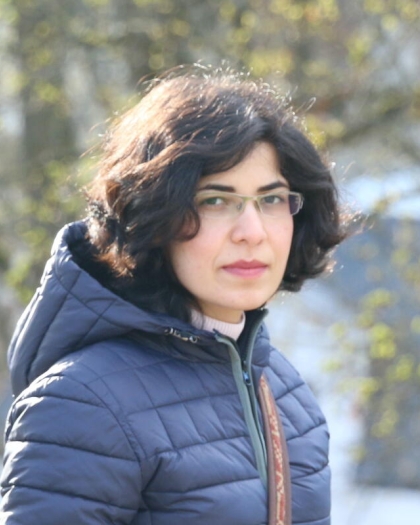
Stefanie Muff is a Professor in the Department of Mathematical Sciences at NTNU, specializing in Bayesian statistical methods, quantitative genetics, and ecological modeling. Her work bridges statistical methodology with applications in evolutionary biology and wildlife research. Expertise: Bayesian inference, missing data modeling, genomic prediction, and habitat selection analysis Key affiliations: NTNU's Department of Mathematical Sciences Research interests focus on developing statistical frameworks for ecological and evolutionary questions, including studies on animal movement patterns, inbreeding effects in wild populations, and genomic prediction in non-model organisms. She actively contributes to methodological advancements in handling missing data and measurement error in ecological datasets. Recent work emphasizes applying Bayesian models to real-world ecological problems, such as dispersal genetics in vertebrate metapopulations and spatial variation in metabolic traits. Her interdisciplinary approach integrates statistics with empirical studies on birds and other wildlife. Notable collaborations: Alpine ibex conservation, house sparrow metapopulation studies, and genomic prediction frameworks Advocates for transparent science through teaching courses like ISTT1003 - Statistics and TMA4268 - Statistical Learning. Active in academic outreach with documentaries and workshops on ecological data analysis.
Ignasi Josep Soler Poquet is a Doctoral Research Fellow at the Rosseland Centre for Solar Physics, University of Oslo. His research focuses on solar physics and computational science, with a strong emphasis on applying machine learning techniques to analyze solar observations. **Education**: Bachelor's in Physics from University of Valencia (specializing in astrophysics/theoretical physics) Master's in Advanced Physics (University of Valencia, focusing on supernovae and simulations) **Research Interests**: Development of deep learning models for detecting solar phenomena like Ellerman bombs Integration of Python-based tools for observational astronomy Computational analysis of solar dynamics using instruments like SST and SDO **Publications Trends**: His recent work demonstrates a clear trajectory in leveraging neural networks and deep learning to interpret solar observational data, with a focus on automated detection systems for transient solar events. **Advising & Grants**: No specific grants or advisees listed, though his PhD work is institutionally supported through the Rosseland Centre.
Role and Affiliation: Md Nazmul Haque Mondol is a Professor at the Department of Geosciences, University of Oslo , leading the Section for Study of Sedimentary Basins . He also holds an Adjunct Advisor position at the Norwegian Geotechnical Institute (NGI) since 2009. His research focuses on CO2 storage, geomechanics, and geophysical monitoring , with expertise in sedimentary basins and energy transition technologies. Education: Ph.D. in Geology and Geophysics (2007) – University of Oslo, specializing in Rock Physics M.Sc. in Petroleum Geosciences (2003) – Norwegian University of Science and Technology (NTNU) Research Interests: Energy Transition : Green Shift, CO2 storage in volcanic and sedimentary systems (e.g., VICCO project). Geophysical Techniques : 4D seismic, microseismic, and InSAR for reservoir monitoring. Reservoir Engineering : CO2 storage seals (shales/evaporites), 3D geomechanical modeling, and offshore windfarm site characterization. Machine Learning : Applications in reservoir log prediction and petrophysical analysis. Key Projects and Contributions: VICCO VISTA Centre : Explores CO2 storage in volcanic-sedimentary systems on the Norwegian Continental Shelf. gigaCCS : Advances CCS implementation at gigatonne scale globally. THERMESI : Investigates thermal effects on CO2 storage caprocks and reservoirs. Labs and Collaborations: Active in interdisciplinary teams at the University of Oslo and NGI, focusing on geomechanics, rock physics, and subsurface engineering.
Pernille Merethe Sire Seljom is an Associate Professor in the Section for Energy Systems at the University of Oslo. Her research focuses on energy systems, renewable energy integration, and sustainable development, with a particular emphasis on low-carbon transition strategies and energy policy. She holds a PhD and has extensive experience in energy system modeling, demand response analysis, and climate change mitigation. Her work bridges technical and socio-economic aspects of energy systems, addressing challenges such as renewable energy variability, offshore wind potential, and energy demand reduction scenarios aligned with the Sustainable Development Goals (SDGs). She has published extensively in high-impact journals and conferences, with notable contributions to energy system flexibility, transmission infrastructure, and decentralized energy solutions in developing regions. Key research trends in her publications include the optimization of energy systems under climate constraints, the role of end-use flexibility, and the analysis of renewable energy technologies in bridging supply-demand gaps in sectors like manufacturing. Her work often employs advanced modeling techniques, including stochastic approaches and machine learning, to enhance energy system resilience and sustainability. Awards: None explicitly listed. Grants/Advising: Supervised research projects on energy transition pathways and energy policy frameworks. Active in interdisciplinary collaborations on sustainable energy solutions. She contributes to international conferences and journals, maintaining a strong focus on practical applications of energy research to real-world policy and infrastructure challenges.
Hans Ole Ørka is an Associate Professor at the Norwegian University of Life Sciences (NMBU), Faculty of Environmental Sciences and Natural Resource Management (MINA), Department of Ecology and Natural Resource Management. He is a member of the Forest Inventory and Monitoring Research Group (SkogRover) and the Section for Renewable Energy and Forest Science. His work integrates advanced remote sensing technologies into forest management and ecological monitoring. His research focuses on the application of remote sensing—particularly airborne laser scanning (LiDAR), satellite imagery (e.g., Landsat), and drone-based systems—to improve forest inventory accuracy and support sustainable forest management. Key areas include mapping non-native conifer species, detecting drought stress in spruce, estimating biomass, assessing albedo in boreal forests, and enhancing precision forestry. His work supports national environmental policy and carbon accounting initiatives. His recent publications demonstrate strong methodological development in species classification and model-assisted estimation. Using data fusion and machine learning (e.g., Random Forest, Logistic Regression), he has advanced techniques for distinguishing Norway spruce from invasive Sitka spruce. His research often involves collaboration with national agencies and international partners. Scientific awards and honors are not mentioned in the provided text. He has advised doctoral students including Benjamin Allen and Ana Claudia Ferreira Aza. His research is supported by grants from the Norwegian Environment Agency and the Norwegian Research Council. Key projects include PRECISION , ForestPotential , CABMACC-LUANAR , and initiatives on non-native species and albedo monitoring. He leads and contributes to research teams focused on forest monitoring, climate change impacts, and sustainable resource use. The SkogRover group, where he is active, develops tools for operational forest planning and ecological assessment using cutting-edge remote sensing and data science methods.
Kim Aleksander Haukland is an Associate Professor in the Department of Civil and Environmental Engineering at the Norwegian University of Life Sciences (NMBU). His work focuses on sustainable urban water systems, with a strong emphasis on stormwater management in cold climate regions. His primary research interests include: Urban stormwater management Modeling of drainage systems Nature-based solutions for climate adaptation Bioretention technologies in cold climates Application of machine learning in environmental modeling The research themes reflect a strong interdisciplinary approach combining civil engineering, environmental science, and climate resilience. Although specific publications are listed via Cristin, no individual articles are detailed in the source text, so trends cannot be further elaborated. He is the course responsible for THT303 Analysis and Design of Systems for Urban Drainage and THT200 Sustainable Stormwater Management, indicating an active role in academic teaching and curriculum development. No scientific awards, student advisement records, or grant funding details are mentioned in the available information. There is no mention of lab affiliations, research teams, or collaborative groups in the provided content.
Gabriel Hanssen Kiss is currently an Associate Professor at the Department of Computer Science (IDI), Norwegian University of Science and Technology (NTNU), and Senior Engineer at the Operating Room of the Future, St Olavs Hospital. He holds a PhD in Engineering from K.U. Leuven, Belgium, with a focus on visualization and automated polyp detection in virtual colonoscopy, and a computer science engineer diploma from Technical University of Cluj-Napoca, Romania. Education: PhD in Engineering (K.U. Leuven), Computer Science Engineer (Technical University of Cluj-Napoca) Affiliations: NTNU (Associate Professor), St Olavs Hospital (Senior Engineer) His research focuses on medical image processing and visualization, extended reality (XR) systems, and ultrasound technology. Key subfields include volumetric data visualization, image registration/fusion, and XR applications in both medical and non-medical domains. Recent publications highlight AI-driven echocardiography, LiDAR-GNSS data fusion for localization, and mixed reality in surgical training. Collaborative work spans AI applications in transesophageal echocardiography for left ventricular function, 3D segmentation models, and augmented reality systems for medical education. He works with teams at NTNU and St Olavs Hospital, focusing on systems like the Operating Room of the Future (FOR).
Professor Danilo Gligoroski is affiliated with the Norwegian University of Science and Technology (NTNU) under the Department of Information Security and Communication Technology. His work bridges cryptography, blockchain technology, and 5G network security, with a focus on decentralized systems and privacy-preserving protocols. Key research trends in his recent publications include blockchain applications in healthcare and reseller markets, verifiable delay functions for consensus mechanisms, and cryptographic frameworks for chat-based systems. He explores data integrity, network coding, and scalable storage solutions for blockchain ecosystems. Major collaborations include co-authors like Mayank Raikwar, Katina Kralevska, and Anton Karl Oskar Hasselgren. His work often intersects with GDPR compliance, network slice isolation, and secure service implementation in modern telecommunications.
Professor Lasse Natvig is a faculty member at the Norwegian University of Science and Technology (NTNU) in the Faculty of Information Technology and Electrical Engineering , specifically the Department of Computer Science . His research focuses on computer architecture , parallel processing , multi-core programming , and energy-efficient computing . His work includes studying vectorization techniques , cache management , power emulation models , and task scheduling policies to improve performance and energy efficiency in modern processors. He has published extensively in journals like Expert Systems With Applications , The Journal of Supercomputing , and Lecture Notes in Computer Science , with recent 2024 work on micromobility simulation tools. Lasse Natvig's research spans computer architecture , green computing , parallel algorithms , and energy measurement through publications addressing vectorization , cache optimization , and heterogeneous processing . His articles reveal a consistent focus on performance-energy tradeoffs , hardware-software co-design , and simulation tools for computational challenges. Email: lasse.natvig@ntnu.no
Sule Yildirim Yayilgan is a Professor at the Department of Information Security and Communication Technology (IIK) within the Faculty of Information Technology and Electrical Engineering at Norwegian University of Science and Technology (NTNU). With over 30 years of academic experience, she leads the MR PET research group focused on Privacy and Data Protection. PhD in Artificial Intelligence (2002) MSc in Computer Engineering (1995) Her research spans: AI/ML for health, energy, education, and security Cybersecurity & Federated Learning Explainable AI & Bias Reduction Blockchain & Multilingual NLP Recent projects include: VIPADELF : Vineyard Leaf Disease Detection with Federated Learning METICOS : EU Horizon2020 Border Control Platform LITHME : Human-Machine Era Language Technologies (COST Action CA19102) She serves on scientific boards for: NTNU Data Science Strategic Area 3DMT European Master’s Program
Rodica Georgeta Mihai is an Associate Professor in the Department of Informatics at the University of Bergen, Norway. She is also affiliated with NORCE Norwegian Research Centre AS, where she contributes to advanced research in drilling automation and digital well technologies. Her work bridges theoretical computer science and practical engineering applications in the energy sector. Position: Associate Professor Institution: University of Bergen Department: Department of Informatics Affiliation: NORCE Norwegian Research Centre AS Email: rodica.g.mihai@uib.no Phone: +4755584350 Her research interests lie at the intersection of computer science and petroleum engineering, focusing on drilling automation, autonomous systems, verification and validation in distributed control environments, AI safety, and graph algorithms . She explores how intelligent systems can make safe and efficient decisions in complex, uncertain drilling conditions. The recent publications demonstrate a strong trend toward applied AI in drilling operations, particularly in autonomous decision-making, safe mode transitions, distributed control, and online verification of multi-vendor systems . Earlier works were rooted in theoretical computer science, especially graph searching and structural graph theory. The shift reflects a move from foundational algorithms to real-world deployment in energy systems. Rodica Mihai is actively involved in major research initiatives, including the DigiWells project, funded by the Research Council of Norway and industry partners such as Equinor and Aker BP. Her work emphasizes system reliability, safety, and interoperability in automated drilling environments. DigiWells: Digital Well Center for Value Creation, Competitiveness and Minimum Environmental Footprint Demonstration of Automated Drilling Process Control She advises on the design of safe and resilient automation systems, ensuring smooth human-machine transitions and robust operation under uncertainty. Her contributions are presented at leading conferences such as SPE/IADC and include guest lectures at institutions like BI Norwegian Business School.
Asieh Abolpour Mofrad is a researcher at the Department of Informatics, University of Bergen (UiB), with a dual PhD background in behavioral sciences and informatics. She is currently engaged in the Retail Fresh project, leveraging machine learning to reduce food waste in the retail sector in collaboration with Link Retail. Previously, she contributed to the DRONE (Drug Repurposing for Neurological Diseases) project at the Department of Global Health and Public Health, UiB, where she applied machine learning to Norwegian health registry data to investigate Parkinson's disease treatments. Her academic credentials include two doctoral theses: one from OsloMet (2021) on the integration of behavior analysis and machine learning for modeling stimulus equivalence, and another from UiB (2021) on clique-based neural associative memories. Her research bridges artificial intelligence, cognitive modeling, neural networks, and public health applications. Her research interests span machine learning, neural associative memory, reinforcement learning, cognitive modeling, health informatics, and drug repurposing. She employs computational frameworks such as projective simulation and tournament-based neural networks to model complex cognitive and biological phenomena. The analysis of her recent publications reveals a consistent focus on machine learning applications in both cognitive science and healthcare. Her work includes modeling stimulus equivalence, designing neural memory architectures, solving stochastic optimization problems, and analyzing large-scale health data for neurological disease risk. These efforts reflect interdisciplinary innovation, combining theoretical computer science with real-world applications in psychology and medicine. Scientific Contributions: Developed the Enhanced Equivalence Projective Simulation (E-EPS) framework for modeling derived relations in behavior analysis. Designed tournament-based neural networks for efficient sequence storage and bidirectional retrieval. Applied machine learning to large-scale health registries to identify drug classes associated with Parkinson’s disease risk. Contributed to adaptive learning systems based on flow theory for educational optimization. She has advised no publicly listed students but collaborates extensively with researchers across institutions. Her work is supported by interdisciplinary research projects and she actively disseminates code via GitHub, particularly in Jupyter notebooks for reproducibility. She is affiliated with research teams in informatics and global health at UiB, contributing to both theoretical and applied machine learning initiatives. Laboratories and Research Teams: Department of Informatics, University of Bergen – Machine Learning and Neural Systems group. DRONE Project – Interdisciplinary team on drug repurposing using AI and health data. Retail Fresh Project – AI for sustainable retail, in collaboration with industry partners.
Andreas Jørstad Krüger is a Senior Consultant in Anesthesiology and an Adjunct Professor at NTNU's Faculty of Medicine and Health Sciences. He is affiliated with the Clinic for Emergency and Emergency Medicine and the Air Ambulance Department. His primary roles include operational air ambulance physician duties and academic contributions through research and teaching. He holds a PhD from NTNU (2013) focused on Scandinavian physician-staffed emergency medical systems. His research interests span emergency medicine, prehospital critical care, quality measurement in emergency medical services (EMS), resuscitation techniques such as REBOA (resuscitative endovascular balloon occlusion of the aorta), and the application of data science in healthcare systems. He has also explored trauma systems, interdisciplinary cooperation in EMS, and the optimization of prehospital response times using machine learning. Key areas of his work include developing quality indicators for EMS, analyzing dispatch precision via video communication, and evaluating protocols for advanced airway management. His studies often involve multi-center collaborations across Nordic countries and focus on improving patient outcomes through evidence-based practices. He has advised numerous students and contributed to thesis supervision, including projects on emergency exit planning, REBOA applications, and prehospital data standardization. His work emphasizes bridging clinical practice with research to enhance healthcare delivery efficiency and patient safety.
Duc Tien Dang Nguyen is a Professor at the Department of Information and Media Studies , University of Bergen , Norway. He actively contributes to the Intelligent Information Systems (I2S) research group, focusing on Multimedia AI , Deepfake Detection , and Image Forensics . His work addresses Information Disorder through algorithmic solutions and cross-modal analysis. Education : Implied PhD in Computer Science or related field Research Trends emphasize visual content verification , generative synthetic data for detection, and UX/UI design in lifelog systems. Recent publications (2024) explore vision-language models and context-aware algorithms for misinformation. Grants include funding from the Research Council of Norway (Ref: 309339) . Collaborations span institutions including Kristiania University College , Vietnam National University , and University of Trento .
Samia Touileb is an Associate Professor in Natural Language Processing (NLP) at the University of Bergen's Department of Information Science and Media Studies. She co-leads the NLP work package at MediaFutures, a research center focused on responsible media technology. Her research emphasizes bias, fairness, and ethical implications of AI, particularly in language models and under-resourced languages. Education: PhD in NLP from the University of Bergen (2017), postdoctoral research at the University of Oslo's Language Technology Group, and prior roles in MediaFutures. Research Interests: - Bias and fairness in NLP models - Information extraction and summarization - Applications of NLP in social sciences - Scandinavian and under-resourced languages Notable Projects: - Co-developer of the NorBench benchmark for Norwegian language models - Creator of the EDEN dataset for event detection in Norwegian news - Lead in MediaFutures' NLP initiatives Publications focus on event extraction, bias measurement, and ethical AI, with contributions to conferences like NoDaLiDa and ACL.


/pernilms/seljom-pernille_m_sire-2019.jpg)