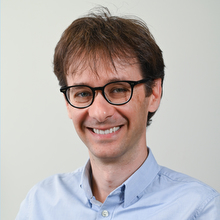
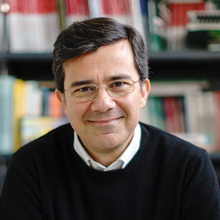
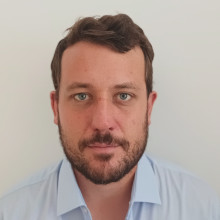
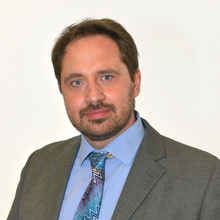
Claudio Lucchese is a Full Professor in the Department of Environmental Sciences, Computer Science and Statistics at Ca' Foscari University of Venice. His research focuses on Machine Learning in Information Retrieval, specifically Learning to Rank, Adversarial ML, and Explainable AI. He has published over 100 articles and won awards including the 2015 ACM SIGIR Best Paper Award. He coordinates the Hospitality Innovation and e-Tourism degree program and leads the Data Mining and Information Retrieval Lab. Research Interests: Efficiency-Effectiveness Trade-offs in IR Adversarial Machine Learning Explainable AI Large-Scale Data Mining Recent Projects: Data Science for Mobility (Humco S.r.l., 2020) Flexymob (Currant s.r.l., 2022) Lucchese serves on editorial boards for ACM Transactions on Information Systems and Data Mining and Knowledge Discovery. His teaching spans Computer Science and Engineering Physics programs, emphasizing Massive Data Learning and High-Performance Computing.
Marcello Pelillo is a **Full Professor** at the Department of Environmental Sciences, Computer Science and Statistics at Ca' Foscari University of Venice. His research focuses on machine learning, pattern recognition, computer vision, and adversarial machine learning. He has contributed significantly to graph-based methods, clustering algorithms, and security in machine learning systems. Pelillo is affiliated with the European Center for Living Technology (ECLT) and the Research Institute for Complexity Communications . His work spans theoretical advancements in graph theory and practical applications in cultural heritage digitization, climate science (e.g., ice core analysis), and AI security. Recent projects include entropy-guided graph clustering, backdoor poisoning defenses, and benchmark datasets for puzzle-solving tasks. Publications emphasize interdisciplinary applications, such as AI-assisted historical document digitization and energy-latency attacks in networks. He has supervised multiple collaborative projects involving institutions like the Research Institute for Complexity and the European Interuniversity Research Center.
Gabriele Santin is a Researcher at Ca' Foscari University of Venice's Department of Environmental Sciences, Computer Science and Statistics. He holds a PhD in Computational Mathematics from the University of Padua and has held postdoctoral positions at the University of Stuttgart and the Bruno Kessler Foundation. His research focuses on kernel-based approximation methods, numerical analysis, and applications in scientific computing, including partial differential equations and biomedical engineering. Research interests include kernel interpolation, greedy algorithms, convergence analysis, and data-driven modeling. He has contributed to advancing numerical techniques for solving PDEs, optimizing kernel methods, and analyzing stability in non-Lipschitz domains. His work bridges theoretical foundations with practical applications in fields like medical imaging, transportation systems, and epidemic modeling. Publications highlight contributions to kernel-based greedy algorithms, image interpolation, and surrogate modeling. He is affiliated with the Research Institute for Complexity and actively collaborates with institutions like SimTech (University of Stuttgart). His expertise spans numerical methods, machine learning, and interdisciplinary problem-solving.
Andrea Torsello is a Full Professor at Ca' Foscari University of Venice, affiliated with the Department of Environmental Sciences, Computer Science and Statistics. His research focuses on Computer Vision, Machine Learning, and Artificial Intelligence with applications in quantum computation, graph theory, and 3D modeling. He is actively involved in teaching courses on quantum computation, artificial intelligence foundations, and computer science fundamentals at both undergraduate and graduate levels. Prof. Torsello's research interests include graph neural networks, quantum machine learning, and structural pattern recognition. His work often bridges theoretical computer science with practical applications in cultural heritage digitization and environmental monitoring. His recent articles highlight advancements in graph generation via spectral diffusion, quantum lens-based 3D shape analysis, and interpretable graph neural networks. He serves on the editorial boards of journals like Pattern Recognition and has contributed to projects funded by the EU’s H2020 program, including the VEiL initiative for visualizing engineered landscapes. His teaching spans topics such as quantum computation, advanced algorithms, and machine learning across multiple engineering programs.
Prof. Franco Moglie is an Associate Professor at the Department of Information Engineering of the University of Marche Polytechnic (UNIVPM). His research focuses on electromagnetic field theory, wireless communication systems, quantum computing applications, and bioelectromagnetics. He leads projects on reverberation chamber analysis, reconfigurable intelligent surfaces, and FDTD simulations. His work spans topics like 5G signal propagation, quantum optimization for wireless networks, and electromagnetic shielding materials. He actively contributes to IEEE standards for stochastic radiator characterization and has pioneered chaotic chamber designs for enhanced testing environments. Research interests include advanced FDTD simulations for complex cavities, time-reversal techniques for biomedical applications, and the development of composite materials for electromagnetic shielding. He collaborates with industry and academia on projects involving 5G infrastructure testing, quantum computing for electromagnetic problems, and bioelectromagnetic safety assessments. Recent publications highlight innovations in quantum algorithms for waveguide simulations, experimental validations of 5G systems in reverberation chambers, and statistical analysis of shielding effectiveness. His work bridges theoretical electromagnetics with practical applications in telecommunications and medical engineering.
Fabio Pareschi is an Associate Professor at the Department of Electronics and Telecommunications (DET), Politecnico di Torino, where he conducts research in circuit architectures, embedded systems, and signal processing with applications in security, AI, and power electronics. He is affiliated with the VLSILAB research group and leads multiple high-impact research projects. Research Interests: Chaos theory and true random number generation for cryptographic applications Compressed sensing for secure and efficient signal acquisition EMI reduction techniques in DC-DC power converters Tiny machine learning and low-power embedded systems Circuit design for IoT and biomedical applications The recent articles highlight a strong trend in integrating compressed sensing with encryption, leveraging chaos-based randomness for security, and optimizing power electronics for EMI reduction. His work bridges theoretical foundations with practical hardware implementations in microelectronics and embedded systems. Scientific Awards: Best Student Paper Award (IEEE, 2005) Best Paper Award (IEEE, 2005) IEEE PRIME Gold Leaf Certificate (2019) BioCAS Transactions Best Paper Award (2019) Best Student Paper Award at EMCCompo (IEEE, 2019) Advising and Grants: He supervises multiple PhD students in the Electrical, Electronics, and Communications Engineering program. He is the Scientific Director of the CESOIA project (Non-EU International Research, 2025–2028) on low-complexity AI models, and leads the ECS4DRES project (EU-funded, 2024–2027) on resilient energy systems. He also heads a commercial research project on high-performance DC-DC converters (2022–2025). His editorial roles include Associate Editor for IEEE Transactions on Circuits and Systems and guest editorships in multiple IEEE journals. Labs and Teams: He is a key member of the VLSILAB Group (DET), which focuses on VLSI systems, embedded signal processing, and secure hardware design.
Micaela Demichela is a Full Professor in the Department of Applied Science and Technology (DISAT) at the Polytechnic University of Turin, where she conducts research and teaches in the fields of process safety, risk management, and occupational safety. She is a member of the Interdepartmental Center R3C – Responsible Risk Resilience Center and the Master's and Continuing Education School. She also serves as vice-coordinator of the MISO (Occupational Safety Engineering) Master's program at the Polytechnic University of Milan and is actively involved in the Doctoral College in Chemical Engineering and Metrology at Politecnico di Torino. Her research interests include process safety, probabilistic risk assessment, safety in the workplace, human and organizational factors in risk analysis, and resilience in industrial systems. She integrates chemical engineering principles with safety science to evaluate the safety status of production lines by combining kinetic and heat transfer data with plant characteristics. Her work spans both fine and basic chemicals sectors and extends to petrochemical industries and international research centers. The recent publications highlight a strong trend toward integrating data-driven methodologies, human factors, and advanced technologies such as human-robot collaboration, Bayesian networks, and prognostics and health management (PHM) to enhance safety and resilience in process industries. Her work increasingly focuses on cyber threats, energy resilience, and decision-making frameworks for industrial safety. Fellow, 3ASI - Association of Environmental, Reliability and Industrial Safety Analysts (2013–2015) President, ESReDA - European Safety, Reliability and Data Association (2012–2014) Associate Editor, Journal of Loss Prevention in the Process Industries (2007–) Associate Editor, Frontiers in Chemical Engineering (2019–) She has supervised numerous PhD students and leads multiple research projects, including ND - Resilience against Cyber Threats, CISC - Collaborative Intelligence for Safety Critical Systems, and several Erasmus+ initiatives such as SAFETY4VET and RE@WBC. She teaches courses such as 'Risk Assessment as Decision Making Tools', 'Advanced Technologies for Risk-Based Decision Making', and 'Occupational Safety Engineering' across various engineering programs. She leads the SAfeR research group and the Applied Biotechnology team at DISAT, and is involved in laboratories including the Biotechnological Laboratory.
Roberto Zamparelli is an Associate Professor at the University of Trento in both the Department of Psychology and Cognitive Science and the Center for Mind/Brain Sciences (CIMeC) . His research spans theoretical and computational linguistics with a focus on syntax-semantics interface phenomena. His research interests include formal semantics , distributional semantics , computational models of language , and linguistic education . He has supervised multiple PhD theses and contributed to interdisciplinary projects combining linguistics with cognitive science. The 15 most recent articles (2013-2024) demonstrate consistent focus on partitive structures , multimodal language models , semantic knowledge evaluation , and multilingualism effects . Key subfields include ellipsis mechanisms, cross-linguistic analysis, and neural network linguistic testing. Marie Curie Post-Doctoral Fellowship (1997-1999) British Academy 'Joint Activity Grant' (2000) Patent: Dispositivo didattico per l’apprendimento o l’esercizio nell’uso di strutture linguistiche (2016) Students supervised include Eva Vecchi , Rossella Varvara , and Sara Zanellini . His work integrates computational methods with theoretical linguistics , supported by grants like the PRIN REPLAI project (2023-25) and EU Atheme collaboration (2014-19).
Mario Di Mauro is a prominent researcher in computer science and engineering, specializing in network security, intrusion detection, and network function virtualization (NFV). His work focuses on leveraging neural networks, machine learning, and stochastic modeling to enhance availability analysis in softwarized systems and telecommunications infrastructure. His research spans critical areas such as: Neural-based intrusion detection systems Optimal configurations for high-availability telecom systems Performance evaluation of multimedia protocols over LTE Machine learning for encrypted traffic detection Key trends in his publications include hybrid active learning for video quality assessment, sensitivity analysis of NFV architectures, and the application of deep learning to network security. Collaborations with co-authors like M. Longo, F. Postiglione, and G. Galatro highlight his interdisciplinary approach.
Qi He is an Associate Professor at the College of Information Technology, Shanghai Ocean University, serving as a master's tutor and member of the Shanghai Branch of the Chinese Computer Society (CCF). Her academic career bridges computer science and marine applications through interdisciplinary research. Her educational background includes: Ph.D. in Computer Software and Theory from Fudan University Her research focuses on marine big data storage , workflow and business process management , service computing , and cloud computing . She pioneers applications of deep learning in ocean informatics, developing novel frameworks for sea surface temperature forecasting, coastal change detection, and ocean front analysis using multimodal data fusion and transformer architectures. Recent publications (2024-2025) reveal a consistent trend toward transformer-based models and ensemble networks for oceanographic time series prediction and remote sensing. Key contributions address subseasonal forecasting (10-30 day horizon), multiscale periodic pattern recognition, and multimodal entity extraction, demonstrating strong integration of computer vision with marine science challenges. As a master's tutor, she mentors graduate students in ocean informatics. Her active publication record in high-impact journals (including IEEE JSTARS and Applied Sciences) indicates sustained research funding in marine big data infrastructure and computational oceanography, though specific grant details aren't provided in source materials.
Maria Paola Carpanese is an Associate Professor at the Department of Civil, Chemical, and Environmental Engineering (DICCA) at the University of Genoa. Her academic career focuses on advanced materials for energy applications and electrochemical systems. Teaching: Courses on Chemical Fundamentals of Technologies, Ceramic Materials for Energy, and Electrochemical Systems for Fuel and Electrolysis Cells and Batteries. Research Interests: Centered on catalytic materials for energy conversion, electrochemical systems, and environmental engineering. Recent work explores ceria-based solid materials for redox properties, hydrogen safety in solid oxide fuel cells, and graphene-based materials for CO2 valorization. Publications demonstrate expertise in solid oxide fuel cells, microstructured electrodes, and molten salt synthesis techniques. Key topics include catalytic oxidation, LSTM-based anomaly detection, and material microstructural analysis. Email: maria.paola.carpanese@unige.it
Davide Clematis is an Associate Professor at the Department of Civil, Chemical, and Environmental Engineering (DICCA) of the University of Genoa. His academic role focuses on chemical foundations of technologies and teaching in engineering programs. University: University of Genoa Department: Civil, Chemical, and Environmental Engineering Role: Associate Professor (CHEM-06/A) His research centers on chemical and environmental engineering , with specific applications in solid oxide fuel cells , oxygen redox reactions , and microstructured electrode design . Recent work employs LSTM-based predictive models for hydrogen safety and physical modeling to correlate electrode microstructure with performance. Publications reveal a focus on energy technology , electrochemical systems , and advanced materials . Key themes include optimizing air electrode interfaces, redox kinetics, and gas transport mechanisms in clean energy devices. Contact: davide.clematis@unige.it
Anna Maria Massone is a Full Professor in the Department of Mathematics (DIMA) at the University of Genoa, affiliated with the School of Mathematical, Physical and Natural Sciences. She holds administrative roles as Deputy Director of DIMA and serves on the School Council and Department Board. Her academic profile is rooted in Numerical Analysis (SSD MATH-05/A), with research extending into interdisciplinary applications of mathematics in solar physics, space weather prediction, and computational methods. She teaches courses such as Mathematics for Pharmaceutical Chemistry and Technology, Mathematical Analysis II for Naval Engineering, and specialized topics like Applications of Mathematics to Astrophysics and Soft Computing. Recent publications highlight her work at the intersection of numerical modeling and solar phenomena, including machine learning approaches for forecasting geo-effective events, multi-scale algorithms for hard X-ray solar imaging, and analyses of electron flux dynamics in solar flares. These studies emphasize predictive analytics, advanced imaging techniques, and space weather impacts. Her advising and grant history are not detailed in the provided materials, though her collaborative research spans astrophysics, computational methods, and data-driven solar event analysis. Contact information includes anna.maria.massone@unige.it and Anna.Maria.Massone@unige.it for academic inquiries.
Claudia Barile is an Associate Professor at the Department of Mechanics, Mathematics & Management (Politecnico di Bari). Her work focuses on mechanical design, composite materials, and non-destructive testing techniques. Email: claudia.barile@poliba.it Phone: +39 080 596 3209 Research Interests : Barile's research spans acoustic emission analysis, residual stress measurement in polymers, and mechanical characterization of advanced composites, with applications in dental materials, aerospace engineering, and sustainable manufacturing. Recent Publications (2023-2025) demonstrate expertise in hybrid techniques (e.g., Gaussian Process Regression with acoustic emission) and environmental applications like biocomposites using agricultural waste.
Giuseppe De Nisco is an Assistant Professor in Industrial Bioengineering at the Department of Mechanical and Aerospace Engineering (DIMEAS) at Polytechnic University of Turin. He works in the Computational and Experimental Cardiovascular Biomechanics Unit and is a member of the PolitoBIOMed Lab. His research focuses on the intersection of blood fluid mechanics, vascular morphometry, and cardiovascular disease development, clinical translation of these associations, and the design of cardiovascular devices. PhD : Bioengineering and Medical-Surgical Sciences, Politecnico di Torino (2018) Postdoctoral : Politecnico di Torino Visiting Researcher : Erasmus MC, Rotterdam (2018) Research Interests : Elucidating hemodynamic mechanisms in atherosclerosis Clinical translation of computational models Cardiovascular device design and optimization Helical flow and vascular health Article Trends : Recent publications focus on computational hemodynamics, plaque progression modeling, stent design optimization, and integration of multimodal imaging with AI tools. Key subfields include LDL transport, flow coherence, shear stress topological skeletons, and clinical applications of CFD. Scientific Awards : ESB Travel Award (2019) VPH Young Researcher Participation Award (2020) VPH Young Investigator Award (2020) Teaching and Coordination : He contributes to graduate and PhD courses in Biomedical Engineering, coordinates 3 postdocs, 5 PhD students, and 40+ graduate students. He served as reviewer/editorial board member for journals and conferences.