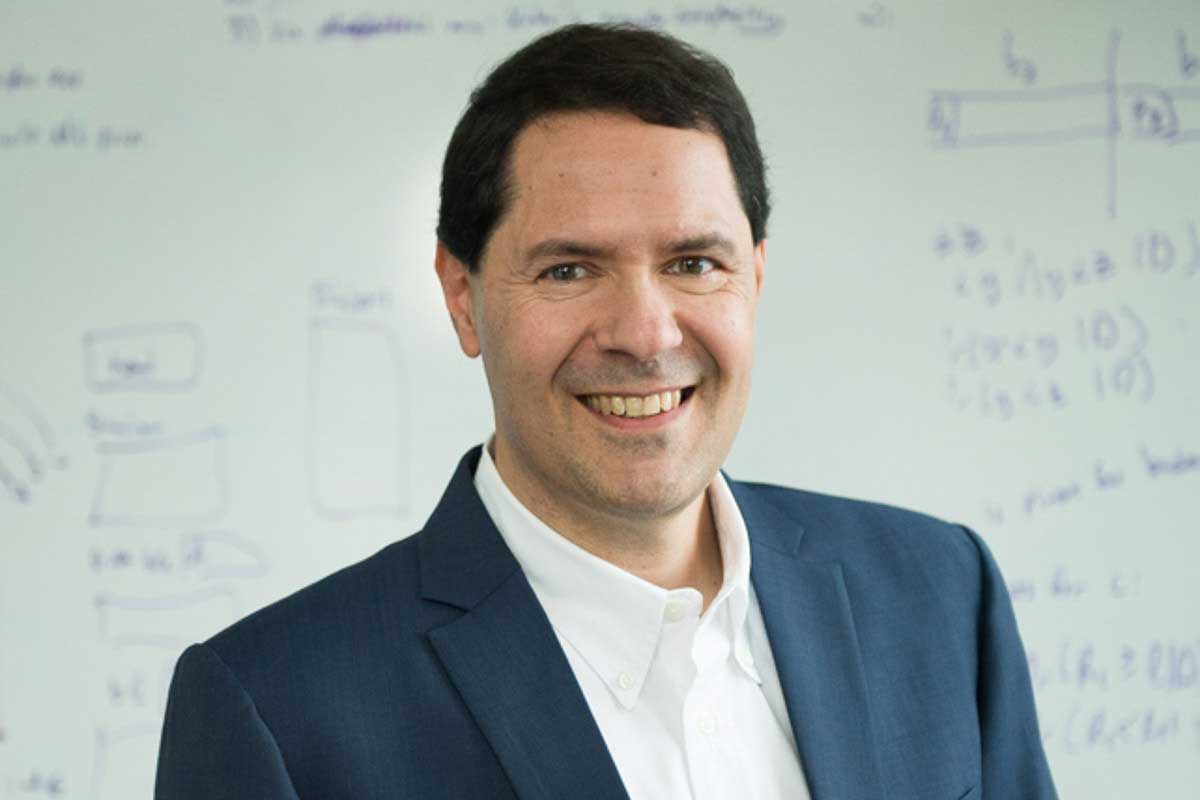
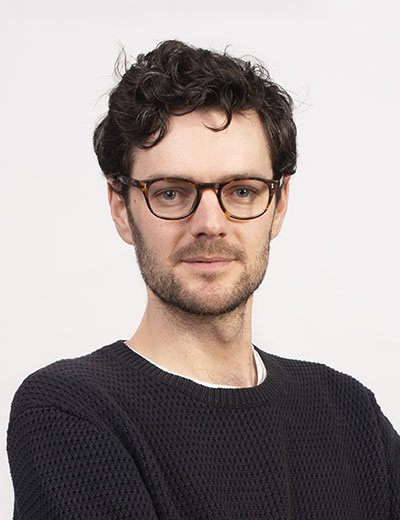
Yi Ding is a tenure-track Assistant Professor of Computer Science at Georgia State University. He leads a research group focusing on multimodal machine learning and human-computer interaction, particularly in understanding human behavior through technology. His work emphasizes applications in healthcare, education, and community benefits. Before academia, he had extensive industry experience as an engineer and researcher. Education B.S. in Computer Science and Mathematics, University of Massachusetts Amherst (2011) M.S. in Computer Science, University of California Santa Barbara (2021) Ph.D. in Computer Science, University of California Santa Barbara (2022) Research Interests Dr. Ding explores how technologies can interpret human behavior and social signals to improve health, education, and community systems. His work addresses challenges in multimodal data fusion, label noise robustness, and ethical AI design. Key areas include: Multimodal machine learning frameworks Human-centric AI ethics Data augmentation strategies for noisy labels Gesture-based interfaces Bio-signal authentication systems Professional Activity His research bridges academia and industry, with contributions to VR/AR systems, health monitoring technologies, and adaptive user interfaces. He collaborates with interdisciplinary teams to address real-world challenges through innovative machine learning approaches.
Gustau Camps-Valls is a Full Professor in Electrical Engineering at the University of Valencia and Group Leader of the Image and Signal Processing (ISP) group at the Image Processing Laboratory (IPL). His research focuses on advancing artificial intelligence (AI) and machine learning for Earth observation, climate science, and environmental applications. He has held prominent roles including IEEE Distinguished Lecturer (2017-2020) and IEEE Fellow (2018), and serves as an ELLIS Fellow and Program Coordinator. His work addresses challenges like climate risk prediction, drought detection, and sustainable development through interdisciplinary approaches combining causal inference and geospatial data analysis. Research interests span AI-driven climate modeling, causal discovery in environmental systems, and geoscience applications of deep learning. Notable contributions include developing frameworks for extreme weather prediction, soil organic carbon inference, and food insecurity modeling. His recent articles explore variational autoencoders for heatwave analysis, geospatial foundation models for sustainability, and robust machine learning for noisy Earth observation data. Awards: IEEE Fellow (2018), IEEE Distinguished Lecturer (2017-2020), ELLIS Fellow Labs/Teams: Image Processing Laboratory (IPL), Image and Signal Processing (ISP) group Grants and collaborations focus on bridging AI with Earth sciences, including projects on climate extremes, digital twins, and humanitarian aid impact analysis. His work emphasizes explainable AI and causal reasoning to ensure scientific rigor in environmental decision-making.
Rob van der Goot is an Associate Professor in Data Science at the IT University of Copenhagen. His affiliations include the NLPnorth group and the Pattern Recognition Revisited lab . His research focuses on Natural Language Processing (NLP), with emphasis on language modeling, lexical normalization, and computational job market analysis. Key contributions include the development of the EEVEE annotation tool, studies on language model biases, and cross-lingual parsing techniques. He has received prestigious awards such as the Best Paper Award at W-NUT 2022 and the Outstanding Paper Award at EACL 2021 . His work spans projects like the Pioneer Centre for Artificial Intelligence (funded by the Danish National Research Foundation) and Multi-Task Sequence Labeling Under Adverse Conditions (funded by Amazon). His research also intersects with societal impacts, addressing bias in AI systems and improving NLP tools for under-resourced languages. Media engagements include discussions on AI adoption in Danish municipalities and business applications. His publications (48+) span topics from domain adaptation to large language model evaluation, emphasizing practical NLP solutions and reproducible research practices.
Emily M. Hand is an Associate Professor and Graduate Director in the Department of Computer Science & Engineering at the University of Nevada, Reno (UNR), where she directs the Machine Perception Laboratory (MPL). Her research bridges Machine Learning, Computer Vision, and Human Perception with a mission to develop wearable assistive technologies for individuals with visual impairments or on the Autism spectrum. Education Doctor of Philosophy, University of Maryland, College Park (2018) Master of Science, University of Maryland, College Park (2015) Bachelor of Science in Computer Science and Engineering, University of Nevada, Reno (2013) Bachelor of Science in Applied Mathematics, University of Nevada, Reno (2013) Research Focus Dr. Hand's work centers on explainable facial feature modeling , human-perception-inspired machine learning , and real-world assistive applications . Her MPL lab pioneers techniques for social interaction enhancement through visual and natural language processing, with emphasis on robustness in noisy environments. Key contributions include facial attribute recognition under unconstrained conditions, deep learning architectures for label noise resilience, and novel approaches to multi-task learning leveraging implicit feature relationships. Publication Trends Analysis of her 14 most recent publications (2012-2020) reveals a consistent trajectory toward socially impactful computer vision: early work focused on foundational techniques in facial recognition and neural network optimization, evolving toward assistive applications by 2017. Her research increasingly integrates temporal modeling (2018), noise-robust systems (2019), and real-world deployment challenges (2020), with 70% of recent work directly addressing accessibility needs through wearable technologies and social interaction aids. Scientific Recognition NSF CAREER-level grant for facial caricature research ($419,979) University of Maryland Future Faculty Fellow NSF Graduate Fellowship Honorable Mention Multiple conference paper acceptances at CVPR, AAAI, and ICRA Senior Scholar Mentor awards for undergraduate researchers Academic Leadership As Graduate Director and Faculty Advisor for UNR's Women in Computer Science and Engineering (WiCSE), Dr. Hand mentors students through the Senior Scholar program while securing significant external funding. Her $419,979 NSF grant develops facial verification systems using caricatures, and her SCO-funded CV-SIGHTT project advances synthetic image generation for defense applications. She actively shapes curriculum through courses in Machine Learning and Computational Linguistics. Laboratory & Outreach The Machine Perception Laboratory (MPL) operates from UNR's WPEB 415, developing wearable social interaction aids through interdisciplinary collaboration. Dr. Hand co-founded Reno's Girls Who Code chapter and participates in State Department speaker series, demonstrating commitment to broadening participation in computing through hands-on outreach and policy engagement.
Elahe Arani is an Assistant Professor in the Department of Mathematics and Computer Science at Eindhoven University of Technology. She also holds external positions as Head of AI Research at Wayve (since October 2023) and previously served as Senior AI Manager and Senior Research Scientist at Wayve from September 2020 to September 2023. Her research interests are centered around Continual Learning, Self-Supervised Learning, and Learning under Noisy Labels. She focuses on developing algorithms for efficient, reliable, and adaptable AI models, particularly in the context of Scene Understanding and Multi-Task Learning. Her work also explores the application of AI in Autonomous Vehicles and integrates insights from Neuroscience to design more biologically plausible AI systems. Key areas include improving generalization in neural networks, mitigating catastrophic forgetting, and leveraging shape-awareness for robust model training. Elahe Arani's recent publications highlight advancements in Continual Learning and Self-Supervised Learning techniques, with a focus on improving model efficiency and adaptability. Her work also delves into applications for Autonomous Vehicles, such as vision-language alignment in SimLingo and generative world models in Gaia-2. She has contributed to frameworks addressing catastrophic forgetting and neural network optimization, often combining biological plausibility with computational methods. No scientific awards are explicitly mentioned in the provided text. No supervised students or specific grant information is listed. Her research emphasizes practical applications and theoretical contributions to AI, with a notable focus on reducing data dependency and environmental impact through efficient model designs. While no specific lab or team names are mentioned, her research involves collaborations in AI-driven systems, including work on road maintenance inspection and autonomous driving technologies. These collaborations aim to bridge academic and industry applications of AI.
Yingbin Bai is a Research Fellow at Australian National University's School of Computing, collaborating with Professor Sylvie Thiebaux. His research focuses on machine learning applications in planning, weakly supervised learning, and unsupervised representation learning. He holds a PhD supervised by Professors Tongliang Liu and Dadong Wang. His work emphasizes addressing challenges in noisy label environments, early stopping techniques, and biomedical image analysis. Key contributions include QUBIQ (uncertainty quantification in medical imaging) and frameworks for robust representation learning under imperfect data conditions. Publications span topics like symmetry breaking in learning systems, semantic shift mitigation in self-supervised learning, and analysis of biomedical image competition practices. Collaborations involve cross-disciplinary teams tackling both theoretical and applied machine learning problems.
Zhenyun Deng is a Researcher in the Department of Computer Science and Technology at the University of Cambridge, specializing in Natural Language Processing (NLP) and Machine Learning. His work focuses on advancing automated fact-checking systems, logical reasoning in large language models, and graph-based reasoning techniques. Key research themes include document-level claim extraction, logic-driven data augmentation, and multi-hop question answering. His recent contributions span automated verification of textual claims , abstract meaning representation-based data augmentation , and robust node classification on graph data . He collaborates on initiatives like the FEVER workshop and develops datasets such as TaKG for table-to-text generation enhanced with knowledge graphs. Notable trends in his publications include: Integration of logical reasoning into NLP systems Improving model interpretability for multi-step reasoning tasks Handling noisy data in graph neural networks His research bridges foundational machine learning theory with real-world applications in information retrieval and causal inference. No awards or grants are explicitly listed in the provided materials.
Javed Aslam is a Professor and Chief of Artificial Intelligence at Northeastern University's Khoury College of Computer Sciences. His academic role includes leadership in AI strategy and research across the university. He holds a tenured position with expertise spanning Artificial Intelligence, Data Science, and Natural Language Processing. Education: Details not explicitly provided in text, but his research trajectory suggests advanced training in computer science and information systems. His research focuses on AI applications in supply chain optimization, blockchain integration for logistics, recommendation systems, and robust machine learning methodologies. Notable projects include frameworks for blockchain adoption in energy and manufacturing sectors, and developing unbiased content recommendation strategies using bandit algorithms. As AI Chief, he advises on Northeastern's AI initiatives, including the development of critical thinking tools like the 'Claude' AI system. His work frequently bridges theory and practice, with emphasis on real-world applications in healthcare, energy, and logistics. Advising: Supervised 8 PhD students in areas like machine learning, cybersecurity, and information retrieval. Grants: Implied through active research projects but explicit details not provided in text. Labs/Teams: Oversee AI research teams at Northeastern, collaborating on interdisciplinary projects involving computer science, business analytics, and public policy.
Vaskar Raychoudhury is a Professor in the Department of Computing at Hong Kong Polytechnic University's Faculty of Engineering. With an extensive publication record spanning from 2007 to 2024, he has established himself as a leading researcher in pervasive computing, networking, and accessible technology systems. His research interests focus on Named Data Networking, Mobile Ad Hoc Networks, and accessible routing systems, with recent work emphasizing machine learning applications for wheelchair navigation and transportation optimization. Professor Raychoudhury's work bridges theoretical computer science with practical applications that address real-world accessibility challenges. His publication trends over the past five years show a strong emphasis on accessible routing systems for wheelchair users (using sensor data and vibration patterns), machine learning applications for transportation (taxi ride sharing and food delivery optimization), and open-world machine learning approaches. His work often combines multiple disciplines including computer networking, machine learning, and human-centered design. Professor Raychoudhury has supervised numerous graduate students including Haoxiang Yu, Ashman Mehra, and Aditi Seetha, who have co-authored multiple publications with him. His research has been supported by grants focused on smart city applications and accessibility technology. He leads research in the Smart Mobility and Accessibility Lab, which develops technologies to improve urban mobility for people with disabilities. The lab employs a multidisciplinary approach combining networking, machine learning, and human-computer interaction to create practical solutions for real-world accessibility challenges.
Robi Polikar is Professor and Department Head of Electrical & Computer Engineering at Rowan University's Henry M. Rowan College of Engineering. He holds a PhD in Electrical Engineering and Biomedical Engineering from Iowa State University. His research develops fundamental computational intelligence approaches for machine learning challenges in nonstationary environments, adversarial settings, and biomedical applications. Polikar's impactful research areas include adversarial machine learning defenses, incremental learning algorithms for streaming data, ensemble-based systems for imbalanced datasets, and applications to metagenomic classification. He directs the Signal Processing and Pattern Recognition Laboratory (SPPRL) where his group studies concept drift, missing data problems, and high-content screening. His publication record demonstrates sustained innovation in adaptive learning systems, with recent advances in adversarial robustness for continual learners, incremental bioinformatics algorithms, and noise-resistant classification. His research has applications in healthcare diagnostics, transportation analytics, and security systems. Honors include the IEEE Computational Intelligence Magazine Best Paper Award, NSF CAREER Award, and Rowan University Research Achievement Award. He has graduated 16 PhD students who now hold positions in academia and industry.
Thanh-Toan (Toan) Do is a Senior Lecturer at the Department of Data Science and AI, Faculty of Information Technology, Monash University. He obtained his Ph.D. in computer science from INRIA (2012) and previously held positions as a Research Fellow at the Singapore University of Technology and Design (2013–2016), the Australian Centre for Robotic Vision (2016–2018), and a Lectureship at the University of Liverpool (2018–2020). His research spans Computer Vision and Machine Learning , with emphasis on: Compact Deep Learning (efficient model architectures) Few-Shot Learning (generalization from minimal data) Metric Learning (similarity optimization) Visual Search & Visual Question Answering (multimodal AI systems) His publications (2023–2025) focus on generative modeling (e.g., diffusion models), noisy-label robustness, human-AI collaboration, and assistive healthcare technology. Trends indicate strong cross-disciplinary integration with HCI and medical applications. Awards: Harold Boley Award for Most Promising Paper (RuleML+RR 2021) CVPR 2019 Best Paper Finalist He is a Chief Investigator in the 2022–2025 project Large-scale multimodal knowledge management (Australian grant). Actively advises PhD students and leads research in deep learning efficiency and vision-language models.
Prof Kai Qin is a Professor of AI and Data Science at Swinburne University, affiliated with the School of Science, Computing and Emerging Technologies. He holds roles including Director of the Intelligent Data Analytics Lab, Deputy Director of the Swinburne Space Technology and Industry Institute, and Vice President for Education at IEEE Computational Intelligence Society (CIS). Qin earned his B.Eng. from Southeast University (2001) and PhD from Nanyang Technological University (2007). His research focuses on Computational Intelligence (CI), encompassing Neural Networks, Evolutionary Computation, and Fuzzy Systems, with applications in Machine Learning, Remote Sensing, and Pervasive Computing. His work has garnered over 20k Google citations and recognition such as IEEE Fellow (2025). Key achievements include the 2012 IEEE Transactions on Evolutionary Computation Outstanding Paper Award and leadership in conferences like IJCNN 2022. He pioneered the Master of Data Science program at Swinburne (2018–2020) and leads initiatives in federated learning, onboard AI for satellite missions, and AI-driven medical diagnostics. Qin’s professional contributions span editorial roles in journals like Swarm and Evolutionary Computation and leadership in IEEE technical committees. His grants include SmartSat CRC projects for satellite AI and ARC-funded research on gravitational lensing and traffic analytics.
Jonathan Wilton is a Casual Academic in the School of Mathematics and Physics at the University of Queensland. His email is jonathan.wilton@uq.edu.au . His research interests focus on machine learning and artificial intelligence, particularly in robust training methodologies for decision trees with noisy labels, positive-unlabeled learning using random forests, and the design of neural networks leveraging randomized algorithms. These areas emphasize improving model reliability and efficiency in complex data environments. His recent work includes contributions to the 2024 AAAI Conference on Artificial Intelligence, highlighting advancements in handling noisy data and optimizing decision tree frameworks. His research spans theoretical algorithm development and practical applications in classification and pattern recognition. No scientific awards or grants are explicitly mentioned in the provided texts. He has not listed any advised students, and no specific laboratories or teams are associated with his profile.
Dr. Abigail Koay is an Honorary Research Fellow at the University of Queensland's School of Electrical Engineering and Computer Science. Her research focuses on cybersecurity, machine learning applications in industrial systems, and healthcare technology. She has contributed to projects such as real-time cyber-attack detection using weakly supervised learning, supported by UQ Cyber Seed Funding (2021–2022). Her work spans multiple disciplines including: Cybersecurity for Industrial Control Systems (ICS) IoT network anomaly detection using fog-assisted frameworks Machine learning for medical imaging (e.g., glaucoma detection) AI-driven cybersecurity strategies for smart grids Recent publications highlight advancements in: Irregular time series analysis using GNNs Positive-unlabeled learning with random forests Domain generalization in retinal image analysis Dr. Koay has authored/co-authored 15+ peer-reviewed articles across journals like Frontiers of Computer Science , IEEE Access , and conferences including NeurIPS and ISGT Asia. She collaborates with industry partners on projects like Plan2Defend for smart grid security and SDGen for synthetic cybersecurity dataset generation. Her research integrates theoretical machine learning with practical cybersecurity challenges, emphasizing real-world applicability in critical infrastructure and healthcare systems.
Timothy Cannings is a Lecturer in Statistics and Data Science at the University of Edinburgh, affiliated with the School of Mathematics' Data & Decisions research group. He holds a PhD from the University of Cambridge (2015) and has since focused on developing statistical methods for medical and genomic applications. His research emphasizes practical impact, particularly in precision medicine, cancer genomics, and classification challenges in high-dimensional data. Collaborations include work with Cambridge Cancer Genomics on predicting tumor relapse and BIOS.health on neural engineering using AI-driven biomarkers. Cannings' projects address modern data complexities such as missing/noisy data and require robust algorithmic approaches. Education: PhD in Statistics (University of Cambridge, 2015). Research Interests : Cannings' work bridges statistical theory and real-world applications. Key areas include: Statistical methods for precision medicine and cancer therapy Classification algorithms for complex biomedical data Handling missing/noisy data in genomic studies Interdisciplinary collaborations in neural engineering and bioinformatics Grants & Projects : Current efforts include a pending project with BIOS.health to decode neural signals for chronic health treatments. Past work includes developing DNA methylation biomarkers for diabetes risk prediction and breast cancer treatment response. His research has been slowed by pandemic-related funding delays, but remains focused on adaptive statistical solutions for modern datasets. Tools & Software : Developed R packages like RPEnsemble (2017) and ICBioMark (2021), providing open-source tools for ensemble classification and gene panel design in immunotherapy.