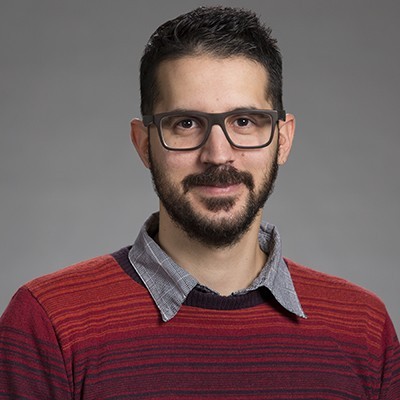
Vicky Kalogeiton is a Professor in AI at École Polytechnique's Computer Science Laboratory (LIX) and leads the VISTA team. As an ELLIS member, her research focuses on multimodal generative AI with applications in medical imaging, efficient generation, and structured output modeling. She actively publishes in top venues like CVPR, ICCV, and IJCV, and supports Slow/ Open Science principles. PhD from University of Edinburgh and INRIA Grenoble Habilitation (HDR) from École Polytechnique 2024 Hi!Paris Chaire and multiple grants (ANR, Microsoft, DIM RFSI) Her recent work explores diffusion models for visual geolocation (Around the World in 80 Timesteps), camera motion control (AKiRa & E.T. dataset), and multimodal humor detection (FunnyNet-W). She pioneered coherence-aware training frameworks and cinematic trajectory analysis methods. Scientific recognition includes CVPR 2024 Highlight paper ACCV 2022 Student Honorable Mention ICCV-W 2021 Best Paper Award Outstanding Reviewer Awards (CVPR, ICCV, ECCV) She supervises current PhD candidates and has mentored numerous students across institutions like MBZUAI, Inria, and Telecom Paris. Her teaching includes Advanced Deep Learning and Computer Vision courses at École Polytechnique.
Wei GAO is an Associate Professor of Computer Science at Singapore Management University's School of Computing and Information Systems (SCIS), where he serves as full-time faculty. His research focuses on artificial intelligence applications in social computing, misinformation analysis, and natural language processing. Professor GAO leads research on large language models, rumor detection, and social media analytics through computational approaches. Research Focus Professor GAO's expertise spans several interconnected domains: AI & Data Science : Developing advanced machine learning models for complex data analysis Social Media Analytics : Studying misinformation propagation and user behavior patterns Natural Language Processing : Creating novel methods for text understanding and generation Computational Social Science : Quantifying psychological and social phenomena through AI Publication Trends Recent works demonstrate strong emphasis on enhancing large language models for: misinformation detection (rumor verification, fake news debunking), social computing (stance classification, moral reasoning), and efficient AI (model compression, transfer learning). Multimodal approaches and explainable AI frameworks appear consistently across publications. Academic Activities Professor GAO supervises PhD students including LAI Yibin, with mentorship focus on NLP and social computing research. He teaches courses on Natural Language Communication and contributes to SMU's research initiatives in digital transformation and AI safety.
Dr. Kofi Appiah serves as a Senior Lecturer in the Department of Computer Science at the University of York, where he contributes to undergraduate and postgraduate teaching while leading departmental initiatives as Microsoft Certification Coordinator and Undergraduate Admissions Tutor. His academic credentials include: PhD in Computer Science, University of Lincoln, UK MSc in Computer Science, University of Oxford, UK MSc in Electrical & Electronic Engineering (System-on-Chip specialization), Royal Institute of Technology (KTH), Sweden BSc in Computer Science, University of Science and Technology, Ghana Dr. Appiah's research bridges hardware and AI with core interests in Edge Computing, Neuromorphic Hardware, and Embedded Computer Vision. His work extends to Health Informatics, Medical Devices, and Machine Learning applications where he develops efficient systems for real-world deployment. This interdisciplinary approach connects computer vision with healthcare diagnostics, environmental monitoring, and energy-aware computing solutions. Analysis of his recent publications reveals a strong trajectory in applying neuromorphic principles to practical challenges, including wildlife conservation through video analytics, medical image classification for cancer detection, and energy-efficient smart-home systems. His work consistently integrates deep learning with hardware acceleration for edge deployment across diverse domains from power grid security to elderly care. As an academic supervisor, Dr. Appiah has guided research degree students as Director of Studies and Second Supervisor. His departmental leadership includes critical roles in admissions and certification programs. He actively contributes to the Vision, Graphics and Learning (VGL) research group, collaborating on computer vision and machine learning advancements within York's Department of Computer Science.
Wojciech Szpankowski is the Saul Rosen Distinguished Professor of Computer Science at Purdue University, with a courtesy appointment in Electrical and Computer Engineering. He holds a Ph.D. and M.S. in Electrical and Computer Engineering from Gdansk University of Technology (1980 and 1970, respectively). His career includes visiting roles at institutions such as McGill University, Stanford, and INRIA. He directs the NSF-funded Center for Science of Information, focusing on extending information theory to modern data challenges. Szpankowski is an IEEE Fellow, Erskine Fellow, and recipient of the Humboldt Research Award (2010). His research spans algorithms, information theory, bioinformatics, and analytic combinatorics. Key contributions include work on data compression, network analysis, and quantum computing. He authored *Average Case Analysis of Algorithms on Sequences* (2001) and co-launched the interdisciplinary Institute for Science of Information (2008). His recent work addresses fundamental limits in machine learning, quantum algorithms, and privacy-preserving systems. Research Interests: Bioinformatics, algorithm analysis, quantum computing, graph theory, and information-theoretic limits of learning. His work often bridges theory and applications, such as analyzing biological networks and developing efficient compression methods for dynamic data. Awards: IEEE Fellow Erskine Fellowship Humboldt Research Award (2010) Grants & Labs: Director of the NSF Science & Technology Center for Science of Information. Active in interdisciplinary projects, including temporal network analysis and quantum information theory.
Yuehaw Khoo is an Assistant Professor in the Department of Statistics at the University of Chicago and a member of the Committee on Computational and Applied Mathematics (CCAM). His research develops computational and data-driven techniques for biological and physical sciences, focusing on many-body physics and protein structure determination from NMR spectroscopy and Cryo-EM. Khoo holds a Ph.D. in Physics from Princeton University (2016) and a B.Sc. in Physics from the University of Virginia (2009). His academic journey included doctoral supervision by Amit Singer at Princeton (2012-2016), postdoctoral mentorship under Lexing Ying at Stanford (2016-2019), and master's thesis guidance from Phuan Ong at Princeton (2010-2012). Ph.D. in Physics, Princeton University (2016) B.Sc. in Physics, University of Virginia (2009) His research integrates convex/non-convex optimization, neural networks, and tensor networks to solve computational structural biology challenges (Cryo-EM, NMR) and quantum many-body physics problems. Key interests include protein structure determination, strongly correlated systems, and matching/registration for medical applications, emphasizing scalable algorithmic solutions. Analysis of his 2024 publications reveals dominant trends in tensor network applications for quantum Monte Carlo, sketching techniques for high-dimensional problems, and optimization-driven approaches to inverse scattering and Cryo-EM reconstruction. These works bridge machine learning, numerical analysis, and domain-specific scientific challenges across physics and biology. Khoo received the prestigious Sloan Fellowship in 2024 for his contributions to computational methods in physics and biology. Sloan Fellowship (2024) As an assistant professor, Khoo advises graduate students in statistics and computational mathematics, guiding research in optimization, tensor methods, and neural networks for scientific applications. His mentorship extends to interdisciplinary projects connecting statistical theory with biological and physical implementations. He actively contributes to the Committee on Computational and Applied Mathematics (CCAM), fostering collaboration between statistics, applied mathematics, and domain sciences through interdisciplinary research initiatives at the University of Chicago.
Hyebin Song is an Assistant Professor of Statistics at the Pennsylvania State University since 2020. She holds a PhD in Statistics from the University of Wisconsin-Madison (2020) and a BA in Applied Statistics from Yonsei University (2012). Previously, she worked as a Statistician at the Bank of Korea. Her research focuses on developing statistical methodologies for high-dimensional and complex datasets, with applications in neuroscience, systems biology, and computational protein modeling. Key areas include semi-parametric inference, statistical learning, and computational biology. She has developed influential software tools like PUlasso for high-dimensional variable selection and contributed to advancements in Markov chain autocovariance estimation. Her work has been recognized with the ASA SLDS Student Paper Competition Award (2018). Education: PhD in Statistics (UW-Madison, 2020), BA in Applied Statistics (Yonsei University, 2012). Current affiliations include the Department of Statistics at Penn State and collaborations with computational biology labs. She actively advises PhD students in statistical methodology and applications. Research interests span high-dimensional statistics, shape-constrained inference, and statistical computing, with applications to protein structure analysis and functional genomics. Notable software includes the 'momentLS' package for Markov chain estimation and 'pudms' for deep mutational scanning analysis.
Christos Tzamos is an Associate Professor in the Department of Informatics and Telecommunications at the National and Kapodistrian University of Athens, and a researcher at Archimedes AI. He received his PhD from MIT and BS from National Technical University of Athens. His research bridges computer science, machine learning, statistics, and algorithmic economics. Research Focus: Machine learning theory, algorithmic mechanism design, optimization, and statistical methods with applications to economics. Current projects include active learning, adaptive information acquisition, and robust algorithm design. Awards: NSF CAREER Award (2022), NeurIPS Outstanding Paper Award (2019), George Sprowls Award for best CS PhD thesis at MIT (2017), multiple programming competition medals. Student Advising: Currently advising 4 PhD students and 1 postdoc, with 3 graduated PhD students now at Georgia Tech, Yale, and UT Austin.
Jie Shen is an Assistant Professor in Computer Science at Stevens Institute of Technology specializing in machine learning theory and applications. His research develops efficient learning methods for noisy data environments while advancing optimization techniques. Education: PhD Computer Science, Rutgers University MS Computer Science, Shanghai Jiao Tong University Research focuses on label-efficient learning, noise-tolerant algorithms, large-scale optimization, and high-dimensional statistics. Recent work enables robust learning from unreliable data sources with applications in NLP and computer vision. Awards: NSF CAREER Award NSF CRII Award Leads research on trustworthy ML systems with funding from NSF and serves as area chair for top machine learning conferences.
Charalampos Chelmis is an Associate Professor in the Department of Computer Science at the University at Albany, State University of New York (SUNY). He directs the Intelligent Big Data Analytics, Applications, and Systems (IDIAS) Lab , focusing on cutting-edge research in data-intensive computing for social good. Previously, he was a Senior Research Associate at the University of Southern California. Education: PhD in Computer Science, University of Southern California (2013) MS in Computer Science, University of Southern California (2010) BEng in Computer Engineering and Informatics, University of Patras, Greece (2007) Research Interests: Dr. Chelmis specializes in Network Science, Big Data analytics, and scalable algorithms for complex, high-dimensional datasets. His work integrates graph theory, machine learning, and data mining to address real-world challenges like energy efficiency and social network analysis. Key applications include cyberbullying detection, demand response in smart grids, and computational social science. Publication Trends: His recent articles (2015-2016) demonstrate a strong focus on scalable algorithms for social networks and energy systems, including FPGA optimizations, dynamic graph computation, and machine learning for time-series prediction. Dominant themes include social influence modeling, big data clustering, and hardware-accelerated graph processing. Awards & Honors: DARPA Forecasting Chikungunya Challenge Methodology Prize (2015) SUNY-B Faculty Research Award (2018) UAlbany's Next Research Frontier Award (2019) Fulbright Mutual Educational Exchange Grant (2008) Grants & Advising: He leads an NSF-funded project ( CRII: III: Adding Exploratory Statistical Analysis and Prediction Support to SPARQL ) to simplify semantic data analysis. As director of IDIAS Lab, he mentors PhD and Master's students in projects like noisy-label learning and cyberbullying detection. Labs & Teams: The IDIAS Lab develops solutions for socially important problems, collaborating with industry partners (e.g., Google, Oracle) and focusing on scalable ML systems and semantic data integration.
Jacob Richard Whitehill is an Associate Professor in the Department of Computer Science at Worcester Polytechnic Institute (WPI), with a research focus at the intersection of artificial intelligence and education. He leads a research group dedicated to applying machine learning, computer vision, and affective computing to educational contexts, with particular emphasis on classroom observation, student engagement, and intelligent tutoring systems. His work bridges multiple disciplines including cognitive science, psychology, and learning technologies. Dr. Whitehill earned his BS in Computer Science from Stanford University (2001, Departmental Honors), MS in Computer Science from the University of the Western Cape (2007, Cum Laude), and PhD in Computer Science from the University of California, San Diego (2012). Prior to joining WPI, he served as a research scientist at Harvard University's Office of the Vice Provost for Advances in Learning and co-founded Emotient, a San Diego-based startup specializing in automatic emotion and facial expression recognition. His research program centers on developing AI technologies that enhance educational experiences through automated classroom observation, student engagement analysis, and intelligent tutoring systems. Whitehill's work applies computer vision to track classroom dynamics, speech recognition to analyze student participation, and affective computing to understand emotional states during learning. His approach is highly interdisciplinary, integrating insights from educational psychology, cognitive science, and human-computer interaction to create practical educational technologies. Whitehill's publication portfolio demonstrates a consistent trajectory toward increasingly sophisticated multimodal analysis of classroom environments. His recent work has shifted toward integrating multiple data streams (video, audio, text) to create comprehensive classroom analytics, with particular focus on equitable student participation, teacher-student interactions, and the development of AI systems that support rather than replace human educators. The research increasingly incorporates large language models while maintaining a strong foundation in traditional computer vision and machine learning techniques. NSF Grant: Developing New Scientific Instruments for Classroom Observation (AWD_ID=2046505) NSF AI Institute for Student-AI Teaming (iSAT) Schmidt Futures Grant: Hybrid Human-Agent Tutoring for Middle School Math $299,991 grant with Shichao Liu studying optimal indoor conditions for learning As an advisor, Whitehill mentors several PhD students working on various aspects of AI in education, including classroom observation systems, speech processing for educational contexts, and multimodal learning analytics. His research is supported by significant external funding from NSF and other organizations, enabling his team to develop cutting-edge technologies that detect and boost student engagement. The lab collaborates extensively with institutions including the University of Colorado Boulder on AI education initiatives. Whitehill leads a vibrant research group focused on applying machine learning to educational challenges, with ongoing projects spanning classroom observation technologies, AI teaching agents, and multimodal learning analytics. The group maintains strong connections with educational researchers and practitioners to ensure their technological innovations address real classroom needs.
Patrick Thiran is a Full Professor at the École Polytechnique Fédérale de Lausanne (EPFL) in Switzerland, affiliated with the School of Computer and Communication Sciences and the Department of Computer Science. His research focuses on network science, wireless networks, machine learning, and complex systems. Laboratoire de la dynamique de l'information et des réseaux Chair in Communication Systems Teaching: Modèles stochastiques pour les communications, Networks out of control His work explores the fundamental properties of wireless networks , source localization in large-scale networks , and network tomography . Recent publications demonstrate expertise in graph neural networks, epidemic modeling, and stochastic optimization. His 15 most recent publications show consistent contributions to network science, machine learning, and wireless communications, with a focus on graph algorithms , source localization , and network dynamics . Key subfields include metric dimension , community detection , and Bayesian optimization . He has advised numerous PhD students including Elahi Sepehr, Fua Raphaël Andrew, and Kuroda Daichi, reflecting his significant contributions to graduate education and research mentorship.
Daniel Fabbri is an Assistant Professor of Biomedical Informatics in the School of Medicine and Assistant Professor of Computer Science in the School of Engineering at Vanderbilt University. His research focuses on database systems and machine learning applied to electronic medical records (EHRs) and clinical data. Notably, he developed the Explanation-Based Auditing System, which uses data mining to monitor EHR access and identify inappropriate use. He holds a Ph.D. in Computer Science from the University of Michigan and a B.S. in Computer Science and Engineering from UCLA. His work has been recognized with a National Science Foundation Innovation Corps award for commercializing auditing technology at Maize Analytics. Research interests include healthcare data security, clinical decision support systems, and applying AI to improve patient care. He has explored NLP applications for phenotyping chronic conditions, predicting treatment outcomes, and analyzing social media health mentions. His recent projects address challenges in postmarketing drug surveillance, surgical risk prediction, and sleep apnea diagnostics. Education : Ph.D., Computer Science (University of Michigan); B.S., Computer Science and Engineering (UCLA) Awards : NSF Innovation Corps award for Maize Analytics Key Projects : Auditing systems, EHR search engines, immune therapy outcome prediction
Sanjeev P. Khudanpur is an Associate Professor at Johns Hopkins University (JHU), holding dual appointments in the Department of Electrical and Computer Engineering and the Department of Computer Science (secondary). He is affiliated with the Center for Language and Speech Processing (CLSP) and the Human Language Technology Center of Excellence. His research focuses on applying information-theoretic methods to human language technologies, including automatic speech recognition, machine translation, and natural language processing. He has contributed to foundational work in pronunciation modeling, statistical language models, and cross-lingual adaptation techniques. Dr. Khudanpur has authored over 50 peer-reviewed publications and edited volumes, such as Mathematical Foundations of Speech and Language Processing . He received his B.Tech. from IIT Bombay (1988) and his Ph.D. from the University of Maryland, College Park (1997). Since joining JHU in 1996, he has held roles including Associate Research Scientist at CLSP and Assistant Professor in ECE/CS before becoming Associate Professor in 2008. His teaching includes courses on information theory, random signal analysis, and speech/text information extraction. Dr. Khudanpur’s awards include recognition of two of his papers among the most impactful in ICASSP’s 50-year history. He advises graduate students in areas like multilingual speech systems and adversarial ML defenses, and collaborates extensively through CLSP workshops and industry partnerships. Current research emphasizes robust ASR in complex acoustic environments, end-to-end systems, and low-resource language technologies.
Yuanbo Hou serves as a Postdoctoral Research Associate within the Machine Learning Group at the University of Oxford's Department of Engineering Science, based at the Oxford-Man Institute. His research bridges artificial intelligence and acoustics, focusing on deep learning applications for sound analysis and emotional recognition in real-world contexts such as healthcare and environmental monitoring. Hou earned his PhD from Ghent University (2020-2024) under Prof. Dick Botteldooren, following a short-term research assistantship at University College London in 2022 supervised by Prof. Jian Kang. His doctoral work earned him the 2023 Chinese Government Award for Outstanding Self-financed Students Abroad (A Category). His research spans AI-driven sound processing for practical applications including broiler health monitoring, emotional regulation for elderly care residents, and road surface condition assessment. Hou specializes in developing robust deep learning models that interpret acoustic data while accounting for human perceptual responses, with emphasis on deployable solutions for industrial and healthcare settings. His methodological innovations frequently integrate graph neural networks, transformers, and contrastive learning to address challenges in noisy environments. Analysis of his 15 most recent publications reveals consistent focus on acoustic scene classification, anomaly detection, and emotion-aware sound analysis. His work demonstrates increasing sophistication in modeling temporal and relational aspects of audio data, with growing application in human-robot interaction and healthcare domains since 2023. His scientific recognition includes: 2023 Chinese Government Award for Outstanding Self-financed Students Abroad (A Category) Hou collaborates extensively across international institutions including Ghent University, University College London, and the Alan Turing Institute. While no formal advising roles are documented, his collaborative projects involve interdisciplinary teams addressing real-world challenges in environmental acoustics and assistive technologies. His research is supported through institutional frameworks at the Oxford-Man Institute, which facilitates cross-departmental work in machine learning applications. Based at the Oxford-Man Institute for Quantitative Finance, Hou contributes to the Machine Learning Group's mission of applying advanced AI techniques to complex systems. His current work extends into human-robot interaction through speech adaptation and tactile gesture recognition, while maintaining strong connections to environmental sound analysis through ongoing projects in urban soundscape assessment.
Gautam Dasarathy is an Associate Professor in the School of Electrical, Computer, and Energy Engineering at Arizona State University, where he also holds a courtesy appointment in the School of Computing and Augmented Intelligence. Additionally, he serves as an Amazon Scholar, working on machine learning and optimization problems relevant to Amazon Last Mile. His academic journey spans prestigious institutions including Rice University, Carnegie Mellon University, and the University of Wisconsin-Madison. Dasarathy's educational background reflects a strong foundation in electrical engineering and machine learning: Ph.D. in Electrical Engineering, University of Wisconsin-Madison (2014) M.S. in Electrical Engineering, University of Wisconsin-Madison (2010) B.Tech. in Electronics and Communication Engineering, VIT University, India (2008) Dasarathy's research lies at the intersection of machine learning, statistics, information processing, and networked systems. He specializes in developing data- and compute-efficient learning algorithms for resource-constrained environments, with a particular focus on interactive learning where algorithms decide what data to collect next. His work frequently leverages structural constraints such as graphs, manifolds, or physical laws to inform both inference and data acquisition. His expertise spans multiple domains including Machine Learning, Network Science, Phylogenetics, Signal Processing and Communications, Statistics, and Systems and Control Theory. Recent applications of his research include power grid monitoring, neuroscience, meta-science, circuit design, and epidemiological forecasting. Dasarathy's recent publications demonstrate a consistent focus on graph-based learning, active learning methodologies, and resource-constrained machine learning. His work spans theoretical foundations in statistical learning and practical applications across diverse domains. A notable trend is the integration of domain-specific constraints (particularly graph structures) into learning algorithms to improve efficiency and accuracy. His research increasingly addresses challenges in federated learning, Bayesian optimization, and meta-science applications. Dasarathy has received numerous prestigious awards recognizing both his research and teaching excellence: 2024 Top 5% Teaching Award from ASU's Fulton Schools of Engineering 2022 IEEE Transaction on Haptics Best Application Paper Award Distinguished Alumni Award (Academics) from VIT University NSF CAREER Award for research on graph structure learning AISTATS 2021 Oral Paper (top ~3% of submissions) Multiple papers accepted to top-tier conferences including NeurIPS, ICASSP, and ECCV Dasarathy actively mentors graduate students, with Parth Thaker recently completing his thesis on bandits, interactive learning, multi-agent systems, and nonconvex optimization. His research program is supported by significant funding from multiple federal agencies. He serves as PI or co-PI on grants from NSF (including CAREER, RAPID, and PIPP programs), DARPA (Geometries of Learning program), ONR (Active Meta Learning), and NIH (Graphical Model Selection from Partial Measurements). His collaborative projects span disciplines from power grid monitoring to epidemiological forecasting, demonstrating the broad applicability of his methodological contributions. Dasarathy leads a research group focused on machine learning and networked systems at ASU. His team works on both theoretical foundations and practical applications of learning algorithms. He is part of several interdisciplinary initiatives at ASU, including collaborations with the Learning and Teaching Hub on AI in education. As an Amazon Scholar, he bridges academic research with industry applications, particularly in last-mile delivery optimization.