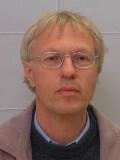
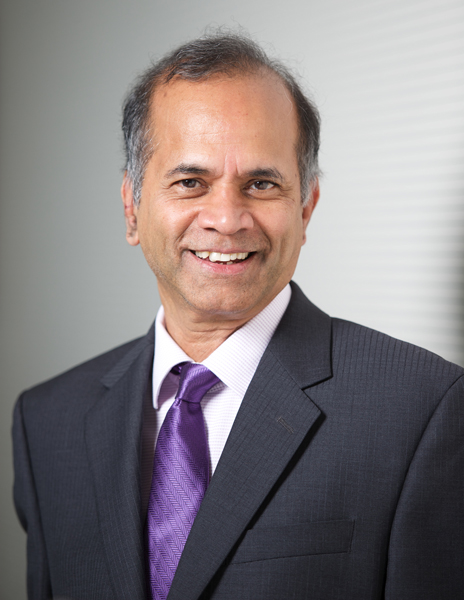
Dejan Nickovic is an Associate Professor in the Department of Cyber-Physical Systems at TU Wien. His primary affiliation is with the Research Area Cyber-Physical Systems (E191-01). Nickovic's research focuses on formal methods, runtime verification, and fault localization in cyber-physical systems (CPS). He has contributed to automated testing frameworks, specification mining, and formal validation techniques for embedded and reactive systems. His work emphasizes bridging the gap between theoretical formalisms and practical CPS applications. Notable research directions include mining specifications from data (e.g., timing diagrams), developing tools like TD-Magic and DeepSTL, and advancing hypernode automata for complex system modeling. He has also explored fault-injection methods (FIM) for Simulink models and mutation testing strategies for improving CPS reliability. Nickovic collaborates extensively with industry partners, as evidenced by his work on production-test coverage analysis in simulation environments. His research has been published in top-tier conferences and journals, focusing on topics like information-flow interfaces, hyperproperties, and adaptive testing strategies. He advises graduate students on CPS-related theses, including those on fault localization, analog-mixed signal verification, and failure explanation in CPS models. His contributions have advanced both academic and industrial applications of formal methods in CPS design and validation.
Christian Böhm is an Associate Professor at the Faculty of Computer Science, leading the Research Group Data Mining and Machine Learning. His work focuses on clustering algorithms, density-based analysis, and graph construction. He has been active in interdisciplinary projects, including computational modeling for biomedical applications and algorithm benchmarking. Notable contributions include ADOD (Adaptive Density Outlier Detection) and DynoGraph (Dynamic Graph Construction for Nonlinear Dimensionality Reduction). His research bridges theoretical data science with practical applications in healthcare and engineering. Research Group: Data Mining and Machine Learning Key Areas: Clustering, Density Analysis, Graph Algorithms, Medical Data Analytics Collaborations: Biohybrid heart valves, computational biomechanics, and algorithmic benchmarking Recent work emphasizes deep learning integration in clustering, medical outcome prediction, and scalable graph classification. His publications span conferences like IEEE ICDM and interdisciplinary journals.
Andreas Ekelhart is affiliated with the Faculty of Computer Science and the Research Group Security and Privacy . His work focuses on cybersecurity, log analysis, machine learning applications in security, and privacy-preserving technologies. He contributes to the UN Sustainable Development Goals related to infrastructure and innovation. He is actively involved in research projects such as Adapting Cyber Situational Awareness for Evolving Computing Environments (2023–2026) and the Christian Doppler Labor für Verbesserung der Sicherheit von Informations-prozessen in Produktionssystemen (2020–2024), collaborating with institutions across multiple countries. His recent publications address cybersecurity challenges in industrial control systems, code obfuscation detection using machine learning, and knowledge graph integration for cybersecurity tasks. He emphasizes interdisciplinary approaches combining AI, data analysis, and cybersecurity. No scientific awards or grants are explicitly listed in the provided text, but his sustained research output demonstrates active engagement in the field. He is part of collaborative networks focusing on cybersecurity solutions for evolving computing environments.
Florina Piroi is a Senior Scientist (Research Fellow) at the Center for Research Data Management (E058-06) within the Faculty of Informatics at TU Wien. Her research integrates information retrieval, knowledge graphs, and semantic technologies to advance exploratory search systems and research data infrastructure. Her core research interests include: Information Retrieval evaluation and validation methodologies Knowledge graph applications for domain-specific search Patent text mining and semantic technologies Medical concept normalization and entity linking Argumentative zoning in scientific documents Table extraction and classification systems Analysis of her recent publications reveals strong trends in applying machine learning to specialized IR tasks, particularly in patent analysis and medical text processing. Her work emphasizes robust evaluation frameworks and cross-lingual capabilities, with consistent contributions to the CLEF campaign and PatentSemTech workshops. Dr. Piroi actively collaborates with international researchers through the Network Lab at TU Wien and contributes to the university's Center for Research Data Management, focusing on semantic technologies for research data infrastructure and scholarly communication systems.
Aleksandar Pavlovic is a Research Fellow at the Institute of Computer Science within the University of Applied Sciences Wiener Neustadt. His work focuses on knowledge graphs, declarative programming, and AI-enhanced systems for complex reasoning tasks. Primary Affiliation: Institute of Computer Science, University of Applied Sciences Wiener Neustadt Research Interests Knowledge Graph Reasoning and Embedding Datalog-based Semantic Query Systems AI for Production Planning Under Uncertainty Interoperability in Semantic Web Technologies Geometric Interpretation of Knowledge Graphs Neural-Symbolic Integration Recent Publications demonstrate expertise in combining classical logic with machine learning for knowledge graph analysis, SPARQL query optimization, and enterprise knowledge management systems. Key trends include geometric embeddings for knowledge graphs and decentralized AI planning. Projects include: 24/7 Digital : AI-powered care systems with remote support and climate-resilience guidelines (FFG-funded) IntelliProPS : AI-enriched production planning simulator for volatile manufacturing environments (COIN-program)
Dr. Filipa Sousa serves as Assistant Professor in the Department of Functional and Evolutionary Ecology at the University of Vienna's Faculty of Life Sciences, leading the Filipa Sousa Lab within the Archaea Biology and Ecogenomics Unit. Her research program integrates genomic, phylogenetic, and experimental approaches to investigate microbial evolution with emphasis on archaeal physiology, metabolic innovation, and bioenergetic transitions across Earth's history. The lab operates from room 3.042 at Djerassiplatz 1 in Vienna. Her primary research interests focus on the evolution of microbial metabolic strategies, particularly energy conservation mechanisms in Archaea. She investigates how carbon and energy metabolic systems evolved through protein complex modularity, gene fusions, and large-scale comparative genomics. Current work emphasizes automatic metabolic classification from genomic data, pan-metabolic profiling of Archaea, and reconstructing evolutionary pathways for sulfur and electron transport systems. Her group combines phylogenomics with experimental validation to bridge geological records and microbial physiology. Analysis of her recent publications reveals dominant trends in archaeal metabolism evolution, particularly dissimilatory sulfur reduction pathways and respiratory complex assembly. Her work increasingly integrates metagenomic data with phylogenetic modeling to reconstruct ancestral metabolic states, while developing computational tools for metabolic classification. Key themes include electron bifurcation mechanisms, horizontal gene transfer in metabolic innovation, and geochemical constraints on early bioenergetic systems. Major scientific recognition includes: ERC Starting Grant (2019-2025) for "Evolution of Physiology: The link between Earth and Life" WWTF Vienna Research Group Grant (2016-2025) for "Pan-metabolic profiling of Archaea: The Ecology of Genomics" Dr. Sousa actively supervises five graduate students across PhD and Master's programs while leading a 12-member research team. Her Vienna Doctoral School project "Microbial biotransformations in biogeochemical cycles" examines metal-based energy conservation in environmental microbes. She maintains significant collaborations with William F. Martin (Heinrich-Heine-Universität Düsseldorf) and Christa Schleper (University of Vienna), with funding supporting experimental work, computational analyses, and field studies in extreme environments. The Filipa Sousa Lab comprises Anwar Hiralal (PhD), Jordi Zamarreno Beas (PhD), Val Karavaeva (M.Sc.), Anastasiia Padalko (M.Sc.), Constantin Leitgeb (B.Sc.), and Marta Medic (B.Sc.). The team operates within the Archaea Biology and Ecogenomics Unit under Christa Schleper's departmental leadership, utilizing advanced genomic and bioinformatic infrastructure. Current projects integrate metagenomic data from diverse environments with phylogenetic modeling to reconstruct metabolic evolution, with particular focus on uncultivated archaeal lineages and their ecological roles.
Franz Aurenhammer is a University Professor (Univ.-Prof.) at the Institute of Machine Learning and Neural Computation, Graz University of Technology, Austria. He holds the academic title DI Dr. techn. and has been active in computational geometry research for several decades. His position as Full Professor was appointed in October 1992 at the Institute of Theoretical Computer Science, where he also served as head of the research group on algorithms, geometry, and optimization. Professor Aurenhammer earned his academic credentials at Graz University of Technology: his MS degree (Dipl. Ing.) in Technical Mathematics in April 1982, his PhD degree (Dr. techn.) in November 1984, and completed his Habilitation (Universitätsdozent) in Theoretical Computer Science in May 1989. Prior to his current position, he served as Assistant Professor at the Institute for Information Processing from January 1985 to April 1989, and held research positions including at the Free University of Berlin (April 1990 to May 1992). Aurenhammer's research focuses primarily on computational and combinatorial geometry, data structures and algorithms, and graph algorithms. His work has particularly emphasized Voronoi diagrams and straight skeletons, with numerous publications on these topics spanning several decades. His research has strong theoretical foundations while also addressing practical applications in computer science, optimization, and geometric modeling. Analysis of his recent publications reveals a continued focus on geometric structures, particularly Voronoi diagrams in various forms (including piecewise-linear farthest-site variants) and straight skeletons in both 2D and 3D contexts. His work often bridges theoretical computational geometry with practical applications in computer-aided design, shape analysis, and spatial data structures. The research demonstrates progression from fundamental theoretical work to increasingly sophisticated applications in 3D modeling and complex geometric structures. Professor Aurenhammer has been actively involved in research funding, with grants from major institutions including the Austrian Ministry of Science (BMWFK), Austrian National Bank (ÖNB), National Science Foundation (FWF), Austrian Academic Exchange Program (ÖAD), and the Special Research Council (SFB) 'Optimization and Control'. His current project FWF I1836-N15 (2015-2020) focuses on Voronoi diagrams as versatile data structures for spatial proximity problems. As an educator, Aurenhammer has supervised numerous MS and PhD theses in theoretical computer science and taught courses including Basic Data Structures & Algorithms, Languages and Automata, Design & Analysis of Algorithms, Computational Geometry, and Information Theory. His teaching responsibilities include Privatissimum courses on Algorithms and Geometry and Dissertation seminars. His international research collaborations span numerous institutions across Europe, the United States, Canada, Japan, Taiwan, Korea, and China, reflecting the global significance of his work in computational geometry. These collaborations have resulted in significant contributions to the field, particularly through the DACH project on Voronoi diagrams and related geometric structures.
Prof. Daniel Watzenig is a Full Professor at Graz University of Technology's Faculty of Electrical Engineering and Information Technology, affiliated with the Institute of Visual Computing and the Institute of Electrical Measurement and Sensor Technology. He serves as Dean of Studies for Digital Engineering (DE), overseeing academic programs in this field. His research focuses on autonomous systems, sensor fusion, and advanced control strategies for vehicles, with a strong emphasis on LiDAR technology, path planning algorithms, and real-time environmental perception systems. He holds academic qualifications including Dipl.-Ing. (FH) and Dr.techn. degrees. Research interests span robotics, computer vision, and machine learning applications in transportation systems. His work addresses challenges in autonomous vehicle navigation, sensor reliability under adverse conditions, and safety-critical system validation. Recent publications highlight innovations in thermal-LiDAR fusion, trajectory optimization, and radar-based occupancy grids. He actively contributes to interdisciplinary projects involving co-simulation frameworks and virtual validation methodologies for automated driving functions. Professional roles include leading academic programs in digital engineering and managing research collaborations at TU Graz. His technical expertise is reflected in over 100 publications (2020-2025) covering sensor technology, path planning algorithms, and autonomous system validation. Key labs/teams associated include the Institute of Visual Computing's autonomous systems group and the Electrical Measurement Institute's sensor innovation team.
Prof. Angelika Wiegele is a full Professor at the Department of Mathematics at Alpen-Adria-Universität Klagenfurt. She serves as a member of the university senate and head of the Institut für Mathematik. Her research focuses on semidefinite optimization, combinatorial optimization, and their applications in graph theory and operations research. She holds a Dipl.-Ing. (2001) and Dr. techn. (2006) from Alpen-Adria-Universität Klagenfurt, with thesis supervision by Franz Rendl. Her academic career includes positions at TU Graz, IASI-CNR Rome, and Universität zu Köln, as well as a visiting professorship at Università di Roma Tor Vergata. Her educational background includes studies at City University London (Erasmus) and TU Eindhoven (Leonardo project). Recent work emphasizes SDP-based methods for graph partitioning, edge expansion, and combinatorial problems, with a focus on high-performance computing solutions. Her research bridges theoretical optimization with practical applications in network design and algorithmic development. Publications from 2021–2024 highlight advancements in semidefinite programming for graph partitioning, SDP-based bounds for cutwidth, and exact solvers for clustering problems. She contributed to the BiqBin and SOS-SDP solvers for quadratic optimization and co-edited special journal issues on mixed-integer nonlinear optimization. Her work often appears in top operations research journals and conference proceedings. Prof. Wiegele has held global faculty positions at the University of Cologne (2022–2024) and is active in international research collaborations through PRACE high-performance computing initiatives. She maintains an ORCID profile and a university webpage with teaching and research materials.
Rama Chellappa is the Bloomberg Distinguished Professor at Johns Hopkins University (JHU), holding primary appointments in the departments of Electrical and Computer Engineering and Biomedical Engineering, under the Whiting School of Engineering and School of Medicine, respectively. He is affiliated with the Center for Imaging Science, Center for Language and Speech Processing, Institute for Assured Autonomy, and Mathematical Institute for Data Science. Previously, he spent 29 years at the University of Maryland as a College Park Professor and held roles at the University of Southern California and Purdue University. His research focuses on computer vision, machine learning, artificial intelligence, pattern recognition, and biometrics, with applications in smart cars, forensics, 2D/3D facial modeling, and medical diagnostics. Notable contributions include work on Markov random fields, 3D structure recovery, deep learning for face recognition, and gait recognition. He has published over 900 papers, achieving an h-index of 140. Rama Chellappa has been honored with prestigious awards, including the US National Academy of Engineering membership (2023), IEEE Jack S. Kilby Medal (2020), and K.S. Fu Prize (2012). He is a Fellow of multiple organizations, including IEEE, IAPR, and AAAS. His current collaborations at JHU School of Medicine involve applying computer vision to analyze facial expressions for monitoring stroke/dementia patients, autism detection in children, and digital pathology.
Alexander Gerhard Lercher is a University Assistant and PhD candidate at the University of Klagenfurt, Austria, within the Department of Informatics Systems. He conducts research in the Software Engineering Research Group (SERG) under Prof. Martin Pinzger, focusing on microservice architectures, API evolution, and automated repair techniques. His work bridges theoretical software engineering with practical industry challenges in distributed systems development. Education Master of Science (Dipl.-Ing.) in Distributed Systems, University of Klagenfurt, 2021 (awarded with distinction) Research Focus Lercher's research centers on critical challenges in modern microservice ecosystems. He investigates API evolution patterns through empirical studies of developer practices while developing technical solutions for automated API documentation generation and repair. His work addresses pain points in maintaining backward compatibility during service evolution and improving developer productivity through tool-supported approaches. The research demonstrates strong alignment with industry needs in cloud-native application development. Publication Trends His 2020-2024 publications reveal a concentrated focus on microservice API evolution, with 2024 representing peak productivity (3 publications). Core contributions include empirical analyses of evolution challenges and technical solutions for OpenAPI generation. Notable interdisciplinary extensions appear in social network analysis (2023) and blockchain energy systems (2021), showcasing collaborative research breadth while maintaining software engineering as the central theme. Awards Master's degree with distinction (2021) Academic Activities As a University Assistant, Lercher participates in departmental research activities while advancing his PhD. His position provides institutional support for research within SERG, though specific grant funding isn't detailed. He maintains an active publication record in software engineering venues while contributing to interdisciplinary projects. The role serves as a critical training phase for his academic career development. Research Environment Lercher operates within the Software Engineering Research Group (SERG) at the University of Klagenfurt, which provides a collaborative framework for investigating contemporary software engineering challenges. The group's focus on microservices and API-related research creates an environment conducive to his specific expertise in evolution management and automated repair techniques.
Dr. Thilo Sauter holds a tenured position as Associate Professor for Automation Technology at Vienna University of Technology (VUT) and is affiliated with Danube University Krems, where he leads the Center for Distributed Systems and Sensor Networks. He has been a pivotal figure in industrial automation research for over two decades, with expertise in smart sensors, real-time systems, and cybersecurity in automation networks. His academic credentials include a Dipl.-Ing. and Doctorate in Electrical Engineering from VUT. Education: Dipl.-Ing. in Electrical Engineering (1992), Vienna University of Technology Doctorate in Electrical Engineering (1999), Vienna University of Technology Research Interests: Dr. Sauter focuses on advancing secure and efficient automation systems, including real-time communication, sensor integration, and cybersecurity for industrial environments. His work bridges theoretical frameworks with practical applications in energy systems, IoT security, and industrial IoT (IIoT). Recent projects emphasize energy transition challenges, such as optimizing e-car charging and enhancing HVAC systems with machine learning. Key Projects: Leading the Community Flexibility in Regional and Local Energy Systems project (2019–2023), addressing energy grid optimization. Principal Investigator for Decision Making and Optimization for Distributed Energy Management (2022–2024), focusing on smart energy systems. Co-developed the Attack Resilience for IoT-Based Sensor Devices in Home Automation initiative (2019–2023). Publications and Awards: With over 300 publications, Dr. Sauter has authored influential works on industrial cybersecurity, sensor systems, and automation networks. His 2014 IEEE Fellow distinction recognizes contributions to synchronization and security in automation networks. He serves as Past Editor-in-Chief of the IEEE Industrial Electronics Magazine and holds leadership roles in IEEE and Austrian professional associations. Grants and Collaborations: His research is supported by grants from FFG (Austrian Research Promotion Agency), FWF (Austrian Science Fund), and industry partners. Projects often combine academic rigor with industry collaboration, such as fiber-optic sensor integration in process furnaces and blockchain-based energy community management. Labs and Teams: He oversees interdisciplinary teams at the Center for Distributed Systems and Sensor Networks, focusing on hardware-software co-design, embedded systems security, and smart energy solutions. His lab infrastructure supports advanced prototyping and testing of sensor networks and IoT devices.
Prof. Vladimir Kolmogorov is a faculty member at the Institute of Science and Technology Austria (IST Austria), specializing in discrete optimization and algorithm design. He holds a Ph.D. in Computer Science from Cornell University and has held positions at Microsoft Research and University College London. His research focuses on combinatorial optimization, MAP inference in graphical models, and applications in computer vision. Educations: M.S. in Applied Mathematics and Physics, Moscow Institute of Physics and Technology Ph.D. in Computer Science, Cornell University Research Interests: Dr. Kolmogorov's work spans algorithmic optimization, including complexity analysis of constraint satisfaction problems, graph algorithms, and machine learning applications. His contributions include foundational work on graph cuts for computer vision and the development of efficient optimization methods for discrete problems. Publications: His recent work includes advancements in parallel algorithms for Gibbs distributions, semidefinite programming, and combinatorial optimization. These contributions highlight his expertise in bridging theoretical computer science with practical applications. Awards: Royal Academy of Engineering/EPSRC Research Fellowship (2006–2011) ERC Consolidator Grant (2014–2020) Best Paper Award at ECCV 2002 Outstanding Student Paper Award (NIPS 2007) Best Paper Honorable Mention (CVPR 2005) Advising and Grants: He has advised multiple PhD students and leads a research team at IST Austria. His grants include significant funding for exploring optimization in machine learning and discrete systems. Labs/Teams: His lab focuses on theoretical and applied discrete optimization, collaborating with institutions globally. Current projects include developing faster algorithms for graph problems and advancing Gibbs distribution analysis.
Bernd Bickel is a Full Professor for Computational Design at ETH Zurich, embedded in the Design++ research center. He holds a Master's degree from ETH Zurich and a PhD from ETH Zurich under Markus Gross. Previously, he was at IST Austria (2015–2023), Disney Research, and TU Berlin as a visiting professor. His research focuses on computational design, digital fabrication, and simulation, with applications in robotics, computer vision, and material science. Key interests include physics-based simulation, geometry processing, and interdisciplinary engineering. Notable awards include the Academy of Motion Picture Technical Achievement Award (2019), SIGGRAPH's Significant New Researcher Award (2017), and the EUROGRAPHICS Best PhD Thesis (2012). He leads the Computational Design Lab at ETH Zurich and collaborates with institutions like Inria Nancy on projects such as MFX team collaborations. His work spans academic contributions (over 50 publications) and industrial applications, including the FlexMaps Pavilion (First Prize at IASS 2019) and computational tools for 3D printing. He actively mentors PhD students and oversees grants like ERC Starting Grant 'Materializable'.
Immanuel Bomze is a Full Professor of Applied Mathematics and Statistics at the University of Vienna, affiliated with the Institute of Statistics and Operations Research and the Data Science Research Center. His research focuses on Operations Research, Game Theory, Optimization, and their applications in areas like astronomy and logistics. He holds the EurOpt Fellow distinction (2014) and has received multiple best paper awards. Bomze has authored over 120 publications, including work on quadratic optimization, evolutionary game dynamics, and stochastic modeling. He serves as Editor-in-Chief of the EURO Journal of Computational Optimization and has held leadership roles in organizations like EURO. His teaching includes advanced optimization courses and PhD seminars. Notable contributions include methods for cluster detection in networks and robust optimization frameworks. Education 1982: Dr. rer. nat (PhD equivalent) in Mathematics, University of Vienna 1981: Mag. rer. nat (MSc equivalent) in Mathematics and Physics, University of Vienna Research Interests include: Optimization Theory, Game Theory applications, Stochastic Modelling, Dynamical Systems, and Data Science. His work bridges theoretical mathematics with real-world problems in logistics, astronomy, and decision theory. Key Achievements: Developed evolutionary game dynamics models for equilibrium analysis. Contributed to copositive programming and robust optimization methodologies. Co-founded the GAMENET European Network for Game Theory. Recipient of the Best Paper Award in Mathematical Methods of Operations Research (2020) and other journals. Grants & Collaborations: Extensive collaborations with institutions worldwide, including the International Institute for Applied Systems Analysis (IIASA). Research funded by grants from NSF, NWO, and others. Labs/Teams: Active in the Vienna Center for Operations Research (VCOR) and the Data Science Research Group at the University of Vienna.