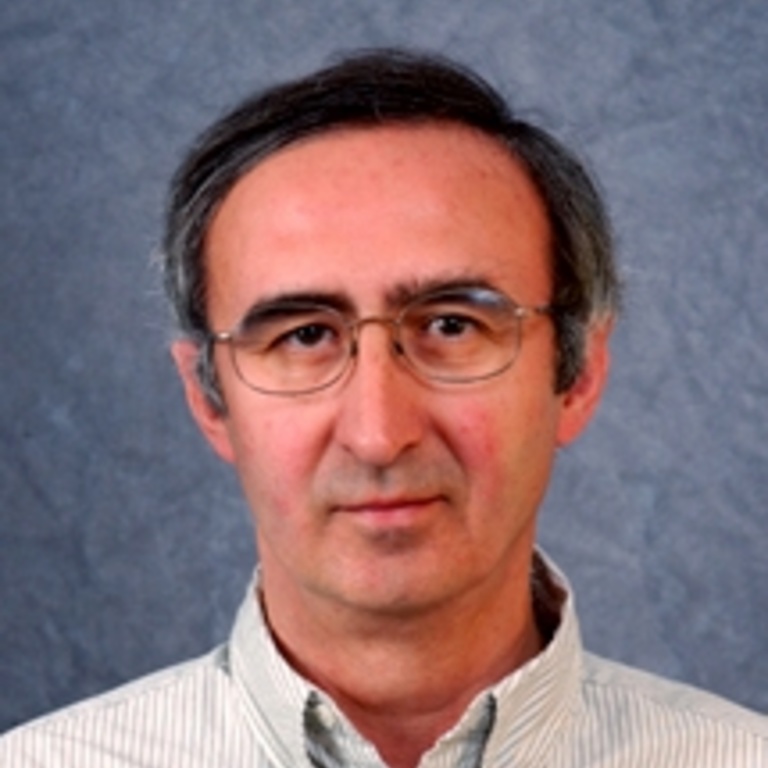
Oguz Durumeric is an Associate Professor in the Department of Mathematics at the University of Iowa, part of the College of Liberal Arts and Sciences. His research focuses on differential geometry, medical image analysis, and geometric topology. He earned his PhD from SUNY Stony Brook and has contributed to interdisciplinary applications of geometry in medical imaging, particularly in lung biomechanics and radiation therapy planning. Education: PhD in Mathematics from SUNY Stony Brook. Research Interests: Dr. Durumeric’s work bridges pure and applied mathematics. In differential geometry, he explores knot energies and curvature properties. In medical imaging, he develops advanced registration techniques for 4DCT and MRI data to study lung ventilation patterns and improve cancer treatment accuracy. His geometric topology research includes ideal knot structures and conformal transformation analysis. Recent Research Trends: His articles highlight innovations in medical image registration (e.g., lung motion artifact correction, out-of-phase ventilation detection) and geometric models for biomedical applications. He also addresses foundational challenges like shape collapse in large-deformation registration. Grants & Collaborations: While specific grants are not listed, his work implies collaboration with medical imaging labs and oncology teams. No formal advisees are documented here. Labs/Teams: Affiliated with the University of Iowa Mathematics Department’s research groups in geometry and applied mathematics. His website provides further details on ongoing projects.
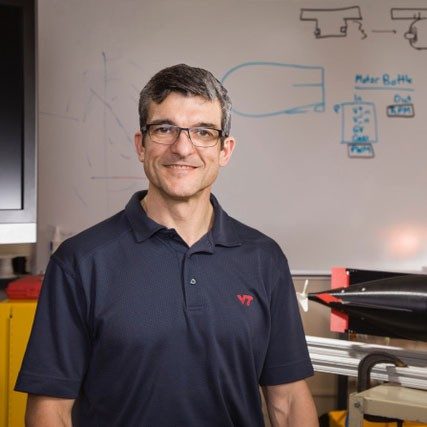
Ming Jin is an Assistant Professor in the Bradley Department of Electrical and Computer Engineering at Virginia Tech. He holds a PhD from UC Berkeley and a B.Eng. from Hong Kong University of Science and Technology. His research focuses on trustworthy AI, CPS security, and energy systems, with affiliations to the Power and Energy Center and Autonomy and Robotics @ VT. Education: PhD in Electrical Engineering and Computer Science (UC Berkeley, 2017), B.Eng. (Honors) in Electronic and Computer Engineering (HKUST, 2012). Postdoc in Industrial Engineering and Operations Research at UC Berkeley. Research interests include safe reinforcement learning, foundation models, cybersecurity, and power systems. Awards include the Siebel Scholarship (2018) and first place in the 2021 CityLearn Challenge. Active in conference organization (e.g., ICML, AAAI) and tutorial development on topics like Safe RL and CPS security. Grants include NSF support for embodied optimization (2025), Amazon-VT Initiative (2023), and Commonwealth Cyber Initiative projects. Involved in labs focused on AI, robotics, and energy systems. Publications span AI safety, RL frameworks, and CPS resilience, with over 50 peer-reviewed articles since 2015.
Daniel J. Stilwell is a Professor in the Bradley Department of Electrical and Computer Engineering at Virginia Polytechnic Institute and State University (Virginia Tech), and Co-Director of the Center for Marine Autonomy and Robotics. He holds affiliations including the Seale Coastal Observatory Faculty Fellow role. His research focuses on autonomous underwater vehicles (AUVs), marine robotics, control systems, and sensor networks. He earned his Ph.D. in Electrical Engineering from Johns Hopkins University (1999), M.S. from Virginia Tech (1993), and B.S. in Computer Engineering from the University of Massachusetts (1991). His notable contributions include advancements in AUV control, underwater acoustic communication, multi-agent systems, and sensor network optimization. Key projects include the "Unconventional Marine Platforms" funded by the Office of Naval Research and collaborative subsea mapping initiatives. His work bridges theoretical control systems with practical robotic applications in marine environments. Dr. Stilwell has received prestigious awards such as the NSF CAREER Award and ONR Young Investigator Program Award. His research emphasizes robust control strategies, adaptive systems, and decentralized learning algorithms. He leads efforts in experimental validation of AUV control systems and underwater sensor networks, contributing to both academic and military applications.
Alannah Oleson is an Assistant Professor in the Department of Computer Science at the University of Denver's Ritchie School of Engineering and Computer Science. Her work focuses on inclusive design, computing education, and addressing equity issues in technology. She is actively involved in the KIHA Innovation Labs, exploring human-centered approaches to computing education and HCI. Her research investigates how demographic factors influence learning outcomes in computing courses, develops pedagogical methods for teaching inclusive design (e.g., the CIDER framework), and examines the ethical implications of technology in K-12 and university settings. Notable areas include algorithmic fairness, gender bias in software systems, and culturally responsive computing education for underrepresented groups. Dr. Oleson's research emphasizes practical methods for integrating critical thinking into software design processes, with recent work exploring peer feedback systems for equity analysis in large courses and curriculum reforms to promote ethical awareness. Her contributions bridge theory and practice, aiming to make computing education more equitable and socially responsible.
Spencer N. Axani is an Assistant Professor in the Department of Physics and Astronomy at the University of Delaware (UD), associated with the College of Arts & Sciences. He also serves as Associate Director of the Delaware NASA Space Grant. His research focuses on experimental neutrino physics, multi-messenger astrophysics, cosmic rays, and nuclear physics, with particular emphasis on developing particle detector technologies. He earned a Diploma in Power Engineering from Southern Alberta Institute of Technology, followed by a B.Sc. (Honors Physics) from the University of Alberta, and M.Sc. and Ph.D. in Physics from MIT. Prior to UD, he was a Postdoctoral Associate at MIT. Key research areas include neutrino oscillations, cosmic ray anisotropy, and detector development such as the IceCube Neutrino Observatory and the CosmicWatch muon detector project. The CosmicWatch initiative provides low-cost educational muon detectors for students. Axani's work involves collaborations with institutions like the Bartol Research Institute and the American Physical Society (APS). His contributions span theoretical and experimental advancements in particle physics, with publications addressing neutrino emission from astrophysical sources, atmospheric neutrino studies, and neutrino detector technologies. His lab spaces include 303 Sharp Lab (R&D) and 012 Sharp Lab (Scintillator Lab). He actively participates in projects like IceCube, KamLAND-Zen, and NuDot. His research highlights include analyses of cosmic ray anisotropy, constraints on heavy neutral leptons, and multi-messenger observations of blazars.
Zheng Li is an Assistant Professor in the Department of Agricultural and Resource Economics at North Carolina State University. His research focuses on econometric methodologies with applications in agricultural economics, resource management, and policy analysis. He holds expertise in nonparametric estimation, quantile regression, and structural econometric modeling. Key research interests include analyzing agricultural production risks, evaluating policy impacts on housing markets, and developing advanced statistical techniques for mixed data types. His work bridges econometric theory with practical applications in environmental, urban, and transportation sectors. Recent publications explore topics such as lung cancer detection via biomedical sensing technologies, ridesharing platform incentives, and pandemic effects on real estate markets. Methodologically, his contributions span kernel-based specification tests, bootstrap methods for heavy-tailed data, and monotonicity-constrained estimation techniques. No scientific awards or formal advisees are listed. His research often intersects with interdisciplinary challenges, reflecting a commitment to innovative solutions in applied economics and data science.
Prof. Gary Shiu is a Professor of Physics at the University of Wisconsin-Madison, leading research at the intersection of string theory, particle physics, and cosmology. He is affiliated with the Department of Physics and has held academic appointments at institutions like the Hong Kong University of Science and Technology and the CERN. His research focuses on quantum gravity, the Swampland program, inflationary cosmology, and AI applications in physics. He has received notable awards including the Guggenheim Fellowship, Kavli Frontiers Fellowship, and Chancellor’s Distinguished Teaching Award. Education: PhD in Physics (Cornell University, 1998), BSc in Physics (Chinese University of Hong Kong, 1993). Academic roles include founding director of the Center for Fundamental Physics at HKUST and co-initiator of the Physics ∩ ML seminar series. He advises graduate and undergraduate students in theoretical physics and cosmology, with notable advisees contributing to projects in dark energy, string vacua, and machine learning. Research highlights include formulating the Weak Gravity Conjecture in AdS space, developing methods for cosmological parameter inference using topological data analysis, and exploring the String Genome Project. His work bridges theoretical physics with experimental observables, leveraging advanced computational techniques and interdisciplinary collaborations. Key awards include the Kellett Mid-Career Award, Vilas Associate Award, and multiple fellowships from prestigious societies. He actively participates in international conferences and editorial boards, contributing to initiatives like the Gordon Research Conference on String Theory and Cosmology. Labs/Teams: Theoretical and Computational Cosmology Group, AI ∩ Universe Initiative, and collaborations in string phenomenology and machine learning applications.
Stephen Lee-Urban is a Teaching Associate Professor in the Department of Computer Science & Engineering at Lehigh University, affiliated with the Rossin College of Engineering. He holds a Ph.D., M.S., and B.S. in Computer Science and Engineering from Lehigh University, all completed with summa cum laude distinction. His research focuses on fundamental and applied artificial intelligence, machine learning, game AI, cognitive systems, and automated planning. He has contributed to innovative projects such as HuManIC (human-machine interpretive control), CORA (cognitive systems framework), and crowdsourced narrative generation systems. His academic career includes significant work in cybersecurity through intelligent agent modeling of malware, as well as contributions to game AI for strategy games and military training simulations. Notable awards include summa cum laude honors for all three of his university degrees. Lee-Urban's scholarly output spans over 20 publications since 2000, with recent emphasis on AI applications in collaborative storytelling, adaptive planning systems, and human-computer interaction. His research integrates machine learning techniques with sociocultural analysis, crowd-powered content creation, and hierarchical task networks. Current work explores autonomous systems capable of leveraging crowd intelligence for generating interactive narratives and optimizing military training scenarios. While no specific grants or advising roles are listed, his interdisciplinary approach bridges computer science with game design, cybersecurity, and cognitive modeling.
Sonja Wogrin is a University Professor (Univ.-Prof.) at Graz University of Technology (TU Graz), where she has been heading the Institute for Electricity Economics and Energy Innovation since August 2021. She holds a Dipl.-Ing. in Technical Mathematics from TU Graz (2008), a Master of Science in Computation for Design and Optimization from MIT (2008), and a doctorate in Electricity Systems from Universidad Pontificia Comillas (2013). Her educational background includes: Doctorate in Electricity Systems, Universidad Pontificia de Comillas (June 2013) Dipl.-Ing. in Technical Mathematics, Graz University of Technology (October 2008) Master of Science in Computation for Design and Optimization, MIT (June 2008) Professor Wogrin's research focuses on decision support systems in the energy sector, optimization methodologies, and particularly the problem of generation capacity expansion. Her work spans several key areas including bilevel programming, capacity expansion planning, energy storage systems, and time series aggregation for energy system optimization. She has made significant contributions to understanding how to integrate renewable energy sources into power systems while maintaining economic efficiency and grid stability. Her research often addresses the challenges of decarbonizing electricity systems through advanced mathematical modeling and optimization techniques. Her recent publications demonstrate a strong focus on improving the computational efficiency of energy system models while maintaining accuracy, with particular attention to the integration of renewable energy sources, energy storage systems, and the development of resilient energy communities. She has pioneered work on time series aggregation methods that balance computational tractability with model accuracy, which is crucial for long-term energy planning under uncertainty. Professor Wogrin has received several prestigious awards and fellowships including: 4th EASE Student Award for "Co-Optimisation of energy storage technologies in tactical and strategic planning models" (2019) Beca de movilidad para investigadores "NILS Ciencia y Sostenibilidad" (2015) Beca Erasmus "Personal Docente/Investigador" de formación (2016) Beca Iberdrola de ayuda a la investigación en energía y medio ambiente (2020) She leads multiple significant research projects including EU - NetZero-Opt, RINGs, iKlimET, V2G-QUESTS, and CIDEAL, which focus on optimizing energy systems for net-zero emissions, resilient energy networks, climate and energy system modeling, vehicle-to-grid integration, and industrial decarbonization. Her work has substantial practical implications for energy policy and grid operations in Austria and beyond. Professor Wogrin collaborates extensively with industry partners including Austrian Power Grid AG, KELAG, and Netz Niederösterreich, ensuring her research addresses real-world energy challenges. Professor Wogrin leads the research group at the Institute for Electricity Economics and Energy Innovation, which develops advanced optimization models for energy systems. Her team has created the LEGO (Low-carbon Expansion Generation Optimization) model, an open-source tool for energy system optimization that has gained international recognition. The group's work spans from fundamental optimization methods to practical applications in energy system planning and operation, with a strong emphasis on computational efficiency and model accuracy.
Dr. Jiju Poovvancheri is an Associate Professor in the Department of Math & Computing Science at Saint Mary’s University, Halifax, Canada. He holds affiliations with the Graphics & Spatial Computing Lab and previously held postdoctoral positions at the University of Victoria and University of Calgary. His research focuses on computer graphics, 3D vision, and machine learning, with applications in virtual/augmented reality, autonomous robotics, urban planning, and bio-mechanical studies. Key research areas include point cloud processing, semantic surface reconstruction, spatial data structures, and geometric deep learning. Education: PhD from Indian Institute of Technology Madras (2011–2014), supervised by Prof. Ramanathan Muthuganapathy. Postdoctoral work at University of Calgary (EYES-HIGH Fellowship, 2015–2017) and University of Victoria (MITACS Elevate Fellowship, 2018). Research & Awards: Winner of MITACS Elevate Fellowship (2018), EYES-HIGH Fellowship (2015–2017), and multiple grants including NSERC DG (2019–2026). His work has been supported by NVIDIA GPU hardware, NSERC, CFI, and industry partners like Modest Tree Media and Caterpillar. Professional Activities: Associate Editor for IEEE Access , Guest Editor for special issues in Remote Sensing and Sensors , and reviewer for top conferences like CVPR, ICCV, and ECCV. Member of ACM SIGGRAPH, Solid Modeling Association, and IEEE Geoscience & Remote Sensing Society. Lab & Collaborations: Leads the Graphics & Spatial Computing Lab, collaborating with institutions globally. Current projects include "Interaction and navigation in virtual spaces" and industry partnerships with Modest Tree Media for real-time object recognition. Advising: Supervised over 20 graduate and undergraduate students, with notable alumni advancing to roles at ReelData AI, Royal Canadian Air Force, and academic institutions like Dalhousie University.
Professor Natalia Berloff is a Professor of Applied Mathematics at the University of Cambridge's Department of Applied Mathematics and Theoretical Physics (DAMTP), where she has been a faculty member since 2002. She is also a Fellow of Jesus College, Cambridge. From 2013 to 2016, she served as Professor, Dean of Faculty, and Director of the Photonics and Quantum Materials Program at Skoltech. Previously, she held positions at the University of California, Los Angeles, including UC President's Research Fellow (1997-1999) and PIC Assistant Professor (1999-2002). Her research focuses on quantum fluids, physics-inspired computing, and non-equilibrium quantum systems. Key areas include coherence in quantum systems, superfluidity, Bose-Einstein condensates, and classical/quantum simulators. Her work bridges applied mathematics and theoretical physics, with applications in optical computing and quantum technologies. Recent studies emphasize Ising machines, photonic networks, and analog computing solutions for optimization problems. Her publications span over two decades, with recent trends in analog optical computing, gain-based systems, and quantum annealing. She leads the Quantum Fluids group, exploring novel computational paradigms using quantum fluids and polariton condensates. Her contributions have advanced interdisciplinary fields like quantum simulation and photonic-based AI. Education: Doctorate in Applied Mathematics (details not explicitly stated but implied via career progression). Grants/Awards: No specific grants or awards listed, though her leadership roles imply significant external funding. Labs/Teams: Leads the Quantum Fluids group and the Physics-inspired Computing team at DAMTP.
Felix Naumann is a Professor at the Hasso Plattner Institute in Potsdam, Germany, specializing in data management and database systems. His research focuses on data quality, data profiling, entity resolution, functional dependencies, and database optimization. He has authored over 300 publications in top-tier conferences and journals, including VLDB, SIGMOD, and ICDE. His work bridges theoretical foundations with practical systems, such as TASHEEH for data cleaning and PRISMA for privacy-preserving schema matching. He serves as an editor for the ACM Journal of Data and Information Quality and has led initiatives on hybrid conference formats and inclusive computing. Key contributions include: Data Quality: Pioneered studies on data quality's impact on machine learning and developed tools like AutoTSAD for anomaly detection. Data Dependency Discovery: Advanced functional and inclusion dependency mining algorithms, including Hitting Set Enumeration methods. Schema Matching & Integration: Created systems like BrewER and Frost for entity resolution and schema alignment. Educational Impact: Led massive open courses in data engineering with over 10,000 participants. His work emphasizes practical applications in cultural heritage data (ReCLAIM), Wikipedia table analysis, and cross-platform data systems (RHEEMix). He collaborates extensively with industry and academia, addressing challenges in dynamic datasets and data governance.
Jacob Whitehill is an Associate Professor in the Department of Computer Science at Worcester Polytechnic Institute (WPI), affiliated with the Learning Science & Technologies (LST) program. His research focuses on applying machine learning to education and human-computer interaction, including speech recognition, emotion analysis, and automated classroom observation. He leads the NSF-funded project Developing New Scientific Instruments for Classroom Observation and collaborates on the AI Institute for Student-AI Teaming (iSAT) . His research interests span Applied Machine Learning (e.g., multi-modal systems, speaker diarization), AI for Education (e.g., automated instructional evaluation, child speech recognition), and Emotion Recognition (e.g., affective computing in classrooms). Recent work emphasizes classroom observation tools and improving student-teacher interaction analysis through video and audio data. Notable projects include: NSF-funded classroom observation tools AI Institute for Student-AI Teaming (iSAT) Schmidt Futures-funded Hybrid Human-Agent Tutoring for math education His team includes PhD students Xinlu He (Data Science), Jiani Wang (Computer Science), and Yiwen Guan (Computer Science), along with visiting scholar Cecilia Tivir. He advises students on topics like speaker recognition, educational data mining, and computer vision in classroom settings. Grants and collaborations include NSF, Schmidt Futures, and industry partnerships. His lab develops tools for automated feedback on teaching practices, leveraging LLMs and multimodal data. For more details, contact jrwhitehill@wpi.edu .
Liqun Wang is a Professor of Statistics at the University of Manitoba, within the Faculty of Science. His research focuses on statistical inference in complex models, measurement error correction, boundary crossing problems in stochastic processes, and Monte Carlo simulation methods. He holds a prominent role in advancing methodologies for nonlinear time series analysis and Bayesian inference. His work integrates theoretical rigor with practical applications, addressing challenges in econometrics, environmental science, and public health. Notable contributions include advancements in instrumental variable estimation, second-order least squares methods, and high-dimensional covariance estimation. He actively mentors graduate students in these areas and has published extensively in top-tier statistical journals. Recent research highlights include Bayesian bias correction techniques, sparse covariance matrix estimation, and modeling SARS-CoV-2 dynamics via wastewater data. His methodologies often bridge computational efficiency with statistical accuracy, making them applicable to diverse fields such as finance, biostatistics, and environmental monitoring. Despite prolific output (over 70 publications since 1990), Dr. Wang has yet to be explicitly noted for formal scientific awards. His academic profile emphasizes methodological innovation, with a strong focus on real-world data challenges and interdisciplinary collaboration.
Yong Zhang is affiliated with Tsinghua University's Research Institute of Information Technology in Beijing, China. His research focuses on machine learning, optimization algorithms, edge computing, and their applications in areas like time series analysis, federated learning, and sensor networks. He has collaborated on projects involving neural networks, scheduling problems, and privacy-preserving techniques. Education: Yong Zhang earned a PhD in Computer Science and Engineering from Fudan University in 2007. His academic career includes roles at institutions like the Chinese Academy of Sciences and the University of Hong Kong, reflecting a strong interdisciplinary background. Research Contributions: His work spans theoretical computer science, algorithm design, and applied machine learning. Notable areas include developing efficient scheduling algorithms for energy systems, creating robust federated learning frameworks for industrial demand forecasting, and advancing methods for sentiment analysis using multimodal data. He has also contributed to biomedical engineering through smartphone-based health monitoring systems. Collaborations: He frequently collaborates with researchers at institutions like the University of Electronic Science and Technology of China, Nanyang Technological University, and The Hong Kong Polytechnic University. Key projects involve data caching optimization in edge computing, distributed algorithms for dynamic networks, and combinatorial optimization problems. Labs & Future Work: His team explores cutting-edge topics in AI-driven systems, including trust-aware machine learning, distributed resource allocation, and real-time data processing for IoT applications. Current research emphasizes scalable solutions for complex optimization challenges in both academic and industrial settings.