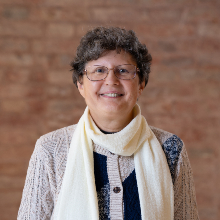
Inbar Fijalkow is a Full Professor at the National School of Electronics and Computer Science (ENSEA) within CY Cergy Paris University. She is a member of the ETIS Research Unit (UMR 8051), focusing on signal processing for wireless communications, optimization, and machine learning applications. Her research bridges theoretical advancements with practical implementation in emerging communication systems. Education & Career: PhD in Signal Processing from TelecomParisTech (1993) Postdoctoral Fellow at Cornell University (1994–1995) Professor at ENSEA since 1999 Former Head of ETIS Research Unit (2004–2013) Research Interests: Signal processing for wireless communications Optimization techniques in massive MIMO and NOMA systems Machine learning applications in communication systems Nonlinear effects mitigation in high-power amplifiers Community & Awards: Member of CoNRS Section 7 (National Committee for Scientific Research) Chevalier de l’Ordre National du Mérite (2015) Founder of the CY Alliance Women in Science Prize (2017) Recent Projects: Active in ANR-funded initiatives (e.g., EcoBioH2, AI4code) and EU projects (e.g., PERSEUS). Her work emphasizes sustainability and AI-driven communication systems. Teaching: Teaches signal processing and wireless communications at ENSEA. Supervises PhD students and master’s theses in communication systems and signal processing.
Alan Fern is a Professor of Computer Science and Robotics in the School of Electrical Engineering and Computer Science at Oregon State University. He leads research in artificial intelligence, focusing on reinforcement learning, planning, and robotics applications like humanoid robotics and agricultural AI. His work includes co-directing the Dynamic Robotics Lab and leading the AgAID National AI Institute for agricultural solutions. Fern holds a Ph.D. from Purdue University and has contributed to over 100 publications. His recognitions include the NSF CAREER Award and multiple best paper awards. Education: B.S., Electrical Engineering, University of Maine (1997) M.S. & Ph.D., Computer Engineering, Purdue University (2000 & 2004) Research Interests: His research spans machine learning, planning, and robotics. Key areas include: AI for humanoid robotics (e.g., bipedal locomotion on Cassie) Reinforcement learning algorithms and applications Agricultural AI for specialty crops Explainable AI and anomaly detection Awards: 2017 College of Engineering Research Collaboration Award 2013 AAAI Outstanding Paper Award 2006 NSF CAREER Award Advising & Labs: Supervised over 50 students. Key collaborations include the Dynamic Robotics Lab (with Jonathan Hurst) and AgAID. His teams address challenges like robot navigation, policy learning, and AI ethics. Labs/Teams: Dynamic Robotics Lab, AgAID National AI Institute, and contributions to computational sustainability initiatives.
Antonella Basso serves as a Full Professor in the Department of Economics at Ca' Foscari University of Venice, specializing in mathematical methods of economics and actuarial and financial sciences (STAT-04/A). She is affiliated with the Research Institute for Complexity and maintains her office in the San Giobbe building where she holds regular office hours on Tuesdays from 2:00 pm to 5:00 pm CET. Professor Basso's research expertise spans multiple domains of quantitative finance and economics, with particular emphasis on Financial Mathematics , Quantitative and Computational Finance , and Ethical Finance including ESG investments and green finance. She has pioneered the application of Data Envelopment Analysis (DEA) across diverse contexts from mutual funds and pension funds to museum evaluation. Her work increasingly explores the integration of Artificial Intelligence and Machine Learning techniques for economic applications, alongside traditional risk assessment methodologies. She also maintains significant research interests in art as a financial asset and alternative investment class. Her recent publications (2019-2025) reveal a consistent research trajectory with growing emphasis on sustainable finance, alternative investments including art, and performance measurement in cultural institutions. Her work demonstrates sophisticated methodological approaches to portfolio optimization with volume-based liquidity constraints, ethical fund evaluation using metafrontier approaches, and innovative integration of DEA with Balanced Scorecard and AHP methodologies for comprehensive performance assessment. As an educator, Professor Basso actively supervises undergraduate and master's theses on topics spanning financial mathematics, computational finance, insurance, and ethical finance applications. She requires preliminary discussions with students to ensure appropriate thesis topic alignment with research objectives and methodological capabilities. Through her affiliation with the Research Institute for Complexity, she contributes to interdisciplinary research examining complex economic and financial systems through quantitative lenses, bridging theoretical mathematical approaches with practical financial applications across multiple sectors.
Nisarg Shah is an Associate Professor in the Department of Computer Science at the University of Toronto, affiliated with the Theory Group. He also serves as a Research Lead at the Schwartz Reisman Institute for Technology and Society and a Faculty Affiliate at the Vector Institute for Artificial Intelligence. Education: Ph.D. in Computer Science, Carnegie Mellon University (2016) B. Tech. with Honors in Computer Science & Engineering, IIT Bombay (2011) Shah's research focuses on the theoretical foundations of artificial intelligence, particularly algorithmic fairness, social choice theory, game theory, and mechanism design. His work addresses fair resource allocation, strategic agent behavior, and robust AI system design through interdisciplinary approaches combining computer science, economics, and cognitive psychology. Recent publications highlight temporal fair division, constrained allocations, and market value integration in fair division. His 2024 awards include the prestigious IJCAI Computers and Thought Award and Kalai Prize for game theory contributions. Scientific Awards: 2024 - IJCAI Computers and Thought Award 2024 - Kalai Prize in Game Theory and Computer Science 2022 - MIT Technology Review Innovators Under 35 2020 - IEEE Intelligent Systems AI's 10 to Watch 2016 - Victor Lesser Distinguished Dissertation Award (IFAAMAS) 2014 - Facebook Graduate Fellowship 2013-14 - Hima and Jive Graduate Fellowship 2011 - IIT Bombay President's Gold Medal Shah supervises numerous graduate students across diverse institutions and leads research initiatives at the intersection of technology and society. His lab collaborates with institutions like Carnegie Mellon University and Harvard University, while developing practical applications such as Spliddit.org for fair decision-making in everyday life.
Sven Mayer is a Professor at TU Dortmund University’s Faculty of Computer Science and leads the Chair for Human-AI Interaction. He previously held a postdoctoral position at LMU Munich’s Media Informatics group and completed his PhD at Carnegie Mellon University (2014–2018). His research focuses on Human-AI/Robot Interaction , machine learning for touch systems , and sensor fusion . Recent work includes super-resolution capacitive touchscreens, pose estimation via smartphones, and city-scale sensing using retroreflective markers. The 15 most recent publications highlight trends in AI-driven interaction design , robot expressions , and smartphone-based sensing , with keywords spanning robotics, machine learning, and smart cities. Subdomains include contextual awareness, ergonomic constraints, and novel touch input paradigms. Scientific contributions recognized with Honorable Mention for 'Flyables' (2022) Honorable Mention for ISS piano learning paper (2022) . He has supervised projects in augmented reality and human-robot interaction courses , and frequently contributes to conferences like CHI, UIST, and MobileHCI as both author and organizational leader (e.g., Publications Chair at CHI 2022).
Michel Gendreau is a Full Professor in the Department of Mathematics and Industrial Engineering at Polytechnique Montréal. He holds a B.Com. from McGill University, and both an M.Sc. and Ph.D. from the University of Montreal. His research focuses on operational research with applications in logistics, transportation, energy systems, and telecommunications. He is affiliated with several prestigious research centers including the Institute for Data Valorization (IVADO), the Trottier Energy Institute (IET), and the Interuniversity Research Center on Enterprise Networks, Logistics and Transport (CIRRELT). Professor Gendreau's research interests span operational research, with particular emphasis on stochastic optimization methods applied to transportation and logistics problems, energy systems management, and telecommunications. His work often addresses real-world challenges through mathematical modeling and algorithm development, with applications ranging from bike-sharing systems to emergency response planning and electricity grid management. The analysis of his recent publications reveals a strong focus on vehicle routing problems under uncertainty, maintenance optimization, and the integration of stochastic programming with machine learning techniques for improved decision making. Professor Gendreau has received numerous prestigious awards recognizing his contributions to the field of operations research. In 2022, he was named a Fellow of the International Federation of Operational Research Societies (IFORS). In 2010, he was awarded Fellow status by INFORMS (Institute for Operations Research and the Management Sciences). Most notably, in November 2015, he received the Robert M. Herman Lifetime Achievement Award from the Transportation Science and Logistics Society of INFORMS, which is considered the most prestigious distinction for operational researchers working in logistics and transportation. Throughout his career, Professor Gendreau has supervised 25 doctoral students and 18 master's students, contributing significantly to the development of the next generation of operations research experts. His research has been supported by numerous grants from organizations including NSERC (Natural Sciences and Engineering Research Council of Canada), with expertise recognized in Operational Research and Management Science (NSERC subject 1601) and Logistics (NSERC subject 1603). Professor Gendreau is actively involved in several research teams and laboratories, particularly those focused on data valorization, energy systems, and transportation logistics. His current work continues to push the boundaries of stochastic optimization and its applications to complex real-world problems, with recent publications addressing challenges in urban transportation, energy management, and emergency response systems.
Sanjay Modgil is a Professor of Artificial Intelligence at King's College London's School of Informatics, specializing in argumentation theory, non-monotonic logic, and AI applications in medicine. He contributes to ethical AI research aligned with UN Sustainable Development Goals. Research Interests Argumentation Theory Non-monotonic Logic Normative Reasoning Agent Reasoning AI in Healthcare Human-AI Collaboration His recent publications focus on depth-bounded reasoning, ethical debates, and large language models. He leads EPSRC-funded projects like CONSULT and RESPECT, emphasizing responsible AI technologies and multimorbidity management systems.
Elizabeth M. Belding is a Professor in the Department of Computer Science at the University of California, Santa Barbara (UCSB) and Associate Director of the Center for Information Technology and Society. She holds a Ph.D. (2000) and M.S. (1997) in Electrical and Computer Engineering from UCSB. Co-developer of AODV routing protocol (basis for IEEE 802.11s and Zigbee) Director of the Mobility Management and Networking (MOMENT) Laboratory Associate Dean and Faculty Equity Advisor, College of Engineering Her research focuses on mobile and wireless communication networks , including network performance analysis , digital equity , and information and communication technologies for development (ICTD) . She specializes in improving internet access for marginalized communities including Native American reservations, refugee camps, and rural areas in Zambia, South Africa, and Mongolia. Recent research trends include: Accurate broadband measurement in the U.S. using crowdsourced data Development of wireless solutions for underserved regions Analysis of 5G performance variability and GEO satellite latency Mapping cellular network evolution and infrastructure criticality Evaluating federal broadband funding programs (CAF, BEAD, NSF) Quantifying video streaming quality of experience (QoE) Scientific honors include: ACM Fellow (2018) IEEE Fellow (2014) AAAS Fellow ACM SIGMOBILE Test of Time Award (2018) NCWIT Harrold and Notkin Award (2015) UCSB Outstanding Graduate Mentor Award (2012) IRTF Applied Networking Research Prize (2024) She has advised 22 Ph.D. graduates from the MOMENT Lab, including Jiamo Liu (2024) and Udit Paul (2023). Current research receives funding from NSF, Bill & Melinda Gates Foundation, and industry partners like ViaSat, with emphasis on broadband deployment analysis and network solutions for challenged environments.
Professor Scott Anthony Sisson is a leading academic at the University of New South Wales (UNSW) , holding the position of Professor of Statistics and Data Science in the School of Mathematics and Statistics . He serves as Director of the UNSW Data Science Hub (uDASH) and Deputy Director of the UNSW AI Institute (UNSW.ai) . Previously, he was Deputy Director of the Australian Centre of Excellence for Mathematical and Statistical Frontiers (ACEMS) and held leadership roles in the Australasian Society of Bayesian Analysis and Statistical Society of Australia . PhD in Statistics (Bristol University, 2002) MSc in Environmental Statistics and Systems (Lancaster University, 1997) BSc in Mathematics and Statistics (Lancaster University, 1996) His research focuses on computational statistics and Bayesian inference , with expertise in machine learning , extreme value theory , and high-dimensional data analysis . He develops simulation-based algorithms for complex statistical problems and applies these to diverse scientific challenges like seagrass decline, urban flood modeling, and drug delivery systems. His recent work spans quantum computing for statistics, graphon modeling, and synthetic likelihood methods. Scientific awards include: 2024 Fellow of the International Society of Bayesian Analysis 2023 Fellow of the Institute of Mathematical Statistics 2017 ARC Future Fellowship 2010 Queen Elizabeth II Research Fellowship 2006 John Yu Fellowship His advising team has mentored students in statistical modeling, Bayesian computation, and applied data science. Grants from the Australian Research Council and industry collaborations support his research in government and scientific applications. He contributes as Associate Editor for Journal of Computational and Graphical Statistics and Statistics and Computing .
Kyle Dawson is a Professor of Physics and Astronomy at the University of Utah, where he has been employed since 2009. He currently serves as both a full Professor and Director of Graduate Studies in the Department of Physics and Astronomy, having progressed from Assistant Professor (2008-2015) to Associate Professor (2015-2019) before achieving his current position in 2019. His institutional affiliation places him within the College of Science at the University of Utah, a major research university in the western United States. Dawson earned his BA in Physics from Cornell University in 1998, followed by a PhD in Physics from the University of California, Berkeley in 2004. After completing his doctoral studies, he served as a postdoctoral researcher at the Lawrence Berkeley National Laboratory before joining the University of Utah faculty. His educational background in physics provided the foundation for his transition into observational cosmology, where he has made significant contributions through large-scale spectroscopic surveys. Professor Dawson's research focuses on observational cosmology through large spectroscopic surveys designed to measure the fundamental properties of the universe. He is currently the co-Spokesperson for the Dark Energy Spectroscopic Instrument (DESI), a major cosmological survey that has produced numerous high-impact publications in 2024-2025. Previously, he served as Principal Investigator for the Extended Baryon Oscillation Spectroscopic Survey (eBOSS), which concluded in 2020 with final cosmological measurements. His work centers on measuring baryon acoustic oscillations to constrain cosmic expansion history, dark energy properties, neutrino masses, and to test General Relativity. His research group employs techniques including galaxy clustering analysis, quasar astrophysics, and large-scale structure mapping to address fundamental questions in cosmology. The analysis of Dawson's recent publications reveals a strong focus on extracting cosmological constraints from the DESI survey data. His work spans multiple aspects of cosmological analysis, including baryon acoustic oscillation measurements, full-shape power spectrum analysis, imaging systematics mitigation, and cross-correlation studies with cosmic microwave background data. The publications demonstrate collaborative work with large international teams and contribute to increasingly precise measurements of cosmological parameters, with particular attention to dark energy equation of state, neutrino masses, and potential deviations from General Relativity. Professor Dawson has secured significant research funding throughout his career, including multiple grants from the Department of Energy (DOE), NASA, and the National Science Foundation. His grant portfolio includes leadership roles in major cosmological surveys like DESI and eBOSS, as well as support for postdoctoral researchers and graduate students. His research group has mentored numerous students who have gone on to successful careers in academia, industry, and data science fields. Dawson leads a vibrant research group at the University of Utah focused on cosmological data analysis from large spectroscopic surveys. His current team includes two postdoctoral researchers (Angela Berti and Sarah Eftekharzadeh) and a graduate student (Allyson Brodzeller). The group specializes in galaxy clustering analysis, quasar astrophysics, and machine learning applications to spectroscopic data. The research environment fosters collaboration with international teams working on DESI and related cosmological surveys, providing students with opportunities to engage with cutting-edge cosmological research and large-scale data analysis techniques.
Eric C. van Berkum is a Full Professor at the Digital Society Institute and Transport Engineering and Management. His research spans Artificial Intelligence, Mobility and Transport, and Intelligent Transport Systems, with a focus on optimizing traffic networks, public transport efficiency, and railway maintenance scheduling. He contributes to UN Sustainable Development Goals (SDGs) related to environmental resilience and social safety in transport systems. Expertise in Equilibrium Traffic Models and Stochastic Modelling Active in Data Mining, Machine Learning, and Network Analysis Key themes: Dynamic Traffic Management, Infrastructure Optimization, and Passenger Behavior His recent work addresses railway maintenance scheduling, shared demand-responsive transit, and passenger rerouting in capacitated systems. He has received a Best Paper Award (2017) and served on editorial boards, including Tijdschrift vervoerswetenschap (2014–2017). He organized the E-COST Summer School on Autonomous Road Transport Systems (2014) and contributed to IEEE conferences as a program committee member.
Travis D. Breaux is an Associate Professor in the School of Computer Science at Carnegie Mellon University, where he directs the Requirements Engineering Lab . His research bridges software engineering, privacy, security, and legal compliance, with a focus on developing formal methods to ensure software systems adhere to regulatory frameworks. He holds appointments in the Software and Societal Systems Department and directs the Masters of Software Engineering (MSE) Professional Programs. Breaux's research investigates privacy policy compliance , empirical extraction of legal requirements , and risk quantification in system design. His work employs AI, formal specification, and empirical methods to resolve ambiguities in policies and quantify privacy/security risks. Key themes include regulatory alignment, automated reasoning for compliance, and human factors in risk perception. Recent publications emphasize AI-driven requirements engineering , including LLM applications for goal modeling, legal requirement extraction, and automated question generation. His work consistently addresses the intersection of formal methods, policy analysis, and scalable compliance verification. Awards and Honors: NSF CAREER Award (2015) IEEE RE Distinguished Paper Award (2018) Distinguished Reviewer Awards (ICSE 2018, RE 2023) IEEE RE Most Influential Paper Award (Honorable Mention, 2016) Breaux advises PhD and Master's students in privacy engineering and requirements formalization. He has led NSF-funded initiatives including the Workshop on Designing Accountable Software Systems (DASS) . Current courses include Prompt Engineering and Artificial Intelligence for Software Engineering , focusing on LLM applications and AI ethics.
Jian Peng is an Associate Professor and Willett Faculty Fellow at the University of Illinois at Urbana-Champaign with primary appointment in the Department of Computer Science and courtesy appointments in the College of Medicine. He holds affiliate positions at the Institute of Genomic Biology, Cancer Center at Illinois, and National Center for Supercomputing Applications. His research integrates computational biology and machine learning, focusing on functional genomics, cancer genomics, neurodegenerative diseases, deep learning architectures, and reinforcement learning applications in biological domains. His work bridges algorithmic development with real-world biomedical challenges. Analysis of recent publications (2020-2021) reveals strong emphasis on machine learning applications in drug design, protein engineering, and computational biology. Key technical themes include generative modeling for molecular structures, reinforcement learning advancements, causal inference frameworks, and novel computer vision approaches. The work demonstrates consistent interdisciplinary innovation across computational and biological domains. Major Scientific Awards: Donald Biggar Willett Faculty Fellow (2020) Overton Prize - ISCB (2020) Dean's Award for Excellence in Research (2020) C.W. Gear Junior Faculty Award (2019) NSF CAREER Award (2017-2022) Sloan Research Fellowship (2016) He leads significant research initiatives including co-directing the NSF AI Institute's Molecular Maker Lab and an ASAP collaborative grant for Parkinson's disease research. His students have secured faculty positions at leading institutions including Georgia Tech and University of Washington.
José Paulo Afonso Esperança is a Full Professor of Finance at ISCTE Business School, ISCTE - University Institute of Lisbon. He previously served as Pro-Rector for International Relations and Entrepreneurship (2010-2013), Dean of ISCTE Business School, and Vice-President of FCT (Foundation for Science and Technology). He co-founded Building Global Innovators (BGI), a MIT Portugal technology transfer accelerator, and chaired AUDAX-ISCTE, an entrepreneurship center focused on family business. His educational background includes: Agregação (2003) from ISCTE-Instituto Universitário de Lisboa PhD in Economics (1993) from the European University Institute, Florence Licenciatura in Organization and Business Management (1980) from ISCTE-IUL Professor Esperança's research centers on entrepreneurship and small business financing , corporate governance , and language commonality in international business . His work bridges theoretical frameworks with empirical analyses of emerging economies, examining financial inclusion mechanisms, SME credit constraints, and linguistic influences on foreign direct investment. He has published extensively in top-tier journals including Annals of Operations Research and Journal of Business Finance and Accounting. His publication trends reveal increasing focus on financial technology applications, behavioral aspects of lending, and Lusophone economic integration. Recent work analyzes prosocial crowdlending dynamics and socio-technical credit evaluation frameworks, reflecting interdisciplinary approaches to financial inclusion challenges. Key recognitions include: Best IBS Case for the FAE-MOVVO Competition: Location-Based Big Data Marketing (2015) Best IBS Case for the FAE-Science 4You Competition (2014) He secured significant research funding as Principal Investigator for the project 'Corporate Governance in Medium Income Countries: The Case of Portugal' (2007-2011). His leadership extends to entrepreneurship initiatives through AUDAX-ISCTE and BGI, where he developed technology transfer frameworks. Since 2014, he has served as National Delegate for the H2020 SME Instrument at FCT, advising on European innovation funding. Professor Esperança maintains active involvement in Lusophone economic networks through the New Atlas of the Portuguese Language project and CPADA (Portuguese Federation of Environmental Associations), where he serves on the board.
Amin Mesmoudi serves as Associate Professor in Data Engineering at the University of Poitiers' IUT (Institut Universitaire de Technologie), with dual laboratory affiliations at LIAS-ENSIP (Poitiers campus) and LIAS-ISAE-ENSMA (Chasseneuil campus). His research bridges theoretical database systems with practical large-scale data engineering challenges, particularly in semantic web technologies and machine learning applications. The laboratory maintains physical presences at both ENSIP's Bâtiment B25 in Poitiers and ISAE-ENSMA's Téléport 2 facility in Chasseneuil, facilitating cross-institutional collaboration. Mesmoudi's research program centers on scalable data management systems, with three interconnected pillars: (1) RDF and graph-based query optimization techniques for billion-triple datasets, (2) machine learning integration for spatial query performance and anomaly detection, and (3) explainability frameworks for complex black-box models. His work demonstrates consistent evolution from foundational database systems (2011-2016) toward contemporary AI-driven data engineering, particularly evident in his 2023-2025 publications on temporal dependency preservation and co-selection explainability. The Data Engineering team within LIAS laboratory provides the primary research context for these investigations. Publication analysis reveals strong methodological continuity in addressing scalability bottlenecks across database paradigms. Early work focused on SQL-on-MapReduce benchmarking for astronomy databases (2015-2016), transitioning to specialized RDF processing frameworks (2019-2021), and culminating in current hybrid approaches combining temporal modeling with machine learning (2023-2025). Key technical themes include fragmentation strategies for distributed data, optimizer feedback mechanisms, and graph-based query acceleration - all targeting real-world performance constraints in big data environments. As a core member of LIAS laboratory's Data Engineering team, Mesmoudi contributes to France's national research infrastructure in computer science and automation systems. The laboratory's dual-university structure enables unique cross-pollination between University of Poitiers' academic programs and ISAE-ENSMA's engineering specialization, with Mesmoudi's work exemplifying this synergy through applications spanning astronomy databases to wireless sensor networks.