Thomas Gustafsson is a Professor of Clinical Physiology and Senior Physician at Karolinska Institutet, Sweden. He leads the Division of Clinical Physiology within the Department of Laboratory Medicine. His roles include clinician at Karolinska University Hospital and educator across multiple programs at KI, focusing on physiology and clinical physiology training. Education: Medical degree (1994), PhD in Clinical Physiology (2005), and appointment as Professor (2019). Research focuses on skeletal muscle, cardiovascular health, aging, and non-communicable diseases, combining clinical, molecular, and physiological approaches. Key areas include muscle aging mechanisms, heart failure, and hormone therapy effects on body composition. Recent articles emphasize post-COVID-19 muscle dysfunction, transgender health biomarkers, and exercise-induced cardiac adaptations. Active grants include longitudinal studies on muscle aging and pericyte roles in ischemic muscle. Supervised over 14 students, with a focus on translational physiology and clinical research. Labs/Teams: Head of the Division of Clinical Physiology, leading projects on muscle physiology and cardiovascular health. Collaborations include clinical and molecular studies with international teams.
Associate Professor Jean (Jiayu) Wen holds positions at The Australian National University (ANU), including Group Leader of The Wen Group, ARC Future Fellow, and Deputy Director of The Shine-Dalgarno Centre for RNA Innovation. She specializes in computational and molecular biology, focusing on RNA regulation, gene expression, and cancer genomics. Her affiliations include ANU’s Division of Genome Sciences and Cancer, and the Centre for Computational Biomedical Sciences. Education: BEng in Electronic Engineering (Beijing), MSc in Computer Science (Lakehead University), PhD in Computational Biology (ANU). Postdoctoral training at Copenhagen University and Memorial Sloan-Kettering Cancer Center. Research interests span RNA structures, microRNA biogenesis, transcriptome dynamics, and epigenetic regulation. Her work addresses intragenomic conflicts, cancer mechanisms, and neural development. Notable projects include RNA-based machine learning models for RNA-RNA interactions and immune cell differentiation studies. Publications highlight contributions to RNA interference pathways, tumor development, and Drosophila genetics. Awards include the ARC Future Fellowship. She leads interdisciplinary teams advancing computational and experimental approaches in genomics and systems biology.
Prof Alison Rodger is a Professor in the Research School of Chemistry at The Australian National University, where she leads research in biophysical spectroscopy. Formerly at Macquarie University (2017–2024) and the University of Warwick (1990s–2017), she specializes in developing advanced spectroscopic techniques for biomacromolecule analysis. Her work integrates circular dichroism, linear dichroism, and Raman methods to study nucleic acids, proteins, and membrane systems. She co-directs the ARC-funded Industrial Transformation Training Centre in Facilitated Advancement of Australia’s Bioactives (FAAB) and runs an open-access biophysical spectroscopy lab. Key awards include Fellowships from the Australian Academy of Science (2021) and Royal Society of Chemistry (2000), and recognition in the Analytical Science Power List (2015). Education: BSc, PhD, DSc (Sydney University) MA (Oxford) DSc (Warwick) BA (Chester) Research Interests: Development of polarized-light spectroscopies for biomacromolecule analysis, including electronic/circular dichroism, Raman spectroscopy, and hybrid techniques. Applications span protein-DNA interactions, membrane biophysics, and biopharmaceutical characterization. She invented five spectroscopic techniques, including micro-volume Couette flow linear dichroism and fluorescence-detected linear dichroism. Awards & Roles: Fellow of the Australian Academy of Science Fellow of the Royal Society of Chemistry Emeritus Professor (University of Warwick) Recipient of Science Teachers of NSW Dedicated Service Award Consultant to European Science Foundation CASPER project Advising & Grants: Supervises PhD students in interdisciplinary biophysical chemistry. Led the EPSRC-funded Molecular Organisation and Assembly in Cells DTC at Warwick. Currently co-directs the ARC FAAB Centre, focusing on bioactive product characterization. Labs & Collaborations: Operates an open-access biophysical spectroscopy lab supporting academic and commercial users. Collaborations span mathematics, medicine, and engineering, with projects on DNA knotting, antimicrobial peptides, and nanomaterials for biosensing.
Sandra Zilles is a Professor and Canada Research Chair (Tier 1) in Computational Learning Theory at the University of Regina's Department of Computer Science. She holds adjunct appointments at the University of Waterloo and collaborates with the Alberta Machine Intelligence Institute (Amii). Her research focuses on theoretical computer science and artificial intelligence, particularly interactive learning models, formal language theory, and heuristic search algorithms. Her research integrates computational learning theory, formal language theory, and discrete artificial intelligence structures. Key interests include: Machine teaching with limited data Learnability of pattern languages and automata Graph-theoretic approaches in AI Her work bridges theoretical frameworks with applications in medical imaging, bioinformatics, and game theory. Zilles has received numerous honors including: NSERC Canada Research Chair (Tier 1, 2022-2029) Royal Society of Canada College membership Best Paper Awards (KI 2012, ALT 2003, COLT 2002) She mentors over 50 students and postdocs through her research group. Current projects explore symbolic automata, collaborative learning, and geometric teaching models. Her lab maintains international collaborations with institutions in Germany, Canada, and the US.
Dr. Yunting Yin is an Assistant Professor of Computer Science at Earlham College, located in Richmond, Indiana. She holds a Ph.D. from Stony Brook University (2024) and a B.S. from Pace University (2019). Her research focuses on speech processing, natural language processing, and machine learning, with applications in aging analysis, facial expression recognition, and large language model forecasting. She actively collaborates with students on innovative projects and contributes to interdisciplinary fields such as computational linguistics and data science. Education: Ph.D., Stony Brook University, 2024 B.S., Pace University, 2019 Research Interests: Speech Processing : Analyzing vocal attributes to estimate aging and mortality risk in veterans. Natural Language Processing : Exploring alignment between computational language models and classical dictionaries. Machine Learning : Developing forecasting systems using large language models (LLMs) for real-world event prediction. Publications reflect a blend of interdisciplinary work, spanning computational linguistics, multimedia analysis, and biochemistry. Recent trends emphasize aging studies and LLM applications. Her 2024 dissertation underscores the intersection of speech and language in gerontology. Professional memberships include IEEE and IEEE WIE. She advises students on research projects and fosters collaborative environments for academic growth. Labs/Teams: Her research projects engage students in cutting-edge areas like facial expression bias analysis, LLM-driven forecasting, and audio-linguistic studies of aging.
Paul E. Hand is an Associate Professor of Mathematics and Computer Science at Northeastern University, affiliated with both the College of Science and the Khoury College of Computer Sciences. He holds a Bachelor of Science in Applied and Computational Mathematics from the California Institute of Technology (2004) and a PhD in Mathematics from the Courant Institute at New York University (2009), where he received the Kurt O. Friedrichs Prize for outstanding dissertation. PhD in Mathematics, Courant Institute, NYU (2009) BS in Applied and Computational Mathematics, Caltech (2004) His research focuses on developing theoretical frameworks and algorithms for machine learning and artificial intelligence, particularly in signal recovery, phase retrieval, and vision/imaging. He also explores intersections of deep learning with convex optimization and has contributed to bilinear recovery problems. Recent publications emphasize generative models, inverse problems, and robust optimization techniques. Key themes include deep learning with provable recovery guarantees , convex programming for signal inversion , and manifold-based optimization . Kurt O. Friedrichs Prize for Outstanding Dissertation (2009) NSF CAREER Grant DMS-1848087 He has taught courses on Deep Learning, Machine Learning, and Signal Processing at Northeastern University since 2016, previously holding academic roles at Rice University (2016-2018) and MIT (2009-2016). He directs educational outreach initiatives and developed the educational resource Leading Lesson for multivariable calculus problem-solving.
Professor Fredros Okumu is a leading researcher in vector biology and infectious disease ecology at the University of Glasgow's School of Biodiversity, One Health & Veterinary Medicine. He holds a PhD in Infectious Diseases from the London School of Hygiene and Tropical Medicine and an MBA in International Health Management from the University of Basel. His work focuses on malaria vector control, insecticide resistance, and ecological management of vector-borne diseases. Okumu leads research programs at the Ifakara Health Institute in Tanzania, collaborating internationally to advance surveillance and intervention strategies. Education: Public Health (Moi University), Applied Parasitology (University of Nairobi), Geo-Information Sciences (Lund University), PhD (London School of Hygiene & Tropical Medicine), MBA (University of Basel) Research: Mosquito biology, malaria transmission dynamics, genomics of Anopheles species, insecticide resistance mechanisms, and innovative control tools like mid-infrared spectroscopy and spatial repellents Awards: Howard Hughes Medical Institute–Gates Award, Wellcome Trust Fellowship, and WHO advisory roles His recent work includes genomic studies of Anopheles funestus resistance patterns, AI-driven mosquito age grading, and spatial modeling of vector habitats. Okumu's research bridges basic science with public health applications, emphasizing African-led R&D ecosystems.
Professor Maria Paola Canevini holds the position of Full Professor of Child Neuropsychiatry and directs the Developmental Neurology - Regional Epilepsy Center at ASST Santi Paolo e Carlo in Milan. Her academic work focuses on epilepsy, neurodevelopmental disorders, and genetic studies in neurological conditions. She graduated in Medicine and Surgery from the University of Milan and specialized in Neurology, with over 300 scientific publications to her name. Her research spans epilepsy therapy optimization (e.g., brivaracetam, cannabidiol), neurogenetic syndromes (Rett syndrome, Tuberous Sclerosis Complex), and sleep neuroscience in neurologic populations. She leads projects on inclusion of people with disabilities and adolescent mental health , addressing transitions to adulthood for patients with ADHD or epilepsy. Collaborative efforts include the BRIVAFIRST epilepsy drug study and CRISIS AFAR pandemic impact analysis. Her work integrates machine learning (e.g., predicting perinatal depression) and innovative wearable technologies for chronic disease monitoring. She has contributed to multinational studies on epilepsy genetics and participates in EU-funded sustainability initiatives (MUSA project).
Professor David Towers is the Head of the School of Engineering at the University of Warwick and holds the position of Professor of Mechanical Engineering. With over 30 years of combined academic and industry experience, he leads a dynamic research group focused on optical sensing technologies, fluid mechanics, and structural assessment. His work bridges engineering, biology, and clinical practice, with significant contributions to malaria control strategies through mosquito behavior analysis. Education: BSc (1st Class) in Mechanical Engineering Science from the University of Warwick PhD in Optical Engineering from the University of Warwick Royal Society Fellowship at ETH Zürich Research Interests: Professor Towers’ research spans three core areas: fluid mechanics (turbulent flows, sprays, multi-phase mixing), structural assessment (optical interferometry for deformation and stress measurement), and clinical optical systems (mosquito tracking for malaria intervention). His multi-disciplinary approach emphasizes collaboration with end-users, particularly in developing novel optical instruments for industrial and healthcare applications. Grants & Projects: AI for Mosquito Trajectory Understanding (£X, 2022–Present) Bill & Melinda Gates Foundation: Next-Gen LLIN Development (£X, 2019–2023) MRC: Indoor Mosquito Behavior Mapping (£X, 2019–2022) Awards: Athena SWAN Silver Award (2021) for promoting gender equality in STEM. Labs & Teams: Leads the Applied Optics Laboratory and collaborates with the Vector Control Research Group, focusing on AI-driven solutions for vector-borne disease control.
Professor Ralph Fyfe, currently at the University of Plymouth , serves as Professor in Geospatial Information and Associate Dean of Research for Science and Engineering. His research focuses on reconstructing past environmental change, with applications to conservation and climate change mitigation. Interdisciplinary expertise in archaeology, ecology, and climate science Lead Leverhulme Trust projects: "Deforesting Europe," "Transforming the Face of the Mediterranean," and "Reclaiming Exmoor" Contributed to over 115 academic papers and book chapters Ralph’s work combines pollen-landscape calibration datasets to quantify historical land cover changes, revealing human-driven transformations dating back to the Neolithic and Bronze Age periods. His research informs modern conservation strategies and has influenced UK National Park Authorities and COP26 climate policies. Recent publications highlight collaborations with international teams on Holocene vegetation dynamics, megafauna extinction impacts, and climate modeling. Key outlets include Global Change Biology and Scientific Reports . Fellow of the Royal Geographical Society Fellow of the Higher Education Academy Fellow of the Royal Society of Arts He teaches GIS skills , palaeoecology , and employability skills , integrating fieldwork and problem-based learning in locations like Iceland and Dartmoor.
Pengyu Hong is a Professor of Computer Science at Brandeis University's Michtom School of Computer Science and an affiliated faculty member at the Benjamin and Mae Volen National Center for Complex Systems. His expertise spans Machine Learning, Bioinformatics, Materials Science, and FinTech, with a focus on interdisciplinary applications in healthcare, molecular biology, and complex systems analysis. Education: Ph.D. in Computer Science, University of Illinois at Urbana-Champaign M.E. in Computer Science, Tsinghua University B.Eng. in Computer Science, Tsinghua University Research Interests: Hong's lab develops advanced machine learning techniques for analyzing heterogeneous data (images, text, financial data), with notable contributions in glycomaterials analysis, clinical outcome prediction, and active nematics modeling. His work bridges computational methods with biomedical and material science challenges, including NMR spectroscopy analysis and molecular property prediction. Publications: Recent work focuses on machine learning applications in glycan sequencing, fairness analysis in medical algorithms, and optical flow techniques for fluid dynamics. The lab also maintains benchmark datasets like GlycoNMR for carbohydrate analysis. Labs & Teams: Hong leads research at the Volen National Center for Complex Systems, integrating computational approaches with experimental systems biology and materials science.
Dr. Ngoc Nha Vi Tran is an Associate Professor of Computer Science at UiT The Arctic University of Norway. She holds a PhD from UiT and was a visiting scholar at Rutgers University, USA. Her research focuses on high-performance and energy-efficient computing, machine learning, and bioinformatics. She is a member of the NORA.startup Steering Group and leads the Arctic Green Computing Group. Education: PhD in Computer Science (UiT), M.Sc. in Software Engineering via Erasmus Mundus (Blekinge Institute of Technology, Sweden & Technical University of Kaiserslautern, Germany). Research interests include energy-efficient algorithms, bioinformatics tools (e.g., vCOMBAT), and applications of machine learning in healthcare and robotics. She teaches courses such as INF-2200 Computer Architecture, INF-2900 Software Engineering, and INF-2202 Concurrent Programming. Her work spans computational models for antibiotic target-binding, runtime energy optimization (REOH framework), and power models for embedded systems (RTHpower/ICE). She contributed to the EXCESS project on energy-efficient computing systems. Labs/Teams: Arctic Green Computing Group, EXCESS consortium.
Robert J. Doerksen is Professor of Medicinal Chemistry in the Department of BioMolecular Sciences at the University of Mississippi School of Pharmacy , Associate Dean of the Graduate School , and Research Professor in the Research Institute of Pharmaceutical Sciences . Since 2004 he has combined computational chemistry with experimental collaborations to advance drug discovery, particularly in glycoscience and cannabinoid research. Education: B.S. (Double First Class Honours) in Mathematics & Physics, University of New Brunswick, 1986 Graduate Diploma in Christian Studies, Regent College, Vancouver, 1996 Ph.D. in Chemistry, University of New Brunswick, 1998 (Advisor: Prof. Ajit Thakkar) Postdoctoral Fellow, UC Berkeley (with Prof. Martin Head-Gordon) Postdoctoral Fellow, University of Pennsylvania (with Prof. Michael Klein) Research Interests: Dr. Doerksen’s laboratory develops and applies computational medicinal chemistry approaches spanning chemoinformatics , molecular dynamics , virtual screening , and machine learning to understand how small molecules interact with proteins. Central themes include: Glycoscience : lectin–glycan interactions, glycosyltransferase regulation, glycomimetic design. Cannabinoids : CB1/CB2 receptor allosteric modulation, cannabidiol pharmacology, synthetic cannabinoid SAR. Neglected & Infectious Diseases : malaria, hepatitis B, tuberculosis, SARS-CoV-2, urinary-tract infections. Drug Delivery & Formulation : nanoparticle coatings, pharmacokinetic optimization, bioavailability enhancement. Publications Trend: Over 2023–2025 his 15 most recent papers reveal intense activity at the intersection of AI-driven discovery , glycobiology , and cannabinoid pharmacology , with emphasis on anti-infective, anticancer, and CNS-active agents. Key contributions include first-in-class MraY inhibitors for TB, cannabinoid-inspired antivirals against SARS-CoV-2, and glycomimetic antagonists of bacterial adhesins for UTI prevention. Scientific Awards & Honors: UM School of Pharmacy Faculty Service Award (2015–2016) UM School of Pharmacy Faculty Service Award (2010–2011) Editorial Boards: Molecules , AIMS Biophysics , Pharmaceutical Sciences , Perspectives in Medicinal Chemistry Repeated NIH, DoD, NSF, Wellcome Trust, and international grant-review panels (2010–present) Guest Editor for multiple special issues in Molecules and Frontiers journals Advising & Mentoring: As Associate Dean, Dr. Doerksen oversees University-wide graduate programs, chairs the Graduate Recruiting Fellowship and Scholarship Committee, and mentors students across disciplines. Faculty advisor for the UM chapters of the Christian Pharmacists Fellowship International (since 2005) and Taiwanese Student Association (2022–2025). He actively participates in PhD and MS thesis committees worldwide and has delivered NSF GRFP information sessions to support trainee funding. Laboratories & Teams: He directs research within the Computational Chemistry and Bioinformatics Research CORE (CCBRC) , fostering collaborative projects involving medicinal chemists, structural biologists, pharmacologists, and data scientists. The group leverages high-performance computing resources at the University of Mississippi to perform large-scale virtual screening, AI/ML model development, and integrative structural biology studies.
Prof. G.V. Shivashankar is a Full Professor of Mechano-Genomics at ETH Zurich and holds a joint appointment at the Paul Scherrer Institute (PSI), Switzerland. He previously served as Deputy Director of the Mechanobiology Institute (MBI) at the National University of Singapore (NUS), where he also held the IFOM-NUS Chair Professorship. His research focuses on nuclear mechanics, genome regulation, and cancer diagnostics, integrating optical imaging, machine learning, and functional genomics. Educated at The Rockefeller University (PhD, 1994–1999) and with postdoctoral training at NEC Research Institute, he has led groundbreaking studies on nuclear mechanogenomics and mechano-driven cell fate transitions. Awards include the Birla Science Prize (2006), Swarnajayanthi Fellowship (2007), and EMBO membership (2019). His work bridges disciplines, exploring how mechanical forces influence nuclear architecture and gene regulation. He leads the Laboratory of Multiscale Bioimaging at PSI, collaborating with IFOM in Milan. Current projects include developing nuclear biomechanical markers for early cancer diagnosis and AI-driven analysis of chromatin dynamics. Grants include support from the Mechanobiology Institute, Ministry of Education (Singapore), and the IFOM-MBI Joint Lab. Notable achievements include detecting chemoresistant cancer cells via chromatin biomarkers and reprogramming fibroblasts for tissue regeneration. His lab actively mentors students and collaborates globally on mechanobiology applications in health and disease.
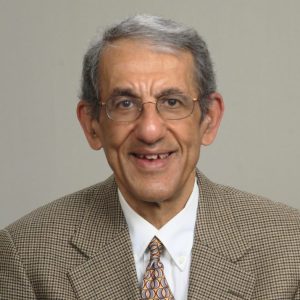
Joseph Ibrahim is an Alumni Distinguished Professor in the Department of Biostatistics at the Gillings School of Global Public Health, University of North Carolina at Chapel Hill, where he has served since 2002. He currently holds dual leadership roles as Director of Graduate Studies for the Department of Biostatistics and Director of the Biostatistics for Research in Genomics and Training Grant. His methodological innovations in Bayesian survival analysis and missing data methodologies have significantly advanced public health research, particularly in cancer genomics applications. Professor Ibrahim's research program centers on developing statistical frameworks for complex clinical and genomic data. His seminal contributions include Bayesian cure rate models, prior elicitation techniques, and diagnostic tools for high-dimensional survival analysis. Current work focuses on integrating multi-omics data with longitudinal tumor burden metrics and refining adaptive clinical trial designs for biomarker-driven populations. These methodologies directly address critical challenges in precision oncology and pharmacovigilance, enabling more robust inference from real-world evidence. His 2025 publications reveal three dominant trends: (1) Advancements in cure rate modeling for joint longitudinal-survival data with change points, (2) Computational innovations for high-dimensional penalized models using autoencoders and R packages like hdbayes, and (3) Methodological refinements for Bayesian trial design incorporating historical controls. These works consistently bridge theoretical statistics with cancer research applications, particularly in tumor phylogeny inference and signal detection for adverse events. Scientific awards include: Samuel S. Wilks Memorial Award (2024) from the American Statistical Association for distinguished contributions to biostatistics Professor Ibrahim has mentored 48 pre-doctoral students and 8 postdoctoral fellows, with exceptional thesis publication records in top statistical journals. As principal investigator of the T32 Cancer Genomics Training Grant since 2004, he has secured funding for 35 doctoral students. His curriculum leadership includes modernizing eight graduate courses and establishing new data science computing sequences since 2015. Current advising focuses on Bayesian methodology development for cancer genomics applications. He directs the department's Biostatistics for Research in Genomics initiative and leads the T32 Cancer Genomics Training Grant team, which integrates statistical methodology development with translational cancer research across UNC's Lineberger Comprehensive Cancer Center and clinical partners.