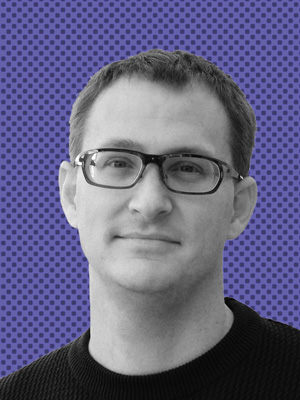
Audrey Salles is a senior expert research engineer at the Unit of Technology and Service Photonic BioImaging (UTechS PBI) within Institut Pasteur in Paris, France. Since 2014, she has specialized in super-resolution microscopy and fluorescence correlation spectroscopy (FCS) techniques, supporting researchers through training and collaborative projects. Her work bridges biophysical modeling with advanced imaging to study plasma membrane mechanics and pathogen interactions. Education: PhD in Immunology (2011), CIML, Marseille, France Her research focuses on plasma membrane organization , ESCRT machinery in cell division , and actin cortex dynamics during viral budding . She collaborates on projects involving Saccharolobus islandicus cytokinesis, HIV-1 release mechanisms, and Staphylococcus aureus pathogenesis. Her publications span Nature Methods , Developmental Cell , and eLife , reflecting interdisciplinary applications of microscopy. Audrey leads quality assurance for the ISO9001 certification at UTechS PBI, ensuring rigorous standards in a facility that integrates equipment management, repair logistics, and staff upskilling. Her methodological innovations include enhanced super-resolution radial fluctuation (eSRRF) and three-dimensional live-cell imaging frameworks.
Dr. Saïd Moussaoui is a Professor in the Department of Automation and Robotics at École Centrale de Nantes , affiliated with the Nantes Digital Sciences Laboratory (LS2N) and the Signal, Image and Sound research team. His work spans machine learning, medical imaging, and signal processing, with a focus on EEG-based mental workload classification, PET reconstruction, and 4D Flow MRI optimization. Research Areas : Signal Processing, Medical Imaging, Machine Learning, Neuroscience, Biomedical Engineering Labs/Teams : LS2N Laboratory, Signal, Image and Sound Team Recent publications highlight trends in graph learning for EEG analysis, deep learning regularization in PET imaging, and super-resolution techniques in cardiovascular MRI. His research integrates physics-based models with data-driven approaches for applications in healthcare and industrial predictive maintenance. The LS2N laboratory provides a multidisciplinary environment for his work, combining advanced computational methods with real-world applications in biomedical engineering and robotics. Collaborations with institutions like IEEE and projects on digital twins underscore his technical leadership in applied research.
Benjamin VIGNAU is a doctoral student and researcher affiliated with INSA Centre Val de Loire and the Laboratoire d'Informatique Fondamentale d'Orléans (LIFO) . His research focuses on evaluating cardiac biometric systems using photoplethysmography (PPG) signals, particularly for continuous authentication in wearable devices. Key contributions include systematic literature reviews on PPG biometric methodologies and AI model analysis for biometric recognition. His thesis, defended in 2024, examines flaws in continuous learning and proposes ergonomic-secure system configurations. He collaborates with Pascal BERTHOME and Patrice CLEMENTE, and his work intersects disciplines like biometric security, signal processing, and artificial intelligence. Affiliated institutions include INSA Centre Val de Loire and the University of Orléans via LIFO lab.
Ismaïl BADACHE is a faculty member at Aix-Marseille Université (AMU), specializing in information retrieval, social signals analysis, and natural language processing. He completed his PhD at Université de Toulouse Paul Sabatier in 2016 with research focused on social information retrieval. Currently, he is actively involved in multiple research projects including DREAM*U (Design your Path to Success at Aix-Marseille University) and AMPIRIC (Aix-Marseille Pôle d'Innovation de Recherche d'enseIgnement pour l'éduCation), which aim to enhance educational outcomes through technological innovation. His educational background includes a PhD from Université de Toulouse Paul Sabatier, defended on February 5, 2016. His doctoral research was conducted at the Institut de Recherche en Informatique de Toulouse (IRIT) under the supervision of Professor Mohand BOUGHANEM. His thesis focused on "Social Information Retrieval: Exploitation of Social Signals to Improve IR," with keywords including Information retrieval, Social Networks, User generated content, Social Signals, Social properties, Time, and Diversity. Dr. BADACHE's research interests center on the intersection of information retrieval, social media analysis, and natural language processing. He has made significant contributions to understanding how social signals can enhance search ranking algorithms, with particular expertise in contradiction detection in online reviews, sentiment analysis, and cross-lingual information retrieval (especially for Arabic language). His work explores temporal aspects of user interactions, emotional signals in social content, and how these factors can improve information retrieval systems. Much of his recent work focuses on educational applications of these technologies. His scientific contributions have been recognized with a 2nd Best Paper award at the Francophone Knowledge Engineering Days (IC 2018). He has developed several practical tools including Arabic Sentiment Analysis, Emotion Analysis, general Sentiment Analysis, and Social Count (a social data extractor from multiple networks). As an educator, Dr. BADACHE teaches a diverse range of courses at AMU including AI and education, Information access techniques (SRI), Web programming, Database management systems, and Educational digital and media education. His teaching portfolio reflects his interdisciplinary expertise spanning computer science, information systems, and educational technology. Dr. BADACHE is currently leading research efforts in two major initiatives: DREAM*U, which aims to improve student success at AMU through personalized educational pathways (running until 2029), and AMPIRIC, which focuses on innovative educational approaches using digital technologies (running until 2030). These projects demonstrate his commitment to applying information retrieval research to solve real-world educational challenges.
Valentin Emiya is an Associate Professor in Computer Science at Aix-Marseille University (AMU), affiliated with the QARMA team at CNRS LIS (Laboratory of Informatics and Systems). His research focuses on Artificial Intelligence, Machine Learning, and Signal Processing, with a particular interest in bridging AI and physical sciences. He is actively involved in: Estimating the environmental impact of AI with Constance Douwes Learning fast transforms and exploring sparse supports in AI Popularizing science through the annual Treize Minutes Marseille event since 2013 Coordinating computer science training in the Licence MPCI program His work emphasizes interdisciplinary collaboration, particularly between AI and physical domains, and he contributes to academic outreach and education initiatives.
Professor at Aix Marseille University's Faculty of Sciences , Mustapha Ouladsine leads cutting-edge research in diagnostic and prognostic methods for complex systems . As Vice-President for Research Infrastructure and AI since 2020, he oversees LIS Computer Science and Systems Laboratory. Directed LIS UMR 7020 (2018–present) Former Director of LSIS UMR 7296 (2008–2018) Scientific manager for €1.2M+ projects with STMicroelectronics Research Focus : Developed innovative approaches for: Equipment health index modeling in semiconductor manufacturing Dynamic sampling techniques for High-Mix Low-Volume systems Fault-tolerant control systems for drones and autonomous robots AI-based cardiac arrhythmia detection with Timone Hospital Scientific Leadership : Founded Aix-Marseille Research Federation in Computer Science Active associate editor for IEEE journals and conferences Coordinated 17+ recruitment committees at Aix Marseille University
Dr. Panayotis Mertikopoulos is a CNRS researcher (chargé de recherche) at the Laboratoire d'Informatique de Grenoble, part of Université Grenoble Alpes. He is affiliated with the Inria/LIG joint team POLARIS and has held visiting positions at UC Berkeley, EPFL, LUISS University of Rome, and NKUA. His academic journey includes completing his PhD at the University of Athens in 2010 on "Stochastic perturbations in game theory and applications to networks" and his Habilitation à Diriger des Recherches (HDR) in 2019 on "Online optimization and learning in games: Theory and Applications". Dr. Mertikopoulos' research spans several interconnected fields at the intersection of mathematics, computer science, and economics. His primary research interests include: Game theory and its applications to network design and resource allocation Online learning algorithms and their convergence properties Optimization methods for non-convex and stochastic problems Applications to machine learning, signal processing, and wireless networks Quantum game theory and quantum computing applications His extensive publication record shows a clear evolution from foundational work in game dynamics and learning theory toward increasingly sophisticated applications in machine learning and network optimization. Recent work demonstrates growing interest in quantum game theory, non-convex optimization, and the mathematical foundations of deep learning. His research consistently bridges theoretical insights with practical applications, particularly in communication networks and distributed systems. Among his notable achievements is receiving the INFORMS best paper award in the network analytics section in 2022 for his work on "Robust power management via learning and game design". His publications have appeared in top venues including NeurIPS, ICML, COLT, IEEE Transactions, and leading economics and operations research journals. Dr. Mertikopoulos has supervised numerous PhD students and postdoctoral researchers, though specific names are not listed in the available information. He has secured research funding for projects at the intersection of game theory, optimization, and machine learning, with applications to network design and resource allocation. His collaborative work spans multiple institutions across Europe and North America. As a member of the POLARIS research team at Inria/LIG, he contributes to a vibrant research environment focused on parallel and distributed systems. His work often intersects with colleagues researching optimization algorithms, machine learning theory, and network science, creating opportunities for cross-disciplinary collaboration on complex computational problems.
Bruce DENBY is a Professor at Sorbonne University specializing in speech processing, telecommunications, and indoor localization. His research spans multiple disciplines including computer science, physics, and environmental science with significant contributions across these fields. His primary research interests include: Silent Speech Interfaces and speech restoration technologies Indoor localization using wireless networks and GSM fingerprints Telecommunications and signal processing Environmental modeling of road dust and air pollution Machine learning applications in speech recognition Dr. DENBY's research trajectory shows evolution from early work in high energy physics to speech processing and wireless communications, with recent publications (2022-2025) demonstrating continued innovation in WiFi analytics, client density mapping, and future speech interfaces. His work increasingly integrates deep learning techniques while maintaining focus on practical applications, particularly for speech restoration and privacy-preserving network analysis. Notable scientific achievements: Chester Sall Award Paper (2012) for work on FPGA-based FM broadcast receivers Significant contributions to the Silent Speech Challenge benchmark with deep learning approaches Development of the NORTRIP model for road dust emissions Highly cited work on Silent Speech Interfaces (over 500 citations) Dr. DENBY has secured research funding across multiple domains, collaborating with institutions across Europe. His work demonstrates strong interdisciplinary connections between speech technology, wireless communications, and environmental science, with applications ranging from assistive technologies to urban air quality management.
Jean-François Giovannelli is a Professor at IMS Bordeaux , affiliated with the Université de Bordeaux . His work focuses on Signal and Image Processing within the SPECTRAL team. Collaborations span institutions like CEA , CNRS , and industry partners ( STMicroelectronics , Stellantis ), emphasizing Bayesian methods and MCMC algorithms for diverse applications. Current Affiliation : Professor, IMS Bordeaux, Université de Bordeaux Research Group : Signal and Image Processing Team : SPECTRAL Collaborations : CEA, CNRS, CESTA, Thales, NXP Research Interests include: Bayesian inference for inverse problems MCMC sampling techniques Signal/image reconstruction Mass spectrometry data analysis Adaptive optics in astronomy Medical imaging algorithms Article Trends show a focus on Bayesian modeling across disciplines: biomedical data, astronomical imaging, and microwave mapping. Key methods include MCMC samplers , regularized inversion , and statistical validation . Professional Contributions involve developing tools like NiftyRec for tomography and advancing Adaptive Optics restoration algorithms. His work bridges theoretical statistics and practical applications in healthcare, space, and defense.
Adrien F. Vincent is an Associate Professor at IMS Bordeaux (Laboratory of Integration, Material to System) under Université de Bordeaux, Institut Polytechnique de Bordeaux, and CNRS. He leads research in neuromorphic computing with a focus on spiking neural networks and memristive devices. His team, 2HC Production Engineering, develops energy-efficient hardware for real-time event-based data processing. Key research areas: Neuromorphic systems, Low-power electronics, Memristor technology Recent publications explore spintronic neural networks, STDP plasticity, and energy optimization His work addresses hardware-friendly learning algorithms and co-integration of analog silicon neurons with memristive arrays. Projects include ULPEC (Ultra-Low Power Event-Based Camera) and MIRA2015 (Memristive Architectures).
Christian Germain is a Professor of Computer Science at Bordeaux Sciences Agro, an engineering school specializing in agronomy. He focuses on information technologies and their applications to agriculture and environmental science, conducting research in image analysis at the IMS laboratory. His work spans remote sensing, embedded agricultural imaging, and digital tool development for vineyards. Key Roles: Co-holder of the AgroTIC business chair (29 corporate sponsors), Scientific Director of DigiLab (open platform for wine-growing experiments). Research Themes: Remote sensing, agricultural imaging systems, covariance pooling in machine learning, and texture analysis for material science. His recent publications highlight collaborations with industry and academic partners, emphasizing applications in vineyard health monitoring, carbon composite modeling, and vine disease detection. Germain’s team utilizes CNNs, Gaussian mixture models, and SAR imaging techniques to advance agricultural and materials engineering. He has contributed to international conferences and journals, integrating computational methods with real-world agricultural challenges, including proximal sensing for crop management and 3D microstructure simulation.
Gilbert Grenier is a Professor at Université de Bordeaux, affiliated with the IMS (Laboratoire de l'intégration, du matériau au système). He works within the Signal and Image Processing research group as part of the MOTIVE team at the university. His research interests focus on applying advanced image analysis techniques to agricultural problems, particularly in precision farming applications. His work bridges computer vision and agricultural engineering to develop innovative solutions for sustainable orchard management. His expertise spans computer vision algorithms, image processing for agricultural applications, and precision agriculture technologies that optimize fruit production while reducing environmental impact. His notable publication from 2013 demonstrates how image analysis can be used to assess mechanical thinning intensity in apple orchards, providing growers with accurate data to improve thinning strategies. This work represents the intersection of agricultural science and computer vision technology, showing how automated systems can enhance traditional farming practices while addressing environmental concerns. Grenier collaborates extensively with agricultural research institutions including CTIFL (Centre Technique Interprofessionnel des Fruits et Légumes) and INRAE (Institut National de Recherche en Agriculture, Alimentation et Environnement), demonstrating strong interdisciplinary connections between engineering and agricultural sciences. As part of the MOTIVE team within the Signal and Image Processing research group at IMS, Professor Grenier contributes to developing cutting-edge image analysis solutions with practical applications in sustainable agriculture.
Cédric HERZET is a Permanent Member of CREST at INRIA Rennes, focusing on statistical learning theory, optimization, and inverse problems. His work bridges theoretical analysis with practical algorithm development. Primary affiliation: INRIA Rennes (French National Institute for Research in Digital Science) Research Interests: Statistical Learning Theory, Optimization algorithms, Operational Research, Inverse Problems. His work particularly addresses sparse approximation, compressed sensing, and iterative thresholding methods. Key Contributions: Development of Bayesian pursuit algorithms, geometric analysis of subspace clustering with outliers, and analysis of state evolution in dense graph message passing. His theoretical work has direct applications in signal/image processing and machine learning. Software: Created MATLAB implementations of sparse approximation algorithms and Bernoulli-Gaussian Lab toolbox for Bayesian pursuit simulation.
Fabien Lotte is a Senior Researcher (Directeur de Recherche DR2) at Inria, affiliated with the University of Bordeaux. He leads the Potioc team, focusing on Brain-Computer Interfaces (BCI) and related technologies. Research Interests: Brain-Computer Interfaces (BCI) for motor imagery and neurofeedback Machine learning on Riemannian manifolds for EEG analysis Reproducibility in neural engineering research Passive BCI for cognitive/affective state estimation Neuroergonomics and adaptive systems Scientific Contributions: His recent work explores Riemannian geometry for BCI, including feature fusion, visualization techniques, and performance prediction via median nerve stimulation. He has developed open-source tools like BioPyC and contributed to large datasets for BCI reproducibility. Scientific Awards: 2023 : Nature Mentorship Award (Mid-Career Category) 2023 : Lovelace-Babbage Prize from French Academy of Science Advising and Collaborations: Supervised multiple PhD students (Léa Pillette, Jelena Mladenovic, David Trocellier) and postdocs. Leads ANR projects (STIM-BCI, BCI4IA) and ERC-funded initiatives (BrainConquest, SPEARS).
Alexandre Gramfort is a Senior Researcher at Inria, with affiliations at multiple university centers including Université Côte d'Azur , University of Bordeaux , and Inria Saclay . He leads the GraphDeco project team and has been actively involved in various research teams such as Parietal, Athena, and Epione since 2007. His research focuses on integrating machine learning and neuroscience to advance brain signal interpretation. Key interests include signal processing , statistical analysis of neural data , and computational neuroscience . Gramfort has made significant contributions through his work on electrophysiological signal processing, supported by the ERC Starting Grant in 2015 for the Signal processing and Learning Applied to Brain data (SLAB) project. He has been recognized with prestigious awards, including ACM Fellow (2016) and ERC Starting Grant (2015) . Over the years, he has been affiliated with several Inria project teams, including GraphDeco , Parietal , Athena , and Epione , contributing to interdisciplinary research at the intersection of data science and neuroscience .